We all, in varying degrees, suffer from illusion about ourselves.
Feisbuk feeds our illusion even more. On fb, people more often agree than disagree, more often compliment than criticise, more often support than attack. Seeing someone stupid, ignorant, narrow-minded, illogical, pathetic, ridiculous... people most of the time choose to make no remark (because, what's the point of arguing?). Besides, fb has the button "like" but no "dislike", and we sometimes forget that a "like" doesn't always mean "I like this" and "I find this good", but can also mean "I support you", "I sympathise with you", "This is for your efforts" or, worse, "This is proof I've read/ seen your post". These things aren't new, but the thought that a post of ours is so 'popular' it must be good, is so hard to resist. Over time, people who don't have acute self-awareness believe themselves much greater, much more talented and popular than they really are, and this can be harmful.
But then it may not. If someone remains forever in a bubble, how can they get disillusioned? Even if they do suffer some disillusionment at some point, it may not be too severe- after a long time such a person may very well find a way of consoling themselves. Oh well...
Monday, 11 August 2014


Wednesday, 6 August 2014
Dostoyevsky's prison reminds me of my schools in VN
1/ From "The 1st month (I)" of Memoirs from the House of the Dead:
To survive, I was tame and meek, followed rules and kept my opinions to myself more or less throughout my years in VN. In class I said and wrote what I expected to, and then went home and wrote my real thoughts in my diary or on my blog. But there were 2 breaks, when I was in 4th grade, and 9th grade. All of a sudden and out of the blue, I went mad and did something shocking, unexpected. Dostoyevsky's description fits me surprisingly.
2/ The inspector scenario is familiar- I've experienced that before, numerous times.
If in Norway, teachers chilled and behaved as usual, without any stress, when inspectors came, in VN teachers made a fuss about it and prepared for weeks. I remember those days well- usually there was only talk and talk, when inspectors came, teachers added lots of other activities as though we were having lots of fun, and it's imprinted on my mind an incident when I was in primary school, my teacher told all of us to raise our hands, without exception, and those who were confident they knew the answers would budge a finger as a sign. The teachers created the lies, we took part in the lies and I'm sure the inspectors also knew it was all lies, for they must have gone through such acts before, in short everyone knew it was acting and everyone took part in it.
The only difference is that in our case, nobody approached us and asked what we thought.
_______________________________________________
I finished reading Memoirs from the House of the Dead last night.
The book isn't very Dostoyevskian- it's more realistic, less 'hysterical', more sane and only once in a while comical. But it's still his work, and already shows his great insight into human nature, especially abnormal psychologies. After a while, I will not remember his characters, who tend to be described with words such as "naive", "simple", "extreme goodness", "like a child" or "comical", "a clown" or "repugnant" and who are not as lively as Tolstoy's characters, but I will remember the philosophical meditations, the passages about what helps one survive in prison and some of the scenes, particularly the haunting bath scene. His descriptions are vivid, the scenes appear before my eyes fully, terrifyingly.
[At times like this, I can't help finding Jane Austen so tiny, so trivial, so mundane....]
A great work.
"Sometimes the authorities were astonished when some convict, who had jogged along for several years in so tame and exemplary a fashion that he had even been made a 'trusty' for his meritorious conduct, suddenly, without rhyme or reason- as if a devil had entered into him- ran off the rails, 'went on a binge', grew violent, or sometimes simply plunged headlong into criminal conduct; either open insolence to the highest authorities, or murder, or rape, or something else of the same kind. He would be watched with amazement. Yet perhaps the whole cause of this violent break in a man from whom it was not in the least to be expected, was a mournful desire for an abrupt display of personality, a longing to be his own self, a wish to declare himself and his own lowly personality, appearing suddenly and developing into fury, insanity, the eclipse of reason, paroxysm, and convulsion. So, perhaps, one buried alive and awakening in his coffin, hammers on its lid and struggles to wrest it off, although, of course, reason might persuade him that all his efforts are vain. There, indeed, lies the point, that reason does not enter into this: it is the convulsion of madness. We must take into consideration that almost any manifestation of will in a prisoner is accounted a crime, and, that being so, it is naturally all the same to him whether the manifestation is great or small. A binge is a binge, to risk anything is to risk everything, even murder itself. And of course it is only the beginning that counts; afterwards a man grows intoxicated and nothing will stop him. Therefore it is best to avoid driving anybody to this point. It is more peaceful for everybody. Yes, but how?"This is how schools in VN, at least in Saigon, are: teachers and textbooks are authorities and pupils are not to challenge authorities; teachers are never wrong (even when they're wrong), pupils may remind them of misspellings but never question incorrect information or distorted views; pupils have assigned seats, from which they cannot move, so that they can be easily controlled; pupils might be forced to sit among those they don't get along with, and what they think isn't the concern of teachers; teachers tell any pupil they like to answer questions or to solve a problem on the board, not only those that raise their hands; pupils aren't allowed to talk, nor to eat, in class; it is common that teachers continue talking in the 5-minute breaks and pupils are not to remind them; humiliation is acceptable and common, such as when a pupil is unable to answer a question or to solve a problem on the board, and teachers read out loud all students' test results in class so that everybody knows everybody's results; there's only 1 history book, which supports 1 view (the communists'), and there's no such thing as evaluation of sources, critical thinking; in literature pupils never read a complete novel, only poems, short stories and excerpts of longer works, then the teachers say everything, pupils write it down and then repeat it in tests and exams, they're not allowed to say something totally different from what teachers have said, etc.
To survive, I was tame and meek, followed rules and kept my opinions to myself more or less throughout my years in VN. In class I said and wrote what I expected to, and then went home and wrote my real thoughts in my diary or on my blog. But there were 2 breaks, when I was in 4th grade, and 9th grade. All of a sudden and out of the blue, I went mad and did something shocking, unexpected. Dostoyevsky's description fits me surprisingly.
2/ The inspector scenario is familiar- I've experienced that before, numerous times.
If in Norway, teachers chilled and behaved as usual, without any stress, when inspectors came, in VN teachers made a fuss about it and prepared for weeks. I remember those days well- usually there was only talk and talk, when inspectors came, teachers added lots of other activities as though we were having lots of fun, and it's imprinted on my mind an incident when I was in primary school, my teacher told all of us to raise our hands, without exception, and those who were confident they knew the answers would budge a finger as a sign. The teachers created the lies, we took part in the lies and I'm sure the inspectors also knew it was all lies, for they must have gone through such acts before, in short everyone knew it was acting and everyone took part in it.
The only difference is that in our case, nobody approached us and asked what we thought.
_______________________________________________
I finished reading Memoirs from the House of the Dead last night.
The book isn't very Dostoyevskian- it's more realistic, less 'hysterical', more sane and only once in a while comical. But it's still his work, and already shows his great insight into human nature, especially abnormal psychologies. After a while, I will not remember his characters, who tend to be described with words such as "naive", "simple", "extreme goodness", "like a child" or "comical", "a clown" or "repugnant" and who are not as lively as Tolstoy's characters, but I will remember the philosophical meditations, the passages about what helps one survive in prison and some of the scenes, particularly the haunting bath scene. His descriptions are vivid, the scenes appear before my eyes fully, terrifyingly.
[At times like this, I can't help finding Jane Austen so tiny, so trivial, so mundane....]
A great work.
Monday, 4 August 2014
Tyranny and force of habit
Another trip- I just got back from Frankfurt, Heidelberg, Würzburg and Rothenburg. Heavenly.... but photos will come later.
________________________________________________
Still reading Memoirs from the House of the Dead. Here is an excerpt:
"I do not know how things are now, but in the recent past there were gentlemen to whom the power of flogging a victim gave a satisfaction resembling that of the Marquis de Sade or Madame de Brinvilliers. I imagine that there was something in those sensations, at once sweet and painful, that made these gentlemen's hearts swoon with pleasure. There were people who, like tigers, thirst for blood. Any man who has once tasted this dominion, this unlimited power, over the body, blood and spirit of a human creature like himself, subject like himself to the law of Christ, any man has tasted this power, this boundless opportunity to humiliate with the deepest degradation another being in the image of God, becomes despite himself the servant instead of the master of his own emotions. Tyranny is a habit; it has the capacity to develop and it does develop, in the end, into a disease. I maintain that the best of men may become coarsened and degraded, by force of habit, to the level of a beast. Blood and power are intoxicants; callousness and perversity develop and grow; the greatest perversions become acceptable and finally sweet to the mind and heart. The man and the citizen perish eternally in the tyrant, and a return to human dignity, to remorse and regeneration, becomes almost completely impossible to him. Besides this, example and the possibility of such arbitrary power act like a contagion on the whole of society; such despotism is a temptation. A society which contemplates such manifestations calmly is already corrupted at its roots. In short, the right given to 1 man to inflict corporal punishment on another is 1 of the ulcers of society, 1 of the most powerful destructive agents of every germ and every budding attempt at civilisation, the fundamental cause of its certain and irretrievable destruction."
(trans. Jessie Coulson)
1/ Reminds me of that time when a classmate asked if we thought Nazis were enjoying what they were doing, or only doing their duties. I believed, and still do, that there were people who liked it, who did find pleasure in humiliating, tormenting, inflicting pain upon other people, in having power and control, in knowing that others feared them, in seeing these people cry and beg for mercy.
2/ I don't believe that human beings all are good at heart. Nor do I believe that human beings are basically evil.
3/ This passage makes me think of VN. E.g, because there's no law that protects people, there's no limit to what the police can do (unless they want to 'touch' the higher officials), therefore, that people die in custody is common. It can be tempting to have such power, with the law on your side, to be able to do whatever you want to someone else, knowing that nothing will happen to you. A system that has no respect for justice, freedom and human rights gives that power to certain groups of people in society, and I believe, in many cases, wakens up and then develops that desire in some individuals who might not be cruel by nature. It affects them, and shapes them gradually. The monstrous acts they do becomes normal and acceptable, and they change.
That's just 1 example.
4/ Much as I want to believe in myself, I cannot say with confidence that, having the same kind of power, I would not abuse it a bit. It's like the way in VN everyone gives bribes- to traffic police, customs officers, officials, nurses...; to be accepted into good schools, to make things faster and easier, to bend rules, to reduce discomfort (especially at hospitals)... I have heard some Viet people, after many years living abroad, say that they find it wrong and therefore impossible to gives bribes, but I'm certain that after a short while in VN they would have to do it, force themselves to conform to the unwritten rule and finally get used to it without a bad conscience. We adapt.
And people who start to have some power (some position in such a society) initially may find it wrong to receive bribes, but they will change and will expect others to do so, then they will speak coldly and meanly and contemptuously as everyone else in the same position does. We adapt.
That's just 1 example.
4/ Much as I want to believe in myself, I cannot say with confidence that, having the same kind of power, I would not abuse it a bit. It's like the way in VN everyone gives bribes- to traffic police, customs officers, officials, nurses...; to be accepted into good schools, to make things faster and easier, to bend rules, to reduce discomfort (especially at hospitals)... I have heard some Viet people, after many years living abroad, say that they find it wrong and therefore impossible to gives bribes, but I'm certain that after a short while in VN they would have to do it, force themselves to conform to the unwritten rule and finally get used to it without a bad conscience. We adapt.
And people who start to have some power (some position in such a society) initially may find it wrong to receive bribes, but they will change and will expect others to do so, then they will speak coldly and meanly and contemptuously as everyone else in the same position does. We adapt.
Wednesday, 30 July 2014
On D. H. Lawrence
Hola.
Nobody here asked, but here I am, back from Paris and Barcelona! (Photos later)
__________________________________________________________
Having tried several times to write about Lady Chatterley's Lover, and failed, I'm going to write about D. H. Lawrence.
Nobody here asked, but here I am, back from Paris and Barcelona! (Photos later)
__________________________________________________________
Having tried several times to write about Lady Chatterley's Lover, and failed, I'm going to write about D. H. Lawrence.
[Limited, biased view, based on 1 single book Lady Chatterley's Lover plus the author's "Apropos..."]
This author's irritating. His syntax. His excessive exclamation marks. His dashes. His repetitiousness. All these things seem like nothing but get on one's nerves like nails scratching continually at the door. Above all, his tone and personality, as felt in the narrator.
Not that he's a bad writer. No. Many passages in the book are brilliant, some even ecstatic; Lady Chatterley's Lover also offers a new take on adultery, love and sex, and the relationship between the mind and the body (it can be said to be a response to Madame Bovary and Anna Karenina, in some ways). But alas, all those talks about humanity and universe and class and social conflicts and life and nature and machines and industrialisation and civilisation and the leisure classes and the lower classes and the individual and the mass and mass products and bolshevism and England and illusion and hypocrisy and universal questions and beauty and mystery and men and women and the body and love and physical intimacy and orgasm and blah blah blah, they drive me crazy. Like Tolstoy, D. H. Lawrence wants to tackle big themes, to say lots of things, and to compress everything into his book, yet unlike Tolstoy, he lacks some kind of rhythm, some kind of flow, or simply some sensitivity, to weave them naturally into the narrative; moreover, he takes everything too seriously- all conversations are discussions, everything can be turned into a discussion, even sex and pleasure. In this book, everything is treated with seriousness and solemnity, as though the smallest, apparently most trivial bits have a much deeper meaning and significance. Talk talk talk, talk talk talk. D. H. Lawrence borrows Connie's voice to say that Marcel Proust "doesn't have feelings, he only has streams of words about feelings" (which, as written in the notes, is his true opinion)- I can say nothing about Proust, whose works I have not read, but in my humble opinion this line seems to apply well for D. H. Lawrence.
It's, very often, horrible, even unbearable, in the 300 pages of the book. It's even worse in the 30 pages in which he discusses the book and some matters related to it. I wouldn't have invited him to dinner. Lots of times, in my reading, I only wanted to yell "Why so serious-sss?" (in the Joker's voice), or "Chill, man. Just chill." He takes everything so seriously that I feel as though he's incapable of pleasure and enjoyment. He probably can't have small talk either.
In short, he's nuts.
At the same time, I also feel that he doesn't see individuals, only humanity as a whole, or people before vs people "today" (he repeatedly says "today" and "nowadays" and "modern people"), or people as divided into his various categories. I like novels both to deal with individuals and to say something about humanity- this book doesn't really fit the 1st, and I'm afraid, nor the 2nd.
Then I feel that, perhaps he's on a different wavelength. I do like Lady Chatterley's Lover in some parts, and this book has quite an inexplicable power- even while feeling irritated, I didn't feel like I was forcing myself to continue, I just kept reading it. His other works may be different, or I may need a different mindset.
Then I feel that, perhaps he's on a different wavelength. I do like Lady Chatterley's Lover in some parts, and this book has quite an inexplicable power- even while feeling irritated, I didn't feel like I was forcing myself to continue, I just kept reading it. His other works may be different, or I may need a different mindset.
Saturday, 12 July 2014
New photos by me
Humph, this set hasn't got a title. Any idea?
https://plus.google.com/photos/104156964467977244850/albums/6035078078031462001?authkey=CPKUyrTX5fGJWw
Some of them:
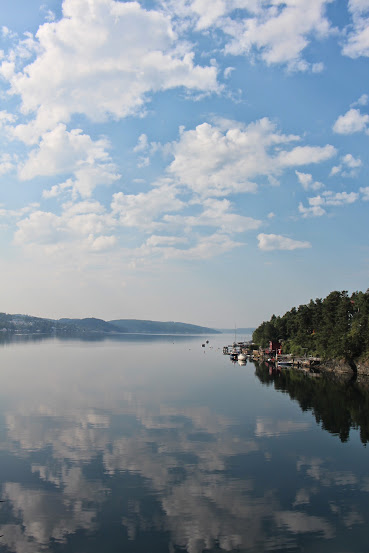


By me.
https://plus.google.com/photos/104156964467977244850/albums/6035078078031462001?authkey=CPKUyrTX5fGJWw
Some of them:
By me.
Thursday, 10 July 2014
Concluding notes on "War and Peace"
So I've finished reading War and Peace (8/6- 9/7).
a) I probably won't watch any adaptation. As with The Sound and the Fury, I've had quite vivid images of the characters with which I don't want someone else's vision to interfere; even though none of these characters have touched me in the strange, inexplicable way Caddy has, I spent 1 month with them.
And what can a film adaptation offer that the book doesn't already have?
b) I began reading the epilogue, preparing to say that War and Peace didn't need an epilogue, yet couldn't say so. It isn't unnecessary. Tolstoy discusses life and history, expands his ideas, elaborates, gives arguments and counterarguments, and challenges commonly accepted views. A novel doesn't need them, indeed, but War and Peace is more than a novel.
c) War and Peace isn't without flaws. It may be a loose baggy monster. Some parts may be tedious or hard to read. There may be lots of repetitions. Tolstoy's views may be debatable. A few details may be contrived. Etc, etc. But so what? Is any great novel flawless? Here is an epic with an immense panorama of humanity- through it Tolstoy expands the scope of a normal novel and at the same time tackles the lives of individuals, which are missing in the works of historians. Here is a masterpiece that overwhelms, which makes one wonder how 1 person could write a book of such size and scope, with that many characters (or more specifically, how did he know how a girl felt?). Here the author presents to us a war, a period, a nation and a people, and with great insight and vivid descriptions lets us enter the characters' minds and feel as though experiencing what they go through; he depicts them in war and in peace, describes their reactions to societal issues such as war, national identity... and to personal ones such as love, betrayal, fear... Here is a work of art about all kinds of experiences, such as birth, death, dancing, hunting, gambling, fighting, falling in love, falling out of love, etc, making one feel alive and love life in all of its manifestations. Here is a book which deals with tragedy, doubt, sorrows, broken-heartedness, disappointment, disillusionment, betrayal... but which doesn't have a cynical, bitter tone, as Tolstoy, in spite of everything, believes in goodness and makes us also do.
The imperfections are therefore insignificant.
d) Choosing between War and Peace and Anna Karenina, as the better work, is difficult.
I can only say that I prefer Anna Karenina, but it's personal, perhaps largely because I read it 1st.
e) I was indeed hard on Liza. She doesn't deserve that, nor does she deserve the way she's treated by the Bolkonskys.
f) The scenes between Marya and Nikolay before their marriage are magnificent. Jane Austen couldn't have written it better.
g) Marya, irrespective of her piousness (and her perfection, to Nikolay), has her defects. She has pride. She has prejudices, against Natasha (though they later disappear) and then against Sonya. She finds herself unable to love Andrey's son as much as her own children. And these things make her human.
After a while it's not only pity- I come to like her a lot more in the end. She also grows stronger.
h) If I were asked to pick some languages I wished I could speak without learning them (because quite frankly, I have no gift for languages), I would definitely include Russian (others: French, German, Spanish and Japanese).
i) Now, to end the post, I don't know what to say, so here is a quote by Isaak Babel:
a) I probably won't watch any adaptation. As with The Sound and the Fury, I've had quite vivid images of the characters with which I don't want someone else's vision to interfere; even though none of these characters have touched me in the strange, inexplicable way Caddy has, I spent 1 month with them.
And what can a film adaptation offer that the book doesn't already have?
b) I began reading the epilogue, preparing to say that War and Peace didn't need an epilogue, yet couldn't say so. It isn't unnecessary. Tolstoy discusses life and history, expands his ideas, elaborates, gives arguments and counterarguments, and challenges commonly accepted views. A novel doesn't need them, indeed, but War and Peace is more than a novel.
c) War and Peace isn't without flaws. It may be a loose baggy monster. Some parts may be tedious or hard to read. There may be lots of repetitions. Tolstoy's views may be debatable. A few details may be contrived. Etc, etc. But so what? Is any great novel flawless? Here is an epic with an immense panorama of humanity- through it Tolstoy expands the scope of a normal novel and at the same time tackles the lives of individuals, which are missing in the works of historians. Here is a masterpiece that overwhelms, which makes one wonder how 1 person could write a book of such size and scope, with that many characters (or more specifically, how did he know how a girl felt?). Here the author presents to us a war, a period, a nation and a people, and with great insight and vivid descriptions lets us enter the characters' minds and feel as though experiencing what they go through; he depicts them in war and in peace, describes their reactions to societal issues such as war, national identity... and to personal ones such as love, betrayal, fear... Here is a work of art about all kinds of experiences, such as birth, death, dancing, hunting, gambling, fighting, falling in love, falling out of love, etc, making one feel alive and love life in all of its manifestations. Here is a book which deals with tragedy, doubt, sorrows, broken-heartedness, disappointment, disillusionment, betrayal... but which doesn't have a cynical, bitter tone, as Tolstoy, in spite of everything, believes in goodness and makes us also do.
The imperfections are therefore insignificant.
d) Choosing between War and Peace and Anna Karenina, as the better work, is difficult.
I can only say that I prefer Anna Karenina, but it's personal, perhaps largely because I read it 1st.
e) I was indeed hard on Liza. She doesn't deserve that, nor does she deserve the way she's treated by the Bolkonskys.
f) The scenes between Marya and Nikolay before their marriage are magnificent. Jane Austen couldn't have written it better.
g) Marya, irrespective of her piousness (and her perfection, to Nikolay), has her defects. She has pride. She has prejudices, against Natasha (though they later disappear) and then against Sonya. She finds herself unable to love Andrey's son as much as her own children. And these things make her human.
After a while it's not only pity- I come to like her a lot more in the end. She also grows stronger.
h) If I were asked to pick some languages I wished I could speak without learning them (because quite frankly, I have no gift for languages), I would definitely include Russian (others: French, German, Spanish and Japanese).
i) Now, to end the post, I don't know what to say, so here is a quote by Isaak Babel:
"If the world could write by itself, it would write like Tolstoy."
Monday, 7 July 2014
The philosophical part in "War and Peace"
As I've said, War and Peace is 3 books put together: a novel, a historical chronicle and a philosophical work on life, religion and history.
1/ Life:
In volume IV part III chapter 13 of War and Peace, God Sees The Truth, But Waits appears in skeletal form.
Here, the story's told by Karatayev, a man Pierre befriends in prison. He seems to be Tolstoy's peasant ideal- an embodiment of Christian virtues, simplicity, acceptance, firmness, endurance, strength, forgiveness, directness, etc, or, in Pierre's words, "an unfathomable, rounded, eternal personification of the spirit of simplicity and truth". All the values Tolstoy considers essential and stresses many times in later works are found in this character: Karatayev lives a simple life, works, finds happiness in simple things, accepts life as it is, forgives, chooses not to judge and never complains.
Having read this story gives me 2 advantages: 1st, I know the full version of the tale, with the details missing in this version; 2nd, reading it now in a context gives me perspective and therefore has more meaning. Whatever one thinks about the story and Karatayev, it does have more meaning when one considers the context that Pierre and Karatayev are both in prison; wider: away from society and luxury, Pierre contemplates the life he has lived and realises what he truly needs and thinks about the people in his life; and the wider context is the book as a whole. Tolstoy's works are always didactic, but they are also real and full of life. It's difficult, and perhaps not a good idea, to try to put it into words, but take forgiveness- Tolstoy writes about forgiveness but also describes how hard it is to forgive that sometimes only under unusual circumstances (such as in deathbed) can one forgive. This makes me think of the revelation I had when reading Anna Karenina- the line "Thou shalt not judge" had meant nothing until I came to understand it through Anna Karenina, through the way Tolstoy slips into the mind of each of his characters and lets us know what they think, how they feel and why they do what they do. Now, War and Peace gives me something else.
2/ Religion:
Tolstoy's critical of organised religion.
Pierre joins the Freemasonry, then what happens? He continues living exactly as before, with lust, sloth, gluttony, perhaps also wrath. The only thing that changes is that from then on he meets other freemasons and participates in rituals- the rituals are meaningless, Pierre doesn't change and some people join the organisation for the mere purpose of gaining contacts and acquaintances, such as Boris.
Tolstoy makes his point clearer by creating Marya Bolkonskaya and later Platon Karatayev. They perform no ritual and hardly preach anything- they practice the teachings.
3/ History:
Tolstoy begins volume III poking fun at historians, and repeats many times later. The main ideas are:
- There are no single causes. Everything's caused by numerous factors.
- Something happens because it's supposed to happen.
- Nothing happens according to plans. No one can control everything, or even anything.
- There's no such thing as military genius. Historians are mistaken to attribute everything to the will of 1 man.
- Very little of what the leaders order is carried out, there are always unforeseeable circumstances, communication issues, competition between soldiers, etc.
- Commanders-in-chief matter more than top leaders such as Napoleon or Kutuzov, and less than the soldiers that are in battle.
- Some people who look ordinary and get forgotten may have a vital role in the army.
- The size of the troops is not the most important factor.
- Morale may be more important than the number of soldiers and the generals' strategies.
- Historians have hindsight- they may praise someone for a correct theory/ prediction because it's proven right, but it's just 1 of the many theories and predictions they had, many of which turned out wrong.
These points make sense and provoke some interesting thoughts. He makes one question history and think differently about the explanations for historical events.
After all, how much of history (the study) is facts? There's no such thing as fiction or nonfiction, only narrative.
Update on 9/7:
- The concepts of chance and genius cannot explain historical events.
- Intellectual activity cannot be singled out as the cause or the expression of an entire historical movement.
- The transfer of popular will to leaders is a fallacy.
- "The movement of peoples is determined not as historians have supposed, by the exercise of power, or the intellect, of both together, but by the actions of all involved; all the people who come together in such a way that those who participate most directly in the activity assume the least responsibility for it, and vice versa."
- Actions are partly free, partly a product of necessity. Freedom and necessity are independent- neither is absolute.
- The extent of free will or necessity changes as we examine an action from different perspectives- there are 3 variables: "the relationship between the man committing the act and the external world, his relationship to time and the relationship between him and the causes which led to the act."
- Free will is an illusion.
1/ Life:
In volume IV part III chapter 13 of War and Peace, God Sees The Truth, But Waits appears in skeletal form.
Here, the story's told by Karatayev, a man Pierre befriends in prison. He seems to be Tolstoy's peasant ideal- an embodiment of Christian virtues, simplicity, acceptance, firmness, endurance, strength, forgiveness, directness, etc, or, in Pierre's words, "an unfathomable, rounded, eternal personification of the spirit of simplicity and truth". All the values Tolstoy considers essential and stresses many times in later works are found in this character: Karatayev lives a simple life, works, finds happiness in simple things, accepts life as it is, forgives, chooses not to judge and never complains.
Having read this story gives me 2 advantages: 1st, I know the full version of the tale, with the details missing in this version; 2nd, reading it now in a context gives me perspective and therefore has more meaning. Whatever one thinks about the story and Karatayev, it does have more meaning when one considers the context that Pierre and Karatayev are both in prison; wider: away from society and luxury, Pierre contemplates the life he has lived and realises what he truly needs and thinks about the people in his life; and the wider context is the book as a whole. Tolstoy's works are always didactic, but they are also real and full of life. It's difficult, and perhaps not a good idea, to try to put it into words, but take forgiveness- Tolstoy writes about forgiveness but also describes how hard it is to forgive that sometimes only under unusual circumstances (such as in deathbed) can one forgive. This makes me think of the revelation I had when reading Anna Karenina- the line "Thou shalt not judge" had meant nothing until I came to understand it through Anna Karenina, through the way Tolstoy slips into the mind of each of his characters and lets us know what they think, how they feel and why they do what they do. Now, War and Peace gives me something else.
2/ Religion:
Tolstoy's critical of organised religion.
Pierre joins the Freemasonry, then what happens? He continues living exactly as before, with lust, sloth, gluttony, perhaps also wrath. The only thing that changes is that from then on he meets other freemasons and participates in rituals- the rituals are meaningless, Pierre doesn't change and some people join the organisation for the mere purpose of gaining contacts and acquaintances, such as Boris.
Tolstoy makes his point clearer by creating Marya Bolkonskaya and later Platon Karatayev. They perform no ritual and hardly preach anything- they practice the teachings.
3/ History:
Tolstoy begins volume III poking fun at historians, and repeats many times later. The main ideas are:
- There are no single causes. Everything's caused by numerous factors.
- Something happens because it's supposed to happen.
- Nothing happens according to plans. No one can control everything, or even anything.
- There's no such thing as military genius. Historians are mistaken to attribute everything to the will of 1 man.
- Very little of what the leaders order is carried out, there are always unforeseeable circumstances, communication issues, competition between soldiers, etc.
- Commanders-in-chief matter more than top leaders such as Napoleon or Kutuzov, and less than the soldiers that are in battle.
- Some people who look ordinary and get forgotten may have a vital role in the army.
- The size of the troops is not the most important factor.
- Morale may be more important than the number of soldiers and the generals' strategies.
- Historians have hindsight- they may praise someone for a correct theory/ prediction because it's proven right, but it's just 1 of the many theories and predictions they had, many of which turned out wrong.
These points make sense and provoke some interesting thoughts. He makes one question history and think differently about the explanations for historical events.
After all, how much of history (the study) is facts? There's no such thing as fiction or nonfiction, only narrative.
Update on 9/7:
- The concepts of chance and genius cannot explain historical events.
- Intellectual activity cannot be singled out as the cause or the expression of an entire historical movement.
- The transfer of popular will to leaders is a fallacy.
- "The movement of peoples is determined not as historians have supposed, by the exercise of power, or the intellect, of both together, but by the actions of all involved; all the people who come together in such a way that those who participate most directly in the activity assume the least responsibility for it, and vice versa."
- Actions are partly free, partly a product of necessity. Freedom and necessity are independent- neither is absolute.
- The extent of free will or necessity changes as we examine an action from different perspectives- there are 3 variables: "the relationship between the man committing the act and the external world, his relationship to time and the relationship between him and the causes which led to the act."
- Free will is an illusion.
Sunday, 6 July 2014
.............
Still reading War and Peace, but all of a sudden I've had another attack.
All of a sudden come up so many questions. Why read? Why write? Why have this blog at all? What have I been doing all of my life and what am I going to do? Why live? What's the point?
So these days I haven't written much. In awe and then in despair I don't know what to write about a book of such size and scope- what a masterpiece!, and after jotting down a few sentences, a few trivial, superficial remarks, I can write no more.
Everything seems pointless.
I don't even know why I keep this blog.
All of a sudden come up so many questions. Why read? Why write? Why have this blog at all? What have I been doing all of my life and what am I going to do? Why live? What's the point?
So these days I haven't written much. In awe and then in despair I don't know what to write about a book of such size and scope- what a masterpiece!, and after jotting down a few sentences, a few trivial, superficial remarks, I can write no more.
Everything seems pointless.
I don't even know why I keep this blog.
Friday, 4 July 2014
3 deaths
Volume IV part I chapter 16.
Tolstoy's main concern, as can be seen in his works, is the meaning of life, and therefore, he many times writes about death, the process of dying, the struggle, the waiting... If I'm not mistaken, up to this point in War and Peace there have been 3 deaths that are described in detail (2 other important deaths are Liza's and Helene's, but Liza dies in childbirth and Helene's death is only mentioned).
The 1st one is count Kirill Bezukhov's. The dying man isn't the focus; instead, Tolstoy draws our attention to the preparations, to all the people coming into and out of the room and waiting for his death without any sadness, to all the relatives discussing his will and the heir Pierre and their own future, to the hypocrites wearing appropriate facial expressions and feigning sorrows; and at the same time, Tolstoy describes Pierre, the only person amidst all this mess who doesn't care about the fortune and who remains passive the whole time and outside of it all.
The 2nd one is the old prince Bolkonsky's. Tolstoy doesn't slip into the old man's mind- rather, he writes down what goes on in Marya's mind, but one can see that the approaching death brings both some kind of epiphany as they come to understand themselves and their love for each other, and at the same time, resolves the conflict that has existed for a long time between them.
The 3rd, and most interesting, death is Andrey's. Tolstoy doesn't forget the feelings and actions of Natasha and Marya, but this time puts more focus on the dying man's thoughts and emotions. One should also note that twice before Andrey has faced death. For some reasons he's associated with no.3: 3 times he is disillusioned, 3 times he runs away from reality, 3 times he faces death, 3 times he experiences awakening. Each time, there is an image: the vast sky, the sight of Anatole and finally, Natasha; yet the 3rd time involves a struggle between life and death, between acceptance of death and yearning for life, because he loves Natasha, more than anything in the world. Unlike Bezukhov, Andrey isn't surrounded by a bunch of people who wait him to die soon. Unlike his father, and I should add, Ivan Ilyich, he doesn't die with regret.
At last, he dies in peace.
Tolstoy's main concern, as can be seen in his works, is the meaning of life, and therefore, he many times writes about death, the process of dying, the struggle, the waiting... If I'm not mistaken, up to this point in War and Peace there have been 3 deaths that are described in detail (2 other important deaths are Liza's and Helene's, but Liza dies in childbirth and Helene's death is only mentioned).
The 1st one is count Kirill Bezukhov's. The dying man isn't the focus; instead, Tolstoy draws our attention to the preparations, to all the people coming into and out of the room and waiting for his death without any sadness, to all the relatives discussing his will and the heir Pierre and their own future, to the hypocrites wearing appropriate facial expressions and feigning sorrows; and at the same time, Tolstoy describes Pierre, the only person amidst all this mess who doesn't care about the fortune and who remains passive the whole time and outside of it all.
The 2nd one is the old prince Bolkonsky's. Tolstoy doesn't slip into the old man's mind- rather, he writes down what goes on in Marya's mind, but one can see that the approaching death brings both some kind of epiphany as they come to understand themselves and their love for each other, and at the same time, resolves the conflict that has existed for a long time between them.
The 3rd, and most interesting, death is Andrey's. Tolstoy doesn't forget the feelings and actions of Natasha and Marya, but this time puts more focus on the dying man's thoughts and emotions. One should also note that twice before Andrey has faced death. For some reasons he's associated with no.3: 3 times he is disillusioned, 3 times he runs away from reality, 3 times he faces death, 3 times he experiences awakening. Each time, there is an image: the vast sky, the sight of Anatole and finally, Natasha; yet the 3rd time involves a struggle between life and death, between acceptance of death and yearning for life, because he loves Natasha, more than anything in the world. Unlike Bezukhov, Andrey isn't surrounded by a bunch of people who wait him to die soon. Unlike his father, and I should add, Ivan Ilyich, he doesn't die with regret.
At last, he dies in peace.
Thursday, 3 July 2014
"War and Peace", volume III
Volume III part III chapter 31.
In volumes I and II, the peace parts and the war parts are separate. From chapter III, they no longer are- when Napoleon invades Russia. There's more history, and more philosophy.
That reminds me of Flaubert's comments on War and Peace in a letter to Turgenev:
Place War and Peace next to Anna Karenina, it's difficult to pick- War and Peace has greater scope and grand scale, covering a long period with a lot more characters in many places, Anna Karenina has a smaller focus and therefore greater psychological depth. The latter is also tighter and, I think, more artistically perfect.
E.g: Why does Pierre run into Dolokhov whilst going around to see the soldiers? Why does the wounded Andrey end up next to his rival Anatole in the military hospital? Why is he taken to the Rostovs? Why do the Rostovs, on their way out of Moscow, run into Pierre?
Less problematic: Why does Helene ask for a divorce when Pierre has fallen in love with Natasha, hence she makes it convenient for him to marry someone else? etc.
Of course, if one examines all great novels and questions the events logically, there would always be something unnatural, unconvincing, contrived or merely functional (such as the functional deaths in Jane Austen's novels, according to Nabokov, which do nothing but move the story forward). Even Flaubert's Madame Bovary, often called a perfect novel, has some impossibilities, as pointed out by Nabokov in his lecture. The question is whether it is so obvious that it disturbs the reader (such as in Jane Eyre, Jane leaves Rochester and ends up at the least possible place- her cousins' home, and later returns to Rochester to find the path cleared of all obstacles).
Such issues in War and Peace do bother me a bit, but there are so many marvellous things that these imperfections can be tolerated.
Take the scenes right before and after the old prince Bolkonsky's death. For years, the interactions and relations between him and his daughter Marya are the same- he abuses her, terrorises her whilst she endures his temper and by doing so prides herself in her own self-sacrifice, he doesn't become nicer, she doesn't become stronger. Suddenly, the approaching death, with the awareness of it, brings about a change, some kind of epiphany. The old prince realises he has wronged his daughter, but more interesting is what goes on in Marya's mind, from worry and fear to relief and the wish that her father will die and free her from torment, followed by shame, guilt, bad conscience, then sorrow, grief and lack of interest in all things. But the situation doesn't allow her to grieve for long. She must stand up and take care of practical matters, and her reaction in such a time of lonesomeness and despair is to try to think like her father and brother, and to act like them (though she doesn't have their decisiveness and authority). It isn't because of her sex, but rather, her personality- under the same circumstances, Natasha would act as herself instead of pretending to be someone else, and have greater authority. One can see that in a later chapter, when Natasha helps with the packing for her family.
Now consider Andrey. I've written before that he's disillusioned twice- with marriage and with military life. He's disillusioned a 3rd time, when he falls in love again and once more finds life worth living and everything with meaning. Each time, he suffers, because he always runs away- the 1st time, into the army, the 2nd time, to the country and the 3rd time, again to the army. And the 3rd time is worst, he suffers a great deal to the point that he can't bear meeting anyone from the past, as though his life's divided into 2 parts, with and without Natasha. All the descriptions of his meeting with Pierre are sublime.
These passages are magnificent.
Concerning the philosophising, although I'm more interested in the people and their relationships, I'm fine with it, unlike some readers including Flaubert. 19th century people weren't used to it, but such a mix of genres can be found in postmodern literature, Tolstoy's ahead of his time.
I'll write more about War and Peace and Anna Karenina.
In volumes I and II, the peace parts and the war parts are separate. From chapter III, they no longer are- when Napoleon invades Russia. There's more history, and more philosophy.
That reminds me of Flaubert's comments on War and Peace in a letter to Turgenev:
"Thanks for having me read Tolstoy's novel. It is 1st rate! What a painter and psychologist! The 1st 2 volumes are sublime, but a 3rd goes downhill terribly. He repeats himself and he philosophises. One sees finally the author and the Russian, and up to then one saw only Nature and Humanity. At times, it seemed to me there were things like Shakespeare's. I cried out in admiration while reading- but it is long!"(http://books.google.no/books?id=NV1m9zDBWyIC&lpg=PA26&ots=OvjiEzHm76&dq=flaubert%20turgenev%20letters%20painter%20psychologist%20philosophizing%20war%20and%20peace&pg=PA26#v=onepage&q=flaubert%20turgenev%20letters%20painter%20psychologist%20philosophizing%20war%20and%20peace&f=false)
Place War and Peace next to Anna Karenina, it's difficult to pick- War and Peace has greater scope and grand scale, covering a long period with a lot more characters in many places, Anna Karenina has a smaller focus and therefore greater psychological depth. The latter is also tighter and, I think, more artistically perfect.
E.g: Why does Pierre run into Dolokhov whilst going around to see the soldiers? Why does the wounded Andrey end up next to his rival Anatole in the military hospital? Why is he taken to the Rostovs? Why do the Rostovs, on their way out of Moscow, run into Pierre?
Less problematic: Why does Helene ask for a divorce when Pierre has fallen in love with Natasha, hence she makes it convenient for him to marry someone else? etc.
Of course, if one examines all great novels and questions the events logically, there would always be something unnatural, unconvincing, contrived or merely functional (such as the functional deaths in Jane Austen's novels, according to Nabokov, which do nothing but move the story forward). Even Flaubert's Madame Bovary, often called a perfect novel, has some impossibilities, as pointed out by Nabokov in his lecture. The question is whether it is so obvious that it disturbs the reader (such as in Jane Eyre, Jane leaves Rochester and ends up at the least possible place- her cousins' home, and later returns to Rochester to find the path cleared of all obstacles).
Such issues in War and Peace do bother me a bit, but there are so many marvellous things that these imperfections can be tolerated.
Take the scenes right before and after the old prince Bolkonsky's death. For years, the interactions and relations between him and his daughter Marya are the same- he abuses her, terrorises her whilst she endures his temper and by doing so prides herself in her own self-sacrifice, he doesn't become nicer, she doesn't become stronger. Suddenly, the approaching death, with the awareness of it, brings about a change, some kind of epiphany. The old prince realises he has wronged his daughter, but more interesting is what goes on in Marya's mind, from worry and fear to relief and the wish that her father will die and free her from torment, followed by shame, guilt, bad conscience, then sorrow, grief and lack of interest in all things. But the situation doesn't allow her to grieve for long. She must stand up and take care of practical matters, and her reaction in such a time of lonesomeness and despair is to try to think like her father and brother, and to act like them (though she doesn't have their decisiveness and authority). It isn't because of her sex, but rather, her personality- under the same circumstances, Natasha would act as herself instead of pretending to be someone else, and have greater authority. One can see that in a later chapter, when Natasha helps with the packing for her family.
Now consider Andrey. I've written before that he's disillusioned twice- with marriage and with military life. He's disillusioned a 3rd time, when he falls in love again and once more finds life worth living and everything with meaning. Each time, he suffers, because he always runs away- the 1st time, into the army, the 2nd time, to the country and the 3rd time, again to the army. And the 3rd time is worst, he suffers a great deal to the point that he can't bear meeting anyone from the past, as though his life's divided into 2 parts, with and without Natasha. All the descriptions of his meeting with Pierre are sublime.
These passages are magnificent.
Concerning the philosophising, although I'm more interested in the people and their relationships, I'm fine with it, unlike some readers including Flaubert. 19th century people weren't used to it, but such a mix of genres can be found in postmodern literature, Tolstoy's ahead of his time.
I'll write more about War and Peace and Anna Karenina.
Subscribe to:
Posts (Atom)