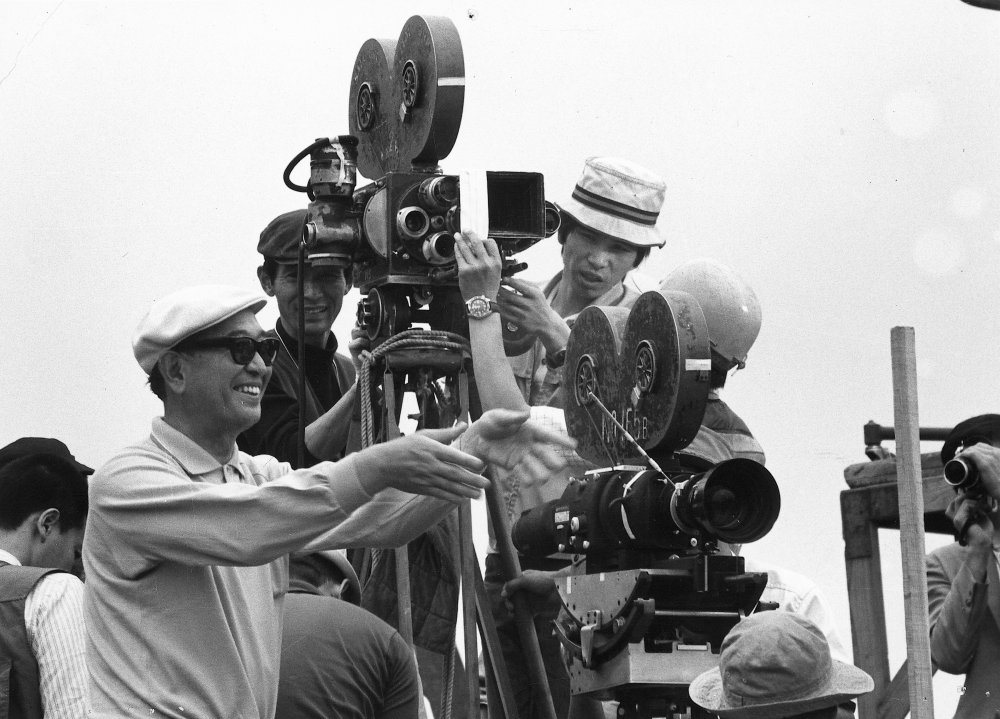
Kurosawa’s Something Like an Autobiography is a terrific book—he writes about his childhood, his life, and his path to become a film director, and the major events that shaped him. As a director’s autobiography, it’s more captivating and enjoyable than Bergman’s The Magic Lantern, not because Bergman’s book is tedious, but because a Japanese man’s life is most likely more interesting than a Swede’s. After all, Kurosawa was born in 1910 and lived through WW2, and he’s part of a samurai family! This is an essential read if you’re interested in Kurosawa, and Japanese cinema in general. I myself have seen Stray Dog, Rashomon, Ikiru, The Bad Sleep Well, Yojimbo, Sanjuro, High and Low, Ran, and Dreams—9 films. My only regret about the book is that Kurosawa only writes up to Rashomon (released in 1950), so we don’t get to read about the inspiration for, ideas behind, and circumstances of, the later films. Having said that, I have learnt quite a bit from the book. 1/ He quotes Yamamoto Kajiro as saying “If you want to become a film director, first write scripts.” Then he goes on to say:
“… Those who say an assistant director’s job doesn’t allow him any free time for writing are just cowards. Perhaps you can write only 1 page a day, but if you do it every day, at the end of the year you’ll have 365 pages of script. I began in this spirit, with a target of 1 page a day. There was nothing I could do about the nights I had to work till dawn, but when I had time to sleep, every after crawling into bed I would turn out 2 or 3 pages. Oddly enough, when I put my mind to writing, it came more easily than I had thought it would, and I wrote quite a few scripts.”
Look at this quote from the addendum:
“With a good script a good director can produce a masterpiece; with the same script a mediocre director can make a passable film. But with a bad script even a good director can’t possibly make a good film. For truly cinematic expression, the camera and the microphone must be able to cross both fire and water. That is what makes a real movie. The script must be something that has the power to do this.”
2/ About editing:
“When I reached a certain level of achievement in scriptwriting, Yama-san told me to start editing. I already knew that you can’t be a film director if you can’t edit. Film editing involves putting on the finishing touches. More than this, it is a process of breathing life into the work.”
This is something I already know. Among the directors I’ve been reading recently, Kieslowski seems to think of filming as collecting raw material to be formed and created on the editing table, whereas Tarkovsky doesn’t seem to think much of editing (which you can tell from his films), and Sidney Lumet says a film is not created on an editing table, you can’t put together things that have not been filmed. I don’t disagree with Sidney Lumet—because I can edit, I think of the edit when writing scripts and planning the shots, and have myself experienced not getting enough shots/ cutaways as well as losing footage. But at the same time, editing is a very powerful tool. With editing, you can improve on an actor’s performance, improve on a scene, shift the focus/ change perspective, juxtapose images to create a new idea/ meaning, manipulate time, restructure the story, and so on. In my previous post, I shared Kurosawa’s story of editing Uma. Here he writes about editing Stray Dog:
“For example, I understood that in novel-writing certain structural techniques can be employed to strengthen the impression of an event and narrow the focus upon it. What I learned was that in the editing process a film can gain similar strength through the use of comparable structural techniques. The story of Stray Dog begins with a young police detective on his way home from marksmanship practice at the headquarters’ range. He gets on a crowded bus, and in the unusually intense summer heat and crush of bodies his pistol is stolen. When I filmed this sequence and edited it according to the passage of chronological time, the effect was terrible. As an introduction to drama it was slow, the focus was vague and it failed to grip the viewer. Troubled, I went back to look at the way I had begun the novel. I had written as follows ‘It was the hottest day of that entire summer.’ Immediately I thought, ‘That’s it.’ I used a shot of a dog with its tongue hanging out, panting. Then the narration begins, ‘It was unbearably hot that day.’ After a sign on a door indicating ‘Police Headquarters, First Division’, I proceeded to the interior. The chief of the First Detective Division glares up from his desk. ‘What? Your pistol was stolen?’ Before him stands the contrite young detective who is the hero of the story. This new way of editing the opening sequence gave me a very short piece of film, but it was extremely effective in drawing the viewer suddenly into the heart of the drama.”
3/ Life experience is extremely important. I think when people criticise student films, people often talk about performances and technical mistakes, which are understandable. But I think most of the time the greater issue is in the story, in the script, and that is mainly because of lack of life experience. 4/ It’s better to write a script with someone else. Writing alone, you may suffer from one-sidedness; writing with someone else, you have 2 perspectives on a character.
“Also, the director has a natural tendency to nudge the hero and the plot along into a pattern that is the easiest one for him to direct. By writing with about 2 other people, you can avoid this danger also.”
5/ In writing a script, avoid explanatory passages. This is called exposition. 6/ Kurosawa also says:
“The camera should follow the actor as he moves; it should stop when he stops.”
7/ Filming with multiple cameras is efficient, but not easy as it may sound—how do you move them?
“As a general system, I put the A camera for the most orthodox positions, use the B camera for quick, decisive shots and the C camera as a kind of guerrilla unit.”
8/ Kurosawa demands authenticity for sets and props, even if they don’t appear on camera.
“The 1st Japanese director to demand authentic sets and props was Mizoguchi Kenji, and the sets in his films are truly superb. I learned a great deal about filmmaking from him, and the making of sets is among the most important. The quality of the set influences the quality of the actors’ performances. If the plan of a house and the design of the rooms are done properly, the actors can move about in them naturally. If I have to tell an actor ‘Don’t think about where this room is in relation to the rest of the house’, that natural ease cannot be achieved. For this reason, I have the sets made exactly like the real thing. It restricts the shooting, but encourages that feeling of authenticity.”
In a way, this view is extreme. We all know that in films, for convenience and for freedom with camera angles, filmmakers can have moving walls or use a set without ceiling, or film at multiple locations and make them look like different parts of the same location. For example, for Dekalog 6/ A Short Film About Love, Kieslowski used 17 locations because he couldn’t find 2 apartments in 2 blocks opposite each other. Nevertheless, Kurosawa’s right that the quality of the set influences the quality of the actors’ performances. This is why I strongly dislike Hollywood’s excessive use of green screen and CGI. People excitedly share behind-the-scenes videos of Hollywood blockbusters, especially fantasy and sci-fi films, and I just think, what’s the fun of filming amidst all that green? 9/ The last point is interesting—when choosing music for films, try counterpoint. Sometimes it can work a lot better.
Every review of Russian Ark starts with the same point: it is a 90-minute film (without credits) that comprises of a single unbroken shot. The story is of an unnamed narrator (the camera), who wanders around Winter Palace in St Petersburg with a character called The European (meant to be Marquis de Custine), who is contemptuous of Russians and Russian culture. They wander around and in each room meet fictional and historical people from different periods of the city’s 300-year history. Russian Ark, to me, is less of a film than a formal experiment and a challenge. It is impressive, especially in the 1st 5 or 10 minutes—at some point, the camera seems to fly above the orchestra and land on the seating area and then follow the character to another room. Filmmakers and anyone interested in the technical aspect should watch it. I’m glad I’ve seen it, but personally I don’t like it. As a viewer, I agree with Stanley Kauffmann “What is there intrinsically in the film that would grip us if it had been made--even excellently made--in the usual edited manner? […] We sample a lot of scenes that in themselves have no cumulation, no self-contained point... Everything we see or hear engages us only as part of a directorial tour de force.” (source) As someone who loves 19th century Russian literature and has some interest in Russian history, I’m indifferent to the film—Russian Ark is not devoid of ideas, it may even have interesting points about Russian culture, but it didn’t have my interest beyond the making of the film itself. As a filmmaker, I would say that Russian Ark is against everything I believe in, about cinema. 1st of all, I love editing—it was editing, or the power to cut and put together different shots to tell a story, that gave birth to cinema. Editing is the main strength of cinema, compared to theatre—the use of different shot sizes (ability to show things in detail—close-up, or in context—wide shot), juxtaposition of images/ ideas, manipulation of time, structure and the ability to restructure a story. A film is made 3 times—in the script, during the shoot, and on the editing table. The filmmakers of Russian Ark therefore deny the most interesting tool of cinema. To make a feature film in a single unbroken shot is a fascinating task, but it is a challenge and an achievement for the crew rather than something for the audience. It is no more than a gimmick—an impressive one indeed, but still a gimmick. As I was watching the film, there was no interest in the story and ideas—all of my attention was for the technical aspect, especially when some image looked weird, probably because they reframed something in post-production or stabilised it and created a warped image. In addition, I like a good frame. On this blog, for example, I have singled out the most interesting shots in Citizen Kane and Jack Clayton’s The Innocents. In Russian Ark, because the entire film is in a single shot and the camera is constantly moving, to follow The European and/or go around a room, there is hardly a single frame that looks good. Russian Ark is not cinematic. I’m surprised when some people name Russian Ark among the most beautiful films they have seen. The film has a magnificent location, and gorgeous costumes. It’s more interesting when the film looks beautiful even though there’s nothing remarkable about the location. The Double Life of Veronique, for instance, has mediocre locations, but it’s one of the most visually beautiful films I have ever seen, thanks to the lighting and framing (and the charming actress). Stalker, which was filmed in desolate, ramshackle buildings and deserted factories, is breath-takingly beautiful Overall, Russian Ark is an impressive challenge, something I would not attempt myself. It’s worth watching for that alone. But honestly, it’s not cinematic.
If you’re familiar with Kieslowski’s career, you know there are 2 Kieslowskis: the Polish Kieslowski—realistic, social/political, grey, unglamorous (Blind Chance, Dekalog…), and the international Kieslowski—metaphysical, poetic, visually dazzling… (The Double Life of Veronique, the Three Colours trilogy). Marek Haltof talks about the turning point:
“In his Polish- French co-productions […] the realistic, often uncomplimentary vision of Poland—a realm of drab landscapes populated by grey characters that are dwarfed by the political system—gives way to dazzling photography, as if taken from glossy illustrated journals. Individuals struggling with themselves replace earlier recognisable characters struggling with communist reality. The unglamorous female characters from Kieslowski’s previous films, often portrayed as narrow-minded and not understanding the aspirations of the male protagonists, are replaced by glamorous foreign characters. From being almost always on the margin of Kieslowski’s stories, and often not deserving of the viewer’s sympathy, they move to the centre of his films. They are young, beautiful and tirelessly dynamic.”
I don’t agree with every single point. It’s true that women are on the margin of the story in Blind Chance and I don’t know about Kieslowski’s earlier films, but the 10 episodes of Dekalog are about stories of both men and women, and Kieslowski depicts both sexes with humanity and without judgment. The female characters in Dekalog exist as individuals, with their strengths and shortcomings, like the male ones. However, the passage does explain well the differences between the 2 periods in Kieslowski’s career. He moves inward. The Double Life of Veronique is a film about feelings, and Three Colours: Blue is an internal film. Haltof also talks about the stylistic changes:
“Unlike Kieslowski’s earlier works, his films made in the 1990s become visually refined to the point of being ornate. The camera does not reveal as in his early films, but intrudes, and calls attention to itself through symbolic, ‘unnatural’ use of colours, camera angles and lighting. The same can be said about Zbigniew Preisner’s music which sometimes takes over the films. Kieslowski’s change of direction can be described as follows: from functional to ‘expressionistic’ photography, from unobtrusive soundtrack to overwhelming musical score, from ordinary characters in everyday situations to literary characters set in a designer’s world, from the particular to the general, from outer to inner reality and from realism to ‘artiness’. A director of detailed realistic observations becomes a director of metaphysical experiences.”
Is it just me, or does Haltof reveal himself to prefer the Polish period to the international period? First of all, Kieslowski’s Polish-French films are undeniably beautiful, especially The Double Life of Veronique and Three Colours: Blue are among the most beautiful films I have ever seen. But they are not beautiful in a superficial, empty, style-over-substance way—the cinematography is visually dazzling but it’s Kieslowski’s skills for visual storytelling, attention to details, and poetic sensibilities that I admire. The best example is the opening of Blue, in which he does not use words or anything lengthy but hints and suggests in close-ups and lets the audience piece together what’s going on. Secondly, if we exclude Three Colours: White (which is mostly set in Poland and different from the other international productions anyway), Kieslowski moves inward, exploring feelings such as loneliness, grief... so his style naturally has to change to fit it. People who prefer the realism of the Polish films may call it artiness, but he utilises lots of POV shots (which I would say do not call attention to themselves) and lots of music, because these films are internal and abstract, showing the main character’s inner world. In addition, The Double Life of Veronique and Blue are both about music. Thirdly, the “core” remains the same. Grazyna Stachowna, as quoted by Haltof, lists the motifs in the trilogy that are also in Kieslowski’s earlier films:
“… blind chance, Van den Budenmayer, voyeurism and eavesdropping, an old woman with a bottle, the final cry of the protagonists, windows, beads made of glass, the 2-franc coin, loneliness, jealousy, humiliation, contempt, sex and suicide.”
More importantly, Kieslowski, whether he’s dealing with social/political issues or private struggles, is still most of all interested in the individual. He’s interested in emotions, relationships, moral dilemmas, choices, and the different paths we may take. He’s interested in depicting and exploring people, as individuals, without judgment—he seeks to understand. ________________________________________ It is strange the way some directors have a clear turning point in their career. Fellini can be divided into early Fellini (neorealism) and late Fellini (Felliniesque—grotesque, dreamlike, cartoonish, heavily influence by Carl Jung). 8 ½ is the peak of his career, which stands apart and can’t be categorised this way, and the same might be said of La Dolce Vita, but before La Dolce Vita is early Fellini (The White Sheik, I vitelloni, La Strada, Il bidone, Nights of Cabiria…) and after 8 ½ is late Fellini (Juliet of the Spirits, Fellini Satyricon, Roma, Fellini’s Casanova, Amarcord, City of Women…). My favourite Fellini film is 8 ½, and generally I prefer early Fellini, apart from Amarcord. (Perhaps that means I’m not truly a Fellini fan). Another example is Zhang Yimou. Early Zhang Yimou (before Hero) is serious drama films, about socio-political issues in Chinese society. Some of his early films are masterpieces, such as Raise the Red Lantern and To Live, and I like or once liked very much some others such as Red Sorghum and Ju Dou. That Zhang Yimou is the great director in Chinese cinema. Since Hero, his career has taken a new turn—he not only turned to commercial cinema but also betrayed himself and sold his soul to the devil (by which I mean the Chinese communist party), attempting to rewrite history and making propaganda movies for the Chinese government. Since Hero, House of Flying Daggers, and Curse of the Golden Flower, I have not seen anything else by Zhang Yimou. I despise him only less than Jackie Chan. However, because of his great talent, I might watch Shadow for curiosity, if I can find it. To go back to Kieslowski, he didn’t betray himself. I like both periods, for different reasons. And he’s great.
I have always found it difficult to write about The Double Life of Veronique. The film is about 2 young women—Weronika in Poland and Veronique in France. They look alike (both played by Irene Jacob), though Weronika is more animated and passionate, and Veronique is more melancholy, with her head in the clouds. They have many things in common: both grow up with a single father; both sing and have beautiful voices; both have a heart condition; both rub their eyelids with a gold ring, and so on. They are not aware of each other till 1 day, Weronika happens to see Veronique on a trip. Soon after, Weronika dies. Reviews and essays usually say the basic premise of the film is that the 2 women are not aware of each other’s existence, but somehow Veronique “learns” from Weronika’s mistakes, like she is given a 2nd chance. Weronika prioritises singing above everything else, including her heart, and it kills her; Veronique gives up singing lessons. That’s not the way I see it. To me, The Double Life of Veronique, above all, is about a feeling—the feeling that maybe there is someone in the world who is just like me, like a lost twin, a double. Have you ever had that feeling? I have, which is why I have a bit of an obsession with doubles. It could be a warm thought—maybe I’m not alone. But at the same time it’s also discomforting—maybe I’m not unique, maybe I don’t really matter. At the same time, it should also be seen in the context of Kieslowski’s work. Kieslowski’s interested in chance, and the different paths one may take. In Blind Chance, 3 scenarios lead to 3 different lives and career paths. It could be that all 3 are the different possibilities. It could also be that the 3rd one is real, as the film begins with Witek screaming, and he thinks about the other lives he might have had if he had got involved in politics—perhaps that could have saved him. Later in Three Colours: Red, Kieslowski again tackles the theme of chance and different paths: a retired judge meets Valentine (also played by Irene Jacob), after years of disillusionment and cynicism, and wonders what may have happened if they had met 40 years earlier; but his life finds parallels in a young law student, and at the end of the film, the student meets Valentine. In The Double Life of Veronique, Kieslowski uses doubles and the idea of parallel existences (Weronika and Veronique) in order to play with the same theme—the 2 women are like the same person in different scenarios because of their different choices. See what Roger Ebert says:
“Kieslowski almost never made a film about characters who lacked choices. Indeed, his films were usually about their choices, how they arrived at them, and the close connections they made or missed. Most films make the unspoken assumption that their characters are defined by and limited to their plots. But lives are not about stories. Stories are about lives. That is the difference between films for children and films for adults. Kieslowski celebrates intersecting timelines and lifelines, choices made and unmade. All his films ask why, since God gave us free will, movie directors go to such trouble to take it away.”
“Because he made most of his early work in Poland during the Cold War, and because his masterpiece "The Decalogue" consists of 10 one-hour films that do not fit easily on the multiplex conveyor belt, he has still not received the kind of recognition given those he deserves to be named with, like Bergman, Ozu, Fellini, Keaton and Bunuel. He is one of the filmmakers I would turn to for consolation if I learned I was dying, or to laugh with on finding I would live after all.”
I’ve read Kieslowski on Kieslowski (edited by Danusia Stok) recently, and at the moment I’m reading The Cinema of Krzysztof Kieslowski: Variations on Destiny and Chance by Marek Haltof. These books remind me of how much I love Kieslowski.
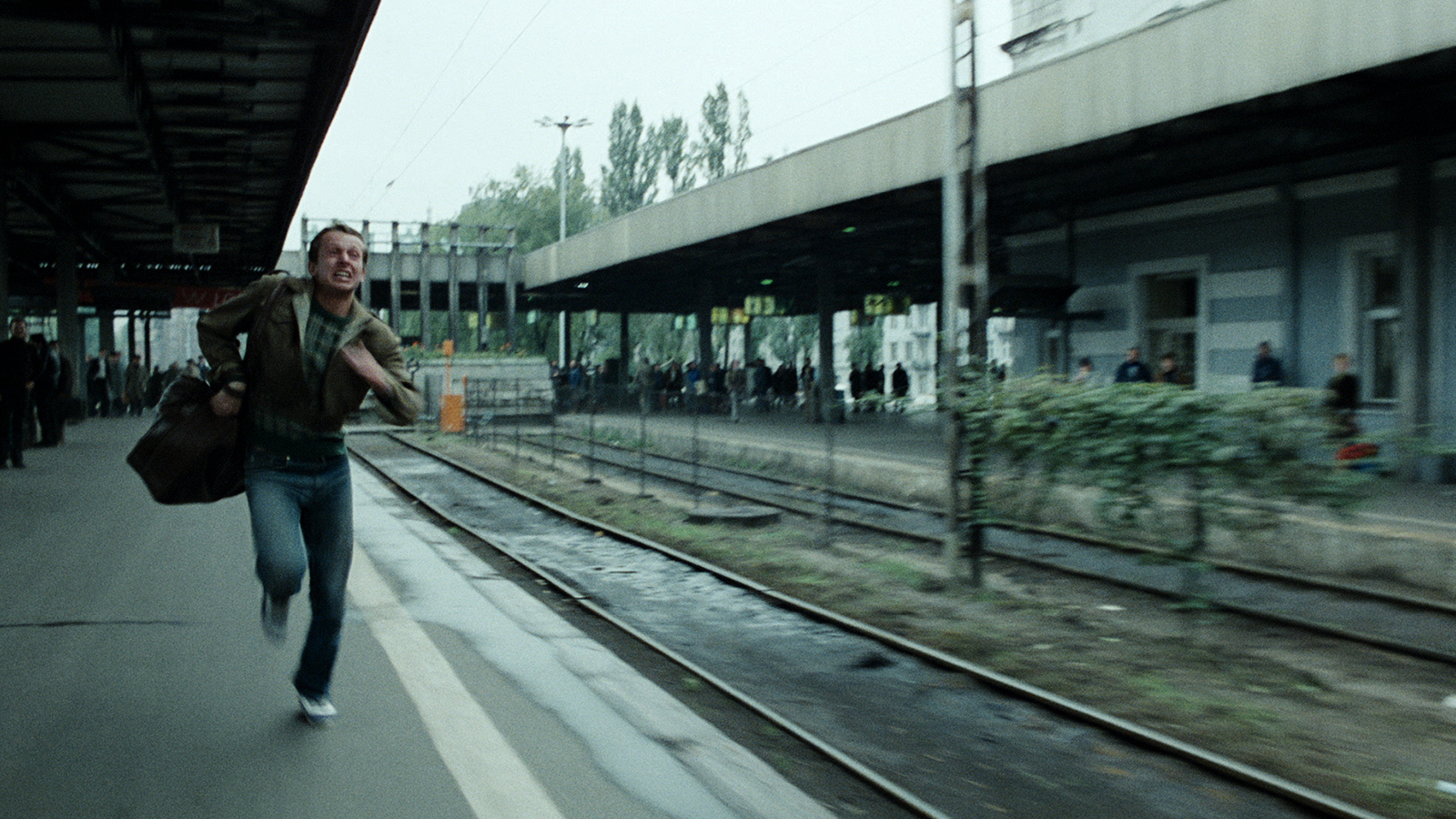
We follow a young man named Witek, after his father dies, he takes time off medical studies, and tries to catch a train—as he runs through the train station, he knocks the money off a woman and a man picks up a coin to buy a beer, and Witek’s behaviour towards the beer-drinking man would affect everything else. This is the concept of the film: Witek’s behaviour and whether or not he catches the train lead to 3 different scenarios, 3 different career paths, 3 different lives. If the concept sounds familiar to you, it’s because it has been used in later films such as Sliding Doors, Mr Nobody, and Run Lola Run, with some variations. Blind Chance most likely has inspired them. Kieslowski’s interested in chance—how many things in life are actually because of chance. Without giving everything away, in Blind Chance, Witek joins the communist party in the 1st scenario; joins the underground and becomes a religious anti-communist in the 2nd scenario; and in the 3rd scenario, goes back to become a doctor and chooses not to get involved in politics either way. Unlike Kieslowski’s later films, this one has lots of politics, so it helps to know about the political climate in Poland at the time (it’s made in 1981 but not released till 1987). The question is, are people that malleable? If people have objections to Blind Chance, it would be this point—are our political affiliations simply because of someone we meet somewhere? Do people not have a core set of values and beliefs? Now let’s look at Witek. He doesn’t become different people in the 3 scenarios. Note that in the 1st one, when he has to represent the communist party and go to talk to the underground group, he agrees with them (the anti-communists). In a communist country like Poland, people sometimes join the party not because of beliefs but because it’s convenient and an easy thing to do. It’s not like you live in the US nowadays—if you meet somebody, you join the Democrats, if you experience something else, you become a Republican; the situation in Poland was different, the communist party was the only one in power and if you joined, you could have convenience and some kind of protection. It should be noted too that at this point Witek has just lost his father, and is directionless, and right away he adopts another father figure and follows him. The 2nd scenario is also possible for someone like Witek. I know people in Vietnam, also a communist country, who for years lead simple lives and choose not to be involved in politics until something happens to them that pushes them to the other side. The scenarios in Kieslowski’s film are extreme, because the situation in communist Poland is extreme. If anything, I’m not really convinced that Witek becomes religious in the 2nd scenario, but at the same time I also know that many dissidents in Vietnam turn to God because of their helpless situations. Then we have the 3rd scenario, where he joins neither side and still gets caught up in it. In such a regime, you can’t afford to be apolitical—politics still gets to you. Blind Chance is a very good film, and a very interesting film. It forces you to think, are we who we are today because of our core values, or because of our experience—because of something that happened at the some point, thanks to chance? Perhaps if the something hadn’t happened, we might have followed a completely different path?
I’m reading Sidney Lumet’s Making Movies, which I think is a very good and enjoyable book, especially for aspiring film directors. Look at this: Isn’t that such a good “defence” of dialogue? The writer-director who has created the most memorable lines is Billy Wilder, who has 3 contenders for the best closing lines of all time—The Apartment (“Shut up and deal”), Some Like It Hot (“Nobody’s perfect”), and Sunset Boulevard (“All right, Mr. DeMille, I'm ready for my close-up”). Dialogue is not uncinematic. It is only uncinematic when it is superfluous exposition, and worst if it’s the director’s way of explaining the film to the audience (which is common in Christopher Nolan’s films). Now look at this passage: That is fascinating and scary at the same time—would I be able to tell? The book offers some invaluable insight and advice about directing. I admire Sidney Lumet immensely, and now love him even more as I read the book. He is not an auteur, he might not even be seen as a stylist, but does it matter? I would say that 12 Angry Men and Dog Day Afternoon are masterpieces, and Before the Devil Knows You’re Dead is a great, heartbreaking film that should be better known. Many of his other films are also highly acclaimed, such as Serpico, The Verdict,Network, Murder on the Orient Express, Long Day’s Journey into Night... Why are some other directors ranked higher just because their films are more stylistic or technically more impressive? That leads me to another point: is the ability to work with actors not important? The directors who I think are masters at getting the best performances out of actors are Ingmar Bergman, Elia Kazan, Sidney Lumet, and Francis Ford Coppola. And perhaps Roman Polanski (Adrien Brody never had anything remotely as good as his performance in The Pianist). Some other directors who are also good at working with actors are Billy Wilder, Clint Eastwood, Martin Scorsese, Zhang Yimou, Krzysztof Kieslowski… (I don’t include Kurosawa and Mizoguchi because Japanese acting is a different style). As you follow a director’s work, you realise what their main strengths are—they are better at some aspects of filmmaking than others. Fellini’s main strengths, for example, are in blocking/staging, cinematography, and visual storytelling. Billy Wilder’s are in story, structure/ pacing, dialogue, and working with actors. Orson Welles’s are in cinematography (especially lighting), structure, editing, and sound. Luis Bunuel’s are in story/ plot, ideas, and pacing. Andrei Tarkovsky’s are in ideas, cinematography, sound, and atmosphere. You also notice, not weaknesses, but that some aspects don’t interest a director as much as others. There isn’t much to say about cinematography and lighting in Luis Bunuel’s films, for example; or editing in Tarkovsky’s; or story in Wong Kar-wai’s. It is not without reason that I think Ingmar Bergman’s the best director of all time, because his films do have everything—good story, interesting idea, depth, pacing, great cinematography (especially lighting), great sound, great editing (most notably in Persona), good production design (at least in Cries and Whispers and Fanny and Alexander), wonderful performances, good visual storytelling, experiments… But usually, directors have their strengths, and they may be weaker, or at least not as spectacular, in some other aspects of filmmaking, so why is it that directors who are good at techniques valued much more highly than directors who are good at drama (emotional complexity in a scene, and pacing for the film as a whole) and working with actors? When a film looks good, it is visually pleasing, but at the end of the day, so what? I like good acting. I like touching stories. I like films that make me see life differently and learn something about myself. I never use the word “great” for directors like Quentin Tarantino or Wes Anderson—they’re good at what they do, and their films are entertaining, but have no depth and offer no more than that. But even if we talk about Stanley Kubrick, a director I admire very much when it comes to techniques (especially the production design, cinematography, and use of music), none of his films has ever touched me on an emotional, personal level like 12 Angry Men or Dog Day Afternoon has. In Dog Day Afternoon, people talk a lot about Al Pacino, who indeed delivers a fine performance, one of the best in his career, but we should also talk about John Cazale—for some reason, I can never forget the incredibly sad look on his face when Al Pacino asks where he wants to go if he could go anywhere, and he says “Wyoming”. 12 Angry Men shows Sidney Lumet’s talent at working with actors, and also his ability to make an engrossing film in an enclosed space. I’d choose Sidney Lumet over Kubrick anytime. But that’s enough. Get Making Movies. It’s a good book. Even Roger Ebert said:
“Invaluable… I am sometimes asked if there is 1 book a filmgoer could read to learn more about how movies are made and what to look for while watching them. This is the book.”
1/ Today I came across this video about Tarkovsky. It is a great video essay, with excellent choice of shots: If you don’t like or haven’t seen Tarkovsky, watch the 1st 2 minutes. 2/ Last September I watched The Sacrifice and wrote that I had immense admiration for him as a director but couldn’t warm to his films. Now it’s different with Stalker, the film has haunting imagery, and it touches on something I have thought a lot about—the idea that we may not want our deeply held desires to come true, because we do not know what we really want deep down, and we may not want what we want when it actually happens. But that is not all Stalker is about—the film also touches on other ideas such as the role of the artist, self-doubt and inspiration, boredom, purpose, the meaning of art and the meaning of life, softness/ agility and strength/ hardness, freedom, choice, sacrifice, faith, and so on. The film is full of evocative images, but I do not want to pin down some meaning. As Tarkovsky said it himself:
“I prefer to express myself metaphorically. Let me stress: metaphorically, not symbolically. A symbol contains within itself a definite meaning, certain intellectual formula, while metaphor is an image. An image possessing the same distinguishing features as the world it represents. An image — as opposed to a symbol — is indefinite in meaning.”
3/ I note that video essays and articles about colours in films never mention the use of colours in Tarkovsky’s films (though they sometimes mention Bergman—Cries and Whispers). Tarkovsky has a tendency to switch between colour and B&W and/or sepia. It is not random. Stalker starts in sepia. Whilst B&W strips everything of colour and it is all seen in shapes, light and shadow, sepia gives the city a sickly hue. The film starts in the Stalker’s house, then he goes out and we follow him to the pub, then he, the Writer, and the Professor, go to the Zone. They ride through the city, through factories, machines, railway, and so on, then all of a sudden there is a burst of colour—the film is now in colour, as they enter the Zone. In Stalker, the Zone is in colour, the outside world is in sepia. The Stalker’s dream is in sepia. But why is the ending in colour? Does it not mean that the Stalker’s daughter Monkey’s telekinetic powers are associated with the Zone? 4/ The other day I came across a piece of writing, in which the author said that the auteur theory (which she called “the auteur myth”) was misogynistic. It is needless to say that I think it is imbecilic. Everyone knows film is a collaborative art, the director is not the sole creator of a film. The concept of the auteur is mostly to distinguish different kinds of directors: there are technicians, there are stylists, and there are auteurs. Why does she think that recognised auteurs such as Bergman, Tarkovsky, and Fellini worked with lots of different people but their films were always recognisable, with a strong vision, recurring images, and recurring themes? Bergman for example might be lucky in finding Sven Nykvist and from that point always used him as cinematographer, but Tarkovsky and Fellini didn’t have the same cinematographer in different films. 5/ It is easy to tell that Tarkovsky likes running water, rain indoors, moss, mud, dead leaves, burning houses, levitation… In his films we can see water, air, fire, and earth. Here is a video about the water motif:
6/ I maintain that Tarkovsky is a great director but a bad influence, at least if you try to imitate him. Art doesn’t come from long takes and nature shots. There are only 2 film directors that I think are thinkers—Andrei Tarkovsky and Ingmar Bergman. 7/ Nevertheless, Tarkovsky is a great antithesis to commercial cinema. I’m saddened by the fact that today cinema is no longer seen as art, only as entertainment. I dislike choppy editing, pointless camera movements, and the pathetic fear of boring the audience and losing money. I dislike the over-use of, and over-reliance on, green screen and CGI. I dislike blockbusters, especially superhero films, but dislike even more films that get acclaimed for being stylistic but have no substance and no depth. Amidst brainless commercial cinema, a film like Roma gets lots of praise that is undeserved. I have never understood why Roma got the Oscar for best cinematography: compare it to actually great B&W films such as Ivan’s Childhood, 8 ½, Persona, Citizen Kane…, you can easily see the difference—Roma has little contrast, no real blacks, no real whites, only shades of grey like a lazy filter. It is a greyscale film, not B&W, and except for a very long tracking shot following the main character, there is nothing spectacular about the cinematography. Stalker, on the other hand, is a very beautiful film. It is sometimes very slow, even painfully slow (142 shots in 163 minutes), but the viewing of the entire film is a rewarding experience. 8/ I think Tarkovsky is the most poetic of directors. It is not about composition as much it’s about the choice of image and the atmosphere, and the fact that he slows things down, makes us pay attention to some detail—everything is still, and he makes us just look at something and experience it in the moment and just feel it, and afterwards we see things in life differently. Another director who also does that is Kieslowski, especially in Three Colours: Blue and The Double Life of Veronique. 9/ As a filmmaker, I’m particularly interested in sound. I can’t work on sound myself, because at the film school I specialised in directing and editing (and briefly in cinematography), but I have a fascination with sound and can work with a sound designer. Sound is full of possibilities, because putting images to sound can’t change how you hear the sound, but changing the sound (or music) can change how you perceive the images. Here is a good video about sound in Stalker: I have always liked sound in Ingmar Bergman, but now I start to like sound in Tarkovsky as well. Sound in Bergman is more expressive and psychological, reflecting the character’s inner world. Sound in Tarkovsky is more atmospheric. 10/ I feel transformed, after watching Stalker.
Which is different from my list of favourite films. Persona (1966), Wild Strawberries (1957), Hour of the Wolf (1968), and Cries and Whispers (1972) by Ingmar Bergman Citizen Kane (1941) and F for Fake (1973) by Orson Welles The Exterminating Angel (1962), The Phantom of Liberty (1974), and That Obscure Object of Desire (1977) by Luis Bunuel La Jetée (1962) by Chris Marker 8 ½ (1963) by Federico Fellini The Godfather (1972) by Francis Ford Coppola Bicycle Thieves (1948) by Vittorio De Sica Three Colours: Blue (1993) by Krzysztof Kieslowski Ivan's Childhood (1962) by Andrei Tarkovsky Taxi Driver (1976) by Martin Scorsese Dogville (2003) by Lars von Trier 3 Women (1977) by Robert Altman
_____________________________ Every filmmaker is influenced by other filmmakers. Sometimes we may even be inspired by some aspect of a film we don’t like, like how I feel about Dogville. As a filmmaking student, I’m still learning the skills and techniques, and exploring the form, I have yet to find my style, but it’s still nice to make a list to acknowledge the influences and have something to compare to in the future. Or maybe I just really like lists.
(chronological, more or less) 1/ Choosing Adam, my boyfriend One of the best decisions I’ve ever made. 2/ Rereading Lolita Nabokov has always been a tremendous influence on me, but now, because of my environment and the political climate in the West, and because of the rereading of Lolita, Nabokov’s stance and attitude have influenced me even more—against black-and-white thinking, against bad reading, against symbolism, against generalisations, against the disregard for details and nuance, against philistinism and anti-intellectualism. 3/ Choosing to direct a short documentary We meant to make a short documentary called PC Pavarotti, which fell apart because of the unreliable contributor, who perhaps at the start didn’t realise what he got himself into. We had to find another subject, and finally made Nicotine Tales. 1st time directing, I learnt the hard lesson about filmmaking—shit happens, and people can be unreliable. The experience was invaluable. 4/ Developing an interest in documentaries Previously indifferent to documentaries, last semester I watched many great films such as Man on Wire, Searching for Sugar Man, The Imposter, Tickled, Deliver Us From Evil, Mea Maxima Culpa: Silence in the House of God, Touching the Void, etc., and discovered the power of documentaries. 5/ Discovering Krzysztof Kieslowski and Louis Theroux Even though Kieslowski is in drama and Theroux is in documentary, these filmmakers have a few things in common—their openness, their non-judgmental approach to characters or subjects, and their humanity. (Interestingly, it was Kieslowski who led me back to Ingmar Bergman). 6/ Taking a trip to Haworth and visiting the Bronte Parsonage Museum Haworth is lovely. This was the 1st part of Adam’s birthday present for me, and the 1st time I saw Yorkshire countryside. 7/ “Rediscovering” Ingmar Bergman and Luis Bunuel; discovering Kenji Mizoguchi; watching Citizen Kane I had seen a few films by Bergman and Bunuel before, but it was during this summer that I “rediscovered” them and found them the greatest of directors and auteurs. With their films, I started to like the idea of films as dreams, and to think of films as capable of dealing with the mind, with human consciousness (unlike the common belief that literature is internal and cinema is external). I also started watching the films of Mizoguchi, whom I came to prefer to Kurosawa and Ozu. Dispassionate but haunting; tragic but never sentimental. 2017 has been a very important year, because I found these masters and changed my view on cinema, and at the same time, because I directed my 1st film and started to watch films differently (Bergman’s my main influence). The single most significant film I watched this year was perhaps Citizen Kane. All kinds of techniques are in there, all the things you need to learn about cinema are in there. Mizoguchi for example is a master of mise-en-scène, but Orson Welles’s Citizen Kane has taught me more about deep focus, staging, and the z-axis, than anything has. 8/ Travelling to Whitby and going whale-watching This was the 2nd part of Adam’s birthday present for me. Imagine how excited I was, as a fan of Moby Dick. 4 hours on a boat, we saw about a dozen whales, I even saw a seal that my bf missed. 9/ Changing my philosophy about people After some talks and fights, some disillusionments, and lots of thinking, I realised that curiosity killed the cat, that excessive empathy was harmful and we shouldn’t try to tolerate and wish to understand everything, that I was drawn to people with issues and that was bad for me as well as them, that my philosophy about people was flawed and simplistic. So I changed. 10/ Having a successful pitch and directing my 1st short film Bird Bitten We had a few problems, which is the nature of filmmaking, but I was lucky for having a fantastic cast and crew. Directing is fun, and actually making a film makes me appreciate great films even more. I also worked on another film, UV, as 2nd AD. We had 5 different locations, and filmed through the night (till 4-5am), mostly outdoors, in winter (Bird Bitten was shot indoors, during the day). More than expected, I’ve learnt a lot from the experience of working on the 2nd film. Overall, (in spite of politics) 2017 has been a great year for me. What about you? Merry Christmas and Happy New Year.
Here are my notes from Cinematic Storytelling: The 100 Most Powerful Films Conventions Every Filmmaker Must Know by Jennifer Van Sijll: 1/ Space: -X-axis (horizontal): Left to right: good Right to left: bad Conflict -Y-axis (vertical): Straight line: good Detouring or being sidetracked: bad -XY-axes (diagonals): Descending: aided by gravity; once the motion starts, it’s hard to stop Ascending: against gravity -Z-axis (depth-of-field): Character’s height and power -Z-axis (planes of action): Staging in-depth: actions in foreground, middleground and background -Z-axis (rack focus/ pull focus): Shifting focus from 1 object to another 2/ Frame: -Directing the eye: light and dark function as visual signposts—directing the audience to focus on what’s intended -Balance/ symmetry -Imbalance -Orientation -Size: character’s relative strength and weakness may be established by the use of size 3/ Shape within the frame: -Circular (circular imagery can inherently suggest confusion, repetition and time) -Linear -Triangular: created by lighting, furnishings, exterior graphics, character positioning, or movement; harmony or disharmony (e.g. love triangle) -Rectangular: may represent logic, civilisation, control, or the aesthetics of modernity; can represent death (coffin) -Organic vs geometric 4/ Editing: -Montage: created through an assembly of quick cuts, disconnected in time or place, that combine to form a larger idea -Assembly editing -Mise-en-Scène: new compositions are created through blocking, lens zooms and camera movement instead of cutting; uninterrupted take -Intercutting/ cross-cutting: cutting back and forth between 2 actions occurring simultaneously in 2 different locations -Split screen -Dissolves: blending 1 shot to another -Smash cut: to jar the audience with a sudden and unexpected change in image or sound (e.g. cutting a wide shot against a huge close-up or vice versa) 5/ Time: -Expanding time through pacing -Contrast of time (pacing and intercutting): slow vs fast (suspense) -Expanding time—overlapping action -Slow-motion -Fast-motion -Flashback -Flashforward: cut to the future, real or imagined; typically assisted with a slow dissolve -Freeze-frame -Visual foreshadowing 6/ Sound effects: -Realistic sound (diegetic): character, emotional response and outer world -Surreal sound (meta-diegetic): inner world 7/ Music: -Lyrics as narrator: character’s inner thoughts -Symbolic use of music -Music as a moveable prop: e.g. used to express an idea linked to a character 8/ Scene transitions: -Matching audio segue -Audio bridge: dialogue or sound effects -Visual match-cut: Graphic similarity Pattern and colour Action Idea -Extended match dissolve (time transition) -Disrupted match-cut: 2 matched images separated by a single shot 9/ Camera lenses: -Wide-angle 3 grounds Establishing shots -Telephoto: brings distant objects closer to the viewer, compresses space, making objects appear to be on the same horizontal plane; its shallow depth-of-field throws objects, both in front of and behind the focal point, out of focus -Fish-eye: distortion -Prop lenses within the scene -Objects: stained glass, water or plastic (distortion) 10/ Camera position: -Close-up -Extreme close-up -2-shot -Over-the-shoulder shot -Point-of-view -High-angle: makes subject small and vulnerable -Low-angle: makes subject large and dominant -High-low combine 11/ Camera motion: -Static shot -Pan -Tilt -Rotation -Tracking shot -Circular: hand-held camera, Steadicam, or tracks -Push-in -Pull-out -Crane -Handheld -Steadicam -Aerial 12/ Lighting: -Rembrandt lighting: light vs dark -TV lighting: conventionally bright, flat and shadowless -Candlelight: flatters the face, smoothens the skin and adds a warm tone -Motivated lighting: any light that would naturally exist in the world depicted in the frame, e.g. a lamp -Unmotivated light: e.g. the bath of light symbolising goodness -Motion: e.g. swinging light bulb, flash lights, etc. 13/ Colour: -Coding character 14/ Props: -Externalising character: Dramatic way to express a character’s inner world Gives a scene an added layer of meaning -Repurposing props: the meaning of a prop changes over the course of the film -Contrast 15/ Wardrobe: -Wardrobe -Repurposing wardrobe -Contrast of wardrobe 16/ Locations: -Defining character -Location as unifying element: e.g. similar locations -Location as theme -Moving locations: e.g. train 17/ Natural environment: -Climate -Seasons and the passage of time -Physical phenomena: can be foreshadowing, can have symbolic meaning, etc. ___________________________________________ Here are a few cool things I’ve just noted lately watching films: -The fade-out in the middle of the scene in Kieslowski’s Three Colours: Blue -The fade-to/from-red in Ingmar Bergman’s Cries and Whispers -The wipe in Kurosawa (scene transition) -Ingmar Bergman’s juxtaposed faces: close-up of 2 faces, in the same shot, not looking at each other -Kurosawa’s axial cut -The geometry of the scene in Kurosawa’s The Bad Sleep Well -Mizoguchi’s mise-en-scène: move characters around, and then move the camera accordingly; long take -The dream sequence in Ingmar Bergman’s Persona of Elisabet entering Alma’s room—the use of smoke and the resulting ghost/dream image -The metaphorical/ symbolic images in Jodorowsky’s The Dance of Reality -The repetition of the exact same scene, from 2 different angles, in Ingmar Bergman’s Persona -The face-merging in Ingmar Bergman’s Persona: the morph at the beginning of the film, and the combination of the 2 halves -The superimposed image in David Lynch’s Mulholland Drive
My choice. Why? Because I love lists. - The 40s: The Great Dictator (1940) Casablanca (1942) Gaslight (1944) Brief Encounter (1945) It's a Wonderful Life (1946) The Killers (1946) The Best Years of Our Lives (1946) Bicycle Thieves (1948) The Treasure of the Sierra Madre (1948) The Heiress (1949) - The 50s: All about Eve (1950) Sunset Boulevard (1950) A Streetcar Named Desire (1951) On the Waterfront (1954) Witness for the Prosecution (1957) 12 Angry Men (1957) Nights of Cabiria (1957) Wild Strawberries (1957) The Seventh Seal (1957) Vertigo (1958) - The 60s: The Apartment (1960) Psycho (1960) Winter Light (1963) 8 ½ (1963) The Woman in the Dunes (1964) Dr. Strangelove or: How I Learned to Stop Worrying and Love the Bomb (1964) My Fair Lady (1964) Persona (1966) Blowup (1966) 2001: A Space Odyssey (1968) - The 70s: The Private Life of Sherlock Holmes (1970) Cries and Whispers (1972) The Godfather (1972) Last Tango in Paris (1972) The Godfather Part II (1974) The Conversation (1974) Chinatown (1974) Dog Day Afternoon (1975) Taxi Driver (1976) Annie Hall (1977) - The 80s: Raging Bull (1980) On Golden Pond (1981) Sophie's Choice (1982) Ran (1985) Rain Man (1988) The Accused (1988) My Left Foot (1989) Monsieur Hire (1989) Sex, Lies, and Videotape (1989) Dekalog (1989) - The 90s: Goodfellas (1990) The Double Life of Veronique (1991) The Silence of the Lambs (1991) Raise the Red Lantern (1991) Three Colours: Blue (1993) To Live (1994) Pulp Fiction (1994) The Shawshank Redemption (1994) Happy Together (1997) Festen (1998) - The 2000s: Memento (2000) The Pianist (2002) Spring, Summer, Fall, Winter... and Spring (2003) 2046 (2004) Million Dollar Baby (2004) Brokeback Mountain (2005) Babel (2006) There Will Be Blood (2007) Before the Devil Knows You're Dead (2007) The Curious Case of Benjamin Button (2007)