Pages

Showing posts with label politics. Show all posts

Monday, 23 March 2026

The Other Bennet Sister and “diverse casting”

In my previous blog post about the TV series The Other Bennet Sister, I wrote about all the changes made to the characters of Pride and Prejudice, and the resulting loss of subtlety and complexity. Now I’d like to address the racial aspect of the series. 

In The Other Bennet Sister, Mary is the black sheep, the one bullied or at least neglected by everyone else in the family, the one assumed to have no prospects. The optician’s son however takes an interest in her, and asks her to dance with him at the ball, so she does, and she dances with him twice. Charlotte Lucas then tells Mary to be careful: two dances imply liking; the third time is going to be remarked upon. Then Mrs Bennet appears and, displaying a cruelty and harshness not seen in Jane Austen’s character, tells Mary not to dance with or speak to him any longer, as he’s an optician’s son, and an association with someone in trade would ruin the prospects of her sisters. 

The remarkable part here is that we can all see that he’s Indian, but nobody mentions his race, as though class is the only barrier. 

From what I can see, there are other non-white characters in the rest of the series, and this is something we see again and again: Netflix and the BBC and Channel 4 and ITV and other companies randomly cast black and brown people in adaptations of 19th century novels and other period dramas. This has gone on for years and seems to have become standard practice. And I have always disliked it. Why do you assume that I need to see someone “looking like me” represented on the screen? Why do you assume that I need to share the same race or ethnicity as a fictional character in order to find them relatable? Why do you assume that I would relate to a character just because we have the same race? What do I have in common with, for example, the characters in Crazy Rich Asians? Why would I want to see actors of the same ethnicity as me randomly cast in adaptations of classic European novels, like Hong Chau playing Nelly Dean in Wuthering Heights? Do we not have our own stories? Do we not have our own classics? Do production companies not understand how insulting this is? 

More importantly, “diverse casting” in period dramas is a whitewashing of history, as though 19th century Britain had been a colourblind society, as though people of all races back then had been equal, as though racism had never existed. If someone grows up watching these films and TV series—every single one has black and brown people as middle-class and upper-class characters, on equal footing with white characters—that person is going to have a very distorted understanding of the past. Bridgerton may have the excuse that it’s a fantasy world, but what excuses does The Other Bennet Sister have? 

I’m going to note too that this is very different from casting in Shakespeare. My favourite King Lear production has a black Lear (Don Warrington). My favourite version of Coriolanus has a black Coriolanus (David Oyelowo). Shakespeare’s plays are full of artifice—race-bending is no big deal as long as it doesn’t draw attention to itself and the play is taken seriously. But film and TV are supposedly more naturalistic; if it doesn’t present itself as a fantasy world as Bridgerton does (which I have never watched), it would be taken to be meant to be realistic; and the depiction of Britain in the late 18th, early 19th century as a colourblind society is unrealistic. I would even say that the erasure of the racial prejudice of the past—erasure of the experiences of victims of racism—is a racist lie. 

Unfortunately I seem to be the only one having these opinions. 

Sunday, 14 December 2025

On being back in Southeast Asia


Me doing the Mahanakhon skywalk. 

I have just returned from my work trips to Jakarta and Bangkok. 

It was strange, in a way, to be back in Southeast Asia for the first time since leaving Vietnam 16 years ago. Except for the February trip to Washington, DC, most of my travels had been within Europe. It almost felt like home—many things were familiar—and yet quite alien—as I couldn’t figure out the languages the way I can guess words in European languages. Many things reminded me of Vietnam: the crazy traffic and the mopeds and the insane electric poles and the vibrant street food culture, etc. Europeans probably don’t fully appreciate their walkable cities till they travel to Asia, or America. Jakarta for instance has the worst roads I’ve ever seen: the pavements are full of gaping mouths ready to swallow up your foot if you just get distracted for a second. Bangkok is less dense, less dangerous, but still mad. There’s a constant thought that I might get hit and see my ancestors any moment. Did you know that Bangkok’s roughly the same size as London? I didn’t know either, till recently. The public transport system however is not the same; I figured out that the best way to travel around—if you’re a bit crazy like me—was to use a Grab bike (a ride on a moped), or if the distance is too great and there’s heavy traffic, to combine the skytrain with a Grab bike. 

The best part is the food. There’s food everywhere. I’m convinced that Southeast and East Asia have the best food, especially if you consider everything—starters, main courses, desserts, snacks, fruits. I barely saw anything in Jakarta, being there for only a couple of days for a conference and having a lot to handle, but I enjoyed the food (to my own surprise). 

It was even better in Bangkok. After nearly two weeks there, my feelings are mixed. For a tourist, the city has a lot to offer: there’s so much to see, to eat, to experience. I ate pad thai and green curry and grilled meat and tom yum and jackfruit and Korean fried chicken. I got addicted to Thai milk tea and mango sticky rice. I tried Bangkok’s highest skywalk—78th floor, 310m high. I visited the Grand Palace (with its temple Wat Phra Kaew), and two other breathtaking temples (Wat Arun and Wat Pho). I took boat rides and tried tuk-tuks. I explored markets and shopping malls. It’s fun, for many reasons (and perhaps the closest to being in Vietnam now that I’m no longer able to return). 

But for someone interested in human rights, it is impossible to fully embrace Thailand because of the appalling behaviour of the government, because of the way they treat refugees, because of the way they collaborate with repressive regimes in the region and abet their transnational repression. I had been writing about the IDCs (Immigration Detention Centres) in Thailand. I was in Bangkok immediately after Thailand’s extradition of Y Quynh Bdap, a Montagnard human rights activist and UNHCR-recognised refugee, back to Vietnam. I visited Vietnamese refugees in Thailand, including some currently detained in the IDC. Most people don’t know about these things, and don’t care—even China’s atrocities don’t stop people from visiting and spending money there, how could I expect people to boycott Thailand “merely” for detaining refugees and allowing them to be beaten up by other detainees, or deporting human rights activists, or assisting Vietnamese authorities’ abductions of dissidents on their soil?—so I feel conflicted about “promoting” the fun stuff in Thailand. 

Oh well. Good experience though. 

Sunday, 23 March 2025

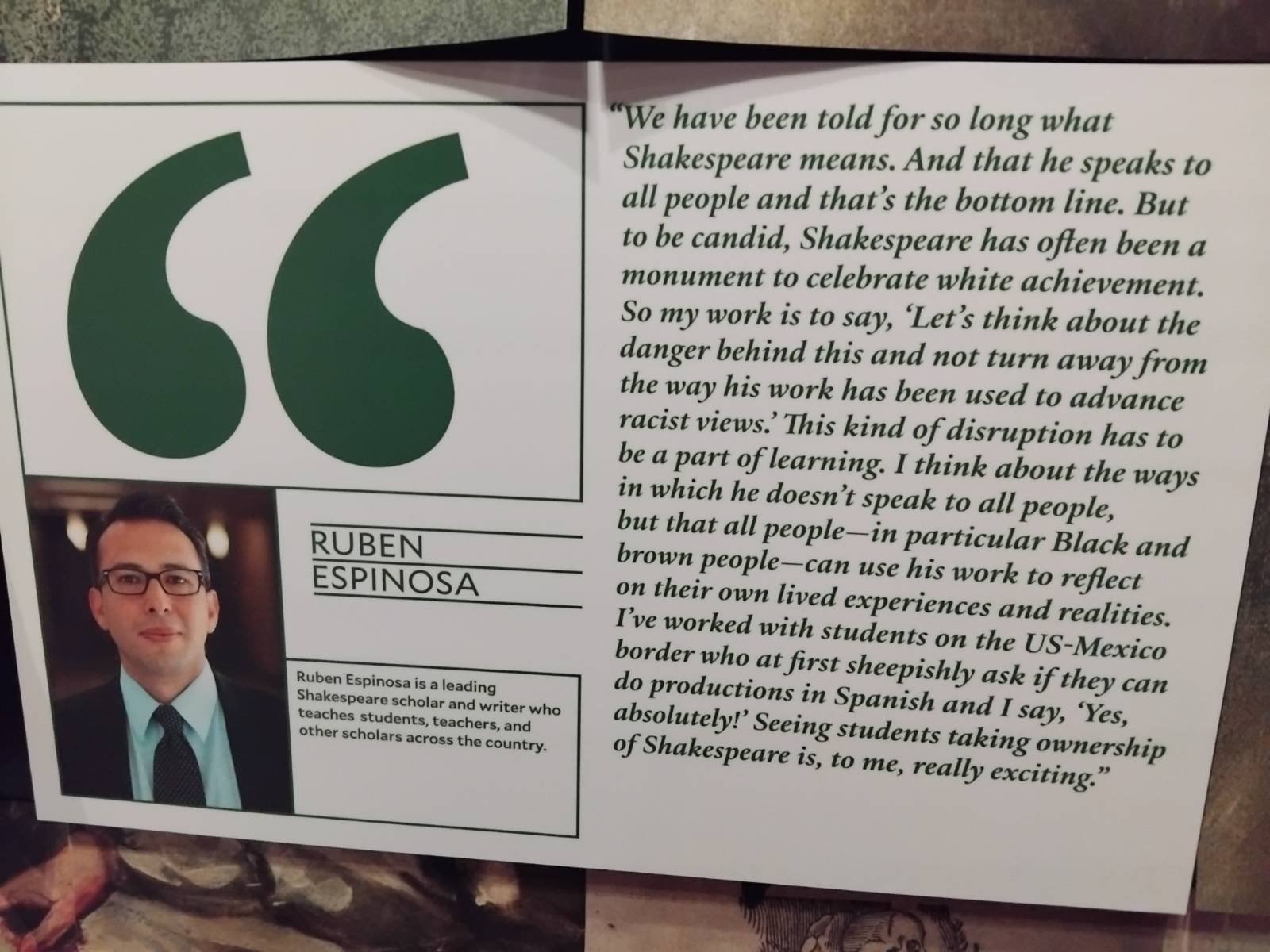
Shakespeare and the culture war

The left and the right both get on my nerves. 

In The Telegraph’s article about the danger of Shakespeare’s birthplace getting “decolonised” (whatever that means), they mentioned “a 2022 collaborative research project between the trust and Dr Helen Hopkins, an academic at the University of Birmingham”, and said: 

“This idea of Shakespeare’s universal genius “benefits the ideology of white European supremacy”, it was claimed.

[…] Veneration of Shakespeare is therefore part of a “white Anglo-centric, Eurocentric, and increasingly ‘West-centric’ worldviews that continue to do harm in the world today”.

The project recommended that Shakespeare’s Birthplace Trust recognise that “the narrative of Shakespeare’s greatness has caused harm – through the epistemic violence”.”

Somebody should read Jonathan Bate’s The Genius of Shakespeare

“The project also recommended that the trust present Shakespeare not as the “greatest”, but as “part of a community of equal and different writers and artists from around the world”.” 

Equal? Very funny. 

I looked up Helen Hopkins. The profile on the university’s website says: 

“Helen’s publications focus on how material objects can both challenge and perpetuate existing power structures, particularly through commemorative practices in a range of cultural institutions around the world. Her research highlights the ways in which these practices shape historical narratives, aiming to subvert dominant power dynamics and identify an inclusive, anti- and de-colonial form of cultural diplomacy that challenges Shakespeare's historical usage as a tool of cultural supremacy.” 

Buzzwords, buzzwords, buzzwords. And: 

“Helen is currently working on her monograph on the Shakespeare Birthplace Trust’s international collections as well as two book chapters and one article on Shakespeare, soft power, and material culture - forthcoming in 2024/25.” 

Why does the Shakespeare Birthplace Trust work with someone who clearly hates Shakespeare? Look at the list of publications. Look at the list of conferences. This is someone who takes zero interest in the plays and the sonnets, and has zero insight to offer about them.

But this is nothing new. Nor is it unusual. Museums in the West are so often poisoned by ideology and hatred of the West, filled with shame and guilt and sanctimony. Such attitudes—dismissive and resentful of Shakespeare, condescending towards the audience—I also saw when visiting the Folger Shakespeare Library in Washington, DC last month.

But when Shakespeare is dragged into the stupid culture war, it also attracts philistines on the right who don’t know anything about Shakespeare and don’t care. 

For instance, the Shakespeare Birthplace Trust had a Twitter thread about compelling female characters in the plays, for 8/3.  

The last tweet of the thread says: 

“You can learn more about these compelling female figures explored at our upcoming exhibition at Shakespeare's New Place, opening this spring…”

Some guy (clearly a sock account) replies: 

“You're the Shakespeare's Birthplace Trust - not the Random Female Figure Trust.” 

What? 

Another example is the controversy not long ago about Romeo and Juliet. I don’t think Francesca Amewudah-Rivers is right for Juliet because Juliet is meant to be strikingly beautiful (the same way I think Lily Collins has the looks for Snow White but Kristen Stewart and Rachel Zegler do not), but the uproar was over Juliet being black—you can tell by the comments that these are people who have no interest in Shakespeare, they neither read nor watch the plays, they know nothing about the history of playing Shakespeare, nor do they care—this, to them, is just another part of the culture war. It is true that modern Shakespeare productions often mess with the plays, either to create something “bold” and “subversive”, or to make them “accessible to modern audiences”—I have often complained about them—but some race-bending or gender-swapping can work perfectly fine if done thoughtfully or if not drawing attention to itself. My favourite King Lear is the Don Warrington production. My favourite Coriolanus is the David Oyelowo. And as I wrote in a recent blog post about Nicholas Hytner’s Julius Caesar, a contemporary production of Julius Caesar in which Cassius, Casca, and a few other conspirators are changed into women works very well—just look at social media, look at all the women embracing violence and revolution—and Michelle Fairley is very good at Cassius. These changes are very different from the ones in the upcoming Cymbeline at the Globe, in which Imogen is now black, Cymbeline is black and a woman, Posthumus is a woman—choices that scream “look at me, see how subversive I am”. 

The philistines on both sides get on my nerves. Just leave Shakespeare to people who love and have deep understanding of the plays. 

Saturday, 11 November 2023

On Hannah Arendt and antisemitism

I always wanted to read Hannah Arendt’s The Origins of Totalitarianism—now seemed like the perfect time. Very interesting book, at least so far. 

I’m just going to jot down some thoughts. 

1/ “This situation was an important factor in the early rise and continuous growth of antisemitism in the nineteenth century. Which group of people would turn antisemitic in a given country at a given historical moment depended exclusively upon general circumstances which made them ready for a violent antagonism to their government. But the remarkable similarity of arguments and images which time and again were spontaneously reproduced have an intimate relationship with the truth they distort. We find the Jews always represented as an international trade organization, a world-wide family concern with identical interests everywhere, a secret force behind the throne which degrades all visible governments into mere facade, or into marionettes whose strings are manipulated from behind the scenes. Because of their close relationship to state sources of power, the Jews were invariably identified with power, and because of their aloofness from society and concentration upon the closed circle of the family, they were invariably suspected of working for the destruction of all social structures.” (P.1, ch.2)

Still true today, this is something I see on both the left and the right. 


2/ “It is an obvious, if frequently forgotten, rule that anti-Jewish feeling acquires political relevance only when it can combine with a major political issue, or when Jewish group interests come into open conflict with those of a major class in society.” (ibid.)

Over the past few years, I have seen anti-Jewish sentiments expressed among the anti-immigrant crowd, the anti-woke crowd, the “Covid is a hoax” crowd, and other groups, but the biggest political issue adopted by antisemites at the moment is the Palestinian cause. To clarify, I don’t mean that every single pro-Palestinian person hates Jews, or wants to destroy the state of Israel, but I would argue that lots of antisemites hide behind the Palestinian cause and mask their Jew hatred by replacing the word “Jews” with “Zionists” when saying something antisemitic. 

Regarding the pro-Palestinian (or more accurately, anti-Israeli) protests in the West and especially in London, I have no doubt that many people genuinely care about the Palestinians and want the suffering in Gaza to end, but it’s a fact that many others in the marches hate Jews, support Hamas, and want Israel to be destroyed “from the river to the sea”. You can’t deny it. You too have seen the signs. You too have heard the chants. You too have seen people openly supporting Hamas. 


3/ “Many of these bankers were Jews and, even more important, the general figure of the banker bore definite Jewish traits for historical reasons. Thus the leftist movement of the lower middle class and the entire propaganda against banking capital turned more or less antisemitic, a development of little importance in industrial Germany but of great significance in France and, to a lesser extent, in Austria.” (ibid.) 

Interestingly, Hannah Arendt points out that Karl Marx, himself a Jew, was anti-Jewish. 


4/ “Friedrich Engels once remarked that the protagonists of the antisemitic movement of his time were noblemen, and its chorus the howling mob of the petty bourgeoisie. This is true not only for Germany, but also for Austria's Christian Socialism and France's Anti-Dreyfusards. In all these cases, the aristocracy, in a desperate last struggle, tried to ally itself with the conservative forces of the churches—the Catholic Church in Austria and France, the Protestant Church in Germany—under the pretext of fighting liberalism with the weapons of Christianity.” (ibid.) 

As I have said earlier, there are antisemites across the political spectrum.

The thing I find fascinating is that there are elements of antisemitism in both of the two worst ideologies of the 20th century: Nazism and communism. There are also such elements in some of the worst ideologies at the moment. 


5/ “… the German Liberal Party, under the leadership of Schoenerer, was from the beginning a lower middle-class party without connections or restraints from the side of the nobility, and with a decidedly left-wing outlook.

It never achieved a real mass basis, but it was remarkably successful in the universities during the eighties where it organized the first closely knit students' organization on the basis of open antisemitism. Schoenerer's antisemitism, at first almost exclusively directed against the Rothschilds, won him the sympathies of the labor movement, which regarded him as a true radical gone astray. His main advantage was that he could base his antisemitic propaganda on demonstrable facts: as a member of the Austrian Reichsrat he had fought for nationalization of the Austrian railroads, the major part of which had been in the hands of the Rothschilds since 1836 due to a state license which expired in 1886. Schoenerer succeeded in gathering 40,000 signatures against its renewal, and in placing the Jewish question in the limelight of public interest. The close connection between the Rothschilds and the financial interests of the monarchy became very obvious when the government tried to extend the license under conditions which were patently to the disadvantage of the state as well as the public.” (ibid.) 

That reminds me, I should pick up a book about the Rothschilds and the conspiracy theory. 


6/ “It is well known that the belief in a Jewish conspiracy that was kept together by a secret society had the greatest propaganda value for antisemitic publicity, and by far outran all traditional European superstitions about ritual murder and well-poisoning.” (P.1, ch.3)

“Jews run Hollywood”, “Jews own the media”, “Jews control the world”, etc.—it is depressing to read Hannah Arendt’s book from 1951 and recognise many things discussed. Are Jews over-represented in certain fields? Yes, it’s undeniable. But if Jews were controlling the media and controlling the world, they’re doing a pretty bad job—the media, the UN, the WHO… have for a long time been strongly biased against Israel. 


7/ “Not the Dreyfus case with its trials but the Dreyfus Affair in its entirety offers a foregleam of the twentieth century. As Bernanos pointed out in 1931 "The Dreyfus affair already belongs to that tragic era which certainly was not ended by the last war. The affair reveals the same inhuman character, preserving amid the welter of unbridled passions and the flames of hate an inconceivably cold and callous heart." Certainly it was not in France that the true sequel to the affair was to be found, but the reason why France fell an easy prey to Nazi aggression is not far to seek.” (P.1, ch.4) 

Is this the case? I have no idea. But the chapter about the Dreyfus affair is interesting.

Emile Zola was indeed a true intellectual, who stood up for the truth and for justice, putting himself at risk. In contrast, many members of the intelligentsia now pretend to stand up for justice and to side with the oppressed, but they sympathise with terrorists, condone atrocities, and unthinkingly repeat slogans and received opinions.

But then that’s nothing new, I guess. It’s only a few months ago when I read Wonder Confronts Certainty, in which Gary Saul Morson wrote about the educated class’s bloodlust and love of violence, and their embracing of revolution for the sake of revolution. 


8/ “It was against the rich and the clergy, not for the republic, not for justice and freedom that the workers finally took to the streets.” (ibid.) 

That’s a good observation, speaking as someone from a communist country. 


9/ “While the mob actually stormed Jewish shops and assailed Jews in the streets, the language of high society made real, passionate violence look like harmless child's play.” (ibid.) 

And that is happening again now. On the streets of London and other Western cities, there have been people chanting genocidal phrases and calling for jihad and calling for intifada; in the West, there have been intimidations of and attacks on Jews, or Jewish businesses; but some people still pretend or perhaps convince themselves that antisemitism is overblown, that there’s no cause for concern, that the chants are all harmless.

I can’t help fearing that we’re reliving the 20th century. 


10/ “The case of the unfortunate Captain Dreyfus had shown the world that in every Jewish nobleman and multimillionaire there still remained something of the old-time pariah, who has no country, for whom human rights do not exist, and whom society would gladly exclude from its privileges. No one, however, found it more difficult to grasp this fact than the emancipated Jews themselves.” (ibid.) 

The shocking responses to the October 7 massacre, which I never would have expected—remember that the first protests were immediately after the massacre and before Israel’s retaliation—truly opened my eyes. 

Thursday, 24 March 2022

On my indifference to the Oscars

Watching the Oscars was to me, for a long time, a “family tradition”. But this year, I’m utterly indifferent—the ceremony is in 4 days but I haven’t seen any of the films. 

Among the Best Picture nominees, I might watch Drive My Car (because it’s Japanese), Belfast (because I love Kenneth Branagh’s Twelfth Night and Much Ado About Nothing), and The Power of the Dog (because I liked Jane Campion’s The Piano, though it was a long time ago and I don’t know if I would still like it now), but Drive My Car is the only film I may watch any time soon, even if it’s based on a story by Haruki Murakami. Licorice Pizza intrigues me a bit, because it’s directed by Paul Thomas Anderson, but I think he is hit-and-miss (hits: There Will Be Blood, Phantom Thread, Boogie Nights, Magnolia; misses: The Master, Inherent Vice, and worst, Punch-Drunk Love). 

As for the rest, Dune isn’t my thing; West Side Story doesn’t interest me (I haven’t even seen the original, though I will); I won’t watch Don’t Look Up because of my dislike of Adam McKay’s Vice and The Big Short; and I haven’t heard of CODA, King Richard, nor Nightmare Alley

When we look at films nominated for other awards, the only films I have seen are Joel Coen’s The Tragedy of Macbeth and Maggie Gyllenhaal’s The Lost Daughter, and I didn’t like either. If anything, I’d like The Tragedy of Macbeth to win Best Cinematography and Best Production Design, because it’s excellent (the cinematography should make people realise that Roma and Mank shouldn’t have won), but the nomination for Denzel Washington as Macbeth is a joke.

But why am I indifferent to the Oscars, especially considering my film background? 

There are three main reasons. First of all, American cinema is dead—it’s over. Mainstream Hollywood is dominated by franchises and superhero nonsense, crushing to death mid-budget films. For a long time, people have complained about the lack of originality in Hollywood, but it’s so much worse today, with remakes and reboots and sequels and prequels and origin stories and spin-offs dominating the market. The star system in Hollywood has been slowly replaced with the franchise system. 

The more “artistic” films in Hollywood are meanwhile distorted and ruined by political agendas.

For a while, I have had problems with modern (American) films, partly because they tend to move the camera for no reason and cut quickly for fear of boring the audience, and partly because film dialogue is now much reduced in quality. When you’re used to films such as A Star Is Born (1954), Casablanca, Room at the Top, The Heiress, Chinatown, or Billy Wilder’s films, in which every line is perfect and many are unforgettable, you can’t help noticing that film dialogue today is mostly banal and corny, often inane, and full of exposition. And it becomes much worse when distorted by politics. 

The second reason for my indifference is to do with the awards. After The Shape of Water won Best Picture in 2017, I could no longer take the Oscars seriously. Adding to that was the Best Cinematography for Life of Pi in 2012, Roma in 2018, and Mank in 2021. Others may mention the Best Editing Oscar for Bohemian Rhapsody, which was shocking. These are just a few examples. 

In recent years, I can’t help thinking, and I’m not the only one, that the Oscars are no longer about best films, but about the worthiest films—films about the most important social issues, with the most important political messages. With the move to make the Oscars more diverse and the announcement about quotas, the awards would just become worse and worse. People don’t seem to realise that with such policies and such announcements, any non-white winner would be seen as winning because of “diversity” and not because of merit, and the awards themselves would become less prestigious, and reduced in value. 

It’s similar to the way they now mix up Best Picture and Best Foreign Language Film (now called Best International Feature Film): it’s seen as a progressive move, celebrating non-English language films in the Best Picture category, but it’s actually much more insulting to cinema around the world because the Best Picture category is still dominated by American films, as though 9 of the 10 best films of the year are in English and only one film from the rest of the world made it to top 10. 

And finally, I no longer want to watch the ceremony. My mom and I watched the Oscars for years because we liked watching people getting celebrated for their achievements, but now the ceremony is heavily political, performative, and self-congratulatory. Now all I see is rich celebrities getting onstage and making self-absorbed speeches, satisfied with how socially conscious and progressive and tolerant they are, not knowing that they don’t live in the real world and don’t know about any problems faced by normal people. Last year I watched the ceremony, despite having seen only Nomadland, The Father, Mank, and Minari, and it was insufferable. I watched it and couldn’t help thinking of the quote by F. Scott Fitzgerald “Let me tell you about the very rich. They are different from you and me.” 

When I look at the way ratings for the Oscars have been going down and down over the years, I know I’m not alone. 

Monday, 5 October 2020

Vintage Didion: Didion on politics and the press

I’m currently reading The Year of Magical Thinking, after finishing Vintage Didion. You perhaps have now noticed that I’m on a Joan Didion marathon. 

Taking a break from social media means having more time for reading (which does make me ask myself, why the hell did I spend time arguing with morons on fb or going through stupid tweets instead of reading good books and enjoying the company of intelligent, interesting people?). I’m enjoying Joan Didion’s company. 

Vintage Didion includes 3 essays from After Henry, 3 chapters from Miami, an excerpt from Salvador, an essay from Political Fictions, and a separate essay called “Fixed Opinions, or the Hinge of History”. They’re all good but I especially like the one from After Henry about Central Park Five, “Clinton Agonistes” from Political Fictions, and “Fixed Opinions, or the Hinge of History”. 

What I find interesting in these essays is that Joan Didion, through her eyes as an essayist, journalist, and novelist, examines the narratives created by politicians and by the press. In the essay about Central Park Five for instance, which according to wikipedia was the first mainstream media to suggest that they were wrongfully convicted, she examines the 2 contrasting narratives by mainstream news on one side, and by black-owned newspapers and black activists on the other; she also writes about the kind of story that gets attention and becomes big, the kind of news that gets ignored, the kind of language used by journalists and by politicians, and so on. In the essay about Bill Clinton, she contrasts the year 1998 with 1992, and writes about how the press (or rather, a handful of prominent journalists) shapes the news and promotes a scandal. In the last one, she writes about the mood in America after 9/11 and the language, the narrative in the news. 

I don’t fully know Didion’s political views, but she is perceptive and sceptical and critical, and she writes well about the way the press frames a story or an event. I should get hold of Political Fictions. Reading Didion’s essays, I can’t help wondering what she thinks about what’s happening today, though many of her observations all the way from the 60s are still true today, and in many cases, worse now.   

For example, in “On Morality” (Slouching Towards Bethlehem), she writes about the disturbing frequency with which the word “morality” appears everywhere, and she ends it with:  

“It is all right only so long as we recognize that the end may or may not be expedient, may or may not be a good idea, but in any case has nothing to do with ‘morality’. Because when we start deceiving ourselves into thinking not that we want something or need something, not that it is a pragmatic necessity for us to have it, but that it is a moral imperative that we have it, then is when we join the fashionable madmen, and then is when the thin whine of hysteria is heard in the land, and then is when we are in bad trouble. And I suspect we are already there.” 

This is from 1965—it is still true, and it is worse. People still assign moral burdens to everything, and also talk about being on the right or wrong side of history. People still act moral and “inflict their conscience” on others, and also talk about compassion and kindness and tolerance—the kind of kindness and tolerance that involves silencing and de-platforming anyone that they see as intolerant and bigoted.  

In “The Women’s Movement” (The White Album), she voices her criticism of the feminist movement in the 70s and mocks the feminists for portraying women as mere victims. 

“That many women are victims of condescension and exploitation and sex-role stereotyping was scarcely news, but neither was it news that other women are not: nobody forces women to buy the package.


[…] Just as one had gotten the unintended but inescapable suggestion, when told about the ‘terror and revulsion’ experienced by women in the vicinity of construction sites, of creatures too ‘tender’ for the abrasiveness of daily life, too fragile for the streets, so now one was getting, in the later literature of the movement, the impression of women too ‘sensitive’ for the difficulties of adult life, women unequipped for reality and grasping at the moment as a rationale for denying that reality.” 

The essay was controversial apparently but she wasn’t wrong, and what she wrote still applies now—it’s not that there’s no discrimination against women, but many feminists concentrate their energy on non-issues (such as manspreading for example) instead of real problems, and it doesn’t help anyone to see women always as victims and men always as (potential) perpetrators or abusers. In the #MeToo movement, I can think of a few cases that are a bad date or a regretful relationship that get equated with sexual assault, as though women had no agency. Again, I’m not saying that there is no misogyny, no discrimination against women (there is), and Didion clearly knows it too, but it doesn’t help to infantilise women. 

The thing is that she also mocks the creation of Women as a class, but the essay is from 1972—I wonder what she thinks about the current attacks on biological sex and the concept of womanhood. 

Reading Didion’s essays, I can just replace names in my head and her observations about certain groups of people like politicians, journalists, activists, etc. apply well for today’s equivalents. Depressingly so. Like (some) activists or political leaders not caring whether something happened because it had happened many times to others, for example. Or the press picking a story over others and framing it in a certain way. 

Interestingly, in the essay about Clinton, Didion notes: 

“The Lewinsky story had in fact first broken not in the traditional media but on the Internet […], posting on the Drudge Report.” 

She quotes James O’Shea of the Chicago Tribune: 

“The days when you can decide not to print a story because it’s not well enough sourced are long gone.” 

That was 1998. Think about now. 

The pity is that she writes about Ronald Reagan, George H. W. Bush, Bill Clinton, and George W. Bush (and I think she has written about Barack Obama) but not Donald Trump. I’d like to know what she thinks about Trump, and the current political trends.

Friday, 7 August 2020

Cuộc tranh luận về trans và vấn đề mâu thuẫn giá trị

Lời tựa: Gần đây tôi có viết 2 bài cho báo Trẻ về vấn đề trans nhưng không được đăng, có lẽ không phù hợp với báo Trẻ. Đây là một vấn đề tương đối mới, có lẽ người Việt không quan tâm nhiều, đặc biệt người lớn tuổi. Tuy nhiên đây là một trong những vấn đề gây tranh cãi nhiều nhất ở các nước dân chủ phương Tây hiện nay, và có thể ảnh hưởng trực tiếp đến quyền lợi của người Việt ở các nước này, dù quan tâm hay không, và các gia đình có thể có mâu thuẫn do khác biệt thế hệ.
Vì thế tôi đưa lên blog 2 bài đã viết về chủ đề này.

Vấn đề trans và mâu thuẫn giá trị

Trong bài viết trước về Reddit, tôi đã viết sơ về cuộc tranh luận về người transgender, thường gọi tắt là trans (người chuyển giới đã qua hay chưa qua phẫu thuật). Đây là một trong những vấn đề phức tạp và gây tranh cãi nhất hiện nay ở các nước phương Tây.
Trước tiên, một trong các điểm quan trọng của gender ideology (ý thức hệ giới tính), giống (sex) và giới tính (gender) là hai khái niệm tách biệt—sex là sinh học, là male hay female, còn gender là xã hội, là man hay woman hay non-binary (phi nhị phân, tức là không phải nam không phải nữ, không theo nhị phân giới tính).
Thế những ý chính của cuộc tranh luận về trans là gì?
Self-ID
Trước đây khái niệm trans mang nghĩa transsexual, và chủ yếu dùng cho người đã qua phẫu thuật chuyển giới. Sau này khái niệm trans mở rộng, trở thành transgender, và bao gồm tất cả những người cảm thấy giới tính (gender) không khớp với giống (sex) của mình sinh ra, dù chưa dùng hormone và chưa qua phẫu thuật, và cũng bao gồm những người không có ý định phẫu thuật.
Đi xa hơn, phong trào trans muốn có luật công nhận self-ID, tức mỗi người có quyền tự xác định (identify) giới tính và phải được luật pháp công nhận, và người khác không có quyền gọi giới tính sai (misgender) người khác.
Riêng ở Anh, luật pháp không công nhận self-ID, và vừa qua BBC đưa tin vài thay đổi về Gender Recognition Act (Đạo luật công nhận giới tính), sẽ bỏ ý định dưới thời thủ tướng Theresa May cho phép người dân đổi giới tính trên giấy khai sinh dù không có chẩn đoán y tế, và cũng sẽ có những biện pháp bảo vệ không gian an toàn cho phụ nữ1.
Không gian của phụ nữ (women’s spaces)
Mọi quốc gia trên thế giới đều có sex segregation vì lý do an toàn và riêng tư—tách biệt không gian dựa theo giống/ giới tính, chẳng hạn như nhà vệ sinh công cộng, phòng thay đồ/ thử đồ, nhà tù, shelter (nơi nương thân cho nạn nhân bạo hành gia đình hoặc bạo lực tình dục), v.v…
Một mặt, các nhà hoạt động cho quyền lợi trans (trans rights activists, thường gọi tắt là TRA) nói rằng, không cho trans women vào không gian của phụ nữ là phân biệt đối xử với người chuyển giới và không công nhận trans women cũng là women.
Mặt khác, có nên chấp nhận trans women trong không gian của phụ nữ không, đặc biệt những nơi như shelter hoặc nhà tù?
Một mặt, trans women có quyền được tôn trọng, chỉ muốn mình được công nhận cũng là phụ nữ, và không nên bị phân biệt đối xử, nhưng còn vấn đề an toàn với phụ nữ, đặc biệt phụ nữ bị chấn thương tâm lý, và trong tình trạng dễ bị tổn thương? Hoặc chấp nhận trans women là một chuyện, chẳng hạn như Sheffield Rape and Sexual Abuse Centre2, nhưng có nên chấp nhận bất kỳ ai xác định mình là nữ, theo self-ID không? Làm thế nào để tránh những kẻ nguy hiểm, muốn lợi dụng chính sách self-ID để tấn công phụ nữ?
Trang web nữ quyền Feminist Current đưa tin, ở Anh luật pháp hoàn toàn không công nhận self-ID, nhưng khắp nước Anh vẫn có nhiều nơi áp dụng chính sách self-ID3.
Riêng ở Anh, một trong những trường hợp gây chú ý là Karen White, một trans woman trong nhà tù nữ và tấn công tình dục vài phụ nữ ngay trong tù4.
Thể thao cho phụ nữ
Một chủ đề gây tranh cãi nhiều là trans women tham gia thể thao của phụ nữ. Chẳng hạn, BBC hay Wall Street Journal đưa ra tranh luận và lập luận của cả hai phía5.
Một mặt, nếu không cho trans women cùng thi đấu thể thao với phụ nữ, đó là phân biệt đối xử, không công nhận trans women là women. Và nếu không cho, trans women phải làm gì? Không được tham gia thể thao? Chỉ tham gia thể thao với người chuyển giới, vốn là thiểu số trên thế giới? Hay tham gia thể thao với nam giới? Nhưng còn tác động của hormone lên cơ thể?
Nhưng ngược lại, có công bằng với phụ nữ không nếu cùng thi đấu với trans women, đặc biệt trong những môn cần sức mạnh? Những người phản đối nói, dù ai đó đã qua phẫu thuật nhưng đã qua dậy thì không thể thay đổi thực tế là cơ thể có khung xương lớn hơn, mật độ xương (bone density) và khối lượng cơ bắp (muscle mass) cao hơn, và mạnh hơn cơ thể nữ giới. Mâu thuẫn ở đây là giữa quyền lợi người chuyển giới và sự công bằng với nữ giới.
Trẻ em
Quan trọng hơn là phải làm gì với trẻ em: bao nhiêu tuổi thì nên biết về vấn đề giới tính và chuyển giới? Bao nhiêu tuổi thì được quyết định chuyển giới? Cha mẹ cần làm gì khi con mình tự nhận là trans?
Những người ủng hộ phong trào trans nói, trans cũng như đồng tính—cha mẹ cần chấp nhận và ủng hộ con cái, đổi từ ngữ xưng hô, chấp nhận tên mới, cho con cái ăn mặc theo giới tính mới… Các tổ chức ủng hộ trans như Mermaids và Pink News thường nhắc tới tỷ lệ tự sát trong cộng đồng trans để cho thấy người trans không nên bị xa lánh hay từ bỏ6, mà cần sự hỗ trợ từ gia đình.
Những người phản đối cho rằng, ủng hộ trans và ủng hộ đồng tính là hai vấn đề khác nhau dù cùng là LGBT—đồng tính không ảnh hưởng trực tiếp đến cơ thể, nhưng chuyển giới sẽ dẫn tới những quyết định không thể rút lại như phẫu thuật, dùng hormone hoặc puberty blocker (thuốc chặn dậy thì). Người ủng hộ nói, trẻ vị thành niên không qua phẫu thuật, có thể chặn dậy thì để có vài năm suy nghĩ, và với những đứa trẻ bị rối loạn định dạng giới (gender dysphoria), nhìn cơ thể dậy thì và phát triển theo giới tính mình không muốn có thể gây trầm cảm và dẫn tới tự sát. Phe phản đối lại nói, không ai biết hiệu ứng lâu dài, puberty blocker có thể ảnh hưởng phát triển trí não.
Gần đây một phụ nữ tên Keira Bell tuyên bố kiện NHS (National Health Service—dịch vụ y tế quốc gia của Anh) vì lẽ ra phải được bảo là suy nghĩ thêm để quyết định. Keira Bell lúc nhỏ xác định mình là nam, và sau khoảng 3 lần gặp ở Tavistock Centre ở London, được nhận puberty blocker khi 15 tuổi. 8 năm sau, và sau khi qua phẫu thuật, Keira Bell nhận ra đây là quyết định sai lầm và trở thành detrans (chuyển giới ngược lại)7.
Đây chỉ là một trong nhiều trường hợp người detrans lên tiếng kể câu chuyện của mình, sau khi nhà văn J. K. Rowling nói về vấn đề trans và đẩy nó lên thành một cuộc tranh luận toàn quốc (thậm chí quốc tế).
Nhà báo Abigail Shrier ra một cuốn sách gọi là Irreversible Damage: The Transgender Craze Seducing Our Daughters và cũng xuất hiện trên chương trình của Joe Rogan8, nói về tỷ lệ tăng đột ngột cao của trẻ vị thành niên nữ xác định mình là trans. Đó là do xã hội chấp nhận trans hơn, hay là ảnh hưởng và áp lực trang lứa (peer pressure)? Bao nhiêu trong số đó thật sự muốn trở thành nam, và bao nhiêu chỉ lầm tưởng vì là tomboy, lesbian, hoặc trầm cảm do vấn đề tâm lý khác?  
Nói tóm lại, vấn đề trans ở các nước phương Tây một lần nữa lại là mâu thuẫn giá trị—một mặt là quyền lợi của người chuyển giới, đặc biệt trans women, và một mặt là quyền trẻ em và phụ nữ. Đâu là cân bằng? Làm thế nào để không ai bị phân biệt đối xử, nhưng mọi người đều được bảo vệ an toàn?


__________________________________________


Trans và nữ quyền

Trong hai bài trước, tôi đã viết về Reddit và trans, trans và mâu thuẫn giá trị. Tại sao đây là vấn đề đáng chú ý? Vì đây là vấn đề phức tạp, có xung đột quyền lợi giữa nhiều nhóm khác nhau, và trong vài khía cạnh, một số chính sách bảo vệ trans (transgender, người chuyển giới đã qua hay chưa qua phẫu thuật) ảnh hưởng đến quyền lợi của trẻ em và phụ nữ.
Tại sao nhiều nhà hoạt động nữ quyền (feminists) cảm thấy phong trào trans, theo nghĩa nào đó, là một cuộc tấn công lên quyền lợi phụ nữ?
Không gian của phái nữ
Như đã viết trong bài trước, có rất nhiều tranh cãi về chuyện có nên chấp nhận trans women vào khu vực của riêng phụ nữ không, như nhà vệ sinh công cộng, phòng thay đồ, nhà tù, shelter (nơi nương thân cho nạn nhân bạo hành gia đình hoặc bạo lực tình dục), v.v…
Cách đây không lâu, Sheffield Rape and Sexual Abuse Centre ở Anh gây chỉ trích trên Twitter khi quảng cáo tìm nhân viên là bất kỳ ai xác định mình là phụ nữ, sau đó phải rút xuống. Tuy nhiên, trung tâm này vẫn nhận nạn nhân tấn công tình dục là trans women1.
Ở Canada, Vancouver Rape Relief and Women’s Shelter, shelter lâu đời nhất ở Vancouver cho nạn nhân bị cưỡng hiếp, trong năm 2019 bị vandalise với các dòng chữ “TERFS go home you are not welcome” and “Kill TERFs”2 (TERF là trans-exclusionary radical feminist, thời kỳ đầu là từ trung lập, sau này trở thành từ xúc phạm) do chỉ nhận phụ nữ, không nhận phụ nữ chuyển giới. Năm 2020, Vancouver Rape Relief and Women’s Shelter bị cắt kinh phí3
Sex và gender, và vấn đề sức khỏe
Một trong những ý chính của gender ideology (ý thức hệ giới tính) là, giống (sex: male/ female) là sinh học, còn giới tính (gender: man/ woman) là xã hội, và hai khái niệm là tách biệt.
Tuy nhiên, trong vài năm gần đây các nhà hoạt động quyền lợi trans (trans rights activists—TRA) đi theo hướng khác, bảo biological sex không có thật, hoặc bảo sex không chỉ tách ra làm hai thành male và female mà là một spectrum, trong đó intersex (người liên giới tính) ở đâu đó ở giữa4.
Pink News, một trong những trang web lớn nhất cho cộng đồng trans, nói câu “only females get cervical cancer” (chỉ có nữ giới mới bị ung thư cổ tử cung) là “disgustingly transphobic lie” (một câu nói dối phân biệt người chuyển giới đáng tởm). Tuy nhiên, Pink News chưa bao giờ tấn công tổ chức Prostate Cancer UK vì gọi ung thư tuyến tiền liệt là bệnh của đàn ông và dùng hashtag #MenWeAreWithYou.
Như đã viết trong bài về Reddit, các subreddits về vấn đề sức khỏe phụ nữ đều bị tấn công, rút xuống, hoặc đưa cho TRA quản lý và bị kiểm soát ngôn ngữ, như r/PCOS cho người bị polycystic ovary syndrome (buồng trứng đa nang), r/endo cho người bị endometriosis (lạc nội mạc tử cung), hoặc r/pregnancy cho phụ nữ mang thai. Trong khi đó những subreddits như r/ErectileDysfunction, r/circumcision, r/Phimosis, r/ProstateCancer, r/TesticularCancer… có thể nói đó là vấn đề sức khỏe của đàn ông mà không bị TRA tấn công—không bị gọi là transphobic.
Quyền lợi dựa theo sex (sex-based rights)
Luật pháp cho những quyền lợi dựa theo sex, nhưng tại sao các tổ chức khắp nơi lại xem gender quan trọng hơn sex?
Trong tháng 7 vừa qua, Action Aid UK, một tổ chức từ thiện cho quyền lợi từ thiện, định nghĩa woman là bất kỳ tự xác định (self-identify) là woman, và không có cái gọi là một cơ thể male hay female5. Tuyên bố này gây chỉ trích dữ dội trên Twitter, đặc biệt từ feminists—làm sao có thể nói không có cái gọi là female body trong khi sự đàn áp với phụ nữ trong lịch sử và khắp thế giới có liên quan trực tiếp đến các đặc điểm sinh học và sinh sản của nữ giới? Làm sao có thể nói không có cái gọi là female body trong khi công việc của Action Aid UK tập trung vào những vấn đề như kinh nguyệt, thai và phá thai, tục ép hôn, hủ tục cắt âm vật, v.v…?
Những vấn đề này là vấn đề của giống (sex) chứ không phải vấn đề giới tính (gender).
Sau phản ứng mạnh mẽ trên Twitter, Action Aid UK bảo tuyên bố đó không phải là chính sách, nhưng không nói rõ quan điểm và chính sách thật sự là gì, mà bảo phải xem xét lại các nhóm liên quan6.  
Trang Feminist Current có bài viết của Raquel Rosario Sánchez, một phụ nữ gốc Dominican, cho rằng gender identity ideology là một dạng feminism của người có privilege7, coi trọng gender identity (bản dạng giới) của dân phương Tây hơn thực tế phân biệt giới tính ở các nước nghèo, các nước đang phát triển—những nơi phụ nữ thật sự bị đàn áp vì là female, và sự đàn áp liên quan trực tiếp tới đặc điểm sinh học và sinh sản của phụ nữ8.
Như Sánchez nói, một nước dân chủ phương Tây có thể có bài báo của một người sinh ra là nam, nói chì kẻ mắt xác định phái nữ của mình (“How My Eyeliner Defines My Womanhood”)9. Nhưng ở các nước có vấn đề phân biệt giới tính trầm trọng, một bé gái không thể cứ tuyên bố mình là nam để thoát những vấn đề như bị cắt âm vật hay cưỡng hôn—khái niệm gender không thể thay đổi thực tế là phụ nữ và bé gái khắp thế giới vì phân biệt vì sex, vì cơ thể female.
Khái niệm woman
Một trong những ý quan trọng của những người phản đối gender ideology là, thế nào là woman, nếu ai cũng có thể tự xác định mình là phái nữ? Thế nào là woman, nếu trans women là women?
Trên Quillette, Helen Joyce có một bài viết phân tích, những người theo phong trào trans đều không thể định nghĩa thế nào là woman—hoặc là nói lòng vòng “phụ nữ là một người cảm thấy mình là phụ nữ”, hoặc là định nghĩa bằng stereotypes, như phụ nữ là người tuân thủ các chuẩn mực của nữ tính (femininity) như đa cảm, dễ bị tổn thương, quan tâm tới ngoại hình, v.v…10 Cái thứ nhất là ngụy biện, cái thứ hai khác nào đi ngược lại với nỗ lực của feminists hàng chục năm qua để xóa bỏ gender stereotypes?
Nếu một người sinh ra với cơ thể nam, không qua phẫu thuật cũng chẳng dùng hormone, nhưng tự nhận mình là trans woman và bảo phái nữ của mình được xác định bằng chì kẻ mắt, vậy thế nào là woman?
Khái niệm lesbian
Ngoài khái niệm woman, khái niệm lesbian (đồng tính nữ) cũng bị cướp và bóp méo. Quan điểm của TRA là “lesbians can have penises” (đồng tính nữ có thể có dương vật), và tất cả những lesbians không muốn hẹn hò hoặc có quan hệ tình dục với trans women đều bị gọi là transphobic, TERF, hoặc “vagina fetishists” (đám tôn sùng âm đạo).
Một trang web về quyền lesbian gom lại một loạt screenshots những câu TRA tấn công, chửi bới lesbians (không phải trans), thậm chí dọa cưỡng hiếp11. Không phải không có lý do mà có phong trào Get the L out, ý nói tách chữ L (cho lesbian) ra khỏi LQBT+, vì cảm thấy lesbians bị lấn áp trong cộng đồng LGBT+ và mất quyền lợi.
Bản thân nhà văn J. K. Rowling, khi lên tiếng về vấn đề trans và quyền lợi phụ nữ, cũng bị nhục mạ và dọa đánh.
Bạo lực
Sự tấn công phụ nữ không chỉ dừng ở lời nói. Năm 2018, trans woman Tara Wolf hành hung một phụ nữ 60 tuổi và đập bể camera giá £120, nhưng chỉ bị phạt và trả phí tổng cộng £43012.
Kết luận
Phong trào trans có phải là một cuộc tấn công có chủ đích lên phụ nữ không, hay đây chỉ là vấn đề mâu thuẫn giá trị? Trên thực tế, quyền lợi phụ nữ vẫn bị ảnh hưởng nhất, và Rowling đã phơi ra mặt trái của phong trào trans.
Nhờ vậy, nhiều phụ nữ, ít nhất ở Anh, đã bắt đầu lên tiếng.


7: Privilege dịch là đặc quyền, nhưng ở đây ý nói những người quen sống sướng và có nhiều quyền, ở phương Tây.  


Saturday, 25 April 2020

The Heart Is a Lonely Hunter: Dr Copeland and Jake Blount [updated]

In the previous blog post, I was whining about the political and religious speeches in The Heart Is a Lonely Hunter. Now I’m going to disagree with myself (which you might have noticed I frequently do, if you follow this blog): the political speeches of Dr Copeland and Jake Blount (to John Singer and to the reader) build up to the argument, the confrontation between the 2 of them, which is an excellent scene.  
As I have written before, Dr Copeland, the black doctor, cannot stop talking about “the purpose” or “the mission”, and Jake Blount, the drunkard, cannot stop talking about “knowing” and “the truth”. Both of them are Marxists—Dr Copeland speaks of Karl Marx and apparently compares him to Jesus in his Christmas speech, and names one of his children after him; Jake Blount calls himself a Red, a radical, and always rants about capitalism. Both of them, in their anger and bitterness, feel lost because they cannot talk to anyone else about their ideas, so they come to John Singer. 
I reckon there must be many readers like me, who wonder what would happen if they had a conversation. Carson McCullers lets them cross paths many times, but they never have a real talk till near the end of the novel, and she handles it masterfully. It is astonishing that at the age of 22-23 and in the year 1940, she could have written so well the character of Dr Copeland and inhabited his mind—his rage, his disappointment, his sense of injustice and oppression, his hatred of “the oppressors” and deep distrust of “the white race”, his humiliation, his desperation and helplessness. Carson McCullers seems to depict him with ease. 
It is even more remarkable that she could have written a character like Jake Blount—a bitter, self-pitying drunkard obsessed with Marx’s ideas, and deeply racist. Throughout the novel, his actions already show that he’s a rude, unpleasant, obnoxious man, but the scene at the Copelands exposes him for what he is—he fills his head with theories and cannot see any individual, doesn’t care about anybody, and just wants to use people (specifically William, Dr Copeland’s son) as his pawns. He’s also deeply racist, without quite realising it—at least twice in the chapters where we’re in his mind, there’s mention of a “Negro smell” (the scene at the Copelands’ house, and the fight scene). He seems to follow eugenics. 
The depiction of the 2 characters, and their confrontation, shows Carson McCullers’s deep understanding of racial relations and ability to get into the minds of such different characters. But to me, it’s more fascinating that she’s capable of seeing through, and portraying, the type like Jake Blount, who talks about equality and such wonderful ideals but has no feelings for the individual and is willing to sacrifice a few people for “a higher cause”. Blount becomes worse in the novel—he doesn’t particularly seem to care about John Singer, only himself, and then it turns out that he’s been eating at Biff Brannon’s restaurant without paying and doesn’t think there’s anything wrong with that.  
Dr Copeland isn’t much better. He’s more sympathetic and likable, but he is also obsessed with ideas (better conditions for black people) but takes out his rage on his wife, alienates his own children, fails as both a husband and a father, and has little patience or kindness with his daughter Portia. Portia is the one who holds everything together. 
In The Heart Is a Lonely Hunter, except for John Singer, who is blank on purpose for people to interpret in any way they like, Biff Brannon is the weakest character of the 5, mostly because he doesn’t have the same complexity and depth. Mick Kelly is another good character, clever, and likeable—the one who gets a glimpse of something beyond her daily life. The 3 finest scenes in the novel, I think, are the scene of Mick discovering Beethoven, the scene of the traumatising incident (which I won’t spoil), and the scene of the argument between Dr Copeland and Jake Blount. 
This is an excellent novel. I’m going to read more of Carson McCullers’s works.


Addendum: I’ve just read a few articles about Marxism in The Heart Is a Lonely Hunter, and would like to expand on my points. There are spoilers.
I think it’s a mistake to read the political passages straight—see the characters’ politics as Carson McCullers’s politics. She’s depicting poverty, racial disparity, and despair in a Southern town in the 30s, and there is no doubt that her sympathies lie with the people she created. She portrays them as they are, depicts them with compassion, and helps the reader understand why they are who they are and why they do what they do—we understand, for example, why Dr Copeland has a deep distrust of “the white race” and convinces himself that John Singer must be Jewish, or why Jake Blount turns into a Marxist.  
However, Carson McCullers isn’t propagating any political message—The Heart Is a Lonely Hunter is a more subtle and complex book. Jake Blount, as I wrote above, is a complex man. Throughout the book, he has many rants about the system, about capitalism, about inequality, and the story seems to support his ideas, but there are 2 important scenes near the end of book that must force us to re-examine his ideas and see his approach in a different light—the confrontation with Dr Copeland, and the scene where he and Biff Brannon talk about the fight. I think a reader misreads the book if they read through the book and read those 2 scenes, but afterwards still read the political passages straight and don’t question the Marxist’s thinking. It is clear that Jake Blount has some fancy ideals, but he’s ready to sacrifice people for a cause and incapable of seeing them as individuals. It is not only racism—he is indifferent to human lives, and seems to have no regret when a tragedy happens because of the messages he has been spreading. 
Note too that he is full of self-pity, rude to everyone, and always speaks against the system but doesn’t have John Singer’s dignity and self-respect. Blount has been eating at Biff’s café without paying and has been rude to him, then says that if he had money, he still wouldn’t pay, but is shameless enough to take Biff’s money before he leaves town. He thinks that he gave Singer everything, but only thinks about himself when Singer’s dead, and leaves all of Singer’s affairs to others (Biff) to take care of. Blount, to me, is a despicable man. 
To clarify, I’m not saying that Carson McCullers, in her portrayal of Blount, is mocking Marxists or taking an anti-socialist stance—she isn’t propagating any political message, she’s depicting the characters. It is more subtle and nuanced.