Kurosawa’s Something Like an Autobiography is a terrific book—he writes about his childhood, his life, and his path to become a film director, and the major events that shaped him.
As a director’s autobiography, it’s more captivating and enjoyable than Bergman’s The Magic Lantern, not because Bergman’s book is tedious, but because a Japanese man’s life is most likely more interesting than a Swede’s. After all, Kurosawa was born in 1910 and lived through WW2, and he’s part of a samurai family!
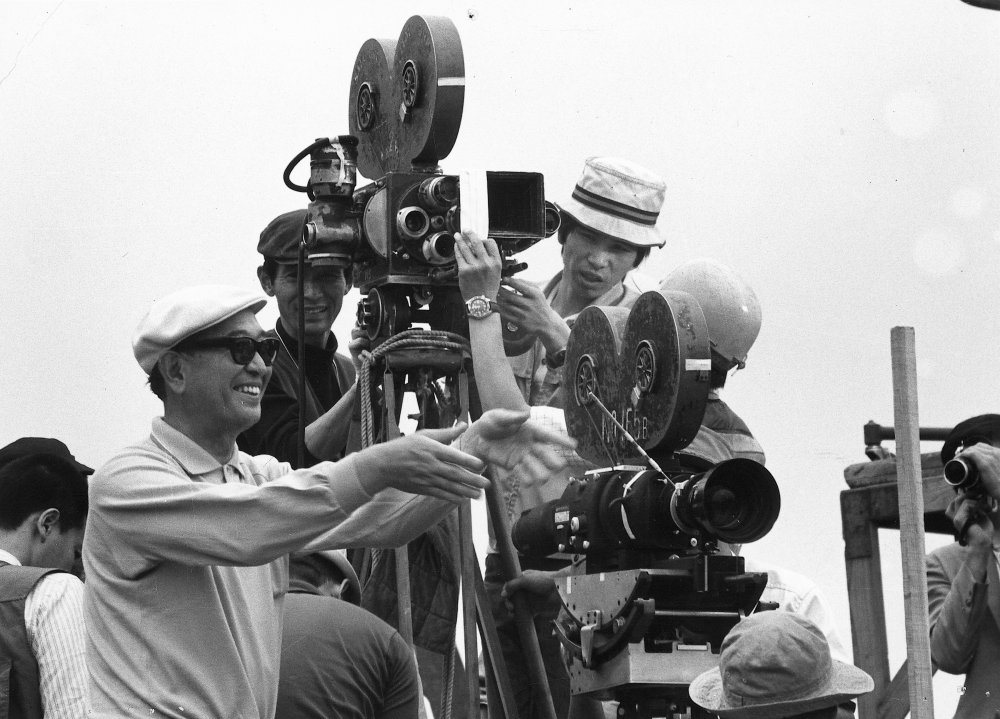 This is an essential read if you’re interested in Kurosawa, and Japanese cinema in general. I myself have seen Stray Dog, Rashomon, Ikiru, The Bad Sleep Well, Yojimbo, Sanjuro, High and Low, Ran, and Dreams—9 films. My only regret about the book is that Kurosawa only writes up to Rashomon (released in 1950), so we don’t get to read about the inspiration for, ideas behind, and circumstances of, the later films.
Having said that, I have learnt quite a bit from the book.
1/ He quotes Yamamoto Kajiro as saying “If you want to become a film director, first write scripts.”
Then he goes on to say:
This is an essential read if you’re interested in Kurosawa, and Japanese cinema in general. I myself have seen Stray Dog, Rashomon, Ikiru, The Bad Sleep Well, Yojimbo, Sanjuro, High and Low, Ran, and Dreams—9 films. My only regret about the book is that Kurosawa only writes up to Rashomon (released in 1950), so we don’t get to read about the inspiration for, ideas behind, and circumstances of, the later films.
Having said that, I have learnt quite a bit from the book.
1/ He quotes Yamamoto Kajiro as saying “If you want to become a film director, first write scripts.”
Then he goes on to say:
“… Those who say an assistant director’s job doesn’t allow him any free time for writing are just cowards. Perhaps you can write only 1 page a day, but if you do it every day, at the end of the year you’ll have 365 pages of script. I began in this spirit, with a target of 1 page a day. There was nothing I could do about the nights I had to work till dawn, but when I had time to sleep, every after crawling into bed I would turn out 2 or 3 pages. Oddly enough, when I put my mind to writing, it came more easily than I had thought it would, and I wrote quite a few scripts.”
Look at this quote from the addendum:
“With a good script a good director can produce a masterpiece; with the same script a mediocre director can make a passable film. But with a bad script even a good director can’t possibly make a good film. For truly cinematic expression, the camera and the microphone must be able to cross both fire and water. That is what makes a real movie. The script must be something that has the power to do this.”
2/ About editing:
“When I reached a certain level of achievement in scriptwriting, Yama-san told me to start editing. I already knew that you can’t be a film director if you can’t edit. Film editing involves putting on the finishing touches. More than this, it is a process of breathing life into the work.”
This is something I already know. Among the directors I’ve been reading recently, Kieslowski seems to think of filming as collecting raw material to be formed and created on the editing table, whereas Tarkovsky doesn’t seem to think much of editing (which you can tell from his films), and Sidney Lumet says a film is not created on an editing table, you can’t put together things that have not been filmed. I don’t disagree with Sidney Lumet—because I can edit, I think of the edit when writing scripts and planning the shots, and have myself experienced not getting enough shots/ cutaways as well as losing footage. But at the same time, editing is a very powerful tool. With editing, you can improve on an actor’s performance, improve on a scene, shift the focus/ change perspective, juxtapose images to create a new idea/ meaning, manipulate time, restructure the story, and so on.
In my previous post, I shared Kurosawa’s story of editing Uma.
Here he writes about editing Stray Dog:
“For example, I understood that in novel-writing certain structural techniques can be employed to strengthen the impression of an event and narrow the focus upon it. What I learned was that in the editing process a film can gain similar strength through the use of comparable structural techniques. The story of Stray Dog begins with a young police detective on his way home from marksmanship practice at the headquarters’ range. He gets on a crowded bus, and in the unusually intense summer heat and crush of bodies his pistol is stolen. When I filmed this sequence and edited it according to the passage of chronological time, the effect was terrible. As an introduction to drama it was slow, the focus was vague and it failed to grip the viewer.
Troubled, I went back to look at the way I had begun the novel. I had written as follows ‘It was the hottest day of that entire summer.’ Immediately I thought, ‘That’s it.’ I used a shot of a dog with its tongue hanging out, panting. Then the narration begins, ‘It was unbearably hot that day.’ After a sign on a door indicating ‘Police Headquarters, First Division’, I proceeded to the interior. The chief of the First Detective Division glares up from his desk. ‘What? Your pistol was stolen?’ Before him stands the contrite young detective who is the hero of the story. This new way of editing the opening sequence gave me a very short piece of film, but it was extremely effective in drawing the viewer suddenly into the heart of the drama.”
3/ Life experience is extremely important.
I think when people criticise student films, people often talk about performances and technical mistakes, which are understandable. But I think most of the time the greater issue is in the story, in the script, and that is mainly because of lack of life experience.
4/ It’s better to write a script with someone else. Writing alone, you may suffer from one-sidedness; writing with someone else, you have 2 perspectives on a character.
“Also, the director has a natural tendency to nudge the hero and the plot along into a pattern that is the easiest one for him to direct. By writing with about 2 other people, you can avoid this danger also.”
5/ In writing a script, avoid explanatory passages. This is called exposition.
6/ Kurosawa also says:
“The camera should follow the actor as he moves; it should stop when he stops.”
7/ Filming with multiple cameras is efficient, but not easy as it may sound—how do you move them?
“As a general system, I put the A camera for the most orthodox positions, use the B camera for quick, decisive shots and the C camera as a kind of guerrilla unit.”
8/ Kurosawa demands authenticity for sets and props, even if they don’t appear on camera.
“The 1st Japanese director to demand authentic sets and props was Mizoguchi Kenji, and the sets in his films are truly superb. I learned a great deal about filmmaking from him, and the making of sets is among the most important. The quality of the set influences the quality of the actors’ performances. If the plan of a house and the design of the rooms are done properly, the actors can move about in them naturally. If I have to tell an actor ‘Don’t think about where this room is in relation to the rest of the house’, that natural ease cannot be achieved. For this reason, I have the sets made exactly like the real thing. It restricts the shooting, but encourages that feeling of authenticity.”
In a way, this view is extreme. We all know that in films, for convenience and for freedom with camera angles, filmmakers can have moving walls or use a set without ceiling, or film at multiple locations and make them look like different parts of the same location. For example, for Dekalog 6/ A Short Film About Love, Kieslowski used 17 locations because he couldn’t find 2 apartments in 2 blocks opposite each other.
Nevertheless, Kurosawa’s right that the quality of the set influences the quality of the actors’ performances. This is why I strongly dislike Hollywood’s excessive use of green screen and CGI. People excitedly share behind-the-scenes videos of Hollywood blockbusters, especially fantasy and sci-fi films, and I just think, what’s the fun of filming amidst all that green?
9/ The last point is interesting—when choosing music for films, try counterpoint. Sometimes it can work a lot better.
I think every filmmaker should read this book. If you’re not a filmmaker but interested in his films, or interested in the making of a film, read it anyway.
Sidney Lumet writes about all aspects of filmmaking, from the director’s point of view: choosing projects, working with writers (he’s not a writer), style, working with actors (how to get the best out of them), working with cinematographers (style, the look of the film, lens, filters…), working with the art department (style, colour scheme, architectural style, locations…), being on set, working with editors (pace, mood, tempo, rushes, rough cut…), working with composers and sound designers, working with timers (in the film age—now in the digital age, the equivalent are colourists), and working with the studio.
In lucid prose, he writes about all aspects of filmmaking from pre-production to production to post-production, the myriad of possibilities a director has, and all the decisions a director has to make, with lots of invaluable insight and advice for young/aspiring filmmakers like me. Take this passage about editing:
 That is good advice.
Earlier I was amused that both he and Tarkovsky wrote about cinema and directing but Tarkovsky’s book was called Sculpting in Time and Sidney Lumet’s was Making Movies. But the different titles also hint at their different approaches: Tarkovsky’s book is a thoughtful read, offering his thoughts on the art of cinema and the ideas behinds his own films, but Sidney Lumet’s book is more practical, and more useful.
It’s also refreshing to read a book by a director who is not an auteur. He writes about everyone with respect and gratitude. Film is collaborative. That of course doesn’t mean that everyone in a film crew is equal, as some people seem to think in film schools. Sidney Lumet repeats throughout the book the phrase “making the same picture”, which refers to the director’s vision.
Interestingly enough, I’ve noticed that even though Sidney Lumet, throughout the book, writes with respect of actors and people in different departments of a film crew, you can tell that he doesn’t have warm feelings for studio and executives, especially in the final chapter, “The Studio”. He mentions that it helps, but also writes about the silliness of previews (early screenings for a small audience whilst a film is in late stage of post-production) and the lack of correlation between them and a financial success of a film. He writes, early in the chapter, that stars don’t make a film a hit, but later writes that studios push for stars anyway, and how it affects the budget of a film (not only the stars’ salaries but also their “limos, secretary, cook, trailer, makeup, hair, and clothes person”—“a lot of money that won’t wind up on the screen”).
But that is the problem with cinema—it is an art, but also a business.
That is good advice.
Earlier I was amused that both he and Tarkovsky wrote about cinema and directing but Tarkovsky’s book was called Sculpting in Time and Sidney Lumet’s was Making Movies. But the different titles also hint at their different approaches: Tarkovsky’s book is a thoughtful read, offering his thoughts on the art of cinema and the ideas behinds his own films, but Sidney Lumet’s book is more practical, and more useful.
It’s also refreshing to read a book by a director who is not an auteur. He writes about everyone with respect and gratitude. Film is collaborative. That of course doesn’t mean that everyone in a film crew is equal, as some people seem to think in film schools. Sidney Lumet repeats throughout the book the phrase “making the same picture”, which refers to the director’s vision.
Interestingly enough, I’ve noticed that even though Sidney Lumet, throughout the book, writes with respect of actors and people in different departments of a film crew, you can tell that he doesn’t have warm feelings for studio and executives, especially in the final chapter, “The Studio”. He mentions that it helps, but also writes about the silliness of previews (early screenings for a small audience whilst a film is in late stage of post-production) and the lack of correlation between them and a financial success of a film. He writes, early in the chapter, that stars don’t make a film a hit, but later writes that studios push for stars anyway, and how it affects the budget of a film (not only the stars’ salaries but also their “limos, secretary, cook, trailer, makeup, hair, and clothes person”—“a lot of money that won’t wind up on the screen”).
But that is the problem with cinema—it is an art, but also a business.
 Above all, Sidney Lumet says cinema is an art form, and:
“Commercial success has no relationship to a good or bad picture. Good pictures become hits. Good pictures become flops. Bad pictures make money, bad pictures lose money. The fact is that no one really knows.”
He says:
 And adds:
“It’s the movies that are works of art that create this interest, even if they’re not on the 10-highest-grosses list too often.”
This is a very good book.
To get it out of the way, rushes are raw footage from a day’s shooting.
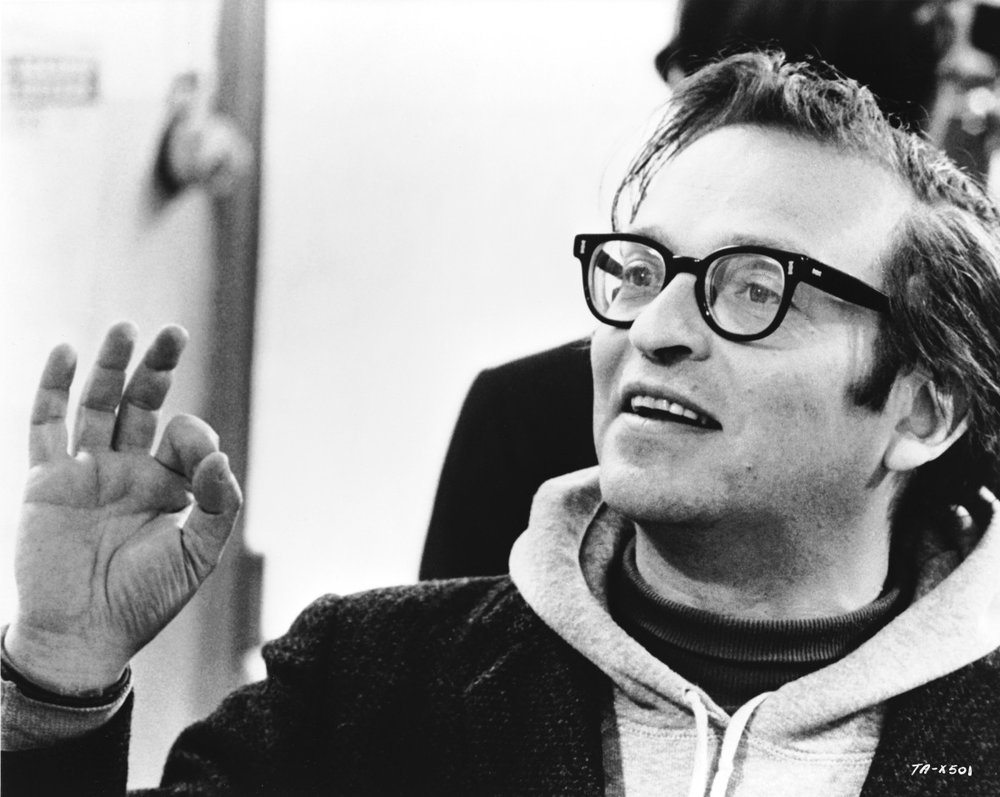 Sidney Lumet has a chapter titled “Rushes”, and mentions some of his rules for looking at rushes. This one stands out for me:
“Don’t let the difficulty of actually achieving a shot make you think that the shot is good. In the finished movie, no one in the audience will know that it took 3 days to light or 10 people to move the camera, the walls, or whatever.”
A short while ago, I read In the Blink of an Eye by Walter Murch, one of the best editors in the world, and he wrote something similar. This is a problem with directors sometimes when they look at footage, the problem of “seeing” beyond the frame—because a shot was so complicated and took so long to be completed, it’s difficult to cut it out of the film. That is why it’s useful to have an editor (who doesn’t come to set), so he has enough distance and detachment from all the troubles of shooting.
Then Sidney Lumet says about the reverse:
“Don’t let a technical failure destroy the shot for you. Obviously, any mechanical error endangers the reality of the movie. And those errors must be eliminated in the future. But you have to keep your eye on the dramatic impact of the shot. Is there life there? That’s what matters.”
This is a good point, and it’s already similar to my view. I’m a film student, we are all learning, so errors and imperfections are to be expected. We of course try to get everything as technically good as possible (after all we get graded on it), but if for some reason I have to choose, I’d rather sacrifice a bit of technical thing to prioritise emotion/ acting and the dramatic impact. For example, on a film we had lots of trouble with a scene, many things went wrong, 4 shots on the shot list were combined into 1 shot and we could only film it in 3 takes, I chose the best take, in which the actor was moving and the camera was also moving. Then we realised the boom was in shot, in a corner, when the camera was tilting up. To cut the boom out of shot, the editor changed the frame, cutting off the actor’s head. I said we couldn’t do that, I’d rather have boom in shot (a mistake) than cut off the actor’s head (the editor asked if I was sure—in the end, we tracked it and adjusted the frame as the camera moved, so we kept the boom out of shot but didn’t have to sacrifice anyone’s head).
Another example, there’s an important scene. The shot I’m talking about is extremely important, because it’s the climax of the film. Excluding all the ones that didn’t work for various reasons, I had 3 “usable” takes—the 1st one was bad, the 2nd one was so-so, not great, and the 3rd one was best for dramatic impact but for whatever reason didn’t have sound. I went with the 3rd one, which didn’t have sound. Others were not sure, we did the best we could, it’s not perfect. But in the end, after the film was screened, nobody came to ask me if that shot was post-synced.
I’m reading Sidney Lumet’s Making Movies, which I think is a very good and enjoyable book, especially for aspiring film directors.
Look at this:
 Isn’t that such a good “defence” of dialogue? The writer-director who has created the most memorable lines is Billy Wilder, who has 3 contenders for the best closing lines of all time—The Apartment (“Shut up and deal”), Some Like It Hot (“Nobody’s perfect”), and Sunset Boulevard (“All right, Mr. DeMille, I'm ready for my close-up”). Dialogue is not uncinematic. It is only uncinematic when it is superfluous exposition, and worst if it’s the director’s way of explaining the film to the audience (which is common in Christopher Nolan’s films).
Now look at this passage:
Isn’t that such a good “defence” of dialogue? The writer-director who has created the most memorable lines is Billy Wilder, who has 3 contenders for the best closing lines of all time—The Apartment (“Shut up and deal”), Some Like It Hot (“Nobody’s perfect”), and Sunset Boulevard (“All right, Mr. DeMille, I'm ready for my close-up”). Dialogue is not uncinematic. It is only uncinematic when it is superfluous exposition, and worst if it’s the director’s way of explaining the film to the audience (which is common in Christopher Nolan’s films).
Now look at this passage:
 That is fascinating and scary at the same time—would I be able to tell?
The book offers some invaluable insight and advice about directing. I admire Sidney Lumet immensely, and now love him even more as I read the book. He is not an auteur, he might not even be seen as a stylist, but does it matter? I would say that 12 Angry Men and Dog Day Afternoon are masterpieces, and Before the Devil Knows You’re Dead is a great, heartbreaking film that should be better known. Many of his other films are also highly acclaimed, such as Serpico, The Verdict, Network, Murder on the Orient Express, Long Day’s Journey into Night... Why are some other directors ranked higher just because their films are more stylistic or technically more impressive?
That leads me to another point: is the ability to work with actors not important? The directors who I think are masters at getting the best performances out of actors are Ingmar Bergman, Elia Kazan, Sidney Lumet, and Francis Ford Coppola. And perhaps Roman Polanski (Adrien Brody never had anything remotely as good as his performance in The Pianist).
Some other directors who are also good at working with actors are Billy Wilder, Clint Eastwood, Martin Scorsese, Zhang Yimou, Krzysztof Kieslowski… (I don’t include Kurosawa and Mizoguchi because Japanese acting is a different style).
As you follow a director’s work, you realise what their main strengths are—they are better at some aspects of filmmaking than others. Fellini’s main strengths, for example, are in blocking/staging, cinematography, and visual storytelling. Billy Wilder’s are in story, structure/ pacing, dialogue, and working with actors. Orson Welles’s are in cinematography (especially lighting), structure, editing, and sound. Luis Bunuel’s are in story/ plot, ideas, and pacing. Andrei Tarkovsky’s are in ideas, cinematography, sound, and atmosphere.
You also notice, not weaknesses, but that some aspects don’t interest a director as much as others. There isn’t much to say about cinematography and lighting in Luis Bunuel’s films, for example; or editing in Tarkovsky’s; or story in Wong Kar-wai’s.
It is not without reason that I think Ingmar Bergman’s the best director of all time, because his films do have everything—good story, interesting idea, depth, pacing, great cinematography (especially lighting), great sound, great editing (most notably in Persona), good production design (at least in Cries and Whispers and Fanny and Alexander), wonderful performances, good visual storytelling, experiments… But usually, directors have their strengths, and they may be weaker, or at least not as spectacular, in some other aspects of filmmaking, so why is it that directors who are good at techniques valued much more highly than directors who are good at drama (emotional complexity in a scene, and pacing for the film as a whole) and working with actors?
When a film looks good, it is visually pleasing, but at the end of the day, so what? I like good acting. I like touching stories. I like films that make me see life differently and learn something about myself. I never use the word “great” for directors like Quentin Tarantino or Wes Anderson—they’re good at what they do, and their films are entertaining, but have no depth and offer no more than that. But even if we talk about Stanley Kubrick, a director I admire very much when it comes to techniques (especially the production design, cinematography, and use of music), none of his films has ever touched me on an emotional, personal level like 12 Angry Men or Dog Day Afternoon has. In Dog Day Afternoon, people talk a lot about Al Pacino, who indeed delivers a fine performance, one of the best in his career, but we should also talk about John Cazale—for some reason, I can never forget the incredibly sad look on his face when Al Pacino asks where he wants to go if he could go anywhere, and he says “Wyoming”. 12 Angry Men shows Sidney Lumet’s talent at working with actors, and also his ability to make an engrossing film in an enclosed space. I’d choose Sidney Lumet over Kubrick anytime.
But that’s enough. Get Making Movies. It’s a good book. Even Roger Ebert said:
That is fascinating and scary at the same time—would I be able to tell?
The book offers some invaluable insight and advice about directing. I admire Sidney Lumet immensely, and now love him even more as I read the book. He is not an auteur, he might not even be seen as a stylist, but does it matter? I would say that 12 Angry Men and Dog Day Afternoon are masterpieces, and Before the Devil Knows You’re Dead is a great, heartbreaking film that should be better known. Many of his other films are also highly acclaimed, such as Serpico, The Verdict, Network, Murder on the Orient Express, Long Day’s Journey into Night... Why are some other directors ranked higher just because their films are more stylistic or technically more impressive?
That leads me to another point: is the ability to work with actors not important? The directors who I think are masters at getting the best performances out of actors are Ingmar Bergman, Elia Kazan, Sidney Lumet, and Francis Ford Coppola. And perhaps Roman Polanski (Adrien Brody never had anything remotely as good as his performance in The Pianist).
Some other directors who are also good at working with actors are Billy Wilder, Clint Eastwood, Martin Scorsese, Zhang Yimou, Krzysztof Kieslowski… (I don’t include Kurosawa and Mizoguchi because Japanese acting is a different style).
As you follow a director’s work, you realise what their main strengths are—they are better at some aspects of filmmaking than others. Fellini’s main strengths, for example, are in blocking/staging, cinematography, and visual storytelling. Billy Wilder’s are in story, structure/ pacing, dialogue, and working with actors. Orson Welles’s are in cinematography (especially lighting), structure, editing, and sound. Luis Bunuel’s are in story/ plot, ideas, and pacing. Andrei Tarkovsky’s are in ideas, cinematography, sound, and atmosphere.
You also notice, not weaknesses, but that some aspects don’t interest a director as much as others. There isn’t much to say about cinematography and lighting in Luis Bunuel’s films, for example; or editing in Tarkovsky’s; or story in Wong Kar-wai’s.
It is not without reason that I think Ingmar Bergman’s the best director of all time, because his films do have everything—good story, interesting idea, depth, pacing, great cinematography (especially lighting), great sound, great editing (most notably in Persona), good production design (at least in Cries and Whispers and Fanny and Alexander), wonderful performances, good visual storytelling, experiments… But usually, directors have their strengths, and they may be weaker, or at least not as spectacular, in some other aspects of filmmaking, so why is it that directors who are good at techniques valued much more highly than directors who are good at drama (emotional complexity in a scene, and pacing for the film as a whole) and working with actors?
When a film looks good, it is visually pleasing, but at the end of the day, so what? I like good acting. I like touching stories. I like films that make me see life differently and learn something about myself. I never use the word “great” for directors like Quentin Tarantino or Wes Anderson—they’re good at what they do, and their films are entertaining, but have no depth and offer no more than that. But even if we talk about Stanley Kubrick, a director I admire very much when it comes to techniques (especially the production design, cinematography, and use of music), none of his films has ever touched me on an emotional, personal level like 12 Angry Men or Dog Day Afternoon has. In Dog Day Afternoon, people talk a lot about Al Pacino, who indeed delivers a fine performance, one of the best in his career, but we should also talk about John Cazale—for some reason, I can never forget the incredibly sad look on his face when Al Pacino asks where he wants to go if he could go anywhere, and he says “Wyoming”. 12 Angry Men shows Sidney Lumet’s talent at working with actors, and also his ability to make an engrossing film in an enclosed space. I’d choose Sidney Lumet over Kubrick anytime.
But that’s enough. Get Making Movies. It’s a good book. Even Roger Ebert said:
“Invaluable… I am sometimes asked if there is 1 book a filmgoer could read to learn more about how movies are made and what to look for while watching them. This is the book.”
The 50s: http://thelittlewhiteattic.blogspot.com/2017/08/my-favourite-films-from-1950s.html
The 60s: http://thelittlewhiteattic.blogspot.com/2018/03/my-favourite-films-from-1960s.html
The Private Life of Sherlock Holmes (1970) by Billy Wilder
Harold and Maude (1971) by Hal Ashby
The French Connection (1971) by William Friedkin
The Godfather (1972) by Francis Ford Coppola
Cries and Whispers (1972) by Ingmar Bergman
The Discreet Charm of the Bourgeoisie (1972) by Luis Bunuel
Last Tango in Paris (1972) by Bernardo Bertolucci
Cabaret (1972) by Bob Fosse
Solaris (1972) by Andrei Tarkovsky
Play It Again, Sam (1972) by Herbert Ross
Amarcord (1973) by Federico Fellini
The Last Detail (1973) by Hal Ashby
Mean Streets (1973) by Martin Scorsese
The Sting (1973) by George Roy Hill
Sleep (1973) by Woody Allen
F for Fake (1973) by Orson Welles
The Godfather Part II (1974) by Francis Ford Coppola
The Conversation (1974) by Francis Ford Coppola
Chinatown (1974) by Roman Polanski
The Phantom of Liberty (1974) by Luis Bunuel
Alice Doesn't Live Here Anymore (1974) by Martin Scorsese
Dog Day Afternoon (1975) by Sidney Lumet
Scent of a Woman (1975) by Martin Brest
Love and Death (1975) by Woody Allen
Taxi Driver (1976) by Martin Scorsese
Network (1976) by Sidney Lumet
3 Women (1977) by Robert Altman
That Obscure Object of Desire (1977) by Luis Bunuel
Annie Hall (1977) by Woody Allen
Autumn Sonata (1978) by Ingmar Bergman
The Tin Drum (1979) by Volker Schlöndorff
Manhatttan (1979) by Woody Allen
All That Jazz (1979) by Bob Fosse
(Note that this is a list of favourites, so some great films may be absent, such as Rashomon or Tokyo Story).
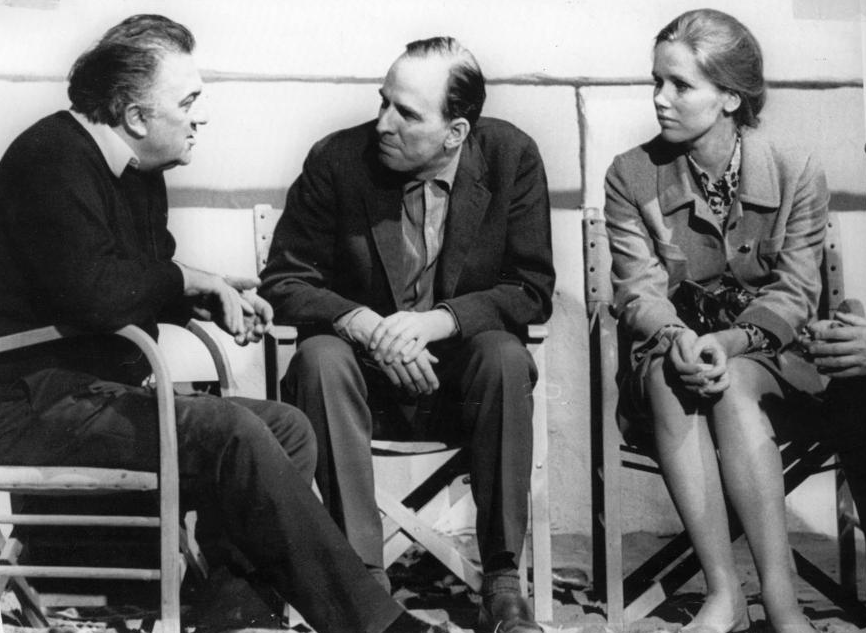 (A photo of Fellini and Bergman, with Liv Ullmann- source)
All about Eve (1950) by Joseph L. Mankiewicz
Sunset Boulevard (1950) by Billy Wilder
In a Lonely Place (1950) by Nicholas Ray
A Streetcar Named Desire (1951) by Elia Kazan
The Big Carnival aka Ace in the Hole (1951) by Billy Wilder
The Life of Oharu (1952) by Kenji Mizoguchi
Ugetsu Monogatari (1953) by Kenji Mizoguchi
A Geisha aka Gion bayashi (1953) by Kenji Mizoguchi
Summer with Monika (1953) by Ingmar Bergman
Roman Holiday (1953) by William Wyler
La Strada (1954) by Federico Fellini
On the Waterfront (1954) by Elia Kazan
Rear Window (1954) by Alfred Hitchcock
Dial M for Murder (1954) by Alfred Hitchcock
Smiles of a Summer Night (1955) by Ingmar Bergman
The Killing (1956) by Stanley Kubrick
The Trouble with Harry (1956) by Alfred Hitchcock
Street of Shame (1956) by Kenji Mizoguchi
Nights of Cabiria (1957) by Federico Fellini
Witness for the Prosecution (1957) by Billy Wilder
12 Angry Men (1957) by Sidney Lumet
Wild Strawberries (1957) by Ingmar Bergman
The Seventh Seal (1957) by Ingmar Bergman
An Affair to Remember (1957) by Leo McCarey
Vertigo (1958) by Alfred Hitchcock
Some Like It Hot (1959) by Billy Wilder
Anatomy of a Murder (1959) by Otto Preminger
So many great films in the 50s. Wonderful period.
1/ The 10 best films I watched this year are:
Brief Encounter (1945): Voted to be the most romantic film of all time, this David Lean film goes against the usual motifs of romance films: the actor and actress are not glamorous, the love story is an affair between 2 married people, the affair begins with the man's help for a woman that has grit in her eye and ends with a shoulder squeeze and is unconsummated. Brief Encounter begins with the scene of the 2 characters at the tea shop, there's a sense of awkwardness, and a vague feeling in the air of something unsaid, but we don't yet know what's going on- it's only later when the narrative goes back to the beginning and all the incidents unfold before us and gradually lead to this scene again, that it becomes particularly beautiful and moving. I've written about it here and here.
12 Angry Men (1957): The best courtroom film, whose actions actually don't take place in a courtroom. Sidney Lumet demonstrates how he can make a film almost set in only 1 room, and make it work- except for the opening and a brief scene outside the courthouse in the end, the entire film takes place in the jury room. It's driven by characters and emotions- Sidney Lumet uses heat to create a sense of claustrophobia and worsen the tense, stressful, irritable atmosphere, as he has done in Dog Day Afternoon. Regarding plot, a man is convicted, 12 men who don't know him and don't know each other walk into a room to decide his fate; 11 men think "guilty", only 1 man, played by Henry Fonda, thinks "probably not", and slowly he breaks their arguments and convinces everyone else. 12 Angry Men is about law and the concept of reasonable doubt, about the job of jurors, about persuasion, about evidence and logic, about reason and prejudices, about justice, about conscience, about standing up for what you believe in even if everyone else in the room disagrees with you.
Witness for the Prosecution (1957): The best courtroom film if 12 Angry Men is excluded because strictly speaking it isn't set in a courtroom. Or the courtroom film with the best twist. Marlene Dietrich and Charles Laughton are wonderful, and if the film isn't as often mentioned as it should be, the simple reason is that it's made by the man who made the masterpieces Sunset Blvd and The Apartment, which naturally overshadow everything else. I briefly wrote about it once.
Le notti di Cabiria (1957): This is early Federico Fellini, before he created Felliniesque films and started being accused of being fanciful and self-indulgent, but it's unmistakably a film by Fellini: Nino Rota music, dancing, parties, magic shows, clowns, a female Charlie Chaplin, a scene of hypnotism, religion, smooth camera movements, people walking as though dancing to music. The film starts with an ordinary story and a stock character, a naive prostitute with a golden heart looking for love in vain, but Fellini works wonders. It is sad but not cynical, moving but not sentimental. A comparison with Sweet Charity shows how restraint, how controlled and unsentimental Le notti di Cabiria is, Fellini knows when it's enough, and refuses to make his Cabiria self-pitying. I've written about it here and here.
The Private Life of Sherlock Holmes (1970): Billy Wilder is often cynical, this is when he's most humane. Roger Ebert thinks that after some interesting scenes at the beginning, the film tells an ordinary Sherlock Holmes adventure- even though he's my hero in film criticism, his assessment is mistaken. On the surface, it's just another adventure, but Wilder makes Holmes more human by letting him fail and giving us a glimpse of his vulnerabilities. Like Fellini and other great writers, Wilder doesn't exploit emotions, he knows when it's enough, he allows silence to suggest more and invites the audience to fill in. A melancholic film, partly thanks to the use of Tchaikovsky's music. I once wrote about it here.
Chinatown (1974): Roman Polanski at his best. I remember those days when my favourite film ever was The Pianist; then I was unimpressed with Rosemary's Baby, rather scared but underwhelmed by The Tenant, puzzled about Bitter Moon, critical of Repulsion, and was for some time indifferent to Polanski. Knife in the Water is great, in its subtleties, I just didn't have the same enthusiasm as a few years ago. Now Chinatown makes me think I have to watch again the films mentioned above (except Repulsion, because I've never seen Catherine Deneuve as a good actress, and she looks too classy for the role), and other films by Polanski. Jack Nicholson plays a Bogart character that looks tougher, more aggressive, but has a heart and a conscience and even some kind of idealism behind his cynicism, wit and sharp tongue.
The Godfather Part II (1974): Is part I better or part II better? It is unfair to say, when part I I've watched 3-4 or even 5 times, and watched part II for the 1st time this year. Francis Ford Coppola does several remarkable things here: he creates a sequel-prequel on a par with the 1st film, he gets from Al Pacino a performance almost as great and memorable as Marlon Brando's performance as the Godfather, and if part I sees the mafia from within and might make people like being part of the mafia, because of the power, principles, sense of a large family, and stress on honour and loyalty, part II portrays the mafia as a lot more violent and ruthless. One may say that Michael betrays his father's values and has no heart, thus isolating himself and making everyone enemies. On the other hand, it's not hard to understand his disillusionment, disappointment and distrust, when the people closest to his family and even his own brother betray him. At the same time, the plot of the young Vito lets us see that violence has always been there, since the beginning- it's just violence begetting violence.Part I is about a powerful man. Part II is about a lonely and self-destructive man.
Annie Hall (1977): I wrote about it a few days ago.
Crimes and Misdemeanors (1989): I also wrote about it a few days ago (a novelistic approach). There are 2 plots, with counterparts and opposites (the Judah in the Misdemeanors plot is Lester, a successful but pompous, self-important, ridiculous film producer; the Ben in the Misdemeanors plot is Cliff). Woody Allen combines the 2 plots together by analogy, by film scenes Cliff watches with his niece that echo scenes in the Crimes plot, by the talk between Cliff and Judah at the end of the film, and by the the-evil-are-reward-the-innocent-are-punished conclusion. The 2 strongest performances are from Martin Landau and Alan Alda, who play the 2 douchebags.
Birdman (2014): If you break down Birdman to its basic plot, it's a story of a faded film star unable to come to terms with ageing and being forgotten or replaced, which would place it in the same basket as Sunset Blvd, All about Eve, The Artist or Clouds of Sils Maria, but it doesn't belong there, because of Alejandro G. Iñárritu's treatment of the basic story and handling of the material. In fact, Birdman doesn't belong to anything, any genre: it has been seen as "a black-humor film, a mental health film, a realism/surrealism/magical realism film, a dark-humor parody film, a film of psychological realism, a failed domestic reconciliation drama, or a film concerning theatrical realism and naturalism". Iñárritu puts much in it that sometimes the film feels a bit messy, but the approach is so creative, particularly in the use of the Birdman figure, with all the imagined flying scenes, that the experience is thrilling. 1 of the most brilliant films produced in recent years.
2/ I watched 18 films again. Some of them pale a bit when viewed again, like Match Point and Mother (South Korea). Anatomy of a Murder is still good but the 2nd time felt a bit slow. Scarface is no longer a favourite. Charlie's Angels now appears unbelievably silly, especially as this time I notice its so-called feminism. A Room with a View still puzzles. Some Like It Hot and Bringing Up Baby are still fresh and hilarious. Some films, no matter how many times I've watched them, are forever wonderful and captivating: The Godfather, The Silence of the Lambs, Spring, Summer, Fall, Winter... and Spring. Psycho gets better the 2nd time.
3/ Spring, Summer, Fall, Winter... and Spring is the most zen, poetic film about life. The 4 seasons are the 4 periods in a person's life. The film is full of symbols, many of which may be lost to people unfamiliar with Buddhism. What do they mean, the doors that close nothing out or in, for example? Roger Ebert thinks: "They are not symbols, I think, but lessons. They teach the inhabitants that it is important to follow custom and tradition, to go the same way that others have gone, to respect what has been left for them." Again here I differ from him: in my interpretation, the doors are only symbolic- barriers are in the mind, if you ignore right and wrong and decide to cross the barrier, as the young monk does in the film, no door can hinder your way. The doors close nothing because they can block nothing. However, even if we don't catch all the symbols and understand their meaning, we can still see it as a beautiful film about the different stages in life, and each episode/part is like a koan, about cruelty to animals, about sexual desire and desire for possession, about anger and jealousy and murder and then remorse and repentance and redemption, etc. There is little dialogue, but Spring, Summer, Fall, Winter... and Spring says a lot, and each time, something new.
The only puzzlement is: how is it that such a beautiful, thought-provoking film could have been made by the same man who made those twisted films Dream, Samaritan Girl, The Bow and, worst of all, Pietà?
4/ The most important directors to me this year are Billy Wilder, Woody Allen, Federico Fellini and Alfred Hitchcock.
By Wilder, so far I've seen Double Indemnity, Sunset Blvd, Stalag 17, Sabrina, The 7 Year Itch, Witness for the Prosecution, Some Like It Hot, The Apartment, One, Two, Three, Irma la Douce, The Fortune Cookie and The Private Life of Sherlock Holmes. 12 films. In terms of cinematography, techniques, he can't compare with, say, Kubrick, he started out as a screenwriter, his strengths are in plot, dialogue, details, characterisation and working with actors. When he's great, he does everything perfectly, as though effortlessly. When he's not so great, he's never really bad- his weaker films always have some "saving grace", like charming Audrey Hepburn in Sabrina, sly Walter Matthau in The Fortune Cookie or energetic James Cagney in One, Two, Three.
Woody Allen is different from Billy Wilder and not as diverse, but there are a few similarities: both are cynical, both are extremely witty and can be funny, satirical as well as hysterical and absurd, both are not innovative in techniques. I've watched Everything You Always Wanted to Know About Sex* (*But Were Afraid to Ask), Love and Death, Annie Hall, Manhattan, Crimes and Misdemeanors, Match Point, Vicky Cristina Barcelona, You Will Meet a Tall Dark Stranger, Midnight in Paris, To Rome with Love and Blue Jasmine. 11 films in total, which is very little, considering how many films he has made. It means something though- I didn't care much for Woody Allen till recently, as I realise that in recent years he hasn't made anything really good that can be on a par with Annie Hall or Crimes and Misdemeanors, which means that I will search for his earlier films instead of watching Irrational Man. Think about it: how many people can write and direct and act and do all well? It is unfortunate that many people dismiss his works because of his personal life, or interpret them in its light.
If the films of Wilder and Allen show the primacy of writing, Fellini's art is about images. Fantasy, dreams, childhood memories. Some directors please the eyes with epic scenes and stunning visual effects but forget the brains, some directors create good films but forget that film is a different medium, using a different language and having different advantages, and Fellini makes wonderful use of cinematic language- he uses images where someone else, a weaker or less confident director, would use voice-over as a short cut. So far I've watched 7 films: I vitelloni, La strada, Le notti di Cabiria, La dolce vita, 8 1/2, Fellini Satyricon and Amarcord. With a bit of Fellini's Casanova. Even whilst personally preferring early Fellini to late Fellini, I don't see him as indulgent- in fact, I like Amarcord and see 8 1/2 as a masterpiece and intend to watch more of his works.
Last but not least, another director I love and consider important to me this year is Hitchcock. My knowledge of his long career is limited, only 10 films: Shadow of a Doubt, Rope, Rear Window, The Trouble with Harry, The Man Who Knew Too Much (1956), Vertigo, Psycho, The Birds, Marnie and Family Plot, with a bit of Rebecca and a bit of Strangers on a Train. I might have watched Foreign Correspondent. Not all of these films are well-done: Rope, also inspired by Dostoyevsky's Crime and Punishment like Match Point and Crimes and Misdemeanors, goes well for most of the film and falls flat in the end, because James Stewart's character's sudden realisation is weak and unconvincing; Marnie is interesting, but there is a problem with the psychology (the incident can't explain Marnie's hatred of men and her mother's apparent dislike of her); The Man Who Knew Too Much has 2 main characters that are too slow, thoughtless and dim-witted. But they aren't that bad- perhaps I'm more critical of them than they deserve because I've seen Hitchcock at his best, like Vertigo and Psycho and The Birds, which show him as the undisputed master of suspense. The Trouble with Harry is another favourite, partly because it's so uncharacteristic of Hitchcock.
5/ This year I watched 7 films produced in 2015.
Furious 7 and Mission: Impossible- Rouge Nation are well-done and highly entertaining. Magic Mike XXL is entertaining, but in terms of plot is weaker than the 1st film. Spectre is visually pleasing and no more, it offers nothing new about James Bond and has 2 forgettable Bond girls and is almost as bad as Quantum of Solace (may I mention in passing that Lea Seydoux's light blue satin dress doesn't look good on her skin and doesn't go well at all with her dark lip colour?). Daniel Craig is very good as James Bond, better than Pierce Brosnan, but his best Bond film is still Casino Royale.
A Most Violent Year is good but perhaps will soon be forgotten.
Far from the Madding Crowd seems a bit weak, even though I haven't read the book to compare. Carey Mulligan delivers a striking performance that runs the whole gamut of emotions, from A to B. As I understand, Bathsheba has 3 different kinds of feeling for the 3 men, and Carey Mulligan shows no distinction. However, it made me want to read the novel, that is probably good enough (I almost didn't read Mansfield Park because of the 1999 film, for example).
Bridge of Spies is good. Tom Hanks in this film isn't very different from himself in Saving Mr Banks, but James B. Donovan is such a fascinating, admirable person that it doesn't matter.
6/ http://thefilmstage.com/features/tokyo-story-hits-criterion-blu-ray-questioning-a-canonical-classic/
I feel less alone. I'm 1 of the people not wild about Tokyo Story. It is good, yes, but is it that good? It's the same way everyone else praises Boyhood to the sky and I alone dislike it.
So next year:
- I have to watch more Ozu. Even if I never warm to Ozu (we can't expect ourselves to like all directors), at least I'll know what I'm talking about.
- There are other directors I have to see or know better. Priorities: Akira Kurosawa, Hiroshi Teshigahara, Ingmar Bergman, Vittorio De Sica, Michelangelo Antonio, Luis Bunuel, Roman Polanski.
So, there.
HAPPY NEW YEAR, FOLKS. I wish you all peace, joy, luck, good health and success.
(originally posted on 17/10/2014).
Such a list only shows how little I've watched (very often, an excellent film is not mentioned here simply because I haven't watched it), but I'm shamelessly making and publishing it anyway. The ones in bold type are masterpieces and strong favourites, and will certainly remain in the list (in other words: will not be removed at any cost), the other films can be replaced when I discover/ remember something greater.
- The 40s:
The Great Dictator (1940)
The Philadelphia Story (1940)
Casablanca (1942)
Gaslight (1944)
Brief Encounter (1945)
It's a Wonderful Life (1946)
The Killers (1946)
The Best Years of Our Lives (1946)
The Bicycle Thief (1948)
The Heiress (1949)
- The 50s:
All about Eve (1950)
Sunset Boulevard (1950)
In a Lonely Place (1950)
A Streetcar Named Desire (1951)
On the Waterfront (1954)
The Killing (1956)
Witness for the Prosecution (1957)
12 Angry Men (1957)
Vertigo (1958)
Anatomy of a Murder (1959)
- The 60s:
The Apartment (1960)
Psycho (1960)
Vivre sa vie (1962)
The Insect Woman (1963)
8 ½ (1963)
The Woman in the Dunes (1964)
Dr. Strangelove or: How I Learned to Stop Worrying and Love the Bomb (1964)
My Fair Lady (1964)
Blowup (1966)
2001: A Space Odyssey (1968)
- The 70s:
The Private Life of Sherlock Holmes (1970)
The Godfather (1972)
Last Tango in Paris (1972)
The Godfather Part II (1974)
The Conversation (1974)
Chinatown (1974)
Dog Day Afternoon (1975)
Scent of a Woman (1975)
Taxi Driver (1976)
Autumn Sonata (1978)
- The 80s:
Raging Bull (1980)
On Golden Pond (1981)
Sophie's Choice (1982)
Scarface (1983)
Ran (1985)
Rain Man (1988)
The Accused (1988)
A Short Film About Love (1988)
My Left Foot (1989)
Monsieur Hire (1989)
- The 90s:
Goodfellas (1990)
The Silence of the Lambs (1991)
Raise the Red Lanterns (1991)
A Few Good Men (1992)
To Live (1994)
The Shawshank Redemption (1994)
Titanic (1997)
Happy Together (1997)
Central do Brasil (1998)
Magnolia (1999)
- The 2000s:
Memento (2000)
À la folie... pas du tout (2002)
The Pianist (2002)
Spring, Summer, Fall, Winter... and Spring (2003)
2046 (2004)
Million Dollar Baby (2004)
Brokeback Mountain (2005)
There Will Be Blood (2007)
Before the Devil Knows You're Dead (2007)
The Curious Case of Benjamin Button (2007)
Comment!
Witness for the Prosecution (1957)
12 Angry Men (1957)
Anatomy of a Murder (1957)
A Few Good Men (1992)
Fracture (2007)

