Pages

Showing posts with label stuff. Show all posts

Thursday, 19 February 2026

My time in America

After the work event, I explored a bit of Washington, DC and saw a bit of Northern California. A bit of the east and a bit of the west. 

In Washington, DC, I visited the Library of Congress, saw the Gutenberg Bible and the content of Abraham Lincoln’s pockets when he was shot and the exhibition about George Washington and King George III (for the 250th anniversary); went to the National Archives Museum, saw the US Constitution and the Bill of Rights and the Declaration of Independence; explored the National Air and Space Museum and saw many cool things including Neil Armstrong’s Apollo 11 Spacesuit and a space rock older than the Earth. Envious, aren’t you? It’s awesome—in the original sense of inspiring awe—to finally see these foundational documents after having grown up with American films and history. 

That’s not all. I also had a burger at Lucky Buns, ate Vietnamese food at Eden Centre in Virginia (quails!), went to a few supermarkets (why is everything huge in America?), looked inside a Trader Joe’s (America is a strange place), and met a Twitter friend (Susan). 

The contrast between that and my time in Northern California is fascinating, not only because of the differences between East and West Coast but also because my time in DC was (primarily) an American experience—going back to its foundation, seeing the documents that made the States the States—whereas my time in Northern California was (primarily) a Vietnamese American experience. I did see San Francisco (how could I not?)—the Golden Gate Bridge and the Bay Bridge, de Young Museum and the San Francisco Museum of Modern Art—but my visit was mostly to see my relatives—on both my mum’s side and my dad’s side—and experience Tết in San Jose. And what an experience that was. My first Tết in California. My first Tết with firecrackers. My time with Vietnamese people in California has made me realise I’m a very bad Vietnamese—I can only console myself that at least I still love mắm tôm and nước mắm, I have read Truyện Kiều and Cung oán ngâm khúc and Chinh phụ ngâm, I got an áo dài. 

And I can’t help wondering what kind of person I would have become—how different I would have been—if I had stayed in Vietnam or moved to the US instead of Europe. 

Sunday, 21 December 2025

2025: an exciting year in reading, viewing, travelling


Me wearing a Thai traditional dress. 


Literature 

In terms of reading, this has been a fantastic year. The main highlight was my discovery of ancient Greek literature: I read the Iliad and the Odyssey (and became a Homer obsessive), 4 plays by Aeschylus (5 if you count Prometheus Bound), 6 plays by Sophocles (1 left), 10 plays by Euripides, 5 by Aristophanes. Is there a more glorious period for theatre than 5th century BC in Athens? Elizabethan/ Jacobean England had Shakespeare, but here were four great writers working around the same time, and I was glad to discover that they did certain things that Shakespeare didn’t do. My favourite is Sophocles.

An Odyssey: A Father, a Son, and an Epic by Daniel Mendelsohn is also a very good book, not only as a companion for Homer but as a memoir on its own. 

In 2025, I also discovered Molière (funnier than Shakespeare); read David Copperfield; explored more of the 18th century with Tom Jones and Gulliver’s Travels; had my first encounter with Goethe; read Elizabethan and Jacobean revenge plays; reread a few Shakespeare plays and read part of Shakespeare After All, an excellent book by Marjorie Garber; read 4 plays by Seneca (whom I did not like) and the Aeneid (which is nowhere near as great as the Iliad and the Odyssey, come on); read more Ibsen (cold and uncompromising) and Flannery O’Connor (cold and uncompromising); read Gilead by Marilynne Robinson, a living writer (shocking, I know). So many great books in a year! 

The highlight in nonfiction is The Drowned and the Saved—my favourite nonfiction writer might actually be Primo Levi. 

The main disappointment of this year—unless I forget anything else more disappointing—is about Oliver Sacks. 

Cinema and theatre 

Let’s start with Shakespeare. I saw 4 great productions: Coriolanus (2024, dir. Lyndsey Turner, with David Oyelowo in the main role), Othello (2013, dir. Nicholas Hytner, with Adrian Lester in the main role), Othello (onstage at Theatre Royal Haymarket, dir. Tom Morris, with David Harewood in the titular role), and Julius Caesar (2018, dir. Nicholas Hytner, with Ben Whishaw as Brutus). Watch them you must, especially the first three. David Harewood’s Othello is still at Theatre Royal Haymarket in London till some time in January. That one and Coriolanus make me glad that there are still great Shakespeare productions (just not at the Globe), that there are still brilliant directors who take Shakespeare seriously and understand the plays, that there are wonderful Shakespearean actors. 

I also saw King Lear (2018, with Ian McKellen), Hamlet (2009, with David Tennant), and Macbeth (the Roman Polanski film from 1971). Not great, but all have something interesting in them. 

Apart from Shakespeare, the main highlight of 2025 was the 1977 series Anna Karenina, the 7th and best adaptation I’ve seen of Tolstoy’s novel. Yes, I’ve seen 7—I’m insane—and would probably watch more though I don’t think anything can be as good as the 1977 series, as Nicola Pagett is the best Anna Karenina and the entire cast is perfect. If you don’t know what to watch for the Christmas and New Year season, go for this—it’s 10 episodes. 

Another highlight is that I watched more films from the 1930s, which I hadn’t known as well as the 40s-70s. 

The 10 best films of 2025 (in chronological order and not counting revisits): 

  • Frankenstein (1931) 
  • It Happened One Night (1934) 
  • My Darling Clementine (1946) 
  • Harakiri (1962) 
  • Tom Jones (1963) 
  • The Servant (1963) 
  • Young Frankenstein (1974)
  • Perfect Blue (1997) 
  • Spirited Away (2001) 
  • In Bruges (2008)

The list might be slightly different tomorrow (which I guess is the way things usually go with these lists). 

The best documentary I’ve seen this year is Groomed: A National Scandal (released earlier this year), which everyone should see. 

Travelling 

I’ve only just realised that I did 6 work trips this year: to Washington, DC (February); Geneva (March and July); Prague (November); Jakarta (November); Bangkok (November – December). No wonder I’m now burnt out and ill. 

More excitingly, my Washington, DC trip was my first time in the US; and my trips to Jakarta and Bangkok were my first return to Southeast Asia since I left Vietnam 16 years ago.  

This has been fun. 

Merry Christmas and Happy New Year, everyone! 


Update on 22/12: I forgot that in 2025, I also read Judi Dench’s Shakespeare, a delightful book that not only tells behind-the-scenes stories but also offers lots of interesting insight into Shakespeare’s plays and characters; I also discovered Hayao Miyazaki. 

Sunday, 14 December 2025

On being back in Southeast Asia


Me doing the Mahanakhon skywalk. 

I have just returned from my work trips to Jakarta and Bangkok. 

It was strange, in a way, to be back in Southeast Asia for the first time since leaving Vietnam 16 years ago. Except for the February trip to Washington, DC, most of my travels had been within Europe. It almost felt like home—many things were familiar—and yet quite alien—as I couldn’t figure out the languages the way I can guess words in European languages. Many things reminded me of Vietnam: the crazy traffic and the mopeds and the insane electric poles and the vibrant street food culture, etc. Europeans probably don’t fully appreciate their walkable cities till they travel to Asia, or America. Jakarta for instance has the worst roads I’ve ever seen: the pavements are full of gaping mouths ready to swallow up your foot if you just get distracted for a second. Bangkok is less dense, less dangerous, but still mad. There’s a constant thought that I might get hit and see my ancestors any moment. Did you know that Bangkok’s roughly the same size as London? I didn’t know either, till recently. The public transport system however is not the same; I figured out that the best way to travel around—if you’re a bit crazy like me—was to use a Grab bike (a ride on a moped), or if the distance is too great and there’s heavy traffic, to combine the skytrain with a Grab bike. 

The best part is the food. There’s food everywhere. I’m convinced that Southeast and East Asia have the best food, especially if you consider everything—starters, main courses, desserts, snacks, fruits. I barely saw anything in Jakarta, being there for only a couple of days for a conference and having a lot to handle, but I enjoyed the food (to my own surprise). 

It was even better in Bangkok. After nearly two weeks there, my feelings are mixed. For a tourist, the city has a lot to offer: there’s so much to see, to eat, to experience. I ate pad thai and green curry and grilled meat and tom yum and jackfruit and Korean fried chicken. I got addicted to Thai milk tea and mango sticky rice. I tried Bangkok’s highest skywalk—78th floor, 310m high. I visited the Grand Palace (with its temple Wat Phra Kaew), and two other breathtaking temples (Wat Arun and Wat Pho). I took boat rides and tried tuk-tuks. I explored markets and shopping malls. It’s fun, for many reasons (and perhaps the closest to being in Vietnam now that I’m no longer able to return). 

But for someone interested in human rights, it is impossible to fully embrace Thailand because of the appalling behaviour of the government, because of the way they treat refugees, because of the way they collaborate with repressive regimes in the region and abet their transnational repression. I had been writing about the IDCs (Immigration Detention Centres) in Thailand. I was in Bangkok immediately after Thailand’s extradition of Y Quynh Bdap, a Montagnard human rights activist and UNHCR-recognised refugee, back to Vietnam. I visited Vietnamese refugees in Thailand, including some currently detained in the IDC. Most people don’t know about these things, and don’t care—even China’s atrocities don’t stop people from visiting and spending money there, how could I expect people to boycott Thailand “merely” for detaining refugees and allowing them to be beaten up by other detainees, or deporting human rights activists, or assisting Vietnamese authorities’ abductions of dissidents on their soil?—so I feel conflicted about “promoting” the fun stuff in Thailand. 

Oh well. Good experience though. 

Friday, 7 November 2025

A coffee diary

Over the past few months, I’ve been getting more properly into coffee, with my French press.

As suggested by the title, I was writing down my thoughts as I was trying the coffee, which means that later I’m going to keep adding to this same post as I try new types (even though I’ve got a favourite for now). 

Lavazza Rossa: A blend of Brazilian Arabica and African Robustas. Smells good, tastes all right, with hints of chocolate. Good start for someone just getting into coffee (and setting off to become a coffee snob—can’t wait!).  

Uganda – The Coffee Gardens from Curious Roo: Arabica (Nyasaland varietal). The tasting notes are said to be mango, cherry liqueur, dark chocolate. The first impression was that it tasted a bit odd. After I changed the dosing, I enjoyed it much more though it’s still a bit odd, a mixture of tastes—perhaps this is what the connoisseur would call “an interesting taste”. 

Dragon (Brazil) from Dark Arts: A mixture of varietals, Arabica or hybrid. The tasting notes are said to be roasted almond, raisin, caramel. Much slighter taste than the Ugandan coffee. I’ve sampled this twice, after the Ugandan coffee from Curious Roo and after the Nicaraguan coffee (Mask of the Mire) from Dark Arts, and think the best option would be 5 tablespoons for 2 cups. Tastes better at 6, but has too much caffeine. I probably shouldn’t be writing about these things when I’m making coffee without a scale and still experimenting with dosing. 

Eternal Light (Colombia) from Dark Arts: Arabica (Yellow Bourbon and Caturra). The tasting notes are said to be blood orange, apricot, Earl Grey. Sharper and more acidic than the other coffee I have tried, which reminds me of the sour coffee in Norway. Best option is 5 tablespoons for 2 cups, with a bit more milk. 

Waterfall (Colombia) from Dark Arts: Arabica (Caturra). The tasting notes are said to be strawberry, black cherry, dark chocolate. Acidic. Best option is 4 tablespoons for 2 cups, a bit slight; more than that, you get a nasty aftertaste. I’m slowly getting all the different kinds of coffee confused, but I’m not really a fan of this one. 

Mix of Eternal Light and Waterfall: All right.  

Don Domingo (Colombia) from Hermanos: Arabica (Castillo). The tasting notes are said to be dark chocolate, caramel, marmalade, red grape. Best option is 5 tablespoons for 2 cups. This one is all right, less acidic than Eternal Light and Waterfall, though there’s a slightly bitter aftertaste I don’t particularly like. 

Catnip (Ethiopia) from Dark Arts: Arabica (74110, 74112). The tasting notes are said to be jasmine, apricot, candied lemon. Smells good, tastes good (4 tablespoons for 2 cups). I like this, otherwise would be disappointing as Ethiopia is the birthplace of coffee. Doesn’t taste acidic and doesn’t have a bitter aftertaste like Colombian coffee. This is my favourite so far.  

Mask of the Mire (Nicaragua) from Dark Arts: Arabica (Parainema, Red Catuai) and hybrid (Sarchimor). The tasting notes are said to be dates, roasted almonds, caramel. I can smell almonds. This one is all right and doesn’t have high acidity or a bitter aftertaste, but it also doesn’t have strong flavours. This one might be my second favourite.

Updates in March 2026:

Exceptional from ASDA – Brazilian roast coffee: Arabica. Described as nutty. Not special but all right, not acidic. I can’t remember if it’s better or worse than Lavazza Rossa. 

4 Macchu Picchu (Peru) from CaféDirect: Arabica, I think. Described as full-bodied with dark chocolate overtones. I don’t like it, having tried 4 spoons and then 5 spoons for 2 cups. Unpleasant aftertaste. 

Rich Italian Ground 4 from Taylors of Harrogate: Arabica. Rather light. So-so at 5 for 2 cups. I’m afraid I’m spoilt by specialty coffee now. 

Updates in June 2026:

Walking Wires (Burundi) from Dark Arts: Arabica (Red Bourbon). The tasting notes are said to be strawberry, yellow plum, cacao. Best at 4 tablespoons for 2 cups; at 5 tablespoons, it tastes all right but I don’t like the aftertaste.  

Rocket Summer (Tanzania) from Dark Arts: Arabica (Kent, Bourbon, N39). The tasting notes are said to be rhubarb, red currant, digestive biscuit. Odd taste, I don’t like it. 

Sunday, 7 September 2025

Đi & khám phá: Video du lịch York

Lâu lâu viết tiếng Việt trên blog, mặc dù mỳnh chắc có khoảng 2 độc giả người Việt (đặc biệt nhé!). 

Mời bà con xem video mỳnh edit về York, một trong những thành phố trung cổ đẹp nhất ở Vương quốc Anh. Video nói về lịch sử, văn hóa, nét đặc trưng của York, một số điểm nên đến khi ghé thăm York, và một số chỗ ăn uống. Hồi xưa mỳnh ở Leeds, đi York vài lần nhưng không biết, sau này đọc cuốn Shakespeare: The Man Who Pays the Rent mới nhận ra bà Judi Dench là dân York, sinh ở Heworth (không phải Haworth), rồi tới khi làm video này mới biết ở York có con đường tên là Dame Judi Dench Walk. 

(Sẵn nói cuốn Shakespeare: The Man Who Pays the Rent, ai thích Shakespeare và bà Judi Dench nên đọc. Không chỉ kể chuyện sân khấu—cực hài—mà bà Judi Dench còn phân tích các vở và nhân vật của Shakespeare). 

Mà nếu không quan tâm vấn đề văn hóa thì bà con cũng xem video cho vui đi (mỳnh mất công edit, hê hê). 


Friday, 22 August 2025

Social media is no longer fun

There was a time when Facebook was fun. You and your friends posted things, you had conversations. Then slowly it became worse, became a place for showing off—you logged on and envied your friends travelling and exploring nice places and chilling on the beach and getting engaged and getting married and having babies, etc. But even that was better than now—I mostly use Facebook for work and for posting photos—now I only see posts from about 15 friends out of the 116 on my friend list—my feed is mostly filled with adverts for things (and beauty procedures) I don’t need and stupid memes I don’t find funny and AI-generated images I don’t find impressive and clickbait from media outlets I don’t read and TikTok-style videos from pages I don’t follow and Reddit stories I don’t know whether are true. The short-form content creators are the worst: occasionally you find something amusing, but most of the time you see people doing stupid couple videos or doing stupid pranks or asking passers-by stupid questions, and you can see when people steal ideas as the algorithm shows you different content creators creating the same content. 

What is the point of all this? 

Twitter also used to be better. I don’t mean it used to be a cosy, heartwarming little place like people often pretend it was before Musk—it has always been a divisive place, full of hate, amplifying stupid opinions and making mainstream issues that should only be on the fringe—you try to create your own circle and curate your own feed and can have interesting conversations with interesting people. But I think in some ways it has become worse: the clickbait and ragebait are worse; with monetisation, you see more sensational stuff and see Twitter threads broken up by bots and unrelated videos; with Grok and other AI, you see more fake stuff and also see people talking to Grok instead of each other. 

On the one hand, it may be hard to leave Twitter permanently—I’m currently taking a break—because that’s where I have friends with whom to discuss classic literature and cinema; that’s also where I can see news unreported and aspects unmentioned and perspectives unconsidered by the mainstream media. On the other hand, I would also see depressing news and hateful tweets and stupid opinions, and none of us are equipped to hear one stupid opinion after another, every day.

The Twitter copycats don’t sound better either—Bluesky for instance looks insufferable. 

I don’t even need to be on TikTok to know it’s much worse than other social media platforms.

The fun is mostly gone. Social media is now largely ragebait and brainrot and bots. The Dead Internet Theory appears increasingly true.  

Wednesday, 23 April 2025

23/4

Today is meaningful for two reasons. One, it’s Shakespeare Day. Two, it’s 16 years since my mum and I moved to Norway (which means that I have now lived longer outside Vietnam than in Vietnam).

I never thought about it, but it’s interesting that the day my life turned to a new chapter—everything has been different since—was Shakespeare Day, the day celebrating the writer with whom I’m most obsessed. 


Anyway, here are some recent photos of me, taken by my bf. 


Monday, 10 February 2025

On being ill, and comforted by classic Hollywood

There was a time when I, whenever ill, wondered if it’s some sort of divine punishment. Now that I’m sick the third time this winter, I see it as a reminder to count my blessings when I’m again in good health. The first time was a bad cold for a week or two in late November or early December, back in London. That led to a sinus infection just before Christmas, when I was in Edinburgh and then in Leeds—half of my upper teeth were in excruciating pain, made even worse by earache and headache—what torture!—I even thought another wisdom tooth was appearing. All that should have built me a strong armour against those invisible devils, but no, I’m now ill again—cold or flu, what’s the difference—and this is my first time in the US. 

But I refuse to be negative: at least the work events in Washington, DC are all done, with flying colours, and now I can indulge in resting my limbs and feeling sorry for myself. 

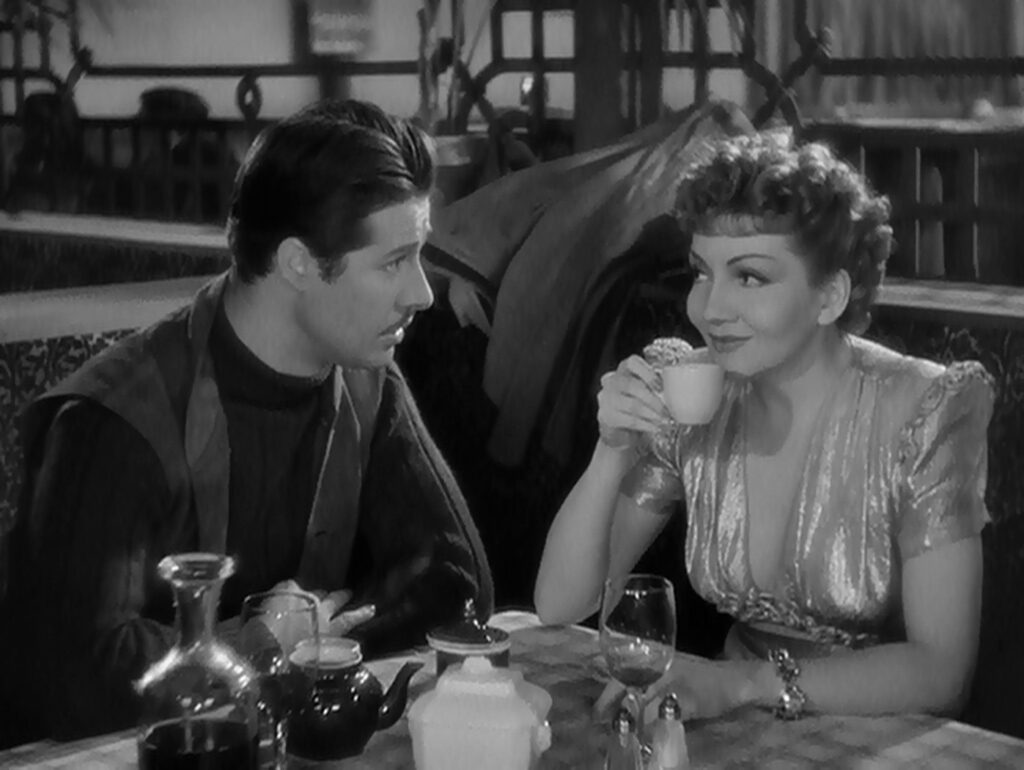
Anyway, having now got The Criterion Channel, I’ve been discovering and enjoying Claudette Colbert films. On Saturday: It Happened One Night and The Palm Beach Story. On Sunday: Midnight and Cleopatra. Why is she not better known today? I mean, compared to Marilyn Monroe or Audrey Hepburn or Grace Kelly? The first three films are delightful romantic comedies, with witty dialogue and the usual charm of classic Hollywood, proving Claudette Colbert a brilliant comic actress, effortlessly funny and sexy. In It Happened One Night, a spoilt heiress elopes and along the way falls in love with the impoverished reporter who helps her; in The Palm Beach Story, a woman runs away from her noble but non-resourceful husband and tries to catch a rich man to help them both, only to throw away everything as she still loves her impractical husband; in Midnight, a showgirl turns up in Paris and tries to capture a rich man, whilst being romantically pursued by a taxi driver, and in the end realises she wants the poor taxi driver. All these roles are similar and in some way variations of the same kind of character—at least in The Palm Beach Story and Midnight—but Claudette Colbert is always charming, always delightful, not at all stale or repetitive. 

Cleopatra is different. Claudette Colbert’s performance as the sensual, captivating queen of Egypt shows that she can do drama. When I started watching it, I thought it was a disadvantage for the film that my view of Caesar, Cleopatra, Antony… was informed entirely by Shakespeare’s Julius Caesar and Antony and Cleopatra and those were wonderful plays, but by the end, I was no longer comparing—Cecil B. DeMille’s film stands on its own (even if I wish there were more chemistry between Claudette Colbert and Henry Wilcoxon as Antony), and she is sensual and utterly bewitching. 

If you haven’t seen these films, you should. 

Tuesday, 25 June 2024

Robin Hood's Bay

 Some photos of me at Robin Hood's Bay, Yorkshire, England. 


Tuesday, 11 June 2024

Birthday

The loveliest person in the world gave me this present for my birthday! Look! 

(I am at this moment reading Vladimir Nabokov's Lectures on Don Quixote). 


Wednesday, 14 February 2024

25 types of men on Tinder

As Blogger would make you sign in to verify your age, I have decided to publish the list on Google Docs. 

Enjoy! 


Wednesday, 4 October 2023

A Bardolator’s notes on living in London

1/ As other sufferers would understand, once you have caught the Shakespeare bug, it’s incurable—you read the plays and listen to audio recordings and watch productions and watch film adaptations and read centuries of criticism—and if you happen to live in London, you look for the places associated with Shakespeare.

In May, I went on a Shakespeare tour with Declan McHugh, who specialises in Shakespeare and serial killers.

Last Sunday, I went on another Shakespeare tour with Helen Palmer of Elan Walks.

(Helen said to me “So you’re the Bardolator in the group.” How did she know? you ask. I’m a show-off, that’s how). 


2/ On 25/9, I was at the Swan at the Globe with Himadri of Argumentative Old Git blog, having won two tickets, for the event celebrating 400 years of First Folio and the new edition by Folio Society.

Three gorgeous volumes, £1000. Limited edition. 

I can’t afford them—I’m just a poor girl—but hey, I was one of the first people outside Folio Society to have seen and felt these beautiful books. 


3/ It’s insane to me that souvenir shops in Amsterdam are filled with Van Gogh and those in Vienna are filled with Mozart and Gustav Klimt, but souvenir shops in London just sell Harry Potter, the royal family, and London symbols such as the red bus. No Shakespeare. No Dickens. Rarely Sherlock Holmes. Just contemporary pop culture nonsense.


4/ I’m currently reading and enjoying Neil MacGregor’s Shakespeare’s Restless World: An Unexpected History in Twenty Objects

It’s an interesting concept.

One can enjoy Shakespeare books anywhere, but it feels a bit more personal when you recognise place names (ah, Shoreditch!) or you can easily pop to Bankside and walk around the area where he worked.

(Yep, I’m rubbing it in). 


5/ There is a Shakespeare Museum opening in London next year. I am excited but worried. 


6/ If you’re heartbroken (or planning to be), I recommend London. Lots of attractions to see, things to do, places to visit.

Since moving to London, I have seen only two copies of the First Folio: the one at British Library and the one at the Globe. 


This year is the 400th anniversary of the First Folio so, you’ve guessed it, I’m gonna go hunt them: https://folio400.com/first-folios-on-show-in-2023/

Thursday, 17 February 2022

The little white attic is 10 years old!

It was actually 13/2/2022 that marked 10 years of The little white attic, but I’ve been so busy that I forgot (silly, that’s me). 

Lots of thanks to all five of you who read the blog and share it (hint hint) and write comments. The interesting conversations are the reason I continue blogging, I have learnt so much from you all. 

Here’s to another year of blogging!  


Sunday, 26 December 2021

The 18 types of people on Book Twitter

1/ The Book Shopper:

Buys more than reads. Tweets photos of book posts and book hauls, but doesn’t say much about books. Loves book sales, especially NYRB sales. Has an NYRB collection. Complains about lack of space, but continues buying books. Once in a while says “oh no, I went to a bookstore and accidentally came out with a pile of books”. 

2/ The Fancy Book Photographer:

Visual. Likes beautiful covers and sees books as objects of beauty. Takes photos of books with flowers, a cup of tea/ coffee, some decoration, etc. Doesn’t talk about the beauty of prose or metaphors.  

3/ The Book Counter: 

Posts photos of books read in the week/ month. Counts number of books they read in a year, and compares it to previous years. More extreme: may have statistics about how many books are by women, how many books are by writers of colour, how many books are in translation, and so on. Generally prefers novellas and short novels to “loose baggy monsters”. 

4/ The Ranker: 

Likes lists and rankings. Occasionally creates a poll comparing books or authors, even when there’s no basis for comparison.  

5/ The Memer:

Regularly shares memes about how much they love books, how all they need is a library and a garden, how books are friends, how books allow you to travel, how books make you better people, and so on and so forth. Doesn’t talk much about specific books, however. 

6/ The Quoter: 

Types lines from books, or shares photos of passages in books, though doesn’t comment on them. 

7/ The Plot Summariser:

Has a blog and reviews books by summarising the entire plot then adding about 2-3 sentences of comments. 

8/ The Group Read Participant:

Takes part in group reads, often more than one at the same time. Reads a set number of 20-40 pages a day. Sees reading “loose baggy monsters” as climbing the Everest, and feels a sense of accomplishment after getting to the top. Congratulates others for reading books. 

9/ The Challenge Participant:

Takes part in challenges such as German Literature Month, Women in Translation Month, Japanese Literature Month, and so on. 

10/ The Text Disruptor/ Canon Hater:

Attacks the Western canon and hates the concept of a canon, though forgets that other countries and cultures also have their own canons. Thinks that the canon is created by a committee, and wants to “disrupt texts”, “decolonise the bookshelf”, “decolonise the curriculum”, etc. Thinks that Shakespeare is celebrated only because of the establishment. First and foremost concern when they look at a book list is to see how many of the books are by women and how many are by people of colour. Often an English teacher.  

11/ The Canon Defender: 

Continually argues with DisruptTexts proponents, always in vain, but doesn’t learn. There can be an overlap with the next group, but a Canon Defender isn’t necessarily a Bloom Worshipper. 

12/ The Bloom Worshipper: 

Quotes Harold Bloom often, and sees The Invention of the Human as a Bible. Often speaks of the School of Resentment, and uses words such as “inwardness”, “anxiety of influence”, “overhearing himself/ herself”, etc. Has little interest in non-Western literature. 

13/ The Nabokov Worshipper: 

Aesthete, only interested in details and “the tingle in the spine”. Refuses to look at literature through the lens of gender, race, or ideology, and ends up looking at literature through a Nabokovian lens. Always defends Nabokov when someone criticises his novels, especially Lolita, or his views, especially on Dostoyevsky. 

14/ The Book Slut/ the Omnivore:  

Reads everything, from different periods, different countries, and different genres. Thinks all kinds of books are good and people shouldn’t be snobbish. Often says “as long as people are reading, that’s good”. 

15/ The Book Snob/ the Old Fogey: 

Reads classics (almost) exclusively. Only interested in books that have stood the test of time. Out of the loop, has no idea what’s hip and who’s currently big.  

16/ The Women Promoter: 

Reads women (almost) exclusively, and often uses the hashtag #ReadMoreWomen. Tends to prefer modern literature. When looking at a book list, first checks how many books are by women. Protective of Persephone Books. Loves Woolf and A Room of One’s Own

17/ The Edgy Kid:

Sees Modernism as the peak of literature, and thinks the novel belongs to the 20th century, not the 19th. Likes Proust, Kafka, and Dostoyevsky, thinks Tolstoy is sunny and simple, and doesn’t care about Shakespeare. Not interested in Dickens or Jane Austen, sees them as old-fashioned, boring, and “safe”. Not interested in plot, and generally not interested in anything before the 20th century. Tends to read books that are difficult, challenging, plot-less, experimental, and overall intellectual. Likes unreliable narrators, dislikes intrusive narrators. Often male. 

18/ The Peacemaker: 

Cheers for everyone. Sees “argument” as a bad word, and sees any challenge to an opinion as a provocation. Sees Book Twitter as a safe space. Mostly female. 

Sunday, 19 December 2021

An update

After the Patreon experiment, I have decided to go on blogging as usual. 

I have deactivated my Twitter account (which is set to be permanently deleted in 29 days unless I change my mind), but if you’re here, it doesn’t matter. After 2 years on Twitter, I’m now going to return to the quiet corner of my blog.


Saturday, 16 October 2021

Light Night 2021

My video of this year's Light Night in Leeds, the largest annual arts and light festival in the UK. 

Set the quality to 1080p and enjoy! 


Monday, 24 February 2020

On blogging and depression

This is one of those days when I’m asking myself: why do I blog? I’ve had this blog for about 8 years now, and been in the blog world for over 10 years. But now I’m asking myself, what exactly is the point?  
Right now, I should be focusing on writing for money. Or, well, doing something for money. The fact is, I’ve been struggling lately. My depression came back last year, for other reasons, and the struggle to get into the film industry just worsened it. Self-doubt and self-loathing fill my head, I have days when I just want to lie in bed and do nothing—I don’t want to cook, I don’t want to do laundry, or I do laundry and don’t want to fold my clothes, so on and so forth. I have days when I just want to sit there, eat Choco Pie and watch stupid videos.   
So I read, these days I’ve been reading and blogging a lot, to drown my own negative thoughts and to be productive in some way. It helped for a bit—especially since I joined Twitter, I have got more people reading my blog, even if most of my readers don’t comment. 
Sometimes I intend to write for the magazine, or some other place, but can’t start, or start and can’t continue, then I end up writing a blog post. But then I start feeling bad again—the energy and time spent on a blog post should be spent on writing something else that brings money, or at least, should be spent on writing a script. 
What am I blogging for? What the hell do I get out of it? 
I know I chose to blog to share my enthusiasm, bring more readers to the books I love, and defend the books I love if anyone takes a dig at them. I know I chose to blog to share my thoughts, have a conversation, and learn from others. I know I chose to blog to find, to reach out to people with similar interests and passions. I know I chose to blog to organise my thoughts, keep track of things, and make notes for later. I know I chose to blog because of the freedom of a blog, where I wouldn’t be edited or censored, where I could write whatever I want without worrying about the audience as much as when I write for the magazine or anything similar. 
I know all of my reasons, and love my blog, and it cheers me up to see a nice comment once in a while. But today is still one of those days when I can’t help feeling that it’s all pointless, time-consuming, and of no use to anyone, even myself. In a sense it has become a distraction, and has allowed me to continue procrastinating. Then I feel like shit. 
To be honest, I don’t even know why I’m writing this blog post. To get some sympathy? To ask for support? Or just to whine? I’m not announcing an end of this blog, or a break—perhaps I might even contradict myself and write a blog post tomorrow. I don’t know. 
But I can’t be the only one out there questioning the point of it all.

Tuesday, 21 January 2020

Jane Austen’s views on relationships and marriages, according to Mansfield Park

I’m going to start by saying that, because of my upbringing, I have a rather strong dislike of people, especially women, who make stupid decisions in relationships. I’m talking about women who run after men, let men treat them like shit, and throw away self-respect (Emma Bovary), women who marry a bad boy with the naïve belief that they can change him (Helen Lawrence Huntingdon), women who accept a man who treats other women like trash but think that they are special—an exception, women who let a man cheat on them or beat them but still believe in his promises and stay in the relationship, women who know a guy is a douchebag but keep going back to him, and so on and so forth. 
(To the moralists who want to tell me to sympathise and stop victim-blaming: can you honestly say that there’s never a moment that a friend comes to you for relationship advice and you think she’s goddamn stupid and must get out of the relationship?) 
Anyway. I’m not going to reduce Jane Austen’s wonderful works to self-help books, she’s a great, fantastic writer. But at the same time, apart from her genius, Jane Austen is so close to my heart because we share the same ideas about balance, and virtues, and we also share similar views on relationships. 
So what are Jane Austen’s views on relationships and marriages, according to Mansfield Park?  
1/ Compatibility is important.  
This is something that is in every single Jane Austen novel. Compatibility doesn’t mean that your personalities have to be the same, nor that you always have to like the same things. Compatibility means you share the same world view and values. 
Edmund Bertram and Mary Crawford are incompatible because their world view, habits, and values are different: Mary likes London life and excitement, likes wealth and distinction, can’t accept Edmund becoming a clergyman and tries to change his mind, can’t handle quiet and solitude, and gets bored and restless easily, whilst Edmund is the opposite. She also doesn’t have the delicacy that he values—she speaks disrespectfully of her uncles to strangers (before becoming close to Edmund and Fanny), makes sweeping generalisations about the Navy and the clergy, and doesn’t care about anyone. 
A reader may think Mary is more fun than Fanny, but that’s a personal response and beside the point—Fanny and Edmund have a lot more in common. 
Apart from love and compatibility, Jane Austen shows in her 6 novels, over and over again, that respect, honesty, and understanding are also important for a relationship and marriage. 

2/ Disapproving of men who play with women’s feelings. 
Jane Austen always shows a distrust of charming men who lack openness and always know the right thing to say, but it’s in Mansfield Park that her view is the clearest—she disapproves of men who play with women’s feelings. 
““I cannot think well of a man who sports with any woman's feelings; and there may often be a great deal more suffered than a stander-by can judge of.”” (Ch.36) 
That comes from Fanny, but it’s obvious in Mansfield Park that the author thinks the same. 
As written in an earlier blog post, Henry plays with Maria’s and Julia’s feelings, makes them fall in love with him for fun, and goes back and forth between the 2 sisters. During the trip to Sotherton, Henry sits with Julia at the front of the carriage, making Maria jealous, then goes off with Maria, leaving Julia behind and abandoning Mr Rushworth, then sits with Julia again on the way back, ignoring Maria. During the play, he cleverly steers himself and Maria into the right parts, making Julia feel slighted, then he flirts with Maria the entire time, in front of Mr Rushworth, without any intention of making her break off the engagement.  
Some readers innocently think Fanny should end up with Henry, or would, if he perseveres. To think so is to misunderstand Jane Austen. Fanny might, convincingly, find Henry charming, and acknowledge some other good qualities, but she says she would never accept him because she has seen enough, and judged him to be a selfish, thoughtless man who likes playing with women’s feelings. He might love her like he never felt about any other woman before, but she is right to distrust it, and read it as a sign of vanity. 
“A little difficulty to be overcome was no evil to Henry Crawford. He rather derived spirits from it. He had been apt to gain hearts too easily. His situation was new and animating.” (Ch.33) 
Again, I don’t doubt that Henry has feelings for Fanny, but the fact that she doesn’t like him back attracts him even more.  
In the end, Fanny’s right for distrusting and refusing Henry. 
(Now I suppose you can guess my thoughts on Rochester—honestly, Jane Austen’s much wiser than Charlotte Bronte).

3/ Against the idea that a woman can or should try to change a man. 
Through Fanny, Jane Austen expresses her view that a woman shouldn’t accept a bad guy and expect to reform him—that’s a naïve, idealistic thought, it never works (look at Anne Bronte’s The Tenant of Wildfell Hall). Not only so—let’s look at this conversation between Fanny and Edmund: 
““I am persuaded that he does not think, as he ought, on serious subjects.”
“[…] Crawford's feelings, I am ready to acknowledge, have hitherto been too much his guides. Happily, those feelings have generally been good. You will supply the rest; and a most fortunate man he is to attach himself to such a creature—to a woman who, firm as a rock in her own principles, has a gentleness of character so well adapted to recommend them. He has chosen his partner, indeed, with rare felicity. He will make you happy, Fanny; I know he will make you happy; but you will make him everything.”
“I would not engage in such a charge,” cried Fanny, in a shrinking accent; “in such an office of high responsibility!”” (Ch.35) 
Here, Jane Austen also goes against the 19th century idea that women are morally superior and should try to tame and manage their husbands.  

4/ A woman has the right to say no, and doesn’t have to provide reason. 
When Edmund tells Fanny that Henry’s sisters, Mary and Mrs Grant, are disappointed and not happy that she rejects Henry, this is the response: 
““I should have thought,” said Fanny, after a pause of recollection and exertion, “that every woman must have felt the possibility of a man's not being approved, not being loved by some one of her sex at least, let him be ever so generally agreeable. Let him have all the perfections in the world, I think it ought not to be set down as certain that a man must be acceptable to every woman he may happen to like himself. […] How, then, was I to be—to be in love with him the moment he said he was with me? How was I to have an attachment at his service, as soon as it was asked for? His sisters should consider me as well as him. […] And, and—we think very differently of the nature of women, if they can imagine a woman so very soon capable of returning an affection as this seems to imply.”” (Ch.35) 
That is such an important passage that I’m surprised I’ve read dozens of essays about Mansfield Park and nobody ever talks about it. A woman has the perfect right to say no, and doesn’t have to justify herself for not loving a man who says he loves her.   

5/ Against the idea that if a woman says no, a man should persevere till she says yes. 
Henry declares his feelings to Fanny, she has no interest, but he doesn’t leave her alone. 
“The gentleman was not so easily satisfied. He had all the disposition to persevere that Sir Thomas could wish him. He had vanity, which strongly inclined him in the first place to think she did love him, though she might not know it herself; and which, secondly, when constrained at last to admit that she did know her own present feelings, convinced him that he should be able in time to make those feelings what he wished.
He was in love, very much in love; and it was a love which, operating on an active, sanguine spirit, of more warmth than delicacy, made her affection appear of greater consequence because it was withheld, and determined him to have the glory, as well as the felicity, of forcing her to love him.
[…] Must it not follow of course, that, when he was understood, he should succeed? He believed it fully. Love such as his, in a man like himself, must with perseverance secure a return, and at no great distance; and he had so much delight in the idea of obliging her to love him in a very short time, that her not loving him now was scarcely regretted.” (Ch.33) 
Just like Mr Collins thinks Elizabeth Bennet rejects him because she doesn’t know her own feelings, Henry doesn’t end it after getting rejected, but keeps coming back and trying to persuade her, even speaks to Sir Thomas, and doesn’t leave her alone. It’s not only him but everyone in the book, especially Sir Thomas, thinks that he only has to persevere and she will yield. Different people try to convince and put pressure on Fanny, from Sir Thomas to Mary Crawford. 
It’s the same today—many men can’t accept a no from a woman, and think that if they just keep asking, at some point the woman will say yes.  
Some people may argue that Mr Darcy proposes twice in Pride and Prejudice and Robert Martin does the same in Emma, but in each case, there’s a gap between the 2 proposals, and many things happen in that time. There’s a difference between trying again after some time, not giving up after a rejection, and harassing a woman till she says yes, which is what Henry tries to do. Henry keeps coming back and talking about it, helps William get promoted to keep score and make Fanny accept him, and tries to make everyone else put pressure on her.  
It is clear that Jane Austen strongly objects to the idea that if a woman says no, a man should persevere till she says yes. 
In short, by using the marriage plot over and over again, Jane Austen keeps exploring different kinds of relationships and stressing the important elements for a happy marriage. Mansfield Park is the novel that encapsulates the best her views on relationships and marriages.

Wednesday, 1 January 2020

Happy 2020!

Happy New Year, everyone!
New decade (go away pedants) so it's time to dig out my favourite New Year song: 


(In Vietnam, at least till I left, they play this song every year. Whenever I listen to it, I think of Vietnam). 

Hope you all have a happy, prosperous year!