Pages

Showing posts with label writers and readers. Show all posts

Thursday, 4 June 2026

Visiting Jane Austen’s House Museum

A few days ago, I finally managed to visit Jane Austen’s House Museum in Chawton, Hampshire. It was great. 

This is where Jane Austen revised her first three novels, and wrote her last three novels Pride and Prejudice, Mansfield Park, and Emma. The table’s much smaller than I thought! 

I don’t know what flowers Austen had in her garden back then, but here are a few photos of mine of the flowers now. 

Also wandered around Chawton. Tiny, charming village. 

In case anyone wonders if I have visited Shakespeare’s Birthplace Museum in Stratford-upon-Avon, here are a few photos from 2023. 

Wednesday, 3 June 2026

On translation and anachronism

The other day, I tweeted about Tom Payne’s translation of The Art of Love: “Picked up this copy of “The Art of Love” but I had to quit after several pages. The translator used phrases like “girlfriend”, “safe sex”, “one-night stand”, etc. This is Ovid!” 

The tweet went semi-viral, attracting some obnoxious people who seem to think that nobody’s allowed to say a single word about a translation from Latin unless they know the language—a phenomenon that never occurred when I discussed translations of Russian, French, Japanese novels over the years—this strangely seems to only happen with Latin and ancient Greek. 

However, I also got many good comments from both people who agreed and disagreed with my complaint and knew Latin. And it led me to think more about this subject: how traditional or modern should a translation be? When is it too modern? When does it appear anachronistic? Because these things seem to be arbitrary, and most of the time, just come down to personal preference. 

When we want to read 19th century Russian novels, for example, we can go for a translation into 19th century English, as the Maudes and Constance Garnett were alive around the same time, or we can go for a modern translation. With Don Quixote, we can read Thomas Shelton if we want 17th century English (it’s also the version that Shakespeare read). But we do not have contemporary English translations—in the sense of “from the same period”—of Homer or Sophocles or Ovid—so all translations are modern—various levels of modernity. I can see the argument that a Victorian translation of Ovid is not any less anachronistic than a new translation—it may even impose Victorian sensibilities on the poems. I however do not buy the argument that because Ovid was modern for his time, he should be translated into today’s English, into the latest slang and colloquial terms (of course Ovid was contemporary to his contemporaries—what kind of argument is that?). However open and modern Ovid appears to us, he’s still a writer from ancient Rome and his works inevitably reflect the lifestyles and customs and values and beliefs of ancient Rome; it’s jarring to come across modern concepts in Ovid. Even if a word accurately conveys the meaning (which some people say “one-night stand” and “safe sex” here do), words don’t only have meanings—words also have connotations and associations—words have baggage. 

It might be arbitrary, and personal, that I prefer “Isn’t she exquisite?” (Aylmer and Louise Maude, revised by Amy Mandelker) to “She is gorgeous, isn’t she?” (Anthony Briggs) in War and Peace, but is it entirely arbitrary and personal when I say that “my ex” sticks out like a sore thumb in The Brothers Karamazov (Ignat Avsey)? Does it not take you out of the story when you read Don Quixote and come across “girlfriend”, “boyfriend”, or “a certain delicious je ne sais quoi” (Tom Lathrop)? Does it not make you stumble when you see “one-night stand” in a Roman poem? The entire translation may be in modern English, but some phrases stick out. Some phrases draw attention to themselves. 

Where we draw the line is the art of translation. Slang, I think, appears more obviously, distractingly anachronistic. 

Another thing to consider as well is that Homeric Greek or Shakespearean English for example wasn’t the way normal people talked. It’s one thing to modernise the language; why do some translators go for something colloquial and mundane when the original is highly literary? Is it not a fair point when readers—whether or not they know the original language—complain that Emily Wilson opts for phrases such as “a complicated man”, “tote bag”, “pep talk”, “playtime is over”, etc. in her translation of the Odyssey? Defenders of Emily Wilson have said “polytropos” means “complicated”, but “poly” means “many” and “tropos” means “turn”—surely Robert Fagles’s “the man of twists and turns” or Robert Fitzgerald’s “that man skilled in many ways of contending” is more interesting and evocative than Emily Wilson’s commonplace “a complicated man”? Those of us who do not know the original language and have to rely on translations may not be able to judge accuracy, but we can comment on other aspects of a translation: how it sounds in the target language, whether it’s good prose/ poetry, whether some choices appear anachronistic, whether we want to read it or switch to a different translation… And yet some people want to shut down the conversation, saying we’re not qualified to say anything if we don’t know the original. 

Let’s have a discussion.  

Sunday, 3 May 2026

My 10 favourite literary works

A list of the 10 literary works I think about, or revisit, most often: 

  • The Iliad 
  • The Odyssey 
  • King Lear 
  • Othello 
  • Shakespeare’s Sonnets 
  • Don Quixote 
  • War and Peace
  • Anna Karenina 
  • Moby-Dick 
  • Mansfield Park


This looks quite basic, does it? But the central figures of my personal canon do happen to be Homer, Shakespeare, and Tolstoy, so I can’t pretend they’re not, just to avoid being called pretentious. 

I refuse to choose between the Iliad and the Odyssey, the same way I refuse to choose between War and Peace and Anna Karenina

2 epic poems, 2 plays, 1 sonnet sequence, 5 novels (4 of which are over 700 pages). 2 in ancient Greek, 5 in the English language (4 English and 1 American), 1 in Spanish, 2 in Russian. 2 from the 8th century BC, 4 from the 17th century, 4 from the 19th century. All Western. 9 written by men.

If you have been reading my blog and/or my tweets, I’m sure I’ve been annoying enough about these works for any choices to be a surprise. Maybe the Sonnets, as I don’t blog about them, but I do revisit them often—there’s a Shakespeare sonnet for every mood (I went out yesterday and on the way home thought of Sonnet 34—guess what happened). The only surprises, I guess, are the exclusions of Greek tragedies (couldn’t pick one) and Chekhov’s stories (what do you do with short stories on such a list?)—a longer list of my personal canon would include Aeschylus, Sophocles, Euripides, The Tale of Genji, all of Shakespeare, Molière, the (dirty) poems of Hồ Xuân Hương, Tom Jones, Hong lou meng (better known as Dream of the Red Chamber or Story of the Stone), Wuthering Heights, Charles Dickens, John Keats, Madame Bovary, The Brothers Karamazov, the plays of Henrik Ibsen (especially The Wild Duck and Rosmersholm), the short stories of Akutagawa, the short stories of Flannery O’Connor, The Metamorphosis (Kafka), Invisible Man, Lolita, Pnin, the poems of Hàn Mặc Tử (especially Đau thương), etc. 

The only thing that bothers me, which is perhaps irrational, is that my literary tastes are strongly Western. I am Vietnamese, I can read well two languages (my Norwegian isn’t on the same level), I spent years promoting East Asian classics, but in the end, my favourite 18th century novel is still Tom Jones, not Hong lou meng; my favourite female writer is still Jane Austen, not Murasaki Shikibu; the central figures of my personal canon are still Homer, Shakespeare, and Tolstoy, not Nguyễn Du… Japanese cinema may be the one I know and love the best after English-language cinema, but in literature, my tastes are markedly Western. 

Does this mean I have lost my roots? Mất gốc? (The Vietnamese phrase carries much harsher overtones). 

I suppose the main thing is that I’m most fascinated by human nature and the human mind, and most interested in characters, which is probably also why I much prefer the Greeks to the Romans (you probably have noticed, with horror, the absence of Virgil and Ovid on my personal canon). Generally, Japanese writers—at least the ones I have read—don’t seem to explore the complexities and contradictions and irrationalities of people as we see in Western literature. Their characters are more opaque, even impressionistic; on the one hand, Japanese novels convey that sense of human mystery, the sense that we can never truly know another human being, which I like; but on the other hand, the characters also feel less alive, and don’t leave deep impressions on my mind like Akhilleus, Cleopatra, or Andrei Bolkonsky. The characters in Hong lou meng in comparison are alive, especially Shi Xiangyun (Sử Tương Vân) and Weng Xifeng (Vương Hy Phượng), but they don’t have the depth and complexity of Elektra, Hamlet, or Anna Karenina, and frankly I think Cao Xueqin takes a lot more pages to give life to a character (which Shakespeare can do in five words: “I was adored once too”). 

I’m also not much of a poetry person, despite liking the little I have read of Donne, Keats, Bùi Giáng, etc. I have The Oxford Book of English Verse, and lately have been slowly getting through The Oxford Book of Sonnets, trying to be less of a philistine, but unfortunately still have a strong taste for narratives and characters. My favourite poet (restricting to only those I can read in the original) is therefore a dramatic poet (and before you ask, I read Shakespeare’s sonnets as dramatic monologues, not autobiographical pieces). 

(If I were pretentious, as some people might call me, I would pretend to love poetry, but I acknowledge my failing).  

My tastes are also predominantly classic. When I first got into literature properly, I was mostly reading the 20th century, then slowly went further back, and further back. Over the years, those 20th century novels for some reason haven’t had a lasting impression, haven’t been part of my mental furniture—I barely remember much of F. Scott Fitzgerald, Gabriel Garcia Marquez, or Toni Morrison. But it’s not just because I read them in my late teens and early 20s, not just because I read them before finding my favourite writers—since my discovery of Tolstoy, Shakespeare, and others, I have read and enjoyed modern books only for them to have caused nothing but a few ripples in my mind—I haven’t found myself thinking about Muriel Spark, R. K. Narayan, or Soseki, for example. Even Marilynne Robinson’s Gilead, which I read only last September and considered highly, has left no imprints. Shouldn’t they resonate more, being more recent? But they don’t, and I don’t know why. My favourite 20th century writer right now is possibly Primo Levi, but that’s non-fiction. 

It’s curious which works of literature speak to us and haunt our minds. 

Sunday, 14 September 2025

The Odyssey and The Tale of Genji: on human nature, customs, and literary tradition

In an earlier blog post, I wrote “I actually had more trouble trying to understand the characters in The Tale of Genji (about 1,000 years old) than the ones in the Odyssey (about 2,700 years old).” My friend Susan asked why that was, so perhaps I’ll write a bit about the subject.

The Odyssey is—if we have to boil it down to one word—about homecoming. The only thing strange about is the concept of xenia—hospitality and guest-friendship—because why does Odysseus’s household have to keep feeding the suitors and allowing them to eat up the estate in his absence? Athena’s involvement is perhaps also a bit strange, but not that strange if you think of her as a character—the gods are like human beings, just with power—and if you’re used to the depiction of the gods’ interferences in Greek tragedy. Everything else is familiar: Odysseus’s urge to go home and his companions’ unthinking recklessness and Poseidon’s anger and Telemakhos’s hatred of the suitors and Odysseus’s caution upon his return and Penelope’s suffering and so on are all familiar.

The Tale of Genji is closer to us in time, but more alien. It requires us to adjust to that world, but many things remain baffling and incomprehensible, if not downright reprehensible: on the one hand, men and women at the Heian court who aren’t married to each other can’t even have a conversation except through servants, and upon further acquaintance, behind screens; but on the other hand, someone like Genji has sex with everyone and nothing seems out of bounds, as he has sex with (or even forces himself on) his first cousin and his best friend’s lover and his own stepmother and other relatives, and he even abducts an eight-year-old and raises her to be his perfect wife.  

Not only so, the characters don’t have names! As the narrator is a lady-in-waiting, like Murasaki Shikibu, she has to refer to them by titles or nicknames or some other ways—we have to keep track of hundreds of characters without names (unless you take the easy way and read another translation instead of Royall Tyler’s). 

That doesn’t mean that The Tale of Genji can’t be appreciated, or even loved, by readers used to Western culture and tradition. It is among my Top 10 novels (or at least was, when I last made the list over a year ago). Once you (manage to) get past the weird stuff in The Tale of Genji, many experiences and feelings are—to use a word lots of readers seem to like—relatable: love and jealousy and heartbreak and suffocation and disappointment and envy and loneliness and fear and grief, etc. Murasaki is especially good at writing about death, grief, women’s suffering, and the impermanence of everything. Her novel simply requires more efforts from the reader. 

But it’s not just that 11th century novel, I also had a hard time when I was exploring 20th century Japanese novels. It’s a different tradition, with different styles and expectations. The only Japanese writer I wholeheartedly embrace is Akutagawa (at least the 18 short stories I’ve read). With all others, there are barriers and the novels often seem blurry to me, as someone interested in characters, details, and metaphors: the characters often seem blurry, without the vividness and complexity of characters in Western novels (except for the main characters in Kokoro and Botchan); descriptions tend to be impressionistic; metaphors are generally rare (Mishima and Abe Kobo excepted); but above all, I’m baffled by the (lack of) sense of pacing and tension, either because it has an odd structure and ends so abruptly (such as Kokoro), or because of its evenness of tone and lack of emphasis (like some novels of Kawabata and Tanizaki). I love Japanese cinema, which I know the best after American and British cinema, but Japanese literature remains for me a challenge. 

I wouldn’t be surprised if it turns out I have more difficulty with Japanese plays than with the ancient Greek plays.

It is perhaps for the same reasons—different tradition, different styles and expectations—that I took quite a while to get into Hong lou meng (Dream of the Red Chamber) from 18th century China, even though I’m familiar with Chinese culture, whereas I took to the 17th century Don Quixote immediately. Descriptions in Don Quixote may be crude—to use Nabokov’s word—but descriptions in Hong lou meng are all catalogues, awkwardly listing qualities or different aspects of someone or something like items. More importantly, Cao Xueqin often doesn’t go very far in depicting characters’ thoughts: sometimes he writes down some thoughts and one expects him to go further, but he doesn’t. Reading Hong lou meng, I had to make an effort and readjust my expectations. 

Where am I going with all this? My point is that it’s important to think of works of literature as part of a tradition. This is why I didn’t randomly pick up a single play from ancient Greece and stop, I read Aeschylus and Sophocles and Euripides and Aristophanes. This is why, with my interest in Western literature, I’m now going back to its foundation. This is why I advocate for teaching Shakespeare and the Western canon in school. This is why, when I explore literature outside the West (especially before the 20th century), I keep in mind that it’s a different tradition and try to explore multiple works and multiple writers. 

All that said, isn’t it amazing that the Odyssey is so relatable—to use again a word I don’t particularly like—after something like 2,700 years? 


PS: I recently read Cyclops by Euripides but didn’t blog about it, as I had nothing to say. 

Saturday, 30 August 2025

Why read plays? (P.2): Plays vs novels

I know, I wrote that the last blog post was my response once and for all to the mantra “Plays are meant to be seen, not read.” But I want to write about a different aspect: Why read plays? What do plays offer that novels do not? 

(Ibsen staring into your soul). 

Considering the popularity of novels, I think we can all name the advantages of novels. Some might argue that novels dig deeper into characters’ minds and have more psychological depth, but I don’t agree—look at Shakespeare—Hamlet and Macbeth and Brutus and many other characters question themselves, struggle with themselves, and people have analysed them for 400 years. But scope is one advantage: a play cannot have hundreds of characters and a wide range of experiences like War and Peace. Length and span are another: The Winter’s Tale might be an exception in making a jump of 16 years, but it doesn’t cover 16 years; War and Peace spans from 1805 to 1813, then jumps to 1820.

However, plays have their own strengths—I’m not even talking about plays as performance, but as text. Plays show a clash of perspectives. I won’t talk again about the range of views in Shakespeare—I think I’ve been annoying enough about this subject—you all know what I would say. Instead, look at Ibsen. In The Wild Duck, he shows the contrast between a character who thinks human beings need delusion and can’t cope with much of the truth, and a character who tears down a marriage to set it on a new foundation of truth and destroys everything. In An Enemy of the People, he depicts a man of integrity, a man of courage standing up for the truth, but at the same time also lets us see the concerns of the townspeople, and makes us feel uneasy about the heroic man. In Rosmersholm, he depicts three different people—or four if you count Mrs Helseth—grappling with a suicide and questioning, blaming themselves. What actually happened? Who is to blame? 

Occasionally you find a novel with the same quality. Tolstoy for instance enters different characters’ minds and depicts their different—clashing—perspectives. William Faulkner has multiple characters narrating the story, in The Sound and the Fury and As I Lay Dying. But even when a novelist switches between different perspectives, there is narration—there is someone shaping how you see characters and events—you are always aware of the authorial presence. The closest a novel gets to a play in this aspect is the epistolary form: in Dangerous Liaisons, the finest epistolary novel I’ve read, you see the different perspectives, you see the manipulators set out their plan and see them at work, you read between the lines and imagine the effect on the receiver of each letter. 

Normally, a novel focuses on a single point of view, or has an omniscient or objective point of view. In the former case—when the story is narrated by the protagonist (such as Jane Eyre) or an observer/ another character (such as Nick Carraway in The Great Gatsby), or it has a third-person narrator but mainly focuses on a single perspective (such as Jane Austen’s novels)—we see everything through that one perspective. With the third-person narrator who focuses on one character’s point of view, we can see the author: Jane Austen’s use of free indirect discourse for instance creates a double perspective, a dual voice—the narrator’s voice blending in with the character’s voice. But even when a novel has a first-person narrator, you can see the author somewhere between the lines: even though Lolita is seen through the eyes of Humbert Humbert, we can see—even without the framing device—that Nabokov is not Humbert Humbert. 

In the latter case, when the story has an omniscient or objective point of view, there is a narrator guiding the reader, which you don’t get in plays. Take Rosmersholm, for instance. What goes on in Rebecca’s mind when she cries out in joy and then rejects Rosmer’s proposal? And because there is no narrator and we are restricted to what the characters say, Ibsen gets us to see the situation in a certain way in the first two acts then turns everything upside down in Act 3. Even then, we only have fragments and there are things we would never know. What actually happened? What’s the truth about the relationship between Rosmer and Beata? What was on Beata’s mind when she decided to kill herself? 

Himadri (Argumentative Old Git) says: 

“I think Ibsen makes use of the fact that there *is* no narrator - no-one to interpret things, even by implication.

[…] This communicates a sense of mystery - not in the sense that the narrator isn’t giving us answers, but in the sense that there is no answer to give that may be articulated.

I don’t know to what extent this is possible in a novel.

A sense of the mystery of our human lives, of its inscrutability, is difficult to convey in a novel, where you’re aware of the authorial presence, even if the authors do their best to keep themselves in the background.”

Even in An Enemy of the People, a play that seems more straightforward than other Ibsen plays, there is a sense of mystery: what happens in Dr Stockman’s mind between Act 3 and Act 4 that he, when he has the chance to speak to people in town, decides not to speak about his findings about the baths but, instead, to have a rant about “the common man”? And more importantly, as Himadri has put it, why is the truth about the endangerment to public health so important to Dr Stockman, considering his contempt for the public? 

That sense of mystery is one of the fascinating things about Shakespeare. Why does Hamlet not act? What goes on in his mind when he tells Ophelia “Get thee to a nunnery”? Why does Iago hate Othello so much that he sets out to destroy him? Does he actually suspect Othello of having slept with his wife? What does Viola see in Orsino? Where does Leontes’s jealousy come from? 

Let’s have a discussion. 

Friday, 29 August 2025

Why read plays?

It is an unwritten rule on the internet that whenever you speak about reading Shakespeare, someone is to appear and (angrily) say “Plays are meant to be seen, not read.” 

This blog post is me responding to that once and for all. 

Why read plays, especially Shakespeare? 

  1. The Preface to the First Folio says “Reade him, therefore; and againe, and againe.” 
  2. Shakespeare is a dramatic poet—poetry is better savoured when read.
  3. It’s also better to think about the meaning of a phrase, a line, a speech when you read the play (especially for a non-native speaker like me). 
  4. A play, especially a Shakespeare play, is different from a screenplay. You may not read the screenplay of Citizen Kane (though you can, it’s published) because the greatness and influence of Citizen Kane also lie in mise-en-scène and cinematography and sound and editing and acting and so on; the greatness of Shakespeare lies in his words. 
  5. A performance is an interpretation: Ian McKellen’s Iago is different from Bob Hoskins’s Iago is different from Rory Kinnear’s Iago. We form our own interpretation from the text. 
  6. Which actor on the stage or the screen can possibly convey the richness and complexity of Hamlet, Cleopatra, or Falstaff on the page?  
  7. Whether or not Shakespeare intended his plays to be read, people have read—and loved reading—his plays for centuries. 
  8. If you only watch plays, you would never know many major works of Western literature, you would never know all the works of Aeschylus, Sophocles, Euripides, Aristophanes, Molière, Racine, Calderón, Ibsen, etc. 
  9. Even with Shakespeare, the most performed playwright in the world, some of his plays are rarely performed. 
  10. Or you may go to the theatre thinking you’re watching a Chekhov play or an Ibsen play, but it’s “a new version” by someone else. 
  11. If you want to know Greek tragedy but only want to see it performed, you not only have no choice in which play is performed, you also have no choice in which translation is being used. You might even end up with a hip hop version (like The Bacchae at the National Theatre in London).   
  12.  A great performance may be an exhilarating experience and deepen your understanding of the play, but a bad performance, well… 

“Plays are meant to be seen, not read”? Just admit you’re not used to reading plays. 

Friday, 30 May 2025

Judi Dench on why she loves Shakespeare so much

From Shakespeare: The Man Who Pays the Rent

“Shakespeare is an international language, a beacon for humanity, and a bridge across cultures. His writing encompasses the minutiae of everyday life. When you come to do the plays you often recognise something that you’ve never been able to articulate. He’s able to express what it is to be human in the most concise way: ‘Nought’s had, all’s spent, / Where our desire is got without content.’ It’s all you need, it’s so spare – the gift of being able to convey so much with so little.

And his iambic pentameter – the rhythm of it is so to do with … now, you see, the hairs on my arm are standing on end. De-dum, de-dum, de-dum. It’s the rhythm of life, the beating of your heart. I know that sounds effete, but nevertheless it’s so primal.

There’s something for everybody in Shakespeare. Everything you have felt or are yet to feel is all in there in his plays: oppression, ambition, loneliness, remorse, everything. If you need to understand jealousy, read Othello or The Winter’s Tale; if you’re in love, listen to Romeo and Juliet.

When I was at my lowest during the pandemic I kept thinking of Richard II’s line: ‘I wasted Time, and now doth Time waste me.’ Shakespeare has examined every single emotion. His writing has the capacity to make us feel less alone.”

If you like Judi Dench (who doesn’t?), this is a delightful book. I like that she doesn’t only talk about acting and tell behind-the-scenes stories, but also comments on the plays and the characters and you can see her love of Shakespeare shine through. See my Twitter thread here (or if you don’t have an account, read it here instead). 


Her performance shapes my interpretation of Lady Macbeth. 

Sunday, 11 May 2025

The Winter’s Tale revisited: thoughts on the play and some commentaries

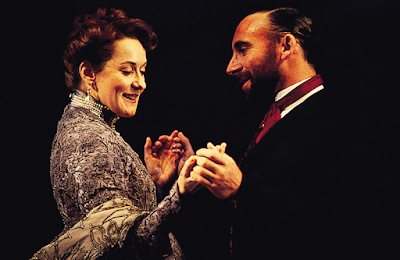
Alexandra Gilbreath as Hermione and Antony Sher as Leontes (my favourite production). 


I have just reread The Winter’s Tale. What a wonderful play! The final scene is one of the greatest, most moving scenes in Shakespeare, but I forgot that the play as a whole was like a fairytale, including the figure of the tyrant. I also picked up The Winter’s Tale Casebook, a collection of essays edited by Kenneth Muir. 


1/ My top 5 is Macbeth, Othello, King Lear, The Winter’s Tale, Measure for Measure. Is it not strange, when you think about it, that the last three plays took centuries to be understood and appreciated? King Lear is now generally recognised as the highest peak of Shakespeare, but Measure and Measure and The Winter’s Tale are still not particularly popular even though their status has now risen among some Shakespeare fans and critics. 

What is it about the development of taste over the centuries that early critics didn’t see the power of The Winter’s Tale but modern critics (and I) do? I can’t help wondering. But it’s amusing to see that Charlotte Lennox (the author of The Female Quixote) is among the ones insensible to the beauty of the resurrection scene and of the play as a whole. 

The usual complaints are these: 

a) The plot is improbable—Charlotte Lennox says “what reason could [Hermione] have for chusing to live in such a miserable confinement when she might have been happy in the possession of her husband’s affection and have shared his throne?”, but she’s not the only one expressing such sentiments; 

b) Leontes’s jealousy lacks a motive—Robert Bridges for example says “the jealousy of Leontes is senseless, whereas in the original story an adequate motive is developed.” 

The latter is not a surprise. Detractors—Tolstoy for instance—sometimes complain about the lack of motive in Shakespeare. But that’s his thing—it’s not only that Shakespeare doesn’t give motive to his characters (in some cases), sometimes he perversely removes the motive stated in his source story. I myself see nothing wrong or unconvincing about it. Shakespeare is fascinated by jealousy and explores it throughout his career, and in his final play about jealousy, pushes to the extreme the idea “They are not ever jealous for the cause/ But jealous for they are jealous; ’tis a monster/ Begon upon itself, born on itself.” 

As for the former, there are two interpretations of the resurrection scene: the mythic one and the realistic one. I’m inclined to go with the realistic reading, but the vision of resurrection in the final ending still fills me with awe and wonder—that she lives in isolation after 16 years isn’t illogical to me—do people forget that Leontes for no reason accused her of not only adultery but also treason? That he imprisoned her and put her on trial? That he caused the death of their son Mamillius? That he banished Perdita and she doesn’t know when she can ever see her daughter again? Leontes needs penance and Paulina is there to make sure he never forgets what he has done. 


2/ I like Robert R. Price’s remark from 1890: 

“And so, in dramatic art, The Winter’s Tale is, I think, Shakespeare’s experiment in constructing a diptych. This experiment no poet, to my knowledge, had ever tried before him, and none that I know of has ever tried it since. Thus, received as a bold experiment in dramatic art, The Winter’s Tale may well stand last in time of the works of Shakespeare’s genius, the final stretching forth of that genius to accomplish a design never before essayed. 

The play is, then, as I conceive it, a genuine diptych in construction. It is made up of two plays, the first a tragedy and the second a comedy, so joined together in the middle as to produce a final result that belongs equally to each.” 

That is indeed something that makes The Winter’s Tale different from everything else by Shakespeare, and most narratives in general. And I love that. When I first read The Winter’s Tale, I thought it lacked harmony even though I loved the play—the shocking rage and intensity seem to appear out of nowhere then vanish into thin air, the play slows down, the mood changes—but I no longer find it odd after watching the Antony Sher production—the two parts go together perfectly well, and the ending is wonderful. It’s a bold experiment that shows Shakespeare’s mastery of mood, pacing, and structure. 

But how does he do it successfully? I like that Ernest Schanzer writes in his essay “The Structural Pattern” that “the two halves of the play consist not only of a series of contrasts but also a series of parallels.” In both halves, Shakespeare paints a picture of harmony and happiness that is violently interrupted by a tyrant. In both halves, Perdita is “committed to the mercy of the waves.” In both halves, Camillio plays the same role of helping the victim of the king escape. In both halves, there’s a climax with Hermione in the centre. 

“The first half culminates in Hermione’s death, the second in her ‘resurrection’.” 


3/ Mark Van Doren says:

“Shakespeare disappoints our expectation in one important respect. The recognition of Leontes and his daughter takes place off stage; we only hear three gentlemen talking prose about it (v ii), and are denied the satisfaction of such a scene as we might have supposed would crown the play. The reason may be that Shakespeare was weary of a plot which already had complicated itself beyond comfort; or that a recognition scene appeared in his mind more due to Hermione, considering the age and degree of her sufferings, than to that ‘most peerless piece of earth’ Perdita.” 

“Our”? Speak for yourself! I don’t agree—the resurrection scene is more important—Shakespeare understands pacing and tension (better than anybody) and knows that two reunion scenes so close to each other would very much reduce the emotional impact—that’s why he leaves one offstage. 

In “Six Points of Stage-Craft”, Neville Coghill defends the scene of the gentlemen telling each other about the first reunion: 

“… in practice this scene is among the most gripping and memorable of the entire play. Whoever saw the production of it by Peter Brook at the Phoenix Theatre in 1951-2 will remember the excitement it created. I know of at least two other productions of the play in which this scene had the same effect, and generated a mounting thrill of expectation needed to prepare us for the final scene.” 


4/ In the same essay, Nevile Coghill defends the “Exit, pursued by a bear” scene, which many people have derided: 

“… [Shakespeare] deliberately underlined the juxtaposition of mood, achieved by the invention of the bear, in the speeches he put into the mouth of the Clown, grisly and ludicrous, mocking and condoling, from one sentence to another: 

[…]

If Shakespeare did not mean it that way, why did he write it that way? So far from being crude or antiquated, stage-craft such as this is a dazzling piece of avant-garde work; no parallel can be found for what, at a stroke, its effects; it is the transformation of tragedy into comedy; it symbolizes the revenge of Nature on the servant of a corrupted court; it is a thundering surprises; and yet those Naturals that are always demanding naturalism cannot complain, for what could be more natural than a bear?” 

That’s a good point. I have learnt to always assume that Shakespeare knows what he’s doing—sometimes one may think something seems wrong or something is a flaw, until one sees a critic defend it, or even better, sees a production which works perfectly, demonstrating again that Shakespeare understands drama better than anybody. 

In the essay Neville Coghill argues several times against S. L. Bethell, who calls the play naïve, antiquated, outmoded, etc. I especially like this point he makes about the final scene (and the fact that Shakespeare does the anachronistic thing of naming a contemporary man as the sculptor): 

“The spiritual meaning of the play in no way depends on [Hermione] being a Lazarus or an Alcestis. It is a play about a crisis in the life of Leontes, not of Hermione, and her restoration to him (it is not a ‘resurrection’) is something which happens not to her, but to him. He had thought her dead by his own hand (‘She I kill’d’, v i 7) and now finds her unexpectedly alive in the guardianship of Paulina. […] That is the miracle, it seems to me, for which Shakespeare so carefully prepared. 

It had to be a miracle not only for Leontes, but for the audience. His first dramaturgical job, then, was to ensure that the audience, like Leontes, should believe her dead. For this reason her death is repeatedly reasserted during the play by a number of characters, and accepted by all as a fact. Shakespeare’s next care was to give credentials to the statue. The audience must accept it as a statue, not a woman; so the Third Gentleman names its sculptor, an actual man, Giulio Romano; a novel trick to borrow a kind of authenticity from the ‘real’ world of the audience, to lend solidity to the imaginary world of the play; it seems to confer a special statueishness.” 

I like that. And this scene is one of the most wonderful and affecting scenes in Shakespeare.  


5/ In my first reading of The Winter’s Tale, I didn’t particularly like Autolycus. But now I do, partly thanks to Ian Hughes’s hilarious performance in the Antony Sher production, partly because Scott Newstok argues in How to Think Like Shakespeare: Lessons from a Renaissance Education that the character of an unrepentant thief is Shakespeare’s joke (The Winter’s Tale is based on Pandosto by Robert Greene, who is now mostly known for calling Shakespeare “an upstart crow, beautified with our feathers”), and partly because I now see him as part of the sun-burnt mirth of the second half of the play. 


Updated: 

My first blog post about the play is here. My post about the play and G. Wilson Knight is here

Saturday, 3 May 2025

On the narrowness of Jane Austen

A recent (stupid) conversation on the hellsite previously known as Twitter has made me realise something interesting. When it comes to range of characters and experiences in writing, the extreme of range would be Shakespeare, who seems to contain everyone and everything (also able to depict a wide range of characters though not as much as Shakespeare are, I would say, Tolstoy, Chekhov, Cao Xueqin); and the polar opposite in this regard would probably be Jane Austen. 

I mean, even compared to other great authors who write about domestic life, Jane Austen’s remarkably narrow: she mainly writes about the landed gentry; servants are neither heard nor seen; other races are not mentioned, except in the unfinished Sanditon; almost all the conversations between male characters take place with a woman present; her characters barely discuss politics or social issues; her novels only depict a tiny part of society; etc. She’s narrower than Henry James, Edith Wharton, George Eliot, even Charlotte Bronte (I’m thinking of Shirley and the Luddite uprisings). 

Isn’t it extraordinary then, how popular she is? Her novels are read and beloved and adapted around the world. And even though the majority of her readers and fans are women (and some philistines think Jane Austen’s novels are only for women), we know that Jane Austen is admired, even loved, by quite a few male writers and lovers of literature. Clearly there’s something universal about Jane Austen’s novels, about her themes of love and courtship and people misperceiving things and misunderstanding each other and misunderstanding themselves—these things happen to everybody regardless of background, regardless of race, regardless of nationality, regardless of gender, regardless of religion. And perhaps, it’s precisely because she leaves out discussions of politics and social issues and leaves out her own opinions that her novels have such wide appeal, that readers of different views and background can all claim her as their own (I have seen conservatives call her conservative and feminists call her feminist, for example). 

When I think about Shakespeare’s popularity and influence around the world and throughout history, it’s easy to understand as Shakespeare is so large and there’s a Shakespeare for everybody: those who don’t like tragedies can go for the comedies; those who don’t like comedies can go for the histories; those interested in politics have the Roman plays; those fond of fairies have A Midsummer Night’s Dream and The Tempest; those preoccupied with race have Othello and The Merchant of Venice; those interested in the subject of colonialism (and part of a national independence movement) find something in The Tempest, and so on and so forth. The wide appeal of Jane Austen’s novels, despite their narrowness, is in a sense more puzzling and thus more fascinating. 

What do you think? 

Monday, 28 April 2025

Shakespeare in Swahililand: what explains the appeal of Shakespeare around the world?

In a blog post from 2013, Himadri (Argumentative Old Git) wrote: 

“It is demonstrable that people who have grown up in very different cultures tend to hold very different values, and think very different thoughts: we are all inevitably products of the societies in which we grow up.

[…] And yet, we can and do respond, often very deeply, to works written in past times, when the values of society were very, very different from those we currently adhere to; we do respond to contemporary books written in countries with very different cultures. So how can this be possible? We tend to claim that these books still “relevant”, and they are “relevant” because, underneath it all, human nature remains the same; but unless we can specify clearly what we mean by “underneath it all”, I don’t know this is a very meaningful thing to say. 

[…] So the question that should be our starting point is not so much “Can we respond to works created in times and cultures very different from our own?”, but, rather, “Given that changes over time, and differences across cultures, are by no means superficial, how can we account for the fact that we do respond, often very deeply, to works from other times and from other cultures?”.” 

Under the comments, Tom (Wuthering Expectations) wrote: 

“I am skeptical of timelessness. Talking about the survival of “Shakespeare” conceals a lot of messiness. How do we know that different audiences, scattered through time and space, found the same aspects of King Lear valuable? Perhaps it is not the universality of a work of art that is important but its complexity. Since everyone, or every time, or every culture, is responding to something different in a work, the more meaningfully complex the work, the more likely it is to have something for everyone.”  

In the English-speaking world, I think the consensus is that Shakespeare’s greatest plays are King Lear, Hamlet, Macbeth, Othello, Twelfth Night—at least that’s my impression—and the most performed plays are A Midsummer Night’s Dream, Hamlet, Romeo and Juliet, Macbeth, and Twelfth Night (now for this I do have evidence). In Vietnam, Shakespeare is mostly associated with Romeo and Juliet and Hamlet. In East Africa, I have no statistics but the plays most mentioned in Shakespeare in Swahililand are Richard II, Julius Caesar, The Merchant of Venice. But you know what, I want statistics about which plays are most popular in each country, and I want the lists of the plays most performed vs the plays most written about. 

Anyway, to go back to the main point, Edward Wilson-Lee writes: 

“What, then, might be the nature of this universalism, this peculiar quality that repeatedly drew readers to his works? Part of this, of course, has to do with the breadth of Shakespeare’s canon and the relentless unmoralizing tone that can be found across his works, meaning that everyone can, to an extent, find their own Shakespeare. Stanley, Steere, Blixen, Farah, Nyerere and Tsegaye all turned to different plays or read the same plays in markedly different ways, in pursuit of a particular Shakespearean voice that spoke to them. This might be said to constitute a very weak form of universalism – a universalism born not of a shared and distinct experience but of mutual contemplation of something so vast and varied as to accommodate every point of view.” (ch.9) 

There is a Shakespeare for everybody: some people (like me) prefer the tragedies, some prefer the comedies, some prefer the histories or more political plays. I have always said that Shakespeare appeals to so many people, and such different people, because the plays themselves depict such a vast range of characters and present such a wide variety of views—it is because Shakespeare cannot be pinned down that readers and theatregoers keep getting drawn to his works.  

Edward Wilson-Lee also says: 

“For Auerbach, Shakespeare represents a pivotal moment in the history of the ‘mixed style,’ which adamantly refuses to separate the comic from the tragic, the everyday things of life from the sublime events by which we define our existence. […] Shakespeare seems a semi-divine ‘creator of man,’ as Pushkin and Haile Selassie suggested, because his writings never turn aside from the messy mixture of life; and in seeming like life itself, his works open themselves to as varied a reaction as life does.” (ibid.) 

There is always something comic in the tragedies, even in the darkest plays like King Lear, Timon of Athens, or Troilus and Cressida. There is always something dark in the comedies, even in the lightest plays like A Midsummer Night’s Dream, As You Like It, or A Comedy of Errors. And to this day, I still don’t know how Shakespeare achieves what he does at the end of Antony and Cleopatra: how the shallow, self-centred, tempestuous, theatrical, manipulative Cleopatra is turned into a quasi-mythological being in the final Act of the play.  

Sunday, 27 April 2025

Shakespeare in Swahililand by Edward Wilson-Lee


Shakespeare in Swahililand is an interesting read—I don’t know a lot about Africa—and looks to me to be a good response to the foolish notion that Shakespeare’s status is merely due to institutions of power and colonialism. 

Here’s an interesting fact: 

“… one of the first books printed in Swahili was a Shakespearean one. Not a play, mind you, but a slim volume of stories from Charles and Mary Lamb’s Tales from Shakespeare, published as Hadithi za Kiingereza (‘English Tales’) on the island of Zanzibar in the 1860s.” (Prelude) 

Oddly enough, the 4 stories include are The Taming of the Shrew (unusual choice), King Lear (great), The Merchant of Venice (great), and Timon of Athens (why???). 

As I don’t know a lot about Africa, the book is full of surprises like that. Did you know, for example, that the love of Shakespeare in East Africa was spread by Indian settlers? 

“… the Indian settlers also brought with them their love of Shakespeare – or rather, it should be said, their two loves of Shakespeare, equally intense but not quite the same. The first of these, which would come to East Africa later, was a scholar’s love of Shakespeare, which came about through long hours of intensive reading of the works and which led to a nineteenth-century cult of Shakespeare that placed him on the level with the Sanskrit poet Kalidas and saw him venerated by (among others) the Bengali poet and novelist Rabindranath Tagore. […] 

The other love of Shakespeare, the theatregoer’s love of his plots and characters, developed alongside the official culture in the popular theatres of northern India, beginning with the Parsi theatres in Maharashtra and accumulating (according to one commentator) 6000 different versions of Shakespeare plays in Indian languages. […] It was this Shakespeare that arrived with the travelling theatre troupes, which began including Mombasa and Zanzibar on an itinerary which had already included stops in other British colonial hubs such as Aden…” (ch.4) 

Edward Wilson-Lee writes at length about the Indian productions and the changes—let’s say the Indianisation of Shakespeare’s plays—and also some contemporary reviews of these productions in British papers (which were negative). 

“… it is these very liberties taken with Shakespeare’s texts, the liberties which so dismayed the reviewers from the Standard, that meant Shakespeare was a living voice to these audiences and not being watched simply to venerate some lifeless idol.” (ibid.)

This is an important point. And over the past 400 years, different cultures have adapted Shakespeare and created new works based on his plays. Verdi for instance created the operas Macbeth, Otello, and Falstaff. Kurosawa made Throne of Blood and Ran based on Macbeth and King Lear respectively. Disney’s The Lion King was inspired by Hamlet

Edward Wilson-Lee also writes about how Shakespeare speaks to people: 

“Ngugi [wa Thiong’o] remarks that even as a schoolchild he mapped the Shakespeare he was watching and reading onto contemporary African politics, imagining the band of woodland exiles in As You Like It were the Mau Mau rebels with whom his brother was encamped in the northern highlands.” (ch.6) 

The plays resonate with people, regardless of background. Milton Obote (later prime minister and then president of Uganda) acted in Julius Caesar at Makerere University at the time when he “was forming a political organization to stage protests against the Ugandan Lukiko elite as puppet-tyrants for the colonial overlords.” (ibid.) 

Another example: 

“I have come to Dar [es Salaam] on the trial of Julius Nyerere, the first President of Tanzania, who translated Julius Caesar and The Merchant of Venice into Swahili in spare evening moments during the very years that he was taking his country from British colony to independent nation and then to grand experiment in African Socialism.” (ch.7)

One of the interesting things the book shows, which the haters of Shakespeare and Western culture don’t seem to know or don’t want to acknowledge, is that Shakespeare does speak to people from different backgrounds and across the political spectrum, even people in the anti-apartheid movement and national independence movements. 

“The most famous case of this is perhaps on Robben Island, a penal colony off Cape Town, where in the late 1970s Nelson Mandela and thirty-three other political detainees marked their favourite Shakespearean passages in a copy of the Works that was passed around among the prisoners and became known as ‘The Robben Island Bible’.” (ch.6)  

I have heard of “The Robben Island Bible” before, though I forgot its name. This is Mandela’s favourite passage: 

“Cowards die many times before their deaths; 

The valiant never taste of death but once. 

Of all the wonders that I yet have heard, 

It seems to me most strange that men should fear, 

Seeing that death, a necessary end, 

Will come when it will come.” 

(Julius Caesar

When some people speak about the “blind reverence” for Shakespeare and try to reduce his popularity and influence around the world to “power structures” and all that, they don’t seem to understand how condescending they sound and, more importantly, that it betrays an embarrassing lack of imagination—just because they themselves don’t particularly like Shakespeare, they cannot imagine that others could genuinely love his works—like all those who call others pretentious for expressing love for classical music or Ulysses or Ingmar Bergman (related: see my letter to the Shakespeare Birthplace Trust). 

As Edward Wilson-Lee says: 

“Hard as it is to argue against this explanation (especially as a white man of British descent), it is less than wholly satisfying for all who have read Shakespeare with little feeling that they are being forced into it or trying to coerce others, and rather belittling for all those who aren’t white and male and British, whose passion for Shakespeare was in danger of being written off as mere craven pandering to the overlord.” (Prelude) 

I’ve been reading this book as a part of Shakespeare Day celebrations. Many of you may find it interesting. 


PS: I recently listened to an audio recording of Antony and Cleopatra, with David Harewood and Frances Barber. Frances Barber is Cleopatra! What a woman. What a performance. Check it out, folks. 

Saturday, 26 April 2025

The amateur’s freedom

By Claude Monet.

Recently my friend Himadri asked, if I were a literary academic, which area of literature I would specialise in. Probably Shakespeare or 19th century novels, British or Russian.

But as I told Himadri then, I’m so glad that literature is not my profession. 

Not a book reviewer or literary critic, I don’t have to read bad books, keep up with the currently hottest writers, or even pay attention to contemporary fiction. Not an academic, I don’t have to read jargon-heavy and ideology-driven critical texts or badly-written and barely-read literary works related to my field of study. Not a Shakespeare scholar, I don’t have to read Harold Bloom. 

A Twitter friend whom I have met in person studies female novelists before Jane Austen (or something like that), and has to read so much crap. My professor and literary critic uncle has been so used to reading for work that even now, when he has retired, can no longer read for pleasure. And I have read George Orwell’s essay about the miserable job of book reviewing (and the rush through books for a review). 

I’m happy for them but happy about my own freedom—the amateur’s freedom! I read the 1200-page The Tale of Genji and some other works of Heian literature because I felt like it. I read all of Shakespeare’s plays and sonnets and also Shakespearean criticism because I felt like it. I explored 17th century playwrights—not only Shakespeare’s contemporaries in England but also Molière and Spanish Golden Age playwrights—because I felt like it. And when I got bored, I stopped. And now, having noticed a gap in my own reading, I’ve been exploring 18th century novels since last year, but—look at the length!—have no intention of reading Clarissa anytime soon. Who can force me?  

What’s more, the amateur doesn’t have to write about every single book she reads.

Literature sustains me, reading helps me keep my sanity in this increasingly insane world, my library’s dukedom large enough, but that’s only the case because of the absolute freedom I’ve got. 


_____________________________________________________


My photo.

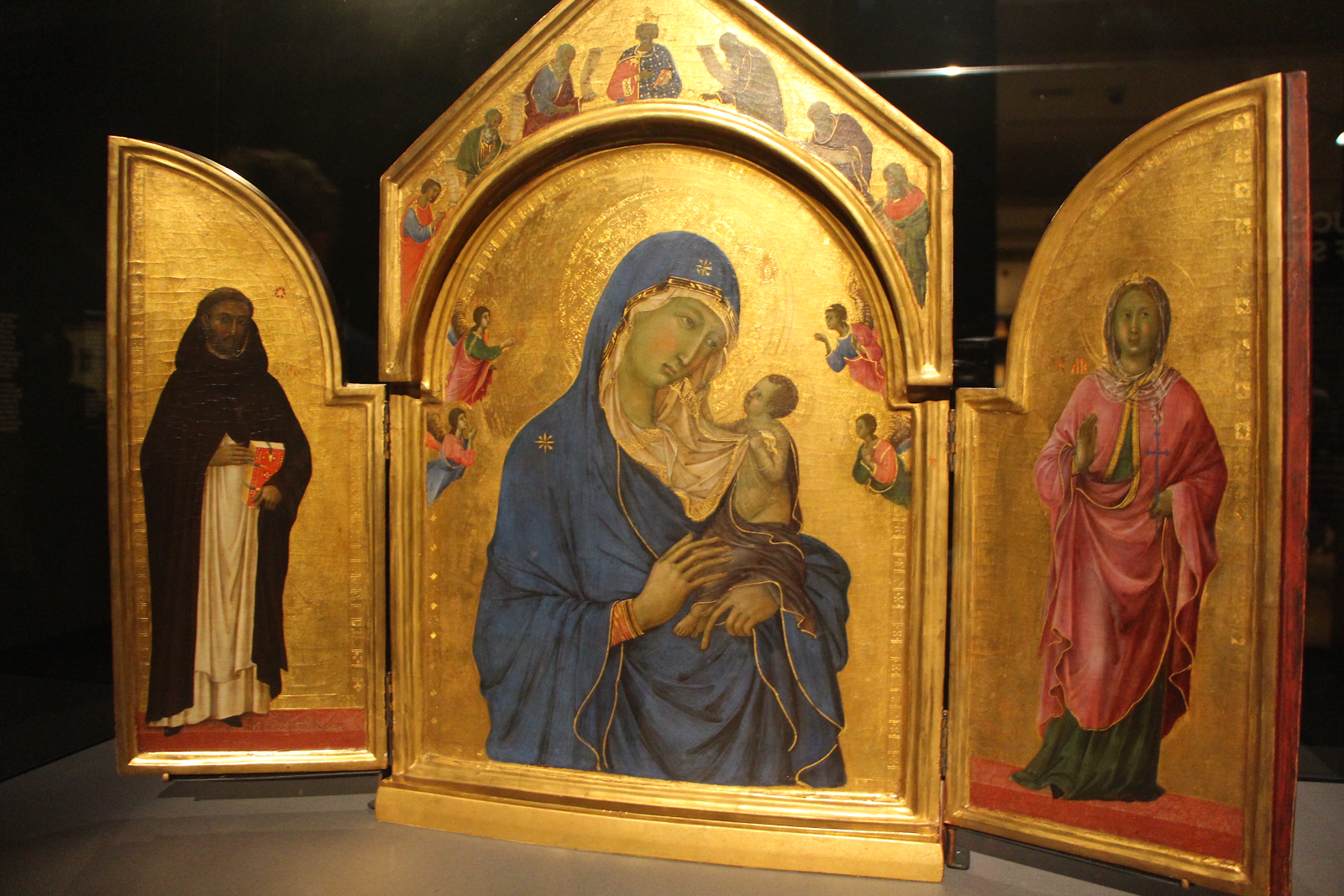
On a side note, a few weeks ago, Himadri and I went to an exhibition of Sienese art (14th century) at National Gallery, London. Not a fan, I’m afraid (some of you are probably puzzled). Looking at the art, I was also thinking that I’d been more or less going back in time in my reading—first contemporary fiction, then the 20th century, then the 19th century, then Shakespeare and the 16th and 17th centuries, then the 18th and more of the 17th—but to go back to literature before Shakespeare’s time, I might make a big jump all the way back to Ancient Greece and Rome. If we look at the period in-between—I’m talking about Western literature—nothing particularly interests me—I know, some of you might gasp in shock and horror, but not even Chaucer or Dante. The only literary works in this long span of time that arouse (some of) my interest are East Asian—Tang poetry, Heian literature, and Water Margin. You might convince me otherwise (though I doubt it). 

Thursday, 3 April 2025

The various subspecies of philistines

Left, right, everywhere we’re surrounded by philistines. 

On the left are the philistines who see everyone and everything through the lens of identity politics, who divide the world neatly into oppressor vs oppressed, who reduce literature to stories and perspectives, who do not believe in universal appeal and the test of time, who think that Shakespeare’s status as the greatest writer of all time is thanks to nothing but colonialism and “structures of power”. These are people who speak of relatability, as though we can only relate to characters with the same sex or skin colour. These are people who speak of relevance, as though only contemporary books can resonate with readers. These are people who associate classic books with “white supremacy” and replace them with contemporary books, as though other countries don’t have their own classic literature. 

There are philistines who call for trigger warnings and sensitivity readers, who want to censor racist or otherwise offensive words, who think writers shouldn’t write about characters from a different community, who think novels should only be from the perspective of the victim rather than the perpetrator, who cannot distinguish the narrator from the author. There are also philistines who demand “moral purity” and “the right opinions”, who cannot separate the art from the artist. Related to such puritans are the philistines who think that a work of art with “an important message” is worthwhile and important. 

On the right are the philistines who constantly say Western culture is under attack but cannot say which classical works they cherish and why, who bemoan modern architecture and praise Disney-style castles, who think representational art is the peak and Hitler is a better artist than Egon Schiele, who applaud vulgar and soulless works such as the sculptures of Luo Li Rong or Jago. These are people who lose their minds over the casting of a Shakespeare production, but neither read nor watch Shakespeare themselves. These are people who are incapable of looking at culture except through the lens of the culture war. These are people who affect to be living in the past but know next to nothing about it. 

There are also conservative philistines who want books removed from schools—not only sexually explicit, borderline-pornographic books (which is understandable) but also serious literature such as The Bluest Eye, or important documents such as Anne Frank’s Diary

And now, beyond politics, beyond the right and the left, are the philistines who happily cheer for “AI art”, who praise AI-generated videos not realising their emptiness and vulgarity, who draw (false) parallels between AI-generated images and photography, who think human beings are nothing but sophisticated machines, who believe AI can one day produce a Shakespeare or a Rembrandt, who have no idea what art is or why human beings engage with it, who dismiss others as reactionaries refusing to be with the times.

All these people have no idea what art is—they either attack art, or produce slop. 

It’s infuriating.   

Monday, 18 November 2024

Oh these shameless moderns!

1/ Over the past few months, I have been bombarded with Facebook ads for The Duchess (of Malfi), featuring Jodie Whittaker. 

What is it? you askwhy is “of Malfi” in brackets? It’s because this is a contemporary adaptation of Webster’s play. “A bloody revenge tragedy made marvellously modern”, says The Telegraph. The Duchess of Malfi stripped of its poetry, stripped of its language. Reduced to its plot. Reduced to something about “the patriarchy” and “female resistance.” 

One ad has the writer-director, Zinnie Harris, discussing “why she thinks John Webster’s classic text is still studied in school and remains relevant today.” 

I’d say The Duchess of Malfi endures because of its poetry, not because of its plot. Zinnie Harris herself mentions language and imagery—then why did she remove all of it? 

I’ll give you two quotes from Webster’s play:  

“BOSOLA Do you not weep?

Other sins only speak; murther shrieks out: 

The element of water moistens the earth, 

But blood flies upwards, and bedews the heavens. 

FERDINAND Cover her face. My eyes dazzle: she di’d young.”

(Act 5 scene 5) 

“ANTONIO […] In all our quest of greatness, 

Like wanton boys, whose pastime is their care, 

We follow after bubbles, blown in th’air. 

Pleasure of life, what is’t? only the good hours

Of an ague: merely a preparative to rest, 

To endure vexation…” 

(Act 5 scene 4)


2/ In 2022, Netflix released an adaptation of Persuasion. A “subversive new take on Jane Austen”, according to British Vogue. Persuasion Fleabag-ified. Anne Elliot regularly breaks the fourth wall and at some point says “Now we’re worse than exes, we’re friends.” Her sister Mary calls herself “an empath.” Someone says “It’s often said that if you’re a 5 in London, you’re a 10 in Bath.” Isn’t that relatable? British Vogue says “The introduction of direct-to-camera moments and doses of contemporary humour make Anne’s inner journey immediately relatable, in a way that might have been impossible under the standard conventions of the buttoned-up Regency drama.”

“Impossible”, they say—why do they think so many people love the book? 

But that’s not all. Carrie Cracknell, the director said “I’ve always loved casting in a color-conscious way. A conversation that I’ve had with lots of the actors that I’ve worked with over the years is how powerful it can be for a diverse audience to see themselves represented in historic cultural texts and stories, because in some way it sort of broadens the scope of the audience who can feel part of this story or can feel ownership over this story.” 

How marvellous! Where would we be without Carrie Cracknell and people like her? Since its publication in 1817, we pitiful people of colour have never felt that Persuasion was ours till Netflix condescended to help us feel included. 


3/ Today, at The Open Book in Richmond, I came across a book called She Speaks! What Shakespeare’s Women Might Have Said by Harriet Walter. 

“An incisive, funny, mischievously subversive homage to Shakespeare’s heroines, written by one of mine,” Meera Syal blurbs. 

Tamsin Greig says “With characteristic wit, compassion and fierce intelligence, she gives tantalising voice to the Bard’s female greats.” 

These are the opening lines of the introduction on the dust jacket:

“Dame Harriet Walter, renowned for her wonderful portrayals in Succession and Killing Eve, among others, is one of Britain’s most acclaimed Shakespearean actors. Now, having played most of the Bard’s female characters, audaciously she lets them speak their minds.” 

I’m sorry—do they not speak in the plays? 

One of the reasons Shakespeare is called the greatest writer of all time is that his range of characters is unequalled—he creates characters of different backgrounds, races, nationalities, classes, sexes, sexualities, religions, political views, points of view… and also different types of characters—he contains everything. Look at the female characters he created—look at Cleopatra and Lady Macbeth and Gertrude and Volumnia and Rosalind and Beatrice and Isabella and Viola and Portia and Imogen and Desdemona and Emilia and Hermione and Juliet’s nurse and so on and so forth—and Harriet Walter or the intro writer thinks she “lets them speak their minds”? That she imagines what “these women were really thinking”? And Walter thinks “the mirror that [Shakespeare] held up to nature reflected a predominantly male image of the world” and he needs her to “let a little sunlight in on some of his women’s stories”? 

The arrogance is incredible. 

Sunday, 14 July 2024

Separating the art from the artist

The art vs artist subject pops up again after the Alice Munro news—on one side are people who can no longer read Alice Munro, condemning her for having compassion for fictional characters but not for her own daughter; on the other side are those who call for separating the art from the artist, saying that we shouldn’t have to approve of the writer’s personal behaviour in order to enjoy their work—but is it always so clear-cut and simple? I don’t think so. 

Are the unpleasant things present in their works? 

You can read Dickens’s novels and ignore the stuff he wrote elsewhere about Indians, but you can’t read Edith Wharton without seeing her attitudes about Jews. You can enjoy Gabriel García Márquez’s novels and ignore his friendship with Fidel Castro, but you can’t watch many 60s French films without seeing their naïve enthusiasm for communism and the Soviet Union. Much harder to focus on merit and ignore an author’s unpleasant side if it’s present in their works. 

Things could also be complicated. You can see on the page Tolstoy’s sexist views on women and unhealthy relationship with sex, but at the same time, he created some of the finest female characters in literature, such as Anna, Dolly, Natasha, Marya, Sonya, Vera, and so on. 

Then what do you do with films? You can ignore Hitchcock’s treatment of his actresses, but could you watch Last Tango in Paris (again) once you know what’s actually happening to Maria Schneider on the screen? 

Talent and importance 

I’m happy never watching another Jackie Chan film for the rest of my life. I probably won’t bother with Sean Penn either. But to never watch a Roman Polanski film would be a much harder choice to make—Chinatown is a masterpiece. 

Most people would agree that Tolstoy and Dostoyevsky are in many ways nasty, or have nasty views, but you would miss out on a lot if you refused to read them, or read them and only focused on the nastiness. But I’m not convinced it’s a huge loss that I haven’t got to Solzhenitsyn—he wrote some important books and people read them despite many wrong-headed views—but I’ve got Vasily Grossman, I don’t get the impression Solzhenitsyn is a must-read.

Time 

There’s a difference between being antisemitic in the 19th century and repeating antisemitic tropes and blood libel today. There’s a difference between having sympathy for communism in the 1960s and praising Stalin or Mao Zedong today. 

I would add, especially after reading a piece recently about Roger Waters, that there is nothing naïve and embarrassing about being unable to separate the art from the artist if the artist is alive and being vile before your very eyes. 

The deader the artist, the better.

Among the writers who mean the most to me, Shakespeare and Cervantes died 400 years ago—they’re no longer capable of surprising and disappointing us, but if something resurfaces, I wouldn’t even flinch—their contemporary Caravaggio after all was a murderer, it doesn’t matter.  

We all draw a line somewhere 

As long as people don’t call for censorship and other forms of cancelling, I don’t think it’s necessarily fair to dismiss someone as philistine or naïve if they’re unable to read a writer—Alice Munro for example—after a shocking and disappointing revelation.

We all draw a line somewhere. For some people, it’s sexual abuse (and its complicity). For some, it’s betrayal of children. For some, it’s racism (especially towards their own group). For some, it’s condonation of terrorism. For some, it’s denial of genocide. And so on and so forth. Certain things are more personal, certain things are felt more strongly.

For example, due to my background, I have no interest in writers who praise communism, or Vietnamese writers who live in Western countries but never say anything critical about the communist government. 

If some people are no longer able to read Alice Munro, why condemn them? Nobody is obliged to read Alice Munro. 

Separating the art from the artist is the ideal—we should appreciate the great works of art that very flawed people have nevertheless given us—but it’s not always possible and that’s fine.