Pages

Showing posts with label videos. Show all posts

Sunday, 7 September 2025

Đi & khám phá: Video du lịch York

Lâu lâu viết tiếng Việt trên blog, mặc dù mỳnh chắc có khoảng 2 độc giả người Việt (đặc biệt nhé!). 

Mời bà con xem video mỳnh edit về York, một trong những thành phố trung cổ đẹp nhất ở Vương quốc Anh. Video nói về lịch sử, văn hóa, nét đặc trưng của York, một số điểm nên đến khi ghé thăm York, và một số chỗ ăn uống. Hồi xưa mỳnh ở Leeds, đi York vài lần nhưng không biết, sau này đọc cuốn Shakespeare: The Man Who Pays the Rent mới nhận ra bà Judi Dench là dân York, sinh ở Heworth (không phải Haworth), rồi tới khi làm video này mới biết ở York có con đường tên là Dame Judi Dench Walk. 

(Sẵn nói cuốn Shakespeare: The Man Who Pays the Rent, ai thích Shakespeare và bà Judi Dench nên đọc. Không chỉ kể chuyện sân khấu—cực hài—mà bà Judi Dench còn phân tích các vở và nhân vật của Shakespeare). 

Mà nếu không quan tâm vấn đề văn hóa thì bà con cũng xem video cho vui đi (mỳnh mất công edit, hê hê). 


Tuesday, 10 June 2025

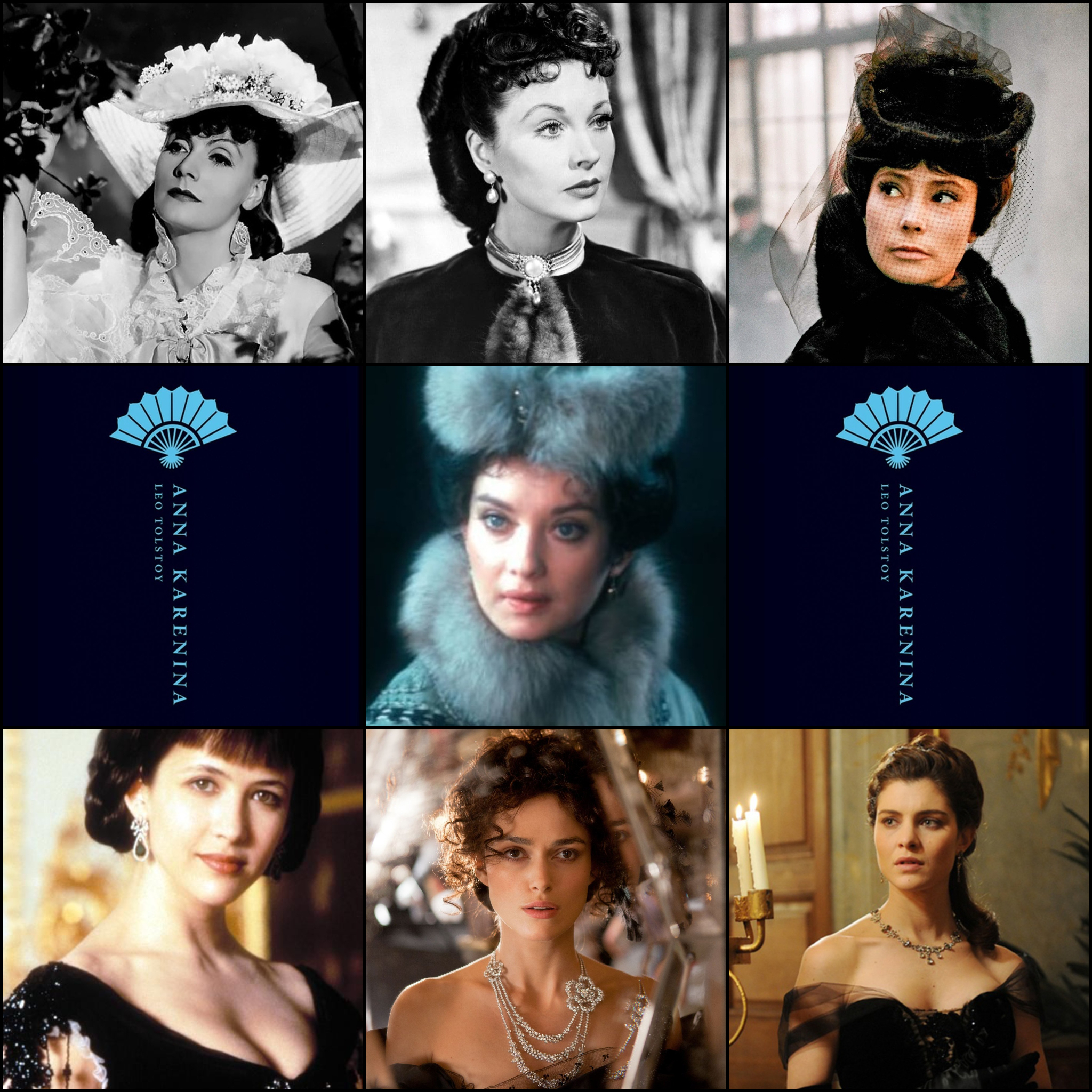
On Anna Karenina (1977), the 7th and best adaptation I’ve seen of Tolstoy’s novel

My collage of all the 7 Annas I have seen (in chronological order). 


One common problem with adaptations of Anna Karenina is that, because of length, they have to cut many things and thus cannot convey the complexity of the characters and their relationships. The Greta Garbo film (1935) is 1 hour 35 minutes, the Vivien Leigh film (1948) is 2 hours 19 minutes, the Tatiana Samoilova film (1967) is 2 hours 25 minutes, the Sophie Marceau film (1997) is 1 hour 48 minutes, the Keira Knightley film (2012) is 2 hours 9 minutes, the Vittoria Puccini film (2013) is 3 hours 15 minutes—the novel is over 900 pages!—the 1977 series is 10 episodes, totalling 8 hours 20 minutes. 

Something I have noticed is that adapters often have trouble with Karenin. The earlier films, 1935 and 1948 films especially, tend to present Karenin as some sort of monster (presumably to make Anna more sympathetic) whereas some later ones, particularly 2012 and 2013, very much soften Karenin, making him more sympathetic, and present Anna as irrational and selfish and Vronsky as some callous playboy. They more or less pick one side over the other, and simplify the story.   

But if you watch the 1977 series, you can see the different facets of the characters, you can see their complexity, you can see their contradictions. Tolstoy may have begun Anna Karenina intending to condemn adultery, condemn the fallen woman, but gradually had compassion for them all, and do we not, reading his novel? We have compassion for Anna, who marries without love and has the misfortune of falling in love with someone else, unable to get a divorce. We can see why Anna hates Karenin, but can feel his pain and humiliation. We understand Vronsky’s shame and see the pain he causes Karenin, but he does love Anna, unlike the callous lovers of Emma Bovary. All these characters are complex, and you can all see that in the performances of Nicola Pagett, Eric Porter, and Stuart Wilson. 

In Stuart Wilson’s performance as Vronsky, I see a man who initially lives for fun and pleasure and who is ennobled by love—he changes—Stuart Wilson is especially good in the scenes of Vronsky suffering, such as the sense of immense shame and humiliation after Anna’s childbirth, and the scene in which he confides in Dolly about their impossible situation—he conveys better than other actors Vronsky’s depth of feeling and his struggle as Anna becomes increasingly difficult. Eric Porter’s Karenin is also the best Karenin I have seen—I can see why Anna doesn’t love him and Seryozha is afraid of him, which I don’t see when the 2012 and 2013 versions soften the character—at the same time, the earlier actors tend to play Karenin as a cold man, without feelings, Eric Porter’s Karenin is a man who speaks of duty, honour, and later Christianity, because he rejects his own feelings. Most importantly, Nicola Pagett is better than all the Annas I have seen, partly thanks to the length of the production and partly thanks to her own performance—she has the charm and passion of Anna, she conveys the shame, the struggle, the self-doubt, the insecurities, the anguish, the paranoia, the contradictions in the character. 

The 1977 series reminds me of the qualities for which Anna Karenina is so dear to my heart. 

This adaptation of Anna Karenina still prioritises the Anna strand—Kitty’s time in Germany for example is cut, Levin’s “revelation” is also cut—but because of length, it can include more of the Levin strand than most other versions. I do very much like Robert Swann as Levin and Caroline Langrishe as Kitty—it’s great casting—she has the innocence and purity of Kitty that contrasts with the more mature and darker sexual charm of Anna. Those of you who prefer the Levin strand to the Anna strand may prefer that the 2013 version puts more emphasis on Levin and Kitty, but that version has the modern disease of quick cuts, constant camera movements, and quiet and badly written dialogue—the 1977 series has great dialogue, spoken clearly, and allows the camera to linger, allows the drama to unfold. 

In short, this is a great adaptation, pitch-perfect. This is something it has in common with the 1972 War and Peace (with Anthony Hopkins as Pierre), also by the BBC: those who are used to spectacular visuals and place the image above all else may complain that these adaptations are “stagey” and lacking in camerawork, but to me, it’s much more important that something is well-written, well-developed, well-acted—I would always choose great performances with basic cinematography, over spectacular cinematography with mediocre performances and hollow representations of characters, especially if it’s an adaptation of a novel—in both cases, the screenwriters (Donald Wilson for Anna Karenina and Jack Pulman for War and Peace) understand and respect the novel, and in both cases, there’s a strong cast. I often say that the 1972 War and Peace handles Tolstoy’s characters much better than Bondarchuk’s film series and its only flaw is Natasha—but there is no weak point in the 1977 Anna Karenina

It is my favourite Tolstoy adaptation. 

It took me years to search for the series. It’s now uploaded on Youtube, in good quality. What are you waiting for? 


PS: 11/6 is my birthday. 

Wednesday, 28 February 2024

My film Footfalls: 5-year anniversary of RTS Student Award

Facebook has just reminded me that 5 years ago, my experimental short Footfalls won the Royal Television Society Student Award – Short Form. 

That also reminds me that I have never made the film public online. 

So here it is. 


Monday, 14 February 2022

Brief thoughts on Joel Coen’s The Tragedy of Macbeth

I don’t have a lot to say about Joel Coen’s film adaptation of Macbeth, but I’m going to jot down some brief thoughts anyway. 

The first thing that must be said is that the mise-en-scène is fantastic. It is so rare for a modern B&W film to look good, and the B&W of The Tragedy of Macbeth is very, very good. (Almost) all the shots are striking—Joel Coen and his cinematographer Bruno Delbonnel play with light and shadow, play with shape, as they should. Those of you who have praised the cinematography of Roma or Mank (philistines!) should look at Joel Coen’s film and note the difference. But it’s not only the cinematography and lighting, I also love the production design, the semi-abstract sets, and the staging.

Another good thing about the film is Kathryn Hunter as the witches. She steals the show.


That is my roundabout way of saying that I don’t have a high opinion of the two leads, Denzel Washington as Macbeth and Frances McDormand as Lady Macbeth. Frances McDormand’s performance is, I think, passable, but once you have seen Trevor Nunn’s production, Judi Dench spoils you for other performances. Put it this way, Frances McDormand’s Lady Macbeth is the Lady Macbeth in popular culture, a villainous woman who manipulates her husband into killing the king; Judi Dench’s is the Lady Macbeth in Shakespeare’s text, an ambitious woman who urges her husband to kill the king and thinks of it in abstract terms but isn’t as strong as she thinks she is, and who falls apart as she realises what she has done. 
Judi Dench’s acting has more complexity, more depth. 

I think Denzel Washington as Macbeth is a weak performance—not just in comparison to Ian McKellen, who is phenomenal—but weak. Why? I don’t feel anything in his performance; I don’t see any struggle, any conflict for a large part of the film, except for a few moments; I don’t think he truly feels what he’s saying, especially in the key soliloquies “Is this a dagger which I see before me” and “Tomorrow, and tomorrow, and tomorrow”. 

Here is a clip. 

He glosses over many lines. Let’s look at Ian McKellen. 


See the difference?  

Denzel Washington is probably better than Michael Fassbender as Macbeth—I haven’t seen the 2015 film as a whole but I have seen many clips, and neither Michael Fassbender nor Marion Cotillard knows how to speak the lines. Here’s the same speech:


That clip gives me the impression that the 2015 film (dir. Justin Kurzel) has the disease of many modern films: a fear of text, of dialogue. This is an important soliloquy in Macbeth and isn’t so long, but Justin Kurzel has to break it into pieces, mixing in epic battle scenes and flashbacks and special effects and drowning music. The 2021 film, even though there are cuts (which is understandable and judicious), at least shows respect for the text.

Another thing I don’t like about Joel Coen’s film, which is perhaps personal, is the American accents. I suppose what I really don’t like is the mixing of accents—if the entire thing were American, I wouldn’t care, and one of my favourite Shakespeare productions is the 1976 ACT The Taming of the Shrew—but there is a mixing of accents in this film, and Denzel Washington and Corey Hawkins (as Macduff) especially stand out as very American. 

So what’s the verdict? I’d probably say 3 out of 5. That’s probably fair. 

Saturday, 16 October 2021

Light Night 2021

My video of this year's Light Night in Leeds, the largest annual arts and light festival in the UK. 

Set the quality to 1080p and enjoy! 


Monday, 29 March 2021

The Taming of the Shrew

1/ The Taming of the Shrew is an unusual play, in that it has a frame narrative (the Induction)—indeed there’s also a play within a play in A Midsummer Night’s Dream, Love’s Labour’s Lost, and Hamlet, but in those cases, the play inside is only a small, secondary part of the plot whereas the play within The Taming of the Shrew is the main text. In fact, the Induction isn’t necessary as such, and he doesn’t return to the Sly plot at the end. 

So why does Shakespeare write it? There must be some meaning.  


2/ Everyone knows the premise: Bianca is a lovely girl and has 2 (and then 3 suitors) but her father Baptista has decided that she cannot get married till her elder sister Kate (Katherina)—the shrew—is wedded.  

In Love’s Labour’s Lost, everything is neat: the king loves the princess of France, Berowne loves Rosaline, Longaville loves Maria, and Dumaine loves Katharine. 

In The Taming of the Shrew, Bianca is wooed by Lucentio, Gremio, and Hortensio whilst Petruchio sets out to tame her sister Kate. Shakespeare complicates matters by making the suitors Hortensio pretend to be a music teacher named Litio and Lucentio a Latin teacher called Cambio to woo Bianca, whilst Lucentio’s servant Tranio impersonates him and gets a pedant to impersonate Lucentio’s father Vincentio. 

As though that’s not confusing enough, Petruchio has a servant named Grumio. 

We can see from the start that the men are assess: Baptista creates a rule to get the shrewish Kate out of the house and doesn’t care who marries her (as we can see in his reaction to Petruchio); the men agree with each other to get Petruchio to court Kate, like schoolboys challenge each other to win over a girl for fun*; Petruchio openly says that he means to marry for money; Baptista tells Gremio and Tranio (as Lucentio) to bid on his daughter Bianca and agrees to give her to the richer Lucentio, without regard for her feelings. 


3/ There’s lots of debate surrounding The Taming of the Shrew, and many people think it’s a misogynistic play about a strong-willed woman broken in a cruel manner—some even think it is proof of Shakespeare’s misogyny. 

First of all, the forgetful readers who call Shakespeare a misogynist must be reminded that he also creates sharp-tongued, intelligent and/or strong-willed female characters such as Rosalind (As You Like It), Rosaline and the princess of France (Love’s Labour’s Lost), Juliet (Romeo and Juliet), Beatrice (Much Ado About Nothing), Emilia (Othello), Adriana (The Comedy of Errors), Cordelia (King Lear), and so on. Luckily there’s no “strong female character” trope in his days so there’s a great range of female characters (and characters in general) in his plays: Shakespeare also depicts traditional women, saintly women, simple-minded women, ambitious women, dangerous and merciless women, etc. 

In The Taming of the Screw, as we can see in the final scene, the widow isn’t soft and Bianca isn’t as submissive as she seems either.  

Secondly, the tender-hearted readers who think of Kate as just a strong-willed woman seem to forget that she verbally abuses everybody (not in jest), hits Hortensio (as the music teacher Litio) on the head, unprovoked; hits Petruchio the first time they meet; even ties up and hits her own sister Bianca and chases her. Is that acceptable behaviour? Kate is different from Beatrice or Adriana. She’s not just strong-willed and sharp-tongued, but stubborn, unreasonable, and violent. 

If we forget about gender, this is a play about a strong will that meets a stronger will. Before Petruchio, nobody wants Kate (even her own father wants to get rid of her). In a way, Petruchio and Kate are a match for each other, like Benedick and Beatrice are a perfect match—Petruchio of course is not Benedick, but neither is Kate Beatrice.

Petruchio says he wants to marry for money, but I don’t think that’s the only reason he marries Kate—there are plenty of other rich women that are easier to deal with, I think he’s in it for the sport. His method is cruel indeed, but in his defence, he tries to mould her into a more suitable partner and one can tell at the end that they’re likely to be happy together, whereas Bianca’s marriage is less certain. 


4/ Another question is: is Kate tamed at the end? How should we interpret her final speech?

Some critics think The Taming of the Shrew is a misogynistic play. I don’t think so. Some others think it’s a proto-feminist play, a satire on objectionable male behaviour. I don’t think so either. 

I think the play is a study of a strong will meeting a stronger will. There is attraction on both sides: for Petruchio, this is a challenge, a game; for Kate, he’s unlike anyone else, a difficult woman like her may find all other men boring and pathetic, and feel drawn to him. 

In the end, does she yield out of tiredness and frustration? Or does she play along, calling the sun the moon and an old man a maid? Does she really submit? Or does she put on a role? 

Shakespeare leaves it open enough that it can depend on the interpretation and approach of the director and the actors. The main point though, is that Petruchio’s method does not change Kate’s nature—she’s still sharp and confrontational, as we see in the conversation with the widow at the wedding; it only changes her behaviour, and her behaviour needs changing.  


5/ Here is Tony Tanner’s argument: 

“When [Petruchio] comes to his wedding in that grotesque tattered motley of hopelessly ill-matched and shoddy garments […], it is as if he is saying to her, in visible, material signs—this is how prepared you are for marriage, given your dire inner dishevelment. When he makes a messy parody of the wedding, with his loud rudeness, blows, and sop-throwing, he is saying—and this is the sort of respect you have for the solemn ceremonies of society. And when he throws the food, and pots, and clothes around, and behaves with incomprehensible contrariness, he is offering a representation, for her benefit, of the kind of domestic chaos which sustainedly ‘shrewish’ behaviour would bring to the household. […] Petruchio is educating and ‘taming’ Kate in, as he sees it, the only way in which she will learn.” (Introduction) 

And: 

“… it is possible to see Petruchio as curbing, rather than crushing, Kate; making her into a worthy companion instead of an all-over-the-place wild-cat, beating her head against every convention in sight (the possibility that her father has contributed to this by his manifest favouritism towards Bianca is clearly hinted). Seen this way, he is liberating her from a pointless, self-lashing, ‘beast-liness’—the Herculean labour.” (ibid.)  

Tony Tanner says there’s no getting around Kate’s final long speech about women’s obedience, but I note some irony there:

“KATE […] Thy husband is thy lord, thy life, thy keeper, 

Thy head, thy sovereign—one that cares for thee, 

And for thy maintenance commits his body

To painful labor both by sea and land,

To watch the night in storms, the day in cold,

Whilst thou li’st warm at home, secure and safe…” 

(Act 5 scene 2) 

These lines she says to the widow, whom Hortensio marries for money—in other words, the widow’s the one providing “maintenance”. How ironic. 


6/ I’ve just seen the ACT production of The Taming of the Shrew from 1976**. It is hysterical. 

Petruchio (Marc Singer) is quick, dynamic, full of energy and magnetism, and—shall I say it—so hot. You can see that his energy matches Kate’s, his quick wit equals hers, he can impose his will on her, and they’re attracted to each other from the start. 

I probably wouldn’t enjoy another production as much as this one. 


*: This is something I saw in several high school movies. Have no idea if it happens in real life or not. 

**: Watch it here, with subtitles. 

Monday, 1 February 2021

Macbeth and Ian McKellen - Judi Dench

Last night I watched a theatrical performance of Macbeth, featuring Ian McKellen and Judi Dench. The production was directed by Trevor Nunn, and the TV version was directed by Philip Casson. 

It was incredible and made me love the play even more.

Everyone is excellent but the two main actors naturally dominate the play, and Ian McKellen and Judi Dench both convey very well the complexity, the conflict in their characters: Macbeth, unlike Othello, knows perfectly well what he’s doing and what the consequences would be, and has in his mind a million different reasons not to kill Duncan, but still does it; Lady Macbeth is the one who comes up with the plan and urges Macbeth to act like a man but isn’t as strong as she convinces herself to be; both of them fall apart, both of them face their damnation, in different ways. 

(If you want a great literary work about the guilt, the struggle of a couple after killing someone, Shakespeare’s play is it, not a certain novel I shall not name).

Lady Macbeth at the beginning seems to think of killing Duncan as something abstract, something simple and easy that could be washed away with water, and only afterwards realises the enormity of what they have done. But Macbeth cannot stop there—once he kills Duncan, he has to kill Banquo; once Banquo’s dead, he has to kill Macduff… I like the way Judi Dench cries “You must leave this.” (Act 3 scene 2) when Ian McKellen’s Macbeth talks about killing Banquo, but I especially love the way she says these 2 similar lines: 

“What’s done is done.” (ibid.) 

And later, when she has gone mad and is talking to herself in front of the doctor and the gentlewoman: 

“What’s done cannot be undone.” (Act 5 scene 1) 

When reading the play, I didn’t quite think about the way the second line seems to mirror/repeat the first but is very different.

The tragedy of Macbeth is the tragedy of one who knows full well the evil of his actions but cannot stop and must continue, who has to convince himself that it doesn’t matter because nothing matters. There isn’t much I can say about Ian McKellen—he is perfect as Macbeth. The peak is in the “Tomorrow, and tomorrow, and tomorrow” soliloquy—I have always liked the soliloquy, it became much better when I read it in the play, in the full context, and it became even better when I watched it performed by Ian McKellen, especially the last few lines: 

“…It is a tale

Told by an idiot, full of sound and fury,

Signifying nothing.” (Act 5 scene 5)

I haven’t seen any other production so can’t compare, but I do like the way this one conveys some uncertainty in the ending, as the ending in Shakespeare’s play seems to mirror the beginning: the play begins in blood and ends in blood, both have a hero killing a traitor, the old king (Duncan) was seen as virtuous but was naïve, will the new king (Malcolm) be fit to govern? 

If you haven’t seen this production, here it is. 

Sunday, 19 January 2020

On 2 new Jane Austen adaptations [updated]

This blog post was originally published on 23/11/2019. I’m now adding an addendum to argue against myself, and republishing it. 

Original text on 23/11/2019:
1/ Sanditon (2019): 
Trailer:


The trailer for the series doesn’t look too bad, except that the music feels off. However, I have no intention of watching it because of Andrew Davies. I have criticised him several times and will say it again: he adapts classic works with the delusion that he is improving them, and sexes up everything from Jane Austen to George Eliot and even Tolstoy. He is responsible for the misrepresentation (and misunderstanding) of Jane Austen in popular culture, and ruins everything he touches.
A few months ago, whilst reading Little Dorrit, I considered watching his adaptation. But then I came across his crude remarks about Dickens and Amy Dorrit, and thought that someone who had such thoughts wouldn’t have enough understanding and sensitivity to adapt Little Dorrit.
So I’ve never seen it.
To go back to the adaptation of Sanditon, I read the book in 2016. It’s more worrisome that it’s an unfinished novel, which means that Andrew Davies would have had more freedom with characters and storyline. I’ve also seen a few reactions here and there that make me think I wouldn’t like it.

2/ Emma (2020):
Trailer:


Do we need another Emma? Not really. But I’m going to see it anyway.
So far I’ve seen the Kate Beckinsale one, the Gwyneth Paltrow one, and Clueless. Clueless is the best—such a radical adaptation (moving Emma’s story to modern day’s American high school) explains Jane Austen’s universal appeal and adaptability. It also shows that a loose adaptation with changed settings may retain the author’s spirit a lot better than many adaptations that appear faithful on the surface.
Regarding this new adaptation, it looks mad. It makes me think of Love and Friendship (adaptation of Jane Austen’s Lady Susan). Maybe I’ll like it. Maybe I’ll hate it. I don’t know. But it’s very different from the 2 adaptations from 1996, in tone—that is, if the film is like the trailer.

____________________________________________

Addendum on 19/1/2020: 
Have you ever felt convinced that you’ve watched a film, only to realise later that you haven’t, and there’s no reason for you to have thought so? 
Because that’s me with the Emma adaptation with Kate Beckinsale. Unbelievable. But the wrong has been righted—I saw it yesterday. 
Since I wrote the text above a few months ago, I’ve seen the Kate Beckinsale’s Emma, rewatched Clueless, and seen a longer trailer of the 2020 Emma twice at the cinema, and my thoughts have changed.  
1/ I previously had strong words about Andrew Davies, and my stance remains the same regarding the adaptations where he sexes it up and ruins something, especially Daniel Deronda and Pride and Prejudice. However, he’s the writer for the Kate Beckinsale’s Emma, and I must say it’s a very good adaptation. 
I can’t compare it to the Emma film with Gwyneth Paltrow, which came out the same year (1996), because I don’t remember that one. But I remember not thinking much of Gwyneth Paltrow’s performance as Emma, whereas I think Kate Beckinsale is good and very lovable as Emma. Which leads to: 
2/ Now, having seen the long trailer twice, I’m convinced I’m going to dislike the new Emma.  
Why? Because of the cast.   
Emma Woodhouse, in my opinion, is very difficult to cast, because the audience are meant to like her in spite of her faults. Emma can be thoughtless, snobbish, and meddlesome; she may misinterpret everything, make mistakes, and hurt others; but deep down she is kind, means to do well, tries to help others, and has self-reflection (like other Jane Austen heroines). It is important that Emma is charming and lovable. A miscast Emma may appear haughty, contemptuous, shallow, egoistic, annoying, and so on.  
Kate Beckinsale, to me, is perfect as Emma. Alicia Silverstone also has the qualities to make her likable as the modern-day version. 
I’m not so sure about Anya Taylor-Joy. 
I also don’t like Johnny Flynn as George Knightley (especially after seeing Mark Strong), nor Callum Turner as Frank Churchill—I don’t think Johnny Flynn has the right look for Knightley, and Callum Turner looks too obvious as a scumbag and doesn’t seem to have the charisma of Frank, but maybe it’s hard to tell from the trailer alone. 
A friend of mine who also likes Jane Austen thinks the new Emma seems to have too much comedy. That may or may not work (Love & Friendship is hysterical, and it’s excellent). But the cast? I have my doubts.

Monday, 6 January 2020

On film adaptations and the strange criticism of Greta Gerwig’s Amy March

I’ve just seen quite a few comments on Youtube, criticising Greta Gerwig’s Little Women (2019) for altering Amy March to fit the modern audience”—Amy in the new adaptation, they say, is not Amy in Louisa May Alcott’s book. 
Isn’t this such a strange criticism? 
I cannot compare the 2019 Amy (played by Florence Pugh) to Alcott’s Amy, as I haven’t read the book, but a director has the perfect right to make changes when adapting a book into a film. As some director once said, why would you make an adaptation if you have nothing new to say? 
Even if you give the same screenplay to 100 different directors, you still get 100 different films, because of the different decisions in casting, location, style, look, pace, tone, camera angles, editing, and so on, not to mention alterations to the script (how many directors passively take a script and make no changes?). When it comes to film adaptations, different directors have different approaches to the same material, highlighting some aspects and omitting others, sometimes making changes. A writer-director is under no obligation whatsoever to be faithful to the book—the film is their film, they use the book as a basis, a foundation, to explore the themes they’re interested in, and say what they want to say.
An adaptation is an interpretation of the book, an adaptation can also be, and should be, its own work. A writer-director has the perfect right to modernise a text (Clueless from Emma, 10 Things I Hate About You from The Taming of the Shrew), move the settings to another country (Untold Scandal from Dangerous Liaisons, The Handmaiden from Fingersmith), whilst retaining the essence and spirit of the book. A writer-director also has the right to change the tone/ genre (Dr Strangelove from Red Alert), or simply take an existing work and create something new (Ran from King Lear). The question is whether the film is good, as a film.
Of course sometimes you can watch a film adaptation and think a character is miscast, but it’s not necessarily because of the character in the book—I’m sure that there are times you watch a film not based on anything, and think some actor is miscast. Or sometimes you watch a film adaptation and see the changes, and feel like the filmmaker thinks they’re improving on the book but they actually make the story a lot worse, but that is because the changes don’t work, not because there are changes.
To go back to Greta Gerwig’s adaptation of Little Women, I don’t know the novel to know that she brings out more depth and emphasises the clear-headedness and practicality in Alcott’s character, or expands and changes Amy to make her a more complex and likeable character. In either case, she has the right to do so, and Amy March in her film works well as a character.
Amy can be a spoilt, selfish brat as a kid, and grow up to be the Amy we see in the film. Amy in the new film is still practical and not at all romantic, and she is mercenary, but if you place the 2019 film next to the 1994 film (I have nothing else for comparison), Amy in Greta Gerwig’s writing is deeper, for knowing her own place in the world and knowing what she wants. Florence Pugh in her performance also brings a groundedness to the character, and makes her a perfect toil to Jo. Both Jo and Amy know what they want, but they want different things, and go different ways.
The new depiction of Amy also explains why Laurie chooses her in the end—she is clear-eyed, sensible, ambitious, and straightforward, she is better for Laurie than Jo is.
Moreover, I like that Greta Gerwig tells the story of the March sisters, not only Jo, which shows women’s limited options in the 19th century. If you have talent and want independence, you can have a writing career like Jo, or have to choose between marrying for love, like Meg, or marrying for money, like Amy (if you don’t sit at home and die, like Beth). I can’t help thinking of the book I’ve just read, No Name. Wilkie Collins’s book and Little Women are nothing alike, but No Name also shows women’s limited options—the 2 sisters get disinherited and cast out on the world with nothing, one schemes to get her money back whilst the other resigns to her fate and works as a governess, and they depend on being rescued by rich husbands.
But I’ve digressed.
I like Florence Pugh’s Amy, and I like that the feminist statements don’t only come from Jo, but they’re shared between her and Amy.
Now watch this clip from the new Little Women


Isn’t that fantastic? Such good lines. I don’t know why some people are complaining.

Wednesday, 1 January 2020

Happy 2020!

Happy New Year, everyone!
New decade (go away pedants) so it's time to dig out my favourite New Year song: 


(In Vietnam, at least till I left, they play this song every year. Whenever I listen to it, I think of Vietnam). 

Hope you all have a happy, prosperous year!

Tuesday, 29 October 2019

Listening to Clifford Brown

These days I’ve been listening to Clifford Brown and Max Roach, thanks to David H. Rosenthal’s Hard Bop: Jazz & Black Music 1955- 1965. Look at these lines about Brown:
“… Clifford was far and away the best trumpeter of his generation. Taking Fats Navarro’s style as his point of departure, he breathed new life into bebop, making it sound as fresh as if it had just been invented. Like Navarro, Brown had a fat, ‘buttery’ sound and played long melodic lines that lent his solos a sense of effortless, flowing ease. […]
Brownie extended Navarro’s style. He played with more vibrato, especially on ballads; and at faster tempos he employed half-valve effects, slurs, and grace notes that gave his solos a wryly puckish quality.”
Clifford Brown & Max Roach:


Study in Brown:


I thought I’d never like trumpets half as much as saxophones, then I listened to Clifford Brown. These albums are fantastic. 
Then I listened to him playing ballads:
Clifford Brown with Strings:


I was amazed. His sound was soaring.
Here is Rosenthal again:
“‘Ebullient’, ‘effervescent’, ‘elated’, and ‘exultant’ were words applied to his improvisational style. His ballads were soaringly romantic rather than somber. […] The trumpet statement crackles with fire and swing. Tuneful phrases and shouts of pleasure fill every chorus. Rarely as modern jazz radiated so much sweetness, light, and sheer elan.”
It’s such a pity that Clifford Brown died so young.

Sunday, 13 October 2019

On Charles Mingus

1/ As How to Listen to Jazz and now, The Language of Jazz, barely talk about Charles Mingus, I have to look other places for writings about his music.
This is a good article: https://www.thenation.com/article/argument-instruments-charles-mingus/
“For sheer range of expression, his work has few equals in postwar American music: furious and tender, joyous and melancholy, grave and mischievous, ecstatic and introspective. It moves from the rapture of the church to the euphoria of the ballroom, from accusation to seduction, from a whisper to a growl, often by way of startling jump cuts and sudden changes in tempo. Vocal metaphors are irresistible when discussing Mingus. As Whitney Balliett remarked, music for him was “another way of talking.””
This is why Mingus Ah Um is a good place to start—it is diverse and shows his different styles and different moods.
“That fire, that irrepressible energy, made Mingus somewhat unfashionable in an era of cool. So did his unabashed maximalism as a composer. The limpid impressionism of Miles Davis’s Kind of Blue (1959), the funky vamps of hard bop and soul jazz, and the honky-tonk expressiveness of Ornette Coleman had little in common, but all were attempts at achieving a simpler, more immediate style than bebop with its bewildering velocity and jarring dissonances.”
Is this why Charles Mingus seems to be overlooked? I like both the impressionism of Kind of Blue and Mingus’s “unabashed maximalism”. I love his raw, bold music, full of life, energy, and rage. 
“Ornette and his followers, Mingus complained to Goodman, were like surgeons who couldn’t retrace their steps: “if I’m a surgeon, am I going to cut you open ‘by heart,’ just free-form it, you know?… I’m not avant-garde, no. I don’t throw rocks and stones, I don’t throw my paint.” […]
Mingus wasn’t afraid of the new, but he didn’t see why it should come at the expense of the past, as the slogans of the avant-garde seemed to imply. He was a rebel in defense of tradition. […] In 1959, the year Coleman announced The Shape of Jazz to Come, Mingus called one of his records Blues & Roots: black music, as he saw it, was a continuum, a bottomless source of renewal; you couldn’t move into the future without a thorough knowledge of the past. “Those eras in the history of jazz, like Dixieland,” he told Goodman, “are the same and as important as classical music styles are.” Gospel and blues, the New Orleans polyphony of Jelly Roll Morton and the urbane sophistication of the Duke Ellington Orchestra, the stride piano of James P. Johnson and the dazzling harmonizations of Art Tatum: all went into the Mingus cauldron, seasoned with dashes of circus music, obscure pop tunes, B-movie scores, flamenco, scraps of Mozart and Richard Strauss. To listen to Mingus is to hear the black American musical tradition talking to itself.”
Blues & Roots was released in 1960 but recorded in 1959, before The Shape of Jazz to Come. It’s particularly interesting in context—after the period of cool jazz (itself a reaction to bebop) and modal jazz, some musicians were going back to their roots and incorporating blues and gospel music in jazz, with hard bop, whilst others were “going forward” with avant-garde jazz and free jazz around the same time.
I won’t quote more from the article, as it should be read in whole. Quite long but a good piece. Adam Shatz writes about the music as well as the man behind the music—early ambitions (classical music), influences, developments in his career, personality, racial identity, and all the things that shaped Mingus’s music. 

2/ Ted Gioia writes about Charles Mingus in his The History of Jazz—the chapter is published on the Jazz Profiles blog:
http://jazzprofiles.blogspot.com/2018/10/ted-gioia-on-charles-mingus-history-of.html
“Like many jazz bandleaders who came to prominence in the 1950s, Charles Mingus drew inspiration from the hard-bop style, albeit transforming it into his own image. He drew heavily on the same ingredients that had proven successful for Blakey and Silver: an appreciation for African American roots music such as gospel and blues; a zest for hard-swinging, often funky playing; a rigorous schooling in the bebop idiom; a renewed emphasis on formalism and the possibilities of jazz composition; and a determination to exploit the full expressive range of the traditional horns-plus-rhythm jazz combo. Despite these similarities, few critics of the period saw Mingus as part of the hard-bop school. Yet his mature musical explorations rarely ventured far afield from this ethos. Had Mingus recorded for Blue Note and drawn on the services of other musicians affiliated with that label, these links would have been more evident. As it stands, he is typically seen as a musician who defies category—more a gadfly, skilled at disrupting hegemonies rather than supporting the current trends in play. Mingus is remembered as a progressive who never really embraced the freedom principle and a traditionalist who constantly tinkered with and subverted the legacies of the past.”
I’m helpless when trying to write about music, so click the link and read Ted Gioia’s chapter.

3/ Here are my favourite albums:
Mingus Ah Um:


Oh Yeah:


The Clown:


The Black Saint and the Sinner Lady:


I’ve also listened to Blues & Roots and Tijuana Moods (did I check out Mingus Dynasty?)—The Black Saint and the Sinner Lady is different from everything else.
Go listen.

Wednesday, 4 September 2019

Charles Mingus and the year 1959

After John Coltrane, I spent some time with Miles Davis, and, finding myself unable to get into Porgy and Bess, In a Silent Way, Sketches of Spain, or even Birth of the Cool, I chose not to listen to Bitches Brew or any more Davis for the moment, and decided to focus on Charles Mingus instead.
Charles Mingus was a bassist, composer, and bandleader. He’s one of the greatest figures in jazz, though probably not as well known in popular culture as some other musicians such as Louis Armstrong, Miles Davis, or John Coltrane. I’ve been listening to Mingus Ah Um lately.


What a great album. It doesn’t have a strong sense of unity like the Coltrane albums I’ve been listening to, but it’s diverse—for example, right after “Better Git It in Yo’ Soul”, full of warmth and energy, is the mournful “Goodbye Pork Pie Hat”, an elegy for saxophonist Lester Young, who wore a pork pie hat, then it is followed by the fun, swing-style composition “Boogie Stop Shuffle”, and so on. Such a ride.
Mingus Ah Um also contains the instrumental version of “Fables of Faubus”, a protest against, and mockery of, Arkansas governor Orval E. Faubus, who sent out the Arkansas National Guard to prevent 9 black students from entering an all-white high school in 1957.
This is the song with lyrics, re-titled “Original Faubus Fables”, from the album Charles Mingus Presents Charles Mingus.


Anyway, as I’ve been listening to the album over and over, I’ve just realised that 1959 was such a fantastic year for jazz. That was the year Kind of Blue was released! BBC4 even made a documentary named 1959: The Year that Changed Jazz.
Here are a few articles talking about the year 1959 in jazz:
https://www.allaboutjazz.com/1959-the-most-creative-year-in-jazz-various-artists-by-nathan-holaway.php
https://www.jazziz.com/year-by-year-five-essential-albums-of-1959/
https://www.albumoftheyear.org/genre/35-jazz/1959/

Here are some important albums for anyone interested:
Miles Davis’s Kind of Blue (with John Coltrane):


Dave Brubeck’s Time Out:


The famous “Take Five” is in this album.

Ornette Coleman’s The Shape of Jazz to Come:


Bill Evans’s Portrait in Jazz:


Art Blakey and the Jazz Messengers’ Moanin’:


Ella Fitzgerald Sings the George and Ira Gershwin Song Book:


Duke Ellington’s soundtrack for Anatomy of a Murder:


Sun Ra & His Arkestra’s Jazz in Silhouette:


Also in 1959, John Coltrane recorded Giant Steps, which was released in 1960.
What a year.

Saturday, 31 August 2019

Jazz standard: “In a Sentimental Mood”

“In a Sentimental Mood” as performed by Duke Ellington (its composer) and John Coltrane is one of my favourite pieces in jazz. It’s tender, melancholic, and just wonderful.

Ellington and Coltrane are 2 of the greatest figures in jazz, and we also have Elvin Jones on drums. I’m a peasant, but even I can hear that the drums are great.
Here is the song with lyrics, performed by Ella Fitzgerald.

Much as I love her silky voice, nothing beats the John Coltrane version.
Today, I’ve just heard for the 1st time the original, performed by Duke Ellington and the orchestra. Here it is, if you haven’t heard it.

I mean, what happened? How is this the same one?

Wednesday, 28 August 2019

Listening to Coltrane: the favourites

I’ve now listened to 12 John Coltrane albums: the 9 albums in the earlier post, plus Soultrane (1958), Dakar (recorded in 1957, released in 1963), and Olé Coltrane (1961).
Instead of writing something to expose my ignorance of music, I’m just going to say that my personal favourite albums are Blue Train, Kind of Blue, and Crescent. If Kind of Blue doesn’t count because it’s Miles Davis’s album and John Coltrane was only playing in the band, swap it with A Love Supreme.
So not Giant Steps. Not Ascension. That probably says something about me.
What about favourite tracks?
I struggle to pick a favourite from Blue Train and Kind of Blue, as I love the entire albums. A Love Supreme should be listened to in its entirety.
Crescent is wonderful as a whole, lyrical, sorrowful, but 2 tracks stand out: “Wise One” and “Lonnie’s Lament”.


Here are my other favourite tracks:
“Equinox” from Coltrane’s Sound:


“In a Sentimental Mood” from Duke Ellington& John Coltrane:


“Big Nick” from Duke Ellington& John Coltrane:


“Angelica” from Duke Ellington& John Coltrane:


“My Favorite Things” from My Favorite Things:


“Giant Steps” from Giant Steps:


 “Milestones” from Milestones:


“Good Bait” from Soultrane:


“Route 4” from Dakar:


Here is someone talking about the albums in a more articulate way: 
https://spinditty.com/genres/Ten-Coltrane-Albums

My listening to Coltrane stopped at Ascension, which means that I haven’t listened to music of his later periods—avant-garde jazz and all that, like Living Space, Transition, Sun Ship, First Meditations, Interstellar Space, etc. That can wait. I don’t want to listen to him so obsessively that I can’t touch his music again in my life.
Next, I’ll probably focus on Miles Davis.

Wednesday, 21 August 2019

Listening to Coltrane: the albums

As I’ve decided to delve into John Coltrane’s music, I’m going to listen in a more systematic way—listen to a whole album, instead of individual tracks here and there as I usually do.
Because Coltrane changed and developed his style over time, it’s useful to be aware of chronological order, and put the albums here. Note: for the time being, I’m not going to listen to every single of his albums chronologically, only a few main ones.
1957: Blue Train.


This is the first album that made me love Coltrane. For the past 2-3 years (I don’t have a good conception of time), “Blue Train” was one of the tracks by Coltrane that I kept coming back to (the other ones were “Equinox” and “So What”) but I love the entire album.

1958: Milestones—Miles Davis and John Coltrane started experimenting with modal jazz.


My favourite is the track “Milestones”.

1959: Kind of Blue—Miles Davis and John Coltrane’s masterpiece, and the best-selling jazz album of all time.


Apart from Miles Davis playing trumpet and John Coltrane playing tenor saxophone, the album had Cannonball Adderly on alto saxophone (except on “Blue in Green”), Bill Evans on piano (except on “Freddie Freeloader”), Wynton Kelly on piano (on “Freddie Freeloader”), Paul Chambers on double bass, and Jimmy Cobb on drums.
Kind of Blue is just wonderful. I keep coming back to it. 

1959: Giant Steps—after Coltrane left Miles Davis to go in a new direction, this was his most influential album.


Youtube called “Giant Steps” “the most feared song in jazz”, because of the difficulty.

1960: My Favorite Things—1st album to feature Coltrane playing soprano saxophone.


It’s interesting to listen to Coltrane’s takes on these jazz standards, especially “Summertime”, though it’s barely recognisable anymore.

1962: Duke Ellington& John Coltrane.
I can’t find the full album on youtube, but I love “In a Sentimental Mood”, which I used in a recent video. It’s good to see Coltrane perform with another jazz musician I like.


It seems like a rather conservative album, compared to the experimental and revolutionary nature of “Giant Steps” and “My Favorite Things”.

1964: Crescent.


The album has McCoy Tyner on piano, Jimmy Garrison on double bass, and Elvin Jones on drums.

1964: A Love Supreme—his most spiritual album, and one of the most critically acclaimed.


I’m not religious, not even particularly spiritual, but this is magnificent.

1965: Ascension— seen as a cornerstone of Coltrane’s work.


Slowly I would probably listen to everything, but these are the albums I choose for now.

Sunday, 18 August 2019

Listening to Coltrane

I discovered jazz several years ago, when doing a course called Multicultural American Literature at University of Oslo, which should have been called African American Literature and Jazz Music. My lecturer was American and had a degree in literature and a degree in jazz. He introduced us, or at least me, to jazz—I’m still thankful for that course.
Over the past few years, I’ve been listening to jazz, mostly vocals, especially Louis Armstrong and Ella Fitzgerald, also Nina Simone, Billie Holiday, Sarah Vaughan, Frank Sinatra, Nat King Cole, etc. I also listen to John Coltrane, Miles Davis, Duke Ellington, bit of Thelonious Monk, Dave Brubeck… (can’t really get into Charlie Parker at all). 
These days I’ve been thinking that I listen to jazz in a rather superficial way. I’m a literature and cinema person rather than a music person. I enjoy jazz, but can’t talk about it, the way I can talk about a book or a film, and can’t recognise the individual style of each musician. This needs to change.
For now I want to get to “know” John Coltrane properly. Listening to A Love Supreme at the moment. 


Yesterday marked the 60th anniversary of Miles Davis and John Coltrane’s album “Kind of Blue”, one of the most successful jazz records in history.


Obviously I spent yesterday listening to it, several times. Isn’t that just wonderful? Especially “So What” and “Blue in Green”.
Here’s a video of their live performance of “So What”:


I won’t say anything about Kind of Blue, because, as I said, I can’t talk about jazz. But I do love the combination of John Coltrane and Miles Davis. Just divine.
Found this article: https://www.jazzwise.com/Features/miles-davis-and-john-coltrane-yin-and-yang

Friday, 16 August 2019

Fishes and social contracts

In Part V of What a Fish Knows, Jonathan Balcombe writes about fishes in a community—with company/tank mates or in a shoal or school of fishes. You now may ask, do fishes recognise each other? They do. Fishes may have patterns that are only visible in UV light. Balcombe says, fishes have individual recognition, memory, and preference about whom they choose to swim with; they also have personalities. Do they recognise human faces? People who have pet fishes say yes.
Yesterday I made a video about fish watching, using my footage of The Deep (aquarium in Hull). Watch who swims with whom.


Now, to get back to the book, the most fascinating section of Part V is when Balcombe writes about social contracts among fishes—consider the cleaner-client symbiosis of fishes.
“The system works as follows. 1 or 2 cleanerfishes signal that they are open for business. They work at specific locations, and may use swimming postures and bright colours to enhance the signal’s visibility (a fish’s version of the rotating red-white-blue cylinder outside a barbershop). Other fishes of various types congregate at the cleaning station, where they wait their turn to be serviced by the cleaners. […] [Cleaners] pick over the clients’ bodies, removing parasites, dead skin, algae, and other undesirable blemishes. Clients benefit by receiving a spa treatment, including parasite removal. Cleaners get fed.”
So which species are they?
“Marine cleanerfishes include many wrasses, some triggerfishes, butterflyfishes, discus fishes, damselfishes, angelfishes, gobies, leatherjackets, pipefishes, sea chubs, surfperches, suckerfishes, jacks, and topsmelts. Freshwater cleanerfishes include cichlids, guppies, carps, sunfishes, killifishes, and sticklebacks. Some invertebrates, including several shrimps, also provide cleaning services. Client lists number well over 100 known fish species, including sharks and rays. Other clients include lobsters, sea turtles, sea snakes, octopuses, marine iguanas, whales, hippopotamuses, and humans.” 
Regarding humans, in Asian (I think Chinese) spas, people can dangle their feet in pool for cleanerfishes to pluck over.
“This is a dramatic scene if the client is a large predator. Although a shark or a moral eel could easily snap up the cleaner for a quick snack; it just isn’t savvy to eat your service provider.
But it is kosher to show consideration toward them. […]
Grey reef sharks invite cleaners to service them by angling their bodies upward and opening their mouths wide. The cleaners show no fear as they enter the shark’s deadly cavern. They seem to know that this massive predator, hundreds of times their size, means them no harm.”
Isn’t that so interesting?
The relationship between a cleanerfish and their client is also not random.
“It is built on trust, and cultivated over weeks or months. A social contract such as this requires that individual cleaners recognise their clients. With dozens of clients per cleaner, cleanerfishes maintain an impressive mental database of clientele. In choice experiments where a cleaner could choose to swim near 1 of 2 clients, the cleaner spent more time near a familiar one. […]
In addition to remembering whom they cleaned, cleaner wrasses can also remember when they cleaned them. They are more likely to give precedence, say, to a particular triggerfish client who missed their last appointment, because that client will probably have greater parasite buildup.”
These fishes can use memory along 3 dimensions—who, when, and what. They demonstrate episodic memory.
“If a fish can track past events, might she also be able to predict future ones? […] Roving cleaners are more cooperative with their clients near the centre of their home ranges, where they are more likely to reencounter client fishes. They do less mucus nipping and cause fewer ‘jolts’ in their clients during cleaning interactions.”
This is like our behaviour—human beings are more cooperative with a partner when we’re likely to interact with them again. Doesn’t this make you look at fishes in a different way?
Now, just as in the business world of human beings, there can be conflicts, cheats, and frauds, there are equivalents in the fish world.
The conflict between cleaners and clients is because cleaners most like to glean from the mucus, which has more nutritional value and might taste better than algae and parasites, and clients wouldn’t like this.
“A jolt happens when a client flinches as a cleaner nips at the protective mucus layer that surrounds a fish’s body.”
Consequently, cleaners give clients some tactile stimulation.
“They do this by facing away from the client and stroking them with rapid movements of their pelvic and pectoral fins. This caressing behaviour seems to be done for 2 reasons: (1) to encourage a client to stay longer at the cleaning station, and (2) to mollify a client following a jolt. Cleaners are more likely to caress a predaceous client, probably because it lowers the risk of an aggressive chase from a potentially dangerous customer.”
I don’t know, that sounds like a massage to me.
The cleaner-client symbiosis, in many ways, mirror business relationships in the human world. For example, if we read reviews before watching a film or ordering a product online, prospective client fishes “watch the performances of cleaners before deciding whether to let a particular cleaner inspect them”, mucus-nipping cleaners are shunned, and cleaners do a better job when they are being watched.
“If a new client, who has no history with the cleaner, is cheated, he or she simply swims away. But a resident client who has built up a relationship of trust with the cleaner behaves as if having been insulted: he chases the cleaner around.”
Cheats get punished.
This social system is highly complex and “encompasses long-term relationships built on trust, crime and punishment, choosiness, audience awareness, reputation, and brownnosing.”
Guess what, there are also con artists in the fish world—fishes that pretend to be cleanerfishes, and when the client least expects it, the impostor takes a bite of fin and dashes for cover.
I can no longer look at fishes the same way again.