Pages

Showing posts with label Billy Wilder. Show all posts

Friday, 18 August 2023

My 10 favourite films (2023 list)

One film per director. 

Persona (dir. Ingmar Bergman)  

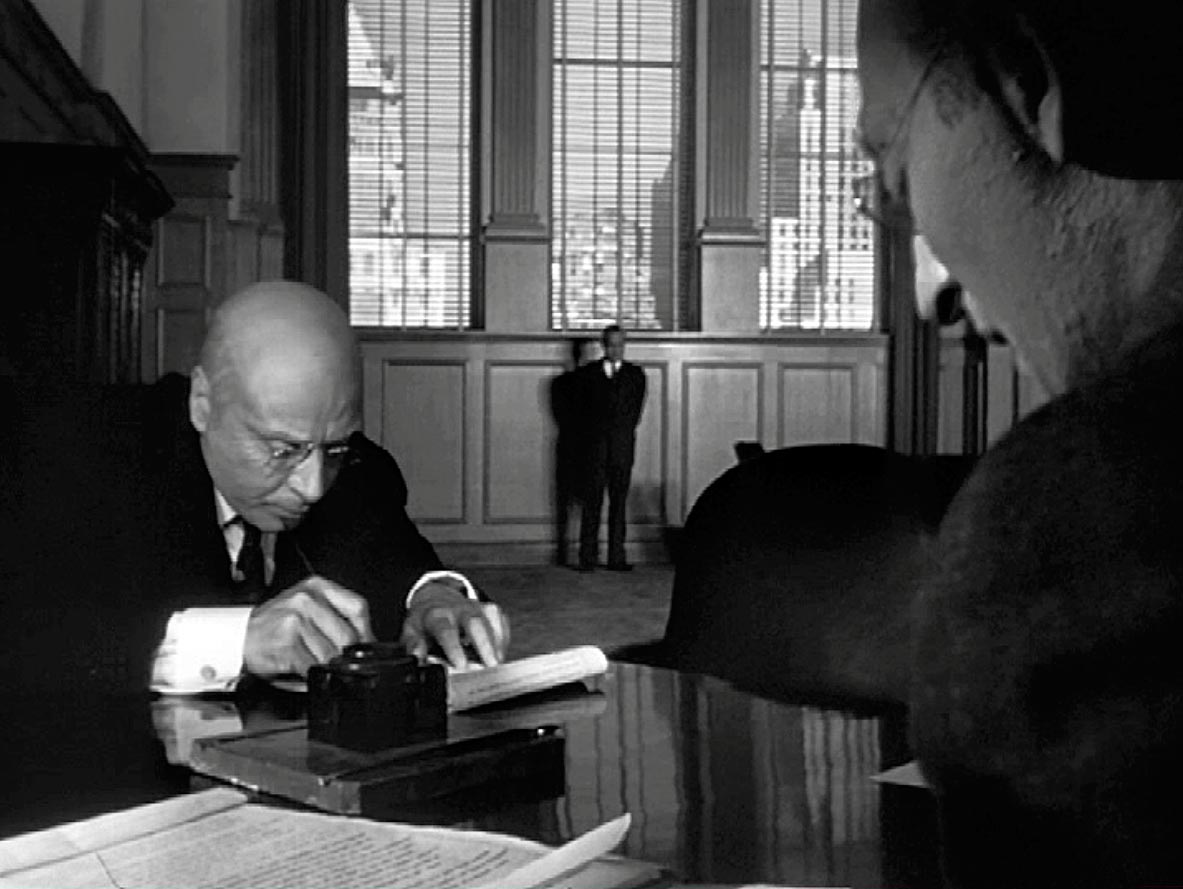
Sunset Boulevard (dir. Billy Wilder) 

Ran (dir. Akira Kurosawa) 

Casablanca (dir. Michael Curtis) 

A Star Is Born (dir. George Cukor) 

The Conversation (dir. Francis Ford Coppola) 

The Phantom of Liberty (dir. Luis Bunuel) 

The Flavour of Green Tea over Rice (dir. Yasujiro Ozu) 

Raise the Red Lantern (dir. Zhang Yimou) 

F for Fake (dir. Orson Welles) 


Monday, 21 October 2019

My favourite comedies

To make it simpler, I’m going to mention only 1 film per director, and group series together. 
I’m also not going to mention comedies I saw only once and it was more than a year ago, even if I remember laughing a lot, such as The Big Lebowski or The Nice Guys
Here’s my list of 10 favourite comedies: 
Modern Times (1936, dir. Charlie Chaplin) 
Bringing Up Baby (1938, dir. Howard Hawks) 
Some Like It Hot (1959, dir. Billy Wilder) 
The Phantom of Liberty (1974, dir. Luis Bunuel) 
Love and Death (1975, dir. Woody Allen) 
The Gods Must Be Crazy 1 and 2 (1980 and 1989, dir. Jamie Uys) 
The Naked Gun (all 3: 1988 and 1991, dir. David Zucker, and 1994, dir. Peter Segal)
A Fish Called Wanda (1988, dir. Charles Crichton) 
The Grand Budapest Hotel (2014, dir. Wes Anderson) 


___________________________________________________________

I’ve just got back from a short trip to Edinburgh, but I’ve been thinking about this: do comedies get worse over time? I hate most of today’s comedies (based on trailers and clips mostly but sometimes a whole film)—they’re just crude and painfully unfunny. Rom-com stuff is even worse. 
Meanwhile I’m reading P. G. Wodehouse’s Carry On, Jeeves. He’s probably the best of humourists.

Monday, 19 August 2019

Changing tastes

1/ A few days ago I watched Breakfast at Tiffany’s again, probably the 3rd time. 
My bf had never seen the film before, but knew about the controversy, which I assume most people would—the controversy about Mickey Rooney playing Mr Yunioshi. Put aside the fact that it’s a white actor wearing make-up and prosthetics to play an Asian character as comic relief, which is seen as offensive, it’s just not funny. Was it ever funny, when the film was released in 1961? It’s crude and unnecessary, and doesn’t fit in with the tone of the film. 
The Yunioshi character was the reason that I could never fully embrace the film. Now, seeing it again, I don’t like it much anymore. Audrey Hepburn is still charming and elegant, the cat is still cute, and Paul’s speech at the end of the film is still poignant, but maybe Breakfast at Tiffany’s is not for repeated viewings. Certain flaws become more obvious, some of the speech sounds expository. Maybe it’s one of those films that should be remembered, as a lovely charming thing, rather than seen again. 

2/ Every year I watch about 100 films, some of which are revisits. 
Some films demand multiple viewings—each time you see something new. Persona, the Mount Everest of film criticism, is an example. Spring, Summer, Fall, Winter… and Spring is another. Or F for Fake
Masterpieces like Sunset Boulevard or Chinatown, which I saw again over the past year, never become boring or outdated. They are perfect. There are films I’ve seen 6-7 times and will still see again: The Godfather, Casablanca, The Silence of the Lambs, The Shawshank Redemption… 
Some films lose their magic on revisit. I enjoyed re-watching The Phantom of Liberty, which is whimsical and brilliant, but I no longer felt the fun upon my revisit of The Discreet Charm of the Bourgeoisie—its charm relied too much on the random unexpectedness, which obviously was no longer there when I knew what was going to happen. Mother the 2nd time around was not as good, which is probably the case for films which rely heavily on the mystery and suspense of solving the case/ finding the murderer, and on the twist. As you watch it again, it no longer has much to keep your interest.  
That’s why a film like Chinatown still retain its magic on multiple viewings. I don’t watch it for the answers. I watch it for Jack Nicholson’s performance, for the character of Jack Gittes, for the great dialogue—sharp and full of meaning, for the tight structure and pace, and for John Huston and Faye Dunaway. 
And sometimes, watching a film again, we don’t like it anymore just because we have changed. I just don’t like American Beauty, Edward Scissorhands, or Scarface anymore, though I used to. Our tastes change over time. 

3/ A blog is a great place to make note of what I like, and keep track of how I’ve changed over time. 
In 2015, I listened to Billie Holiday all the time, obsessively, for a long period. Then it passed. Since then, it’s mostly Ella Fitzgerald and Nina Simone that I listen to. Sometimes Aretha Franklin. Sometimes Etta James. Sometimes Sarah Vaughan. 
Sometimes I wonder how many artists I like now, I will still like in 30 years, or 50 years. My formative years were the time in Norway—that was when I discovered classic cinema, photography, 19th century literature, Russian literature, and jazz. I reckon that for the rest of my life, these things will always be important to me, especially classic cinema, Russian literature, and jazz; it’s my views on the individual artists that change. 
Shall I try to predict? 
Tolstoy, I’m sure, will always be there. He is a giant, not only in Russia but in world literature, and his impact on my life cannot be overstated.  
Same with Nabokov. 
With Melville, I’m not sure, but Moby Dick will always be a favourite and an important novel. With Jane Austen, I expect to still respect her in 30 years, or even 50 years, because I already went from disliking her and thinking she was chicklit, to discovering the great depth and sensitivity in her works, but maybe one day I will no longer care about stories of growth, understanding, and self-understanding. We never know. 
In cinema, I think I will always like Ingmar Bergman and Billy Wilder. I once had a Wong Kar-wai phase, a Martin Scorsese phase, even a Stanley Kubrick phase, but Ingmar Bergman is a director whose films have everything that I think are important about cinema: great cinematography and lighting, striking imagery, creative and haunting use of sound, good editing, great acting and memorable performances, style, depth, personal vision, exploration of relationships and human consciousness, and formal experiments that push the boundaries of cinema. He was also the director that I discovered, and learnt from, during my 3 years at the film school, and who influenced my first short films. 
It’s also hard to imagine a time when I wouldn’t like Billy Wilder. Is there any other writer-director who writes more memorable dialogue and makes so many great films in such different genres? I love his sharp wit and humour, and the humanity of his films. 
About music, I know a few people who listen to jazz their whole lives, so I don’t suppose I will stop loving jazz. It’s just hard to say if I will always like John Coltrane, whom I’m focusing on at the moment. But I expect Louis Armstrong and Ella Fitzgerald to always be there, on their own or together. I don’t like watching Louis Armstrong—his grin makes me uncomfortable, but I can listen to him all day. People talk about his optimism, which isn’t wrong for songs such as “What a Wonderful World”, but there’s nothing so haunting like the pain in his performance of “Black and Blue”. 
Louis Armstrong and Ella Fitzgerald on their own are fantastic. Together, they’re recognised as the greatest duets in jazz. Her velvety voice softens his edges. My favourite of theirs is “Summertime”. 
Well, let’s see how things turn out.

Saturday, 1 June 2019

On Sidney Lumet (and other directors)

I’m reading Sidney Lumet’s Making Movies, which I think is a very good and enjoyable book, especially for aspiring film directors. 
Look at this: 
Image may contain: text that says "dialogue. Dialogue is not uncinematic. So many of movies of the adore are con- stant streams of dialogue. course remember James Cag- ney squashing a grapefruit Mae Clarke's face. But does that affectionate memory than "Here's kid"? knows Chaplin anized feeder in Times is I've ever laughed harder gag. But at the end of Some Like It Hot, E. says to Jack Lemmon, nobody' perfect." The is no between the and the Why not the best of both? I'll go further. love long speeches. of the the studio resisted doing Network"
Isn’t that such a good “defence” of dialogue? The writer-director who has created the most memorable lines is Billy Wilder, who has 3 contenders for the best closing lines of all time—The Apartment (“Shut up and deal”), Some Like It Hot (“Nobody’s perfect”), and Sunset Boulevard (“All right, Mr. DeMille, I'm ready for my close-up”). Dialogue is not uncinematic. It is only uncinematic when it is superfluous exposition, and worst if it’s the director’s way of explaining the film to the audience (which is common in Christopher Nolan’s films). 
Now look at this passage: 
Image may contain: text
That is fascinating and scary at the same time—would I be able to tell? 
The book offers some invaluable insight and advice about directing. I admire Sidney Lumet immensely, and now love him even more as I read the book. He is not an auteur, he might not even be seen as a stylist, but does it matter? I would say that 12 Angry Men and Dog Day Afternoon are masterpieces, and Before the Devil Knows You’re Dead is a great, heartbreaking film that should be better known. Many of his other films are also highly acclaimed, such as Serpico, The Verdict, Network, Murder on the Orient Express, Long Day’s Journey into Night... Why are some other directors ranked higher just because their films are more stylistic or technically more impressive? 
That leads me to another point: is the ability to work with actors not important? The directors who I think are masters at getting the best performances out of actors are Ingmar Bergman, Elia Kazan, Sidney Lumet, and Francis Ford Coppola. And perhaps Roman Polanski (Adrien Brody never had anything remotely as good as his performance in The Pianist). 
Some other directors who are also good at working with actors are Billy Wilder, Clint Eastwood, Martin Scorsese, Zhang Yimou, Krzysztof Kieslowski… (I don’t include Kurosawa and Mizoguchi because Japanese acting is a different style). 
As you follow a director’s work, you realise what their main strengths are—they are better at some aspects of filmmaking than others. Fellini’s main strengths, for example, are in blocking/staging, cinematography, and visual storytelling. Billy Wilder’s are in story, structure/ pacing, dialogue, and working with actors. Orson Welles’s are in cinematography (especially lighting), structure, editing, and sound. Luis Bunuel’s are in story/ plot, ideas, and pacing. Andrei Tarkovsky’s are in ideas, cinematography, sound, and atmosphere. 
You also notice, not weaknesses, but that some aspects don’t interest a director as much as others. There isn’t much to say about cinematography and lighting in Luis Bunuel’s films, for example; or editing in Tarkovsky’s; or story in Wong Kar-wai’s.  
It is not without reason that I think Ingmar Bergman’s the best director of all time, because his films do have everything—good story, interesting idea, depth, pacing, great cinematography (especially lighting), great sound, great editing (most notably in Persona), good production design (at least in Cries and Whispers and Fanny and Alexander), wonderful performances, good visual storytelling, experiments… But usually, directors have their strengths, and they may be weaker, or at least not as spectacular, in some other aspects of filmmaking, so why is it that directors who are good at techniques valued much more highly than directors who are good at drama (emotional complexity in a scene, and pacing for the film as a whole) and working with actors? 
When a film looks good, it is visually pleasing, but at the end of the day, so what? I like good acting. I like touching stories. I like films that make me see life differently and learn something about myself. I never use the word “great” for directors like Quentin Tarantino or Wes Anderson—they’re good at what they do, and their films are entertaining, but have no depth and offer no more than that. But even if we talk about Stanley Kubrick, a director I admire very much when it comes to techniques (especially the production design, cinematography, and use of music), none of his films has ever touched me on an emotional, personal level like 12 Angry Men or Dog Day Afternoon has. In Dog Day Afternoon, people talk a lot about Al Pacino, who indeed delivers a fine performance, one of the best in his career, but we should also talk about John Cazale—for some reason, I can never forget the incredibly sad look on his face when Al Pacino asks where he wants to go if he could go anywhere, and he says “Wyoming”. 12 Angry Men shows Sidney Lumet’s talent at working with actors, and also his ability to make an engrossing film in an enclosed space. I’d choose Sidney Lumet over Kubrick anytime. 
But that’s enough. Get Making Movies. It’s a good book. Even Roger Ebert said: 
“Invaluable… I am sometimes asked if there is 1 book a filmgoer could read to learn more about how movies are made and what to look for while watching them. This is the book.”

Saturday, 1 December 2018

Underrated films: a list

This is my list of favourite underrated films. 
To explain, I don’t mention films such as Cries and Whispers—generally speaking, most people haven’t watched it, but it’s regarded as one of the peaks of Ingmar Bergman’s oeuvre and recognised as among the greatest films ever made. 
By underrated films, I’m thinking of the films that are overlooked—the films that people don’t often include in the list of best films or films you should watch, and the films that people forget when talking about an important director. 

The list (strong favourites in bold): 
Letter from an Unknown Woman (1948), dir. Max Ophuls 
In a Lonely Place (1950), dir. Nicholas Ray 
Gion Bayashi/ A Geisha (1953), dir. Kenji Mizoguchi 
Street of Shame (1956), dir. Kenji Mizoguchi 
The Killing (1956), dir. Stanley Kubrick 
Nights of Cabiria (1957), dir. Federico Fellini 
The Bad Sleep Well (1960), dir. Akira Kurosawa 
The Innocents (1961), dir. Jack Clayton 
My Fair Lady (1964), dir. George Cukor 
The Private Life of Sherlock Holmes (1970), dir. Billy Wilder 
The Last Detail (1973), dir. Hal Ashby 
The Phantom of Liberty (1974), dir. Luis Bunuel 
Alice Doesn't Live Here Anymore (1974), dir. Martin Scorsese 
3 Women (1977), dir. Robert Altman 
On Golden Pond (1981), dir. Mark Rydell 
My Left Foot (1989), dir. Jim Sheridan 
Bound (1996), dir. The Wachowskis 
Happy Together (1997), dir. Wong Kar-wai 
Happiness (1998), dir. Todd Solondz 
Memento (2000), dir. Christopher Nolan 
Sideways (2004), dir. Alexander Payne
Fracture (2007), dir. Gregory Hoblit 

This list would expand.

Sunday, 7 October 2018

On Billy Wilder, The New French Extremity, and Hollywood vs European arthouse

I’ve just watched The Apartment the 3rd time, and I’m crazy about Billy Wilder again.


There was a time I named Billy Wilder as my no.1 favourite director, then over the past 2 years, I’ve been watching more European (art) films, especially from the 40s-60s, taking an interest in experimenting and the idea of film as dream, and moving away from classic and modern Hollywood, realism, and chronological storytelling, but Billy Wilder still has a special place in my heart. Now, watching again The Apartment, I see him as representing the best of classic Hollywood, whilst Ingmar Bergman’s the best of European arthouse—the 2 camps, so to speak. 
Let me elaborate by going slightly off-topic. The other day I came across the term New French Extremity. 
This is the definition on Wikipedia:
“New French Extremity (New French Extremism or, informally, New French Extreme) is a term coined by Artforum critic James Quandt for a collection of transgressive films by French directors at the turn of the 21st century.” 
According to James Quandt: 
“Bava as much as Bataille, Salò no less than Sade seem the determinants of a cinema suddenly determined to break every taboo, to wade in rivers of viscera and spumes of sperm, to fill each frame with flesh, nubile or gnarled, and subject it to all manner of penetration, mutilation, and defilement.” 
The New French Extremity has its roots in body horror and exploitation cinema. Google for images of Baise-moi, In My Skin, or Irréversible, and you’ll get the idea. 
Wikipedia also says: 
“Films belonging to the New French Extremity take a severe approach to depicting violence and sex.” 
The world of Danish director Lars von Trier is also like that, full of violence, rape, sexual humiliation, self-mutilation, hypocrisy...—he wants to break every taboo, have no limit, and depict everything on screen. 
I can’t help wondering, all this extremity—unsimulated sex scenes, violence, rape, self-mutiliation, blood…, all this ugliness, for what? 
Somehow it looks like there are 2 camps: Hollywood vs European arthouse; the Oscars vs Cannes; telling a good story (in a conventional way) vs experimenting with form and narrative. In a way, filmgoers can be put into either camp. The way I see it is that, people who choose European art films are either those who see film as art (good) or those who like avant-garde and experiments, even for the sake of experiment (bad); whereas people who choose American films are either those who see film as entertainment (bad) or those who value characters and a good story over experiment for the sake of experiment (good). 
Because of my favourite films, my own interests and tendencies, I tend to think I’m on the side of European art films, until I’m reminded that whilst there are masters such as Ingmar Bergman, Fellini, Bunuel, Tarkovsky…, European arthouse also has lots of ugliness, lots of filth and extremity, and lots of trash. 
Billy Wilder is the reminder that in cinema, special effects get outdated, experimenting becomes boring, transgression loses it meaning, and over time a film that focuses on those things becomes worthless, whilst a film that has human characters and a good story and a heart would stand the test of time. That is why his films are never old—films such as The Apartment, Sunset Boulevard, Ace in the Hole, and Some Like It Hot, are still fresh today, and will still be fresh 50 years from now, because they deal with human beings and conflicts and feelings, and because he looks at people with clear eyes and doesn’t stoop to false sentimentality. 
Ingmar Bergman and Billy Wilder are the directors who touch me the most on a personal level. They have very different styles, and very different approaches to cinema and storytelling, but they both are interested in human beings and universal problems. 
Their films are never old. 


_______________________________________

Ultimately, Bergman and Wilder may be in the same camp.
Film is their way of telling stories, expressing themselves, and dealing with human problems. 
The other camp is filmmakers who are more interested in other stuff—entertainment, special effects, experimenting, narrative, shock, whatever. To me, special effects may be fun to watch, experimenting may be interesting to see, but in the end, if there’s nothing beneath all that, who cares?

Thursday, 27 September 2018

Billy Wilder and the themes of deception and cowardice

Noel Simsolo’s book about Billy Wilder in the Masters of Cinema series is delightful to read. It reminds me of why I love Billy Wilder so much. 
Take this paragraph about The Lost Weekend, a film I haven’t seen: 
The Lost Weekend does not show that alcohol brings about a harmful disconnection from reality, but that people who drink are in tune with the far more horrible reality of their own cowardice. The mise-en-scène endlessly condemns the character for his spinelessness rather than his vice.” 
Billy Wilder might not have a strong, recognisable visual style, but there are 2 main themes that stay with him throughout his career. 
The 1st is illusion and deception—lies, masks, cross-dressing, disguise, fraud, masquerade… I once had a post about different forms of lies and deception in his films. 
The 2nd is cowardice and spinelessness, which relates to the choice between false values (e.g. easy money) and being a mensch. This is most clear in Sunset Boulevard, The Apartment, Double Indemnity, and Ace in the Hole (or The Big Carnival). His films are not moralising, but he is a moralist. The main character in each of these films throws away his own dignity and self-respect for money, power, or fame, and struggles with the awareness that it is wrong, but in the end, chooses to be a mensch.  
“Although Wilder kept moving from 1 film genre to another to avoid being classified in any of the industry’s categories, it becomes increasingly clear that all of his characters are similar in personality and behaviour. With this ghost trilogy certain contestants become apparent: differences of social situation, motivation, and crucially, ways of understanding reality; role play and lies; cowardice and a lack of lucidity; and manipulation of some by others. And always there is a discomfort with one’s life, past and present.” 
By “the ghost trilogy”, Simsolo’s referring to The Emperor Waltz, A Foreign Affair, and Sunset Boulevard
“… Sunset Boulevard is a despairing film that ends with 1 last lie, in which a mad, murderous old star is made to believe that she is shooting a film so that she can be taken away to prison or an asylum.” 
Seeing through pretensions and having no illusion, Billy Wilder keeps making films about people who lie. Simsolo says about Love in the Afternoon, another film I haven’t seen: 
Love in the Afternoon is an apology for lying.” 
But then he says: 
“The happy ending at the station emerges from tears of distress because it is the product of a fool’s game. Neither the spineless seducer nor the innocent liar has escaped the vice resulting from their respective obsessions. They have each become a prisoner of a dream susceptible to becoming a daily nightmare. Despite its comic moments, Love in the Afternoon is a tragedy.” 
About Witness for the Prosecution, Simsolo remarks: 
 “Witness for the Prosecution is a film in which all the actors have to speak and express themselves in a range of different ways according to the profession, physical position, duality, disguise and psychology of their characters, who are all entangled in big or small lies.” 
It is an adaptation of Agatha Christie, but at the same time, is very much a Billy Wilder film. 
Simsolo’s comment also brings me to another point: Wilder’s greatest strengths are in dialogue and in his characters. No matter what kind of film he makes—film noir or drama or comedy or even farce, ultimately it is people that he’s interested in. He deals with greed, ambition, opportunism, deception, delusion, manipulation, shame, self-loathing, internal conflicts, cowardice…, and his characters are never flat or simplistic. This is the reason I would choose Billy Wilder over Stanley Kubrick any day. 
Danilo Castro at Taste of Cinema picked Billy Wilder as the best writer-director of all time. No.2 is Ingmar Bergman. Do I agree? Probably not, but I can see why. Bergman’s the better director, but Wilder has a greater range, and as a writer, he has wit.

Monday, 17 September 2018

Citizen Kane and deep focus

Now that I’ve discovered my university library has several books from the Masters of Cinema series of Cahiers du Cinema, I’m reading the one about Orson Welles, by Paolo Mereghetti. 

See what he says about Citizen Kane and deep focus (i.e. foreground, middleground, and background are all in focus): 
“The depth of field Welles and Toland wanted to achieve would offer the viewer a larger expanse of clearly visible space, and consequently a greater choice of objects contained in the same shot. Previously—and even subsequently—the image on the screen had tended to highlight the person or object to which the filmmaker wanted to draw attention, leaving everything surrounding it or behind it indistinct. Welles, however, wanted to experiment with different spatial shots. Toland therefore worked mainly with a Cooke 24mm lens with a very short focal length, which captured a far greater amount of light and gave him a far greater depth of field. The use of Eastman Kodak Super XX film (4 times more sensitive than conventional film stock) and a reliance on powerful arc lamps rather than the softer tungsten lamps, substantially enhanced the deep focus effect of a scene.” 
To most people, that is probably too technical and provokes nothing, but to me, it is delicious. 
 Mereghetti goes on: 
“This revolutionary approach to lighting brought about other changes, because wide-angle lenses such as the Cooke 24mm enlarged the image both horizontally and vertically, thus forcing the filmmaker to concentrate on the ceilings as well as the other parts of the set. This led to a totally new conception of scenic spaces and camera angles; Welles could use ceilings not only to conceal a larger number of microphones (which enabled him to obtain an unprecedented depth of sound), but also to enhance the dramatic power of a particular scene. A low ceiling that appeared to be ‘crushing or ‘imprisoning’ the characters heightened the impression of their spatial confinement.
However, the experiment with deep-focus photography should not be interpreted as a quest for greater realism or an opportunity to adapt the camera lens to the human eye, which always brings into focus the space that surrounds it. Welles regarded it as an essential tool for devising a new way of reading the spaces within the shot, for creating an articulated system of spatial references, a new ‘symbolic form’ with which to subvert the conventions of the medium. This is apparent at the beginning of Citizen Kane, where the narrator (Welles), describing the approach to Xanadu and then the discovery of Kane’s death, immediately puts the viewer on his guard and provides a clear demonstration of a new ‘form’ of cinema.” 
The deep focus not only creates a richer image, with everything in frame sharp and clear. It also allows Welles to view space differently, so he might keep everything we need to see in 1 shot instead of breaking up the action into a series of shots; he also has greater freedom with staging and blocking, and plays with the z-axis.
My friend Himadri places Billy Wilder above Orson Welles, but the passages above explain why Welles belongs to the top rank of directors whilst someone like Billy Wilder doesn’t. Much as I love Billy Wilder’s films, he was using the tools and techniques that were already there, to tell great stories, whereas Orson Welles, like Bergman or Fellini, was exploring the possibilities of cinema, pushing for new ways of telling a story, and challenging conventions, and he changed cinema. Style is not more important than substance, I doubt that I’d get along with auteurists, but directors are not mere storytellers. I might feel more about Billy Wilder’s work (especially Sunset Boulevard, The Apartment, Witness for the Prosecution, and perhaps also The Private Life of Sherlock Holmes), but rank Orson Welles more highly. 
Having said that, I love Welles not only because of his style and revolutionary techniques, but also because of the content, the complex, multi-faceted characters, and the themes.

Saturday, 11 August 2018

My favourite films from the 1970s

The 50s: http://thelittlewhiteattic.blogspot.com/2017/08/my-favourite-films-from-1950s.html
The 60s: http://thelittlewhiteattic.blogspot.com/2018/03/my-favourite-films-from-1960s.html 

The Private Life of Sherlock Holmes (1970) by Billy Wilder
Harold and Maude (1971) by Hal Ashby
The French Connection (1971) by William Friedkin 
The Godfather (1972) by Francis Ford Coppola
Cries and Whispers (1972) by Ingmar Bergman 
The Discreet Charm of the Bourgeoisie (1972) by Luis Bunuel 
Last Tango in Paris (1972) by Bernardo Bertolucci 
Cabaret (1972) by Bob Fosse 
Solaris (1972) by Andrei Tarkovsky 
Play It Again, Sam (1972) by Herbert Ross 
Amarcord (1973) by Federico Fellini
The Last Detail (1973) by Hal Ashby 
Mean Streets (1973) by Martin Scorsese 
The Sting (1973) by George Roy Hill 
Sleep (1973) by Woody Allen 
F for Fake (1973) by Orson Welles 
The Godfather Part II (1974) by Francis Ford Coppola
The Conversation (1974) by Francis Ford Coppola
Chinatown (1974) by Roman Polanski 
The Phantom of Liberty (1974) by Luis Bunuel 
Alice Doesn't Live Here Anymore (1974) by Martin Scorsese 
Dog Day Afternoon (1975) by Sidney Lumet
Scent of a Woman (1975) by Martin Brest
Love and Death (1975) by Woody Allen 
Taxi Driver (1976) by Martin Scorsese
Network (1976) by Sidney Lumet 
3 Women (1977) by Robert Altman 
That Obscure Object of Desire (1977) by Luis Bunuel 
Annie Hall (1977) by Woody Allen 
Autumn Sonata (1978) by Ingmar Bergman 
The Tin Drum (1979) by Volker Schlöndorff 
Manhatttan (1979) by Woody Allen 
All That Jazz (1979) by Bob Fosse

Monday, 30 July 2018

My new 10 (+1) favourite films; 30/7/2018

Persona by Ingmar Bergman 
Citizen Kane by Orson Welles 
Nights of Cabiria by Federico Fellini 
Yojimbo & Sanjuro by Akira Kurosawa 
Sunset Boulevard by Billy Wilder
The Discreet Charm of the Bourgeoisie by Luis Buñuel
Spring, Summer, Fall, Winter... and Spring by Kim Ki-duk 
Taxi Driver by Martin Scorsese
The Godfather by Francis Ford Coppola
Casablanca by Michael Curtis 


------------------------------------------------------------

Once in a while I make a new list of favourites to see what has changed and to keep notes over time. 
Now there have been only a few changes since last year: http://thelittlewhiteattic.blogspot.com/2017/06/my-new-10-favourite-films.htm
Ran is replaced with Yojimbo and Sanjuro. Choosing a favourite Kurosawa is difficult. I love Ran. I love The Bad Sleep Well. I love High and Low. The Bad Sleep Well is a perfect film, and a great example to learn from about the geometry of the scene—about staging and creating a shape in the frame. But finally I chose Yojimbo and Sanjuro (for how do you separate them?) for their dynamic quality and humour, and Toshiro Mifune’s charismatic hero, over the tragic The Bad Sleep Well.  
Persona and Citizen Kane, I love to the point of obsession. They are masterpieces, and I keep coming back to them for inspiration. Citizen Kane has everything you need to learn about cinema, especially in terms of blocking, cinematography, and editing; whilst Persona in particular and European art films in the 1950s-60s in general have changed my view of the possibilities of cinema and had a huge influence on me, especially with the idea of film as dream.


------------------------------------------------------------

On this date in 2007, Ingmar Bergman passed away. 
Today is also Emily Bronte's 200th birthday. 

Tuesday, 27 March 2018

My favourite films from the 1960s

For the 1950s: http://thelittlewhiteattic.blogspot.com/2017/08/my-favourite-films-from-1950s.html

The Bad Sleep Well (1960) by Akira Kurosawa
The Apartment (1960) by Billy Wilder 
Psycho (1960) by Alfred Hitchcock 
La Dolce Vita (1960) by Federico Fellini 
Le Trou (1960) by Jacques Becker
Viridiana (1961) by Luis Buñuel
One, Two, Three (1961) by Billy Wilder
Breakfast at Tiffany’s (1961) by Blake Edwards
Yojimbo (1961) by Akira Kurosawa 
Sanjuro (1962) by Akira Kurosawa
Ivan’s Childhood (1962) by Andrei Tarkovsky
The Exterminating Angel (1962) by Luis Buñuel  
The Trial (1962) by Orson Welles 
Winter Light (1963) by Ingmar Bergman 
High and Low (1963) by Akira Kurosawa
8 1/2 (1963) by Federico Fellini
Knife in the Water (1963) by Roman Polanski 
Charade (1963) by Stanley Donen
Woman in the Dunes (1964) by Hiroshi Teshigahara 
Dr Strangelove (1964) by Stanley Kubrick 
My Fair Lady (1964) by George Cukor 
Persona (1966) by Ingmar Bergman
Blow-Up (1966) by Michelangelo Antonioni
2001: A Space Odyssey (1968) by Stanley Kubrick
The Graduate (1968) by Mike Nichols 
Hour of the Wolf (1968) by Ingmar Bergman
Romeo and Juliet (1968) by Franco Zeffirelli

Thursday, 22 February 2018

The favourite 3

Following the previous post, here’s a list of my 3 favourite films of some directors. I also note how many of the directors’ films I’ve watched. 
(I don’t include a director if I’ve only seen 5 films or less. You probably notice that I broke my own rule a few times). 

Woody Allen:
Annie Hall 
Crimes and Misdemeanors 
Love and Death 
(out of 18) 

Martin Scorsese: 
Taxi Driver 
Mean Streets 
The Aviator 
(out of 17) 

Ingmar Bergman: 
Persona 
Cries and Whispers 
Wild Strawberries or The Seventh Seal 
(out of 15) 

Alfred Hitchcock: 
Psycho 
Dial M for Murder 
Vertigo 
(out of 15) 

Billy Wilder: 
Sunset Boulevard 
The Apartment 
Witness for the Prosecution 
(out of 14) 

Federico Fellini: 
Nights of Cabiria 
8 ½ 
Amarcord 
(out of 10) 

Clint Eastwood: 
Million Dollar Baby 
Changeling 
True Crime 
(out of 10) 

Zhang Yimou: 
Raise the Red Lantern 
To Live 
Red Sorghum or Ju Dou 
(out of 10) 

Stanley Kubrick: 
Dr Strangelove 
The Killing 
2001: A Space Odyssey 
(out of 9) 

Joel& Ethan Coen: 
No Country for Old Men 
The Big Lebowski 
Fargo 
(out of 9) 

Kenji Mizoguchi: 
Gion bayashi, aka A Geisha 
Ugetsu monogatari 
Akasen chitai, aka Street of Shame 
(out of 8) 

Luis Bunuel: 
The Exterminating Angel
The Discreet Charm of the Bourgeoisie 
The Phantom of Liberty or Viridiana 
(out of 8) 

Wong Kar-wai: 
Chungking Express 
Happy Together
2046
(out of 8) 

Tim Burton: 
Edward Scissorhands 
Corpse Bride
Sweeney Todd
(out of 8) 

Akira Kurosawa: 
Ran 
The Bad Sleep Well 
High and Low 
(out of 7) 

Francis Ford Coppola: 
The Godfather 
The Conversation 
The Godfather Part II 
(out of 7) 

Steven Spielberg: 
Catch Me If You Can 
A.I. Artificial Intelligence 
The Terminal 
(out of 7) 

Park Chan-wook: 
The Handmaiden 
Thirst 
(out of 6) 

Roman Polanski: 
Chinatown
The Pianist 
Knife in the Water 
(out of 6) 

Quentin Tarantino: 
Pulp Fiction 
Inglourious Basterds 
Jackie Brown 
(out of 6) 

Ang Lee: 
Sense and Sensibility 
Brokeback Mountain 
Crouching Tiger, Hidden Dragon
(out of 6)

Saturday, 12 August 2017

My favourite films from the 1950s

(Note that this is a list of favourites, so some great films may be absent, such as Rashomon or Tokyo Story). 


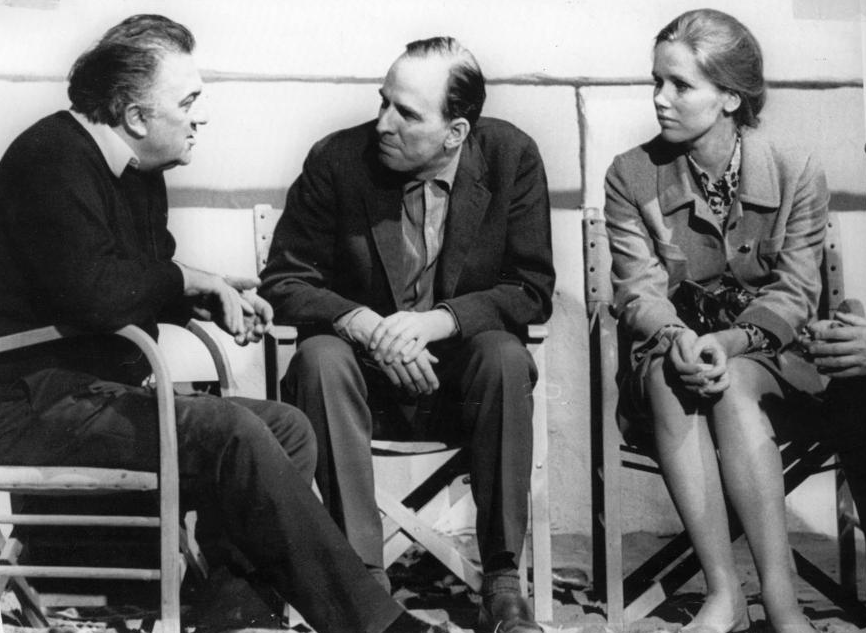
(A photo of Fellini and Bergman, with Liv Ullmann- source

All about Eve (1950) by Joseph L. Mankiewicz
Sunset Boulevard (1950) by Billy Wilder 
In a Lonely Place (1950) by Nicholas Ray 
A Streetcar Named Desire (1951) by Elia Kazan 
The Big Carnival aka Ace in the Hole (1951) by Billy Wilder
The Life of Oharu (1952) by Kenji Mizoguchi 
Ugetsu Monogatari (1953) by Kenji Mizoguchi 
A Geisha aka Gion bayashi (1953) by Kenji Mizoguchi 
Summer with Monika (1953) by Ingmar Bergman 
Roman Holiday (1953) by William Wyler 
La Strada (1954) by Federico Fellini
On the Waterfront (1954) by Elia Kazan 
Rear Window (1954) by Alfred Hitchcock 
Dial M for Murder (1954) by Alfred Hitchcock 
Smiles of a Summer Night (1955) by Ingmar Bergman 
The Killing (1956) by Stanley Kubrick 
The Trouble with Harry (1956) by Alfred Hitchcock
Street of Shame (1956) by Kenji Mizoguchi 
Nights of Cabiria (1957) by Federico Fellini 
Witness for the Prosecution (1957) by Billy Wilder
12 Angry Men (1957) by Sidney Lumet
Wild Strawberries (1957) by Ingmar Bergman 
The Seventh Seal (1957) by Ingmar Bergman 
An Affair to Remember (1957) by Leo McCarey 
Vertigo (1958) by Alfred Hitchcock 
Some Like It Hot (1959) by Billy Wilder 
Anatomy of a Murder (1959) by Otto Preminger 

So many great films in the 50s. Wonderful period.

Friday, 30 June 2017

My new 10 favourite films

Persona by Ingmar Bergman 
The Seventh Seal by Ingmar Bergman 
Sunset Boulevard by Billy Wilder 
Nights of Cabiria by Federico Fellini 
Spring, Summer, Fall, Winter... and Spring by Kim Ki-duk 
Ran by Akira Kurosawa 
Taxi Driver by Martin Scorsese
The Godfather by Francis Ford Coppola
Casablanca by Michael Curtis 
The Silence of the Lambs by Jonathan Demme 

(replaced 1 film on the list on 17/6/2017) 

Thursday, 31 December 2015

2015 film wrap-up

1/ The 10 best films I watched this year are:
Brief Encounter (1945): Voted to be the most romantic film of all time, this David Lean film goes against the usual motifs of romance films: the actor and actress are not glamorous, the love story is an affair between 2 married people, the affair begins with the man's help for a woman that has grit in her eye and ends with a shoulder squeeze and is unconsummated. Brief Encounter begins with the scene of the 2 characters at the tea shop, there's a sense of awkwardness, and a vague feeling in the air of something unsaid, but we don't yet know what's going on- it's only later when the narrative goes back to the beginning and all the incidents unfold before us and gradually lead to this scene again, that it becomes particularly beautiful and moving. I've written about it here and here.
12 Angry Men (1957): The best courtroom film, whose actions actually don't take place in a courtroom. Sidney Lumet demonstrates how he can make a film almost set in only 1 room, and make it work- except for the opening and a brief scene outside the courthouse in the end, the entire film takes place in the jury room. It's driven by characters and emotions- Sidney Lumet uses heat to create a sense of claustrophobia and worsen the tense, stressful, irritable atmosphere, as he has done in Dog Day Afternoon. Regarding plot, a man is convicted, 12 men who don't know him and don't know each other walk into a room to decide his fate; 11 men think "guilty", only 1 man, played by Henry Fonda, thinks "probably not", and slowly he breaks their arguments and convinces everyone else. 12 Angry Men is about law and the concept of reasonable doubt, about the job of jurors, about persuasion, about evidence and logic, about reason and prejudices, about justice, about conscience, about standing up for what you believe in even if everyone else in the room disagrees with you.
Witness for the Prosecution (1957): The best courtroom film if 12 Angry Men is excluded because strictly speaking it isn't set in a courtroom. Or the courtroom film with the best twist. Marlene Dietrich and Charles Laughton are wonderful, and if the film isn't as often mentioned as it should be, the simple reason is that it's made by the man who made the masterpieces Sunset Blvd and The Apartment, which naturally overshadow everything else. I briefly wrote about it once.
Le notti di Cabiria (1957): This is early Federico Fellini, before he created Felliniesque films and started being accused of being fanciful and self-indulgent, but it's unmistakably a film by Fellini: Nino Rota music, dancing, parties, magic shows, clowns, a female Charlie Chaplin, a scene of hypnotism, religion, smooth camera movements, people walking as though dancing to music. The film starts with an ordinary story and a stock character, a naive prostitute with a golden heart looking for love in vain, but Fellini works wonders. It is sad but not cynical, moving but not sentimental. A comparison with Sweet Charity shows how restraint, how controlled and unsentimental Le notti di Cabiria is, Fellini knows when it's enough, and refuses to make his Cabiria self-pitying. I've written about it here and here.
The Private Life of Sherlock Holmes (1970): Billy Wilder is often cynical, this is when he's most humane. Roger Ebert thinks that after some interesting scenes at the beginning, the film tells an ordinary Sherlock Holmes adventure- even though he's my hero in film criticism, his assessment is mistaken. On the surface, it's just another adventure, but Wilder makes Holmes more human by letting him fail and giving us a glimpse of his vulnerabilities. Like Fellini and other great writers, Wilder doesn't exploit emotions, he knows when it's enough, he allows silence to suggest more and invites the audience to fill in. A melancholic film, partly thanks to the use of Tchaikovsky's music. I once wrote about it here.
Chinatown (1974): Roman Polanski at his best. I remember those days when my favourite film ever was The Pianist; then I was unimpressed with Rosemary's Baby, rather scared but underwhelmed by The Tenant, puzzled about Bitter Moon, critical of Repulsion, and was for some time indifferent to Polanski. Knife in the Water is great, in its subtleties, I just didn't have the same enthusiasm as a few years ago. Now Chinatown makes me think I have to watch again the films mentioned above (except Repulsion, because I've never seen Catherine Deneuve as a good actress, and she looks too classy for the role), and other films by Polanski. Jack Nicholson plays a Bogart character that looks tougher, more aggressive, but has a heart and a conscience and even some kind of idealism behind his cynicism, wit and sharp tongue.
The Godfather Part II (1974): Is part I better or part II better? It is unfair to say, when part I I've watched 3-4 or even 5 times, and watched part II for the 1st time this year. Francis Ford Coppola does several remarkable things here: he creates a sequel-prequel on a par with the 1st film, he gets from Al Pacino a performance almost as great and memorable as Marlon Brando's performance as the Godfather, and if part I sees the mafia from within and might make people like being part of the mafia, because of the power, principles, sense of a large family, and stress on honour and loyalty, part II portrays the mafia as a lot more violent and ruthless. One may say that Michael betrays his father's values and has no heart, thus isolating himself and making everyone enemies. On the other hand, it's not hard to understand his disillusionment, disappointment and distrust, when the people closest to his family and even his own brother betray him. At the same time, the plot of the young Vito lets us see that violence has always been there, since the beginning- it's just violence begetting violence.Part I is about a powerful man. Part II is about a lonely and self-destructive man.
Annie Hall (1977): I wrote about it a few days ago.
Crimes and Misdemeanors (1989): I also wrote about it a few days ago (a novelistic approach). There are 2 plots, with counterparts and opposites (the Judah in the Misdemeanors plot is Lester, a successful but pompous, self-important, ridiculous film producer; the Ben in the Misdemeanors plot is Cliff). Woody Allen combines the 2 plots together by analogy, by film scenes Cliff watches with his niece that echo scenes in the Crimes plot, by the talk between Cliff and Judah at the end of the film, and by the the-evil-are-reward-the-innocent-are-punished conclusion. The 2 strongest performances are from Martin Landau and Alan Alda, who play the 2 douchebags.
Birdman (2014): If you break down Birdman to its basic plot, it's a story of a faded film star unable to come to terms with ageing and being forgotten or replaced, which would place it in the same basket as Sunset Blvd, All about Eve, The Artist or Clouds of Sils Maria, but it doesn't belong there, because of Alejandro G. Iñárritu's treatment of the basic story and handling of the material. In fact, Birdman doesn't belong to anything, any genre: it has been seen as "a black-humor film, a mental health film, a realism/surrealism/magical realism film, a dark-humor parody film, a film of psychological realism, a failed domestic reconciliation drama, or a film concerning theatrical realism and naturalism". Iñárritu puts much in it that sometimes the film feels a bit messy, but the approach is so creative, particularly in the use of the Birdman figure, with all the imagined flying scenes, that the experience is thrilling. 1 of the most brilliant films produced in recent years.

2/ I watched 18 films again. Some of them pale a bit when viewed again, like Match Point and Mother (South Korea). Anatomy of a Murder is still good but the 2nd time felt a bit slow. Scarface is no longer a favourite. Charlie's Angels now appears unbelievably silly, especially as this time I notice its so-called feminism. A Room with a View still puzzles. Some Like It Hot and Bringing Up Baby are still fresh and hilarious. Some films, no matter how many times I've watched them, are forever wonderful and captivating: The Godfather, The Silence of the Lambs, Spring, Summer, Fall, Winter... and Spring. Psycho gets better the 2nd time.

3/ Spring, Summer, Fall, Winter... and Spring is the most zen, poetic film about life. The 4 seasons are the 4 periods in a person's life. The film is full of symbols, many of which may be lost to people unfamiliar with Buddhism. What do they mean, the doors that close nothing out or in, for example? Roger Ebert thinks: "They are not symbols, I think, but lessons. They teach the inhabitants that it is important to follow custom and tradition, to go the same way that others have gone, to respect what has been left for them." Again here I differ from him: in my interpretation, the doors are only symbolic- barriers are in the mind, if you ignore right and wrong and decide to cross the barrier, as the young monk does in the film, no door can hinder your way. The doors close nothing because they can block nothing. However, even if we don't catch all the symbols and understand their meaning, we can still see it as a beautiful film about the different stages in life, and each episode/part is like a koan, about cruelty to animals, about sexual desire and desire for possession, about anger and jealousy and murder and then remorse and repentance and redemption, etc. There is little dialogue, but Spring, Summer, Fall, Winter... and Spring says a lot, and each time, something new.
The only puzzlement is: how is it that such a beautiful, thought-provoking film could have been made by the same man who made those twisted films DreamSamaritan Girl, The Bow and, worst of all, Pietà?

4/ The most important directors to me this year are Billy Wilder, Woody Allen, Federico Fellini and Alfred Hitchcock.
By Wilder, so far I've seen Double Indemnity, Sunset Blvd, Stalag 17, Sabrina, The 7 Year Itch, Witness for the Prosecution, Some Like It Hot, The Apartment, One, Two, Three, Irma la Douce, The Fortune Cookie and The Private Life of Sherlock Holmes. 12 films. In terms of cinematography, techniques, he can't compare with, say, Kubrick, he started out as a screenwriter, his strengths are in plot, dialogue, details, characterisation and working with actors. When he's great, he does everything perfectly, as though effortlessly. When he's not so great, he's never really bad- his weaker films always have some "saving grace", like charming Audrey Hepburn in Sabrina, sly Walter Matthau in The Fortune Cookie or energetic James Cagney in One, Two, Three.
Woody Allen is different from Billy Wilder and not as diverse, but there are a few similarities: both are cynical, both are extremely witty and can be funny, satirical as well as hysterical and absurd, both are not innovative in techniques. I've watched Everything You Always Wanted to Know About Sex* (*But Were Afraid to Ask), Love and Death, Annie Hall, Manhattan, Crimes and Misdemeanors, Match Point, Vicky Cristina Barcelona, You Will Meet a Tall Dark Stranger, Midnight in Paris, To Rome with Love and Blue Jasmine. 11 films in total, which is very little, considering how many films he has made. It means something though- I didn't care much for Woody Allen till recently, as I realise that in recent years he hasn't made anything really good that can be on a par with Annie Hall or Crimes and Misdemeanors, which means that I will search for his earlier films instead of watching Irrational Man. Think about it: how many people can write and direct and act and do all well? It is unfortunate that many people dismiss his works because of his personal life, or interpret them in its light.
If the films of Wilder and Allen show the primacy of writing, Fellini's art is about images. Fantasy, dreams, childhood memories. Some directors please the eyes with epic scenes and stunning visual effects but forget the brains, some directors create good films but forget that film is a different medium, using a different language and having different advantages, and Fellini makes wonderful use of cinematic language- he uses images where someone else, a weaker or less confident director, would use voice-over as a short cut. So far I've watched 7 films: I vitelloni, La strada, Le notti di Cabiria, La dolce vita, 8 1/2, Fellini Satyricon and Amarcord. With a bit of Fellini's Casanova. Even whilst personally preferring early Fellini to late Fellini, I don't see him as indulgent- in fact, I like Amarcord and see 8 1/2 as a masterpiece and intend to watch more of his works.
Last but not least, another director I love and consider important to me this year is Hitchcock. My knowledge of his long career is limited, only 10 films: Shadow of a Doubt, Rope, Rear Window, The Trouble with Harry, The Man Who Knew Too Much (1956), Vertigo, Psycho, The Birds, Marnie and Family Plot, with a bit of Rebecca and a bit of Strangers on a Train. I might have watched Foreign Correspondent. Not all of these films are well-done: Rope, also inspired by Dostoyevsky's Crime and Punishment like Match Point and Crimes and Misdemeanors, goes well for most of the film and falls flat in the end, because James Stewart's character's sudden realisation is weak and unconvincing; Marnie is interesting, but there is a problem with the psychology (the incident can't explain Marnie's hatred of men and her mother's apparent dislike of her); The Man Who Knew Too Much has 2 main characters that are too slow, thoughtless and dim-witted. But they aren't that bad- perhaps I'm more critical of them than they deserve because I've seen Hitchcock at his best, like Vertigo and Psycho and The Birds, which show him as the undisputed master of suspense. The Trouble with Harry is another favourite, partly because it's so uncharacteristic of Hitchcock.

5/ This year I watched 7 films produced in 2015.
Furious 7 and Mission: Impossible- Rouge Nation are well-done and highly entertaining. Magic Mike XXL is entertaining, but in terms of plot is weaker than the 1st film. Spectre is visually pleasing and no more, it offers nothing new about James Bond and has 2 forgettable Bond girls and is almost as bad as Quantum of Solace (may I mention in passing that Lea Seydoux's light blue satin dress doesn't look good on her skin and doesn't go well at all with her dark lip colour?). Daniel Craig is very good as James Bond, better than Pierce Brosnan, but his best Bond film is still Casino Royale
A Most Violent Year is good but perhaps will soon be forgotten.
Far from the Madding Crowd seems a bit weak, even though I haven't read the book to compare. Carey Mulligan delivers a striking performance that runs the whole gamut of emotions, from A to B. As I understand, Bathsheba has 3 different kinds of feeling for the 3 men, and Carey Mulligan shows no distinction. However, it made me want to read the novel, that is probably good enough (I almost didn't read Mansfield Park because of the 1999 film, for example). 
Bridge of Spies is good. Tom Hanks in this film isn't very different from himself in Saving Mr Banks, but James B. Donovan is such a fascinating, admirable person that it doesn't matter. 

6/ http://thefilmstage.com/features/tokyo-story-hits-criterion-blu-ray-questioning-a-canonical-classic/
I feel less alone. I'm 1 of the people not wild about Tokyo Story. It is good, yes, but is it that good? It's the same way everyone else praises Boyhood to the sky and I alone dislike it.
So next year:
- I have to watch more Ozu. Even if I never warm to Ozu (we can't expect ourselves to like all directors), at least I'll know what I'm talking about.
- There are other directors I have to see or know better. Priorities: Akira Kurosawa, Hiroshi Teshigahara, Ingmar Bergman, Vittorio De Sica, Michelangelo Antonio, Luis Bunuel, Roman Polanski.

So, there. 


HAPPY NEW YEAR, FOLKS. I wish you all peace, joy, luck, good health and success.