Pages

Showing posts with label feeling. Show all posts

Saturday, 17 October 2026

My personal library

1/ As I consider buying a Muriel Spark omnibus, I’m idly thinking about the books I own. We all know reading and book buying are two different hobbies. As I’m not able to buy books often, most of the books I read I do not own—they’re usually copies from the libraries or ebooks from Gutenberg. Most books aren’t read more than once. Great books written in other languages should be read in multiple translations. 

So what books do I own? Shakespeare, of course: all the plays in 7 volumes, plus an Oxford book containing the sonnets and narrative poems (I’m a fanatic, of course, but does any English-speaking household not own any Shakespeare?). Jane Austen: 7 novels in one volume (great for anyone who wants to combine reading with weight-lifting). Moby-Dick, my Bible. The King James Bible. The Oxford Book of English Verse (my attempt to get into poetry beyond Shakespeare and Keats). No Charlotte, no Anne, but I do have Emily Bronte’s Wuthering Heights. No George Eliot, if we talk about the books in my place right now and ignore the ones stored at my mum’s house in Leeds. No Dickens except David Copperfield, a rescue, though I sometimes feel an urge to buy Bleak House (but when am I going to reread it? I’m also unlikely to occasionally pick it up and reread chapters as I do with Moby-Dick). No Henry Fielding. No Edith Wharton. No Henry James. The books I own, I suppose, indicate my obsessions, especially if they’re right here with me. I have three books by Nabokov (Lolita, Pnin, and Speak, Memory) for instance, but they’re stored away in Leeds. No Alice Munro (I gave away my copy), but I have Flannery O’Connor. 

Beyond English? Tolstoy, of course: I read Anna Karenina and War and Peace twice, each time in a different translation, but a Tolstoy fan must have their own copies to revisit chapters (Anna Karenina by Rosamund Bartlett, War and Peace by Aylmer and Louise Maude, revised by Amy Mandelker); sometimes I feel an urge to buy Hadji Murad and the short stories. Chekhov: 2 collections in Constance Garnett’s translation (how many times have I read “The Bishop” or “The Lady with the Little Dog”?). Homer: next time I reread the Iliad or the Odyssey from cover to cover, it’s going to be another translation, but I need my own copies (Robert Fitzgerald) so as to easily revisit Akhilleus or Odysseus.

Clearly a lot of this is about how often I pick up the books. Value for money and all that, which doesn’t sound very romantic. But one needs to be practical and I need to stop buying books. Next time I move house, Don Quixote (Tom Lathrop) and The Brothers Karamazov (Ignat Avsey) might have to go despite my enjoyment, but Metamorphoses (A. D. Melville) might stay despite my indifference, because it’s more useful to keep a collection of myths (especially when it influenced my boy Shakespeare). Practical, practical. 

Then why do I own copies of Aeschylus, Sophocles, and Euripides? I’m contradicting myself. And I own Truyện Kiều mainly because I’m Vietnamese, the same way English speakers must all own some Shakespeare (I’d also love Nguyễn Du to improve my Vietnamese writings but isn’t it foolish, I don’t really pick it up). 

(I’m leaving non-fiction out of this blog post). 


2/ What do our favourite books say about us? 

Sometimes I try to find some pattern behind the writers who speak the most to me, but can’t find any. I like both sane writers (Jane Austen, Chekhov, Tolstoy…) and mad writers (Emily Bronte, Melville, Akutagawa…); both warm writers (Chekhov, Molière, Dickens…) and cold writers (Jane Austen, Flannery O’Connor, Muriel Spark…). I think I like writers preoccupied with the subject of death, but Jane Austen leaves it offstage. I think I like writers with a sense of humour, but does Tolstoy make anyone laugh? (Maybe twice in War and Peace). I think I like writers who see some goodness and nobility in humanity and don’t just depict us all as base and bestial, but why do I like Flannery O’Connor? 


3/ Russian literature ruined my life. 

In my younger and more vulnerable years, reading Tolstoy made me want to have compassion and seek to understand other human beings. In such foolishness, I put up with lots of things and lots of people I shouldn’t have tolerated. It’s Jane Austen who taught me to have more discernment, to look at things with detachment, to be more judgemental. 

I don’t read literature for self-improvement, but we love a book more than others not only because it’s masterfully crafted, not only because it’s enjoyable, but also because it speaks to us and stays with us over the years. Austen is a good guide because, whereas many 19th century writers tend to focus on compassion and empathy, Austen emphasises the importance of discernment, self-reflection, and balance or moderation (we know what happens when one has excessive empathy). 

Later on, during that difficult period of my life, I found solace in Chekhov and found myself moving away from Austen—she didn’t write about the subjects that were preoccupying me. But now looking back, I can’t help wondering if I was making a mess of things because I absorbed Chekhov’s pessimism and accepted that human relationships were messy and my life was over and there’s no happiness on earth. I was going through volumes and volumes of Chekhov—how many stories did I read?—Chekhov saved me but also ruined me. 

(Of course I exaggerate for dramatic effect: some of it is true, but I’m doing fine and more judgemental than ever). 

Interesting that now both my favourite male and female writers are English. 

Thursday, 19 February 2026

My time in America

After the work event, I explored a bit of Washington, DC and saw a bit of Northern California. A bit of the east and a bit of the west. 

In Washington, DC, I visited the Library of Congress, saw the Gutenberg Bible and the content of Abraham Lincoln’s pockets when he was shot and the exhibition about George Washington and King George III (for the 250th anniversary); went to the National Archives Museum, saw the US Constitution and the Bill of Rights and the Declaration of Independence; explored the National Air and Space Museum and saw many cool things including Neil Armstrong’s Apollo 11 Spacesuit and a space rock older than the Earth. Envious, aren’t you? It’s awesome—in the original sense of inspiring awe—to finally see these foundational documents after having grown up with American films and history. 

That’s not all. I also had a burger at Lucky Buns, ate Vietnamese food at Eden Centre in Virginia (quails!), went to a few supermarkets (why is everything huge in America?), looked inside a Trader Joe’s (America is a strange place), and met a Twitter friend (Susan). 

The contrast between that and my time in Northern California is fascinating, not only because of the differences between East and West Coast but also because my time in DC was (primarily) an American experience—going back to its foundation, seeing the documents that made the States the States—whereas my time in Northern California was (primarily) a Vietnamese American experience. I did see San Francisco (how could I not?)—the Golden Gate Bridge and the Bay Bridge, de Young Museum and the San Francisco Museum of Modern Art—but my visit was mostly to see my relatives—on both my mum’s side and my dad’s side—and experience Tết in San Jose. And what an experience that was. My first Tết in California. My first Tết with firecrackers. My time with Vietnamese people in California has made me realise I’m a very bad Vietnamese—I can only console myself that at least I still love mắm tôm and nước mắm, I have read Truyện Kiều and Cung oán ngâm khúc and Chinh phụ ngâm, I got an áo dài. 

And I can’t help wondering what kind of person I would have become—how different I would have been—if I had stayed in Vietnam or moved to the US instead of Europe. 

Friday, 22 August 2025

Social media is no longer fun

There was a time when Facebook was fun. You and your friends posted things, you had conversations. Then slowly it became worse, became a place for showing off—you logged on and envied your friends travelling and exploring nice places and chilling on the beach and getting engaged and getting married and having babies, etc. But even that was better than now—I mostly use Facebook for work and for posting photos—now I only see posts from about 15 friends out of the 116 on my friend list—my feed is mostly filled with adverts for things (and beauty procedures) I don’t need and stupid memes I don’t find funny and AI-generated images I don’t find impressive and clickbait from media outlets I don’t read and TikTok-style videos from pages I don’t follow and Reddit stories I don’t know whether are true. The short-form content creators are the worst: occasionally you find something amusing, but most of the time you see people doing stupid couple videos or doing stupid pranks or asking passers-by stupid questions, and you can see when people steal ideas as the algorithm shows you different content creators creating the same content. 

What is the point of all this? 

Twitter also used to be better. I don’t mean it used to be a cosy, heartwarming little place like people often pretend it was before Musk—it has always been a divisive place, full of hate, amplifying stupid opinions and making mainstream issues that should only be on the fringe—you try to create your own circle and curate your own feed and can have interesting conversations with interesting people. But I think in some ways it has become worse: the clickbait and ragebait are worse; with monetisation, you see more sensational stuff and see Twitter threads broken up by bots and unrelated videos; with Grok and other AI, you see more fake stuff and also see people talking to Grok instead of each other. 

On the one hand, it may be hard to leave Twitter permanently—I’m currently taking a break—because that’s where I have friends with whom to discuss classic literature and cinema; that’s also where I can see news unreported and aspects unmentioned and perspectives unconsidered by the mainstream media. On the other hand, I would also see depressing news and hateful tweets and stupid opinions, and none of us are equipped to hear one stupid opinion after another, every day.

The Twitter copycats don’t sound better either—Bluesky for instance looks insufferable. 

I don’t even need to be on TikTok to know it’s much worse than other social media platforms.

The fun is mostly gone. Social media is now largely ragebait and brainrot and bots. The Dead Internet Theory appears increasingly true.  

Monday, 10 February 2025

On being ill, and comforted by classic Hollywood

There was a time when I, whenever ill, wondered if it’s some sort of divine punishment. Now that I’m sick the third time this winter, I see it as a reminder to count my blessings when I’m again in good health. The first time was a bad cold for a week or two in late November or early December, back in London. That led to a sinus infection just before Christmas, when I was in Edinburgh and then in Leeds—half of my upper teeth were in excruciating pain, made even worse by earache and headache—what torture!—I even thought another wisdom tooth was appearing. All that should have built me a strong armour against those invisible devils, but no, I’m now ill again—cold or flu, what’s the difference—and this is my first time in the US. 

But I refuse to be negative: at least the work events in Washington, DC are all done, with flying colours, and now I can indulge in resting my limbs and feeling sorry for myself. 

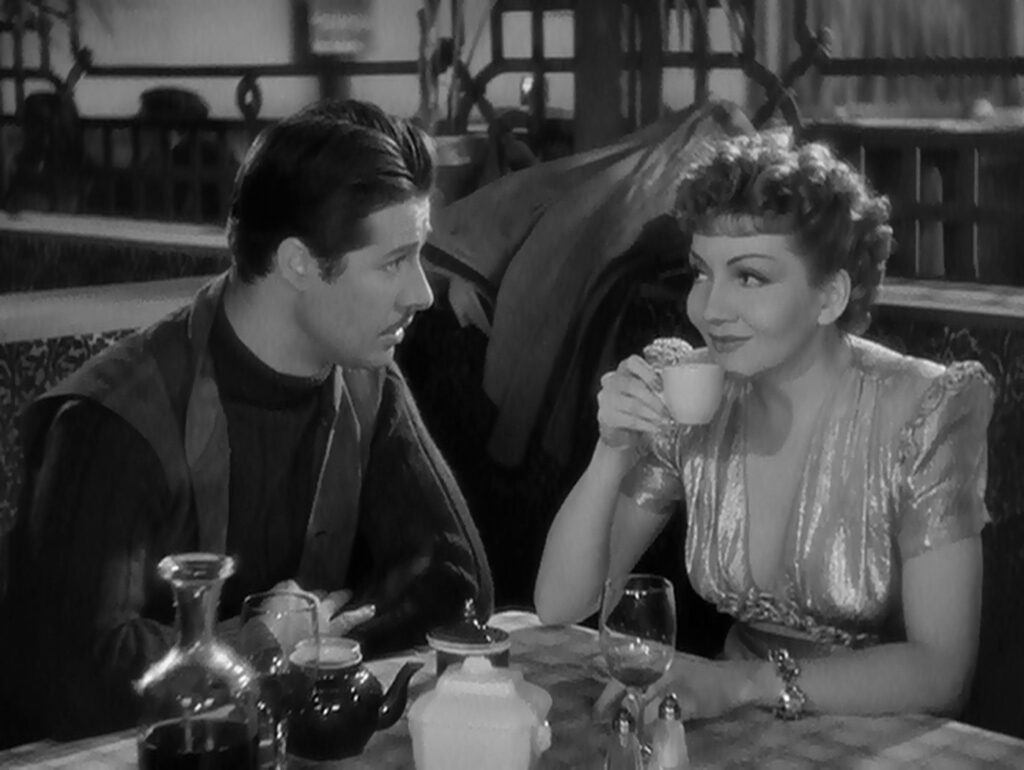
Anyway, having now got The Criterion Channel, I’ve been discovering and enjoying Claudette Colbert films. On Saturday: It Happened One Night and The Palm Beach Story. On Sunday: Midnight and Cleopatra. Why is she not better known today? I mean, compared to Marilyn Monroe or Audrey Hepburn or Grace Kelly? The first three films are delightful romantic comedies, with witty dialogue and the usual charm of classic Hollywood, proving Claudette Colbert a brilliant comic actress, effortlessly funny and sexy. In It Happened One Night, a spoilt heiress elopes and along the way falls in love with the impoverished reporter who helps her; in The Palm Beach Story, a woman runs away from her noble but non-resourceful husband and tries to catch a rich man to help them both, only to throw away everything as she still loves her impractical husband; in Midnight, a showgirl turns up in Paris and tries to capture a rich man, whilst being romantically pursued by a taxi driver, and in the end realises she wants the poor taxi driver. All these roles are similar and in some way variations of the same kind of character—at least in The Palm Beach Story and Midnight—but Claudette Colbert is always charming, always delightful, not at all stale or repetitive. 

Cleopatra is different. Claudette Colbert’s performance as the sensual, captivating queen of Egypt shows that she can do drama. When I started watching it, I thought it was a disadvantage for the film that my view of Caesar, Cleopatra, Antony… was informed entirely by Shakespeare’s Julius Caesar and Antony and Cleopatra and those were wonderful plays, but by the end, I was no longer comparing—Cecil B. DeMille’s film stands on its own (even if I wish there were more chemistry between Claudette Colbert and Henry Wilcoxon as Antony), and she is sensual and utterly bewitching. 

If you haven’t seen these films, you should. 

Friday, 27 December 2024

Between languages

1/ I have just finished reading another book of my uncle’s, a kind of memoir. Makes me sad about Vietnam, about writers in exile, about a myriad other things. 

My uncle’s a (retired) literary critic and professor of Vietnamese Studies in Australia. And a dissident. Denied entry twice into Vietnam, at the airport. 

(You see, I’m from a family of “difficult people”). 


2/ The book also makes me feel the acute pain that I have lost my roots. I still write in Vietnamese, I still speak it, my tongue is not robbed from breathing its native breath, and yet I have lost my roots. I immerse myself in English-language literature; I aim, like A. C. Bradley or Henry Fielding, to absorb Shakespeare into my bloodstream. Shakespeare rather than Nguyễn Du. Rather than any of our writers. 


3/ And yet English will never fully be my language. I can read Shakespeare, I can read Melville, some day I may read Joyce, but it will forever be a foreign tongue. 

I still sound like an outsider, still stumble over multi-syllabic words, still lose grammar together with my temper. 


4/ Past Lives is not a good film—most of the dialogue is banal—but there is one great scene. In it, the main character, a South Korean woman who in childhood migrated to Canada and then to the US, is in bed talking with her American husband and he says she dreams in Korean—“You dream in a language that I can’t understand. It’s like there’s this whole place inside of you where I can’t go.” 


5/ Studies have shown for years that multilinguals have different personalities in different languages, but it was only during my time visiting a Vietnamese writer and her family in Berlin a few months ago that I realised I was different and felt different as I switched between languages in conversation with her. In English, the hierarchy ceased to exist, the sense of intimidation disappeared. I was free. 

Monday, 22 April 2024

15 years

I have just realised that today is exactly 15 years since my mum and I left Vietnam.

Haven't returned since. Most likely can't return now.

Soon I will have spent more than half my life away.

April is the cruellest month. 

PS: In 8 days, 30/4, is the 49th anniversary of the fall of Saigon. 

Monday, 14 August 2023

Musings on Jane Austen—a personal blog post

1/ It’s strange how these things work. There are writers with whom it was love at first sight (Tolstoy, Melville). There are writers I came to like over time (Jane Austen). There are writers I had to rediscover (Shakespeare, Chekhov). And sometimes a writer comes to mean a lot more to me at a particular stage of my life, like Chekhov at the moment, whilst I’m having a difficult time. As I move closer to Chekhov, it so happens that I move further away from Jane Austen. It’s not because I think less highly of her, but the themes of balance, misperception, and appearance vs reality now mean less to me; whereas the subjects that now occupy me didn’t seem to interest Austen: death, grief, loneliness, longing, sex, sexual desire, unhappiness, fleetingness of love, search for meaning, and so on. 


2/ I’ve never got out of my head Nabokov’s remark in his lecture about Mansfield Park: 

“Nobody in Mansfield Park dies in the arms of the author and reader, as people do in Dickens, Flaubert, Tolstoy. The deaths in Mansfield Park happen somewhere behind the scenes and excite little emotion. These dull deaths have, however, a curiously strong influence on the development of plot.”

This is true for all of Jane Austen’s novels: deaths happen off-stage, and they’re often, if not always, functional (in Nabokov’s words: “affect the development of the novel and are introduced for structural purposes, purposes of development”). 


3/ I reread Pride and Prejudice several months ago. I have always had a complicated relationship with it: I like it a lot, but it’s too light, bright, and sparkling, too much like a woman’s fantasy. Mr Darcy might exist, but you’re not going to meet him. 

(I myself prefer Mr Knightley). 


4/ It probably says something about me that my favourite Austen novel is Mansfield Park, her darkest, most sombre novel.

Like her other novels, it has a happy ending, but she gives us a vision, a glimpse of something else that might have happened: Fanny Price back in Portsmouth, poor, alienated, unhappy, forever unable to get out; or married to Henry Crawford, betrayed, humiliated, and miserable.

These visions are gloomier than what her other heroines might have experienced if they hadn’t got a happy ending.


Update on 17/10/2026: see this blog post about my return to Jane Austen. 

Thursday, 27 April 2023

On feeling close to Chekhov; 30 favourite stories

When I first read Chekhov, I was too young—I hadn’t lived. My rediscovery of Chekhov was two years ago, and now that I have loved and lost, now that I’m going through something never expected to happen, now that I must begin all over again and feel something akin to shame for doing so, I feel closer and closer to Chekhov. He is so good at discerning the subtlest emotional shades, at conveying the uncertainty and absurdity of life, at depicting the way people change and love doesn’t last. He writes about wasted lives, missed opportunities, and regrets, without descending into lachrymose wallowing or cynicism. 

I perhaps even feel closer to Chekhov now than to Jane Austen, because he writes about love and disappointment, sex, sexual desire, death, and the futility of life—which she doesn’t. On this blog, I have avoided identifying with characters and tried to write about literature with detachment, but reading is still a subjective thing, especially during a difficult time. 

It’s also interesting that at this time I’m turning to Chekhov rather than Tolstoy, my favourite writer of all time—why? 


___________________________________________


I have just finished Volume 4 of Constance Garnett’s Chekhov but find it hard to write about him, so here’s a list of my 30 favourite Chekhov stories so far: 

  • “Three Years”
  • “The Party” or “The Name-Day Party” 
  • “The Lady with the Dog” 
  • “About Love” 
  • “An Anonymous Story” 
  • “Terror” 
  • “My Life” 
  • “In the Ravine” 
  • “Peasants” 
  • “Ionitch” or “Ionych” 
  • “A Woman’s Kingdom” 
  • “A Dreary Story” 
  • “The Bishop” 
  • “The Betrothed” or “The Bride” 
  • “Neighbours” 
  • “The Murder” 
  • “Ward No. 6” 
  • “The Steppe” 
  • “The Kiss” 
  • “Verochka” 
  • “Man in a Case” 
  • “The Teacher of Literature” 
  • “An Artist’s Story” or “The House with the Mezzanine” 
  • “Volodya” 
  • “Ariadne”
  • “Mire” 
  • “The Chemist’s Wife” 
  • “The Duel” 
  • “The New Villa” 
  • “The Darling” 

The list is not in order of merit or importance; some of the stories are grouped thematically.  

Monday, 10 April 2023

Heartbreak and Chekhov

I’m going through one of the worst times—perhaps the hardest—of my life. Heartbreak.

So I turned to Chekhov.

At a time of heartache and dejection, Chekhov seems like a perfect companion, making one feel less lonely—there are others who also feel unhappy, who also struggle, who also find life hard and unfair—but his stories aren’t just bleak or cynical. I love the warmth, the compassion in Chekhov. And even though he doesn’t aim for moral instruction—as Tolstoy does—he still gets me to think about my life as he depicts, over and over again though in different ways, people wasting their lives and/or being unkind to others. 

I’ve just finished Volumes 1 and 2 of Constance Garnett’s 13 volumes. Volume 1 is good, especially “Three Years”, which I have read in the NYRB Peasants and Other Stories, but most of the stories feel relatively early, more like sketches. In Volume 2, most of the stories feel more substantial, and they are wonderful.

In “Mire”, a lieutenant comes to a Jewish woman named Susanna telling her to repay a debt to his cousin, as he (the lieutenant) needs the money in order to get married. The cousin and his wife wait all day only for him to return the next day, not only without money but also without the IOU, having been seduced by Susanna. Angry, the cousin himself goes to Susanna to get back his money, and also returns the following day. 

“Kryukov flopped on the sofa, thrust his head in the pillow, and shook with suppressed laughter. A minute later he got up, and looking at the surprised lieutenant, with his eyes full of tears from laughing, said:

“Close the door. Well . . . she is a fe-e-male, I beg to inform you!”

“Did you get the IOUs?”

Kryukov waved his hand and went off into a peal of laughter again.

“Well! she is a female!” he went on. “Merci for the acquaintance, my boy! She’s a devil in petticoats…”” 

It’s an excellent scene. 

“Of Susanna Moiseyevna and the IOUs they said nothing. Both of them felt, somehow, ashamed to speak of the incident aloud. Yet they remembered it and thought of it with pleasure, as of a curious farce, which life had unexpectedly and casually played upon them, and which it would be pleasant to recall in old age.” 

But it doesn’t end there. The lieutenant decides to leave, and the married cousin one day cannot resist the temptation to go to Susanna again. The final scene—the shock, the shame, the anger—is magnificent. 

In both “Excellent People” and “Neighbours”, Chekhov writes about strained brother-sister relationships. 

In “Excellent People”: 

“His sister had become a stranger to him. And he was a stranger to her.”

In “Neighbours”, the relationship between the brother and sister changes because she comes to live with a married man, despite the family’s disapproval. 

“It seemed to Pyotr Mihalitch that she had not changed in the least during the last week, except that she was a little paler. She looked calm and just as usual, as though she had come with her brother to visit Vlassitch. But Pyotr Mihalitch felt that some change had taken place in himself. Before, when she was living at home, he could have spoken to her about anything, and now he did not feel equal to asking her the simple question, “How do you like being here?” The question seemed awkward and unnecessary. Probably the same change had taken place in her. She was in no haste to turn the conversation to her mother, to her home, to her relations with Vlassitch; she did not defend herself, she did not say that free unions are better than marriages in the church; she was not agitated, and calmly brooded over the story of Olivier. . . . And why had they suddenly begun talking of Olivier?”

I love the subtlety in Chekhov. Pyotr Mihalitch sets off in anger to have a talk with his sister Zina and Vlassitch, but the meeting doesn’t happen as he has imagined in his head: 

“And Pyotr Mihalitch felt all the bitterness and horror of his position. He thought of his deserted home, the closed piano, and Zina’s bright little room into which no one went now; he thought there were no prints of little feet on the garden-paths, and that before tea no one went off, laughing gaily, to bathe. What he had clung to more and more from his childhood upwards, what he had loved thinking about when he used to sit in the stuffy class-room or the lecture theatre—brightness, purity, and joy, everything that filled the house with life and light, had gone never to return, had vanished, and was mixed up with a coarse, clumsy story of some battalion officer, a chivalrous lieutenant, a depraved woman and a grandfather who had shot himself. . . . And to begin to talk about his mother or to think that the past could ever return would mean not understanding what was clear.”

Chekhov’s writing about a brother and sister, but that could be true for everything: life changes, people change, and the past could never return.

Another story I love in Volume 2 is “At Home”, in which a young woman named Vera returns to an estate she has inherited: 

“The space, the lovely peace of the steppe, told her that happiness was near at hand, and perhaps was here already; thousands of people, in fact, would have said: “What happiness to be young, healthy, well-educated, to be living on one’s own estate!” And at the same time the endless plain, all alike, without one living soul, frightened her, and at moments it was clear to her that its peaceful green vastness would swallow up her life and reduce it to nothingness. She was very young, elegant, fond of life; she had finished her studies at an aristocratic boarding-school, had learnt three languages, had read a great deal, had travelled with her father—and could all this have been meant to lead to nothing but settling down in a remote country-house in the steppe, and wandering day after day from the garden into the fields and from the fields into the garden to while away the time, and then sitting at home listening to her grandfather’s breathing? But what could she do? Where could she go? She could find no answer, and as she was returning home she doubted whether she would be happy here, and thought that driving from the station was far more interesting than living here.” 

Chekhov writes with compassion, and gets one to sympathise with Vera’s loneliness and restlessness. But somehow, in a subtle way, he changes one’s perspective of Vera towards the end of the story, as she becomes so wrapped up in her own problems and in her passivity that she does nothing when her servants are treated badly. 

“At Home” pairs well with “The Princess”, the story about a princess who feels unhappy about her life but finds consolation in philanthropy, only to be told the painful truth that her charities help nobody but her own self-satisfaction: “There was nothing but the desire to amuse yourself with living puppets, nothing else. . . . A person who does not feel the difference between a human being and a lap-dog ought not to go in for philanthropy.” But Chekhov has no illusion about human nature—the honesty shocks her, but doesn’t transform her. 

In Volume 2, I also love “Expensive Lessons”, about a man who hires a Frenchwoman to teach him French and gets nothing out of his lessons, but who continues taking lessons and falls in love with her; and “The Chemist’s Wife”, a little sketch about an unhappy wife. 

Chekhov is such a wonderful writer. 

Sunday, 10 January 2021

How to Be a Good Creature by Sy Montgomery

Why did I pick up The Soul of an Octopus? I must have read about it somewhere. It’s a wonderful, deeply affecting book, and it introduced me to Sy Montgomery, so lately I’ve been reading her book How to Be a Good Creature: A Memoir in Thirteen Animals. 

She was a weird kid.

“An only child, I never yearned for siblings. I didn’t need other kids around. Most children were loud and wiggly. They wouldn’t stay still long enough to watch a bumblebee. They ran and scattered the pigeons strutting on the sidewalk.

With rare exceptions, adult humans were not particularly memorable either. I would stare blankly at an adult I had seen many times, unable to place them, unless one of my parents could remind me of their pet.” (Ch.1) 

Sy Montgomery has the gift to understand animals, to communicate with them, to feel a closeness to them. I don’t. Apart from a turtle my grandma got when I was a kid, which didn’t live that long, I’ve never really had a pet because my family have always lived in apartments and we couldn’t have pets. My boyfriend and I don’t have pets now either, though his grandparents and my stepfather have cats and I play with them when I visit. But that’s all, so I do envy Sy Montgomery’s gift for understanding animals and I love the way she writes about them—with a sense of wonder and an infectious enthusiasm and lots of love. She sees each animal as an individual, with a personality, with likes and dislikes, with a soul. 

For example, look at this passage about emus: 

“I could easily tell them apart. One had a long scar on his right leg. I named him Knackered Leg. (Knackered is Australian slang I’d learned from a zookeeper. It means “messed up” and is more impolite than I then realized.) His injury might have been the reason he sat down most often of the three. Black Head seemed to be the most forward emu of the group, and took the lead most often. It was surely he who approached us straight on during my second meeting with them. Bald Throat had a whitish patch on his throat where the black feathers were sparse. He seemed skittish. When the wind would blow or a car would approach, he’d be the first to run.

[…] I knew, though, that they were not quite adult, because they lacked the turquoise neck patches that adorn the mature birds. And they were surely siblings, having left their father’s care (the male incubates the greenish-black eggs and takes care of the up to twenty chicks who hatch) only weeks or months earlier. Like me, they were just starting to explore their world.

What do they do all day? I wondered.” (Ch.2) 

She makes me curious too: what do they do all day? 

Emus are strange, fascinating birds. I’ve heard that Luis Bunuel liked emus, which is why he put them in The Phantom of Liberty. I didn’t know till I read this book that emus had 2 different sitting positions.  

Now look at this passage, about the emus: 

“They also had a sense of humor. One day I watched them approach the ranger’s dog, tied on a chain outside his house. The dog barked hysterically, but bold Black Head, head and shoulders raised high, continued approaching the straining animal head-on. Once Black Head was within twenty feet, he raised his wing stumps forward, hurled his neck upward, and leapt into the air with both feet kicking, repeating the behavior for perhaps forty seconds. Soon the other two joined him, and the dog went absolutely wild. The emus then raced off across the dog’s line of vision for about three hundred yards, before sitting down abruptly to preen—as if to congratulate themselves on the success of their prank.” (ibid.) 

Is that not fascinating? 

Sy Montgomery and her husband adopted a baby pig, called Christopher Hogwood (named after the conductor). This passage is about the pig and their little neighbours Kate and Jane, who were 10 and 7 respectively: 

“Kate and Jane also instituted Pig Spa. One spring day, Kate decided that the long ringlet of hair at the tip of Christopher’s tail needed to be combed. Then, of course, it needed to be braided. Inevitably for two preteen girls whose house was littered with hair scrunchies and smelled like bubble bath, the effort expanded to an entire beauty regimen for our pig.

We fetched warm buckets of soapy water from the kitchen, and more warm water for the rinse. We added products created for horses to apply to his hooves to make them shine. Grunting his contentment as he lay in his pool of soapy water, Christopher made clear he adored his spa—unless the water was chilly. Then he’d scream like he was being butchered—and we’d race back to the kitchen to fetch a more comfortable bath. He forgave us the instant the warm water touched his skin.” (Ch.3) 

Each chapter of the book is dedicated to an animal that has changed her life and what lessons they have taught her. Chapter 3 is particularly interesting because, while writing about the pig, Sy Montgomery also writes about her parents and the differences that broke their relationship. The differences between her and her pig do not matter—they love each other.  

This is the concluding passage in the chapter: 

“Chris loved his food. He loved the feel of the warm, soapy water of Pig Spa, the caress of little hands on the soft skin behind his ears. He loved company. No matter who you were—a child or an adult, sick or well, bold or shy, or whether you held out a watermelon rind or a chocolate donut or an empty hand to rub behind his ear—Christopher welcomed you with grunts of good cheer. No wonder everyone adored him.

Studying at the cloven feet of this porcine Buddha every day, I could not help but learn from a master how to revel in and savor this world’s abundance: the glow of warm sun on skin, the joy of playing with children. Also, his big heart, and huge body, made my sorrows seem smaller. After a lifetime of moving, Christopher Hogwood helped give me a home. And after my parents had disowned me, out of an assortment of unrelated, unmarried people and animals of many different species, Christopher helped create for me a real family—a family made not from genes, not from blood, but from love.” (ibid.) 

This is a delightful, heartwarming book. She writes well, and she can change the way you think. About a decade before How to be a Good Creature, she wrote a book about her pig, called The Good Good Pig: The Extraordinary Life of Christopher Hogwood. 

In the same chapter about Chris, Sy Montgomery also writes about their dog Tess, a border collie who was abandoned several times and previously had an accident that took her nearly a year to recover from multiple surgeries.

“She was only two years old when we took her home from Evelyn’s, but Tess had already seen a lifetime of pain, loss, and rejection.” (ibid.) 

This passage is heartbreaking: 

“…except for when we were playing her favorite sports (which worked out to be about once an hour), Tess was as wary of people as Chris was outgoing. She didn’t pee, poop, or eat without our specifically asking her to do so. She consented to petting, but seemed confused about the point. She didn’t bark for weeks, as if she were afraid to use her voice in the house. The first time we invited her up on our bed she looked at us in shocked disbelief. When we patted the covers, obediently she jumped up, but leapt back down again a second later, as if this couldn’t possibly be what we wanted.

Tess seemed to be guarding her emotions. But we knew we could change that.” (ibid.) 

And they did. 

Later in chapter 6, she writes again about Tess—in more detail. This is a deeply moving chapter with some great passages but I won’t put them here—you should read the book yourself. It is a great chapter. She makes me love a dog I have never known. She makes me envy her relationship with Tess. 

In How to be a Good Creature, Sy Montgomery alternates between her pets and the wild animals she has met. In chapter 7, she writes about tree kangaroos, echidnas, pademelons… Then in chapter 8, she writes about another pet dog: Sally, another black and white border collie that she believes Tess sent to her in a dream.  

“Despite being the same breed, Sally and Tess were almost complete opposites. Tess was a graceful athlete. Sally knocked things over. Tess loved her Frisbee and tennis ball but disdained other toys. Sally, as it turned out, became crazy for toys—except for the Frisbee, which she would catch only grudgingly to please Howard…” (Ch.8) 

Different from The Soul of an Octopus, How to be a Good Creature is a lot more personal. When she writes about wild animals, including those in capture like the octopuses, there is a sense of wonder and a sense of exploration as she interacts with an animal with which humans are not very familiar, especially animals that lack facial expressions or have expressions that we can’t read. Chapter 4 for example is about her transformative encounter with a pinktoe tarantula in a rainforest—transformative because the experience opens her up to the world of spiders that she has never known before, because it forever changes her perception of the small spiders she sees at home. 

Her writings about the pets are different—she feeds them, plays with them, loves them, and sees them as family. 

“I felt whole again. Sally made me unspeakably happy. I loved the softness of her fur, the cornmeal-like scent of her paws, the rolling cadence of her gait, the gusto with which she ate (even the stick of butter softening for the dinner table and the bowl of cereal abandoned for a moment to take a phone call)…” (ibid.) 

The three of them (her, her husband Howard, and Sally) sleep together in the same bed. 

“… And if Howard got up at night, Sally would immediately and deliberately rearrange herself to take up his sleeping lane, with her head on his pillow. When he got back, she’d give him a puffy smile. She thought this was a hilarious joke. And so did we.” (ibid.) 

This too is a great chapter, and Sally sounds like an adorable dog. 

Overall, How to Be a Good Creature is a wonderful little book, a good book to read in these depressing times. What are you waiting for? 

Monday, 24 February 2020

On blogging and depression

This is one of those days when I’m asking myself: why do I blog? I’ve had this blog for about 8 years now, and been in the blog world for over 10 years. But now I’m asking myself, what exactly is the point?  
Right now, I should be focusing on writing for money. Or, well, doing something for money. The fact is, I’ve been struggling lately. My depression came back last year, for other reasons, and the struggle to get into the film industry just worsened it. Self-doubt and self-loathing fill my head, I have days when I just want to lie in bed and do nothing—I don’t want to cook, I don’t want to do laundry, or I do laundry and don’t want to fold my clothes, so on and so forth. I have days when I just want to sit there, eat Choco Pie and watch stupid videos.   
So I read, these days I’ve been reading and blogging a lot, to drown my own negative thoughts and to be productive in some way. It helped for a bit—especially since I joined Twitter, I have got more people reading my blog, even if most of my readers don’t comment. 
Sometimes I intend to write for the magazine, or some other place, but can’t start, or start and can’t continue, then I end up writing a blog post. But then I start feeling bad again—the energy and time spent on a blog post should be spent on writing something else that brings money, or at least, should be spent on writing a script. 
What am I blogging for? What the hell do I get out of it? 
I know I chose to blog to share my enthusiasm, bring more readers to the books I love, and defend the books I love if anyone takes a dig at them. I know I chose to blog to share my thoughts, have a conversation, and learn from others. I know I chose to blog to find, to reach out to people with similar interests and passions. I know I chose to blog to organise my thoughts, keep track of things, and make notes for later. I know I chose to blog because of the freedom of a blog, where I wouldn’t be edited or censored, where I could write whatever I want without worrying about the audience as much as when I write for the magazine or anything similar. 
I know all of my reasons, and love my blog, and it cheers me up to see a nice comment once in a while. But today is still one of those days when I can’t help feeling that it’s all pointless, time-consuming, and of no use to anyone, even myself. In a sense it has become a distraction, and has allowed me to continue procrastinating. Then I feel like shit. 
To be honest, I don’t even know why I’m writing this blog post. To get some sympathy? To ask for support? Or just to whine? I’m not announcing an end of this blog, or a break—perhaps I might even contradict myself and write a blog post tomorrow. I don’t know. 
But I can’t be the only one out there questioning the point of it all.

Friday, 24 January 2020

Education and privilege in Mansfield Park

These are 2 important themes in Jane Austen’s novel—they are linked to some extent, so I’ll discuss them in the same post. 
1/ In my earlier post defending Fanny Price, I already wrote about her situation—she’s sent off to live with her rich relatives from a young age. 
This is an important point, and even though Jane Austen’s always painfully aware of class, women’s position in society, and the importance of a good income, I think Mansfield Park is the one most conscious of wealth and privilege. 
When Fanny enters Mansfield, her cousins think that her ignorance of languages and geography and her lack of accomplishments is due to her stupidity, instead of lack of education. 
As she and the Bertrams grow up together, they seem to receive the same education, but she doesn’t play any musical instrument. 

2/ Note this line about Maria and Julia: 
“… it is not very wonderful that, with all their promising talents and early information, they should be entirely deficient in the less common acquirements of self-knowledge, generosity and humility. In everything but disposition they were admirably taught. Sir Thomas did not know what was wanting, because, though a truly anxious father, he was not outwardly affectionate, and the reserve of his manner repressed all the flow of their spirits before him.” (Ch.2) 
Jane Austen says something similar again later: 
“Poor Julia, the only one out of the nine not tolerably satisfied with their lot, was now in a state of complete penance, and as different from the Julia of the barouche-box as could well be imagined. The politeness which she had been brought up to practise as a duty made it impossible for her to escape; while the want of that higher species of self-command, that just consideration of others, that knowledge of her own heart, that principle of right, which had not formed any essential part of her education, made her miserable under it.” (Ch.9) 
As I wrote in the previous blog post, self-knowledge and consideration of others are the qualities most important to Jane Austen, and they’re stressed in these passages. Maria and Julia get a formal education, and have the accomplishments of a lady, but lack a moral education. It is no wonder that Mansfield Park is not very popular—it is a serious work, in which education is a central theme and the author criticises an education that neglects principle and morality. 
The passages above also apply perfectly for Henry and Mary Crawford. 
At the end of the book, Sir Thomas realises and regrets the faults of his parenting: 
“Here had been grievous mismanagement; but, bad as it was, he gradually grew to feel that it had not been the most direful mistake in his plan of education. Something must have been wanting within, or time would have worn away much of its ill effect. He feared that principle, active principle, had been wanting; that they had never been properly taught to govern their inclinations and tempers by that sense of duty which can alone suffice. They had been instructed theoretically in their religion, but never required to bring it into daily practice. To be distinguished for elegance and accomplishments, the authorised object of their youth, could have had no useful influence that way, no moral effect on the mind. He had meant them to be good, but his cares had been directed to the understanding and manners, not the disposition; and of the necessity of self-denial and humility, he feared they had never heard from any lips that could profit them.” (Ch.48) 
In comparison, Fanny lacks some of a lady’s accomplishments, but has good self-awareness and acute perceptiveness of other people’s character and feelings, which all of the Bertram children lack.
Fanny also has strong principles. There are some people who see her refusal to act in the play and refusal to marry Henry as a passivity, but there is nothing passive about holding fast to your principles, believing in yourself, and resisting pressure from everyone else. 

3/ Look at the 3 guardians at Mansfield Park: Sir Thomas, Lady Bertram, and Mrs Norris. 
Lady Bertram is helpless and ineffectual as a mother. It is stated from the start: 
“To the education of her daughters Lady Bertram paid not the smallest attention. She had not time for such cares.” (Ch.2) 
Sir Thomas is severe and distant, so the education mostly falls on Mrs Norris, who is meddlesome, officious, and small-minded, with very little sense. She makes bad judgments, spoils the girls with flattery, and gives them no good model. 
Jane Austen’s heroines often have silly, useless, or neglectful parents, but Sir Thomas is the most interesting of all. He is not a tyrant, but he is severe, and he is the kind of parent who forbids his children from doing wrong, without teaching them to know right from wrong. His children therefore learn to hide things from him, and disobey him in his absence. 
This is something that resonates with me, because my mom has taught me to know right from wrong, and didn’t have to forbid me from doing things. Too often I’ve seen parents control and spy on children, or punish them for doing something they don’t allow and say “Because I said so”, instead of reasoning about why it’s wrong. 

4/ Isn’t it interesting that under such guardians, Edmund turns out all right? He has faults, and isn’t very perceptive (he’s wrong about everything except Fanny’s goodness), but overall is a sensitive, principled, honest, and kind man.   
Does that mean that in this case, nature is more important than nurture? 

5/ Let’s move onto the Price family. 
“Of her two sisters, Mrs. Price very much more resembled Lady Bertram than Mrs. Norris. She was a manager by necessity, without any of Mrs. Norris's inclination for it, or any of her activity. Her disposition was naturally easy and indolent, like Lady Bertram's; and a situation of similar affluence and do-nothingness would have been much more suited to her capacity than the exertions and self-denials of the one which her imprudent marriage had placed her in. She might have made just as good a woman of consequence as Lady Bertram, but Mrs. Norris would have been a more respectable mother of nine children on a small income.” (Ch.39) 
Fanny is disappointed in her parents. The problem with her Portsmouth home is not its poverty, but its chaos, noise, and lack of harmony and respect, and it’s because of her indifferent parents. In different ways, the Bertrams and the Prices both neglect the education of their children. 
Here, Fanny sees that her mother is similar to Lady Bertram, and acknowledges that Mrs Norris has some merit. At the same time, if we take that comparison and turn it around, Lady Bertram is similar to Mrs Price, and can get away with her indolence and irresponsibility only because of her wealth and status. Without them, she wouldn’t be seen as any better. 
At some point, there’s another comparison between the sisters: 
“Her poor mother now did not look so very unworthy of being Lady Bertram's sister as she was but too apt to look. It often grieved her to the heart to think of the contrast between them; to think that where nature had made so little difference, circumstances should have made so much, and that her mother, as handsome as Lady Bertram, and some years her junior, should have an appearance so much more worn and faded, so comfortless, so slatternly, so shabby.” (Ch.42)

6/ In Portsmouth, Fanny’s shocked by the disorder, and shocked by Susan’s manners and language. However, she comes to understand Susan. 
“... it was at least a fortnight before she began to understand a disposition so totally different from her own. Susan saw that much was wrong at home, and wanted to set it right. That a girl of fourteen, acting only on her own unassisted reason, should err in the method of reform, was not wonderful; and Fanny soon became more disposed to admire the natural light of the mind which could so early distinguish justly, than to censure severely the faults of conduct to which it led. Susan was only acting on the same truths, and pursuing the same system, which her own judgment acknowledged, but which her more supine and yielding temper would have shrunk from asserting. Susan tried to be useful, where she could only have gone away and cried; and that Susan was useful she could perceive; that things, bad as they were, would have been worse but for such interposition, and that both her mother and Betsey were restrained from some excesses of very offensive indulgence and vulgarity.” (Ch.40) 
Anyone who sees Fanny as a figure of passivity can just look at her relationship with Susan—that is a good counter-example. 
“Her greatest wonder on the subject soon became—not that Susan should have been provoked into disrespect and impatience against her better knowledge—but that so much better knowledge, so many good notions should have been hers at all; and that, brought up in the midst of negligence and error, she should have formed such proper opinions of what ought to be; she, who had had no cousin Edmund to direct her thoughts or fix her principles.” (ibid.) 
There are many things Susan doesn’t know, not having the education and privilege, and she doesn’t read—she needs to move to Mansfield for a better environment and better opportunities. But at the same time, “brought up in the midst of negligence and error”, she still knows right from wrong, and tries to fix things. 
In the character of Susan, Jane Austen again raises the question of nature vs nurture, and comments on the subject of privilege. 

7/ People usually say that Jane Austen’s heroines usually grow and gain self-knowledge throughout the book, except Fanny, who is right about everything and right the entire time (uhm… what about Anne Elliot?).   
That is not entirely true. Fanny Price does gain self-knowledge at the end of the book—it’s just not the same kind of self-knowledge that Catherine Morland and Elizabeth Bennet and Emma Woodhouse come to have. 
She gains self-knowledge when she’s at her Portsmouth house. I just had a discussion with Himadri (Argumentative Old Git)—he said, Mansfield Park is about displacement and personal identity. Some critics (including Vladimir Nabokov) complain about Jane Austen staying with Fanny for the entire story and not depicting the “interesting” stuff with Maria and Henry, or Julia and Mr Yates, but the real interesting stuff happens in Portsmouth. It’s at Portsmouth that Fanny discovers who she is, and where she really belongs—that Mansfield is home.  
Perhaps that is why Mansfield Park is so dear, so personal to me. 


If there is any student out there who steals ideas from my blog for an assignment, let me know what you get. 

Tuesday, 21 January 2020

Jane Austen’s views on relationships and marriages, according to Mansfield Park

I’m going to start by saying that, because of my upbringing, I have a rather strong dislike of people, especially women, who make stupid decisions in relationships. I’m talking about women who run after men, let men treat them like shit, and throw away self-respect (Emma Bovary), women who marry a bad boy with the naïve belief that they can change him (Helen Lawrence Huntingdon), women who accept a man who treats other women like trash but think that they are special—an exception, women who let a man cheat on them or beat them but still believe in his promises and stay in the relationship, women who know a guy is a douchebag but keep going back to him, and so on and so forth. 
(To the moralists who want to tell me to sympathise and stop victim-blaming: can you honestly say that there’s never a moment that a friend comes to you for relationship advice and you think she’s goddamn stupid and must get out of the relationship?) 
Anyway. I’m not going to reduce Jane Austen’s wonderful works to self-help books, she’s a great, fantastic writer. But at the same time, apart from her genius, Jane Austen is so close to my heart because we share the same ideas about balance, and virtues, and we also share similar views on relationships. 
So what are Jane Austen’s views on relationships and marriages, according to Mansfield Park?  
1/ Compatibility is important.  
This is something that is in every single Jane Austen novel. Compatibility doesn’t mean that your personalities have to be the same, nor that you always have to like the same things. Compatibility means you share the same world view and values. 
Edmund Bertram and Mary Crawford are incompatible because their world view, habits, and values are different: Mary likes London life and excitement, likes wealth and distinction, can’t accept Edmund becoming a clergyman and tries to change his mind, can’t handle quiet and solitude, and gets bored and restless easily, whilst Edmund is the opposite. She also doesn’t have the delicacy that he values—she speaks disrespectfully of her uncles to strangers (before becoming close to Edmund and Fanny), makes sweeping generalisations about the Navy and the clergy, and doesn’t care about anyone. 
A reader may think Mary is more fun than Fanny, but that’s a personal response and beside the point—Fanny and Edmund have a lot more in common. 
Apart from love and compatibility, Jane Austen shows in her 6 novels, over and over again, that respect, honesty, and understanding are also important for a relationship and marriage. 

2/ Disapproving of men who play with women’s feelings. 
Jane Austen always shows a distrust of charming men who lack openness and always know the right thing to say, but it’s in Mansfield Park that her view is the clearest—she disapproves of men who play with women’s feelings. 
““I cannot think well of a man who sports with any woman's feelings; and there may often be a great deal more suffered than a stander-by can judge of.”” (Ch.36) 
That comes from Fanny, but it’s obvious in Mansfield Park that the author thinks the same. 
As written in an earlier blog post, Henry plays with Maria’s and Julia’s feelings, makes them fall in love with him for fun, and goes back and forth between the 2 sisters. During the trip to Sotherton, Henry sits with Julia at the front of the carriage, making Maria jealous, then goes off with Maria, leaving Julia behind and abandoning Mr Rushworth, then sits with Julia again on the way back, ignoring Maria. During the play, he cleverly steers himself and Maria into the right parts, making Julia feel slighted, then he flirts with Maria the entire time, in front of Mr Rushworth, without any intention of making her break off the engagement.  
Some readers innocently think Fanny should end up with Henry, or would, if he perseveres. To think so is to misunderstand Jane Austen. Fanny might, convincingly, find Henry charming, and acknowledge some other good qualities, but she says she would never accept him because she has seen enough, and judged him to be a selfish, thoughtless man who likes playing with women’s feelings. He might love her like he never felt about any other woman before, but she is right to distrust it, and read it as a sign of vanity. 
“A little difficulty to be overcome was no evil to Henry Crawford. He rather derived spirits from it. He had been apt to gain hearts too easily. His situation was new and animating.” (Ch.33) 
Again, I don’t doubt that Henry has feelings for Fanny, but the fact that she doesn’t like him back attracts him even more.  
In the end, Fanny’s right for distrusting and refusing Henry. 
(Now I suppose you can guess my thoughts on Rochester—honestly, Jane Austen’s much wiser than Charlotte Bronte).

3/ Against the idea that a woman can or should try to change a man. 
Through Fanny, Jane Austen expresses her view that a woman shouldn’t accept a bad guy and expect to reform him—that’s a naïve, idealistic thought, it never works (look at Anne Bronte’s The Tenant of Wildfell Hall). Not only so—let’s look at this conversation between Fanny and Edmund: 
““I am persuaded that he does not think, as he ought, on serious subjects.”
“[…] Crawford's feelings, I am ready to acknowledge, have hitherto been too much his guides. Happily, those feelings have generally been good. You will supply the rest; and a most fortunate man he is to attach himself to such a creature—to a woman who, firm as a rock in her own principles, has a gentleness of character so well adapted to recommend them. He has chosen his partner, indeed, with rare felicity. He will make you happy, Fanny; I know he will make you happy; but you will make him everything.”
“I would not engage in such a charge,” cried Fanny, in a shrinking accent; “in such an office of high responsibility!”” (Ch.35) 
Here, Jane Austen also goes against the 19th century idea that women are morally superior and should try to tame and manage their husbands.  

4/ A woman has the right to say no, and doesn’t have to provide reason. 
When Edmund tells Fanny that Henry’s sisters, Mary and Mrs Grant, are disappointed and not happy that she rejects Henry, this is the response: 
““I should have thought,” said Fanny, after a pause of recollection and exertion, “that every woman must have felt the possibility of a man's not being approved, not being loved by some one of her sex at least, let him be ever so generally agreeable. Let him have all the perfections in the world, I think it ought not to be set down as certain that a man must be acceptable to every woman he may happen to like himself. […] How, then, was I to be—to be in love with him the moment he said he was with me? How was I to have an attachment at his service, as soon as it was asked for? His sisters should consider me as well as him. […] And, and—we think very differently of the nature of women, if they can imagine a woman so very soon capable of returning an affection as this seems to imply.”” (Ch.35) 
That is such an important passage that I’m surprised I’ve read dozens of essays about Mansfield Park and nobody ever talks about it. A woman has the perfect right to say no, and doesn’t have to justify herself for not loving a man who says he loves her.   

5/ Against the idea that if a woman says no, a man should persevere till she says yes. 
Henry declares his feelings to Fanny, she has no interest, but he doesn’t leave her alone. 
“The gentleman was not so easily satisfied. He had all the disposition to persevere that Sir Thomas could wish him. He had vanity, which strongly inclined him in the first place to think she did love him, though she might not know it herself; and which, secondly, when constrained at last to admit that she did know her own present feelings, convinced him that he should be able in time to make those feelings what he wished.
He was in love, very much in love; and it was a love which, operating on an active, sanguine spirit, of more warmth than delicacy, made her affection appear of greater consequence because it was withheld, and determined him to have the glory, as well as the felicity, of forcing her to love him.
[…] Must it not follow of course, that, when he was understood, he should succeed? He believed it fully. Love such as his, in a man like himself, must with perseverance secure a return, and at no great distance; and he had so much delight in the idea of obliging her to love him in a very short time, that her not loving him now was scarcely regretted.” (Ch.33) 
Just like Mr Collins thinks Elizabeth Bennet rejects him because she doesn’t know her own feelings, Henry doesn’t end it after getting rejected, but keeps coming back and trying to persuade her, even speaks to Sir Thomas, and doesn’t leave her alone. It’s not only him but everyone in the book, especially Sir Thomas, thinks that he only has to persevere and she will yield. Different people try to convince and put pressure on Fanny, from Sir Thomas to Mary Crawford. 
It’s the same today—many men can’t accept a no from a woman, and think that if they just keep asking, at some point the woman will say yes.  
Some people may argue that Mr Darcy proposes twice in Pride and Prejudice and Robert Martin does the same in Emma, but in each case, there’s a gap between the 2 proposals, and many things happen in that time. There’s a difference between trying again after some time, not giving up after a rejection, and harassing a woman till she says yes, which is what Henry tries to do. Henry keeps coming back and talking about it, helps William get promoted to keep score and make Fanny accept him, and tries to make everyone else put pressure on her.  
It is clear that Jane Austen strongly objects to the idea that if a woman says no, a man should persevere till she says yes. 
In short, by using the marriage plot over and over again, Jane Austen keeps exploring different kinds of relationships and stressing the important elements for a happy marriage. Mansfield Park is the novel that encapsulates the best her views on relationships and marriages.

Saturday, 18 January 2020

Mansfield Park: in defence of Fanny Price

Of Jane Austen’s novels, Mansfield Park is the least popular. I’ve been rereading the book lately. In this blog post, I’ll respond to the common complaints, one by one.  
“Fanny Price is insipid.” 
She is quiet and introverted. 
Compared to some other Jane Austen heroines, especially Elizabeth Bennet and Emma Woodhouse, Fanny may not have the same vivacity and charm, but at the same time, her circumstances are different. Readers who complain that Fanny is quiet and boring usually forget that she’s sent to live with her rich relatives since a child, and always conscious of her own place. 
From the start, Sir Thomas makes it clear that she would not be equal to her cousins: 
““There will be some difficulty in our way, Mrs. Norris,” observed Sir Thomas, “as to the distinction proper to be made between the girls as they grow up: how to preserve in the minds of my daughters the consciousness of what they are, without making them think too lowly of their cousin; and how, without depressing her spirits too far, to make her remember that she is not a Miss Bertram. I should wish to see them very good friends, and would, on no account, authorise in my girls the smallest degree of arrogance towards their relation; but still they cannot be equals. Their rank, fortune, rights, and expectations will always be different...”” (Ch.1) 
Mrs Norris is always there to remind Fanny of her own place: 
““The nonsense and folly of people's stepping out of their rank and trying to appear above themselves, makes me think it right to give you a hint, Fanny, now that you are going into company without any of us; and I do beseech and entreat you not to be putting yourself forward, and talking and giving your opinion as if you were one of your cousins—as if you were dear Mrs. Rushworth or Julia. That will never do, believe me. Remember, wherever you are, you must be the lowest and last; and though Miss Crawford is in a manner at home at the Parsonage, you are not to be taking place of her. And as to coming away at night, you are to stay just as long as Edmund chuses. Leave him to settle that.”” (Ch.23) 
She can make no claims, and can never put herself forward. She is raised among snobs—Sir Thomas is kind but condescending towards her, and her cousins except Edmund think that her ignorance of geography and languages and her lack of accomplishments is due to stupidity, not lack of education. 
In such circumstances, how can she be as active, vivacious, and fun as Elizabeth Bennet? Or Mary Crawford? 

“Fanny is not as fun as Mary Crawford.” 
To some extent, I don’t disagree—Mary Crawford is more fun, she is clever and a good judge of character, and charming in her straightforwardness. 
But so what? I for one make a distinction between being fun and being interesting. Mary might be more fun, but Fanny has sensitivity and self-reflection, and also a richer mind. Mary might be perceptive of people, but she doesn’t have Fanny’s sensitivity and depth of feeling to appreciate nature nor feel anything when visiting a house (Sotherton).  
Fanny can sit in quiet and contemplation, whereas Mary gets restless. An example is when they visit Sotherton, Mary can’t sit for long and gets restless and needs to get up to go.   
When Maria and Julia go away, she turns to Fanny, because she always needs excitement, needs someone to talk to. 
Later, when Edmund is also away: 
“What was tranquillity and comfort to Fanny was tediousness and vexation to Mary. Something arose from difference of disposition and habit: one so easily satisfied, the other so unused to endure; but still more might be imputed to difference of circumstances.” (Ch.29) 
All these things show that Fanny has a richer mind. Look at what Edmund says to her:  
““I am worn out with civility,” said he. “I have been talking incessantly all night, and with nothing to say. But with you, Fanny, there may be peace. You will not want to be talked to. Let us have the luxury of silence.”” (Ch.28) 
This is something he can’t do with Mary—she is shallow, so she has to fill the emptiness with talk talk talk. 
In addition, people say that Fanny is boring, but look at this passage: 
““This is pretty, very pretty,” said Fanny, looking around her as they were thus sitting together one day; “every time I come into this shrubbery I am more struck with its growth and beauty. Three years ago, this was nothing but a rough hedgerow along the upper side of the field, never thought of as anything, or capable of becoming anything; and now it is converted into a walk, and it would be difficult to say whether most valuable as a convenience or an ornament; and perhaps, in another three years, we may be forgetting—almost forgetting what it was before. How wonderful, how very wonderful the operations of time, and the changes of the human mind!” And following the latter train of thought, she soon afterwards added: “If any one faculty of our nature may be called more wonderful than the rest, I do think it is memory. There seems something more speakingly incomprehensible in the powers, the failures, the inequalities of memory, than in any other of our intelligences. The memory is sometimes so retentive, so serviceable, so obedient; at others, so bewildered and so weak; and at others again, so tyrannic, so beyond control! We are, to be sure, a miracle every way; but our powers of recollecting and of forgetting do seem peculiarly past finding out.”
Miss Crawford, untouched and inattentive, had nothing to say; and Fanny, perceiving it, brought back her own mind to what she thought must interest…” (Ch.22) 
It is clear in this passage that she is the interesting one, and Mary can’t follow her and has nothing to say. 

“Fanny is a prig—she makes a fuss about others acting in the play.” 
People who make this complaint don’t seem to think of the context and the rules of the time (Mansfield Park was published in 1814). In No Name, Wilkie Collins also writes about the impropriety of private theatricals, especially when 2 young unmarried people play the roles of lovers. You can’t judge it by modern standards. 
That being said, most of the opposition to Lovers’ Vow comes from Edmund, who openly and repeatedly condemns it. Fanny mostly doesn’t support it because she knows Sir Thomas wouldn’t like it, and it’s not right to do something he wouldn’t approve of, in his absence. 
Mostly, she’s disappointed in Edmund for opposing the play and then agreeing to act in it—he appears inconsistent, and in a way, it’s like he lets the others win.

“Fanny is judgmental.”  
This criticism is mostly because she seems judgmental towards Mary Crawford. What if she’s just a good judge of character? 
Note that the people who use the word “judgmental” for Fanny like Mary, and don’t seem to realise that Mary is actually the judgmental one, who makes sweeping generalisations about the entire Navy and all of the clergy, merely because of the Admiral (her uncle) and Dr Grant (her brother-in-law), and a few things she has heard. 
Mary is also a snob—whilst approving of Fanny’s character, she’s still conscious of the fact that Fanny is beneath her brother, and later, she congratulates her for being liked by Henry. 
Most importantly, Fanny is being called judgmental, but she notices everything and always sympathises with the underdog—she notices Maria’s avoidance and helps Mr Rushworth learn his lines, feels bad for him when Maria and Henry go off without him and he goes back to fetch the key for nothing, notices Henry playing with Maria’s and Julia’s feelings, and feels sorry for Julia for being slighted by Henry. 
In contrast, Mary might step in when Fanny’s scolded and accused of ingratitude by Mrs Norris, but doesn’t help anyone, and doesn’t care when knowing that Henry plays with Maria and Julia without caring about either of them. I do like that she recognises that Maria is also at fault for being intimate with someone else when she’s engaged, it’s not all Henry’s blame, but still, she doesn’t care. 
If you read the book carefully, you can see that Fanny is most critical of herself—she has self-reflection, thinks that she is shy, weak, timid, awkward, nothing special, ponders over her own actions, wonders if she’s ungrateful or unfair, and so on.
It should be noted too that Fanny doesn’t explain to Sir Thomas her reason for refusing Henry, so as not to incriminate Maria and Julia, and she accepts the consequences herself. 

“Fanny is weak and passive.” 
She is physically weak indeed, but mentally strong. Think of the pressure from every side, but she still says no to Henry Crawford. 

“Fanny marries her cousin, ew.”
This complaint is judging the story through modern lens, and should be disregarded. 

“Fanny should choose Henry Crawford.” 
I’ve said it many times before, and I’ll say it again: anyone who thinks so misunderstands not only Mansfield Park but Jane Austen in general. 
Anyone who truly understands Jane Austen knows that she distrusts charming men, disapproves of men who play with women’s feelings, and doesn’t believe that a woman’s love can reform a man. 
For a large part of the book, Henry plays with Maria’s and Julia’s feelings, going back and forth between the 2, charming each of the Miss Bertrams at one time and slighting the other another moment. For example, on the trip to Sotherton, he sits at the front with Julia, neglecting Maria, then afterwards goes with Maria, having fun with her, leaving Julia behind, then on the way back, sits again with Julia on the carriage.  
During the play rehearsals, he flirts with Maria and gives her lots of attention, hurting Julia’s feelings and thinking nothing of the engagement, but without any intention of proposing to her and persuading her to break off the engagement with Mr Rushworth. 
Later, when Maria has got married and gone away: 
“Her two absent cousins, especially Maria, were much in her thoughts on seeing him; but no embarrassing remembrance affected his spirits. Here he was again on the same ground where all had passed before, and apparently as willing to stay and be happy without the Miss Bertrams, as if he had never known Mansfield in any other state. She heard them spoken of by him only in a general way, till they were all re-assembled in the drawing-room, when Edmund, being engaged apart in some matter of business with Dr. Grant, which seemed entirely to engross them, and Mrs. Grant occupied at the tea-table, he began talking of them with more particularity to his other sister. With a significant smile, which made Fanny quite hate him, he said, “So! Rushworth and his fair bride are at Brighton, I understand; happy man!”” (Ch.23) 
He is clearly a douchebag, having no remorse. 
I don’t say it’s impossible that Henry falls in love with someone like Fanny—in real life that happens often. But she has every reason to distrust it, and even Mary, the popular Mary, doesn’t think it would last either: 
““… I know that a wife you loved would be the happiest of women, and that even when you ceased to love, she would yet find in you the liberality and good-breeding of a gentleman.”” (Ch.30) 
There’s another detail I forgot after my first reading of Mansfield Park several years ago: Henry declares his feelings to Fanny right after telling her about her brother’s promotion to Lieutenant, thanks to his doing. It is distasteful—it is like he wants to manipulate her and pressure her into accepting him, to avoid being accused of ingratitude. Afterwards, he makes her more uncomfortable by showing up at dinner, instead of leaving her alone for some time to calm down and decide. 
Not only so, Henry speaks to Sir Thomas about his intentions, despite Fanny's reaction. 
All these actions show that, despite his declarations of love, and his belief, Henry doesn’t have the sensitivity to care about Fanny’s feelings. It baffles me that some people may claim to be a Jane Austen’s fan and think Fanny should end up with Henry. 

In short, this is my response, once and for all, to the idiocy that has been said about Fanny Price and Mansfield Park.