Pages

Showing posts with label art. Show all posts

Saturday, 26 April 2025

The amateur’s freedom

By Claude Monet.

Recently my friend Himadri asked, if I were a literary academic, which area of literature I would specialise in. Probably Shakespeare or 19th century novels, British or Russian.

But as I told Himadri then, I’m so glad that literature is not my profession. 

Not a book reviewer or literary critic, I don’t have to read bad books, keep up with the currently hottest writers, or even pay attention to contemporary fiction. Not an academic, I don’t have to read jargon-heavy and ideology-driven critical texts or badly-written and barely-read literary works related to my field of study. Not a Shakespeare scholar, I don’t have to read Harold Bloom. 

A Twitter friend whom I have met in person studies female novelists before Jane Austen (or something like that), and has to read so much crap. My professor and literary critic uncle has been so used to reading for work that even now, when he has retired, can no longer read for pleasure. And I have read George Orwell’s essay about the miserable job of book reviewing (and the rush through books for a review). 

I’m happy for them but happy about my own freedom—the amateur’s freedom! I read the 1200-page The Tale of Genji and some other works of Heian literature because I felt like it. I read all of Shakespeare’s plays and sonnets and also Shakespearean criticism because I felt like it. I explored 17th century playwrights—not only Shakespeare’s contemporaries in England but also Molière and Spanish Golden Age playwrights—because I felt like it. And when I got bored, I stopped. And now, having noticed a gap in my own reading, I’ve been exploring 18th century novels since last year, but—look at the length!—have no intention of reading Clarissa anytime soon. Who can force me?  

What’s more, the amateur doesn’t have to write about every single book she reads.

Literature sustains me, reading helps me keep my sanity in this increasingly insane world, my library’s dukedom large enough, but that’s only the case because of the absolute freedom I’ve got. 


_____________________________________________________
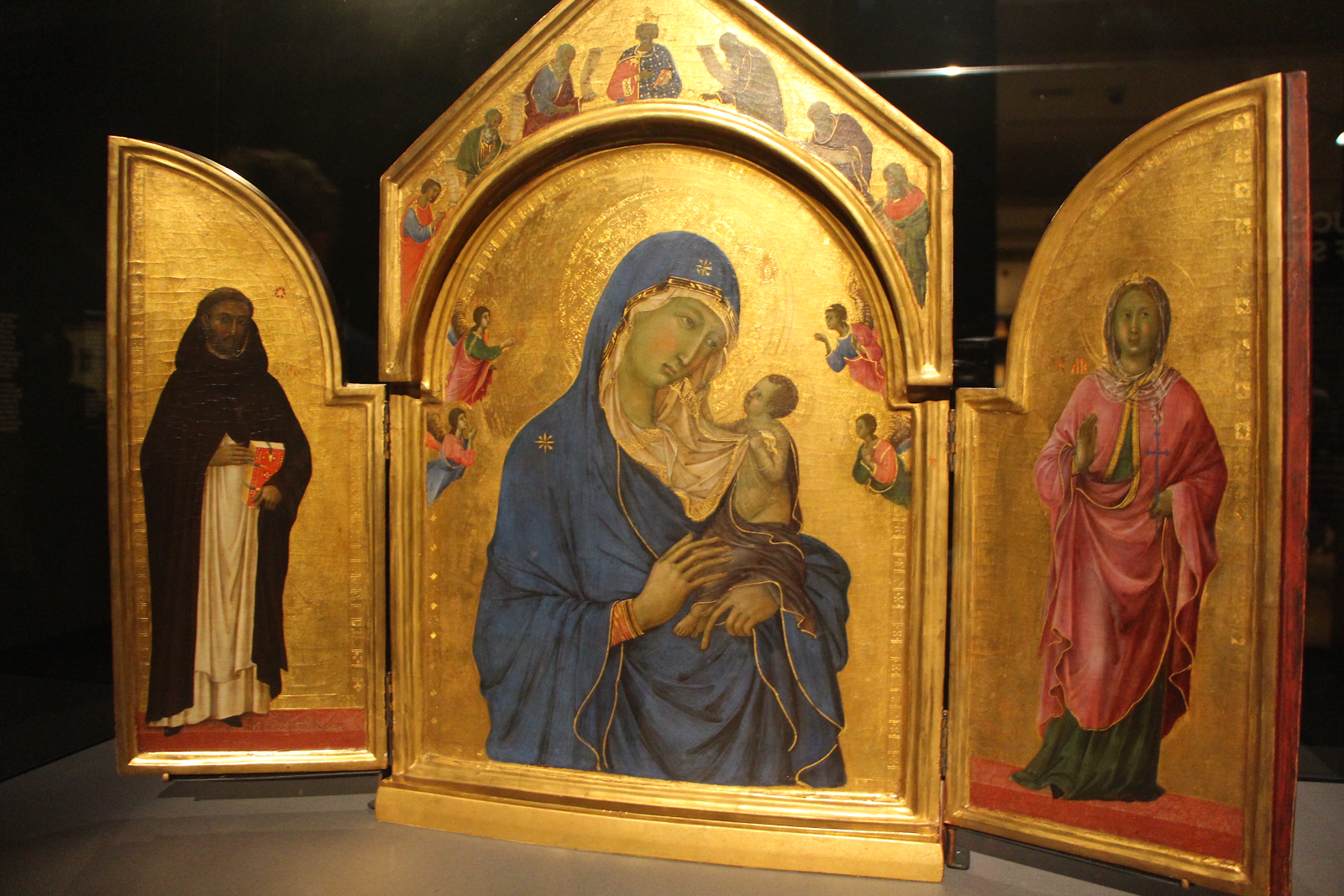

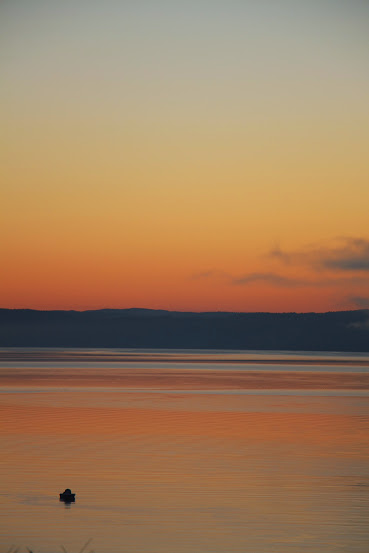
My photo.

On a side note, a few weeks ago, Himadri and I went to an exhibition of Sienese art (14th century) at National Gallery, London. Not a fan, I’m afraid (some of you are probably puzzled). Looking at the art, I was also thinking that I’d been more or less going back in time in my reading—first contemporary fiction, then the 20th century, then the 19th century, then Shakespeare and the 16th and 17th centuries, then the 18th and more of the 17th—but to go back to literature before Shakespeare’s time, I might make a big jump all the way back to Ancient Greece and Rome. If we look at the period in-between—I’m talking about Western literature—nothing particularly interests me—I know, some of you might gasp in shock and horror, but not even Chaucer or Dante. The only literary works in this long span of time that arouse (some of) my interest are East Asian—Tang poetry, Heian literature, and Water Margin. You might convince me otherwise (though I doubt it). 

Friday, 4 April 2025

On “AI art” and the artist’s vision

(An image created by MidJourney that caused controversy a few years ago when winning a photography/ digital art award). 

1/ I once saw a tweet saying “the brain is literally a computer and there are a lot of people who deny this for some reason.” In response, someone called Duncan Reyburn (@duncanreyburn) wrote:  

“Amazing inability to see the difference between an analogy and an identity here. Left-hemispheric overreach. Computers have no intentionality, for one thing, and also no capacity to feel their own being, to sense their own life, to transcend their own limitations, to be porous to vibes, etc.

To reason properly, you have to be able to spot not just similarity but also difference. You need to assume that your own immediate, conscious assumptions are shutting the door to some pretty important aspects of meaning.” 

I thought of that exchange when I was talking to my friend Himadri recently about “AI art” and he said: 

“It’s an interesting question: given all the possible uses for AI, why are so many people so insistent that it can produce art, and that, some day AI will produce works of the level of Caravaggio, Mozart, Tolstoy? I think the reason is this:

There are many who are very deeply wedded to the idea that humans are no more than machines. Incredibly sophisticated machines, but machines nonetheless. They absolutely hate the idea that humans can have souls - that is, that humans can have some element in them that are beyond rational analysis, beyond rational explanation. If AI can replicate the greatest works of art, they will be proved right. Even Caravaggio and Rembrandts were mere machines.”

But why? I don’t understand. The enthusiastic cheering for “AI art” is deeply anti-art and anti-human. 


2/ A couple of years ago, I had a discussion with someone, also on Twitter, who said that there’s no difference between “AI art” and art made by humans, because “all art is a mash-up of previous art.” 

I wouldn’t be surprised if that’s the way all AI-loving tech bros think. But as I pointed out back then, artists don’t just take something from other artists, they have something of their own—their own experiences and vision of life and obsessions and antipathies and regrets and fears and desires and hangups—artists may also break the rules and do something new and transcend the boundaries—all these things are beyond AI. 

Apart from a profound misunderstanding of art and its creation, I can’t help thinking that some people have had their thinking distorted by decades (or perhaps a century?) of sci-fi (a genre I have never particularly liked) and it has made them believe that AI (such as we currently have) could be conscious. It is not. And if you use AI to generate something, you’re not the artist—you’re the equivalent of a commissioner. 


3/ When I read, I’m not only interested in characters, details, imagery, metaphors, motifs, language, style, etc—I’m also interested in the author’s vision. 

When people say that a reader is either a Tolstoy person or a Dostoyevsky person, for example, it’s because they don’t just have different writing styles but also have different visions of life: Dostoyevsky writes about the abnormal and the extreme, Tolstoy writes about a wide range of “normal” people; Dostoyevsky believes in free will, Tolstoy believes in determinism; Dostoyevsky depicts life as made up of dramatic moments and great decisions determining the trajectory of one’s life, Tolstoy sees life as formed by all the little decisions one makes every moment; they are opposite. Then you read Chekhov and he again has a different vision of life: Tolstoy and Dostoyevsky are both religious whereas Chekhov is a humanist (if you’re new here, I’m a Tolstoy and Chekhov girl). 

These things fascinate me. Chekhov, Jane Austen, and Flannery O’Connor all strike me as having no illusions about human nature, for instance, but Chekhov looks at people with warmth and compassion, Jane Austen laughs at them, and Flannery O’Connor coldly dissects and studies them. 

It’s also because I’m interested in the artist’s vision that in painting, I have zero interest in photorealism: the skills are impressive, but so what? All I see is someone painstakingly reproducing what the camera “sees”. Most of my favourite artists are not realistic as such—Egon Schiele, Van Gogh, Monet, Cézanne, Turner, etc.—even the more “realistic” ones such as Rembrandt or Sargent, I like them not because they depict people with great accuracy, but because their subjects feel alive and because I love Rembrandt’s use of lighting and Sargent’s way of focusing on the face but using broad brushstrokes and a more impressionistic style for the clothes and surroundings. 

But it’s not just me. Who would be interested in “art” made by machine, made by something that doesn’t see the world, doesn’t experience things, doesn’t have feelings? I don’t think most people are. The only people (I see) enthusiastically promoting and cheering for “AI art” are the tech people who are not really interested in art in the first place. 

Thursday, 3 April 2025

The various subspecies of philistines

Left, right, everywhere we’re surrounded by philistines. 

On the left are the philistines who see everyone and everything through the lens of identity politics, who divide the world neatly into oppressor vs oppressed, who reduce literature to stories and perspectives, who do not believe in universal appeal and the test of time, who think that Shakespeare’s status as the greatest writer of all time is thanks to nothing but colonialism and “structures of power”. These are people who speak of relatability, as though we can only relate to characters with the same sex or skin colour. These are people who speak of relevance, as though only contemporary books can resonate with readers. These are people who associate classic books with “white supremacy” and replace them with contemporary books, as though other countries don’t have their own classic literature. 

There are philistines who call for trigger warnings and sensitivity readers, who want to censor racist or otherwise offensive words, who think writers shouldn’t write about characters from a different community, who think novels should only be from the perspective of the victim rather than the perpetrator, who cannot distinguish the narrator from the author. There are also philistines who demand “moral purity” and “the right opinions”, who cannot separate the art from the artist. Related to such puritans are the philistines who think that a work of art with “an important message” is worthwhile and important. 

On the right are the philistines who constantly say Western culture is under attack but cannot say which classical works they cherish and why, who bemoan modern architecture and praise Disney-style castles, who think representational art is the peak and Hitler is a better artist than Egon Schiele, who applaud vulgar and soulless works such as the sculptures of Luo Li Rong or Jago. These are people who lose their minds over the casting of a Shakespeare production, but neither read nor watch Shakespeare themselves. These are people who are incapable of looking at culture except through the lens of the culture war. These are people who affect to be living in the past but know next to nothing about it. 

There are also conservative philistines who want books removed from schools—not only sexually explicit, borderline-pornographic books (which is understandable) but also serious literature such as The Bluest Eye, or important documents such as Anne Frank’s Diary

And now, beyond politics, beyond the right and the left, are the philistines who happily cheer for “AI art”, who praise AI-generated videos not realising their emptiness and vulgarity, who draw (false) parallels between AI-generated images and photography, who think human beings are nothing but sophisticated machines, who believe AI can one day produce a Shakespeare or a Rembrandt, who have no idea what art is or why human beings engage with it, who dismiss others as reactionaries refusing to be with the times.

All these people have no idea what art is—they either attack art, or produce slop. 

It’s infuriating.   

Tuesday, 14 May 2024

What will the future say about the arts of the 21st century?

As I talked about my favourite centuries, one person said his was the 20th century.

That’s a good answer. Just cinema and photography are good reasons to pick the 20th century. Explosive.

In music, plenty of things were happening—I myself like jazz—I love John Coltrane, Miles Davis, Clifford Brown, Charles Mingus, Louis Armstrong, Ella Fitzgerald, Nina Simone, etc. But most importantly, technology forever changed music listening. 

In literature, on this side of the Atlantic, the Modernists—especially Joyce, Proust, Woolf, T. S. Eliot—changed fiction and poetry. American literature peaked in the 20th century: Henry James, Edith Wharton, William Faulkner, Vladimir Nabokov, Ralph Ellison, James Baldwin, Flannery O’Connor, J. D. Salinger, Toni Morrison, etc. Russian literature was no longer the Golden Age but still had great writers—I love Life and Fate. The 20th century was glorious for many countries around the world: France had Proust and many others; Japan had Soseki, Kawabata, and Akutagawa; Bohemia had Kafka; Czech literature had Milan Kundera; Austria had Robert Musil; Norway had Knut Hamsun; Colombia had Gabriel García Márquez; Argentina had Jorge Luis Borges; Yiddish literature had Isaac Bashevis Singer; Canada got Alice Munro (rest in peace); etc.  

South Vietnam also had a great burst of creativity in a very short span of time, sadly not much known internationally. My mum mentions Nhã Ca, Túy Hồng, Nguyễn Thị Ng.H, Nguyễn Thị Hoàng, Nguyễn Thị Thụy Vũ, Dương Nghiễm Mậu, Nguyễn Hương, etc. in prose fiction; Du Tử Lê, Vũ Hoàng Chương, Thanh Tâm Tuyền, Trần Dạ Từ, Nguyễn Tất Nhiên, Đinh Hùng, Trầm Tử Thiêng, etc. in poetry. I would add Bùi Giáng, one of my favourite poets. 

20th century literature was so rich. It just so happens that I feel more at home in the 19th century, that writers such as Tolstoy and Chekhov mean a lot more to me personally.

It’s the same with the visual arts. The 20th century had lots of art movements: Fauvism, Expressionism, Cubism, Futurism, Dadaism, Surrealism, Abstract Expressionism, Pop Art, Minimalism, Postmodernism, Photorealism, and so on—there are also performance art, installation art, butoh, etc. but I only like a couple of artists, like Egon Schiele and Picasso. 20th century art generally doesn’t speak to me, especially since Postmodernism, conceptual art, and performance art. Also not a fan of camp and kitsch. 


_____________________________________________


(A piece by Jeff Koons) 

So what will the arts in the 21st century be like? What will people in the future say about this century? 

It is impossible to say what will happen in the arts, with the emergence of AI. Will it be an explosion like the Industrial Revolution? Will it change everything like the invention of cameras and music recordings? 

Or will it swallow us all, and destroy everything? 

If we talk about the arts of 2000-2024, I don’t read much contemporary fiction and can’t comment on it—some of it is safe and ideology-driven and there are harmful trends such as sensitivity readers, but I think there are plenty of great talents around. I like Alice Munro, for instance. 

The field I know the best is cinema, and generally I prefer films of the 50s-70s to contemporary films, at least when it comes to American cinema. I do like some recent films: Ballad of a White Cow (Iran), Anatomy of a Fall (France), Shoplifters (Japan), The Zone of Interest (English director), The Taste of Things (France), The Father (French director), etc. Hollywood, on the other hand, is dominated by superhero movies, franchises, and remakes, and I often dislike recent highly acclaimed American films.

I expect people in the future will say that 21st century cinema was brilliant and full of wonderful things in other countries—Japan, France, a few places in Europe, perhaps South Korea, perhaps Iran—but not in the US.

In theatre, nothing seems to be happening. The 20th century had Bertolt Brecht and Samuel Beckett doing crazy things, and there were plenty of great playwrights—the current scene pales in comparison. I’m ignorant, but I guess people who know more than me would probably say that there’s a decline in theatre—London theatres, apart from Shakespeare productions, are dominated by musical adaptations of popular films and rewritten versions of Chekhov. 

The art scene is even bleaker and more depressing. I had followed art pages and gone to contemporary art exhibitions for years, in different countries in Europe, before deciding, after a visit to Wellcome Collection last year, that I would no longer bother to keep up with it. And having decided so, I still went to Saatchi Gallery and a few months ago saw the contemporary section at Tate Britain, so I can say I do have a good idea of what’s going on in the art scene, and it’s largely rubbish. Look at the glorious 17th century! Look at the great artists of the late 19th, early 20th century! Then look at contemporary art—it’s embarrassing. 

What’s going on in music? I have no idea. I’ve got the impression that there are lots of different things, different genres, different styles, but pop music also dominates everything? 

The 21st century however will be very, very different because of AI.

What do you think? 

Monday, 13 May 2024

My favourite centuries

(Saint Francis in Meditation by Francisco de Zurbarán, one of my favourite paintings at National Gallery, London)


For a long time, my favourite century has been the 19th century. British novels were glorious: Jane Austen, Charles Dickens, the Bronte sisters, George Eliot, Vanity Fair, Lewis Carroll’s Alice books, Frankenstein, Dr Jekyll and Mr Hyde, Wilkie Collins, the Sherlock Holmes stories, etc. Romantic and Victorian poetry had many great names: John Keats, Percy Bysshe Shelley, Lord Byron, William Wordsworth, John Clare, Elizabeth Barrett Browning, Robert Browning, Christina Rossetti, Dante Gabriel Rossetti, Thomas Hardy, Rudyard Kipling, etc.

Russian literature had its Golden Age in the 19th century: Pushkin, Lermontov, Gogol, Turgenev, Tolstoy, Dostoyevsky, Leskov, Chekhov, etc. (the only one here I haven’t read is Pushkin—humiliating, I know).

American literature didn’t peak till the 20th century—I think you would agree—but Moby Dick is one of my favourite novels.

As for French literature, I haven’t read much—two Flaubert novels, one Balzac, one Zola—but they had those three novelists, plus Alexandre Dumas, Victor Hugo, Stendhal, Jules Verne, George Sand, Guy de Maupassant…

Vietnam’s most important literary work, Truyện Kiều, is also from the 19th century.

When I first got into serious literature, in my teens, many of my favourite writers were from the 20th century—Kafka, Nabokov, Salinger, Fitzgerald, Toni Morrison, Marquez, and so on—but over the years, the writers who have had lasting impact and come to mean the most to me are mostly 19th century British and Russian writers. It feels like my period, so to speak.

Most of my favourite painters, as it happens, are also from the 19th century: Van Gogh, Monet, Cézanne, William Turner, John Singer Sargent, etc.

Anyway, today I was at the National Gallery in London again—this year is the 200th anniversary of the gallery—and on my way to the Rembrandt paintings, I found myself in the room of the Spanish Golden Age—so far something of indifference but now a subject of interest, thanks to Don Quixote. And then I thought, how glorious the 17th century was! English theatre at the turn of the 17th century was largely defined by Shakespeare, but there were also John Webster, Ben Jonson, Beaumont and Fletcher, etc. English poetry at this time had John Milton, John Donne, George Herbert, John Dryden, etc. Francis Bacon and Samuel Pepys are two other important figures, and The Pilgrim’s Progress is also from the 17th century, which I recently discovered had been translated into even more languages than The Communist Manifesto, Alice’s Adventures in Wonderland, and Don Quixote.

The 17th century was also a magnificent period in Spain, part of the Golden Age: especially with Cervantes in literature, creating “the first modern novel”; Lope de Vega and Calderón in theatre; Velázquez, Zurbarán, and Bartolomé Esteban Murillo in painting, etc. Apparently it was also a great period for Spanish sculpture, architecture, and music, though I don’t know much about these.

The same century was the Golden Age for Dutch painting—my favourites are Rembrandt and Vermeer—they also had Frans Hals, Jan Steen, Aert de Gelder, Bartholomeus van der Helst, Ambrosius Bosschaert, Willem van Aelst, Jan Weenix, etc. Flemish art had Peter Paul Rubens, Anthony van Dyck, Jacob Jordaens, etc.

What else? 17th century in France was called Grand Siècle, though I’m a pleb—I only know about Molière, Racine, Madame de La Fayette, and Descartes. Italy had Bernini and Caravaggio (I saw “The Last Caravaggio” exhibition at the National Gallery today). Japan had Basho and Chikamatsu Monzaemon. What else did I miss?

The 17th century increasingly fascinates me, especially now that I’m a fan of Shakespeare and Cervantes.

What are your favourite centuries? And why?


Update: My friend Himadri's blog post in response.

Monday, 17 June 2019

An art gallery and a feminist: A rant

1/ Yesterday I went to Manchester Art Gallery. Lovely gallery, with some great artworks. But 1 thing ruined the entire experience: The feminist revision. 


(Right click and open in new tab to see in full size). 
And more.
These notes were written by Anne Louise Kershaw. 
There is no enlightenment, no new information—everyone knows that women in the past didn’t have the same opportunities as men, we are talking about the art world centuries ago. How sad and pathetic are you that you’re looking at great art, and all you can think about is gender? This obsession with the identity of the artist shows an indifference to artistic merit and artistic quality. To be honest, people who don’t give a shit about art should stop talking about art and spouting nonsense. 
These notes don’t belong in an art gallery, at least not a serious one. Apart from the bitter tone, pointlessness, and irrelevance, it’s not even good writing—it’s casual, inarticulate, and carelessly phrased. 
People like Anne Louise Kershaw give feminism a bad name. 

2/ Sadly this way of thinking is not uncommon. Identity politics are now the norm. Society is full of people who talk about art, or even create art (or “art”), but don’t care about art. I mean, if you care more about social issues, intentions, and messages, you don’t really care about art. If you care more about the artist’s identity, background, and private life, you don’t really care about art. Does artistic quality not matter? Does talent not matter? Does vision not matter? 
To promote equality and diversity, you don’t have to attack the past and its achievements. 
To promote equality and diversity, you don’t have to wage war against dead white males. 
To promote equality and diversity, you don’t have to fill yourself with hatred and bitterness.
I’m sick of people who see everything through the lens of identity politics, and distort all to fit their agenda. I’m sick of people who like to categorise and label and divide. 
People should be seen as individuals, and art should be judged from the aesthetic point of view. 

Tuesday, 31 May 2016

New photos- fish- Untitled set


Click here for full set. 
Photos taken and edited by me.


If the link isn't available, that means I have deactivated my fb account. Wait until I'm back. 

Friday, 18 March 2016

The Moby Dick Big Read

http://www.mobydickbigread.com/
You can hear Moby Dick read in its entirety by Tilda Swinton, Benedict Cumberbatch, Stephen Fry, Nathaniel Philbrick, Fiona Shaw, John Waters, Tony Kushner and many others, even British PM David Cameron. 


Bonus: I haven't found anything in Moby Dick to write about, but here is something about whales: 
http://www.mymodernmet.com/profiles/blogs/isana-yamada-whale-sculptures

Sunday, 14 June 2015

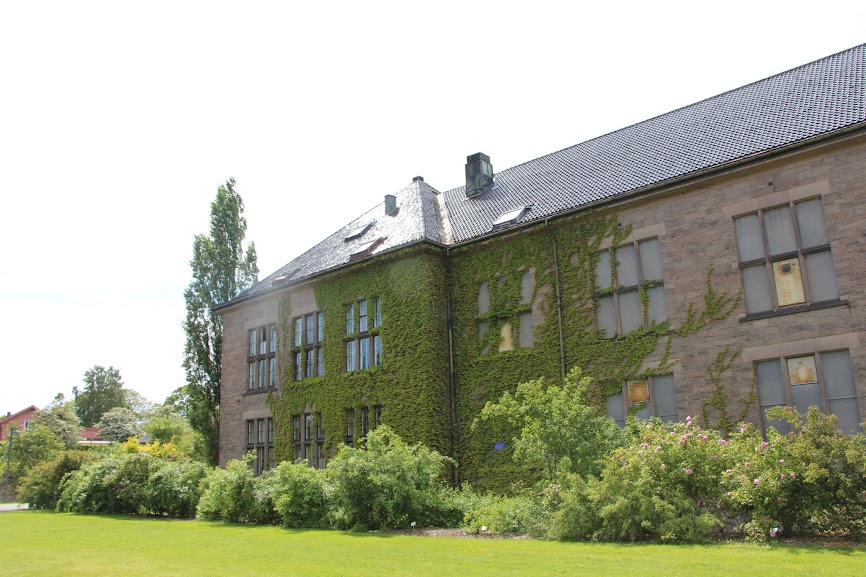
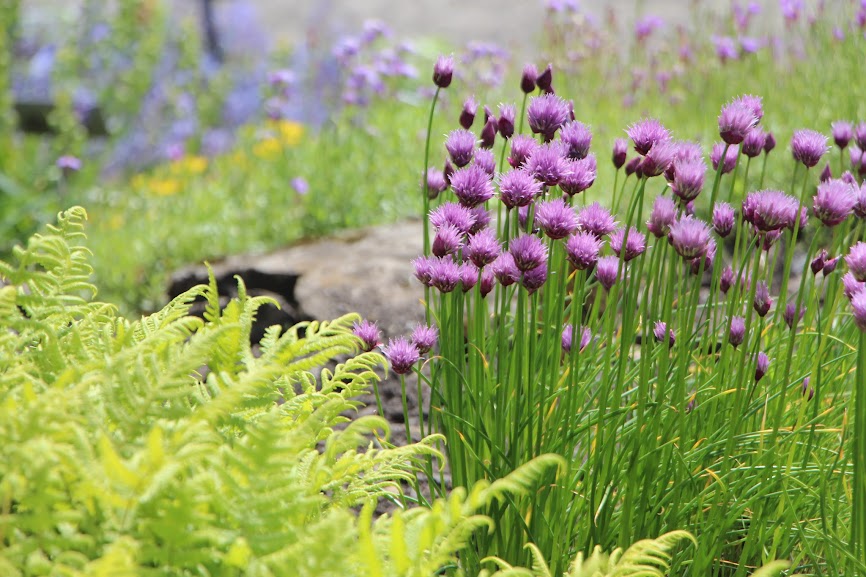
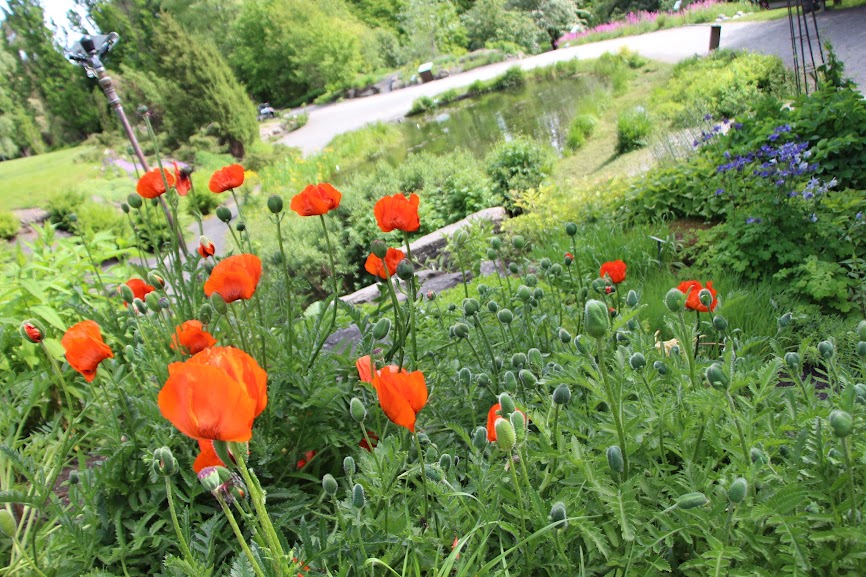
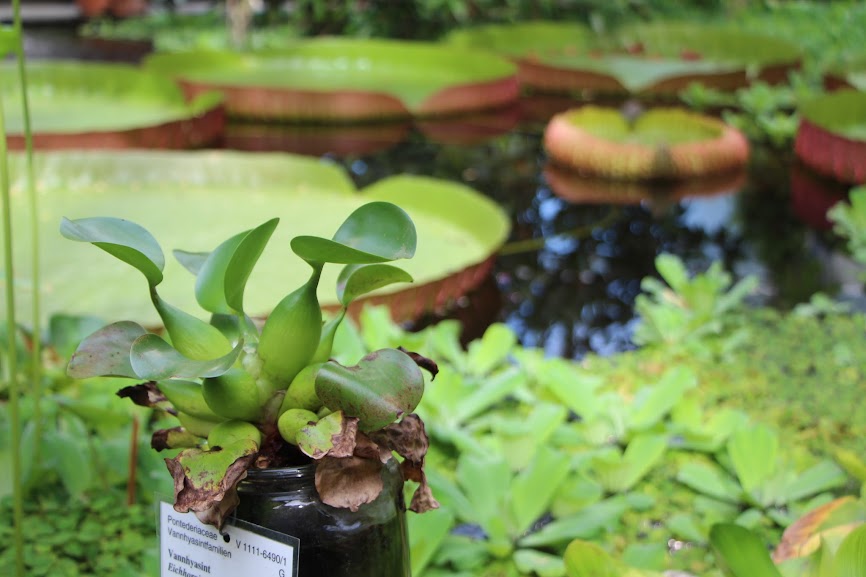
Photos: Oslo botanical garden

New photos by me. 


Full set: 
https://plus.google.com/photos/104156964467977244850/albums/6160157442913097137


____________________________________________________

I got 3 books on my birthday: a Germany photobook from Hải Lý (photos of our trip to Frankfurt, Heidelberg, Würzburg and Rothenburg), Kendra Bean's Vivien Leigh: An Intimate Portrait from Thanh Thanh and ****: or, The Anatomy of Melancholy by Matthew Selwyn from the author himself (OK he didn't know about my birthday, but the book arrived just the day before so why not include it :p). Also got a pair of high heels from my mom, because I'd been invited to a wedding. 
This year I celebrated my birthday completely off facebook (my account's still deactivated), and spent hours with Sediqa at the botanical garden. It was lovely. 

Tuesday, 27 January 2015

Tuesday, 20 January 2015

Thursday, 11 September 2014

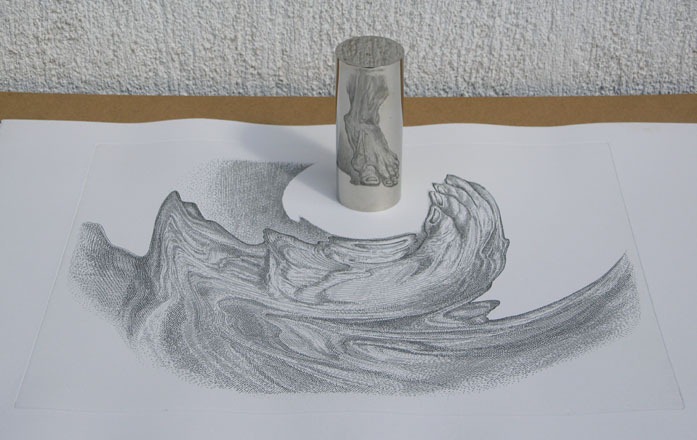
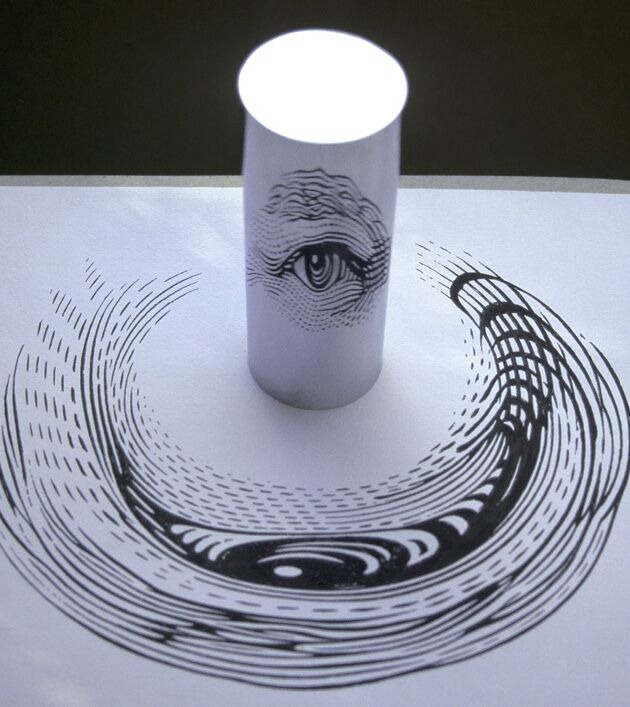
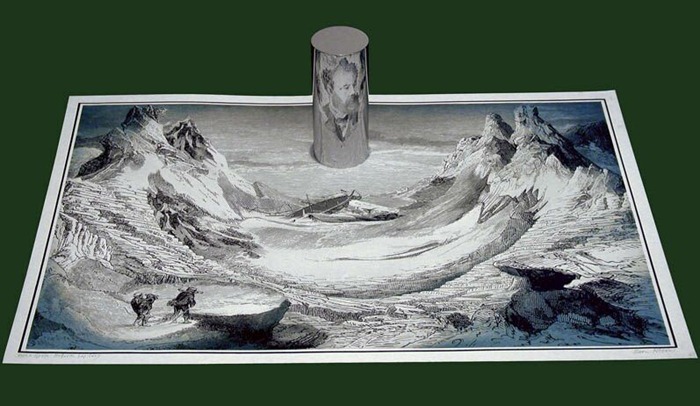
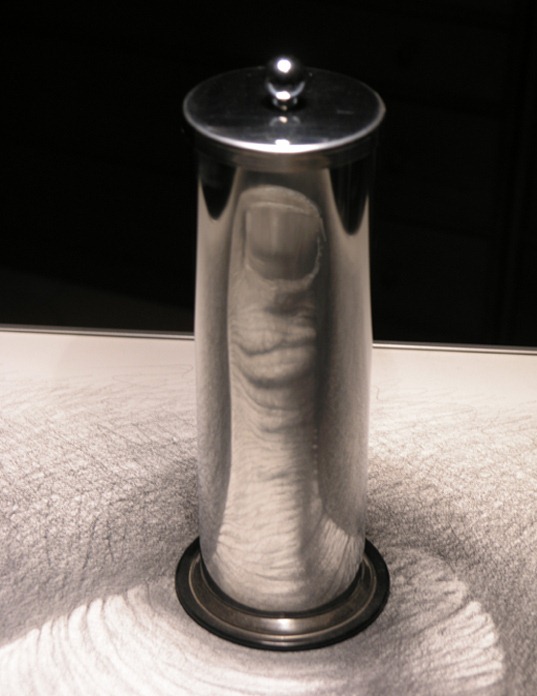
Anamorphic artworks by István Orosz and some others

By István Orosz:


orosz (5)

orosz (3)
orosz (4)
orosz
orosz
orosz

orosz (13)
verne
verne2
orosz
orosz
orosz
orosz
orosz (1)

By Jonty Hurwitz:


By Rex Young:
anamorphic-cylinder-perspective-art-12

By William Kentridge:
anamorphic-cylinder-perspective-art-20

By Awtar Singh Virdi:
anamorphosis-anamorphic-cylinder-art-17

From http://imgur.com/HfJyR9d:


From facebook.com/artpeople1, amusingplanet.com, demilked.com and some other sites.