Pages

Showing posts with label theatre. Show all posts

Friday, 16 January 2026

Edward II by Christopher Marlowe

 1/ The Greeks, once known, are seen everywhere. References to the ancient Greeks are scattered all over Marlowe’s play. 

 “QUEEN O miserable and distressed queen!

Would, when I left sweet France, and was embarked,

That charming Circe, walking on the waves,

Had changed my shape! or at the marriage day

The cup of Hymen had been full of poison!

Or with those arms, that twined about my neck,

I had been stifled, and not lived to see

The king my lord thus to abandon me.

Like frantic Juno, will I fill the earth

With ghastly murmur of my sighs and cries,

For never doted Jove on Ganymede

So much as he on cursèd Gaveston…” 

(Scene 4)

This is a moving scene. The play is about King Edward II’s obsessive relationship with his minion Gaveston and its impact on the realm—Marlowe begins the play with Gaveston and Edward, then writes about the resentment of the nobles, then lets us see that the one who suffers most is Queen Isabella—it is moving. 

Mortimer Senior also references the Greeks (and the Romans) when defending the King’s relationship with Gaveston: 

“MORTIMER SENIOR […] Thou seest by nature he is mild and calm,

And, seeing his mind so dotes on Gaveston,

Let him without controlment have his will.

The mightiest kings have had their minions:

Great Alexander loved Hephaestion,

The conquering Hercules for Hylas wept,

And for Patroclus stern Achilles drooped.

And not kings only, but the wisest men:

The Roman Tully loved Octavius,

Grave Socrates wild Alcibiades.

Then let his grace, whose youth is flexible,

And promiseth as much as we can wish,

Freely enjoy that vain lightheaded earl,

For riper years will wean him from such toys.” 

(ibid.) 

Even Edward compares himself and Gaveston to Hercules and Hylas in Scene 1. 

(But then a play about a gay relationship would mention the Greeks, wouldn’t it?) 


2/ Edward II is very different from Marlowe’s other plays. Firstly, it’s about English history. Secondly, whereas his other plays tend to have a dominating character—a Machiavelli or an overreacher—pushing everyone else to the background, Edward II is a much more balanced play and has at its centre a weak king (though in the second half, Mortimer threatens to upset the balance of the play and seems like a typical Marlovian figure). It’s also a more subtle play, with characters plotting and saying things they don’t mean and switching sides.

I can see the influence of Shakespeare’s Henry VI plays on Edward II, and in turn, the influence of Marlowe’s play on Shakespeare’s Richard II

“EDWARD Nay, then, lay violent hands upon your king:

Here, Mortimer, sit thou in Edward’s throne;

Warwick and Lancaster, wear you my crown.

Was ever king thus overruled as I?” 

(Scene 1) 

Later: 

“EDWARD My swelling heart for very anger breaks.

How oft have I been baited by these peers,

And dare not be revenged, for their power is great!

Yet, shall the crowning of these cockerels

Affright a lion? Edward, unfold thy paws,

And let their lives’-blood slake thy fury’s hunger.

If I be cruel and grow tyrannous,

Now let them thank themselves, and rue too late.” 

(Scene 6)

Edward II and Richard II both explore weak kings, favouritism, and political instability; they both raise questions about the role, power, and responsibility of the king, though I think Shakespeare goes further; Marlowe focuses more on the gay relationship between the king and Gaveston.   

About halfway through the play, Gaveston is killed; his position is then filled by Spencer, an opportunist and flatterer. 

The contrast between Gaveston and Spencer is interesting, because Marlowe lets us see that King Edward II and Gaveston love each other. The former may be an ineffectual king and the latter may be an obnoxious upstart and they both may be cruel to the Queen, but their love for each other appears to be genuine.  

“MORTIMER Why should you love him whom the world hates so?

EDWARD Because he loves me more than all the world.” 

(Scene 4) 

Marlowe does complicate things—what is the relationship between Gaveston and the king’s niece?—but he does give us Gaveston’s soliloquy at the start of the play, and in a few scenes, in Edward’s absence, Gaveston talks about him and not anyone else. It is Spencer who is like the flatterers in Richard II


3/ The scene in which Edward seeks refuge in a monastery is so moving. 

“EDWARD […] Stately and proud in riches and in train,

Whilom I was, powerful and full of pomp;

But what is he whom rule and empery

Have not in life or death made miserable?⁠

Come, Spenser, come, Baldock⁠, come, sit down by me;

Make trial now of that philosophy

That in our famous nurseries of arts

Thou sucked’st from Plato and from Aristotle.⁠

Father, this life contemplative is heaven.

O, that I might this life in quiet lead!...” 

(Scene 19)

In Shakespeare, there are many speeches about the burdens of being a king (King John, Henry IV…), or about the downfall of a king (Lear, Richard II…). What caught my attention was the word “whilom”—formerly, in the past—which I had never seen in Shakespeare, and possibly had never seen before. 

The abdication scene is even better, and again I can see Marlowe’s influence on Richard II

There are some very good lines: 

“EDWARD […] The griefs of private men are soon allayed;

But not of kings…”

(Scene 21)

This is followed by an image of “the forest deer” and “the imperial lion”—Edward refers to himself as a lion quite a few times, but he’s not much of a lion, is he? 

I like these lines from the same speech: 

“But what are kings, when regiment is gone,

But perfect shadows in a sunshine day?” 

This is also good: 

“EDWARD I know not; but of this am I assured,

That death ends all, and I can die but once.” 

(ibid.) 


4/ I note something interesting Marlowe does a few times throughout the play, though I don’t know what you call these pairs of lines—thesis and antithesis? 

“KENT For he’ll complain unto the see of Rome.

GAVESTONE Let him complain unto the see of hell.” 

(Scene 1) 

“EDWARD Lay hands on that traitor Mortimer!

MORTIMER SENIOR Lay hands on that traitor Gaveston!” 

(Scene 4) 

“QUEEN [to Gaveston] Villain, ’tis thou that robb’st me of my lord.

GAVESTON Madam, ’tis you that rob me of my lord.” 

(ibid.) 

“WARWICK Saint George for England, and the barons’ right!

EDWARD Saint George for England, and King Edward’s right!” 

(Scene 12) 

“GURNEY Your passions make your dolours to increase.

EDWARD This usage makes my misery increase.” 

(Scene 23) 

“EDWARD III My lord, he is my uncle, and shall live.

MORTIMER My lord, he is your enemy, and shall die.”

(Scene 24) 

“LIGHTBORNE What means your highness to mistrust me thus? 

EDWARD What means thou to dissemble with me thus?” 

(Scene 25) 

The best wordplay in Edward II, however, is when Mortimer decides to kill Edward and wants to cover his tracks:  

“MORTIMER […] This letter, written by a friend of ours,

Contains his death, yet bids then save his life.

Reads. ‘Edwardum occidere nolite timere, bonum est’,

‘Fear not to kill the king, ’tis good he die.’

But read it thus, and that’s another sense;

‘Edwardum occidere nolite, timere bonum est’,

‘Kill not the king, ’tis good to fear the worst.’

Unpointed as it is, thus shall it go…” 

(ibid.) 

According to a post I came across, the line comes from Holinshed—sent by Adam de Orleton, not Mortimer. 


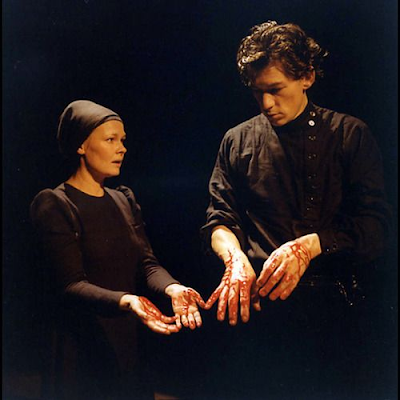
5/ In 1970, the BBC broadcast a double feature done by Prospect Theatre Company: Edward II and Richard II with Ian McKellen playing Edward and Richard, Timothy West playing Mortimer and Henry Bolingbroke, Paul Hardwick playing the Earl of Warwick and John of Gaunt, and so on. 

Both are wonderful productions—the entire cast is perfect. Ian McKellen is great, as always (I saw Richard II back in November); Timothy West has a lot more to do as Mortimer; but I especially like Diane Fletcher as she helps me understand better the character of Queen Isabella and her changes throughout the play. 

The more I think about Edward II—such a great play—the more annoyed I get with the Marlovian theory, i.e. the conspiracy theory that Marlowe faked his death and was the real Shakespeare. It’s a distraction from a much more worthwhile pursuit of rereading, rewatching, analysing, getting immersed in Shakespeare’s plays; it’s also a distraction from the brilliance of Marlowe’s actual plays when we should be celebrating and promoting Edward II and Doctor Faustus

If you are in the UK and have a school/ university email address, both productions are available on the ERA website. Otherwise, they’re on Youtube, though the quality is a bit lower. 

Sunday, 21 December 2025

2025: an exciting year in reading, viewing, travelling


Me wearing a Thai traditional dress. 


Literature 

In terms of reading, this has been a fantastic year. The main highlight was my discovery of ancient Greek literature: I read the Iliad and the Odyssey (and became a Homer obsessive), 4 plays by Aeschylus (5 if you count Prometheus Bound), 6 plays by Sophocles (1 left), 10 plays by Euripides, 5 by Aristophanes. Is there a more glorious period for theatre than 5th century BC in Athens? Elizabethan/ Jacobean England had Shakespeare, but here were four great writers working around the same time, and I was glad to discover that they did certain things that Shakespeare didn’t do. My favourite is Sophocles.

An Odyssey: A Father, a Son, and an Epic by Daniel Mendelsohn is also a very good book, not only as a companion for Homer but as a memoir on its own. 

In 2025, I also discovered Molière (funnier than Shakespeare); read David Copperfield; explored more of the 18th century with Tom Jones and Gulliver’s Travels; had my first encounter with Goethe; read Elizabethan and Jacobean revenge plays; reread a few Shakespeare plays and read part of Shakespeare After All, an excellent book by Marjorie Garber; read 4 plays by Seneca (whom I did not like) and the Aeneid (which is nowhere near as great as the Iliad and the Odyssey, come on); read more Ibsen (cold and uncompromising) and Flannery O’Connor (cold and uncompromising); read Gilead by Marilynne Robinson, a living writer (shocking, I know). So many great books in a year! 

The highlight in nonfiction is The Drowned and the Saved—my favourite nonfiction writer might actually be Primo Levi. 

The main disappointment of this year—unless I forget anything else more disappointing—is about Oliver Sacks. 

Cinema and theatre 

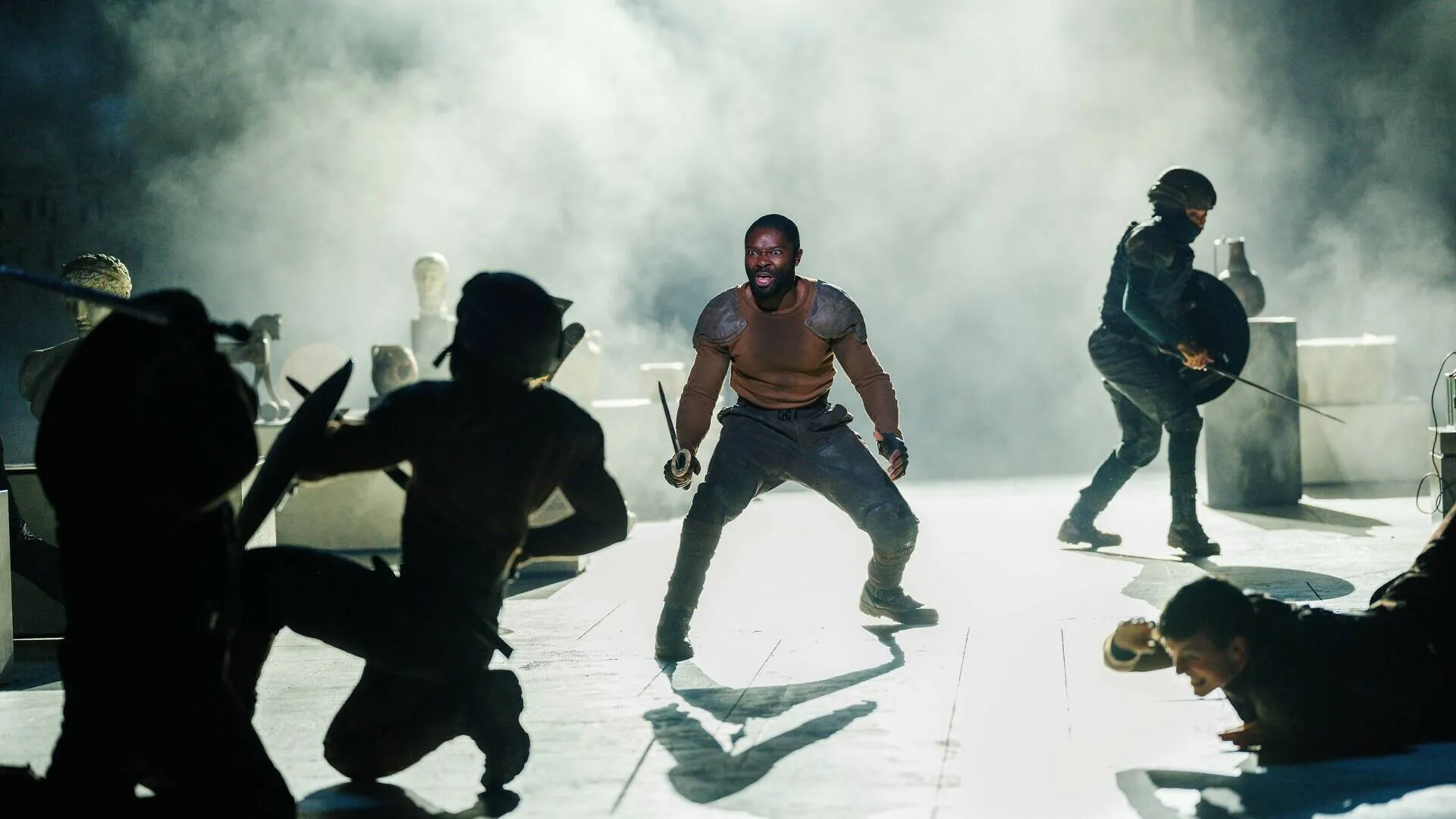
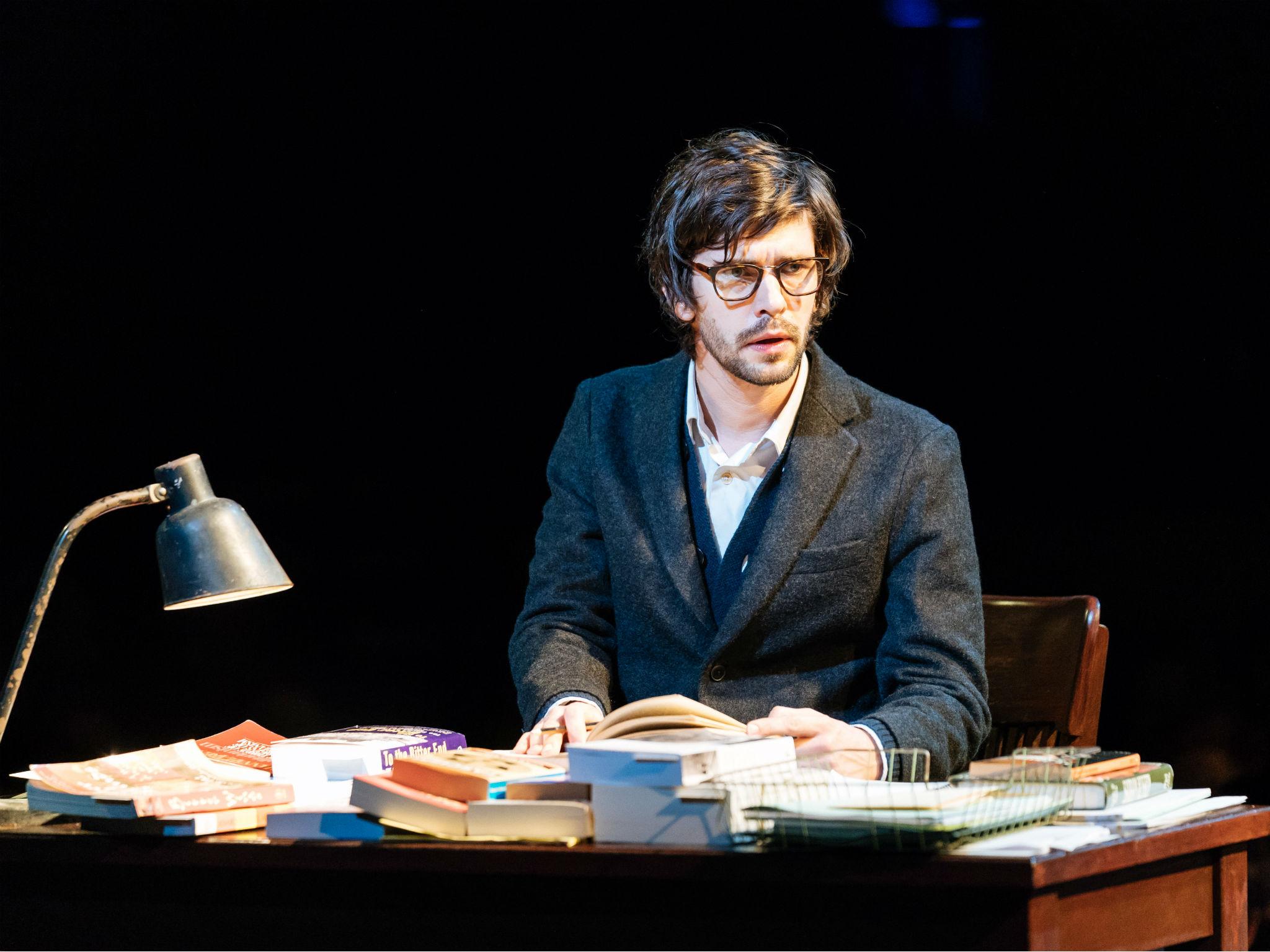
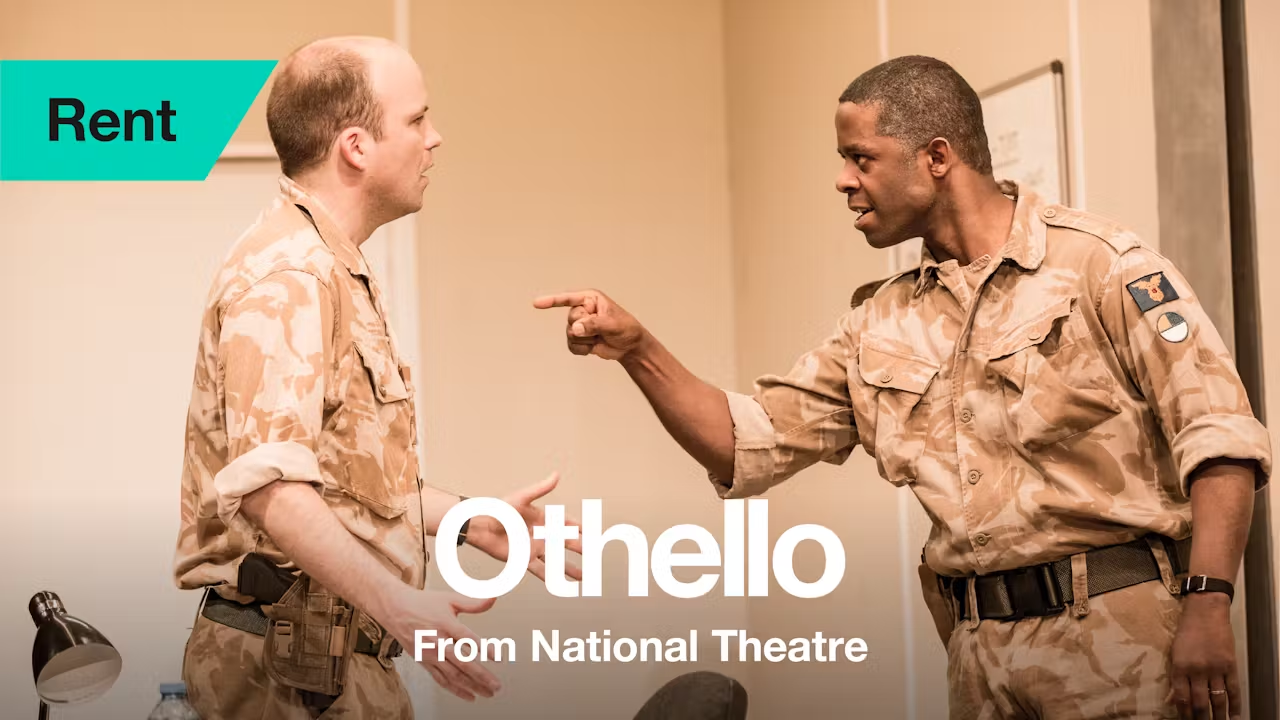
Let’s start with Shakespeare. I saw 4 great productions: Coriolanus (2024, dir. Lyndsey Turner, with David Oyelowo in the main role), Othello (2013, dir. Nicholas Hytner, with Adrian Lester in the main role), Othello (onstage at Theatre Royal Haymarket, dir. Tom Morris, with David Harewood in the titular role), and Julius Caesar (2018, dir. Nicholas Hytner, with Ben Whishaw as Brutus). Watch them you must, especially the first three. David Harewood’s Othello is still at Theatre Royal Haymarket in London till some time in January. That one and Coriolanus make me glad that there are still great Shakespeare productions (just not at the Globe), that there are still brilliant directors who take Shakespeare seriously and understand the plays, that there are wonderful Shakespearean actors. 

I also saw King Lear (2018, with Ian McKellen), Hamlet (2009, with David Tennant), and Macbeth (the Roman Polanski film from 1971). Not great, but all have something interesting in them. 

Apart from Shakespeare, the main highlight of 2025 was the 1977 series Anna Karenina, the 7th and best adaptation I’ve seen of Tolstoy’s novel. Yes, I’ve seen 7—I’m insane—and would probably watch more though I don’t think anything can be as good as the 1977 series, as Nicola Pagett is the best Anna Karenina and the entire cast is perfect. If you don’t know what to watch for the Christmas and New Year season, go for this—it’s 10 episodes. 

Another highlight is that I watched more films from the 1930s, which I hadn’t known as well as the 40s-70s. 

The 10 best films of 2025 (in chronological order and not counting revisits): 

  • Frankenstein (1931) 
  • It Happened One Night (1934) 
  • My Darling Clementine (1946) 
  • Harakiri (1962) 
  • Tom Jones (1963) 
  • The Servant (1963) 
  • Young Frankenstein (1974)
  • Perfect Blue (1997) 
  • Spirited Away (2001) 
  • In Bruges (2008)

The list might be slightly different tomorrow (which I guess is the way things usually go with these lists). 

The best documentary I’ve seen this year is Groomed: A National Scandal (released earlier this year), which everyone should see. 

Travelling 

I’ve only just realised that I did 6 work trips this year: to Washington, DC (February); Geneva (March and July); Prague (November); Jakarta (November); Bangkok (November – December). No wonder I’m now burnt out and ill. 

More excitingly, my Washington, DC trip was my first time in the US; and my trips to Jakarta and Bangkok were my first return to Southeast Asia since I left Vietnam 16 years ago.  

This has been fun. 

Merry Christmas and Happy New Year, everyone! 


Update on 22/12: I forgot that in 2025, I also read Judi Dench’s Shakespeare, a delightful book that not only tells behind-the-scenes stories but also offers lots of interesting insight into Shakespeare’s plays and characters; I also discovered Hayao Miyazaki. 

Thursday, 30 October 2025

Brief thoughts on Othello (Theatre Royal Haymarket), dir. Tom Morris and ft. David Harewood

Yesterday I was thinking about killing myself. But weeks ago, I had bought a ticket for Othello at Theatre Royal Haymarket, so today I went. 

I was in tears by the end.

The best part of the production was David Harewood’s performance. The first black actor to play Othello at the National Theatre in 1997 (shocking, I know), he now returns to the role when he’s more, er, “declined into the vale of years”, and delivers a great performance. Here is a noble Moor, here is a dignified and strong general, and yet he makes one feel uneasy when he says “My life upon her faith”, and later “Perdition catch my soul/ But I do love thee. And when I love thee not/ Chaos is come again.” He plays Othello with dignity, and with vulnerability. When Iago puts poison in his ear, he cracks, all collapses. His threat to kill Iago and his changed behaviour towards Desdemona are terrifying. But Othello is not a base little man—the nobility is there—one leaves the play feeling pity and sorrow for a noble man ensnared and corrupted by a villain. The play belongs to Othello—to David Harewood. 

I’m not sure if I prefer him or Adrian Lester in the role.

I also like Tom Byrne as Roderigo and Vinette Robinson as Emilia. Generally speaking, Tom Morris respects the text—no nonsense, no gimmicks—it’s interesting to see Iago’s wife played by a black actress, which gets you to see Iago in a different light. However, I think Tom Morris makes a few questionable choices. Sometimes he uses a bit too much stage effects, which is distracting, and sometimes the staging is slightly odd, such as when Desdemona (Caitlyn Fitzgerald) is praying and preparing for bed onstage at the same time as Roderigo wounding Cassio and getting killed by Iago. Especially questionable is the removal of Desdemona seemingly returning from death and exonerating Othello—we hear a sound effect instead of Desdemona, and she does not speak—why? 

But my main problem with this production is Toby Jones as Iago. I guess you could argue that he approaches the role differently, which is fine, considering that Ian McKellen and Bob Hoskins and Rory Kinnear are very different Iagos and all great. I came across a theatre forum thread in which people were discussing this production and a few of them said Toby Jones played Iago as a weakling, or a little weasel, who’s constantly bewildered that his plans are working. You might think it works, you have to see for yourself. My problem with his performance is that I don’t think he conveys a sense of menace except till the very end, when he says “What you know, you know.” 

So do I think this is a great production? No, my favourite is still the one from 2013, with Adrian Lester as Othello and Rory Kinnear as Iago. 

Do I think it’s worth watching? Yes, David Harewood is magnificent and the final scene would wreck you.  

Sunday, 31 August 2025

Why read/ watch plays? (P.3): Plays vs films

Before we begin, I’m going to say that I’m talking about plays in the broad sense: not only live performances but also texts and filmed plays and audio recordings (“Let’s hear a play”); I however exclude musicals.

If we compare cinema and theatre (in the sense of live performance), we can all name the advantages of theatre: the nearness of the audience to the actors, the interaction and immediacy, the fact that no two performances are the same. But if we compare cinema and drama (in the broad sense), I’m afraid most people would only talk about the advantages of cinematic language: the language of image, large scenes, visual effects, and above all, editing and the close-up. It is derogatory when a film or TV series is described as “stagey”; what’s the equivalent for the other way around? 

I myself have loved literature and cinema all my life—my interest in drama is relatively new—but I love Shakespeare. That’s why I want to examine these questions: are films actually superior to plays, or is cinematic language superior to the language of drama, as the derogatory use of “stagey” seems to suggest? What do plays do better than films?

Now you may argue that the word “stagey” only suggests that a film should use cinematic language, but let’s look at the word when it’s used for TV. In the past, TV series, especially TV adaptations of classic novels, were modelled after theatre; now they’re modelled after films, meaning that they’re now meant and expected to be cinematic. Look at the 1972 War and Peace or 1977 Anna Karenina for example. Some people disparage them as stagey, and in some ways these TV series are closer to plays—lots of dialogue and minimal camerawork—but this also means that the screenwriters and directors pay more attention to dialogue and let the scenes unfold. Both series are excellent adaptations that take Tolstoy’s novels seriously and convey the complexity of the characters. Now if you look at the 2013 TV adaptation of Anna Karenina, you can see that it’s modelled after cinema and dialogue is devalued. And I can’t help asking, why do they keep moving the camera? Why do they cut every 4 seconds? (I counted) Why do they not let the scene unfold? I couldn’t even watch beyond 5-10 minutes of the 2018 King Lear for the same reasons, despite my admiration for Anthony Hopkins and Florence Pugh as actors. 

I’m not saying that screen adaptations of classic novels should be closer to plays, nor that they shouldn’t employ cinematic language. I’m also not saying that I’m mainly interested in drama driven by dialogue, driven by words (as my friend Himadri would probably say, who loves plays more than films). But dialogue is increasingly devalued in our mainly visual world—the word “stagey” reflects that—and that I find very sad. 

Films and plays do different things and have different strengths—I love both. In a film, the story and conflict are driven by many things, including dialogue (which some filmmakers unfortunately seem to forget). In a play, drama is driven by dialogue: what we say and what we don’t say and how we say it and how we hide or deceive with words. 

Persona or Cries and Whispers for instance has to be a film—it would not work as a novel or a play or an audio performance. Conversely, Rosmersholm has to be a play—you could of course turn it into a film, but its ambiguity and intricacies cannot be communicated by image or cinematic language. 

And when I watch Shakespeare, which I can’t watch live all the time (I’m just a poor girl, from a poor family), the choice would more often be a recording of a live performance, or a filmed play (like the BBC Television Shakespeare from the 1970s-80s), than a film adaptation. Sometimes a Shakespeare film respects the text, such as the 1993 and 2012 Much Ado About Nothing. Very often, Shakespeare’s words are heavily cut. Chimes at Midnight on its own is probably a passable film, but Orson Welles condenses into two hours the two Henry IV plays, with some bits from Richard II, Henry V, and The Merry Wives of Windsor. The result is a Falstaff—Welles—film with lots of supporting characters: all the others are underdeveloped, but even Falstaff is sentimentalised and simplified. 

Some Shakespeare films also indicate something like a fear of words. The 2015 Macbeth—perhaps I’m being unfair as I didn’t watch all of it—breaks into pieces the “Tomorrow, and tomorrow, and tomorrow” speech, mixing in flashbacks and battle scenes and special effects and drowning music. The main actors, Michael Fassbender and Marion Cotillard, also don’t know how to speak the words. 

Even when we look at Kurosawa’s adaptations of Shakespeare, Ran is a masterpiece, a work of art on its own separate from King Lear, but Throne of Blood is shallow compared to Macbeth: stripped of much dialogue, it is an exciting film, but doesn’t have the complexity of Macbeth; the main characters are reduced to a weak man urged on by an evil wife. Now you might say Throne of Blood uses cinematic language and I should judge it as a film, so I would say that it is not a profound, thought-provoking film. 

Now I have seen many film adaptations of plays, it would be interesting to watch play adaptations of films. 

Saturday, 30 August 2025

Why read plays? (P.2): Plays vs novels

I know, I wrote that the last blog post was my response once and for all to the mantra “Plays are meant to be seen, not read.” But I want to write about a different aspect: Why read plays? What do plays offer that novels do not? 

(Ibsen staring into your soul). 

Considering the popularity of novels, I think we can all name the advantages of novels. Some might argue that novels dig deeper into characters’ minds and have more psychological depth, but I don’t agree—look at Shakespeare—Hamlet and Macbeth and Brutus and many other characters question themselves, struggle with themselves, and people have analysed them for 400 years. But scope is one advantage: a play cannot have hundreds of characters and a wide range of experiences like War and Peace. Length and span are another: The Winter’s Tale might be an exception in making a jump of 16 years, but it doesn’t cover 16 years; War and Peace spans from 1805 to 1813, then jumps to 1820.

However, plays have their own strengths—I’m not even talking about plays as performance, but as text. Plays show a clash of perspectives. I won’t talk again about the range of views in Shakespeare—I think I’ve been annoying enough about this subject—you all know what I would say. Instead, look at Ibsen. In The Wild Duck, he shows the contrast between a character who thinks human beings need delusion and can’t cope with much of the truth, and a character who tears down a marriage to set it on a new foundation of truth and destroys everything. In An Enemy of the People, he depicts a man of integrity, a man of courage standing up for the truth, but at the same time also lets us see the concerns of the townspeople, and makes us feel uneasy about the heroic man. In Rosmersholm, he depicts three different people—or four if you count Mrs Helseth—grappling with a suicide and questioning, blaming themselves. What actually happened? Who is to blame? 

Occasionally you find a novel with the same quality. Tolstoy for instance enters different characters’ minds and depicts their different—clashing—perspectives. William Faulkner has multiple characters narrating the story, in The Sound and the Fury and As I Lay Dying. But even when a novelist switches between different perspectives, there is narration—there is someone shaping how you see characters and events—you are always aware of the authorial presence. The closest a novel gets to a play in this aspect is the epistolary form: in Dangerous Liaisons, the finest epistolary novel I’ve read, you see the different perspectives, you see the manipulators set out their plan and see them at work, you read between the lines and imagine the effect on the receiver of each letter. 

Normally, a novel focuses on a single point of view, or has an omniscient or objective point of view. In the former case—when the story is narrated by the protagonist (such as Jane Eyre) or an observer/ another character (such as Nick Carraway in The Great Gatsby), or it has a third-person narrator but mainly focuses on a single perspective (such as Jane Austen’s novels)—we see everything through that one perspective. With the third-person narrator who focuses on one character’s point of view, we can see the author: Jane Austen’s use of free indirect discourse for instance creates a double perspective, a dual voice—the narrator’s voice blending in with the character’s voice. But even when a novel has a first-person narrator, you can see the author somewhere between the lines: even though Lolita is seen through the eyes of Humbert Humbert, we can see—even without the framing device—that Nabokov is not Humbert Humbert. 

In the latter case, when the story has an omniscient or objective point of view, there is a narrator guiding the reader, which you don’t get in plays. Take Rosmersholm, for instance. What goes on in Rebecca’s mind when she cries out in joy and then rejects Rosmer’s proposal? And because there is no narrator and we are restricted to what the characters say, Ibsen gets us to see the situation in a certain way in the first two acts then turns everything upside down in Act 3. Even then, we only have fragments and there are things we would never know. What actually happened? What’s the truth about the relationship between Rosmer and Beata? What was on Beata’s mind when she decided to kill herself? 

Himadri (Argumentative Old Git) says: 

“I think Ibsen makes use of the fact that there *is* no narrator - no-one to interpret things, even by implication.

[…] This communicates a sense of mystery - not in the sense that the narrator isn’t giving us answers, but in the sense that there is no answer to give that may be articulated.

I don’t know to what extent this is possible in a novel.

A sense of the mystery of our human lives, of its inscrutability, is difficult to convey in a novel, where you’re aware of the authorial presence, even if the authors do their best to keep themselves in the background.”

Even in An Enemy of the People, a play that seems more straightforward than other Ibsen plays, there is a sense of mystery: what happens in Dr Stockman’s mind between Act 3 and Act 4 that he, when he has the chance to speak to people in town, decides not to speak about his findings about the baths but, instead, to have a rant about “the common man”? And more importantly, as Himadri has put it, why is the truth about the endangerment to public health so important to Dr Stockman, considering his contempt for the public? 

That sense of mystery is one of the fascinating things about Shakespeare. Why does Hamlet not act? What goes on in his mind when he tells Ophelia “Get thee to a nunnery”? Why does Iago hate Othello so much that he sets out to destroy him? Does he actually suspect Othello of having slept with his wife? What does Viola see in Orsino? Where does Leontes’s jealousy come from? 

Let’s have a discussion. 

Friday, 29 August 2025

Why read plays?

It is an unwritten rule on the internet that whenever you speak about reading Shakespeare, someone is to appear and (angrily) say “Plays are meant to be seen, not read.” 

This blog post is me responding to that once and for all. 

Why read plays, especially Shakespeare? 

  1. The Preface to the First Folio says “Reade him, therefore; and againe, and againe.” 
  2. Shakespeare is a dramatic poet—poetry is better savoured when read.
  3. It’s also better to think about the meaning of a phrase, a line, a speech when you read the play (especially for a non-native speaker like me). 
  4. A play, especially a Shakespeare play, is different from a screenplay. You may not read the screenplay of Citizen Kane (though you can, it’s published) because the greatness and influence of Citizen Kane also lie in mise-en-scène and cinematography and sound and editing and acting and so on; the greatness of Shakespeare lies in his words. 
  5. A performance is an interpretation: Ian McKellen’s Iago is different from Bob Hoskins’s Iago is different from Rory Kinnear’s Iago. We form our own interpretation from the text. 
  6. Which actor on the stage or the screen can possibly convey the richness and complexity of Hamlet, Cleopatra, or Falstaff on the page?  
  7. Whether or not Shakespeare intended his plays to be read, people have read—and loved reading—his plays for centuries. 
  8. If you only watch plays, you would never know many major works of Western literature, you would never know all the works of Aeschylus, Sophocles, Euripides, Aristophanes, Molière, Racine, Calderón, Ibsen, etc. 
  9. Even with Shakespeare, the most performed playwright in the world, some of his plays are rarely performed. 
  10. Or you may go to the theatre thinking you’re watching a Chekhov play or an Ibsen play, but it’s “a new version” by someone else. 
  11. If you want to know Greek tragedy but only want to see it performed, you not only have no choice in which play is performed, you also have no choice in which translation is being used. You might even end up with a hip hop version (like The Bacchae at the National Theatre in London).   
  12.  A great performance may be an exhilarating experience and deepen your understanding of the play, but a bad performance, well… 

“Plays are meant to be seen, not read”? Just admit you’re not used to reading plays. 

Monday, 18 August 2025

Ranking Shakespeare [updated]

On 6/4/2023, after reading all of Shakespeare’s plays, I created this blog post ranking the plays and characters. All the lists are now updated. 


My 5 favourite plays:

King Lear

Macbeth 

Othello

The Winter’s Tale 

Antony and Cleopatra 


My 15 favourite plays: 

Macbeth 

Othello

King Lear

Antony and Cleopatra

The Winter’s Tale 

Hamlet 

Measure for Measure 

Henry IV, Part 1 

Henry IV, Part 2 

Twelfth Night 

The Merchant of Venice 

A Midsummer Night’s Dream 

Richard II

Julius Caesar 

Coriolanus 


5 greatest male characters:

Macbeth in Macbeth 

Hamlet in Hamlet

Iago in Othello

Falstaff in Henry IV plays (not The Merry Wives of Windsor

Shylock in The Merchant of Venice 


5 favourite male characters:

Mercutio in Romeo and Juliet 

Falstaff in Henry IV plays (not The Merry Wives of Windsor

Barnardine in Measure for Measure 

Benedick in Much Ado About Nothing 

The Fool in King Lear 


5 greatest female characters:

Cleopatra in Antony and Cleopatra 

Lady Macbeth in Macbeth 

Rosalind in As You Like It

Viola in Twelfth Night 

Isabella in Measure for Measure 


5 favourite female characters: 

Beatrice in Much Ado About Nothing

Emilia in Othello 

Hermione in The Winter’s Tale

Rosalind in As You Like It  

Margaret in Henry VI Part 2, Henry VI Part 3, and Richard III (not Henry VI Part 1)


Favourite couple:

Beatrice and Benedick in Much Ado About Nothing


Favourite non-speaking character: 

Crab the dog in The Two Gentlemen of Verona 


5 most evil characters: 

Iago in Othello 

Goneril in King Lear 

Regan in King Lear

Leontes in The Winter’s Tale 

Richard III in Richard III 


10 favourite Shakespeare productions and films: 

Macbeth (1979), dir. Trevor Nunn, with Ian McKellen as Macbeth and Judi Dench as Lady Macbeth 

King Lear (2016), dir. Michael Buffong, with Don Warrington as Lear 

The Winter’s Tale (1999), dir. Gregory Doran, with Antony Sher as Leontes 

Hamlet (1990), dir. Kevin Kline, with Kevin Kline as Hamlet 

Coriolanus (2024), dir. Lyndsey Turner, with David Oyelowo as Coriolanus 

Henry IV Part 1 and Henry IV Part 2 (1979), dir. David Giles, with David Gwillim as Hal and Anthony Quayle as Falstaff 

Twelfth Night (1988), dir. Kenneth Branagh, with Frances Barber as Viola and Richard Briers as Malvolio 

Measure for Measure (1979), dir. Desmond Davis, with Kate Nelligan as Isabella 

Othello (2013), dir. Nicholas Hytner, with Adrian Lester as Othello and Rory Kinnear as Iago 

Antony and Cleopatra (1974), dir. Trevor Nunn and Jon Scoffield, with Richard Johnson as Antony and Janet Suzman as Cleopatra 

Bonus: 

Ran (1985), dir. Akira Kurosawa 


+10 favourite books about Shakespeare: 

Prefaces to Shakespeare by Tony Tanner

Shakespearean Tragedy: Lectures on Hamlet, Othello, King Lear and Macbeth by A. C. Bradley

The Wheel of Fire by G. Wilson Knight 

The Crown of Life by G. Wilson Knight 

The Imperial Theme by G. Wilson Knight  

What Happens in Hamlet by John Dover Wilson 

Shakespeare After All by Marjorie Garber 

The Genius of Shakespeare by Jonathan Bate

Soul of the Age by Jonathan Bate 

Shakespeare: The World As Stage by Bill Bryson 

Shakespeare by Anthony Burgess 


Now give me your lists. 

Friday, 30 May 2025

Judi Dench on why she loves Shakespeare so much

From Shakespeare: The Man Who Pays the Rent

“Shakespeare is an international language, a beacon for humanity, and a bridge across cultures. His writing encompasses the minutiae of everyday life. When you come to do the plays you often recognise something that you’ve never been able to articulate. He’s able to express what it is to be human in the most concise way: ‘Nought’s had, all’s spent, / Where our desire is got without content.’ It’s all you need, it’s so spare – the gift of being able to convey so much with so little.

And his iambic pentameter – the rhythm of it is so to do with … now, you see, the hairs on my arm are standing on end. De-dum, de-dum, de-dum. It’s the rhythm of life, the beating of your heart. I know that sounds effete, but nevertheless it’s so primal.

There’s something for everybody in Shakespeare. Everything you have felt or are yet to feel is all in there in his plays: oppression, ambition, loneliness, remorse, everything. If you need to understand jealousy, read Othello or The Winter’s Tale; if you’re in love, listen to Romeo and Juliet.

When I was at my lowest during the pandemic I kept thinking of Richard II’s line: ‘I wasted Time, and now doth Time waste me.’ Shakespeare has examined every single emotion. His writing has the capacity to make us feel less alone.”

If you like Judi Dench (who doesn’t?), this is a delightful book. I like that she doesn’t only talk about acting and tell behind-the-scenes stories, but also comments on the plays and the characters and you can see her love of Shakespeare shine through. See my Twitter thread here (or if you don’t have an account, read it here instead). 


Her performance shapes my interpretation of Lady Macbeth. 

Sunday, 25 May 2025

Hamlet (2009), ft. David Tennant

Directed by Gregory Doran (who did my favourite version of The Winter’s Tale), this is in some ways a strong production. There are some interesting choices and there are some questionable choices. Let me gather my thoughts. 

Firstly, it is set in modern day and there are CCTVs everywhere. Like Robert Icke later does in the 2018 version (with Andrew Scott), Gregory Doran also emphasises the surveillance theme of the play. Sometimes it works well, often it feels gimmicky, but I’m afraid that the CCTVs only create more questions: does it not get anyone’s attention that at some point Marcellus, Francisco, Barnardo, and Horatio run around in fear and wonder, clearly speaking to something unseen?

Secondly, I don’t like the casting of Patrick Stewart for both the Ghost and Claudius. Some of you may tell me that this doubling is nothing new and some reviewers have said it’s sometimes done, but why then does Hamlet ask Gertrude “Have you eyes?”? Why then does he say that Claudius is “no more like my father/ Than I to Hercules”? And more importantly, how are we to feel about Gertrude, if she moves on from her dead husband to his brother, who looks just like him? It’s interesting however that Patrick Stewart plays the Ghost as stiff and stern—cold even—indeed, what does it say about the relationship between Hamlet and his father that when the Ghost appears, there are no words of love, only calls for revenge? Hamlet has to avenge the murder of a father with whom he didn’t have a close, loving relationship. 

Thirdly, I don’t like Patrick Stewart as Claudius. He softens the character. The production removes some of the more insulting lines in the wedding scene: 

“KING It shows a will most incorrect to heaven, 

A heart unfortified, a mind impatient, 

An understanding simple and unschooled.” 

(Act 1 scene 2)

Imagine how insulting these lines are to someone such as Hamlet. In front of the whole court! Claudius aims to sting and Shakespeare lets us see from the very first scene that he is cunning and subtle. But Gregory Doran cuts these lines, and Patrick Stewart’s performance as a whole softens the character. It is one thing to play Claudius as even-tempered, but is this really a man who murders his own brother, usurps the throne, marries his brother’s widow, sets others to spy on his nephew then plots to have him killed, takes advantage of a courtier’s death to manipulate the son into being his pawn, and so on? I don’t buy it. 

Someone has called it a nuanced performance but I don’t think so—a nuanced performance is one that shows Claudius as a ruthless man but also a good king and an adoring husband—the best Claudius I have seen so far is Robert Shaw.  

I do think David Tennant is very good as Hamlet however. The best Hamlet I have seen is still Kevin Kline, who conveys better something of “the sweet prince” that Hamlet once was, but David Tennant does convey very well the intensity and volatility and sardonic wit of the character, and also some vulnerability—it is much better than the performance of Andrew Scott, who plays Hamlet like a psychopath that anyone would want to remove from court. 

Penny Downie is also very good as Gertrude, playing her as a tragic character, and I like Oliver Ford Davies as Polonius.

What about the ending? 

“KING Gertrude, do not drink. 

QUEEN I will, my lord; I pray you pardon me.” 

(Act 5 scene 2)  

There are different ways of playing this moment. Gertrude may carelessly drink from the cup, too absorbed in the duel to notice. Or Gertrude may know the cup to be poisoned, and deliberately drink from it, as Juliet Stevenson does in the 2018 production. Or she may have a little pause, think, and then drink from it, which is what Penny Downie does here, and I think it works very well. 

One interesting thing Patrick Stewart does, which I don’t see in other version of Hamlet, is that at the end he shrugs and drinks from the poisoned cup himself. It adds something tragic to the character. But at the same time, the consequence is that it makes Hamlet even more passive—for the entire story, Hamlet doesn’t take any action (apart from staging the play wherein he catches the conscience of the king), and at the very end, he only slashes at Claudius’s hand—admittedly the sword is envenomed, but he still appears less active as he hands over the cup to Claudius and the King drinks it himself. 

Not the best rendition, but interesting and worth watching. 

Saturday, 17 May 2025

Brief thoughts on Roman Polanski’s Macbeth

The trouble with Macbeth, I think, is that it’s such an exciting play—full of plot and action—that people sometimes seem to forget that the greatness of the play is in the happenings in the minds of the Macbeths. The clearest example is Kurosawa’s loose adaptation Throne of Blood, enjoyable enough but stripped of the characters’ thoughts, stripped of all depth and complexity. Roman Polanski’s film also seems to focus more on the external violence—it is bloody, full of graphic violence (and nudity)—if not for Jon Finch. I have seen Jon Finch as Henry IV in the BBC Television Shakespeare and he’s so much like a Shakespearean actor, so much better than Michael Fassbender (who doesn’t know how to speak the lines) and Denzel Washington, that I didn’t realise till after watching the film that it was the first time he did Shakespeare. You see him tempted by the witches; you see him struggle before and after the deed; you see him slowly lose his soul as he's in blood stepped in so far; you see that by the end, to him life’s a tale told by an idiot, full of sound and fury, signifying nothing. 

The problem with the film though is that Francesca Annis is a weak Lady Macbeth. When you see different versions of Macbeth, you might sometimes wonder if Lady Macbeth’s descent into madness could be abrupt—some people think perhaps the text is cut and we’ve lost a scene or two—but Trevor Nunn’s production demonstrates that there is nothing wrong with the pacing or structure, as Judi Dench shows from the very beginning that Lady Macbeth is more vulnerable than she thinks, that she has started to crack much earlier, so her descent into madness comes as no surprise. That abruptness is in Joel Coen’s film, as Frances McDormand is so evil, so unmoved at the beginning and doesn’t show the gradual change. Orson Welles and Kurosawa solve “the problem” by making some changes and creating a reason to explain Lady Macbeth’s shock and insanity. Francesca Annis doesn’t play Lady Macbeth as evil like Frances McDormand, but her insanity also seems abrupt because we don’t quite see her conflict, her struggle, her vulnerability. 

There are also some questionable choices. Why have the Macbeths discuss killing Duncan at the party, in front of everybody? Why depict so much nudity? Why do we need to see a completely naked young boy (Macduff’s son)? Why depict Macbeth and Macduff fight in front of everybody like it’s a spectacle, like they are gladiators? Not to mention the ending?  

I also wonder if the Manson Family’s murder of Polanski’s wife Sharon Tate in 1969 had any impact on his mind and his vision for Macbeth—the film came out in 1971—not only because the film is so bloody and violent, but also because Macbeth’s death is depicted in such a cynical way and doesn’t seem tragic. 

Overall, it’s still worth seeing, for Jon Finch (unless you boycott Roman Polanski’s films, which is perfectly understandable). It’s also an interesting approach.   


On Trevor Nunn’s production (Ian McKellen – Judi Dench). 

On Joel Coen’s film

On Orson Welles’s film

On Throne of Blood

Addendum on 20/5: I forgot that I saw the Ralph Fiennes version onstage, which I wrote about here and here

Friday, 16 May 2025

Some Shakespearean performances I wish to have seen

As I have been reading Judi Dench’s Shakespeare: The Man Who Pays the Rent (a very enjoyable read) and just updated my list of favourite Shakespearean performances, here’s a shortlist of performances I wish to have seen:

  • 17th century: 

Richard Burbage as Hamlet, Othello, Macbeth (obviously, he worked directly with our man) 

  • 18th century: 

Sarah Siddons as Lady Macbeth (because William Hazlitt calls her “Tragedy personified” and this is her most famous role) 

  • 19th century: 

Ellen Terry as Lady Macbeth (I mean, have you seen Sargent’s painting? I’ve also seen the dress in person) 

Sarah Siddons as Hermione (because of some commentaries I’ve read in The Winter’s Tale Casebook 

  • 20th century: 

Vivien Leigh as Lady Macbeth (I’m curious about her performance) and Cleopatra (come on, she must have been great in the role) 

Diana Rigg as Lady Macbeth (the best Regan I have seen, she would have been great as Lady Macbeth) 

Ralph Richardson as Falstaff (he’s part of the trinity, and extraordinary in everything I’ve seen) 

Judi Dench as Gertrude with Daniel Day-Lewis as Hamlet (come on, that sounds amazing, I also like Judi Dench’s analysis of Gertrude and the play) 

Judi Dench as Isabella (I like her comments on the character) 

  • 21st century: 

Frances Barber as Cleopatra (she is Cleopatra, I have heard her on audio and wish I had seen her onstage) 

Give me your list. 

My 50 favourite Shakespearean performances onscreen and onstage

The 30 list was first published on 29/12/2023. It is now updated. 

In chronological order. 


Robert Shaw as Claudius in Hamlet at Elsinor (1964)  
Michael Aldridge as Pistol in Chimes at Midnight (1965) 
Olivia Hussey as Juliet in Romeo and Juliet (1968) 
Leonard Whiting as Romeo in Romeo and Juliet (1968)
Diana Rigg as Helena in A Midsummer Night’s Dream (1968) 
Laurence Olivier as Shylock in The Merchant of Venice (1973) 
Jeremy Brett as Berowne in Love’s Labour’s Lost (1975) 
Marc Singer as Petruchio in The Taming of the Shrew (1976) 
Ian McKellen as Macbeth in Macbeth (1979) 
Judi Dench as Lady Macbeth in Macbeth (1979)
David Gwillim as Hal/ Henry V in the Henry IV plays and Henry V (1979) 
Anthony Quayle as Falstaff in the Henry IV plays (1979) 
Jon Finch as Henry IV in the Henry IV plays (1979)  
Tim Pigott-Smith as Hotspur in Henry IV, Part 1 (1979) 
Kate Nelligan as Isabella in Measure for Measure (1979) 
Anthony Hopkins as Othello in Othello (1981) 
Bob Hoskins as Iago in Othello (1981) 
Michael Hordern as Lear in King Lear (1982) 
Anton Lesser as Edgar in King Lear (1982) 
Penelope Wilton as Regan in King Lear (1982) 
Michael Pennington as Posthumus in Cymbeline (1982) 
Robert Lindsay as Iachimo in Cymbeline (1982) 
Robert Lindsay as Edmund in King Lear (1983) 
Diana Rigg as Regan in King Lear (1983)
Cherie Lunghi as Beatrice in Much Ado About Nothing (1984) 
Robert Lindsay as Benedick in Much Ado About Nothing (1984)
Richard Briers as Malvolio in Twelfth Night (1988) 
Frances Barber as Viola in Twelfth Night (1988)  
Kevin Kline as Hamlet in Hamlet (1990) 
Ian McKellen as Iago in Othello (1990) 
Imogen Stubbs as Desdemona in Othello (1990)
Helena Bonham Carter as Olivia in Twelfth Night (1990) 
Antony Sher as Leontes in The Winter’s Tale (1999) 
Ian Hughes as Autolycus in The Winter’s Tale (1999) 
Ralph Fiennes as Coriolanus in Coriolanus (2011) 
Vanessa Redgrave as Volumnia in Coriolanus (2011)
Amy Acker as Beatrice in Much Ado About Nothing (2012) 
Adrian Lester as Othello in Othello (2013) 
Don Warrington as Lear in King Lear (2016) 
Miltos Yerolemou as the Fool in King Lear (2016)
Thomas Coombes as Oswald in King Lear (2016)
Ian McKellen as Lear in King Lear (2018) 
Ben Whishaw as Brutus in Julius Caesar (2018) 
Kathryn Hunter as the Witches in Macbeth (2021) 
David Oyelowo as Coriolanus in Coriolanus (2024) 
Mathew Baynton as Bottom in A Midsummer Night’s Dream (2024) 
.
.
.

Saturday, 15 March 2025

On David Oyelowo’s Coriolanus and Ben Whishaw’s Julius Caesar

Coriolanus (2024, dir. Lyndsey Turner and ft. David Oyelowo): 

The entire production is excellent, and David Oyelowo has an electrifying performance. He and Ralph Fiennes approach the role rather differently—Ralph Fiennes’s Coriolanus is colder and more contemptuous, David Oyelowo’s is proud, hard, inflexible, unable to be false to his nature, unable to do anything but play the man he is—the pride is still there, but he is more sympathetic—he is a great soldier, not a great politician; a great fighter, not a great orator. The line “There is a world elsewhere” is also different in their performances—Ralph Fiennes says it quietly, it’s a sad line, a bitter line; David Oyelowo shouts the line with ferocity, it’s a defiance and a threat, it’s terrifying—both work very well. 

The scene where Volumnia comes to persuade Coriolanus to lay down his arms and stop destroying Rome is so good, especially when he says “O Mother, Mother, what have you done?”. This, I have always thought, is the most fascinating mother-son relationship in Shakespeare. 

Great play, great production. 


Julius Caesar (2018, dir. Nicholas Hytner and ft. Ben Whishaw): 

Like his Othello production (with Adrian Lester and Rory Kinnear), Nicholas Hytner also has the cast of Julius Caesar in modern dress. The difference is that here he emphasises his contemporary approach—a few choices are rather questionable, such as the songs or the political slogan “Do this!” or the appearance of Julius Caesar wearing a red cap with white letters—but overall, it is a very good production. A large part of it is thanks to Ben Whishaw. His Brutus is a bookish intellectual, who speaks of ideals and thinks in abstract terms, persuading himself that he must kill Caesar to save Rome but not thinking about the next step—Shakespeare’s Brutus, of course, is not just an idealistic man, he is proud and hypocritical and conceited—and we can see all that in Ben Whishaw’s performance, especially in the scene where he chastises Cassius (here female) for her “itching palm” and corruption.  

I also like Michelle Fairley as Cassius, who plays the role with intensity and persuasiveness. It doesn’t bother me that Cassius, Casca, and a few others are changed into women—look at social media, look at all the women today embracing violence and yearning for revolution—I would say it works rather well that in this contemporary production, a few of the conspirators are women, that Cassius, the one that manipulates Brutus into killing Caesar, is a woman. Cassius is calculating and manipulative and dishonest, but at the same time, Cassius’s love for Brutus is genuine—I do think Michelle Fairley conveys very well the contradictions in Cassius’s character. 

I didn’t realise it was the Ides of March when I decided to watch Julius Caesar


Both productions are available on National Theatre at Home, and you all should watch them. 

Thursday, 13 March 2025

On watching Shakespeare

1/ The more Shakespeare I watch, the more convinced I am that it’s essential to both read and watch Shakespeare. 

Read, to savour the poetry and have our own interpretations. Watch, to see different interpretations and approaches and perhaps gain a deeper understanding of the plays. 

For instance, the Ian McKellen – Judi Dench production shaped my interpretation of the Macbeths. The Winter’s Tale I have always loved, but I didn’t quite see the point of Autolycus and thought the play lacked harmony until watching the Antony Sher production (with Ian Hughes playing Autolycus). The Taming of the Shrew appears misogynistic when performed as serious drama like the BBC production with John Cleese, but it is a romp when the ACT goes for commedia dell’arte and casts Marc Singer and Fredi Olster, a great match in wit, energy, and magnetism (also, Marc Singer is hot). And so on. 


2/ One fun thing about watching different productions is that you can enjoy different aspects of them. 

Not counting Ran and the Kozintsev film, I have seen 5 different versions of King Lear: the Michael Buffong production from 2016 (ft. Don Warrington), the Jonathan Miller one from 1982 for the BBC (ft. Michael Hordern), the Michael Elliott one from 1982 (ft. Laurence Olivier), the 1971 Peter Brook film (ft. Paul Scofield), and the Jonathan Munby one from 2018 (ft. Ian McKellen). 

Don Warrington, Michael Hordern, and Ian McKellen are all wonderful as Lear.

The best Goneril? Rakie Ayola (2016). 

The best Regan? Diana Rigg (1983). 

The best Edgar? Anton Lesser (1982). 

The best Edmund? Robert Lindsay (1983). 

The best Fool? Miltos Yerolemou (2016). 

The best Cordelia? Brenda Blethyn (1982). 

The best Oswald? Thomas Coombes (2016). 

In the 2018 production, next to the magnificent Ian McKellen, the cast is lacklustre and uninspired, but I like that Kirsty Bushell does something different—she explicitly portrays Regan as sexually aroused by violence. 


3/ You know what, now that I have seen 4 different productions of Othello and see 3 very different but all brilliant Iagos (Ian McKellen, Bob Hoskins, and Rory Kinnear), I would say that Shakespeare doesn’t need to be updated or subverted or made “accessible to modern audiences”. Race-bending or gender-swapping is not necessarily a problem: Don Warrington and David Oyelowo are excellent as Lear and Coriolanus respectively, the productions respect the texts and don’t make a point about the actors being black; an Othello in which Othello is white and the rest is black is an interesting idea; an Othello in which Iago is black also sounds like an interesting idea, as it brings the two characters closer to each other and the plot even more disturbing… But too often, you can tell the directors make certain choices only for the sake of being “modern” or “bold” or “subversive”, you can tell they do certain things because they want to be “inclusive” or impose their ideology or make a political statement, you can tell they have no respect for and most likely no deep understanding of Shakespeare. 

Take the upcoming production of Cymbeline at the Globe: Imogen is now black, Cymbeline is turned into a black woman, Posthumus becomes an Arab woman—what’s the point?—you can tell there’s no thinking behind this, nothing but an urge to be “subversive” and to mess with the play, something irritating enough with oft-performed plays and much worse with a lesser-known work such as Cymbeline.


4/ Some theatre people seem to think they need to “update” Shakespeare, they need to change the race or swap the gender or add sign language or bring in deaf actors or cut half the text or add some hip hop or just do anything different, because a straight production would be boring and say nothing new. But that’s wrong! There’s nothing like the pleasure of watching a great, serious Shakespeare production, like the David Oyelowo Coriolanus or the Adrian Lester Othello. It’s exhilarating! And we cannot assume that everyone knows the plays and has all seen straight productions before—some people’s first encounter with Shakespeare may be a production that messes with Shakespeare and it ruins the play for them.  


5/ Having expected the 2022 Othello (ft. Giles Terera) to be bad, I watched a few important scenes in it, out of morbid curiosity perhaps, and it’s so much worse than I thought. From the beginning, when images of past productions of Othello are projected onto the stage (with Orson Welles, Anthony Hopkins, etc. in blackface), you can tell that the director Clint Dyer’s only interested in making a political statement. Giles Terera as Othello and Paul Hilton as Iago are both awful—it’s the most amateurish, laughable Shakespeare production I have ever seen—in the murder scene for instance, Giles Tererea and Rosy McEwen (as Desdemona) both stood there speaking their lines, like two awkward amateurs not knowing what to do with their bodies, that I couldn’t care less when that Desdemona was getting killed. 

Shocking. 

And that is why, folks, we must read the plays—don’t judge Shakespeare by modern productions. 

Wednesday, 12 March 2025

On the 2013 Othello, dir. Nicholas Hytner and ft. Adrian Lester


Othello is the Shakespeare play I have seen the most after King Lear: the 2019 production by Nigel Shawn Williams (with Michael Blake as Othello and Gordon S. Miller as Iago), the 1990 production by Trevor Nunn (with Willard White and Ian McKellen), the BBC production from 1981 by Jonathan Miller (with Anthony Hopkins and Bob Hoskins), and now this one. 

What is it about Othello that fascinates me so? Let me think. Some people reduce it to a play about jealousy. Some, to domestic violence and honour killing. Some, to race and racism. Of course it’s not so simple. I suppose I’m obsessed with the play partly because of my fascination with Iago’s malignity and manipulation, partly because of the character of Emilia and her transfiguration at the end of the play, and partly because I have grappled for years with the character of Othello and he still eludes me. What a play! 

I think I would say that the Nicholas Hytner production is my favourite version so far. At first, I didn’t particularly like Rory Kinnear as Iago. Ian McKellen is the one who most matches the Iago I had in my head reading the text: in front of others, he speaks softly and listens sympathetically, thus appearing trustworthy; alone, he’s cold, calculating, consumed with hatred for Othello. Bob Hoskins plays a very different Iago and that also works excellently: he has a matey persona, fun, genial, but sometimes chuckles to himself like a psychopath. Rory Kinnear is yet another Iago: a dull fellow who doesn’t stand out in the crowd but who in his dullness appears honest and trustworthy. When he poisons Othello’s ear, he plays so well the part of one who gains nothing from it, who doesn’t even want to say it. It is a different approach, and it works. 

The reason it is my favourite version so far is that the entire production—and the entire cast—is excellent. In the BBC production, Penelope Wilton doesn’t quite have the childlike qualities of Desdemona—the character is saintlike and at the same time childlike. The Trevor Nunn production has a perfect Desdemona (Imogen Stubbs) and a perfect Iago, but tilts too much towards Iago—the play is not about Iago but about Othello, about the destruction of his soul. It also messes up the killing scene, as I have written a few times before—the tension rises and rises and Othello must kill Desdemona when it gets to the highest pitch—there cannot be any pause, any interruption, any lingering—Othello kills her at the height of madness—the way Willard White and Imogen Stubbs play the scene not only destroy the climax of the play but ruin the entire tragedy. 

The production I have just seen doesn’t have this problem. Nicholas Hytner and his cast get perfectly right the pacing, tension, and pitch. The scene of Othello murdering Desdemona brought tears to my eyes, and when it got to the moment of Emilia screaming “Thou hast not half that power to do me harm/ As I have to be hurt”, I was crying. To look at the lifeless body of sweet, innocent Desdemona (Olivia Vinall), to hear the agony, the passionate anger of Emilia (Lyndsey Marshal), to see the horror on Othello’s face as he realises what he has done to his love and to his own soul—the play tore my heart to pieces. 

Excellent production.


PS: You can find both this one and the David Oyelowo Coriolanus on National Theatre at Home, which is available worldwide. Start with a month subscription.