Pages

Thursday, 29 February 2024

Things I read and saw in February

Films 

In February, I watched Past Lives, The Holdovers, Maestro, and American Fiction

It probably says something about me—I know not what—that people say the biggest films of 2023 are Oppenheimer, Barbie, and Killers of the Flower Moon and I either dislike them or, at best, feel indifferent (in the case of Killers of the Flower Moon). My favourite film of 2023 is Anatomy of a Fall, followed by The Holdovers. What is wrong with those people who sneer at The Holdovers and call it a cosy film? Most modern films exasperate me with their badly written dialogue, probably resulting from dismissive attitudes about dialogue in film (hello, Denis Villeneuve), so it’s refreshing to watch something with such good dialogue. 

Past Lives mostly has boring and mundane dialogue except for one great scene, between the main character and her husband in bed. About 2-3 good scenes, and one great scene. 

Maestro I can only comment on as a pleb—for I have not seen much of Leonard Bernstein to critique Bradley Cooper’s performance—but perhaps ignorance is an advantage in that, not distracted by the differences between the actor and the man he portrayed, I could judge the film as a film and I thought it was a mess. Why is it called Maestro when it’s more about the wife? 

American Fiction is funny and enjoyable, though sometimes a bit ham-fisted. I like though that the main character is named after Thelonious Monk and Ralph Ellison. 

But my favourite is Anatomy of a Fall, a film I still think about long after. 


Books

In February, I read Primo Levi’s If This Is a Man (also known as Survival in Auschwitz), then read G. Wilson Knight’s The Imperial Theme on my work trip, and returned to Primo Levi with The Truce, the sequel. 

If This Is a Man is one of the greatest books I’ve ever read, not just because of its importance as a testimony and a record, but also because of Primo Levi’s talent as a writer and insights about people. Reading the book, I thought of the differences between it and a famous memoir by a Vietnamese man who was imprisoned by the communists—both wrote about their own experiences, but if the Vietnamese writer was a storyteller and no more, Primo Levi got one to think about what it meant to be human. 

G. Wilson Knight’s book is brilliant, especially for those of you who love Antony and Cleopatra


Museums 

My favourite museum in Geneva is the Patek Philippe Museum, followed by Musée Ariana. 

The Musée d’Art et d’Histoire and Maison Tavel in Geneva were not without interesting things, but they made me realise how lucky, how spoilt I was, living in London. 


Play

Today I saw my first Shakespeare production onstage: Simon Godwin’s Macbeth, with Ralph Fiennes and Indira Varma as the Macbeths. 

That would be the fourth version, after Trevor Nunn (Ian McKellen – Judi Dench), Joel Coen (Denzel Washington – Frances McDormand), and Orson Welles (Orson Welles – Jeanette Nolan).

It’s too early to comment at length. My immediate reaction is that it’s very different from Trevor Nunn’s production, which to me is perfect as a Shakespeare production can be. I did enjoy it, and I liked the comic touch in Ralph Fiennes’s performance as Macbeth—I hadn’t seen the potential for something comic, darkly comic, in the text and in the other performances—but it worked.

One complaint is that the porter scene is removed. Another complaint is that Simon Godwin increased the presence and significance of the witches, but they didn’t look right—they didn’t look striking, frightening, unnatural, like they’re not the inhabitants of the earth—compare them to the witches in Trevor Nunn’s production, or Kathryn Hunter in Joel Coen’s film. 

But I need to think some more about the play. 

Wednesday, 28 February 2024

My film Footfalls: 5-year anniversary of RTS Student Award

Facebook has just reminded me that 5 years ago, my experimental short Footfalls won the Royal Television Society Student Award – Short Form. 

That also reminds me that I have never made the film public online. 

So here it is. 


Wednesday, 14 February 2024

25 types of men on Tinder

As Blogger would make you sign in to verify your age, I have decided to publish the list on Google Docs. 

Enjoy! 


Sunday, 4 February 2024

Primo Levi and King Lear

I’m currently reading If This Is a Man (known in the US as Survival in Auschwitz), a memoir by Jewish Italian chemist/writer Primo Levi. 

I don’t need to tell you that the book is full of horrors. 

“Then for the first time we became aware that our language lacks words to express this offence, the demolition of a man. In a moment, with almost prophetic intuition, the reality was revealed to us: we had reached the bottom. It is not possible to sink lower than this; no human condition is more miserable than this, nor could it conceivably be so. Nothing belongs to us any more; they have taken away our clothes, our shoes, even our hair; if we speak, they will not listen to us, and if they listen, they will not understand. They will even take away our name: and if we want to keep it, we will have to find ourselves the strength to do so, to manage somehow so that behind the name something of us, of us as we were, still remains.” (ch.2) 

(translated by Stuart Woolf)

How could people do this to other human beings? Is there any cause in nature that makes these hard hearts? The Holocaust is invoked a lot these days—unfortunately I have seen a lot of Holocaust inversion—but I think people cannot imagine, till they have read such an account, the awfulness, the enormity of what the Nazis did to the prisoners at the camp. 

“Imagine now a man who is deprived of everyone he loves, and at the same time of his house, his habits, his clothes, in short, of everything he possesses: he will be a hollow man, reduced to suffering and needs, forgetful of dignity and restraint, for he who loses all often easily loses himself. He will be a man whose life or death can be lightly decided with no sense of human affinity, in the most fortunate of cases, on the basis of a pure judgement of utility. It is in this way that one can understand the double sense of the term ‘extermination camp’, and it is now clear what we seek to express with the phrase: ‘to lie on the bottom’.”

That paragraph makes me think of a key passage in King Lear, when Lear sees the disguised Edgar:

“Is man no more than this? Consider him well. Thou owest the worm no silk, the beast no hide, the sheep no wool, the cat no perfume. Ha! Here’s three on’s are sophisticated! Thou art the thing itself: unaccommodated man is no more but such a poor bare, forked animal as thou art.” (Act 3 scene 4) 

But the power of If This Is a Man, at least it’s my impression so far, is that Primo Levi writes about how the prisoners strove to retain their humanity, even in the most inhuman conditions of the camp: 

“… precisely because the Lager was a great machine to reduce us to beasts, we must not become beasts; that even in this place one can survive, and therefore one must want to survive, to tell the story, to bear witness; and that to survive we must force ourselves to save at least the skeleton, the scaffolding, the form of civilization. We are slaves, deprived of every right, exposed to every insult, condemned to certain death, but we still possess one power, and we must defend it with all our strength for it is the last – the power to refuse our consent. So we must certainly wash our faces without soap in dirty water and dry ourselves on our jackets. We must polish our shoes, not because the regulation states it, but for dignity and propriety. We must walk erect, without dragging our feet, not in homage to Prussian discipline but to remain alive, not to begin to die.” (ch.3) 

That is a powerful passage. 

Tuesday, 30 January 2024

King Lear (1971, dir. Peter Brook)

At its most basic, my measure of a King Lear production or film adaptation is rather simple: does it make me cry at Lear’s reunion at Cordelia, and at the final scene? 

Peter Brook’s film doesn’t—but why? 

I’m going to quote Roger Ebert

“It is important to describe him as Brook's Lear, because he is not Shakespeare's. "King Lear" is the most difficult of Shakespeare's plays to stage, the most complex and, to my mind, the greatest. There are immensities of feeling and meaning in it that Brook has not even touched.” 

King Lear is severely cut. A standard production of King Lear is about 3 hours (my favourite version, featuring Don Warrington, is 3 hours 10 minutes) and Peter Brook’s film is 2 hours 11 minutes on Prime (though IMDb says it’s 2 hours 17 minutes). Apart from removing many lines from the main plot and reducing the Gloucester subplot to its minimum, he rearranges lines and changes many details in the story. Above all, he reduces—or flattens out—the extremities of the play. 

Shakespeare’s King Lear is a play of extremes. On one side are the extremely evil, beyond comprehension: Goneril, Regan, Cornwall, Edmund. On the other side are the extremely good, equally incomprehensible: Cordelia, Kent, Edgar, the unnamed servant who kills Cornwall. We are constantly told—and rightly so—that people are not black and white, that we shouldn’t create characters who are wholly evil or wholly good. But Shakespeare pulls it off as he knows that there is unmotivated hate, just as there is senseless goodness, and he pushes to the extreme these two concepts in King Lear, to powerful effect.

In the film, Peter Brook makes Cordelia (Anne-Lise Gabold) more ambiguous as he omits her reasons for saying “Nothing”; presents Kent (Tom Fleming) as a hothead; and reduces the villainy of Goneril (Irene Worth) and Regan (Susan Engel), making them more sympathetic at the beginning as he gets Paul Scofield to play Lear as an erratic, irrational man, increasingly difficult to live with. Portraying Lear is a delicate balancing act: in some way, his hateful, misogynistic curses are awful, revealing something dark in his character; but at the same time, there is a reason that Cordelia loves him and Kent remains loyal to him; Lear is a figure of pity, but sometimes also a figure of greatness. I don’t quite see that in Paul Scofield’s performance in the 1971 film. 

Roger Ebert argues: 

“[Brook’s] approach was suggested by "Shakespeare Our Contemporary," a controversial book by the Polish critic Jan Kott. In Kott's view, "King Lear" is a play about the total futility of things. The old man Lear stumbles ungracefully toward his death because, simply put, that's the way it goes for most of us. To search for meaning or philosophical consolation is to kid yourself. 

[…] the Brook-Kott version of "Lear" is certainly fashionable and modern. But it gives us a film that severely limits Shakespeare's vision, and focuses our attention on his more nihilistic passages while ignoring or sabotaging the others.” 

That perhaps is why the film doesn’t quite work for me. I also think that the final scene loses much of its impact because Brook quickly kills off Edmund (Ian Hogg), cutting the speech “Some good I mean to do/ Despite of mine own nature”, and gives us a flash of the hanged Cordelia before Lear appears with her dead body. It is an incomprehensible thing about art that even though we all know the story of King Lear, even though we all know what happens at the end of the play, we still get that feeling akin to hope when Edmund reveals his plot—as though this time Cordelia would be saved—and we still feel shocked when Lear appears carrying her body and saying “Howl, howl, howl, howl! O, you men of stone/ Had I your tongues and eyes, I'd use them so/ That heaven’s vault should crack. She’s gone forever!”. All of that effect is lost in the 1971 film. It also doesn’t help that Brook makes lots of jump cuts in that scene, perhaps aiming for a sense of fragmentation like the state of Lear’s mind, but to me it breaks Lear’s speeches and the scene into pieces, destroying their emotional impact. 

What do you think about the 1971 film? 

Sunday, 28 January 2024

Types of characters in Shakespeare

Aren’t you amazed at the range of characters in Shakespeare? I mean not just a range in backgrounds, identities, personalities, viewpoints, but also a range in types of characters? 

Shakespeare can create both larger-than-life characters (the Macbeths, Lear, Othello) and small, ordinary characters (Juliet’s nurse, Celia, Hero); both complex, multifaceted characters (Hamlet, Hal, Cleopatra) and caricatures (Pistol, Dogberry, Perdita’s adoptive father). He can create utterly charming characters (Rosalind, Beatrice). He can depict, convincingly, wholly good characters (Desdemona, Kent, Imogen) and wholly evil characters (Goneril, Regan, Iago). He can delineate characters who are charismatic and lovable despite their bad traits (Falstaff) or sympathetic despite their villainy (Shylock), as well as characters who are repulsive despite their intelligence (Portia) or deeply unpleasant despite their virtue (Isabella). He can get you to dislike a character then feel ashamed for having laughed at their humiliation (Malvolio). He can create a two-dimensional comic relief character then, with a single line, give him depth (Sir Andrew Aguecheek). He can depict an utterly ordinary character then transfigure her in the last act (Emilia), or elevate her into a quasi-mythological being (Cleopatra). He can create characters who continue to puzzle, who continue to be analysed and discussed centuries later (Hamlet, Iago). 

It’s astonishing. (Most) other writers don’t have such range.

At the risk of being accused of denigrating other writers in order to praise Shakespeare, let me explain what I mean. I think, for example, that Chekhov can’t create larger-than-life characters and Tolstoy can’t really write caricatures (except for Napoleon), not for lack of talent but because of their sensibilities. Dostoyevsky probably can’t write small, ordinary characters. George Eliot and Edith Wharton can’t portray a charming character, especially if they themselves disapprove of them, as Jane Austen (Henry and Mary Crawford) and Thackeray (Becky Sharp) can. Jane Austen, like Shakespeare, can depict a two-dimensional foolish character and then make us feel ashamed when we realise they have feelings (Miss Bates), but she doesn’t create a character whose name becomes a byword for something, the way Shakespeare (Othello, Shylock) and some other writers can (Melville: Bartleby, Ahab; Nabokov: Lolita; Dickens: Scrooge). Dickens, like Shakespeare, can give us a caricature and then in last few chapters give them complexity and depth (Sir Leicester Dedlock), but readers tend to complain about his wholly good characters, something very few writers can convincingly pull off. 

Shakespeare’s genius is miraculous. 

Friday, 5 January 2024

Chimes at Midnight and the BBC 1979 productions of the Henry IV plays

Before commenting on these productions, let’s talk a bit about the plays. 

I love Henry IV, Part 1. I also love Henry IV, Part 2. It seems that many people only like, or much prefer, Part 1—an exciting play, full of banter and witty exchanges between Hal and Falstaff—whereas nothing seems to happen for a large part of Part 2. It is a play of disease and decay and death. The jokes are stale. The jester is jaded. But I love them both, and love the Henry IV plays as one unified thing, inseparable. In Part 1, Shakespeare depicts the friendship, the bond between Hal and Falstaff. In Part 2, he depicts each one alone, their wit unmatched and unappreciated by other companions, and builds it all up for Hal’s reconciliation with his father and banishment of Falstaff at the end of the play.

From the tetralogy, we can separate Richard II or even Henry V, but the Henry IV plays must go together.

At the heart of the Henry IV plays is the Henry IV-Hal-Falstaff triangle. Chimes at Midnight is a Falstaff film. Orson Welles uses material from the Henry IV plays (about 5 hours), with some bits from Richard II, The Merry Wives of Windsor, and Henry V; moves things around, changes the order of some scenes, gives some character’s lines to another; and creates a 2-hour film focusing on Falstaff. Perhaps I may have liked it if I hadn’t known the plays, but I know them. Chimes at Midnight is essentially an Orson Welles film with lots of supporting actors. The BBC’s Henry IV productions from 1979 have all the characters fully developed and well-acted. I especially love David Gwillim as Hal, Anthony Quayle as Falstaff, Tim Pigott-Smith as Hotspur, and Jon Finch as Henry IV. 

The only case in which I prefer a performance in Chimes at Midnight is Michael Aldridge as Pistol. 

I also think that Keith Baxter and Orson Welles don’t have chemistry as I see between David Gwillim and Anthony Quayle, and Keith Baxter isn’t very good as Hal (though to be fair, he doesn’t have much to work with).


More importantly, the greatest flaw of Chimes at Midnight is that Orson Welles sentimentalises Falstaff, removing much of his nasty side and turning him into a harmless fun-loving old man. Falstaff is one of Shakespeare’s greatest creations: he is full of life and warmth and charisma, with lovable qualities, but he’s also a robber, a braggart, an alcoholic, a coward, a man of no principles. The greatest challenge of staging or adapting the Henry IV plays is conveying that Hal’s banishment is necessary and inevitable, but at the same time showing why Hal is so fond of him and how much it costs Hal to reject him. It’s a delicate balancing act. I do think the 1979 productions succeed at it, largely thanks to Anthony Quayle and David Gwillim. 

David Gwillim is brilliant in the scenes with Anthony Quayle, Hal and Falstaff exchanging insults and witticisms at lightning speed. He is also brilliant in the scenes with other characters, showing Hal’s ability to adapt to different environments, to adopt the lingo of different interlocutors, to transform. 

I especially love the banishment scene. I watched Chimes at Midnight first and thought the banishment scene was perfect—the best part of the film—the look on Orson Welles’s face was haunting. But the scene in the BBC Henry IV, Part 2 is even better: the look of pain and shock on Anthony Quayle’s face is heartbreaking, as Hal says “I know thee not, old man”, you can understand why Falstaff would later die of grief and heartbreak, yet at the same time you can see on David Gwillim’s face that he’s killing a part of himself as he banishes Falstaff. 

Wonderful, wonderful productions.

It baffles me that the BBC Television Shakespeare from the 70s-80s is not widely available to the public. Is this not Shakespeare’s country? 


A darker note: I increasingly feel at odds with modern culture. I’m indifferent to contemporary music, contemporary literature, contemporary art, most contemporary cinema. My interest in Shakespeare feels like a niche. And when people now stage or adapt Shakespeare, they either fuck with the plays and impose some trendy ideologies, to be “inclusive” and “subversive”, or butcher the plays, removing vast chunks of text, to be “more accessible” to “modern audiences”. 

I’m afraid that the kind of things I love will no longer be produced, and the things I love from the past will one day be lost. 

Monday, 1 January 2024

Hamlet at Elsinore (ft. Christopher Plummer) and the different approaches to Hamlet

Michael Caine as Horatio and Christopher Plummer as Hamlet

There are different ways of approaching and interpreting the character of Hamlet. For simplicity, I would roughly divide people into two camps: the A. C. Bradley camp or the G. Wilson Knight camp*.

I spent the last day of 2023 watching Hamlet at Elsinore, and Christopher Plummer, in some ways, is similar to Kevin Kline in his portrayal of Hamlet. They both approach the role with a comic touch, and both convey very well the humour and sharp wit of the character. Christopher Plummer’s Hamlet is a mimicker, a performer, an actor, especially amusing in the “Words, words, words” scene and the scene welcoming the actors and the “O wonderful son that can ‘stonish a mother” scene. He is charming. And above all, Christopher Plummer and Kevin Kline both play Hamlet the way A. C. Bradley sees the character—with warmth and a sense of nobility—and they give us a glimpse of what Hamlet once was before finding everything weary, stale, flat, and unprofitable. 

In contrast, Andrew Scott’s approach is more like G. Wilson Knight’s: he plays Hamlet like a psychopath, cold, violent, dangerous, almost inhuman. It’s no wonder that Claudius must get rid of him for the sake of Elsinore. There is no sense of nobility in the character, therefore no sense of loss at the end of the play. That’s not how I see Hamlet. The tragedy of Hamlet, in my view, is the tragedy of one disillusioned with life, the tragedy of one who had ideals and now sees that life is an unweeded garden that’s gone to seed, things rank and gross possess it merely. Hamlet hates his mother so intensely because he loved her, because she disappointed him and made the whole world collapse for him because of her frailty.

A good actor should give us a glimpse of the sweet prince that Hamlet once was. Andrew Scott doesn’t.

At the same time, Hamlet is no longer a sweet prince. He is sardonic and volatile and unpredictable, and he can be cruel. Christopher Plummer’s Hamlet is nicer, warmer than Kevin Kline’s. It is perhaps the choice of the director, Philip Saville. The speech “Do you think I’m easier to be played on than a pipe?” is much shortened, for example, softening Hamlet. Kevin Kline is more volatile in the role: he’s funny and often charming, but sometimes he’s terrifying, such as in that moment, or in the “Get thee to a nunnery” scene.

That is more like the way I see the character.

But I love Hamlet at Elsinore and Christopher Plummer’s performance. I watched it, and then saw some clips of Kenneth Branagh in the role. Kenneth Branagh seems to me to just recite the lines he has memorised, whereas Christopher Plummer seems to feel every word he utters. His delivery of the key speeches, like “To be or not to be” or “What a piece of work is a man”, is excellent. Deeply felt, not overacted like Andrew Scott. 

I also like Philip Saville’s decision not to show the ghost—we hear him, but don’t see him—when Gertrude doesn’t see the ghost in her bedchamber, is it because he only shows himself to Hamlet, or because Hamlet hallucinates things in a frenzy?—we cannot know. 

Hamlet at Elsinore is also particularly good because Robert Shaw is the most striking and unsettling Claudius I have seen so far. He has a striking presence from the very beginning, putting Hamlet down, calling him unmanly and unschooled before the whole court. Throughout the production, he portrays very well Claudius’s disregard for everybody except himself and Gertrude, especially in that moment when Ophelia runs away in humiliation—the look on his face then is unforgettable.

Strange that it’s not better known.

Hamlet at Elsinore, which is the only Hamlet production with sound to be filmed at the castle in Helsingør (Elsinore), Denmark (setting of Shakespeare’s play), is available on Youtube, and available with subtitles on BBC iPlayer. 


*: See A. C. Bradley’s Shakespearean Tragedy and G. Wilson Knight’s The Wheel of Fire

Wednesday, 20 December 2023

2023 in reading and film-watching

1/ The greatest novel I’ve read this year is easily The Brothers Karamazov by Dostoyevsky. Sometimes I look at the suffering around the world, and around me, and think about the “I’ll return the ticket” chapter. 

Not hard to see why some people think The Brothers Karamazov is the greatest novel ever written. 


2/ The greatest non-fiction book I’ve read this year is Gary Saul Morson’s Wonder Confronts Certainty.

The book was a birthday present from Tom of Wuthering Expectations and it was just my thing, exploring Russian literature and history of ideas—from the period leading up to the Revolution, to the Stalinist years—and the big questions.

Gary Saul Morson also wrote about intellectuals’ bloodlust and love of violence and embrace of revolution for the sake of revolution, which I didn’t expect to see playing out across the West just a few months later.  


3/ 2023 has been a strange year. Things fell apart. My life took a new turn.

Looking back at my reading and viewing in 2023, I realise that I didn’t read many novels, nor watched many films. Busy with work. Unable to concentrate. And all that. So I mostly binged on The Mentalist and watched Inside No.9 and read short stories.

The writer who has meant the most to me this year, on a personal level, is Chekhov. Tolstoy continues to be the prose writer I admire the most—Anna Karenina and War and Peace are part of my mental furniture—but Chekhov is the writer to whom I feel the closest. 

And yet here’s a paradox: Chekhov brings comfort in difficult times but might also make me pessimistic. Tolstoy and Shakespeare don’t have that effect. 


4/ I read Hamlet for the third time this year and finally something clicked, finally I grasped something that had previously eluded me. I love the play, and love the Kevin Kline production. 


5/ In 2023, I discovered Mishima Yukio, Alice Munro, Flannery O’Connor, and Isaac Babel.

Flannery O’Connor is one of the few short story writers about whom I do not think “not quite Chekhov but…”. I think that when reading Alice Munro or Isaac Babel or Balzac, but not when reading O’Connor. She’s her own thing. And she is a great writer. 


6/ For a long time, my idea of Russia was either Tolstoy’s Russia or Soviet Russia. Isaac Babel’s Russia, now Ukraine, is very different as he wrote about Jews, Jewish gangsters, and pogroms. 

I was reading Odessa Stories on my Prague work trip: it was strange, and horrible, to read Isaac Babel’s depiction of the 1905 pogrom, then see the memorial to Holocaust victims in Bohemia and Moravia, and then look at the internet and see the antisemitism taking hold of many people and institutions in the West today. 

Now reading Red Cavalry

I’d like to read more Jewish literature. 


Anyway, thanks for reading my blog, and thanks for all the interesting conversations here. Merry Christmas and Happy New Year to you all!

Wednesday, 15 November 2023

My 10 favourite episodes of Inside No.9

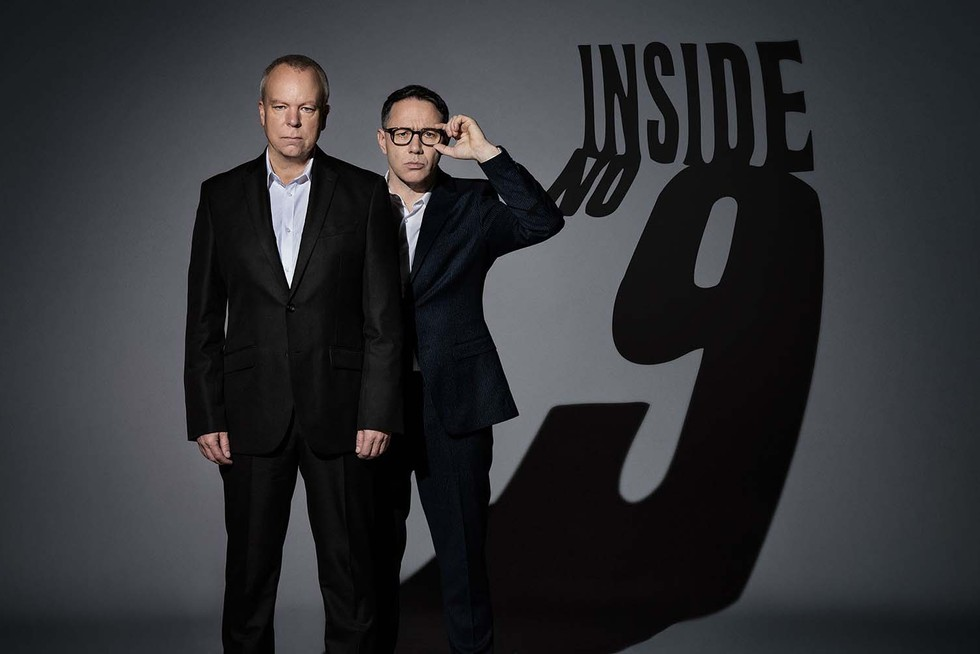
I have just finished watching Inside No.9—it is brilliant! It’s a British black comedy series, written by Reece Shearsmith and Steve Pemberton, and each episode is a self-contained story, almost all starring one of them or both (usually both).

Ingenuous plots, clever twists, good dialogue, good attention to detail. Also, both Shearsmith and Pemberton have a great range. 

Here are my 10 favourite episodes (in chronological order): 

  • A Quiet Night In: two hapless burglars trying to steal a (postmodernist?) painting whilst the couple in the house argue; almost entirely without dialogue. 
  • The Understudy: about a production of Macbeth, and inspired by Macbeth
  • The 12 Days of Christine: 12 days from 12 years of Christine’s life; great drama and emotion packed into just half an hour. 
  • The Billsimple premise (four men arguing over a bill), simple location (for most of the episode, around a table); the entire plot driven by characters and dialogue. 
  • The Riddle of the Sphinx: one of the most ingenuous episodes in the series; revolving around a cryptic crossword. 
  • Zanzibar: a Shakespeare mash-up; the whole dialogue in iambic pentameter. 
  • Bernie Clifton’s Dressing Room: double-act Cheese and Crackers reuniting after 30 years to perform in front of an audience. 
  • Once Removed: a removal man arriving to help a woman move house, leading to bizarre circumstances that unfold through reverse chronology; one of the cleverest episodes. 
  • Misdirection: a battle of wits between magicians, years after a stolen trick. 
  • Wuthering Heist: a heist film in the style of Commedia dell’arte and inspired by Reservoir Dogs
  • The Bones of St Nicholas: a professor camping in a church that is said to be haunted and contain the bones of St Nicholas. 

All right, I know, that’s actually 11. But you can’t make me get rid of one. 


One of my favourite jokes from Inside No.9

- Jesus! What a blue-cock!

- What’s a blue-cock?

- A tight-fisted wanker.