Pages

Saturday, 22 March 2025

People have always been the same—random thoughts on Gulliver’s Travels

Lately I’ve been reading Gulliver’s Travels, another major novel of the 18th century, and enjoying it a lot. 

The book is divided into four parts. In the first part, Gulliver gets shipwrecked and finds himself in Lilliput, an island of tiny people just about 6 inches (or 15cm) tall. Their tiny stature mirrors their small-mindedness, as they divide into factions and wage wars over small and trivial differences—a satire of petty differences in religion, I guess. 

In the second part, he has another misadventure and gets to Brobdingnag, an island of giants. The farmer who finds him treats him as a curiosity, exhibits him around the country for money—we all know about the freak shows in the past, but my Penguin notes also tell me that in the 18th century, “it was a normal amusement to visit Bethlehem Hospital (Bedlam) to watch the lunatics” (what?). 

In the third part, which I’m currently reading, Gulliver is attacked by pirates and gets to the Floating Island of Laputa, where people know nothing but music, mathematics, and astronomy, but they don’t use them for any practical ends. 

“These people are under continual disquietudes, never enjoying a minute’s peace of mind; and their disturbances proceed from causes which very little affect the rest of mortals. Their apprehensions arise from several changes they dread in the celestial bodies: for instance, that the earth, by the continual approaches of the sun towards it, must, in course of time, be absorbed, or swallowed up; that the face of the sun, will, by degrees, be encrusted with its own effluvia, and give no more light to the world; that the earth very narrowly escaped a brush from the tail of the last comet, which would have infallibly reduced it to ashes; and that the next, which they have calculated for one-and-thirty years hence, will probably destroy us. […] 

They are so perpetually alarmed with the apprehensions of these, and the like impending dangers, that they can neither sleep quietly in their beds, nor have any relish for the common pleasures and amusements of life. When they meet an acquaintance in the morning, the first question is about the sun’s health, how he looked at his setting and rising, and what hopes they have to avoid the stroke of the approaching comet.” (P.3, ch.2) 

Doesn’t that sound like the environmentalists today—not the people who care about the Earth and seek to protect it in a moderate and sensible way—but the doomers and the alarmists?

Bored with Laputa, Gulliver visits Balnibarbi, the kingdom underneath and ruled by the Floating Island of Laputa. Houses are strangely built, fields are badly cultivated, people are in rags, everything is in disrepair. 

“… about forty years ago, certain persons went up to Laputa, either upon business or diversion, and, after five months continuance, came back with a very little smattering in mathematics, but full of volatile spirits acquired in that airy region: that these persons, upon their return, began to dislike the management of everything below, and fell into schemes of putting all arts, sciences, languages, and mechanics, upon a new foot. […] The only inconvenience is, that none of these projects are yet brought to perfection; and in the meantime, the whole country lies miserably waste, the houses in ruins, and the people without food or clothes. By all which, instead of being discouraged, they are fifty times more violently bent upon prosecuting their schemes, driven equally on by hope and despair: that as for himself, being not of an enterprising spirit, [Lord Munodi] was content to go on in the old forms, to live in the houses his ancestors had built, and act as they did, in every part of life, without innovation: that some few other persons of quality and gentry had done the same, but were looked on with an eye of contempt and ill-will, as enemies to art, ignorant, and ill common-wealth’s men, preferring their own ease and sloth before the general improvement of their country.” (P.3, ch.4) 

Jonathan Swift satirises the pointless experiments of the 18th century, but doesn’t that sound similar to the people today who want to destroy civilisation and tear down everything good, in the name of radicalism and progressivism? Or the people who continue and insist on “gender-affirming care” as the only option for gender dysphoria even now, despite side effects, despite the impact on orgasms and fertility, despite a myriad other health problems, despite the testimonies of detransitioners, and above all, despite the weak evidence to support these practices? It’s the same spirit. 

Now look at this: 

“His employment, from his first coming into the academy, was an operation to reduce human excrement to its original food, by separating the several parts, removing the tincture which it receives from the gall, making the odour exhale, and scumming off the saliva.” (P.3, ch.5) 

Doesn’t that make you think of Bill Gates’s project to turn sewage into clean and drinkable water? 

“Another professor showed me a large paper of instructions for discovering plots and conspiracies against the government. He advised great statesmen to examine into the diet of all suspected persons; their times of eating; upon which side they lay in bed; with which hand they wipe their posteriors; take a strict view of their excrements, and, from the colour, the odour, the taste, the consistence, the crudeness or maturity of digestion, form a judgment of their thoughts and designs; because men are never so serious, thoughtful, and intent, as when they are at stool, which he found by frequent experiment…” (P.3, ch.6) 

Absurd, isn’t it? And yet, a BBC article from 2016 says

“A former Soviet agent says he has found evidence that Joseph Stalin spied on Mao Zedong, among others, by analysing excrement to construct psychological portraits.” 

Gulliver’s Travels is brilliant. 

Friday, 21 March 2025

A letter to Shakespeare Birthplace Trust

Me at Shakespeare’s Birthplace Museum in 2023. 


On 16/3/2025, The Telegraph reported

“William Shakespeare’s birthplace is being “decolonised” following concerns about the playwright being used to promote “white supremacy”.

Shakespeare’s Birthplace Trust owns buildings linked to the Bard in his home town of Stratford-upon-Avon. The trust also owns archival material including parish records of the playwright’s birth and baptism.

It is now “decolonising” its vast collection to “create a more inclusive museum experience”.” 

Here is the full email I have just sent to the Shakespeare Birthplace Trust: 

Dear Sir/Madam, 

My name is Hai-Di Nguyen. 

I’m contacting you regarding the recent report in the Telegraph that Shakespeare’s birthplace is going to be “decolonised”, over concerns that the idea of Shakespeare’s genius “benefits the ideology of white European supremacy”. 

I’m sure I’m not the only person reaching out to you about this subject. I myself come from Vietnam (a country never colonised by Britain) and lived for several years in Norway (also never colonised by Britain) before moving to the UK—English is not even my first language—but Shakespeare speaks to me. And I always say (perhaps to the annoyance of my friends) that Shakespeare is the greatest writer of all time, because of the language, the poetry, the imagery, the characterisation, the psychological depth, the ideas, the range of characters and perspectives, and so on. 

You don’t have to apologise for Shakespeare’s status and reputation because of some discomfort over history and colonialism. You don’t have to look at Shakespeare through the lens of identity politics, intersectionality, or Critical Race Theory. Colonialism may have spread the English language and introduced the world to Shakespeare, but couldn’t make people love his plays and create new works based on them. Colonialism alone couldn’t explain his influence on the English language, on literature, on painting, on opera, on cinema, on other arts. Colonialism alone couldn’t explain his reputation as the greatest writer of all time, and his popularity through the ages. Colonialism definitely couldn’t explain the reason 400 years later, Shakespeare’s words sometimes come to my head, a Vietnamese woman, such as “Is man no more than this?” or “Is there any cause in nature that makes these hard hearts?” or “How weary, stale, flat, and unprofitable seem to me all the uses of this world”.

It is true that nationalists and colonisers have promoted Shakespeare’s works, but it is also true that colonised people, people post-colonial, and people from countries never colonised by Britain (such as me) have loved and cherished these plays and poems. They resonate with us all. And they don’t need to be “decolonised”.

Kind regards, 

Hai-Di Nguyen 

I blog about Shakespeare and literature at https://thelittlewhiteattic.blogspot.com.  

Saturday, 15 March 2025

On David Oyelowo’s Coriolanus and Ben Whishaw’s Julius Caesar

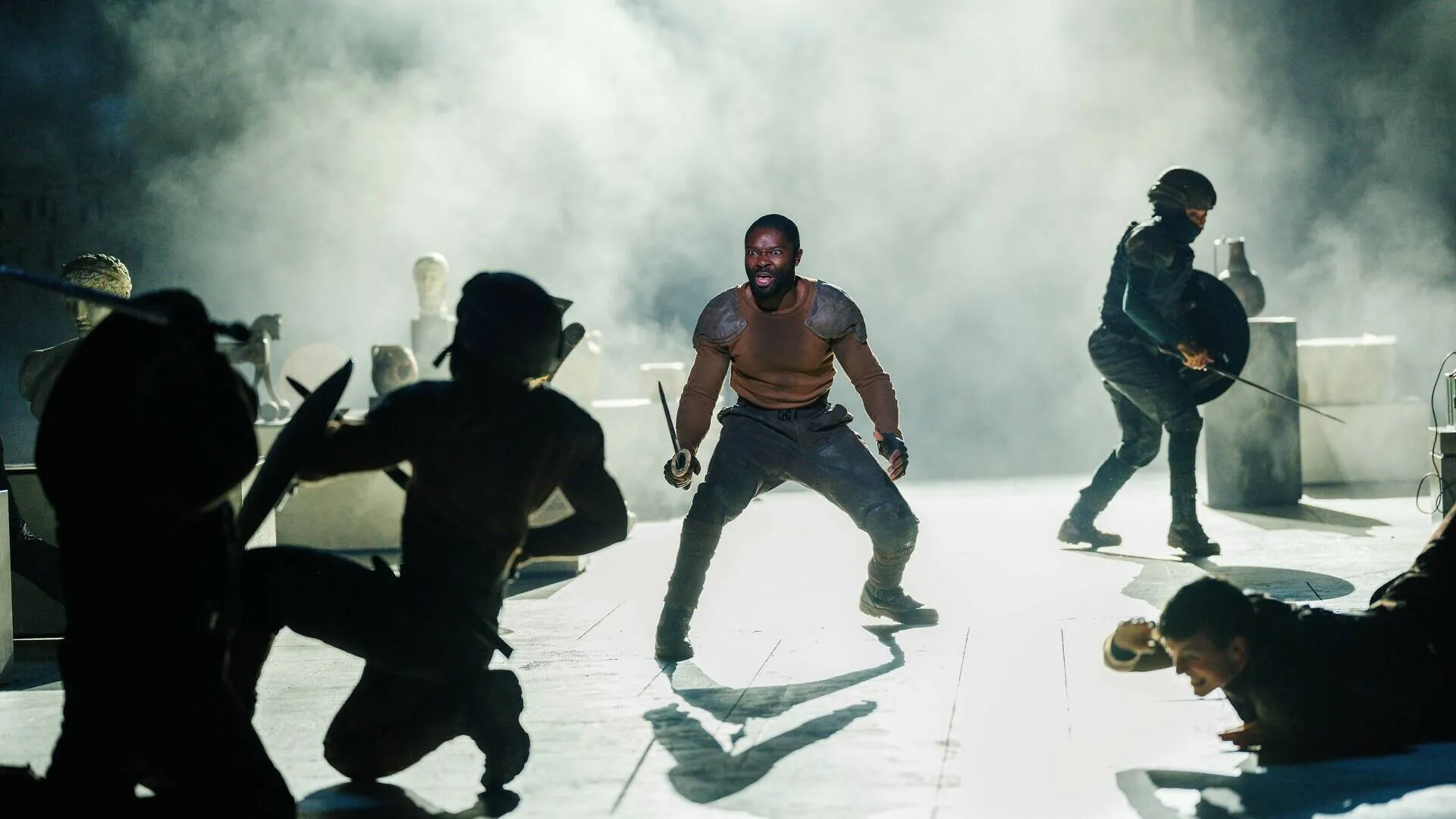
Coriolanus (2024, dir. Lyndsey Turner and ft. David Oyelowo): 

The entire production is excellent, and David Oyelowo has an electrifying performance. He and Ralph Fiennes approach the role rather differently—Ralph Fiennes’s Coriolanus is colder and more contemptuous, David Oyelowo’s is proud, hard, inflexible, unable to be false to his nature, unable to do anything but play the man he is—the pride is still there, but he is more sympathetic—he is a great soldier, not a great politician; a great fighter, not a great orator. The line “There is a world elsewhere” is also different in their performances—Ralph Fiennes says it quietly, it’s a sad line, a bitter line; David Oyelowo shouts the line with ferocity, it’s a defiance and a threat, it’s terrifying—both work very well. 

The scene where Volumnia comes to persuade Coriolanus to lay down his arms and stop destroying Rome is so good, especially when he says “O Mother, Mother, what have you done?”. This, I have always thought, is the most fascinating mother-son relationship in Shakespeare. 

Great play, great production. 


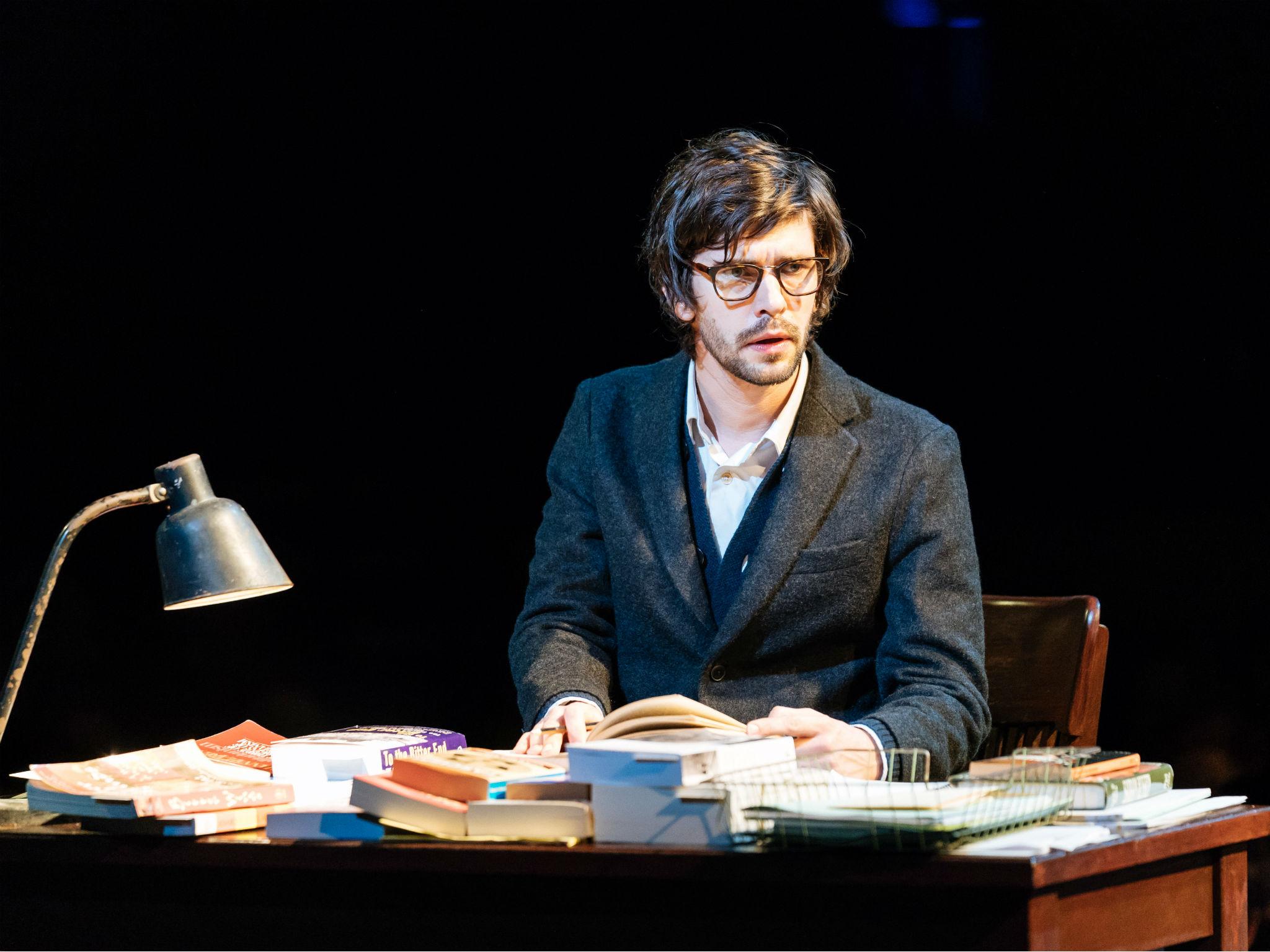
Julius Caesar (2018, dir. Nicholas Hytner and ft. Ben Whishaw): 

Like his Othello production (with Adrian Lester and Rory Kinnear), Nicholas Hytner also has the cast of Julius Caesar in modern dress. The difference is that here he emphasises his contemporary approach—a few choices are rather questionable, such as the songs or the political slogan “Do this!” or the appearance of Julius Caesar wearing a red cap with white letters—but overall, it is a very good production. A large part of it is thanks to Ben Whishaw. His Brutus is a bookish intellectual, who speaks of ideals and thinks in abstract terms, persuading himself that he must kill Caesar to save Rome but not thinking about the next step—Shakespeare’s Brutus, of course, is not just an idealistic man, he is proud and hypocritical and conceited—and we can see all that in Ben Whishaw’s performance, especially in the scene where he chastises Cassius (here female) for her “itching palm” and corruption.  

I also like Michelle Fairley as Cassius, who plays the role with intensity and persuasiveness. It doesn’t bother me that Cassius, Casca, and a few others are changed into women—look at social media, look at all the women today embracing violence and yearning for revolution—I would say it works rather well that in this contemporary production, a few of the conspirators are women, that Cassius, the one that manipulates Brutus into killing Caesar, is a woman. Cassius is calculating and manipulative and dishonest, but at the same time, Cassius’s love for Brutus is genuine—I do think Michelle Fairley conveys very well the contradictions in Cassius’s character. 

I didn’t realise it was the Ides of March when I decided to watch Julius Caesar


Both productions are available on National Theatre at Home, and you all should watch them. 

Thursday, 13 March 2025

On watching Shakespeare

1/ The more Shakespeare I watch, the more convinced I am that it’s essential to both read and watch Shakespeare. 

Read, to savour the poetry and have our own interpretations. Watch, to see different interpretations and approaches and perhaps gain a deeper understanding of the plays. 

For instance, the Ian McKellen – Judi Dench production shaped my interpretation of the Macbeths. The Winter’s Tale I have always loved, but I didn’t quite see the point of Autolycus and thought the play lacked harmony until watching the Antony Sher production (with Ian Hughes playing Autolycus). The Taming of the Shrew appears misogynistic when performed as serious drama like the BBC production with John Cleese, but it is a romp when the ACT goes for commedia dell’arte and casts Marc Singer and Fredi Olster, a great match in wit, energy, and magnetism (also, Marc Singer is hot). And so on. 


2/ One fun thing about watching different productions is that you can enjoy different aspects of them. 

Not counting Ran and the Kozintsev film, I have seen 5 different versions of King Lear: the Michael Buffong production from 2016 (ft. Don Warrington), the Jonathan Miller one from 1982 for the BBC (ft. Michael Hordern), the Michael Elliott one from 1982 (ft. Laurence Olivier), the 1971 Peter Brook film (ft. Paul Scofield), and the Jonathan Munby one from 2018 (ft. Ian McKellen). 

Don Warrington, Michael Hordern, and Ian McKellen are all wonderful as Lear.

The best Goneril? Rakie Ayola (2016). 

The best Regan? Diana Rigg (1983). 

The best Edgar? Anton Lesser (1982). 

The best Edmund? Robert Lindsay (1983). 

The best Fool? Miltos Yerolemou (2016). 

The best Cordelia? Brenda Blethyn (1982). 

The best Oswald? Thomas Coombes (2016). 

In the 2018 production, next to the magnificent Ian McKellen, the cast is lacklustre and uninspired, but I like that Kirsty Bushell does something different—she explicitly portrays Regan as sexually aroused by violence. 


3/ You know what, now that I have seen 4 different productions of Othello and see 3 very different but all brilliant Iagos (Ian McKellen, Bob Hoskins, and Rory Kinnear), I would say that Shakespeare doesn’t need to be updated or subverted or made “accessible to modern audiences”. Race-bending or gender-swapping is not necessarily a problem: Don Warrington and David Oyelowo are excellent as Lear and Coriolanus respectively, the productions respect the texts and don’t make a point about the actors being black; an Othello in which Othello is white and the rest is black is an interesting idea; an Othello in which Iago is black also sounds like an interesting idea, as it brings the two characters closer to each other and the plot even more disturbing… But too often, you can tell the directors make certain choices only for the sake of being “modern” or “bold” or “subversive”, you can tell they do certain things because they want to be “inclusive” or impose their ideology or make a political statement, you can tell they have no respect for and most likely no deep understanding of Shakespeare. 

Take the upcoming production of Cymbeline at the Globe: Imogen is now black, Cymbeline is turned into a black woman, Posthumus becomes an Arab woman—what’s the point?—you can tell there’s no thinking behind this, nothing but an urge to be “subversive” and to mess with the play, something irritating enough with oft-performed plays and much worse with a lesser-known work such as Cymbeline.


4/ Some theatre people seem to think they need to “update” Shakespeare, they need to change the race or swap the gender or add sign language or bring in deaf actors or cut half the text or add some hip hop or just do anything different, because a straight production would be boring and say nothing new. But that’s wrong! There’s nothing like the pleasure of watching a great, serious Shakespeare production, like the David Oyelowo Coriolanus or the Adrian Lester Othello. It’s exhilarating! And we cannot assume that everyone knows the plays and has all seen straight productions before—some people’s first encounter with Shakespeare may be a production that messes with Shakespeare and it ruins the play for them.  


5/ Having expected the 2022 Othello (ft. Giles Terera) to be bad, I watched a few important scenes in it, out of morbid curiosity perhaps, and it’s so much worse than I thought. From the beginning, when images of past productions of Othello are projected onto the stage (with Orson Welles, Anthony Hopkins, etc. in blackface), you can tell that the director Clint Dyer’s only interested in making a political statement. Giles Terera as Othello and Paul Hilton as Iago are both awful—it’s the most amateurish, laughable Shakespeare production I have ever seen—in the murder scene for instance, Giles Tererea and Rosy McEwen (as Desdemona) both stood there speaking their lines, like two awkward amateurs not knowing what to do with their bodies, that I couldn’t care less when that Desdemona was getting killed. 

Shocking. 

And that is why, folks, we must read the plays—don’t judge Shakespeare by modern productions. 

Wednesday, 12 March 2025

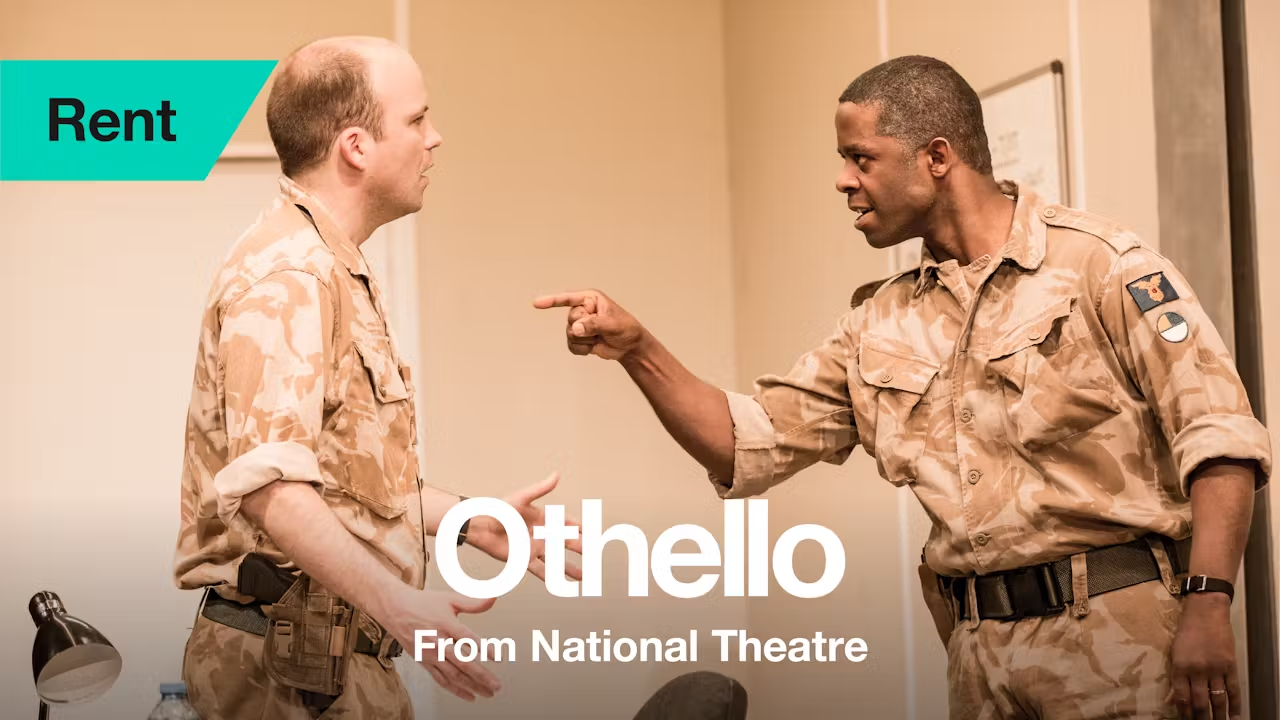
On the 2013 Othello, dir. Nicholas Hytner and ft. Adrian Lester


Othello is the Shakespeare play I have seen the most after King Lear: the 2019 production by Nigel Shawn Williams (with Michael Blake as Othello and Gordon S. Miller as Iago), the 1990 production by Trevor Nunn (with Willard White and Ian McKellen), the BBC production from 1981 by Jonathan Miller (with Anthony Hopkins and Bob Hoskins), and now this one. 

What is it about Othello that fascinates me so? Let me think. Some people reduce it to a play about jealousy. Some, to domestic violence and honour killing. Some, to race and racism. Of course it’s not so simple. I suppose I’m obsessed with the play partly because of my fascination with Iago’s malignity and manipulation, partly because of the character of Emilia and her transfiguration at the end of the play, and partly because I have grappled for years with the character of Othello and he still eludes me. What a play! 

I think I would say that the Nicholas Hytner production is my favourite version so far. At first, I didn’t particularly like Rory Kinnear as Iago. Ian McKellen is the one who most matches the Iago I had in my head reading the text: in front of others, he speaks softly and listens sympathetically, thus appearing trustworthy; alone, he’s cold, calculating, consumed with hatred for Othello. Bob Hoskins plays a very different Iago and that also works excellently: he has a matey persona, fun, genial, but sometimes chuckles to himself like a psychopath. Rory Kinnear is yet another Iago: a dull fellow who doesn’t stand out in the crowd but who in his dullness appears honest and trustworthy. When he poisons Othello’s ear, he plays so well the part of one who gains nothing from it, who doesn’t even want to say it. It is a different approach, and it works. 

The reason it is my favourite version so far is that the entire production—and the entire cast—is excellent. In the BBC production, Penelope Wilton doesn’t quite have the childlike qualities of Desdemona—the character is saintlike and at the same time childlike. The Trevor Nunn production has a perfect Desdemona (Imogen Stubbs) and a perfect Iago, but tilts too much towards Iago—the play is not about Iago but about Othello, about the destruction of his soul. It also messes up the killing scene, as I have written a few times before—the tension rises and rises and Othello must kill Desdemona when it gets to the highest pitch—there cannot be any pause, any interruption, any lingering—Othello kills her at the height of madness—the way Willard White and Imogen Stubbs play the scene not only destroy the climax of the play but ruin the entire tragedy. 

The production I have just seen doesn’t have this problem. Nicholas Hytner and his cast get perfectly right the pacing, tension, and pitch. The scene of Othello murdering Desdemona brought tears to my eyes, and when it got to the moment of Emilia screaming “Thou hast not half that power to do me harm/ As I have to be hurt”, I was crying. To look at the lifeless body of sweet, innocent Desdemona (Olivia Vinall), to hear the agony, the passionate anger of Emilia (Lyndsey Marshal), to see the horror on Othello’s face as he realises what he has done to his love and to his own soul—the play tore my heart to pieces. 

Excellent production.


PS: You can find both this one and the David Oyelowo Coriolanus on National Theatre at Home, which is available worldwide. Start with a month subscription. 

Tuesday, 11 March 2025

Primo Levi’s The Drowned and the Saved

I have been reading The Drowned and the Saved. Quite different from If This Is a Man, The Truce, and Moments of Reprieve. The other books are narratives, this one is analytical. And it is, as people say, Primo Levi’s angriest book. 

He writes about the hatred, cruelty, sadism, and “useless violence” of the Nazis; about the degradation, humiliation, and dehumanisation in the camps; about the things the inmates had to do to survive and the compromises they had to make; about the insurmountable gap between what people think it was like in Auschwitz and what it was actually like; about moral judgement and “the grey zone”; about the shame of Holocaust survivors; about memory; about bearing witness… 

Just so you get an idea of the writing, here’s an excerpt from the chapter “Useless Violence”: 

“You entered the Lager naked: more than naked, in fact, deprived not only of your clothing and shoes (which were confiscated) but also of all the hair on your head and body. […] A man who is naked and barefoot feels as if his nerves and tendons had been severed: he is defenceless prey. Clothing, even the filthy clothes that were handed out, even the shoddy wooden-soled clogs, is a tenuous but indispensable defence. Without it, a man no longer feels like a human being. He feels like a worm: naked, slow, ignoble, prostrate on the ground. He knows that he might be crushed at any moment.” 

(translated by Raymond Rosenthal) 

Lucid, sharp, unsentimental. Makes me think of that passage in King Lear: “unaccommodated man is no more but such a poor bare, forked animal as thou art.” 

There are so many great passages, so many haunting passages that it’s impossible to quote them all, so I’m just going to pick another one from the same chapter:

“Until September 1944, there were no children in Auschwitz: they were killed with gas upon arrival. After this date, entire Polish families began to arrive, families who had been arrested at random during the Warsaw uprising: all of them were tattooed, including newborns.

The procedure was relatively painless and lasted less than a minute. Its symbolic meaning was clear to everyone: this is an indelible sign that you will never get out of here alive; this is the mark branded on slaves and on livestock being sent to the slaughter, which is what you have become. You no longer have a name; this is your new name. The violence of the tattoo was gratuitous, an end in itself, a pure insult: wasn’t it enough to have three cloth numbers sewn on your pants, jacket, and winter coat? No, something more was needed, a nonverbal message, so the innocent would feel their sentence inscribed in their flesh. The tattoo also constituted a return to barbarism that was particularly upsetting to Orthodox Jews, since it is precisely in order to distinguish the Jews from the barbarians that tattooing is forbidden by Mosaic law (Leviticus 19:28).” 

I don’t think many people today—I’m especially thinking of those who compare other things to the Holocaust—are fully aware of its horrors. Not only so, Primo Levi says a few times throughout the book that the survivors cannot convey the worst of the camps—they did not touch bottom:  

“Let me repeat that we, the survivors, are not the true witnesses. This is a troublesome notion that I became aware of gradually by reading other people’s memoirs and rereading my own years later. We survivors are an anomalous and negligible minority. We are the ones who, because of our transgressions, ability, or luck, did not touch bottom. The ones who did, who saw the Gorgon, did not come back to tell, or they came back mute. But it is they, the “Muselmänner,” the drowned, the witnesses to everything—they are the ones whose testimony would have had a comprehensive meaning. They are the rule, we are the exception.” (from the chapter “Shame”) 

It is an intense book, one of the most powerful books I have ever read. The great thing about Primo Levi is that he doesn’t only describe his experiences, he ponders and makes one think about evil, about tyranny, about degradation, about hopelessness, about senseless violence, about senseless kindness (to use Vasily Grossman’s phrase in Life and Fate), about moral judgement, about outsiders’ inability to understand, about what it means to be human, and so on. It is a book everyone should read. 

Monday, 3 March 2025

Goethe’s Faust, Part 1

I read the verse translation by Philip Wayne. 


1/ The first interesting thing to observe is that in Goethe’s play, Faust doesn’t appear first. In Christopher Marlowe’s Doctor Faustus, we do have the character of Chorus introducing the main character and providing us the context, but right afterwards Marlowe brings us into Faustus’ study. That is not the case in Goethe’s play. Goethe’s Faust begins in a “meta” way—the director, the poet, and the comedian talk about the play and its writing—then we have a scene in Heaven and see Mephistopheles and his intentions before meeting Faust. That shifts the focus.   


2/ I don’t know how close the translation is, but I enjoyed it—I liked that there’s rhyme.  

“FAUST […] The spirit’s splendour, in the soul unfurled, 

Is ever stifled with a stranger stuff. 

High values, matched with good things of this world, 

Mocking recede, and seem an airy bluff. 

Our nobler veins, the true, life-giving springs, 

Are choked with all the dust of earthy things.

[…] Shall I then rank with gods? Too well I feel 

My kinship with the worm, who bores the soil, 

Who feeds on dust until the wanderer’s heel 

Gives sepulture to all his care and toil…” (p.52 in my Penguin copy)  

Faust gets the best lines, naturally: 

“… But let not mortal troubles cast their shades, 

Before this hour of sweet content has run. 

Mark, now, the glimmering in the leafy glades, 

Of dwellings gilded by the setting sun. 

Now slants the fiery god towards the west, 

Hasting away, but seeking in his round 

New life afar: I long to join his quest, 

On tireless wings uplifted from the ground. 

[…] And now at length the sun-god seems to sink, 

Yet stirs my heart with new-awakened might, 

The streams of quenchless light I long to drink, 

Before me day, and, far behind, the night, 

The heavens above me, and the waves below: 

A lovely dream, but gone with set of sun…” (p.66) 

I couldn’t help thinking however that Faust felt like it’s meant to be read more than seen. Many long speeches—like some speeches in Spanish Golden Age plays—would feel rather awkward for the stage. This is very different from Shakespeare. As I noted before in my blog post about Tirso de Molina, the long speeches in Shakespeare are either rhetoric (a character trying to persuade another character or a group), or streams of thoughts showing the character’s process of thinking. In other (pre-Ibsen, pre-Chekhov) playwrights I have read including Goethe, the long speeches are often just the playwright writing some poetry. Some speeches in Faust are indeed him doing some thinking (such as his pondering over the line “In the beginning of the Word” before Mephistopheles’s appearance), but a lot of the long speeches are basically just Goethe writing poetry. 

(A side note: it’s when you read plays that are great poetically but undramatic and unstageable that you realise how stupid it is to believe that Shakespeare, who combined such great poetic and dramatic gifts, was an aristocrat sitting at court rather than, as Shakespeare was, a theatre man). 


3/ One problem with reading Faust in translation is that I cannot see its influence—I do not know which lines and phrases have entered the German language. Another problem is that when I come across something like “the dogs of war” (p.59) or “’Tis I for whom the bell shall toll” (p.87), I have no idea if it’s Goethe or the translator who is referencing Shakespeare and Donne. I know Goethe loves Shakespeare, but it may just be a “remembrance of things past” situation. 


4/ Faust goes in a direction I didn’t expect. 

“FAUST […] I have, I grant, outdistanced all the others, 

Doctors, pedants, clergy and lay-brothers; 

All plague of doubts and scruples I can quell, 

And have no fear of devil or of hell, 

And in return am destitute of pleasure, 

Knowing that knowledge tricks us beyond measure, 

That man’s conversion is beyond my reach, 

Knowing the emptiness of what I teach…” (p.43) 

That’s Faust when we see him the first time, bemoaning the emptiness of his knowledge. He is depressed: 

“FAUST […] And shall I wonder why my heart 

Is lamed and frightened in my breast, 

Why all the springs of life that start 

Are strangely smothered and oppressed? 

Instead of all that life can hold 

Of Nature’s free, god-given breath, 

I take to me the smoke and mould

Of skeletons and dust and death…” (p.45) 

Why does he make a pact with the devil? 

“FAUST Have you not heard?—I do not ask for joy. 

I take the way of turmoil’s bitterest gain, 

Of love-sick hate, of quickening bought with pain. 

My heart, from learning’s tyranny set free, 

Shall no more shun distress, but take its toll 

Of all the hazards of humanity, 

And nourish mortal sadness in my soul. 

I’ll sound the heights and depths that men can know, 

Their very souls shall be with mine entwined, 

I’ll load my bosom with their weal and woe, 

And share with them the shipwreck of mankind.” (p.89-90) 

But once he has power, as Mephistopheles does whatever he wants, the thing he wants is a lover—Margareta (or Gretchen). 

“FAUST […] To cut the story short, I tell you plain, 

Unless her sweet young loveliness has lain 

Within my arms’ embrace this very night, 

The stroke of twelve shall end our pact outright.” (p.122) 

That could very well be the effect of the potion Mephistopheles previously gave Faust, as part of the plan to corrupt and destroy him—my surprise is that the affair with Margareta dominates the play, that love and lust are Mephistopheles’s way of ruining Faust—it’s very different from Marlowe’s version.  

(But then this is the man who wrote The Sorrows of Young Werther, which I recently read). 


5/ I don’t have much to say about Faust, as I don’t think I got much out of it in my first reading. 

Philip Wayne makes a good point though, when he says: 

“[Goethe’s Mephistopheles] is the world’s most convincing portrait of Satan, and cynicism, scoffing, negation, is the key-note of his intellectuality.” (Introduction) 

Thursday, 27 February 2025

On the 2018 King Lear, dir. Jonathan Munby and ft. Ian McKellen

How many versions of King Lear have I seen? 

If we exclude Ran (a loose adaptation) and the Kozintsev film (in Russian), 5: the Michael Buffong production from 2016 (ft. Don Warrington), the Jonathan Miller one from 1982 for the BBC (ft. Michael Hordern), the Michael Elliott one from 1982 (ft. Laurence Olivier), the 1971 Peter Brook film (ft. Paul Scofield), and now this one. 

Ian McKellen is excellent as Lear—if Don Warrington’s Lear is a monumental character striving against cosmic forces, Ian McKellen’s Lear, like Michael Hordern’s, is a frail and feeble man in a domestic drama, betrayed by his ungrateful daughters—his performance emphasises the theme of old age and mortality in Shakespeare’s play. One of the finest scenes in the production is between the mad Lear and the blind Gloucester. Look at Lear—an old man, a frail man—as he says: 

“Ay, every inch a king!

When I do stare, see how the subject quakes....”

It is one of the greatest scenes in King Lear and also one of the hardest to play, because of the mix of tragedy and comedy. 

“LEAR […] We came crying hither;

Thou know’st, the first time that we smell the air

We wawl and cry. I will preach to thee. 

GLOUCESTER Alack, alack the day!

LEAR When we are born, we cry that we are come

To this great stage of fools…”  

The scene of Lear holding Cordelia’s body also brought tears to my eyes—“Why should a dog, a horse,”—Ian McKellen’s voice breaks—“a rat have life, and thou no breath at all?”.

It is a great performance. 

And yet, the production as a whole doesn’t quite work for me. I’m not sure why. Perhaps King Lear looks wrong in modern dress. Perhaps the problem is simply the rest of the cast—in the Michael Buffong production, I love Miltos Yerolemou as the Fool, Rakie Ayola as Goneril, Debbie Korley as Regan, Thomas Coombes as Oswald; in the Jonathan Miller version, I love Penelope Wilton as Regan, Brenda Blethyn as Cordelia, Anton Lesser as Edgar; in the Michael Elliott production, I love Robert Lindsay as Edmund and Diana Rigg as Regan (even if the whole thing fails because Laurence Olivier’s performance as Lear lacks power)—in this production, none of the rest of the cast delivers a strong, memorable performance, none leaves a lasting impression. Danny Webb as Gloucester, Claire Price as Goneril, Kirsty Bushell as Regan, Anita-Joy Uwajeh as Cordelia, Luke Thompson as Edgar, James Corrigan as Edmund, Lloyd Hutchinson as the Fool, and so on—they’re all pale, all weak, all forgettable. The only one who does something that could be interesting is Kirsty Bushell—more than other Regans I have seen, she explicitly portrays the character as sexually aroused by violence—it’s perhaps unfair for her that I have seen Diana Rigg and Penelope Wilton in the role, but at least she takes a different approach, at least she makes one think about Regan’s sadism. 

The rest are just bland. Not awful as such, just lacklustre and uninspired. 

Should you watch it? Perhaps, for Ian McKellen, but that’s all. 

Instead, watch Lyndsey Turner’s Coriolanus from 2024, with David Oyelowo in the titular role. Now that is a magnificent production, one that makes you feel exhilarated, one that makes you think great Shakespeare productions still exist, one that makes you realise that, despite ideology and all the other nonsense, Shakespeare will prevail.  

Sunday, 23 February 2025

David Copperfield: some thoughts on characters (with mention of Tolstoy)

1/ Now that I’ve finished reading David Copperfield after about 6 weeks (though I did take a break and spent a few days reading The Sorrows of Young Werther) and so far mostly written about Dickens’s writing style, I should jot down some thoughts on the characters. 

The greatest character in David Copperfield is, without doubt, Uriah Heep. Repulsive Heep! Fawning, obsequious Heep! Scheming, villainous Heep! From his physical attributes to his voice, to his personality, to his evil—this is one of the most memorable villains in fiction.

After that, the most brilliant characters in the book are Betsey Trotwood, Miss Mowcher, and Rosa Dartle. The Murdstones and the Micawbers and Mr Dick are also very good—only Dickens could create such characters and give them so much life, so much presence—but I especially love these three. All those detractors who sneeringly say Dickens only creates caricatures, that he cannot write characters with depth—have they not seen Betsey Trotwood? And Miss Mowcher? As we often see in Dickens, Betsey Trotwood first appears as a caricature and gradually becomes a complex, multifaceted character: when we first see her, she’s an eccentric woman, an intimidating woman who terrifies everyone and keeps yelling “Donkeys!”, fighting donkeys off the little piece of green before her house; but she changes, she grows, she develops; the intimidating woman turns out to be a generous great aunt, a pitiful wife, a wonderful woman, and she is especially lovable in her gentleness towards Dora. 

Dickens does something similar with Miss Mowcher, except that it’s more extraordinary: Betsey Trotwood has lots of space to develop throughout the novel, whereas Miss Mowcher is a minor character who has about two big scenes. When we first see her, she’s a dwarf hairdresser and a friend of James Steerforth—she’s witty, she’s talking nonstop, she’s captivating David’s attention and also ours. 

“… ‘No,’ said Steerforth, before I could reply. ‘Nothing of the sort. On the contrary, Mr Copperfield used—or I am much mistaken—to have a great admiration for her.’

‘Why, hasn’t he now?’ returned Miss Mowcher. ‘Is he fickle? Oh, for shame! Did he sip every flower, and change every hour, until Polly his passion requited?—Is her name Polly?’

The Elfin suddenness with which she pounced upon me with this question, and a searching look, quite disconcerted me for a moment.

‘No, Miss Mowcher,’ I replied. ‘Her name is Emily.’

‘Aha?’ she cried exactly as before. ‘Umph? What a rattle I am! Mr. Copperfield, ain’t I volatile?’

[…] ‘Very well: very well! Quite a long story. Ought to end “and they lived happy ever afterwards”; oughtn’t it? Ah! What’s that game at forfeits? I love my love with an E, because she’s enticing; I hate her with an E, because she’s engaged. I took her to the sign of the exquisite, and treated her with an elopement, her name’s Emily, and she lives in the east? Ha! ha! ha! Mr Copperfield, ain’t I volatile?’” (ch.22) 

She has such a vivid existence that I would be happy even if she stayed the same. But later, Dickens removes the layer and lets us see the real Miss Mowcher: 

“Miss Mowcher sat down on the fender again, and took out her handkerchief, and wiped her eyes.

‘Be thankful for me, if you have a kind heart, as I think you have,’ she said, ‘that while I know well what I am, I can be cheerful and endure it all. I am thankful for myself, at any rate, that I can find my tiny way through the world, without being beholden to anyone; and that in return for all that is thrown at me, in folly or vanity, as I go along, I can throw bubbles back. If I don’t brood over all I want, it is the better for me, and not the worse for anyone. If I am a plaything for you giants, be gentle with me.’” (ch.32) 

A magnificent scene, an unforgettable character. 

But even with the characters called caricatures, the ones who don’t have another side and don’t change, Dickens makes them so individual and gives them such a vivid existence that they cease to be mere types. Just look at them. Mr Murdstone is not just a cold, hard man who breaks his wives and reduces them to a state of imbecility. Mr Micawber is not just a poor man who keeps getting into financial troubles. Dickens gives them all individual voices and phrases, and thickens his characterisation with such details, such “unnecessary” details that they feel full of life within the world of his book. 

Among those characters who don’t change, who don’t have another side is Rosa Dartle. Throughout the novel, she remains the same as a haughty, snobbish, and bitter woman who loves James Steerforth and has burning hatred in her heart for everyone else, especially for Emily but also for Steerforth. But she suffers, and that pain gives life to the character. 

Later in Little Dorrit, Dickens goes further as he creates several characters—mostly women—who nurse a grievance and destroy their own lives because of it, such as Miss Wade, Fanny Dorrit, Harriet Beadle, Mrs Clennam, and so on. They’re in a prison of their own making. 


2/ I have called Dora Spenlow insufferable, and she is, but she is redeemed in her last moments—she gains awareness at last, and it’s a moving scene.

In an earlier blog post, I wrote that the second half of the book was less enjoyable. I still think that way, despite Uriah Heep. There’s a magical quality, a fairytale-like quality to the childhood section of the book that is absent in the adulthood section. More importantly, I think the adulthood section suffers because of Dora and because of David Copperfield. 

Let’s compare Dickens and Tolstoy. Levin is Tolstoy’s self-insert in Anna Karenina—I know some readers don’t like Levin, but this is not a flattering portrayal of himself—Levin sometimes gets silenced in debates and cannot argue his points, he recoils at his brother’s suffering and becomes helpless, he’s hot-tempered, he keeps questioning everything and continues to question even after his conversion at the end of the book, he has many flaws… 

If Pierre, as some people say, is Tolstoy’s self-insert in War and Peace, that is also not a flattering portrait—Pierre may be a good man, a lovable man, but he initially engages in all sorts of debauchery; he is weak-willed, naïve, idealistic, and impressionable; he jumps from one idea to another… I think it’s better to say that Tolstoy puts himself into Pierre, Andrei, and Nikolai, and all these characters are flawed and full of weaknesses—Andrei can even be quite cold and cruel. 

I’d go even further: I’d say that there’s something of Tolstoy himself in the main character of The Kreutzer Sonata. Many people hate this novella because they see the similarities in some ideas between the two, because they see Tolstoy as a misogynist. But Tolstoy is obviously not Pozdnyshev: he’s not a (wife) murderer, and Pozdnyshev would never be able to write Anna Karenina. What Tolstoy does in The Kreutzer Sonata is that he examines his own ideas about love, sex, men and women, and pushes his own ideas to the extreme—to use Ibsen’s phrase, he sits in judgement on himself—and he is utterly brutal about it. 

Now if we go back to Dickens, David Copperfield is a semi-biography and I think we would all agree that David is a nice, tame, whitewashed version of Dickens. The adult David is so dull because he’s too good. Yes, he has some small flaws, he’s a helpless husband just as Dora’s a helpless wife, but it’s tame. The real Dickens was awful to his wife. 

I’m of course not dismissing David Copperfield because of Dickens’s personal life—it’s in many ways a wonderful novel—I’m also not wishing David Copperfield had been a different book, truer to life—I’m merely pointing out what I saw as a difference between Dickens and Tolstoy. 

Tuesday, 18 February 2025

David Copperfield: “like a convulsive fish”

One of the best things about Dickens is his imagery, especially the way he uses imagery for characterisation.

Sometimes it’s just an amusing image: 

“… the room door opened, and Mrs. Waterbrook, who was a large lady—or who wore a large dress: I don’t exactly know which, for I don’t know which was dress and which was lady—came sailing in.” (ch.25) 

Or: 

“I found Mr Waterbrook to be a middle-aged gentleman, with a short throat, and a good deal of shirt-collar, who only wanted a black nose to be the portrait of a pug-dog. He told me he was happy to have the honour of making my acquaintance; and when I had paid my homage to Mrs Waterbrook, presented me, with much ceremony, to a very awful lady in a black velvet dress, and a great black velvet hat, whom I remember as looking like a near relation of Hamlet’s—say his aunt.

Mrs Henry Spiker was this lady’s name; and her husband was there too: so cold a man, that his head, instead of being grey, seemed to be sprinkled with hoar-frost.” (ibid.) 

But sometimes, with some imagery, Dickens conveys everything you need to know about a character, like this sketch of Miss Murdstone, for example: 

“She brought with her two uncompromising hard black boxes, with her initials on the lids in hard brass nails. When she paid the coachman she took her money out of a hard steel purse, and she kept the purse in a very jail of a bag which hung upon her arm by a heavy chain, and shut up like a bite. I had never, at that time, seen such a metallic lady altogether as Miss Murdstone was.” (ch.4) 

Miss Rosa Dartle: 

“She was a little dilapidated—like a house—with having been so long to let; yet had, as I have said, an appearance of good looks. Her thinness seemed to be the effect of some wasting fire within her, which found a vent in her gaunt eyes.” (ch.20) 

Mr Waterbrook: 

“I was much impressed by the extremely comfortable and satisfied manner in which Mr Waterbrook delivered himself of this little word ‘Yes’, every now and then. There was wonderful expression in it. It completely conveyed the idea of a man who had been born, not to say with a silver spoon, but with a scaling-ladder, and had gone on mounting all the heights of life one after another, until now he looked, from the top of the fortifications, with the eye of a philosopher and a patron, on the people down in the trenches.” (ch.25) 

Is there a better way to convey the hardness of Miss Murdstone, the gaunt look of Miss Dartle, or the self-satisfaction of Mr Waterbrook? 

You don’t find passages like this in, say, Henry Fielding: 

“They both had little bright round twinkling eyes, by the way, which were like birds’ eyes. They were not unlike birds, altogether; having a sharp, brisk, sudden manner, and a little short, spruce way of adjusting themselves, like canaries.” (ch.41) 

Those are the Misses Spenlow, Dora’s aunts. 

“… these little birds hopped out with great dignity; leaving me to receive the congratulations of Traddles, and to feel as if I were translated to regions of exquisite happiness. Exactly at the expiration of the quarter of an hour, they reappeared with no less dignity than they had disappeared. They had gone rustling away as if their little dresses were made of autumn-leaves: and they came rustling back, in like manner.” (ibid.) 

Especially good is the creation of Uriah Heep. Even the name is brilliant. Heep. Rhymes with creep. Dust heap. Cheap. Uriah Heep has a striking presence from the start, his face described a few times as “cadaverous”, his hands “skeleton hands”.   

“As I came back, I saw Uriah Heep shutting up the office; and feeling friendly towards everybody, went in and spoke to him, and at parting, gave him my hand. But oh, what a clammy hand his was! as ghostly to the touch as to the sight! I rubbed mine afterwards, to warm it, and to rub his off.

It was such an uncomfortable hand, that, when I went to my room, it was still cold and wet upon my memory.” (ch.15) 

What disgust! The narrator describes the hand again later: 

“After shaking hands with me—his hand felt like a fish, in the dark—he opened the door into the street a very little, and crept out, and shut it, leaving me to grope my way back into the house…” (ch.16) 

He also compares Uriah Heep to a fish again later: 

“… he cried; and gave himself a jerk, like a convulsive fish.” (ch.25)  

The second half of David Copperfield is—I think most people would agree—less enjoyable because the adult David is lifeless and dull, and his love Dora Spenlow is one of the most insufferable characters on God’s green earth. But it is saved—again I think many would agree—by the brilliant characterisation of Uriah Heep, one of the most memorable characters in fiction, obsequious, dishonest, scheming, vile, and just repulsive. 

“… Uriah writhed with such obtrusive satisfaction and self-abasement, that I could gladly have pitched him over the banisters.” (ibid.) 

The pair of Uriah and Mrs Heep together is even better—look at the imagery: 

“Presently they began to talk about aunts, and then I told them about mine; and about fathers and mothers, and then I told them about mine; and then Mrs Heep began to talk about fathers-in-law, and then I began to tell her about mine—but stopped, because my aunt had advised me to observe a silence on that subject. A tender young cork, however, would have had no more chance against a pair of corkscrews, or a tender young tooth against a pair of dentists, or a little shuttlecock against two battledores, than I had against Uriah and Mrs Heep. They did just what they liked with me; and wormed things out of me that I had no desire to tell, with a certainty I blush to think of, the more especially, as in my juvenile frankness, I took some credit to myself for being so confidential and felt that I was quite the patron of my two respectful entertainers.” (ch.17) 

Dickens is wonderful. 

(I am now back in London, having returned from the US).