Pages

Sunday, 11 May 2025

The Winter’s Tale revisited: thoughts on the play and some commentaries

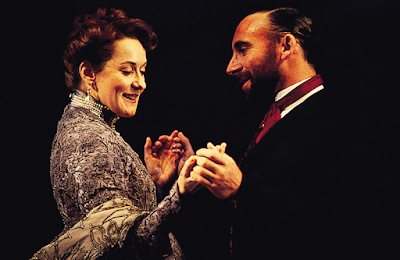
Alexandra Gilbreath as Hermione and Antony Sher as Leontes (my favourite production). 


I have just reread The Winter’s Tale. What a wonderful play! The final scene is one of the greatest, most moving scenes in Shakespeare, but I forgot that the play as a whole was like a fairytale, including the figure of the tyrant. I also picked up The Winter’s Tale Casebook, a collection of essays edited by Kenneth Muir. 


1/ My top 5 is Macbeth, Othello, King Lear, The Winter’s Tale, Measure for Measure. Is it not strange, when you think about it, that the last three plays took centuries to be understood and appreciated? King Lear is now generally recognised as the highest peak of Shakespeare, but Measure and Measure and The Winter’s Tale are still not particularly popular even though their status has now risen among some Shakespeare fans and critics. 

What is it about the development of taste over the centuries that early critics didn’t see the power of The Winter’s Tale but modern critics (and I) do? I can’t help wondering. But it’s amusing to see that Charlotte Lennox (the author of The Female Quixote) is among the ones insensible to the beauty of the resurrection scene and of the play as a whole. 

The usual complaints are these: 

a) The plot is improbable—Charlotte Lennox says “what reason could [Hermione] have for chusing to live in such a miserable confinement when she might have been happy in the possession of her husband’s affection and have shared his throne?”, but she’s not the only one expressing such sentiments; 

b) Leontes’s jealousy lacks a motive—Robert Bridges for example says “the jealousy of Leontes is senseless, whereas in the original story an adequate motive is developed.” 

The latter is not a surprise. Detractors—Tolstoy for instance—sometimes complain about the lack of motive in Shakespeare. But that’s his thing—it’s not only that Shakespeare doesn’t give motive to his characters (in some cases), sometimes he perversely removes the motive stated in his source story. I myself see nothing wrong or unconvincing about it. Shakespeare is fascinated by jealousy and explores it throughout his career, and in his final play about jealousy, pushes to the extreme the idea “They are not ever jealous for the cause/ But jealous for they are jealous; ’tis a monster/ Begon upon itself, born on itself.” 

As for the former, there are two interpretations of the resurrection scene: the mythic one and the realistic one. I’m inclined to go with the realistic reading, but the vision of resurrection in the final ending still fills me with awe and wonder—that she lives in isolation after 16 years isn’t illogical to me—do people forget that Leontes for no reason accused her of not only adultery but also treason? That he imprisoned her and put her on trial? That he caused the death of their son Mamillius? That he banished Perdita and she doesn’t know when she can ever see her daughter again? Leontes needs penance and Paulina is there to make sure he never forgets what he has done. 


2/ I like Robert R. Price’s remark from 1890: 

“And so, in dramatic art, The Winter’s Tale is, I think, Shakespeare’s experiment in constructing a diptych. This experiment no poet, to my knowledge, had ever tried before him, and none that I know of has ever tried it since. Thus, received as a bold experiment in dramatic art, The Winter’s Tale may well stand last in time of the works of Shakespeare’s genius, the final stretching forth of that genius to accomplish a design never before essayed. 

The play is, then, as I conceive it, a genuine diptych in construction. It is made up of two plays, the first a tragedy and the second a comedy, so joined together in the middle as to produce a final result that belongs equally to each.” 

That is indeed something that makes The Winter’s Tale different from everything else by Shakespeare, and most narratives in general. And I love that. When I first read The Winter’s Tale, I thought it lacked harmony even though I loved the play—the shocking rage and intensity seem to appear out of nowhere then vanish into thin air, the play slows down, the mood changes—but I no longer find it odd after watching the Antony Sher production—the two parts go together perfectly well, and the ending is wonderful. It’s a bold experiment that shows Shakespeare’s mastery of mood, pacing, and structure. 

But how does he do it successfully? I like that Ernest Schanzer writes in his essay “The Structural Pattern” that “the two halves of the play consist not only of a series of contrasts but also a series of parallels.” In both halves, Shakespeare paints a picture of harmony and happiness that is violently interrupted by a tyrant. In both halves, Perdita is “committed to the mercy of the waves.” In both halves, Camillio plays the same role of helping the victim of the king escape. In both halves, there’s a climax with Hermione in the centre. 

“The first half culminates in Hermione’s death, the second in her ‘resurrection’.” 


3/ Mark Van Doren says:

“Shakespeare disappoints our expectation in one important respect. The recognition of Leontes and his daughter takes place off stage; we only hear three gentlemen talking prose about it (v ii), and are denied the satisfaction of such a scene as we might have supposed would crown the play. The reason may be that Shakespeare was weary of a plot which already had complicated itself beyond comfort; or that a recognition scene appeared in his mind more due to Hermione, considering the age and degree of her sufferings, than to that ‘most peerless piece of earth’ Perdita.” 

“Our”? Speak for yourself! I don’t agree—the resurrection scene is more important—Shakespeare understands pacing and tension (better than anybody) and knows that two reunion scenes so close to each other would very much reduce the emotional impact—that’s why he leaves one offstage. 

In “Six Points of Stage-Craft”, Neville Coghill defends the scene of the gentlemen telling each other about the first reunion: 

“… in practice this scene is among the most gripping and memorable of the entire play. Whoever saw the production of it by Peter Brook at the Phoenix Theatre in 1951-2 will remember the excitement it created. I know of at least two other productions of the play in which this scene had the same effect, and generated a mounting thrill of expectation needed to prepare us for the final scene.” 


4/ In the same essay, Nevile Coghill defends the “Exit, pursued by a bear” scene, which many people have derided: 

“… [Shakespeare] deliberately underlined the juxtaposition of mood, achieved by the invention of the bear, in the speeches he put into the mouth of the Clown, grisly and ludicrous, mocking and condoling, from one sentence to another: 

[…]

If Shakespeare did not mean it that way, why did he write it that way? So far from being crude or antiquated, stage-craft such as this is a dazzling piece of avant-garde work; no parallel can be found for what, at a stroke, its effects; it is the transformation of tragedy into comedy; it symbolizes the revenge of Nature on the servant of a corrupted court; it is a thundering surprises; and yet those Naturals that are always demanding naturalism cannot complain, for what could be more natural than a bear?” 

That’s a good point. I have learnt to always assume that Shakespeare knows what he’s doing—sometimes one may think something seems wrong or something is a flaw, until one sees a critic defend it, or even better, sees a production which works perfectly, demonstrating again that Shakespeare understands drama better than anybody. 

In the essay Neville Coghill argues several times against S. L. Bethell, who calls the play naïve, antiquated, outmoded, etc. I especially like this point he makes about the final scene (and the fact that Shakespeare does the anachronistic thing of naming a contemporary man as the sculptor): 

“The spiritual meaning of the play in no way depends on [Hermione] being a Lazarus or an Alcestis. It is a play about a crisis in the life of Leontes, not of Hermione, and her restoration to him (it is not a ‘resurrection’) is something which happens not to her, but to him. He had thought her dead by his own hand (‘She I kill’d’, v i 7) and now finds her unexpectedly alive in the guardianship of Paulina. […] That is the miracle, it seems to me, for which Shakespeare so carefully prepared. 

It had to be a miracle not only for Leontes, but for the audience. His first dramaturgical job, then, was to ensure that the audience, like Leontes, should believe her dead. For this reason her death is repeatedly reasserted during the play by a number of characters, and accepted by all as a fact. Shakespeare’s next care was to give credentials to the statue. The audience must accept it as a statue, not a woman; so the Third Gentleman names its sculptor, an actual man, Giulio Romano; a novel trick to borrow a kind of authenticity from the ‘real’ world of the audience, to lend solidity to the imaginary world of the play; it seems to confer a special statueishness.” 

I like that. And this scene is one of the most wonderful and affecting scenes in Shakespeare.  


5/ In my first reading of The Winter’s Tale, I didn’t particularly like Autolycus. But now I do, partly thanks to Ian Hughes’s hilarious performance in the Antony Sher production, partly because Scott Newstok argues in How to Think Like Shakespeare: Lessons from a Renaissance Education that the character of an unrepentant thief is Shakespeare’s joke (The Winter’s Tale is based on Pandosto by Robert Greene, who is now mostly known for calling Shakespeare “an upstart crow, beautified with our feathers”), and partly because I now see him as part of the sun-burnt mirth of the second half of the play. 


Updated: 

My first blog post about the play is here. My post about the play and G. Wilson Knight is here

Saturday, 3 May 2025

On the narrowness of Jane Austen

A recent (stupid) conversation on the hellsite previously known as Twitter has made me realise something interesting. When it comes to range of characters and experiences in writing, the extreme of range would be Shakespeare, who seems to contain everyone and everything (also able to depict a wide range of characters though not as much as Shakespeare are, I would say, Tolstoy, Chekhov, Cao Xueqin); and the polar opposite in this regard would probably be Jane Austen. 

I mean, even compared to other great authors who write about domestic life, Jane Austen’s remarkably narrow: she mainly writes about the landed gentry; servants are neither heard nor seen; other races are not mentioned, except in the unfinished Sanditon; almost all the conversations between male characters take place with a woman present; her characters barely discuss politics or social issues; her novels only depict a tiny part of society; etc. She’s narrower than Henry James, Edith Wharton, George Eliot, even Charlotte Bronte (I’m thinking of Shirley and the Luddite uprisings). 

Isn’t it extraordinary then, how popular she is? Her novels are read and beloved and adapted around the world. And even though the majority of her readers and fans are women (and some philistines think Jane Austen’s novels are only for women), we know that Jane Austen is admired, even loved, by quite a few male writers and lovers of literature. Clearly there’s something universal about Jane Austen’s novels, about her themes of love and courtship and people misperceiving things and misunderstanding each other and misunderstanding themselves—these things happen to everybody regardless of background, regardless of race, regardless of nationality, regardless of gender, regardless of religion. And perhaps, it’s precisely because she leaves out discussions of politics and social issues and leaves out her own opinions that her novels have such wide appeal, that readers of different views and background can all claim her as their own (I have seen conservatives call her conservative and feminists call her feminist, for example). 

When I think about Shakespeare’s popularity and influence around the world and throughout history, it’s easy to understand as Shakespeare is so large and there’s a Shakespeare for everybody: those who don’t like tragedies can go for the comedies; those who don’t like comedies can go for the histories; those interested in politics have the Roman plays; those fond of fairies have A Midsummer Night’s Dream and The Tempest; those preoccupied with race have Othello and The Merchant of Venice; those interested in the subject of colonialism (and part of a national independence movement) find something in The Tempest, and so on and so forth. The wide appeal of Jane Austen’s novels, despite their narrowness, is in a sense more puzzling and thus more fascinating. 

What do you think? 

Monday, 28 April 2025

Shakespeare in Swahililand: what explains the appeal of Shakespeare around the world?

In a blog post from 2013, Himadri (Argumentative Old Git) wrote: 

“It is demonstrable that people who have grown up in very different cultures tend to hold very different values, and think very different thoughts: we are all inevitably products of the societies in which we grow up.

[…] And yet, we can and do respond, often very deeply, to works written in past times, when the values of society were very, very different from those we currently adhere to; we do respond to contemporary books written in countries with very different cultures. So how can this be possible? We tend to claim that these books still “relevant”, and they are “relevant” because, underneath it all, human nature remains the same; but unless we can specify clearly what we mean by “underneath it all”, I don’t know this is a very meaningful thing to say. 

[…] So the question that should be our starting point is not so much “Can we respond to works created in times and cultures very different from our own?”, but, rather, “Given that changes over time, and differences across cultures, are by no means superficial, how can we account for the fact that we do respond, often very deeply, to works from other times and from other cultures?”.” 

Under the comments, Tom (Wuthering Expectations) wrote: 

“I am skeptical of timelessness. Talking about the survival of “Shakespeare” conceals a lot of messiness. How do we know that different audiences, scattered through time and space, found the same aspects of King Lear valuable? Perhaps it is not the universality of a work of art that is important but its complexity. Since everyone, or every time, or every culture, is responding to something different in a work, the more meaningfully complex the work, the more likely it is to have something for everyone.”  

In the English-speaking world, I think the consensus is that Shakespeare’s greatest plays are King Lear, Hamlet, Macbeth, Othello, Twelfth Night—at least that’s my impression—and the most performed plays are A Midsummer Night’s Dream, Hamlet, Romeo and Juliet, Macbeth, and Twelfth Night (now for this I do have evidence). In Vietnam, Shakespeare is mostly associated with Romeo and Juliet and Hamlet. In East Africa, I have no statistics but the plays most mentioned in Shakespeare in Swahililand are Richard II, Julius Caesar, The Merchant of Venice. But you know what, I want statistics about which plays are most popular in each country, and I want the lists of the plays most performed vs the plays most written about. 

Anyway, to go back to the main point, Edward Wilson-Lee writes: 

“What, then, might be the nature of this universalism, this peculiar quality that repeatedly drew readers to his works? Part of this, of course, has to do with the breadth of Shakespeare’s canon and the relentless unmoralizing tone that can be found across his works, meaning that everyone can, to an extent, find their own Shakespeare. Stanley, Steere, Blixen, Farah, Nyerere and Tsegaye all turned to different plays or read the same plays in markedly different ways, in pursuit of a particular Shakespearean voice that spoke to them. This might be said to constitute a very weak form of universalism – a universalism born not of a shared and distinct experience but of mutual contemplation of something so vast and varied as to accommodate every point of view.” (ch.9) 

There is a Shakespeare for everybody: some people (like me) prefer the tragedies, some prefer the comedies, some prefer the histories or more political plays. I have always said that Shakespeare appeals to so many people, and such different people, because the plays themselves depict such a vast range of characters and present such a wide variety of views—it is because Shakespeare cannot be pinned down that readers and theatregoers keep getting drawn to his works.  

Edward Wilson-Lee also says: 

“For Auerbach, Shakespeare represents a pivotal moment in the history of the ‘mixed style,’ which adamantly refuses to separate the comic from the tragic, the everyday things of life from the sublime events by which we define our existence. […] Shakespeare seems a semi-divine ‘creator of man,’ as Pushkin and Haile Selassie suggested, because his writings never turn aside from the messy mixture of life; and in seeming like life itself, his works open themselves to as varied a reaction as life does.” (ibid.) 

There is always something comic in the tragedies, even in the darkest plays like King Lear, Timon of Athens, or Troilus and Cressida. There is always something dark in the comedies, even in the lightest plays like A Midsummer Night’s Dream, As You Like It, or A Comedy of Errors. And to this day, I still don’t know how Shakespeare achieves what he does at the end of Antony and Cleopatra: how the shallow, self-centred, tempestuous, theatrical, manipulative Cleopatra is turned into a quasi-mythological being in the final Act of the play.  

Sunday, 27 April 2025

Shakespeare in Swahililand by Edward Wilson-Lee


Shakespeare in Swahililand is an interesting read—I don’t know a lot about Africa—and looks to me to be a good response to the foolish notion that Shakespeare’s status is merely due to institutions of power and colonialism. 

Here’s an interesting fact: 

“… one of the first books printed in Swahili was a Shakespearean one. Not a play, mind you, but a slim volume of stories from Charles and Mary Lamb’s Tales from Shakespeare, published as Hadithi za Kiingereza (‘English Tales’) on the island of Zanzibar in the 1860s.” (Prelude) 

Oddly enough, the 4 stories include are The Taming of the Shrew (unusual choice), King Lear (great), The Merchant of Venice (great), and Timon of Athens (why???). 

As I don’t know a lot about Africa, the book is full of surprises like that. Did you know, for example, that the love of Shakespeare in East Africa was spread by Indian settlers? 

“… the Indian settlers also brought with them their love of Shakespeare – or rather, it should be said, their two loves of Shakespeare, equally intense but not quite the same. The first of these, which would come to East Africa later, was a scholar’s love of Shakespeare, which came about through long hours of intensive reading of the works and which led to a nineteenth-century cult of Shakespeare that placed him on the level with the Sanskrit poet Kalidas and saw him venerated by (among others) the Bengali poet and novelist Rabindranath Tagore. […] 

The other love of Shakespeare, the theatregoer’s love of his plots and characters, developed alongside the official culture in the popular theatres of northern India, beginning with the Parsi theatres in Maharashtra and accumulating (according to one commentator) 6000 different versions of Shakespeare plays in Indian languages. […] It was this Shakespeare that arrived with the travelling theatre troupes, which began including Mombasa and Zanzibar on an itinerary which had already included stops in other British colonial hubs such as Aden…” (ch.4) 

Edward Wilson-Lee writes at length about the Indian productions and the changes—let’s say the Indianisation of Shakespeare’s plays—and also some contemporary reviews of these productions in British papers (which were negative). 

“… it is these very liberties taken with Shakespeare’s texts, the liberties which so dismayed the reviewers from the Standard, that meant Shakespeare was a living voice to these audiences and not being watched simply to venerate some lifeless idol.” (ibid.)

This is an important point. And over the past 400 years, different cultures have adapted Shakespeare and created new works based on his plays. Verdi for instance created the operas Macbeth, Otello, and Falstaff. Kurosawa made Throne of Blood and Ran based on Macbeth and King Lear respectively. Disney’s The Lion King was inspired by Hamlet

Edward Wilson-Lee also writes about how Shakespeare speaks to people: 

“Ngugi [wa Thiong’o] remarks that even as a schoolchild he mapped the Shakespeare he was watching and reading onto contemporary African politics, imagining the band of woodland exiles in As You Like It were the Mau Mau rebels with whom his brother was encamped in the northern highlands.” (ch.6) 

The plays resonate with people, regardless of background. Milton Obote (later prime minister and then president of Uganda) acted in Julius Caesar at Makerere University at the time when he “was forming a political organization to stage protests against the Ugandan Lukiko elite as puppet-tyrants for the colonial overlords.” (ibid.) 

Another example: 

“I have come to Dar [es Salaam] on the trial of Julius Nyerere, the first President of Tanzania, who translated Julius Caesar and The Merchant of Venice into Swahili in spare evening moments during the very years that he was taking his country from British colony to independent nation and then to grand experiment in African Socialism.” (ch.7)

One of the interesting things the book shows, which the haters of Shakespeare and Western culture don’t seem to know or don’t want to acknowledge, is that Shakespeare does speak to people from different backgrounds and across the political spectrum, even people in the anti-apartheid movement and national independence movements. 

“The most famous case of this is perhaps on Robben Island, a penal colony off Cape Town, where in the late 1970s Nelson Mandela and thirty-three other political detainees marked their favourite Shakespearean passages in a copy of the Works that was passed around among the prisoners and became known as ‘The Robben Island Bible’.” (ch.6)  

I have heard of “The Robben Island Bible” before, though I forgot its name. This is Mandela’s favourite passage: 

“Cowards die many times before their deaths; 

The valiant never taste of death but once. 

Of all the wonders that I yet have heard, 

It seems to me most strange that men should fear, 

Seeing that death, a necessary end, 

Will come when it will come.” 

(Julius Caesar

When some people speak about the “blind reverence” for Shakespeare and try to reduce his popularity and influence around the world to “power structures” and all that, they don’t seem to understand how condescending they sound and, more importantly, that it betrays an embarrassing lack of imagination—just because they themselves don’t particularly like Shakespeare, they cannot imagine that others could genuinely love his works—like all those who call others pretentious for expressing love for classical music or Ulysses or Ingmar Bergman (related: see my letter to the Shakespeare Birthplace Trust). 

As Edward Wilson-Lee says: 

“Hard as it is to argue against this explanation (especially as a white man of British descent), it is less than wholly satisfying for all who have read Shakespeare with little feeling that they are being forced into it or trying to coerce others, and rather belittling for all those who aren’t white and male and British, whose passion for Shakespeare was in danger of being written off as mere craven pandering to the overlord.” (Prelude) 

I’ve been reading this book as a part of Shakespeare Day celebrations. Many of you may find it interesting. 


PS: I recently listened to an audio recording of Antony and Cleopatra, with David Harewood and Frances Barber. Frances Barber is Cleopatra! What a woman. What a performance. Check it out, folks. 

Saturday, 26 April 2025

The amateur’s freedom

By Claude Monet.

Recently my friend Himadri asked, if I were a literary academic, which area of literature I would specialise in. Probably Shakespeare or 19th century novels, British or Russian.

But as I told Himadri then, I’m so glad that literature is not my profession. 

Not a book reviewer or literary critic, I don’t have to read bad books, keep up with the currently hottest writers, or even pay attention to contemporary fiction. Not an academic, I don’t have to read jargon-heavy and ideology-driven critical texts or badly-written and barely-read literary works related to my field of study. Not a Shakespeare scholar, I don’t have to read Harold Bloom. 

A Twitter friend whom I have met in person studies female novelists before Jane Austen (or something like that), and has to read so much crap. My professor and literary critic uncle has been so used to reading for work that even now, when he has retired, can no longer read for pleasure. And I have read George Orwell’s essay about the miserable job of book reviewing (and the rush through books for a review). 

I’m happy for them but happy about my own freedom—the amateur’s freedom! I read the 1200-page The Tale of Genji and some other works of Heian literature because I felt like it. I read all of Shakespeare’s plays and sonnets and also Shakespearean criticism because I felt like it. I explored 17th century playwrights—not only Shakespeare’s contemporaries in England but also Molière and Spanish Golden Age playwrights—because I felt like it. And when I got bored, I stopped. And now, having noticed a gap in my own reading, I’ve been exploring 18th century novels since last year, but—look at the length!—have no intention of reading Clarissa anytime soon. Who can force me?  

What’s more, the amateur doesn’t have to write about every single book she reads.

Literature sustains me, reading helps me keep my sanity in this increasingly insane world, my library’s dukedom large enough, but that’s only the case because of the absolute freedom I’ve got. 


_____________________________________________________


My photo.

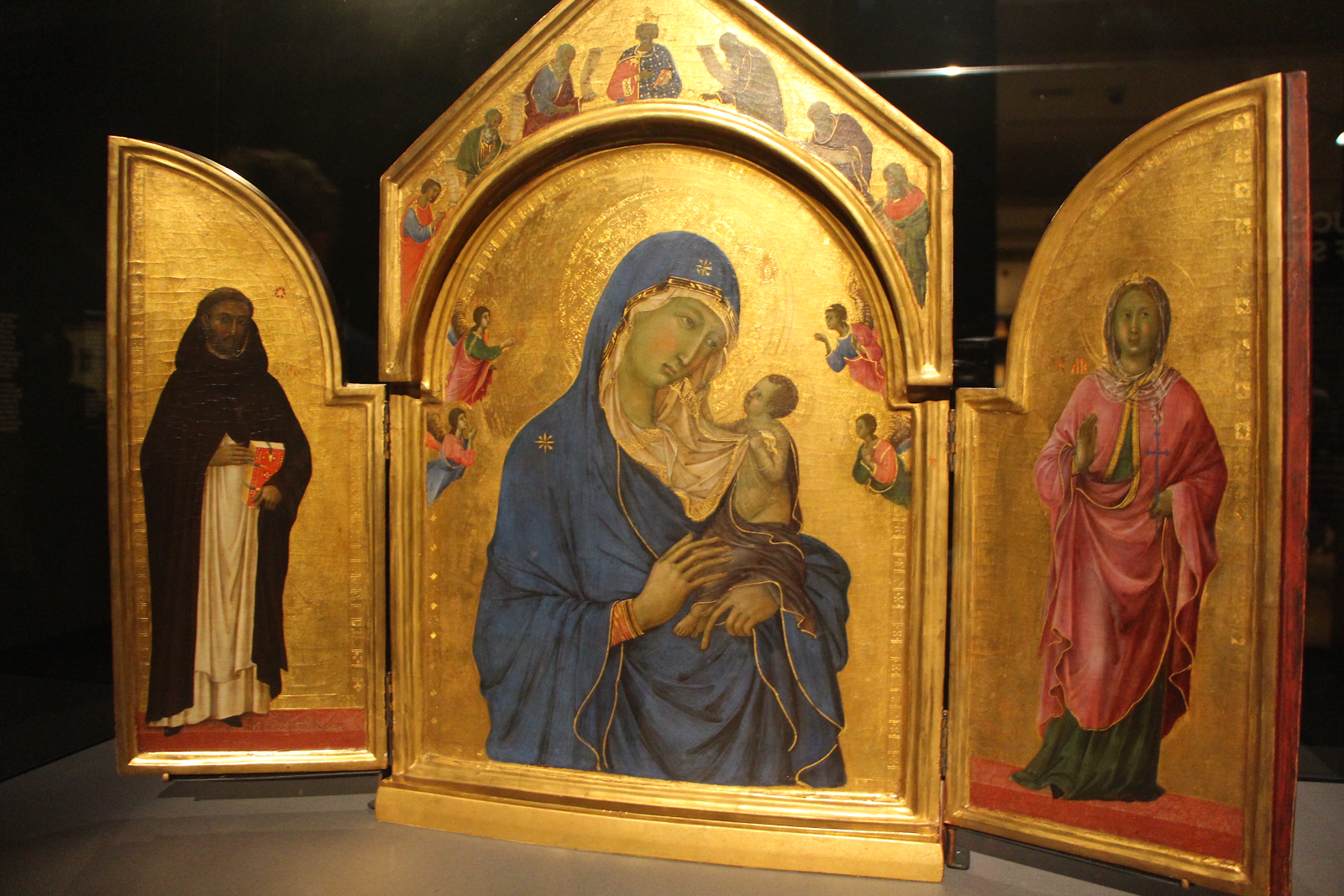
On a side note, a few weeks ago, Himadri and I went to an exhibition of Sienese art (14th century) at National Gallery, London. Not a fan, I’m afraid (some of you are probably puzzled). Looking at the art, I was also thinking that I’d been more or less going back in time in my reading—first contemporary fiction, then the 20th century, then the 19th century, then Shakespeare and the 16th and 17th centuries, then the 18th and more of the 17th—but to go back to literature before Shakespeare’s time, I might make a big jump all the way back to Ancient Greece and Rome. If we look at the period in-between—I’m talking about Western literature—nothing particularly interests me—I know, some of you might gasp in shock and horror, but not even Chaucer or Dante. The only literary works in this long span of time that arouse (some of) my interest are East Asian—Tang poetry, Heian literature, and Water Margin. You might convince me otherwise (though I doubt it). 

Wednesday, 23 April 2025

23/4

Today is meaningful for two reasons. One, it’s Shakespeare Day. Two, it’s 16 years since my mum and I moved to Norway (which means that I have now lived longer outside Vietnam than in Vietnam).

I never thought about it, but it’s interesting that the day my life turned to a new chapter—everything has been different since—was Shakespeare Day, the day celebrating the writer with whom I’m most obsessed. 


Anyway, here are some recent photos of me, taken by my bf. 


Saturday, 19 April 2025

L’Avare and Le Bourgeois Geltilhomme—reading Molière, thinking about Shakespeare

I read L’Avare (The Miser) and Le Bourgeois Geltilhomme (here translated as The Self-Made Gentleman) in the translation by George Graveley. The latter is also known as The Bourgeois Gentleman, The Middle-Class Aristocrat, or The Would-Be Noble


1/ Why do people ignore plays? And neglect the 17th century? Molière is very good and very funny. Laugh-out-loud funny even on paper. 

If we compare him and Shakespeare, Shakespeare’s sense of humour tends to be puns, wordplay, and bawdy jokes (the man’s English after all); these things aren’t in Molière, at least not in the plays I’ve read; his comedy tends to heavily focus on satire, stock characters, farcical elements, fast-paced dialogue, mishearing or misunderstanding, etc. I admit that Molière is funnier, but, because of the nature of their comedy, Shakespeare has more funny lines that can be standalone quotes. 

Another difference is that Molière—not just in these plays but I believe in general—tends to adhere to the classical unities: unity of action (one principal action), unity of time (no more than 24 hours), and unity of place (a single location). Shakespeare doesn’t give a toss.  


2/ I don’t have much to say about The Miser. It’s a delight. One thing I’m gonna note is that even though Molière and Balzac both depict misers in the characters of Harpagon and Felix Grandet, The Miser has not only the light-heartedness of a comedy but also the warmth of a man who makes fun of human foibles but still likes humanity, whereas Eugenie Grandet presents a rather cynical view of the world.  

Molière makes me think of Henry Fielding. 


3/ Like Shakespeare, Molière was also an actor. I just didn’t realise that he gave himself the main roles (Harpagon in The Miser, Jourdain in The Self-Made Gentleman). 

So he’s like Orson Welles. 


4/ Reading these plays—one is about a miser and the other is a social climber—I’ve realised that, unlike Molière, Shakespeare doesn’t really do satire. His comedies are a wide range of genres: farce (The Comedy of Errors), slapstick (The Merry Wives of Windsor), romcom (Much Ado About Nothing), pastoral comedy (As You Like It), and others that are harder to categorise (what kind of comedy is A Midsummer Night’s Dream, for example?), but not satire—one counter-example I can think of is Malvolio in Twelfth Night, but he’s not the central character and more importantly, he may have been initially created as a satire of the Puritans but became an individual, not just a type. 

(My view of Malvolio is heavily influenced by the performance of Richard Briers—he gives the character tragic stature).

Another thing is that Shakespeare has more variety, at least that’s my impression. When I got the Shakespeare bug a couple of years ago, I was reading one play after another—not all his plays at once but still many in succession—and it was all fine. Now I’m exploring Molière—Britannica says he wrote 31 plays (presumably that includes the one-act plays)—the third play, The Self-Made Gentleman, starts to feel a bit samey—it’s still very funny, but I can see the similarities. 


5/ The Self-Made Gentleman is hilarious though. Molière is a bit hard to quote because often the humour is some back-and-forth that goes on for a page or two, but here’s a funny line when Jourdain (the social climber) meets a Marquise: 

“M. JOURDAIN Madam, it is a great honour for me to see myself so fortunate as to be so happy as to have the pleasure that you have had the kindness to accord the favour of doing me the honour of honouring me with the privilege of your presence; and if I had only the merit to merit a merit such as yours, and Heaven, envious of my good fortune, had accorded me the joy of seeing myself worthy… to… to…” 

(Act 3) 


6/ In both plays, Molière gives the strong impression that he pokes fun at different types of people but still likes people—there’s no malice in his laughter—Jourdain is ridiculous, yes, but aren’t we all? In our own ways? 

Wednesday, 16 April 2025

Don Juan, my first encounter with Molière

Sooner or later, I had to read France’s most important playwright, so here we go. The translation I read was by George Graveley. 


1/ I will again quote Salvador de Madariaga: 

“Don Quixote, Sancho, Don Juan, Hamlet, and Faust are the five great men created by man. Resembling in this the great men made directly by the Creator, their forms have been covered in each generation by a new over-growth of legends, opinions, interpretations, and symbols. Such is the privilege of those living beings of art who by sheer vitality impress their personality on the collective mind of mankind.” (Don Quixote: An Introductory Essay in Psychology, chapter “The Real Don Quixote”) 

The character of Don Juan originates in the 1630 Spanish play The Trickster of Seville and the Stone Guest by Tirso de Molina, which I read last year when exploring the Spanish Golden Age. The curious part is that the original is barely known—if you look at the other figures, Don Quixote and Sancho Panza are original, and Goethe’s Faust may be the most famous and influential version but Christopher Marlowe’s Doctor Faustus is also a celebrated play—not only is The Trickster of Seville nowhere near as famous as Molière’s 1665 play Dom Juan, and the 1887 opera Don Giovanni by Mozart and Lorenzo da Ponte, but I also think that very few people know about its existence, or recognise the name Tirso de Molina. 


2/ Tirso de Molina’s Don Juan is a sociopath, who stops at nothing once he desires a woman, including disguising himself and pretending to be her lover in the dark, which is obviously rape but which also is cheating—that’s not exactly a seduction, is it? Molière’s Don Juan is more like the Don Juan in my head and in popular culture: a womaniser and manipulator. 

“DON JUAN So you think we should be tied for ever to the first object that takes our fancy, forswear the rest of the world, and have no eyes for anyone else? […] Constancy is only for fools. Every pretty woman has the right to attract us, and the mere accident of being seen first should not rob the others of their privilege of making prey of our hearts. Beauty delights me wherever I find it, and I fall a willing slave to the sweet force with which it seeks to bind me…” 

(Act 1) 

That’s an excellent depiction of the mind of a womaniser. And when we see him at work, well well well… the scene of him and the two peasant girls, Charlotte and Marthurine, is hilarious. 


3/ Molière is hilarious. There’s a funny scene where Don Juan tells his servant Sganarelle that he doesn’t believe in anything—not God, not hell, not the devil, not even medicine. 

“SGANARELLE You must have a very unbelieving soul. But look what a reputation emetic wine has got in the last few years. Its wonders have won over the most incredulous. Why, only three weeks ago, I saw a wonderful proof myself. 

DON JUAN What was that? 

SGANARELLE A man was at the point of death for six whole days. They didn’t know what to do for him. Nothing had any effect. Then suddenly they decided to give him a dose of emetic wine. 

DON JUAN And he recovered? 

SGANARELLE No. He died. 

DON JUAN An admirable effect, truly. 

SGANARELLE What? For six whole days he couldn’t die; and that finished him off at once.” 

(Act 3) 

Hahahahahahaha. 


4/ Compared to Tirso de Molina’s play, this one is tightly controlled—The Trickster of Seville has a four-page speech about Lisbon that adds nothing to the plot (to this day, I still don’t know what that’s about). 

Molière also gives us a much more interesting and memorable character. Both Don Juans are scoundrels, of course, but Molière’s has more charm and seductive power. The playwright humanises him by letting us see his perspective—Don Juan sees himself as open and generous, an appreciator of beauty, a lover of women—he also has some honour and courage, such as when he saves a man from robbers. Molière also depicts a warm friendship between Don Juan and his servant Sganarelle—they talk and banter and argue, like Don Quixote and Sancho Panza—Sganarelle is repulsed by Don Juan’s actions and afraid of losing his job but at the same time also charmed by him—so we too are charmed by Don Juan, or at least we can see his charm.

(Jane Austen would have liked this play, I think). 


5/ My friend Himadri said: 

“Molière makes more of Don Juan than just as satyromaniac. He is a man wedded to rationality, to reason. But the irrational is also an aspect of life, whether Juan accepts it or not. And it’s precisely this irrational aspect that destroys him.

One may even consider the statue to be symbolic of the irrational in Juan’s own psyche, but which he refuses to accept.”

Excellent play.

Monday, 14 April 2025

On revenge tragedies and Shakespeare

Revenge tragedies were all the rage in the Elizabethan and Jacobean eras. The Spanish Tragedy marks the beginning. ’Tis Pity She’s a Whore marks the end (or at least, I believe it was one of the last ones). So lately I’ve been reading a few and thinking about them.  

If you’re looking for depth or complexity or big ideas, I would say you won’t find any. Revenge tragedies are about excitement and ingenuity of plot and violence. Revenge tragedies are about shocking and sensational stage effects, like someone biting off his own tongue and spitting it out, or kissing and getting killed by a skull, or appearing with a bloody heart on a dagger. The modern equivalent would be Korean and Japanese revenge films. I have seen Audition, Lady Snowblood, Confessions… from Japan; Oldboy, Lady Vengeance, Sympathy for Mr Vengeance, Pietà, Montage, The Housemaid (remake), The Handmaiden… from South Korea. You watch these films for the violence and the ingenuity of the revenge. Sometimes I may find a revenge film entertaining and clever, like The Handmaiden, but often I’m just disgusted by the excessive violence and savagery—Pietà is probably the best example of a film with a disturbing delight in its depiction of cruelty and depravity—it left me thinking, all right that’s a picture of extreme barbarity, now what?—all it gave me was strong disgust and a bad taste in my mouth. 

The most profound revenge film I have seen, if it counts as a revenge film, is Ran. It’s not only about revenge but revenge is a big part of it and it’s something Kurosawa adds that isn’t in King Lear

And that brings me to another point, about Shakespeare. When my friend Himadri read these revenge plays 10 years ago, he wrote

“If Shakespeare’s audiences really did crave revenge tragedy – and the existence of so many plays by his contemporaries in this genre indicates that they did – then Shakespeare seems on the whole to have been swimming against the popular tide in refusing to satisfy them.”

That’s an interesting observation. The only proper revenge play Shakespeare wrote was Titus Andronicus, and even then I’m not sure what he was doing—was it serious or tongue-in-cheek? was it a genuine attempt to out-Seneca Seneca? or a parody? or just an early paid job before he could write what he wanted? (or, was it even Shakespeare at all? I always say Oxfordians and other loonies are welcome to claim that one).  

Once Titus Andronicus was over and done with, Shakespeare didn’t seem to particularly care for the revenge genre. His only interest was in parodying it or playing with it. Hamlet is a clear example—it’s a play about revenge, but most of it is about Hamlet not doing anything—instead, he ponders about the nature of revenge, the point of revenge, the point of existence, and when he finally kills Claudius, it doesn’t happen as a result of Hamlet’s plan. Coriolanus has revenge in the latter half of the play but it’s arguably not about the revenge itself—Shakespeare seems more interested in why a hero such as Coriolanus would go to the enemy and bring destruction upon his own city—the central difference is that revenge tragedies (at least those I have read) are about the how of revenge whereas Shakespeare is more fascinated by the why. The Tempest is another parody of the genre—it starts off with Prospero speaking of revenge and ends with him forgiving his enemies. 

Clearly Shakespeare isn’t interested in the spectacle of violence, but in people’s minds—and that is why his plays have a kind of depth that the revenge tragedies don’t have. 


Disclaimer: I very much enjoyed The Revenger’s Tragedy, which should be better known, and The Spanish Tragedy was also good fun. 

Sunday, 13 April 2025

’Tis Pity She’s a Whore by John Ford

Performed sometime between 1629 and 1633 and published in 1633, the play thus came out a while after Shakespeare’s death (1616) and the publication of the First Folio (1623).


1/ ’Tis Pity She’s a Whore is one of the most well-known plays of 17th century England, and one of the most controversial. 

“GIOVANNI I marvel why the chaster of your sex 

Should think this pretty toy called maidenhead 

So strange a loss, when, being lost, ’tis nothing, 

And you are still the same.” 

(Act 2 scene 1)  

Giovanni is talking to his own sister Annabella (yuck)—the play is about incest. 

Listen to Annabella’s tutoress/ guardian: 

“PUTANA […] Fear nothing, sweetheart: what though he be your brother? Your brother’s a man I hope, and I say still, if a young wench feel the fit upon her; let her take anybody, father or brother, all is one.” 

(ibid.) 

Ugh. She quickly changes the tune though, when Annabella’s pregnant.

This conversation between Annabella’s father Florio and Richardetto (who’s pretending to be a doctor) is funny: 

“RICHARDETTO […] You need not doubt her health; I rather think 

Her sickness is a fullness of her blood – 

You understand me? 

FLORIO I do – you counsel well – 

And once within these few days will so order’t 

She shall be married, ere she know the time.” 

(Act 3 scene 4) 

Florio doesn’t know that she’s pregnant. Whether or not Richardetto knows is not made clear, though I think it works better for the story if he does.  

According to the notes in my copy (New Mermaids’ Four Revenge Tragedies), “fullness of her blood” means “sexual ripeness”.

“This was believed to be an ailment of female virgins; the usual remedy was for the young woman to have sex as soon as possible.”

Hmm, interesting. 


2/ ’Tis Pity She’s a Whore is a play about incest and begins with the Friar talking about “devilish atheism”, but John Ford slowly shows that it’s the clergy that is immoral and hypocritical. 

For instance, when the Friar is talking to Annabella, now pregnant with her own brother’s child, he talks about hell, about “smoky fogs” and “infected darkness” and “never-dying death” and “damned souls” and “burning oil” and “molten gold” and so on. But then: 

“FRIAR […] Heaven is merciful, 

And offers grace even now. ’Tis thus agreed: 

First, for your honour’s safety, that you marry 

The Lord Soranzo; next, to save your soul, 

Leave off this life, and henceforth live to him.” 

(Act 3 scene 7)  

That has nothing to do with heaven or hell—the Friar tells Annabella to marry Soranzo, thus deceiving him, to save her reputation. 

Even worse is when Grimaldi (one of Annabella’s suitors), intending to get rid of Soranzo, mistakenly kills Bergetto and runs to the Cardinal for help. 

“CARDINAL […] You citizens of Parma, if you seek 

For justice, know, as Nuncio from the Pope, 

For this offence I here receive Grimaldi

Into his Holiness’ protection. 

He is no common man, but nobly born 

Of princes’ blood… 

[…] 

FLORIO Justice is fled to heaven and comes no nearer. 

[…] When cardinals think murder’s not amiss. 

Great men may do their wills, we must obey, 

But Heaven will judge them for’t another day.” 

(Act 3 scene 9)  

All these revenge plays depict society as unfair and unjust—that’s why people must take the law into their own hands. 


3/ Like the other revenge plays I have read, ’Tis Pity She’s a Whore is engrossing. John Ford goes further, to excess—whereas The Spanish Tragedy is chiefly about Hieronimo’s revenge for the murder of his son and The Revenger’s Tragedy is about Vindice’s revenge on the Duke’s family for the murder of his betrothed, ’Tis Pity She’s a Whore has multiple vengeful characters: Grimaldi wants a revenge on Soranzo for humiliating him and “stealing” Annabella; Hippolita wants a revenge on Soranzo for discarding her and marrying Annabella; her husband Richardetto pretends to be dead in order to take revenge on Hippolita and Soranzo for their affair; Soranzo wants revenge after discovering Annabella’s relations with Giovanni, and so on. 

John Ford’s play doesn’t have the great poetry of The White Devil or The Revenger’s Tragedy.

But more importantly, it leaves a bad taste in my mouth. The play depicts a dissolute, corrupt world, and at the centre of it is the incestuous, lecherous, unreasonable Giovanni: 

“GIOVANNI Shall then, for that I am her brother born, 

My joys be ever banished from her bed?” 

(Act 1 scene 1) 

He doesn’t listen to reason and doesn’t care for consequences. Even if you are indifferent to incest when it’s consensual, I doubt I am alone in finding his thinking and actions vile:  

“GIOVANNI Busy opinion is an idle fool, 

That, as a school-rod keeps a child in awe, 

Frights the unexperienced temper of the mind, 

So did it me, who, ere my precious sister

Was married, thought all taste of love would die

In such a contract; but I find no change 

Of pleasure in this formal law of sport. 

She is still one to me, and every kiss 

As sweet and as delicious as the first 

I reaped when yet the privilege of youth 

Entitled her a virgin.” 

(Act 5 scene 3)  

However unlikeable Soranzo is—and John Ford makes sure that we all find him abhorrent—the fact remains that Annabella deceives him into marriage and continues betraying him after the wedding. And when Giovanni foils Soranzo’s plan at the end, he may save Annabella from the awful plot and refuses Soranzo the satisfaction of revenge, but all he does in the final spectacle is degrading himself and his sister, and elevating the husband—nobody knows about Soranzo’s cruelty, nobody knows about the murder plot—all the others see is that the poor husband is wronged.  

“GIOVANNI Father, no. 

For nine months’ space in secret I enjoyed 

Sweet Annabella’s sheets; nine months I lived 

A happy monarch of her heart and her. 

Soranzo, thou know’st this: thy paler cheek 

Bears the confounding print of thy disgrace, 

For her too fruitful womb too soon bewrayed 

The happy passage of our stol’n delights, 

And made her mother to a child unborn.” 

(Act 5 scene 6) 

It is all sordid. 

I feel sorry for people in early 17th century England—they went to Shakespeare’s plays for years but then he died and they went to the theatre and it was ’Tis Pity She’s a Whore


PS: My favourite plays by Shakespeare's contemporaries so far are The Duchess of Malfi by John Webster, Doctor Faustus by Christopher Marlowe, and The Revenger’s Tragedy by Cyril Tourneur/ Thomas Middleton.