Pages

Friday, 11 April 2025

The Revenger’s Tragedy, a Jacobean play

1/ This is another revenge play, first performed in 1606, and published in 1607. The authorship is disputed: it was long attributed to Cyril Tourneur; some modern scholars believe it’s by Thomas Middleton (who collaborated with Shakespeare in a few plays); but the debate is never settled. 

Whoever it was, it would have been tough for him—1606 was roughly the year of King Lear, Macbeth, and Antony and Cleopatra—that’s Shakespeare at his peak. 


2/ It’s harder to read than Thomas Kyd’s The Spanish Tragedy, at first—the language is knottier.

There’s interesting imagery from the very first page though: 

“VINDICE […] Oh that marrowless age 

Would stuff the hollow bones with damned desires, 

And ’stead of heat kindle infernal fires

Within the spendthrift veins of a dry duke, 

A parched and juiceless luxur...” 

(Act 1 scene 1) 

Tourneur/ Middleton has some good metaphors: 

“DUKE Duchess it is your youngest son, we’re sorry, 

His violent act has e’er draw blood of honour 

And stained our humours, 

Thrown ink upon the forehead of our state 

Which envious spirits will dip their pens into 

Fater our death, and blot us in our tombs. 

For that which would seem treason in our lives

Is laughter when we’re dead. Who dares now whisper 

That dares not then speak out, and e’en proclaim 

With loud words and broad pens our closest shame.” 

(Act 1 scene 2) 

The Duke is talking about the Duchess’s youngest son being a rapist, but the thing that interests me more is that the playwright uses extended metaphors, which Shakespeare also likes (and masters). 


3/ I was surprised to come across the word “dad” in The Revenger’s Tragedy—I don’t remember ever coming across it in 19th century novels, the preferred word is “papa”—but Etymonline says “dad” is recorded from ca. 1500 and could be much older. 

Learn something new every day. 


4/ One of the main themes in the play is lust. The misogyny of some of the characters is revolting. For example, the Duchess’s youngest son is brought to court for raping another man’s wife. A judge asks why he did it. 

“YOUNGEST SON Why flesh and blood my lord; 

What should move men unto a woman else?” 

(Act 1 scene 2) 

Lussurioso, the Duke’s son from an earlier marriage, is not much better. 

“LUSSURIOSO […] I am past my depth in lust

And I must swim or drown. All my desires 

Are levelled at a virgin not far from Court…” 

(Act 1 scene 3) 

He wants to “ravish” Castiza and doesn’t realise that the bawd to whom he thinks he’s speaking is actually her brother Vindice in disguise. 

“LUSSURIOSO Push; the dowry of her blood and of her fortunes 

Are both too mean – good enough to be bad withal. 

I’m one of that number can defend 

Marriage is good; yet rather keep a friend. 

Give me my bed by stealth – there’s true delight; 

What breeds a loathing in’t but night by night?” 

(ibid.) 

That frankly makes me puke in my mouth a little. 

But it’s not just men who are full of lust. The Duchess wants to bang Spurio, the Duke’s bastard son. 


5/ The scene of Vindice in disguise acting as a bawd for Lussurioso, as a way of testing his sister Castiza and his mother Gratiana, is excellent. Here’s an example: 

“VINDICE […] Would I be poor, dejected, scorned of greatness, 

Swept from the palace, and see other daughters 

Spring with the dew o’the court, having mine own 

So much desired and loved – by the Duke’s son? 

No, I would raise my state upon her breast

And call her eyes my tenants; I would count 

My yearly maintenance upon her cheeks, 

Take coach upon her lips and all her parts 

Should keep men after men and I would ride 

In pleasure upon pleasure…”  

(Act 2 scene 1) 

Vile indeed, but Vindice is playing the role of a bawd and testing his mother. The entire scene is a fine example of rhetoric, and drama. It then ends with Vindice’s soliloquy: 

“VINDICE […] Why does not heaven turn black or with a frown 

Undo the world? Why does not earth start up

And strike the sins that tread upon it? Oh, 

Were’t not for gold and women there would be no damnation. 

Hell would look like a lord’s great kitchen without fire in’t; 

But ’twas decreed before the world began

That they should be the hooks to catch at man.” 

(ibid.) 

Vindice is the revenger of the play, setting out to destroy the family of the Duke, who are lustful, brutal, and callous, but he too is a misogynist. We’ve seen it from the very beginning: 

“VINDICE We must coin. 

Women are apt you know to take false money, 

But I dare stake my soul for these two creatures, 

Only excuse excepted, that they’ll swallow 

Because their sex is easy in belief.” 

(Act 1 scene 1) 

He is here speaking to his brother Hippolita, and “these two creatures” refers to their mother and sister—who talks like that about his female family members? At the end of the same scene, he says “Wives are but made to go to bed and feed.” 

The play presents a rather bleak view of humanity—how many good characters are there in the play?—I can only think of two (chaste Castiza and honest Antonio). Makes me think of Webster. 


6/ There is a passage in The Revenger’s Tragedy that reminds me of Hamlet’s “Now get you to my lady’s chamber, and tell her, let her paint an inch thick, to this favour she must come.”  

The revenge scene is probably crazier than anything I’ve seen in Shakespeare, even the eye-gouging scene in King Lear or the headless body in Cymbeline. And then the grand finale—the big killing scene at the end—is quite something. 

As a whole, The Revenger’s Tragedy is a crazy play, a fun and exciting play. Do I think it’s a great work of art? Not really, no—like The Spanish Tragedy, there’s not much depth in it—it’s not a play that makes you think about evil, the nature of revenge, or “the human condition” as such. But it doesn’t matter. It’s a fun, enjoyable play—Tourneur/ Middleton has a good feel for pacing and tension, and his poetry is much better than Kyd’s. 

Wednesday, 9 April 2025

The Spanish Tragedy by Thomas Kyd

The Spanish Tragedy, or Hieronimo is Mad Again is an Elizabethan play, generally accepted to have been written by Thomas Kyd, sometime between 1582 and 1592. Highly popular and influential at the time, it established the genre of the revenge play. For theatrical context, it’s around the same time as Shakespeare’s The Taming of the Shrew, The Two Gentlemen of Verona, Titus Andronicus, and Henry VI plays. For historical context, the Spanish Armada was defeated in 1588. 


1/ The play begins with the ghost of Don Andrea, killed in the war between Spain and Portugal, here called Portingale (please tell me I’m not the only one who sees that and keeps thinking of nightingales). Don Andrea is killed by Prince Balthazar (son of the Portuguese Viceroy), who not long after surrenders to Lorenzo (son of the Duke of Castile, nephew of the Spanish King, brother of Bel-Imperia) and Don Horatio (son of Hieronimo and friend of Don Andrea). 

Bel-Imperia is Don Andrea’s girlfriend. Prince Balthazar fancies her but she falls for Don Horatio, not long after Don Andrea’s death (frailty, thy name is woman). 


2/ Thomas Kyd likes repetitions. Sometimes it’s awkward. 

“BEL-IMPERIA I know the scarf, would he had kept it still, 

For had he lived he would have kept it still…” 

(Act 1 scene 4) 

But sometimes it works rather well. 

“VICEROY […] My late ambition hath distained my faith, 

My breach of faith occasioned bloody wars, 

Those bloody wars have spent my treasure, 

And with my treasure my people’s blood, 

And with their blood, my joy and best beloved, 

My best beloved, my sweet and only son…” 

(Act 1 scene 3) 

(In case you’re wondering, that’s when the Viceroy mistakenly thinks his son Balthazar is dead). 

“BALHAZAR […] First, in his hand he brandished a sword, 

And with that sword he fiercely waged war, 

And in that war he gave me dangerous wounds, 

And by those wounds he forced me to yield, 

And by my yielding I became his slave. 

Now in his mouth he carries pleasing words, 

Which pleasing words do harbour sweet conceits, 

Which sweet conceits are limed with sly deceits, 

Which sly deceits smooth Bel-Imperia’s ears, 

And through her ears dive down into her heart, 

And in her heart set him where I should stand…” 

(Act 2 scene 1) 

You can see for yourself that in terms of poetry, Kyd ain’t Webster. But these passages are interesting nevertheless, in terms of rhetoric. 

I like this: 

“HIERONIMO O eyes, no eyes, but fountains fraught with tears; 

O life, no life, but lively form of death; 

O world, no world, but mass of public wrongs, 

Confused and filled with murder and misdeeds!...” 

(Act 3 scene 2) 

Kyd gives Hieronimo some rather good speeches, some moving expressions of grief. But that also makes me realise that he doesn’t give such speeches to Bel-Imperia. 


3/ One of the challenges I have set for myself blogging about The Spanish Tragedy is to refrain from comparing Kyd and Shakespeare, so I will not judge the qualities of the play against Shakespeare. However, it’s impossible not to note the parallels between The Spanish Tragedy and Hamlet

The Spanish Tragedy is about a father avenging his son’s death; Hamlet is about a son avenging his father’s death. 

In Kyd’s play, Hieronimo takes a while to consider how to take revenge on Horatio’s murderers; in Shakespeare’s play, Hamlet spends almost the entire play thinking, delaying, doing other things. 

Hieronimo rebukes himself as he sees Don Bazulto, an old man who seeks justice for his murdered son:    

“HIERONIMO See, see, O see thy shame, Hieronimo, 

See here a loving father to his son! 

[…] If love’s effects so strives in lesser things, 

If love enforce such moods in meaner wits, 

If love express such power in poor estates

[…] Then sham’st thou not, Hieronimo, to neglect 

The sweet revenge of thy Horatio?...” 

(Act 3 scene 13) 

Hamlet watches the actors, and thinks “What’s Hecuba to him, or he to Hecuba/ That he should weep for her?”.

In both cases, there’s a play within a play, though they serve different purposes. 

I was thinking, why did I think The Spanish Tragedy was a much bloodier play? There are 9 deaths in The Spanish Tragedy, 8 in Hamlet (not counting Don Andrea and King Hamlet, appearing as ghosts). But then I realised: only 5 deaths in Hamlet are onstage (the deaths of Ophelia, Guildenstern, and Rosencrantz are reported); the deaths in Kyd’s play are also more violent, and there’s a character who bites off his tongue (Kyd, why?). But then Shakespeare outdoes all that in Titus Andronicus: much more violent, much more ridiculous (Oxfordians and other loonies are welcome to claim that one, I don’t care). 


4/ The Spanish Tragedy is without doubt an exciting play. It is packed with action—war, false accusation, torture, abduction, murder, deception, forced marriage, intrigue, revenge, and so on and so forth. What is that Machiavellian villain Lorenzo going to do next? Where is Bel-Imperia? How are Bel-Imperia and Hieronimo going to avenge Horatio’s death? 

Had I just watched it, I would probably have enjoyed it as an equivalent of a Hollywood action, bloody and exciting—it’s not hard to see why the Elizabethan audience loved the play. As it happened, I was reading it over the course of a few days and had time to think about the characters, the poetry, the plot, etc. Why do we see the ghost of Don Andrea but not the ghost of Horatio, for example? Why does the ghost of Don Andrea not seem to care that Bel-Imperia moves on so quickly? Is the play about a revenge for Horatio, or a revenge for Don Andrea? Why is it that Hieronimo seems so passive for a large part of the play until he’s reproached by Bel-Imperia, but he’s the one who comes up with the plan to kill the murderers? Or maybe I overthink, as usual. 

Fun play. Thomas Kyd makes me think of Lope de Vega—not much depth, but they both know how to captivate the audience. 


PS: I have created a tag on my blog for Shakespeare’s contemporaries (restricted to those in England/ Britain). My blog posts about Marlowe, Webster, Jonson... are collected there. 

Saturday, 5 April 2025

Some thoughts on Robinson Crusoe [updated]

I don’t have much to say about Robinson Crusoe. Probably won’t have much when I finish reading it either. 

As I explore the 18th century, I can see why Robinson Crusoe was huge at the time and became so influential—it was a new kind of writing; it was an invention of a modern myth; it explored the themes of self-reliance, civilisation, power, colonialism, faith, and so on—but I can’t help thinking that, compared to other 18th century novels I’ve read, it feels more dated, more like a relic of the past. All right, I know that Defoe’s book was published in 1719 and the others were decades later, but it feels very 18th, late 17th century, very much stuck in its time and place. Let me clarify what I mean. Tom Jones (1749) doesn’t feel much different from 19th century literature—if you have been reading 19th century British novels like Dickens, Thackeray, Trollope… and pick up Tom Jones, you wouldn’t feel like there’s a jump even if some words and expressions are more archaic. Gulliver’s Travels (1726) doesn’t feel like the 18th century either, though it’s probably because it’s fantasy/ satire, the same way Alice’s Adventures in Wonderland (1865) and Through the Looking-Glass (1871) feel extremely modern, not at all Victorian.  

I’m probably not explaining this very well. More examples. When I read Shakespeare’s contemporaries, I always find that Shakespeare was light years ahead—his psychological insight and power of characterisation and range of sympathies make everyone else seem crude—but I do think that Ben Jonson’s The Alchemist (1610) feels more rooted in its time and place, more dated than, say, Webster’s The Duchess of Malfi (1612-1613) or Marlowe’s Doctor Faustus (ca. 1592), because it’s much more topical and thick with references to current events and current obsessions—it doesn’t transcend its time and place. 

In a similar way, Robinson Crusoe feels like a relic of the past rather than a timeless work of art, and it’s because of the narrator’s imperialist mindset and his plantations and his use of “Negroes” and his attitudes towards “savages” and his treatment of the “savage” he renames as Friday and his conversion of Friday to Christianity and so on and so forth. Defoe may or may not have shared these views—I don’t know—but his depiction of the simple, loyal, subservient Friday doesn’t particularly help. That is not to say that the book is badly written. After the tedious first 50 or so pages, the book (about 250 pages a whole) became much more interesting—not when Crusoe survives the shipwreck but when he starts his life on the desert island—and it’s much more exciting when Crusoe starts exploring the other side of the island after years of staying in more or less one place. 

Is this a book I want to read more than once? At the moment, possibly not. Do I think you should read it? Let me finish it and see. 


Update on 7/4/2025: 

I have now finished reading Robinson Crusoe. I maintain that Robinson Crusoe, more than other 18th century novels I have read, feels more like a relic of the past. I also think that Crusoe is not a particularly interesting character—or rather, his actions for sustenance and survival have some interest, his mind doesn’t. 

But if you are interested in 18th century literature and/or the development of the novel, it’s a book you should read. The first 50 pages are tedious, but it becomes more interesting, especially the second half, as there’s more conflict. Daniel Defoe is very good at filling the book with details, creating the illusion that it’s a real memoir, a real document of a man’s survival on a desert island, thus pioneering the realist novel. He is also very good at depicting Crusoe’s conversion to Christianity. I can see why the book was immensely popular, and can see why Gabriel Betteredge in Wilkie Collins’s The Moonstone is obsessed with it and uses it for a kind of divination. 

Friday, 4 April 2025

On “AI art” and the artist’s vision

(An image created by MidJourney that caused controversy a few years ago when winning a photography/ digital art award). 


1/ I once saw a tweet saying “the brain is literally a computer and there are a lot of people who deny this for some reason.” In response, someone called Duncan Reyburn (@duncanreyburn) wrote:  

“Amazing inability to see the difference between an analogy and an identity here. Left-hemispheric overreach. Computers have no intentionality, for one thing, and also no capacity to feel their own being, to sense their own life, to transcend their own limitations, to be porous to vibes, etc.

To reason properly, you have to be able to spot not just similarity but also difference. You need to assume that your own immediate, conscious assumptions are shutting the door to some pretty important aspects of meaning.” 

I thought of that exchange when I was talking to my friend Himadri recently about “AI art” and he said: 

“It’s an interesting question: given all the possible uses for AI, why are so many people so insistent that it can produce art, and that, some day AI will produce works of the level of Caravaggio, Mozart, Tolstoy? I think the reason is this:

There are many who are very deeply wedded to the idea that humans are no more than machines. Incredibly sophisticated machines, but machines nonetheless. They absolutely hate the idea that humans can have souls - that is, that humans can have some element in them that are beyond rational analysis, beyond rational explanation. If AI can replicate the greatest works of art, they will be proved right. Even Caravaggio and Rembrandts were mere machines.”

But why? I don’t understand. The enthusiastic cheering for “AI art” is deeply anti-art and anti-human. 


2/ A couple of years ago, I had a discussion with someone, also on Twitter, who said that there’s no difference between “AI art” and art made by humans, because “all art is a mash-up of previous art.” 

I wouldn’t be surprised if that’s the way all AI-loving tech bros think. But as I pointed out back then, artists don’t just take something from other artists, they have something of their own—their own experiences and vision of life and obsessions and antipathies and regrets and fears and desires and hangups—artists may also break the rules and do something new and transcend the boundaries—all these things are beyond AI. 

Apart from a profound misunderstanding of art and its creation, I can’t help thinking that some people have had their thinking distorted by decades (or perhaps a century?) of sci-fi (a genre I have never particularly liked) and it has made them believe that AI (such as we currently have) could be conscious. It is not. And if you use AI to generate something, you’re not the artist—you’re the equivalent of a commissioner. 


3/ When I read, I’m not only interested in characters, details, imagery, metaphors, motifs, language, style, etc—I’m also interested in the author’s vision. 

When people say that a reader is either a Tolstoy person or a Dostoyevsky person, for example, it’s because they don’t just have different writing styles but also have different visions of life: Dostoyevsky writes about the abnormal and the extreme, Tolstoy writes about a wide range of “normal” people; Dostoyevsky believes in free will, Tolstoy believes in determinism; Dostoyevsky depicts life as made up of dramatic moments and great decisions determining the trajectory of one’s life, Tolstoy sees life as formed by all the little decisions one makes every moment; they are opposite. Then you read Chekhov and he again has a different vision of life: Tolstoy and Dostoyevsky are both religious whereas Chekhov is a humanist (if you’re new here, I’m a Tolstoy and Chekhov girl). 

These things fascinate me. Chekhov, Jane Austen, and Flannery O’Connor all strike me as having no illusions about human nature, for instance, but Chekhov looks at people with warmth and compassion, Jane Austen laughs at them, and Flannery O’Connor coldly dissects and studies them. 

It’s also because I’m interested in the artist’s vision that in painting, I have zero interest in photorealism: the skills are impressive, but so what? All I see is someone painstakingly reproducing what the camera “sees”. Most of my favourite artists are not realistic as such—Egon Schiele, Van Gogh, Monet, Cézanne, Turner, etc.—even the more “realistic” ones such as Rembrandt or Sargent, I like them not because they depict people with great accuracy, but because their subjects feel alive and because I love Rembrandt’s use of lighting and Sargent’s way of focusing on the face but using broad brushstrokes and a more impressionistic style for the clothes and surroundings. 

But it’s not just me. Who would be interested in “art” made by machine, made by something that doesn’t see the world, doesn’t experience things, doesn’t have feelings? I don’t think most people are. The only people (I see) enthusiastically promoting and cheering for “AI art” are the tech people who are not really interested in art in the first place. 

Thursday, 3 April 2025

The various subspecies of philistines

Left, right, everywhere we’re surrounded by philistines. 

On the left are the philistines who see everyone and everything through the lens of identity politics, who divide the world neatly into oppressor vs oppressed, who reduce literature to stories and perspectives, who do not believe in universal appeal and the test of time, who think that Shakespeare’s status as the greatest writer of all time is thanks to nothing but colonialism and “structures of power”. These are people who speak of relatability, as though we can only relate to characters with the same sex or skin colour. These are people who speak of relevance, as though only contemporary books can resonate with readers. These are people who associate classic books with “white supremacy” and replace them with contemporary books, as though other countries don’t have their own classic literature. 

There are philistines who call for trigger warnings and sensitivity readers, who want to censor racist or otherwise offensive words, who think writers shouldn’t write about characters from a different community, who think novels should only be from the perspective of the victim rather than the perpetrator, who cannot distinguish the narrator from the author. There are also philistines who demand “moral purity” and “the right opinions”, who cannot separate the art from the artist. Related to such puritans are the philistines who think that a work of art with “an important message” is worthwhile and important. 

On the right are the philistines who constantly say Western culture is under attack but cannot say which classical works they cherish and why, who bemoan modern architecture and praise Disney-style castles, who think representational art is the peak and Hitler is a better artist than Egon Schiele, who applaud vulgar and soulless works such as the sculptures of Luo Li Rong or Jago. These are people who lose their minds over the casting of a Shakespeare production, but neither read nor watch Shakespeare themselves. These are people who are incapable of looking at culture except through the lens of the culture war. These are people who affect to be living in the past but know next to nothing about it. 

There are also conservative philistines who want books removed from schools—not only sexually explicit, borderline-pornographic books (which is understandable) but also serious literature such as The Bluest Eye, or important documents such as Anne Frank’s Diary

And now, beyond politics, beyond the right and the left, are the philistines who happily cheer for “AI art”, who praise AI-generated videos not realising their emptiness and vulgarity, who draw (false) parallels between AI-generated images and photography, who think human beings are nothing but sophisticated machines, who believe AI can one day produce a Shakespeare or a Rembrandt, who have no idea what art is or why human beings engage with it, who dismiss others as reactionaries refusing to be with the times.

All these people have no idea what art is—they either attack art, or produce slop. 

It’s infuriating.   

Sunday, 30 March 2025

Gulliver’s Travels: the skins of Yahoos

I’m currently reading Robinson Crusoe, but still thinking about Gulliver’s Travels, especially Part 4. 

Here’s something I’ve noticed. 

“I had hitherto concealed the secret of my dress, in order to distinguish myself, as much as possible, from that cursed race of Yahoos; but now I found it in vain to do so any longer. Besides, I considered that my clothes and shoes would soon wear out, which already were in a declining condition, and must be supplied by some contrivance from the hides of Yahoos, or other brutes; whereby the whole secret would be known.” (P.4, ch.3) 

(emphasis mine) 

Gulliver speaks of using “the hides of Yahoos”, but at this point, he doesn’t see the Yahoos as humans and doesn’t see himself as a Yahoo—all he knows is that the Houyhnhnms think he may be a Yahoo—and he must do all he can to identify himself as a human, different from the Yahoos, because “Upon the whole, I never beheld, in all my travels, so disagreeable an animal, or one against which I naturally conceived so strong an antipathy.” (P.4, ch.1)

But things gradually change. 

“My master had ordered a room to be made for me, after their manner, about six yards from the house: the sides and floors of which I plastered with clay, and covered with rush-mats of my own contriving. I had beaten hemp, which there grows wild, and made of it a sort of ticking; this I filled with the feathers of several birds I had taken with springes made of Yahoos’ hairs, and were excellent food. […] I soled my shoes with wood, which I cut from a tree, and fitted to the upper-leather; and when this was worn out, I supplied it with the skins of Yahoos dried in the sun.” (P.4, ch.10) 

Now it’s different—Gulliver uses the hairs and skins of Yahoos in order to be like the Houyhnhnms, the same way he trots and sounds like a horse—at this point, he sees human beings as “Yahoos in shape and disposition, perhaps a little more civilised, and qualified with the gift of speech.” But the Houyhnhnms see him as an outsider, the same way the Lilliputians and Brobdingnagians have done in the past, and expel him. 

“… in six weeks time with the help of the sorrel nag, who performed the parts that required most labour, I finished a sort of Indian canoe, but much larger, covering it with the skins of Yahoos, well stitched together with hempen threads of my own making. My sail was likewise composed of the skins of the same animal; but I made use of the youngest I could get, the older being too tough and thick; and I likewise provided myself with four paddles. […] 

I tried my canoe in a large pond, near my master’s house, and then corrected in it what was amiss; stopping all the chinks with Yahoos’ tallow, till I found it staunch, and able to bear me and my freight; and, when it was as complete as I could possibly make it, I had it drawn on a carriage very gently by Yahoos to the sea-side, under the conduct of the sorrel nag and another servant.” (ibid.) 

Is that not disturbing? The Yahoos are not quite humans—Gulliver doesn’t think of them as humans in his first encounter with them, before the influence of the Houyhnhnms—but they are similar, too similar for comfort, and even Gulliver himself sees human beings including his own family as Yahoos—then why does he happily use the skins of Yahoos?

Is it simply misanthropy and madness? Or is it more about Gulliver absorbing the Houyhnhnms’ hatred of the Yahoos, submitting to their totalitarian society, and internalising all that repugnance and aversion?

It is unsettling. As Jonathan Swift himself wrote in a 1725 letter to Alexander Pope, he wrote in order to “vex the world rather than divert it.”

Friday, 28 March 2025

Gulliver’s Travels: the Houyhnhnms and the Yahoos

Gulliver’s Travels is such a rich book. I’ve been thinking about Part 4—there are so many different ways of interpreting it.

On the most basic level, it’s a reverse of the horse-human relationship in real life: on this island, horses (Houyhnhnms) are the ones with reason and language, humans (Yahoos) are bestial; horses subjugate and use humans for draught and carriage, and later decide to castrate them; Swift makes one think about how we treat horses, and animals in general.

If you think about it in terms of politics, especially racial politics, the Houyhnhnms are slaveowners and the Yahoos are slaves—Gulliver, being in the house, getting taught language, and receiving different treatment, is an equivalent of a “house Negro”. 

Among themselves, the Houyhnhnms also have a caste system that is racial in character: 

“… that among the Houyhnhnms, the white, the sorrel, and the iron-grey, were not so exactly shaped as the bay, the dapple-grey, and the black; nor born with equal talents of mind, or a capacity to improve them; and therefore continued always in the condition of servants, without ever aspiring to match out of their own race, which in that country would be reckoned monstrous and unnatural.” (P.4, ch.6) 

This sounds like anti-miscegenation and eugenics: 

“In their marriages, they are exactly careful to choose such colours as will not make any disagreeable mixture in the breed. Strength is chiefly valued in the male, and comeliness in the female; not upon the account of love, but to preserve the race from degenerating; for where a female happens to excel in strength, a consort is chosen, with regard to comeliness.” (P.4, ch.8) 

The book goes further. Having no word for “opinion” because they are ruled by reason, the Houyhnhnms have no disagreements, and they hold an assembly for one debate, the only debate in their country: “whether the Yahoos should be exterminated from the face of the earth?” (P.4, ch.9). 

Does that not make you think of Nazis, the Final Solution, and extermination camps? 

But if you look at it from a different angle, the Houyhnhnms that Gulliver idealises sound very much like the concept of noble savage: 

“The Houyhnhnms have no letters, and consequently their knowledge is all traditional. […]

They calculate the year by the revolution of the sun and moon, but use no subdivisions into weeks. They are well enough acquainted with the motions of those two luminaries, and understand the nature of eclipses; and this is the utmost progress of their astronomy.

[…] Their buildings, although very rude and simple, are not inconvenient, but well contrived to defend them from all injuries of cold and heat. They have a kind of tree, which at forty years old loosens in the root, and falls with the first storm: it grows very straight, and being pointed like stakes with a sharp stone (for the Houyhnhnms know not the use of iron), they stick them erect in the ground, about ten inches asunder, and then weave in oat straw, or sometimes wattles, between them. 

[…] They have a kind of hard flints, which, by grinding against other stones, they form into instruments, that serve instead of wedges, axes, and hammers.” (P.4, ch.9) 

Primitive, unsophisticated, incurious, oblivious of the world and the universe, but happy, morally good, uncorrupted by civilisation—does that not sound like the myth of the noble savage?  

If you think of it in terms of philosophy, Part 4 raises some uncomfortable questions about humanity: the Yahoos are essentially human beings without clothes, without language, without the veneers of civilisation—stripped of all the lendings, is man no more than this? Greedy, lecherous, filthy, depraved, vicious brutes?  

The King of the Houyhnhnms, whom Gulliver calls his master, thinks: 

“That our institutions of government and law were plainly owing to our gross defects in reason, and by consequence in virtue; because reason alone is sufficient to govern a rational creature…” (P.4, ch.7) 

At the same time, the Houyhnhnms show the other extreme—ruled by reason, they have no love, no family bonding, no joy, no grief—they also have no concept of opinions—this utopia is a totalitarian society where everyone conforms and submits. Does anyone want such a dreary society? Gulliver does, but I doubt the same for Swift. 

Such a rich, complex novel. 

Gulliver’s Travels: “I never saw any sensitive being so detestable on all accounts”

One thing readers of Gulliver’s Travels must all notice is that the novel becomes darker and darker as the story progresses, especially in the final section. In Part 1, when Gulliver ends up at Lilliput and meets its tiny inhabitants, the book feels like an adventure story, a fairytale. Part 2 takes a dark turn when Gulliver gets to Brobdingnag, and becomes not only a money-making curiosity but also a sex toy by the giants of the island. 

This is Gulliver watching a nurse—a giant—breastfeeding:  

“I must confess no object ever disgusted me so much as the sight of her monstrous breast […]. This made me reflect upon the fair skins of our English ladies, who appear so beautiful to us, only because they are of our own size, and their defects not to be seen but through a magnifying glass; where we find by experiment that the smoothest and whitest skins look rough, and coarse, and ill-coloured.” (P.2, ch.1) 

Is that how Swift sees human beings? Gross like the nudes of Lucian Freud? 

In one chapter, Gulliver tells the King of Brobdingnag about his world—England in particular—and these are the words from the King that end the chapter: 

“‘… But by what I have gathered from your own relation, and the answers I have with much pains wrung and extorted from you, I cannot but conclude the bulk of your natives to be the most pernicious race of little odious vermin that nature ever suffered to crawl upon the surface of the earth.’” (P.2, ch.6) 

Jeez, take it easy. 

Part 3 could be read for amusement, as Gulliver travels to the Floating Island of Laputa and its kingdom Barnibarbi, and Jonathan Swifts satirises the pointless experiments of his day, but the sense of mockery and annoyance is there. The tone becomes darker when Gulliver learns about the existence of struldbrugs, people who live forever—how wonderful! Gulliver thinks, talking excitedly about all the things he would do, were he also immortal—only to realise with disappointment that his vision of immortal life supposes “a perpetuity of youth, health, and vigour”, which is not the case with the struldbrugs. They “pass a perpetual life under all the usual disadvantages which old age brings along with it”. 

“‘If a struldbrug happen to marry one of his own kind, the marriage is dissolved of course, by the courtesy of the kingdom, as soon as the younger of the two comes to be fourscore; for the law thinks it a reasonable indulgence, that those who are condemned, without any fault of their own, to a perpetual continuance in the world, should not have their misery doubled by the load of a wife.’” (P.3, ch.10) 

Isn’t that such a bitter view of life and marriage? 

(No, do not be mistaken—I love life but do not wish for immortality—even with youth, health, and vigour, a life forever is my idea of hell).

But Part 4 is where it gets especially dark—there is an overwhelming sense of disgust with humanity. Here Gulliver is in a utopia of the Houyhnhnms, intelligent horses ruled by reason. The island is also inhabited by Yahoos—brutes very much like human beings, but without clothes, culture, and civilisation—they are filthy, stinky, and repulsive savages, driven by greed, cruelty, and other vices. Gulliver tries to distinguish himself from the Yahoos, wearing clothes, keeping himself clean, learning the language of the Houyhnhnms and communicating with them, but the Houyhnhnms nevertheless see him as a Yahoo, just with “some rudiments of reason”, and it’s clear that Jonathan Swift—or at least Gulliver—feels a strong disgust with humanity and sees human beings as greedy, irrational, vicious brutes. Just look at how Gulliver talks about his countrymen: 

“I replied ‘that England (the dear place of my nativity) was computed to produce three times the quantity of food more than its inhabitants are able to consume […]. But, in order to feed the luxury and intemperance of the males, and the vanity of the females, we sent away the greatest part of our necessary things to other countries, whence, in return, we brought the materials of diseases, folly, and vice, to spend among ourselves. Hence it follows of necessity, that vast numbers of our people are compelled to seek their livelihood by begging, robbing, stealing, cheating, pimping, flattering, suborning, forswearing, forging, gaming, lying, fawning, hectoring, voting, scribbling, star-gazing, poisoning, whoring, canting, libelling, freethinking, and the like occupations:’ every one of which terms I was at much pains to make him understand.” (P.4, ch.6) 

Not only so, Gulliver later says: 

“When I thought of my family, my friends, my countrymen, or the human race in general, I considered them, as they really were, Yahoos in shape and disposition, perhaps a little more civilized, and qualified with the gift of speech; but making no other use of reason, than to improve and multiply those vices whereof their brethren in this country had only the share that nature allotted them. When I happened to behold the reflection of my own form in a lake or fountain, I turned away my face in horror and detestation of myself, and could better endure the sight of a common Yahoo than of my own person.” (P.4, ch.10) 

One can of course argue that the misanthropy is Gulliver’s, not Swift’s—Gulliver has clearly gone mad at the end, and Swift includes a kind man, Pedro de Mendez, who rescues and helps Gulliver after his expulsion from the land of the Houyhnhnms—but there is such harshness, such a strong sense of revulsion and repugnance, and so much mention of “gibers, censurers, backbiters, pickpockets, highwaymen, housebreakers, attorneys, bawds, buffoons, gamesters, politicians, wits, splenetics, tedious talkers, controvertists, ravishers, murderers, robbers, virtuosos; […] fops, bullies, drunkards, strolling whores…” and so on that I can’t help thinking that Swift partly shares the loathing for (much of) humanity, that he shares the horror for the human body and diseases. 

But do I think that Swift sees the land of Houyhnhnms as an ideal? Most likely not. As George Orwell points out in his essay “Politics v. Literature: An Examination of Gulliver’s Travels”, it is a dreary world, a backward country, a totalitarian society—but unlike Orwell, I don’t think that Swift doesn’t know it—he surely knows that the Houyhnhnms are not as lovely and virtuous as Gulliver keeps saying they are—the Houyhnhnms subjugate and later decide to castrate the Yahoos, and even among themselves, they have a caste system that is racial in character. Gulliver in Part 4 is unreliable. 

Gulliver’s Travels is a brilliant novel, inventive, and full of interesting ideas. 

Wednesday, 26 March 2025

The 10 best films of every decade from the 1940s to the 2010s (2025 list)

My personal list, maybe idiosyncratic. Some are firm choices, some may be different tomorrow.


- The 40s:

The Great Dictator (1940)

Citizen Kane (1941)

Casablanca (1942)

To Be or Not to Be (1942) 

Gaslight (1944)

Brief Encounter (1945)

Bicycle Thieves (1948)

The Treasure of the Sierra Madre (1948)

The Heiress (1949)

Kind Hearts and Coronets (1949) 


- The 50s:

All about Eve (1950)

Sunset Boulevard (1950)

In a Lonely Place (1950)

A Streetcar Named Desire (1951)

Ace in the Hole (1951) 

The Flavour of Green Tea over Rice (1952) 

A Star Is Born (1954) 

12 Angry Men (1957)

Wild Strawberries (1957)

Room at the Top (1959)


- The 60s:

The Apartment (1960)

The Innocents (1961) 

Yojimbo (1961)

The Exterminating Angel (1962)

8 ½ (1963)

Woman in the Dunes (1964) 

Charulata (1964) 

Kwaidan (1965) 

Persona (1966)

La piscine (1969) 


- The 70s:

Cries and Whispers (1972) 

The Godfather (1972) and The Godfather Part II (1974) 

Love in the Afternoon (1972) 

Amarcord (1973) 

The Conversation (1974)

Chinatown (1974) 

The Phantom of Liberty (1974) 

Dog Day Afternoon (1975)

Taxi Driver (1976)

Stalker (1979) 


- The 80s:

The Draughtsman's Contract (1982)

Fanny and Alexander (1982) 

Ran (1985)

My Girlfriend's Boyfriend (1987)

Dangerous Liaisons (1988)

Alice (1988)  

A Fish Called Wanda (1988) 

Sex, Lies, and Videotape (1989)

Crimes and Misdemeanors (1989) 

Cinema Paradiso (1989) 


- The 90s:

Rosencrantz & Guildenstern Are Dead (1990)

Raise the Red Lantern (1991)

The Double Life of Veronique (1991)

The Silence of the Lambs (1991)

Thelma & Louise (1991)

Farewell my Concubine (1993) 

To Live (1994)

Happy Together (1997)

L. A. Confidential (1997) 

Run Lola Run (1998)


- The 2000s:

Memento (2000)

The Pianist (2002)

Spring, Summer, Fall, Winter... and Spring (2003)

Memories of Murder (2003) 

The Aviator (2004)

Sideways (2004) 

Brokeback Mountain (2005)

Babel (2006) 

The Lives of Others (2006) 

Before the Devil Knows You’re Dead (2007)


- The 2010s:

The Dance of Reality (2013) 

The Grand Budapest Hotel (2014) 

Our Little Sister (2015) 

The Handmaiden (2016) 

Phantom Thread (2017) 

The Square (2017) 

Shoplifters (2018) 

Parasite (2019) 

Pain and Glory (2019) 

Little Women (2019) 

Sunday, 23 March 2025

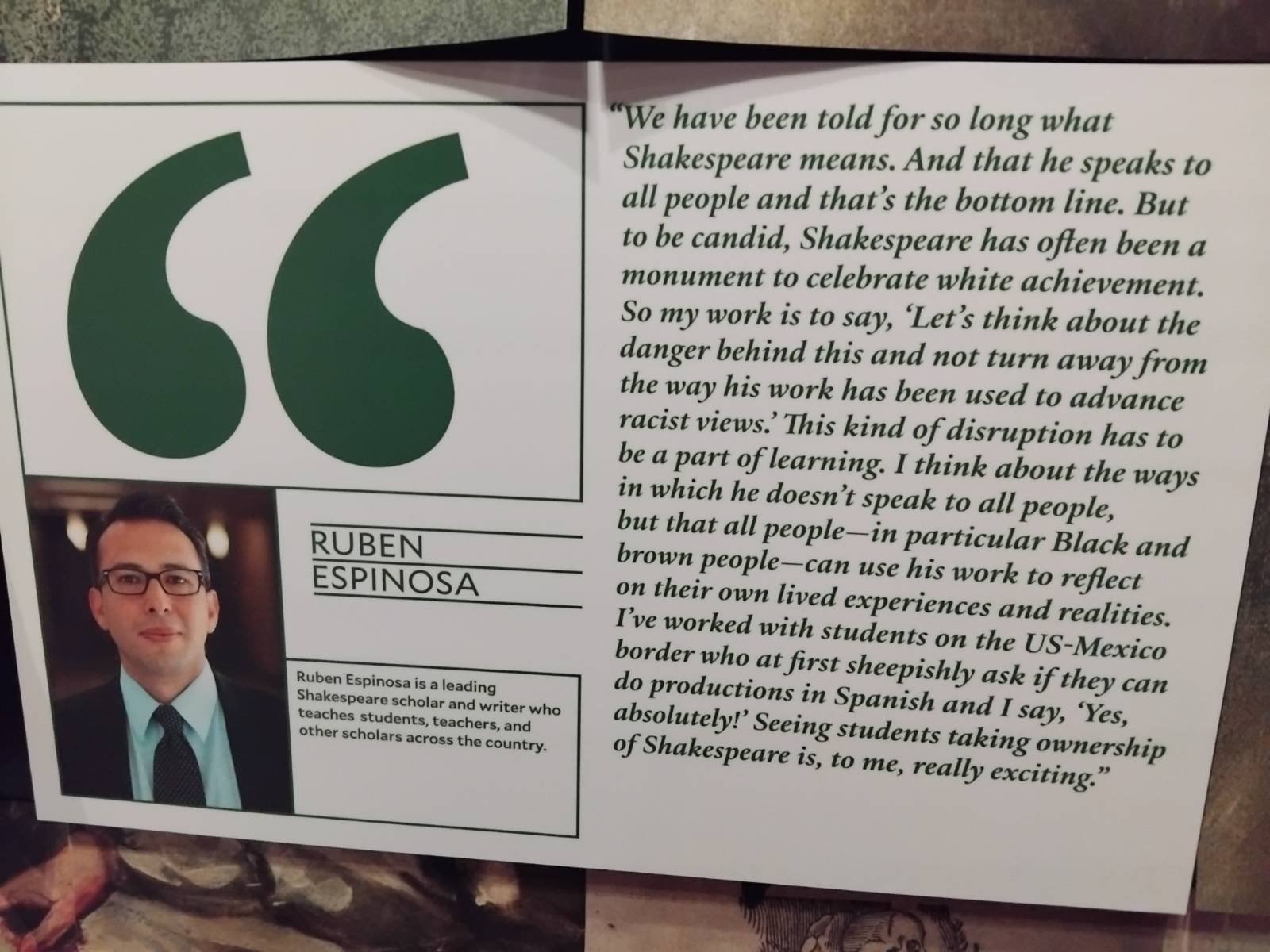
Shakespeare and the culture war

The left and the right both get on my nerves. 

In The Telegraph’s article about the danger of Shakespeare’s birthplace getting “decolonised” (whatever that means), they mentioned “a 2022 collaborative research project between the trust and Dr Helen Hopkins, an academic at the University of Birmingham”, and said: 

“This idea of Shakespeare’s universal genius “benefits the ideology of white European supremacy”, it was claimed.

[…] Veneration of Shakespeare is therefore part of a “white Anglo-centric, Eurocentric, and increasingly ‘West-centric’ worldviews that continue to do harm in the world today”.

The project recommended that Shakespeare’s Birthplace Trust recognise that “the narrative of Shakespeare’s greatness has caused harm – through the epistemic violence”.”

Somebody should read Jonathan Bate’s The Genius of Shakespeare

“The project also recommended that the trust present Shakespeare not as the “greatest”, but as “part of a community of equal and different writers and artists from around the world”.” 

Equal? Very funny. 

I looked up Helen Hopkins. The profile on the university’s website says: 

“Helen’s publications focus on how material objects can both challenge and perpetuate existing power structures, particularly through commemorative practices in a range of cultural institutions around the world. Her research highlights the ways in which these practices shape historical narratives, aiming to subvert dominant power dynamics and identify an inclusive, anti- and de-colonial form of cultural diplomacy that challenges Shakespeare's historical usage as a tool of cultural supremacy.” 

Buzzwords, buzzwords, buzzwords. And: 

“Helen is currently working on her monograph on the Shakespeare Birthplace Trust’s international collections as well as two book chapters and one article on Shakespeare, soft power, and material culture - forthcoming in 2024/25.” 

Why does the Shakespeare Birthplace Trust work with someone who clearly hates Shakespeare? Look at the list of publications. Look at the list of conferences. This is someone who takes zero interest in the plays and the sonnets, and has zero insight to offer about them.

But this is nothing new. Nor is it unusual. Museums in the West are so often poisoned by ideology and hatred of the West, filled with shame and guilt and sanctimony. Such attitudes—dismissive and resentful of Shakespeare, condescending towards the audience—I also saw when visiting the Folger Shakespeare Library in Washington, DC last month.

But when Shakespeare is dragged into the stupid culture war, it also attracts philistines on the right who don’t know anything about Shakespeare and don’t care. 

For instance, the Shakespeare Birthplace Trust had a Twitter thread about compelling female characters in the plays, for 8/3.  

The last tweet of the thread says: 

“You can learn more about these compelling female figures explored at our upcoming exhibition at Shakespeare's New Place, opening this spring…”

Some guy (clearly a sock account) replies: 

“You're the Shakespeare's Birthplace Trust - not the Random Female Figure Trust.” 

What? 

Another example is the controversy not long ago about Romeo and Juliet. I don’t think Francesca Amewudah-Rivers is right for Juliet because Juliet is meant to be strikingly beautiful (the same way I think Lily Collins has the looks for Snow White but Kristen Stewart and Rachel Zegler do not), but the uproar was over Juliet being black—you can tell by the comments that these are people who have no interest in Shakespeare, they neither read nor watch the plays, they know nothing about the history of playing Shakespeare, nor do they care—this, to them, is just another part of the culture war. It is true that modern Shakespeare productions often mess with the plays, either to create something “bold” and “subversive”, or to make them “accessible to modern audiences”—I have often complained about them—but some race-bending or gender-swapping can work perfectly fine if done thoughtfully or if not drawing attention to itself. My favourite King Lear is the Don Warrington production. My favourite Coriolanus is the David Oyelowo. And as I wrote in a recent blog post about Nicholas Hytner’s Julius Caesar, a contemporary production of Julius Caesar in which Cassius, Casca, and a few other conspirators are changed into women works very well—just look at social media, look at all the women embracing violence and revolution—and Michelle Fairley is very good at Cassius. These changes are very different from the ones in the upcoming Cymbeline at the Globe, in which Imogen is now black, Cymbeline is black and a woman, Posthumus is a woman—choices that scream “look at me, see how subversive I am”. 

The philistines on both sides get on my nerves. Just leave Shakespeare to people who love and have deep understanding of the plays.