1/ A new BBC adaptation of Les Miserables is coming out.
I’ve just realised I’ve seen 3 adaptations:
- The 1998 version, dir. Bille August, with Liam Neeson. I don’t remember it very well, but remember thinking that it was excellent.
- The 2012 musical, dir. Tom Hooper, with Hugh Jackman. A great adaptation.
- If I remember correctly, I’ve also seen the 2000 French miniseries, dir. Josée Dayan, with Gerard Depardieu.
Might as well watch this one, though I’ll probably hate it because it’s by Andrew Davies.
My general impression is that there are good adaptations of Les Miserables, unlike Anna Karenina or Wuthering Heights, but perhaps I’m wrong—I haven’t read Victor Hugo’s book.
2/ I’ve seen 5 adaptations of Anna Karenina:
- 1935, dir. Clarence Brown, with Greta Garbo. American.
- 1948, dir. Julien Duvivier, with Vivien Leigh. British.
- 1967, dir. Aleksandr Zarkhi, with Tatiana Samoilova. Russian.
- 1997, dir. Bernard Rose, with Sophie Marceau. American.
- 2012, dir. Joe Wright, with Keira Knightley. British.
Probably the work I followed the most obsessively. I either saw all 5 adaptations before reading Tolstoy book, or saw 4 of them, and watched the Sophie Marceau version whilst reading.
So far none of the Anna Karenina adaptations is good—Greta Garbo looks too hard and imposing, Vivien Leigh doesn’t look right even though I love her, Tatiana Samoilova has a moustache, Sophie Marceau looks right but can’t act, and Keira Knightley is too bony and too sure of herself to be Anna; at the same time, the early adaptations tend to portray Karenin as a monster, whilst the 2012 one portray him as too good, too nice, and too good-looking (Jude Law), whereas the character in the book is a lot more complicated.
I’d like to see the 1977 series with Nicola Pagett, the 1985 version with Jacqueline Bisset, and the 2013 miniseries with Vittoria Puccini. Currently most interested in the 2013 version because, if we ignore the fact that she’s supposed to look Russian, Vittoria Puccini seems to have the right look for Anna.
3/ Haven’t seen any adaptation of War and Peace.
4/ I’ve seen 3 adaptations of Jane Eyre:
- 1996, dir. Franco Zeffirelli, with Charlotte Gainsbourg.
- 2006, TV, dir. Susanna White, with Ruth Wilson.
- 2011, dir. Cary Fukunaga, with Mia Wasikowska.
The 1996 was a failure, partly because of the changes and partly because of Charlotte Gainsbourg (one of the actresses I most hate), but I liked William Hurt in it.
The best one is 2006.
The 2011 version receives lots of praise, but it’s overrated—I have never thought highly of Mia Wasikowska as an actress, and Michael Fassbender can act with his face and body but never his voice, it is always monotonous and devoid of feeling. I remember laughing at the outburst scene at the cinema, when Jane Eyre (Mia Wasikowska) confessed her feelings.
If you want a Jane Eyre film with feeling, watch the 2006 version.
5/ Officially, I’ve only seen 2 films based on Wuthering Heights:
- 1970, dir. Robert Fuest, with Anna Calder-Marshall and Timothy Dalton. Incomplete adaptation.
- 1992, dir. Peter Kosminsky, with Juliette Binoche and Ralph Fiennes.
In the 1992 film, Ralph Fiennes has the qualities for Heathcliff, but Juliette Binoche lacks the fire, wildness, and savagery of Cathy—much as I like her in other films, she looks too nice and sweet for the role.
I may or may not have seen another one.
Other adaptations don’t interest me at all, because the casting just doesn’t look right, which is probably the hardest thing about adapting Wuthering Heights. I mean, Laurence Olivier as Heathcliff? Or black Heathcliff? Or Tom Hardy as Heathcliff with Charlotte Riley as Cathy? Nah.
Right now the only version I’m mildly interested in is the Luis Bunuel one.
6/ I’ve seen 2 films based on Sense and Sensibility:
- 1995, dir. Ang Lee, with Emma Thompson and Kate Winslet.
- 2008, TV, dir. John Alexander, with Hattie Morahan and Charity Wakefield.
The 2008 version is very good, but it is sexed up, which is something you expect when it’s written by Andrew Davies.
I love the 1995 film, and I love how Emma Thompson shifts the balance from Sense (as in Jane Austen’s novel) to Sensibility.
7/ I’ve seen 2 adaptations of Emma:
- 1996 film version, dir. Douglas McGrath, with Gwyneth Paltrow.
- Clueless (1995), the modernisation of Emma, dir. Amy Heckerling, with Alicia Silverstone.
Nothing beats Clueless. I see Clueless as one of the best teen films, and one of the best loose adaptations of a literary work. Amy Heckerling moves the setting to high school in modern day America, whilst retaining the spirit of Jane Austen’s novel. It is a great work.
8/ With Pride and Prejudice, I don’t remember the Keira Knightley version (2005) and couldn’t finish the Jennifer Ehle version (1995).
I have always hold a personal grudge against the 1995 version, because Andrew Davies does lots of harm to the understanding of Jane Austen, by creating a charming and handsome Mr Darcy (Colin Firth) and leading to massive misconceptions of Pride and Prejudice and Jane Austen’s works in general.
I also believe that the lack of understanding of Pride and Prejudice and Jane Austen’s views on men and relationships contributes to the misunderstanding of Mansfield Park.
I will not talk about Bridget Jones's Diary, nor the 1999 version of Mansfield Park with Frances O’Connor. Let’s pretend they didn’t exist.
9/ I’ve seen 3 adaptations of Great Expectations:
- 1946, dir. David Lean, with John Mills as Pip, Jean Simmons and Valerie Hobson as Estella, and Martita Hunt as Miss Havisham.
- 1998, modernisation, dir. Alfonso Cuaron, with Ethan Hawke as Pip (now called Finn) and Gwyneth Paltrow as Estella.
- 2012, dir. Mike Newell, with Jeremy Irvine as Pip, Holliday Grainger as Estella, and Helena Bonham Carter as Miss Havisham.
I have a vague feeling of having seen the 1999 version with Ioan Gruffudd, but am not sure.
Of these films, the best one is the David Lean film, but the Mike Newell has some good moments, especially with Ralph Fiennes as Magwitch and Helena Bonham Carter as Miss Havisham.
The 1998 film is forgettable. I have always maintained that a modernised Great Expectations would be The Great Gatsby.
10/ Up till now, I haven’t seen any of the Dracula or Frankenstein films, except for Brides of Dracula, which isn’t really an adaptation anyway.
Updated at 5:30pm: I have seen the Francis Ford Coppola film Bram Stoker's Dracula. Not a fan.
_______________________________________________
It turns out that, after all, I don’t dislike film adaptations. In fact, with certain works, I keep watching different versions and compare. Each adaptation is a new take on the work, and another chance to go through the story and live with the characters again.
Showing posts with label Vivling. Show all posts
Showing posts with label Vivling. Show all posts
Tuesday, 1 January 2019


Sunday, 2 December 2018
On remakes
1/ Generally speaking, the majority of remakes are unnecessary and/or bad. However, I’m not against remakes per se.
2/ I am, as a principle, against remakes that are unnecessary and offer nothing new. What does David Lee Fisher offer in his 2005 remake of The Cabinet of Dr Caligari, except sound? Even the visual style is the same. And what after all is the point of Gus van Sant’s shot-for-shot remake of Psycho—with colour? Everyone I know, and perhaps everyone, associates Psycho with Anthony Perkins, not Vince Vaughn.
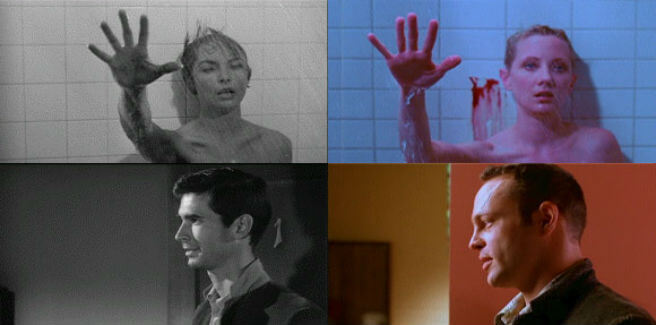
It’s because of this reason that I embrace the new Suspiria (which I intend to watch) and don’t understand some people’s complaint that Luca Guadagnino doesn’t want the same style and colour style of Dario Argento’s film.
Faithfulness may be a good thing for a film adaptation of a book (though it depends), but what do we need a remake for, if it offers nothing new? For filmgoers who only watch new films and refuse to watch B&W films and silent films? It is their problem that they deny history and the legacy of cinema, and miss out on masterpieces.
3/ As a principle, I’m also against remakes of films that are already regarded as among the greatest films ever made.
For example, I keep hearing rumours about a Gone with the Wind remake. Why would you remake a film that got 10 Oscars? I can’t think of any reason.
I’ve just discovered, though, that there’s a 2016 Ben-Hur. To be a precise, it’s not really a remake, but a 5th adaptation of the novel—however, the other adaptations are a silent short film, a silent film, and an animation, so this new film by Timur Bekmambetov would be directly compared to the William Wyler film, which got 11 Oscars.
Even the 1995 TV version of A Streetcar Named Desire is not a wise idea, in my opinion. Glenn Jordan’s take on the play is different from Elia Kazan’s—closer to Tennessee Williams’s play, if I remember correctly, so in a sense it does offer something new. At the same time, how can you compare to the cast of the 1951 film, especially Vivien Leigh and Marlon Brando? Alec Baldwin was very brave to take on one of Marlon Brando’s best roles, and Jessica Lange looked more like she was playing Vivien Leigh as Blanche DuBois.
4/ For some reason, all American remakes of Asian films I have seen are terrible. That includes The Departed, an acclaimed film which got Martin Scorsese an Oscar—the Hong Kong original Infernal Affairs is much better.
Spike Lee’s remake of Oldboy I haven’t seen, but it looks like a big mistake, judging by the cast. The story is also, in some sense, very Asian.
5/ However, I’m not against remakes in another language, country, and culture. In fact, when they’re good, I love them even more than standard remakes.

The best remakes of this type that I can think of are The Handmaiden and Untold Scandal, South Korean remakes or adaptations of Western material—Fingersmith and Dangerous Liaisons respectively. They are excellent films on their own. As remakes/ adaptations, they retain the spirit of the original whilst adapting the story to the culture and traditions in South Korea, so they don’t feel foreign.
I haven’t seen A Fistful of Dollars, but I like the idea of it as a Western remake of Akira Kurosawa’s Yojimbo. Same with The Magnificent Seven and The Seven Samurai.
I suppose the question here is whether the remake in another culture offers anything new (as in the case of The Handmaiden) or just takes good material and makes it in English for filmgoers who are too lazy to watch films with subtitles. In the latter case, those people should watch dubbed films instead, and I’m saying that despite being against dubbing.
6/ Here’s an unpopular opinion: I think David Fincher’s The Girl with the Dragon Tattoo is better than the Swedish version.
2/ I am, as a principle, against remakes that are unnecessary and offer nothing new. What does David Lee Fisher offer in his 2005 remake of The Cabinet of Dr Caligari, except sound? Even the visual style is the same. And what after all is the point of Gus van Sant’s shot-for-shot remake of Psycho—with colour? Everyone I know, and perhaps everyone, associates Psycho with Anthony Perkins, not Vince Vaughn.
It’s because of this reason that I embrace the new Suspiria (which I intend to watch) and don’t understand some people’s complaint that Luca Guadagnino doesn’t want the same style and colour style of Dario Argento’s film.
Faithfulness may be a good thing for a film adaptation of a book (though it depends), but what do we need a remake for, if it offers nothing new? For filmgoers who only watch new films and refuse to watch B&W films and silent films? It is their problem that they deny history and the legacy of cinema, and miss out on masterpieces.
3/ As a principle, I’m also against remakes of films that are already regarded as among the greatest films ever made.
For example, I keep hearing rumours about a Gone with the Wind remake. Why would you remake a film that got 10 Oscars? I can’t think of any reason.
I’ve just discovered, though, that there’s a 2016 Ben-Hur. To be a precise, it’s not really a remake, but a 5th adaptation of the novel—however, the other adaptations are a silent short film, a silent film, and an animation, so this new film by Timur Bekmambetov would be directly compared to the William Wyler film, which got 11 Oscars.
Even the 1995 TV version of A Streetcar Named Desire is not a wise idea, in my opinion. Glenn Jordan’s take on the play is different from Elia Kazan’s—closer to Tennessee Williams’s play, if I remember correctly, so in a sense it does offer something new. At the same time, how can you compare to the cast of the 1951 film, especially Vivien Leigh and Marlon Brando? Alec Baldwin was very brave to take on one of Marlon Brando’s best roles, and Jessica Lange looked more like she was playing Vivien Leigh as Blanche DuBois.
4/ For some reason, all American remakes of Asian films I have seen are terrible. That includes The Departed, an acclaimed film which got Martin Scorsese an Oscar—the Hong Kong original Infernal Affairs is much better.
Spike Lee’s remake of Oldboy I haven’t seen, but it looks like a big mistake, judging by the cast. The story is also, in some sense, very Asian.
5/ However, I’m not against remakes in another language, country, and culture. In fact, when they’re good, I love them even more than standard remakes.
The best remakes of this type that I can think of are The Handmaiden and Untold Scandal, South Korean remakes or adaptations of Western material—Fingersmith and Dangerous Liaisons respectively. They are excellent films on their own. As remakes/ adaptations, they retain the spirit of the original whilst adapting the story to the culture and traditions in South Korea, so they don’t feel foreign.
I haven’t seen A Fistful of Dollars, but I like the idea of it as a Western remake of Akira Kurosawa’s Yojimbo. Same with The Magnificent Seven and The Seven Samurai.
I suppose the question here is whether the remake in another culture offers anything new (as in the case of The Handmaiden) or just takes good material and makes it in English for filmgoers who are too lazy to watch films with subtitles. In the latter case, those people should watch dubbed films instead, and I’m saying that despite being against dubbing.
6/ Here’s an unpopular opinion: I think David Fincher’s The Girl with the Dragon Tattoo is better than the Swedish version.
Tuesday, 20 June 2017
The best 10 films of every decade from the 1940s to 2000s- new list
My choice.
Why? Because I love lists.
- The 40s:
The Great Dictator (1940)
Casablanca (1942)
Gaslight (1944)
Brief Encounter (1945)
It's a Wonderful Life (1946)
The Killers (1946)
The Best Years of Our Lives (1946)
Bicycle Thieves (1948)
The Treasure of the Sierra Madre (1948)
The Heiress (1949)
- The 50s:
All about Eve (1950)
Sunset Boulevard (1950)
A Streetcar Named Desire (1951)
On the Waterfront (1954)
Witness for the Prosecution (1957)
12 Angry Men (1957)
Nights of Cabiria (1957)
Wild Strawberries (1957)
The Seventh Seal (1957)
Vertigo (1958)
- The 60s:
The Apartment (1960)
Psycho (1960)
Winter Light (1963)
8 ½ (1963)
The Woman in the Dunes (1964)
Dr. Strangelove or: How I Learned to Stop Worrying and Love the Bomb (1964)
My Fair Lady (1964)
Persona (1966)
Blowup (1966)
2001: A Space Odyssey (1968)
- The 70s:
The Private Life of Sherlock Holmes (1970)
Cries and Whispers (1972)
The Godfather (1972)
Last Tango in Paris (1972)
The Godfather Part II (1974)
The Conversation (1974)
Chinatown (1974)
Dog Day Afternoon (1975)
Taxi Driver (1976)
Annie Hall (1977)
- The 80s:
Raging Bull (1980)
On Golden Pond (1981)
Sophie's Choice (1982)
Ran (1985)
Rain Man (1988)
The Accused (1988)
My Left Foot (1989)
Monsieur Hire (1989)
Sex, Lies, and Videotape (1989)
Dekalog (1989)
- The 90s:
Goodfellas (1990)
The Double Life of Veronique (1991)
The Silence of the Lambs (1991)
Raise the Red Lantern (1991)
Three Colours: Blue (1993)
To Live (1994)
Pulp Fiction (1994)
The Shawshank Redemption (1994)
Happy Together (1997)
Festen (1998)
- The 2000s:
Memento (2000)
The Pianist (2002)
Spring, Summer, Fall, Winter... and Spring (2003)
2046 (2004)
Million Dollar Baby (2004)
Brokeback Mountain (2005)
Babel (2006)
There Will Be Blood (2007)
Before the Devil Knows You're Dead (2007)
The Curious Case of Benjamin Button (2007)
Why? Because I love lists.
- The 40s:
The Great Dictator (1940)
Casablanca (1942)
Gaslight (1944)
Brief Encounter (1945)
It's a Wonderful Life (1946)
The Killers (1946)
The Best Years of Our Lives (1946)
Bicycle Thieves (1948)
The Treasure of the Sierra Madre (1948)
The Heiress (1949)
- The 50s:
All about Eve (1950)
Sunset Boulevard (1950)
A Streetcar Named Desire (1951)
On the Waterfront (1954)
Witness for the Prosecution (1957)
12 Angry Men (1957)
Nights of Cabiria (1957)
Wild Strawberries (1957)
The Seventh Seal (1957)
Vertigo (1958)
- The 60s:
The Apartment (1960)
Psycho (1960)
Winter Light (1963)
8 ½ (1963)
The Woman in the Dunes (1964)
Dr. Strangelove or: How I Learned to Stop Worrying and Love the Bomb (1964)
My Fair Lady (1964)
Persona (1966)
Blowup (1966)
2001: A Space Odyssey (1968)
- The 70s:
The Private Life of Sherlock Holmes (1970)
Cries and Whispers (1972)
The Godfather (1972)
Last Tango in Paris (1972)
The Godfather Part II (1974)
The Conversation (1974)
Chinatown (1974)
Dog Day Afternoon (1975)
Taxi Driver (1976)
Annie Hall (1977)
- The 80s:
Raging Bull (1980)
On Golden Pond (1981)
Sophie's Choice (1982)
Ran (1985)
Rain Man (1988)
The Accused (1988)
My Left Foot (1989)
Monsieur Hire (1989)
Sex, Lies, and Videotape (1989)
Dekalog (1989)
- The 90s:
Goodfellas (1990)
The Double Life of Veronique (1991)
The Silence of the Lambs (1991)
Raise the Red Lantern (1991)
Three Colours: Blue (1993)
To Live (1994)
Pulp Fiction (1994)
The Shawshank Redemption (1994)
Happy Together (1997)
Festen (1998)
- The 2000s:
Memento (2000)
The Pianist (2002)
Spring, Summer, Fall, Winter... and Spring (2003)
2046 (2004)
Million Dollar Baby (2004)
Brokeback Mountain (2005)
Babel (2006)
There Will Be Blood (2007)
Before the Devil Knows You're Dead (2007)
The Curious Case of Benjamin Button (2007)
Saturday, 25 July 2015
The best films of the 40s, 50s, 60s, 70s, 80s, 90s and 00s (my choice)- 4th update
(originally posted on 17/10/2014).
Such a list only shows how little I've watched (very often, an excellent film is not mentioned here simply because I haven't watched it), but I'm shamelessly making and publishing it anyway. The ones in bold type are masterpieces and strong favourites, and will certainly remain in the list (in other words: will not be removed at any cost), the other films can be replaced when I discover/ remember something greater.
- The 40s:
The Great Dictator (1940)
The Philadelphia Story (1940)
Casablanca (1942)
Gaslight (1944)
Brief Encounter (1945)
It's a Wonderful Life (1946)
The Killers (1946)
The Best Years of Our Lives (1946)
The Bicycle Thief (1948)
The Heiress (1949)
- The 50s:
All about Eve (1950)
Sunset Boulevard (1950)
In a Lonely Place (1950)
A Streetcar Named Desire (1951)
On the Waterfront (1954)
The Killing (1956)
Witness for the Prosecution (1957)
12 Angry Men (1957)
Vertigo (1958)
Anatomy of a Murder (1959)
- The 60s:
The Apartment (1960)
Psycho (1960)
Vivre sa vie (1962)
The Insect Woman (1963)
8 ½ (1963)
The Woman in the Dunes (1964)
Dr. Strangelove or: How I Learned to Stop Worrying and Love the Bomb (1964)
My Fair Lady (1964)
Blowup (1966)
2001: A Space Odyssey (1968)
- The 70s:
The Private Life of Sherlock Holmes (1970)
The Godfather (1972)
Last Tango in Paris (1972)
The Godfather Part II (1974)
The Conversation (1974)
Chinatown (1974)
Dog Day Afternoon (1975)
Scent of a Woman (1975)
Taxi Driver (1976)
Autumn Sonata (1978)
- The 80s:
Raging Bull (1980)
On Golden Pond (1981)
Sophie's Choice (1982)
Scarface (1983)
Ran (1985)
Rain Man (1988)
The Accused (1988)
A Short Film About Love (1988)
My Left Foot (1989)
Monsieur Hire (1989)
- The 90s:
Goodfellas (1990)
The Silence of the Lambs (1991)
Raise the Red Lanterns (1991)
A Few Good Men (1992)
To Live (1994)
The Shawshank Redemption (1994)
Titanic (1997)
Happy Together (1997)
Central do Brasil (1998)
Magnolia (1999)
- The 2000s:
Memento (2000)
À la folie... pas du tout (2002)
The Pianist (2002)
Spring, Summer, Fall, Winter... and Spring (2003)
2046 (2004)
Million Dollar Baby (2004)
Brokeback Mountain (2005)
There Will Be Blood (2007)
Before the Devil Knows You're Dead (2007)
The Curious Case of Benjamin Button (2007)
Comment!
Such a list only shows how little I've watched (very often, an excellent film is not mentioned here simply because I haven't watched it), but I'm shamelessly making and publishing it anyway. The ones in bold type are masterpieces and strong favourites, and will certainly remain in the list (in other words: will not be removed at any cost), the other films can be replaced when I discover/ remember something greater.
- The 40s:
The Great Dictator (1940)
The Philadelphia Story (1940)
Casablanca (1942)
Gaslight (1944)
Brief Encounter (1945)
It's a Wonderful Life (1946)
The Killers (1946)
The Best Years of Our Lives (1946)
The Bicycle Thief (1948)
The Heiress (1949)
- The 50s:
All about Eve (1950)
Sunset Boulevard (1950)
In a Lonely Place (1950)
A Streetcar Named Desire (1951)
On the Waterfront (1954)
The Killing (1956)
Witness for the Prosecution (1957)
12 Angry Men (1957)
Vertigo (1958)
Anatomy of a Murder (1959)
- The 60s:
The Apartment (1960)
Psycho (1960)
Vivre sa vie (1962)
The Insect Woman (1963)
8 ½ (1963)
The Woman in the Dunes (1964)
Dr. Strangelove or: How I Learned to Stop Worrying and Love the Bomb (1964)
My Fair Lady (1964)
Blowup (1966)
2001: A Space Odyssey (1968)
- The 70s:
The Private Life of Sherlock Holmes (1970)
The Godfather (1972)
Last Tango in Paris (1972)
The Godfather Part II (1974)
The Conversation (1974)
Chinatown (1974)
Dog Day Afternoon (1975)
Scent of a Woman (1975)
Taxi Driver (1976)
Autumn Sonata (1978)
- The 80s:
Raging Bull (1980)
On Golden Pond (1981)
Sophie's Choice (1982)
Scarface (1983)
Ran (1985)
Rain Man (1988)
The Accused (1988)
A Short Film About Love (1988)
My Left Foot (1989)
Monsieur Hire (1989)
- The 90s:
Goodfellas (1990)
The Silence of the Lambs (1991)
Raise the Red Lanterns (1991)
A Few Good Men (1992)
To Live (1994)
The Shawshank Redemption (1994)
Titanic (1997)
Happy Together (1997)
Central do Brasil (1998)
Magnolia (1999)
- The 2000s:
Memento (2000)
À la folie... pas du tout (2002)
The Pianist (2002)
Spring, Summer, Fall, Winter... and Spring (2003)
2046 (2004)
Million Dollar Baby (2004)
Brokeback Mountain (2005)
There Will Be Blood (2007)
Before the Devil Knows You're Dead (2007)
The Curious Case of Benjamin Button (2007)
Comment!
Friday, 12 June 2015
Brief Encounter; and my 5 favourite romantic films

A love story, between a doctor and a housewife who are neither particularly good-looking, nor young- both are married and with children. They meet in a railway station's café and, enjoying each other's company, they agree to meet every Thursday, but soon find out that their innocent and casual relationship turns into something much stronger, and deeper. Brief Encounter has been chosen by Time as the best romantic film ever made and it's not difficult to see why, though the couple don't consummate their relationship, because the film focuses on the tension and struggle in Laura's mind, on the conflicting feelings of passion, longing, happiness and guilt, degradation. There are several wonderful scenes in the film, but the most moving one is perhaps the farewell, the most retrained of farewells ever- for the good of everybody, Laura and Alec know they must part and therefore try to enjoy their last moments together, but their last precious minutes are interrupted by a garrulous friend and their farewell can only be a soft shoulder squeeze.
Beautiful film by David Lean. This is the film that has inspired The Apartment, according to Billy Wilder himself.
________________________________________________
My 5 favourite love stories in cinema:
Casablanca (1942)
The Apartment (1960)
Brief Encounter (1945)
Breakfast at Tiffany's (1961)
Waterloo Bridge (1940)
Thursday, 4 June 2015


Wednesday, 20 May 2015
10 films that I'm crazy crazy about
Updated. Originally published on 21/10/2013.
1/ The Apartment (Billy Wilder)
2/ Sunset Boulevard (Billy Wilder)
3/ Ladri di bicilette (Vittorio De Sica)
4/ Casablanca (Michael Curtiz)
5/ A Streetcar Named Desire (Elia Kazan)
6/ Taxi Driver (Martin Scorsese)
7/ The Godfather (Francis Ford Coppola)
8/ Spring, Summer, Fall, Winter... and Spring (Kim Ki-duk)
9/ The Best Years of Our Lives (William Wyler)
10/ Happy Together (Wong Kar-wai)
1/ The Apartment (Billy Wilder)
2/ Sunset Boulevard (Billy Wilder)
3/ Ladri di bicilette (Vittorio De Sica)
4/ Casablanca (Michael Curtiz)
5/ A Streetcar Named Desire (Elia Kazan)
6/ Taxi Driver (Martin Scorsese)
7/ The Godfather (Francis Ford Coppola)
8/ Spring, Summer, Fall, Winter... and Spring (Kim Ki-duk)
9/ The Best Years of Our Lives (William Wyler)
10/ Happy Together (Wong Kar-wai)
Sunday, 21 September 2014
On the Waterfront
Just watched On the Waterfront.
I'm too overwhelmed to write anything. What can top this Elia Kazan- Marlon Brando collaboration? Perhaps only the masterpiece that combines the genius of Elia Kazan, Marlon Brando and Vivien Leigh.
I'm too overwhelmed to write anything. What can top this Elia Kazan- Marlon Brando collaboration? Perhaps only the masterpiece that combines the genius of Elia Kazan, Marlon Brando and Vivien Leigh.
Thursday, 5 June 2014
Another "Anna Karenina" film
Looks rather good.
Lou de Laâge doesn't look like Kitty to me, but Vittoria Puccini as Anna, Santiago Cabrera as Vronsky and Benjamin Sadler as Karenin seem OK. It of course depends on the screenplay, dialogues, acting, chemistry between actors... but for now I feel quite pleased with the trailer and look forward to watching this adaptation. Hopefully it will do Tolstoy some justice, because so far all the versions I've watched- 1935 (Greta Garbo), 1948 (Vivien Leigh), 1967 (Tatiana Samoilova), 1997 (Sophie Marceau) and 2012 (Keira Knightley), do not really capture the essence of the novel.
[Have here the 1977 version (Nicola Pagett) as well, but I haven't had time to watch it].
It may be hard to find this one though, it's only a miniseries.
Wednesday, 23 April 2014
Cate Blanchett in "Blue Jasmine"
Before watching "Blue Jasmine" I had 2 preconceptions.
1 was that Cate Blanchett wouldn't disappoint me, and she didn't. As I've often said, Meryl Streep and Cate Blanchett are the 2 best actresses working today, and 2 of the greatest of all time. But that's also why I thought she wouldn't surprise me.

I was wrong. I was blown away.
"Blue Jasmine" tends to be compared to "A streetcar named Desire"- it's similar enough to remind one of Tennessee Williams's play and different enough to be a Woody Allen film rather than a remake. The film as a whole, I think, doesn't measure up to the 1951 "Streetcar" film in some aspects: the other actors are rather forgettable (except Sally Hawkins), the supporting characters can be inconsistent or simply caricatural, a few details (such as the 2 moments of revelation) seem quite contrived, Ginger's house is unrealistically, unconvincingly spacious, and then the plot doesn't have the dynamic between 2 persons, 2 forces, 2 sets of values (though one may defend the last point by arguing that Woody Allen chooses to focus on Jasmine and present her as causing her own downfall and destroying everything for everybody and that I'm simply biased).
 However, with Cate, these things don't matter greatly; and if they do, the film should nevertheless be watched for Cate alone- hers is 1 of the most outstanding, breathtaking and haunting performances in film history. I remember watching the 1995 TV adaptation of "Streetcar", looking at Jessica Lange and seeing, hearing Vivien Leigh. Cate escapes that, though her character Jasmine is not the same as Blanche DuBois, there was still a danger that her performance as Jasmine could be a replica of Vivien's, but she presents a different interpretation, a different approach, a more naturalistic style of acting, and it works beautifully. She mumbles, she rambles, she shakes, she bursts into tears, she stares into space, she looks the other way, above all, we look at her and see Jasmine, not Cate Blanchett, not Blanche DuBois, not Vivien Leigh, we see the madness and despair in her eyes and feel her pain and watch her fall apart. Some actors act only with the face, some also with hands and arms and legs and feet, with movements and gestures and voice- Cate Blanchett in "Blue Jasmine", like Vivien in "Streetcar", acts with every fibre in her body. She's so magnificent and hypnotic that the flaws of the film almost escape notice.
If asked, I cannot compare Cate's performance as Jasmine and that of Vivien as Blanche, it's impossible and both are 2 of the most deserving Oscar winners. But taking the career as a whole I must say that, as much as it pains me to say, Cate Blanchett (as well as Meryl Streep) is greater than Vivien at acting- having wider range, greater versatility, she is unrecognisable.
I may say more, but words are inadequate. Just watch the film.
1 was that Cate Blanchett wouldn't disappoint me, and she didn't. As I've often said, Meryl Streep and Cate Blanchett are the 2 best actresses working today, and 2 of the greatest of all time. But that's also why I thought she wouldn't surprise me.
I was wrong. I was blown away.
"Blue Jasmine" tends to be compared to "A streetcar named Desire"- it's similar enough to remind one of Tennessee Williams's play and different enough to be a Woody Allen film rather than a remake. The film as a whole, I think, doesn't measure up to the 1951 "Streetcar" film in some aspects: the other actors are rather forgettable (except Sally Hawkins), the supporting characters can be inconsistent or simply caricatural, a few details (such as the 2 moments of revelation) seem quite contrived, Ginger's house is unrealistically, unconvincingly spacious, and then the plot doesn't have the dynamic between 2 persons, 2 forces, 2 sets of values (though one may defend the last point by arguing that Woody Allen chooses to focus on Jasmine and present her as causing her own downfall and destroying everything for everybody and that I'm simply biased).
 However, with Cate, these things don't matter greatly; and if they do, the film should nevertheless be watched for Cate alone- hers is 1 of the most outstanding, breathtaking and haunting performances in film history. I remember watching the 1995 TV adaptation of "Streetcar", looking at Jessica Lange and seeing, hearing Vivien Leigh. Cate escapes that, though her character Jasmine is not the same as Blanche DuBois, there was still a danger that her performance as Jasmine could be a replica of Vivien's, but she presents a different interpretation, a different approach, a more naturalistic style of acting, and it works beautifully. She mumbles, she rambles, she shakes, she bursts into tears, she stares into space, she looks the other way, above all, we look at her and see Jasmine, not Cate Blanchett, not Blanche DuBois, not Vivien Leigh, we see the madness and despair in her eyes and feel her pain and watch her fall apart. Some actors act only with the face, some also with hands and arms and legs and feet, with movements and gestures and voice- Cate Blanchett in "Blue Jasmine", like Vivien in "Streetcar", acts with every fibre in her body. She's so magnificent and hypnotic that the flaws of the film almost escape notice.
If asked, I cannot compare Cate's performance as Jasmine and that of Vivien as Blanche, it's impossible and both are 2 of the most deserving Oscar winners. But taking the career as a whole I must say that, as much as it pains me to say, Cate Blanchett (as well as Meryl Streep) is greater than Vivien at acting- having wider range, greater versatility, she is unrecognisable.
I may say more, but words are inadequate. Just watch the film.
Monday, 21 April 2014
Vivien Leigh as Catherine Earnshaw
might not have been a bad idea after all.
Catherine Earnshaw in "Wuthering heights" is 1 of the roles Vivien Leigh very much wanted to play but couldn't, together with Ophelia and Elizabeth Bennet and Joan Fontaine's role in "Rebecca".

So far I have generally thought her not perfectly suitable for the role, because she had such a classical, impeccable beauty that didn't seem right for Catherine Earnshaw. But then, could anyone expect the lovely, charming Vivien Leigh to transform into Scarlett O'Hara? Clark Gable, for example, said "I’ll be truthful about it, however; I’ll confess that the first time I saw her I doubted that Vivien could really play Scarlett. That reaction shows I’m no casting director." Vivien not only became Scarlett, spoilt, frivolous, vain, materialistic, manipulative, mischievous and selfish yet charming, determined, strong, independent and smart, but she also made it impossible for (most) people to conceive the idea of a remake of "Gone with the wind" with another actress playing Scarlett, and at the same time, defined the Southern belle so strongly that Bette Davis's performance as Jezebel the year before paled in comparison and so would anyone who played a Southern belle. Come to think of it, Scarlett O'Hara and Catherine Earnshaw are similar in some aspects- both are selfish, both choose money over love, both are full of life and somehow destructive and self-destructive. Vivien must have seen in Scarlett what she had in herself that she could make use of- strength, independence and self-determination. Fans of "Gone with the wind" must be familiar with the legend of the film itself, the making of a masterpiece, the story of how Vivien made up her mind on fighting for the role and beat hundreds of other actresses in the race (including Katharine Hepburn and Bette Davis) and then proved all doubters wrong, which isn't much different from the way Scarlett O'Hara swears to God "I'll never be hungry again" and does whatever it requires to survive and achieve her goals. Similarly, I think Vivien wanted the main role in "Wuthering heights" not for the sole purpose of acting opposite Laurence Olivier, but because she believed that she had the qualities to portray Catherine Earnshaw. Look at her, Vivien was indeed pulchritudinous, 1 of the most gorgeous actresses to grace the silver screen, if not the most, but in addition to that charm and sweetness and the perfect features, there was something else, indescribable, since Vivien didn't possess the kind of refreshing, innocent and youthful image of Audrey Hepburn, nor the soft, gentle look of Ingrid Bergman, but seemed to have some kind of fire, something wild and fierce, even destructive and dangerous. From what I've read, she was in general a very passionate person, and then had to struggle in "her possession by that uncannily evil monster" (Larry's words). The sentence describing Catherine Earnshaw can apply perfectly to her: "She burned too bright for this world."

Above all, unlike Audrey Hepburn, Marilyn Monroe, Grace Kelly..., Vivien Leigh's not a film star, but an actress, and a great one. And whilst people talk of Katharine Hepburn and Bette Davis more often, I admire Vivien more for the fact that, as she didn't belong to Hollywood, she was as different in her roles as she could, and wasn't stuck to 1 definite persona. These 2 actresses were undoubtedly excellent, but after all in films Katharine Hepburn was always Katharine Hepburn and Bette Davis was always Bette Davis, Vivien, albeit often vivacious, managed to be different, and a decade after Scarlett O'Hara, she again played a Southern belle in "A streetcar named Desire", a totally different one, and again did it so wonderfully and reached such an unimaginable height in acting that she was Blanche DuBois as much as Blanche DuBois was her, that one reads Tennessee Williams's play and hears her voice, that one sees Jessica Lange in the same role in the TV version and only sees Jessica Lange as Vivien as Blanche DuBois (and, as I've read, it's the same with other actresses who have played the character in theatre after Vivien Leigh). Most admirable is the way she made use of her inner demon for her craft, her performance, as she portrayed the smallest nuances, the vulnerability and fragility, the insecurity and desperation and despair underneath the shifting mood, the snobbery and frivolity of the character. Her theatrical acting was the most appropriate approach. She turned into the character, and defined the character.
The only thing to resent is that Vivien made the mistake of choosing theatre over film. And that she didn't get the role of Catherine Earnshaw, which, I now believe, she could have played marvellously.
Catherine Earnshaw in "Wuthering heights" is 1 of the roles Vivien Leigh very much wanted to play but couldn't, together with Ophelia and Elizabeth Bennet and Joan Fontaine's role in "Rebecca".
So far I have generally thought her not perfectly suitable for the role, because she had such a classical, impeccable beauty that didn't seem right for Catherine Earnshaw. But then, could anyone expect the lovely, charming Vivien Leigh to transform into Scarlett O'Hara? Clark Gable, for example, said "I’ll be truthful about it, however; I’ll confess that the first time I saw her I doubted that Vivien could really play Scarlett. That reaction shows I’m no casting director." Vivien not only became Scarlett, spoilt, frivolous, vain, materialistic, manipulative, mischievous and selfish yet charming, determined, strong, independent and smart, but she also made it impossible for (most) people to conceive the idea of a remake of "Gone with the wind" with another actress playing Scarlett, and at the same time, defined the Southern belle so strongly that Bette Davis's performance as Jezebel the year before paled in comparison and so would anyone who played a Southern belle. Come to think of it, Scarlett O'Hara and Catherine Earnshaw are similar in some aspects- both are selfish, both choose money over love, both are full of life and somehow destructive and self-destructive. Vivien must have seen in Scarlett what she had in herself that she could make use of- strength, independence and self-determination. Fans of "Gone with the wind" must be familiar with the legend of the film itself, the making of a masterpiece, the story of how Vivien made up her mind on fighting for the role and beat hundreds of other actresses in the race (including Katharine Hepburn and Bette Davis) and then proved all doubters wrong, which isn't much different from the way Scarlett O'Hara swears to God "I'll never be hungry again" and does whatever it requires to survive and achieve her goals. Similarly, I think Vivien wanted the main role in "Wuthering heights" not for the sole purpose of acting opposite Laurence Olivier, but because she believed that she had the qualities to portray Catherine Earnshaw. Look at her, Vivien was indeed pulchritudinous, 1 of the most gorgeous actresses to grace the silver screen, if not the most, but in addition to that charm and sweetness and the perfect features, there was something else, indescribable, since Vivien didn't possess the kind of refreshing, innocent and youthful image of Audrey Hepburn, nor the soft, gentle look of Ingrid Bergman, but seemed to have some kind of fire, something wild and fierce, even destructive and dangerous. From what I've read, she was in general a very passionate person, and then had to struggle in "her possession by that uncannily evil monster" (Larry's words). The sentence describing Catherine Earnshaw can apply perfectly to her: "She burned too bright for this world."
Above all, unlike Audrey Hepburn, Marilyn Monroe, Grace Kelly..., Vivien Leigh's not a film star, but an actress, and a great one. And whilst people talk of Katharine Hepburn and Bette Davis more often, I admire Vivien more for the fact that, as she didn't belong to Hollywood, she was as different in her roles as she could, and wasn't stuck to 1 definite persona. These 2 actresses were undoubtedly excellent, but after all in films Katharine Hepburn was always Katharine Hepburn and Bette Davis was always Bette Davis, Vivien, albeit often vivacious, managed to be different, and a decade after Scarlett O'Hara, she again played a Southern belle in "A streetcar named Desire", a totally different one, and again did it so wonderfully and reached such an unimaginable height in acting that she was Blanche DuBois as much as Blanche DuBois was her, that one reads Tennessee Williams's play and hears her voice, that one sees Jessica Lange in the same role in the TV version and only sees Jessica Lange as Vivien as Blanche DuBois (and, as I've read, it's the same with other actresses who have played the character in theatre after Vivien Leigh). Most admirable is the way she made use of her inner demon for her craft, her performance, as she portrayed the smallest nuances, the vulnerability and fragility, the insecurity and desperation and despair underneath the shifting mood, the snobbery and frivolity of the character. Her theatrical acting was the most appropriate approach. She turned into the character, and defined the character.
The only thing to resent is that Vivien made the mistake of choosing theatre over film. And that she didn't get the role of Catherine Earnshaw, which, I now believe, she could have played marvellously.
Wednesday, 14 August 2013
Never Before Seen: Vivien Leigh's archive

http://www.bbc.co.uk/news/entertainment-arts-23692733
"...The archive contains many never-before-seen items, including affectionate letters between the Gone With The Wind star and her husband, Laurence Olivier.
It also features diaries, photographs, annotated film and theatre scripts and her numerous awards.
[...] The actress meticulously catalogued more than 7,500 personal letters from friends and colleagues, addressed to both her and Olivier, including missives from TS Eliot, Marilyn Monroe, Winston Churchill and the Queen Mother.
[...] Also on display will be the visitors' book for Leigh and Olivier's Notley Abbey home in Buckinghamshire.
Among the signatories were Humphrey Bogart, Lauren Bacall, Orson Welles, Judy Garland and Rex Harrison..."
http://www.dailymail.co.uk/femail/article-2393172/Vivien-Leigh-life-loves-revealed-new-V-A-display-including-romantic-letters-Laurence-Olivier.html
This is wonderful news. I never knew she wrote diaries, now it turns out she started at the age of 16 and continued till death. There's some uncertainty, of course, because usually I prefer to keep a certain distance from people I admire, especially in this case, when on 1 hand Vivien had bipolar disorder and later contracted TB, which caused her much suffering and which affected her relationships, on the other hand I've heard some stories about her darker side, which I've come to accept as possibilities or probabilities but not facts, and who knows, her diaries may reveal even more shocking things.
Still, it's nice to know about this archive. I'd like to see the letters and the personal photos and backstage photos.
Bonus:


Subscribe to:
Posts (Atom)