Pages

Showing posts with label Ingmar Bergman. Show all posts

Monday, 31 August 2026

Reading the Bible: Job

1/ Does anyone read the Book of Job without feeling disturbed by the cruelty and callousness of God? Why does God, for no reason, take everything away from “one that feared God, and eschewed evil” and make him suffer? 

But the writing—on the sentence level—is magnificent.

“Why died I not from the womb? why did I not give up the ghost when I came out of the belly?

Why did the knees prevent me? or why the breasts that I should suck?

For now should I have lain still and been quiet, I should have slept: then had I been at rest,

With kings and counsellors of the earth, which built desolate places for themselves;

Or with princes that had gold, who filled their houses with silver:

Or as an hidden untimely birth I had not been; as infants which never saw light.

There the wicked cease from troubling; and there the weary be at rest.

There the prisoners rest together; they hear not the voice of the oppressor.

The small and great are there; and the servant is free from his master.

Wherefore is light given to him that is in misery, and life unto the bitter in soul;

Which long for death, but it cometh not; and dig for it more than for hid treasures;

Which rejoice exceedingly, and are glad, when they can find the grave?

Why is light given to a man whose way is hid, and whom God hath hedged in?

For my sighing cometh before I eat, and my roarings are poured out like the waters.

For the thing which I greatly feared is come upon me, and that which I was afraid of is come unto me.

I was not in safety, neither had I rest, neither was I quiet; yet trouble came.” (Job 3:11-26) 

I can see how the Book of Job resonates with Christians who are going through a tough time and longing for death and finding God unjust. 

“Am I a sea, or a whale, that thou settest a watch over me?

When I say, My bed shall comfort me, my couch shall ease my complaint;

Then thou scarest me with dreams, and terrifiest me through visions:

So that my soul chooseth strangling, and death rather than my life.

I loathe it; I would not live alway: let me alone; for my days are vanity.

What is man, that thou shouldest magnify him? and that thou shouldest set thine heart upon him?

And that thou shouldest visit him every morning, and try him every moment?

How long wilt thou not depart from me, nor let me alone till I swallow down my spittle?

I have sinned; what shall I do unto thee, O thou preserver of men? why hast thou set me as a mark against thee, so that I am a burden to myself?

And why dost thou not pardon my transgression, and take away mine iniquity? for now shall I sleep in the dust; and thou shalt seek me in the morning, but I shall not be.” (Job 7:12-21) 

The Book of Job is very quotable, and depicts well the bitterness of a man who suffers and can’t understand why he has to suffer. 

“The earth is given into the hand of the wicked: he covereth the faces of the judges thereof; if not, where, and who is he?” (Job 9:24)

This reminds me of The Brothers Karamazov, especially Ivan’s talk about returning the ticket and rejecting God—the rereading is going to be a very different experience when I have known the Bible.

Like some other parts of the Bible, the Book of Job could be repetitive, but it doesn’t matter because I love the prose, the rhythm of the prose: 

“I put on righteousness, and it clothed me: my judgment was as a robe and a diadem.

I was eyes to the blind, and feet was I to the lame.

I was a father to the poor: and the cause which I knew not I searched out.

And I brake the jaws of the wicked, and plucked the spoil out of his teeth.

Then I said, I shall die in my nest, and I shall multiply my days as the sand.

My root was spread out by the waters, and the dew lay all night upon my branch.

My glory was fresh in me, and my bow was renewed in my hand.” (Job 29:14-20)


2/ I don’t have a lot to say, so I’m just poking at it from different angles. 

“He putteth my feet in the stocks, he marketh all my paths.” (Job 33:11)

Was that line in Shakespeare’s mind when he had Cornwall place Kent in the stocks in King Lear?

Job and Lear both lose everything. Job and Lear both experience extreme suffering. Job and Lear both question existence. 

“How much less man, that is a worm? and the son of man, which is a worm?” (Job 25:6) 

That reminds me of: 

“Is man no more than this? Consider him well.—Thou ow’st the worm no silk, the beast no hide, the sheep no wool, the cat no perfume. Ha, here’s three on’s are sophisticated. Thou art the thing itself; unaccommodated man is no more but such a poor, bare, forked animal as thou art.” (King Lear, Act 3 scene 4) 

Not only King Lear, Job also makes me think of Timon of Athens: together with the change in his fortunes is the change in others’ attitudes. Timon and Lear however are much angrier, and the gods are absent. 

“As flies to wanton boys are we to th’ gods;

They kill us for their sport.” 

(King Lear, Act 4 scene 1) 

Funnily enough, in the Book of Job, God does appear and restore Job’s fortunes but doesn’t answer the questions. 


3/ Ingmar Bergman, who made a few films about human suffering and the silence of God and a crisis of faith, must have loved the Book of Job. 

“But where shall wisdom be found? and where is the place of understanding?

Man knoweth not the price thereof; neither is it found in the land of the living.” (Job 28:12-13) 

The entire chapter is magnificent. For someone who reads the Bible as a literary—rather than religious—text, the Book of Job is a great read, because of the prose and because of the depiction of someone in great suffering who’s questioning God. It’s more literary than some other parts of the Bible I have read, and in the form of a dialogue between Job and his accusing friends. 


4/ Moby-Dick begins and ends with the Book of Job. 

The second quote in Extracts is “Leviathan maketh a path to shine after him; One would think the deep to be hoary,” which comes from Job 41:32. 

The Epilogue quotes “I only am escaped alone to tell thee”, which recurs 4 times in the first chapter. 

I suppose Melville wants to contrast the humility and patience of Job with the hate and anger of Ahab. 

“There is a wisdom that is woe; but there is a woe that is madness.” (Moby-Dick, ch.96) 

Can’t help wondering if Melville, when he wrote that sentence, was thinking of the poem on wisdom in the Book of Job. 

Sunday, 31 August 2025

Why read/ watch plays? (P.3): Plays vs films

Before we begin, I’m going to say that I’m talking about plays in the broad sense: not only live performances but also texts and filmed plays and audio recordings (“Let’s hear a play”); I however exclude musicals.

If we compare cinema and theatre (in the sense of live performance), we can all name the advantages of theatre: the nearness of the audience to the actors, the interaction and immediacy, the fact that no two performances are the same. But if we compare cinema and drama (in the broad sense), I’m afraid most people would only talk about the advantages of cinematic language: the language of image, large scenes, visual effects, and above all, editing and the close-up. It is derogatory when a film or TV series is described as “stagey”; what’s the equivalent for the other way around? 

I myself have loved literature and cinema all my life—my interest in drama is relatively new—but I love Shakespeare. That’s why I want to examine these questions: are films actually superior to plays, or is cinematic language superior to the language of drama, as the derogatory use of “stagey” seems to suggest? What do plays do better than films?

Now you may argue that the word “stagey” only suggests that a film should use cinematic language, but let’s look at the word when it’s used for TV. In the past, TV series, especially TV adaptations of classic novels, were modelled after theatre; now they’re modelled after films, meaning that they’re now meant and expected to be cinematic. Look at the 1972 War and Peace or 1977 Anna Karenina for example. Some people disparage them as stagey, and in some ways these TV series are closer to plays—lots of dialogue and minimal camerawork—but this also means that the screenwriters and directors pay more attention to dialogue and let the scenes unfold. Both series are excellent adaptations that take Tolstoy’s novels seriously and convey the complexity of the characters. Now if you look at the 2013 TV adaptation of Anna Karenina, you can see that it’s modelled after cinema and dialogue is devalued. And I can’t help asking, why do they keep moving the camera? Why do they cut every 4 seconds? (I counted) Why do they not let the scene unfold? I couldn’t even watch beyond 5-10 minutes of the 2018 King Lear for the same reasons, despite my admiration for Anthony Hopkins and Florence Pugh as actors. 

I’m not saying that screen adaptations of classic novels should be closer to plays, nor that they shouldn’t employ cinematic language. I’m also not saying that I’m mainly interested in drama driven by dialogue, driven by words (as my friend Himadri would probably say, who loves plays more than films). But dialogue is increasingly devalued in our mainly visual world—the word “stagey” reflects that—and that I find very sad. 

Films and plays do different things and have different strengths—I love both. In a film, the story and conflict are driven by many things, including dialogue (which some filmmakers unfortunately seem to forget). In a play, drama is driven by dialogue: what we say and what we don’t say and how we say it and how we hide or deceive with words. 

Persona or Cries and Whispers for instance has to be a film—it would not work as a novel or a play or an audio performance. Conversely, Rosmersholm has to be a play—you could of course turn it into a film, but its ambiguity and intricacies cannot be communicated by image or cinematic language. 

And when I watch Shakespeare, which I can’t watch live all the time (I’m just a poor girl, from a poor family), the choice would more often be a recording of a live performance, or a filmed play (like the BBC Television Shakespeare from the 1970s-80s), than a film adaptation. Sometimes a Shakespeare film respects the text, such as the 1993 and 2012 Much Ado About Nothing. Very often, Shakespeare’s words are heavily cut. Chimes at Midnight on its own is probably a passable film, but Orson Welles condenses into two hours the two Henry IV plays, with some bits from Richard II, Henry V, and The Merry Wives of Windsor. The result is a Falstaff—Welles—film with lots of supporting characters: all the others are underdeveloped, but even Falstaff is sentimentalised and simplified. 

Some Shakespeare films also indicate something like a fear of words. The 2015 Macbeth—perhaps I’m being unfair as I didn’t watch all of it—breaks into pieces the “Tomorrow, and tomorrow, and tomorrow” speech, mixing in flashbacks and battle scenes and special effects and drowning music. The main actors, Michael Fassbender and Marion Cotillard, also don’t know how to speak the words. 

Even when we look at Kurosawa’s adaptations of Shakespeare, Ran is a masterpiece, a work of art on its own separate from King Lear, but Throne of Blood is shallow compared to Macbeth: stripped of much dialogue, it is an exciting film, but doesn’t have the complexity of Macbeth; the main characters are reduced to a weak man urged on by an evil wife. Now you might say Throne of Blood uses cinematic language and I should judge it as a film, so I would say that it is not a profound, thought-provoking film. 

Now I have seen many film adaptations of plays, it would be interesting to watch play adaptations of films. 

Friday, 18 August 2023

My 10 favourite films (2023 list)

One film per director. 

Persona (dir. Ingmar Bergman)  

Sunset Boulevard (dir. Billy Wilder) 

Ran (dir. Akira Kurosawa) 

Casablanca (dir. Michael Curtis) 

A Star Is Born (dir. George Cukor) 

The Conversation (dir. Francis Ford Coppola) 

The Phantom of Liberty (dir. Luis Bunuel) 

The Flavour of Green Tea over Rice (dir. Yasujiro Ozu) 

Raise the Red Lantern (dir. Zhang Yimou) 

F for Fake (dir. Orson Welles) 


Friday, 4 September 2020

The Sound of the Mountain: first impressions of Kawabata

1/ After Kokoro, I read 3 other books, without blogging about them: Sarashina Nikki or As I Crossed a Bridge of Dreams by a lady known as Takasue’s daughter (translated by Ivan Morris), Stiff Upper Lip, Jeeves by P. G. Wodehouse, and The Adventures of Sherlock Holmes by Arthur Conan Doyle (a reread, but this time in English). 
I’m now returning to Japanese literature with The Sound of the Mountain by Yasunari Kawabata, translated by Edward G. Seidensticker. Kawabata writes in short, sparse sentences. The prose is not as bare as Soseki’s in Kokoro in terms of descriptions but there is an intensity to Soseki’s writing that isn’t here—Kawabata’s style is more quiet and restrained. 
The novel is about an old man named Ogata Shingo (name in Japanese order), as he looks back on his life and examines his relationships with his family members. Shingo has lived for a long time with his wife Yasuko but never truly loves her, and only married her because of the death of his love, who was her more beautiful sister that he cannot forget. Shingo cannot communicate with either of his children, and both of them fail in their marriages—the daughter Fusako leaves her husband and returns home with 2 children, and the son Shuichi has an affair, leaving his wife Kikuko at home. 
As Shingo experiences lapses of memory, has disturbing dreams about dead people while feeling distant from his living family members, and keeps hearing the sound of the mountain, which he takes to be an omen of his impending death, the only person who can bring some joy to his life is his daughter-in-law Kikuko. However, Shingo doesn’t talk to her about Shuichi’s affairs. 

2/ Look at the section named “The Cherry in the Winter”: 
“On New Year’s Day the occidental way of reckoning ages became official. Shingo was therefore sixty-one. Yasuko sixty-two.” 
This is expanded on later, as the old people watch Satoko, Fusako’s daughter. 
“Yasuko listened. ‘It gives you a strange feeling, doesn’t it? She should be five this year, and all of a sudden she’s three. It doesn’t make all that much difference for me, shifting from sixty-four to sixty-two.’ 
‘But there’s something you haven’t thought of. My birthday comes before yours, and for a while then we’ll be the same age. From my birthday to yours.’ 
Yasuko seemed aware of the fact for the first time. 
‘Quite a discovery. Once in a lifetime.’ 
‘Maybe so’, muttered Yasuko. ‘But it doesn’t do much good to start being the same age this late in life.’” 
Is that not an interesting passage? When my grandma passed away, she was 81 in the Western way of reckoning ages, and 83 in the Eastern way. 
A sudden shift from one system to another is quite something else. 

3/ It is tempting to compare The Sound of the Mountain and Wild Strawberries, because of the similar themes of old age, life and death, family relationships, and failures. However, Shingo is portrayed more sympathetically—he is a good man, ineffectual and distant perhaps, but not as cold and egoistic as Isak Borg. Kawabata’s novel is also understated, and gentler. 
For example, in this passage in “Water in the Morning”, Shingo starts suggesting to his wife that Shuichi and Kikuko live away from them, because he thinks that perhaps Shuichi would be less likely to leave Kikuko at home alone to go to his mistress. 
“‘I’m thinking of having them live away from us,’ he said in a low voice. 
‘Away from us?’ 
‘Don’t you think that would be better?’ 
‘Maybe. If Fusako is going to stay on.’ 
‘I’ll leave, Mother, if it’s a question of living away from you.’ Fusako got out of bed. ‘I’ll move out. Isn’t that the thing to do?’ 
‘It has nothing to do with you,’ Shingo half snarled at her. 
‘It does have something to do with me. A great deal, in fact. When Aihara said that you made me what I am by not liking me, I almost choked. I’ve never been so hurt in my life.’ 
‘Control yourself, control yourself. Here you are in your thirties.’ 
‘I can’t control myself because I have no place to control myself in.’ 
Fusako brought together her night kimono over her rich breasts. 
Shingo got up wearily. ‘Let’s go to bed, Granny.’” 
(Aihara is Fusako’s husband). 
The conversation ends. In Wild Strawberries, there are several conversations, between Isak Borg and his daughter-in-law, or between her and her husband, in which they are brutally honest to each other and the speaker just coldly dissects the listener’s weaknesses and cruelties—Bergman doesn’t hold back in his examination of people’s egotism and hypocrisy, and their troubled relationships. In The Sound of the Mountain, Kawabata takes a different approach—for once, Fusako speaks of her hurt feelings but the conversation doesn’t go any further, she doesn’t speak more, and Shingo neither clears the misunderstanding nor reassures her of his fatherly love. 
In a quiet way, Kawabata gives us a glimpse of the father-daughter relationship from Fusako’s point of view. Earlier, we have seen that she leaves her husband for some relatives’ house, instead of going home to her parents. Now we can see it more clearly. 
As Shingo and his daughter cannot communicate, the problem is never resolved. 

4/ Did you notice the phrase “her rich breasts”, which looked rather out of place in the passage above? I can’t help noticing that breasts are mentioned lots of times throughout the book—there’s a fixation on breasts, mostly Fusako’s and Eiko’s. I can barely visualise Eiko, who is Shingo’s secretary and Shuichi’s friend, and knows the mistress. In Shingo’s mind, she’s mostly associated with small breasts. 

5/ In the section “The Voice in the Night”, Shingo is waken up by Shuichi’s voice calling “Kikuko-o-oh” in the night. 
“Shuichi seemed to be calling out in heart-broken love and in sorrow. It was the voice of one for whom there is nothing else. The groaning was like a child calling out for its mother in a moment of pain and sorrow, or of mortal fear. And it seemed to come from depths of guilt. Shuichi was calling out to Kikuko, seeking to endear himself to her, with a heart that lay cruelly naked. Perhaps, his drunkenness his excuse, he called out in a voice that begged for affection, thinking he could not be heard. And it was as if he were doing reverence to her.” 
Does it not sound like Marlon Brando as Stanley Kowalski, crying “Stellaaa!” in A Streetcar Named Desire? 

Monday, 19 August 2019

Changing tastes

1/ A few days ago I watched Breakfast at Tiffany’s again, probably the 3rd time. 
My bf had never seen the film before, but knew about the controversy, which I assume most people would—the controversy about Mickey Rooney playing Mr Yunioshi. Put aside the fact that it’s a white actor wearing make-up and prosthetics to play an Asian character as comic relief, which is seen as offensive, it’s just not funny. Was it ever funny, when the film was released in 1961? It’s crude and unnecessary, and doesn’t fit in with the tone of the film. 
The Yunioshi character was the reason that I could never fully embrace the film. Now, seeing it again, I don’t like it much anymore. Audrey Hepburn is still charming and elegant, the cat is still cute, and Paul’s speech at the end of the film is still poignant, but maybe Breakfast at Tiffany’s is not for repeated viewings. Certain flaws become more obvious, some of the speech sounds expository. Maybe it’s one of those films that should be remembered, as a lovely charming thing, rather than seen again. 

2/ Every year I watch about 100 films, some of which are revisits. 
Some films demand multiple viewings—each time you see something new. Persona, the Mount Everest of film criticism, is an example. Spring, Summer, Fall, Winter… and Spring is another. Or F for Fake. 
Masterpieces like Sunset Boulevard or Chinatown, which I saw again over the past year, never become boring or outdated. They are perfect. There are films I’ve seen 6-7 times and will still see again: The Godfather, Casablanca, The Silence of the Lambs, The Shawshank Redemption… 
Some films lose their magic on revisit. I enjoyed re-watching The Phantom of Liberty, which is whimsical and brilliant, but I no longer felt the fun upon my revisit of The Discreet Charm of the Bourgeoisie—its charm relied too much on the random unexpectedness, which obviously was no longer there when I knew what was going to happen. Mother the 2nd time around was not as good, which is probably the case for films which rely heavily on the mystery and suspense of solving the case/ finding the murderer, and on the twist. As you watch it again, it no longer has much to keep your interest.  
That’s why a film like Chinatown still retain its magic on multiple viewings. I don’t watch it for the answers. I watch it for Jack Nicholson’s performance, for the character of Jack Gittes, for the great dialogue—sharp and full of meaning, for the tight structure and pace, and for John Huston and Faye Dunaway. 
And sometimes, watching a film again, we don’t like it anymore just because we have changed. I just don’t like American Beauty, Edward Scissorhands, or Scarface anymore, though I used to. Our tastes change over time. 

3/ A blog is a great place to make note of what I like, and keep track of how I’ve changed over time. 
In 2015, I listened to Billie Holiday all the time, obsessively, for a long period. Then it passed. Since then, it’s mostly Ella Fitzgerald and Nina Simone that I listen to. Sometimes Aretha Franklin. Sometimes Etta James. Sometimes Sarah Vaughan. 
Sometimes I wonder how many artists I like now, I will still like in 30 years, or 50 years. My formative years were the time in Norway—that was when I discovered classic cinema, photography, 19th century literature, Russian literature, and jazz. I reckon that for the rest of my life, these things will always be important to me, especially classic cinema, Russian literature, and jazz; it’s my views on the individual artists that change. 
Shall I try to predict? 
Tolstoy, I’m sure, will always be there. He is a giant, not only in Russia but in world literature, and his impact on my life cannot be overstated.  
Same with Nabokov. 
With Melville, I’m not sure, but Moby Dick will always be a favourite and an important novel. With Jane Austen, I expect to still respect her in 30 years, or even 50 years, because I already went from disliking her and thinking she was chicklit, to discovering the great depth and sensitivity in her works, but maybe one day I will no longer care about stories of growth, understanding, and self-understanding. We never know. 
In cinema, I think I will always like Ingmar Bergman and Billy Wilder. I once had a Wong Kar-wai phase, a Martin Scorsese phase, even a Stanley Kubrick phase, but Ingmar Bergman is a director whose films have everything that I think are important about cinema: great cinematography and lighting, striking imagery, creative and haunting use of sound, good editing, great acting and memorable performances, style, depth, personal vision, exploration of relationships and human consciousness, and formal experiments that push the boundaries of cinema. He was also the director that I discovered, and learnt from, during my 3 years at the film school, and who influenced my first short films. 
It’s also hard to imagine a time when I wouldn’t like Billy Wilder. Is there any other writer-director who writes more memorable dialogue and makes so many great films in such different genres? I love his sharp wit and humour, and the humanity of his films. 
About music, I know a few people who listen to jazz their whole lives, so I don’t suppose I will stop loving jazz. It’s just hard to say if I will always like John Coltrane, whom I’m focusing on at the moment. But I expect Louis Armstrong and Ella Fitzgerald to always be there, on their own or together. I don’t like watching Louis Armstrong—his grin makes me uncomfortable, but I can listen to him all day. People talk about his optimism, which isn’t wrong for songs such as “What a Wonderful World”, but there’s nothing so haunting like the pain in his performance of “Black and Blue”. 
Louis Armstrong and Ella Fitzgerald on their own are fantastic. Together, they’re recognised as the greatest duets in jazz. Her velvety voice softens his edges. My favourite of theirs is “Summertime”. 
Well, let’s see how things turn out.

Saturday, 1 June 2019

On Sidney Lumet (and other directors)

I’m reading Sidney Lumet’s Making Movies, which I think is a very good and enjoyable book, especially for aspiring film directors. 
Look at this: 
Image may contain: text that says "dialogue. Dialogue is not uncinematic. So many of movies of the adore are con- stant streams of dialogue. course remember James Cag- ney squashing a grapefruit Mae Clarke's face. But does that affectionate memory than "Here's kid"? knows Chaplin anized feeder in Times is I've ever laughed harder gag. But at the end of Some Like It Hot, E. says to Jack Lemmon, nobody' perfect." The is no between the and the Why not the best of both? I'll go further. love long speeches. of the the studio resisted doing Network"
Isn’t that such a good “defence” of dialogue? The writer-director who has created the most memorable lines is Billy Wilder, who has 3 contenders for the best closing lines of all time—The Apartment (“Shut up and deal”), Some Like It Hot (“Nobody’s perfect”), and Sunset Boulevard (“All right, Mr. DeMille, I'm ready for my close-up”). Dialogue is not uncinematic. It is only uncinematic when it is superfluous exposition, and worst if it’s the director’s way of explaining the film to the audience (which is common in Christopher Nolan’s films). 
Now look at this passage: 
Image may contain: text
That is fascinating and scary at the same time—would I be able to tell? 
The book offers some invaluable insight and advice about directing. I admire Sidney Lumet immensely, and now love him even more as I read the book. He is not an auteur, he might not even be seen as a stylist, but does it matter? I would say that 12 Angry Men and Dog Day Afternoon are masterpieces, and Before the Devil Knows You’re Dead is a great, heartbreaking film that should be better known. Many of his other films are also highly acclaimed, such as Serpico, The Verdict, Network, Murder on the Orient Express, Long Day’s Journey into Night... Why are some other directors ranked higher just because their films are more stylistic or technically more impressive? 
That leads me to another point: is the ability to work with actors not important? The directors who I think are masters at getting the best performances out of actors are Ingmar Bergman, Elia Kazan, Sidney Lumet, and Francis Ford Coppola. And perhaps Roman Polanski (Adrien Brody never had anything remotely as good as his performance in The Pianist). 
Some other directors who are also good at working with actors are Billy Wilder, Clint Eastwood, Martin Scorsese, Zhang Yimou, Krzysztof Kieslowski… (I don’t include Kurosawa and Mizoguchi because Japanese acting is a different style). 
As you follow a director’s work, you realise what their main strengths are—they are better at some aspects of filmmaking than others. Fellini’s main strengths, for example, are in blocking/staging, cinematography, and visual storytelling. Billy Wilder’s are in story, structure/ pacing, dialogue, and working with actors. Orson Welles’s are in cinematography (especially lighting), structure, editing, and sound. Luis Bunuel’s are in story/ plot, ideas, and pacing. Andrei Tarkovsky’s are in ideas, cinematography, sound, and atmosphere. 
You also notice, not weaknesses, but that some aspects don’t interest a director as much as others. There isn’t much to say about cinematography and lighting in Luis Bunuel’s films, for example; or editing in Tarkovsky’s; or story in Wong Kar-wai’s.  
It is not without reason that I think Ingmar Bergman’s the best director of all time, because his films do have everything—good story, interesting idea, depth, pacing, great cinematography (especially lighting), great sound, great editing (most notably in Persona), good production design (at least in Cries and Whispers and Fanny and Alexander), wonderful performances, good visual storytelling, experiments… But usually, directors have their strengths, and they may be weaker, or at least not as spectacular, in some other aspects of filmmaking, so why is it that directors who are good at techniques valued much more highly than directors who are good at drama (emotional complexity in a scene, and pacing for the film as a whole) and working with actors? 
When a film looks good, it is visually pleasing, but at the end of the day, so what? I like good acting. I like touching stories. I like films that make me see life differently and learn something about myself. I never use the word “great” for directors like Quentin Tarantino or Wes Anderson—they’re good at what they do, and their films are entertaining, but have no depth and offer no more than that. But even if we talk about Stanley Kubrick, a director I admire very much when it comes to techniques (especially the production design, cinematography, and use of music), none of his films has ever touched me on an emotional, personal level like 12 Angry Men or Dog Day Afternoon has. In Dog Day Afternoon, people talk a lot about Al Pacino, who indeed delivers a fine performance, one of the best in his career, but we should also talk about John Cazale—for some reason, I can never forget the incredibly sad look on his face when Al Pacino asks where he wants to go if he could go anywhere, and he says “Wyoming”. 12 Angry Men shows Sidney Lumet’s talent at working with actors, and also his ability to make an engrossing film in an enclosed space. I’d choose Sidney Lumet over Kubrick anytime. 
But that’s enough. Get Making Movies. It’s a good book. Even Roger Ebert said: 
“Invaluable… I am sometimes asked if there is 1 book a filmgoer could read to learn more about how movies are made and what to look for while watching them. This is the book.”

Monday, 27 May 2019

Watching Tarkovsky’s Stalker as a filmmaker

1/ Today I came across this video about Tarkovsky. It is a great video essay, with excellent choice of shots:


If you don’t like or haven’t seen Tarkovsky, watch the 1st 2 minutes.

2/ Last September I watched The Sacrifice and wrote that I had immense admiration for him as a director but couldn’t warm to his films.
Now it’s different with Stalker, the film has haunting imagery, and it touches on something I have thought a lot about—the idea that we may not want our deeply held desires to come true, because we do not know what we really want deep down, and we may not want what we want when it actually happens. But that is not all Stalker is about—the film also touches on other ideas such as the role of the artist, self-doubt and inspiration, boredom, purpose, the meaning of art and the meaning of life, softness/ agility and strength/ hardness, freedom, choice, sacrifice, faith, and so on.
The film is full of evocative images, but I do not want to pin down some meaning. As Tarkovsky said it himself:
“I prefer to express myself metaphorically. Let me stress: metaphorically, not symbolically. A symbol contains within itself a definite meaning, certain intellectual formula, while metaphor is an image. An image possessing the same distinguishing features as the world it represents. An image — as opposed to a symbol — is indefinite in meaning.”

3/ I note that video essays and articles about colours in films never mention the use of colours in Tarkovsky’s films (though they sometimes mention Bergman—Cries and Whispers). Tarkovsky has a tendency to switch between colour and B&W and/or sepia. It is not random.
Stalker starts in sepia. Whilst B&W strips everything of colour and it is all seen in shapes, light and shadow, sepia gives the city a sickly hue. The film starts in the Stalker’s house, then he goes out and we follow him to the pub, then he, the Writer, and the Professor, go to the Zone. They ride through the city, through factories, machines, railway, and so on, then all of a sudden there is a burst of colour—the film is now in colour, as they enter the Zone.
In Stalker, the Zone is in colour, the outside world is in sepia. The Stalker’s dream is in sepia. But why is the ending in colour? Does it not mean that the Stalker’s daughter Monkey’s telekinetic powers are associated with the Zone?

4/ The other day I came across a piece of writing, in which the author said that the auteur theory (which she called “the auteur myth”) was misogynistic.
It is needless to say that I think it is imbecilic. Everyone knows film is a collaborative art, the director is not the sole creator of a film. The concept of the auteur is mostly to distinguish different kinds of directors: there are technicians, there are stylists, and there are auteurs. Why does she think that recognised auteurs such as Bergman, Tarkovsky, and Fellini worked with lots of different people but their films were always recognisable, with a strong vision, recurring images, and recurring themes? Bergman for example might be lucky in finding Sven Nykvist and from that point always used him as cinematographer, but Tarkovsky and Fellini didn’t have the same cinematographer in different films.

5/ It is easy to tell that Tarkovsky likes running water, rain indoors, moss, mud, dead leaves, burning houses, levitation… In his films we can see water, air, fire, and earth.
Here is a video about the water motif:


6/ I maintain that Tarkovsky is a great director but a bad influence, at least if you try to imitate him. Art doesn’t come from long takes and nature shots.
There are only 2 film directors that I think are thinkers—Andrei Tarkovsky and Ingmar Bergman.

7/ Nevertheless, Tarkovsky is a great antithesis to commercial cinema.
I’m saddened by the fact that today cinema is no longer seen as art, only as entertainment. I dislike choppy editing, pointless camera movements, and the pathetic fear of boring the audience and losing money. I dislike the over-use of, and over-reliance on, green screen and CGI. I dislike blockbusters, especially superhero films, but dislike even more films that get acclaimed for being stylistic but have no substance and no depth.
Amidst brainless commercial cinema, a film like Roma gets lots of praise that is undeserved. I have never understood why Roma got the Oscar for best cinematography: compare it to actually great B&W films such as Ivan’s Childhood, 8 ½, Persona, Citizen Kane…, you can easily see the difference—Roma has little contrast, no real blacks, no real whites, only shades of grey like a lazy filter. It is a greyscale film, not B&W, and except for a very long tracking shot following the main character, there is nothing spectacular about the cinematography.
Stalker, on the other hand, is a very beautiful film. It is sometimes very slow, even painfully slow (142 shots in 163 minutes), but the viewing of the entire film is a rewarding experience.

8/ I think Tarkovsky is the most poetic of directors. It is not about composition as much it’s about the choice of image and the atmosphere, and the fact that he slows things down, makes us pay attention to some detail—everything is still, and he makes us just look at something and experience it in the moment and just feel it, and afterwards we see things in life differently.
Another director who also does that is Kieslowski, especially in Three Colours: Blue and The Double Life of Veronique.

9/ As a filmmaker, I’m particularly interested in sound. I can’t work on sound myself, because at the film school I specialised in directing and editing (and briefly in cinematography), but I have a fascination with sound and can work with a sound designer.
Sound is full of possibilities, because putting images to sound can’t change how you hear the sound, but changing the sound (or music) can change how you perceive the images.
Here is a good video about sound in Stalker:


I have always liked sound in Ingmar Bergman, but now I start to like sound in Tarkovsky as well. Sound in Bergman is more expressive and psychological, reflecting the character’s inner world. Sound in Tarkovsky is more atmospheric.

10/ I feel transformed, after watching Stalker.

Saturday, 29 December 2018

Ranking Ingmar Bergman’s films

I’ve just come across this ranking: https://hyperallergic.com/425499/48-ingmar-bergman-films-ranked/ 
I don’t agree, of course. So here’s mine: 
1. Persona (1966)
2. Cries and Whispers (1972) 
3. Fanny and Alexander (1982), the 5-hour version 
4. Wild Strawberries (1957)
5. The Seventh Seal (1957) 
6. Autumn Sonata (1978)
7. Winter Light (1963)
8. Summer with Monika (1953)
9. Smiles of a Summer Night (1955) 
10. Hour of the Wolf (1968) 
11. The Passion of Anna (1969) 
12. Through a Glass Darkly (1961) 
13. Summer Interlude (1951) 
14. The Virgin Spring (1960) 
15. The Magician (1958) 
16. All These Women (1964) 
Not ranking The Silence because I’ve forgotten it.
Note that that is a ranking from best to worst, among the films I’ve seen. 
This would be a ranking of favourites: 
1. Persona (1966)
2. Cries and Whispers (1972) 
3. Fanny and Alexander (1982), the 5-hour version 
4. Autumn Sonata (1978)
5. Wild Strawberries (1957)
6. Hour of the Wolf (1968) 
7. Summer with Monika (1953)
8. Smiles of a Summer Night (1955) 
9. The Seventh Seal (1957) 
10. Summer Interlude (1951) 
11. The Passion of Anna (1969) 
12. Through a Glass Darkly (1961) 
13. Winter Light (1963)
14. The Virgin Spring (1960) 
15. The Magician (1958) 
16. All These Women (1964)

Friday, 28 December 2018

The Turn of the Screw: the governess is very odd

“It was striking of the children, at all events, to kiss me inveterately with a kind of wild irrelevance and never to fail—one or the other—of the precious question that had helped us through many a peril. “When do you think he will come? Don’t you think we ought to write?”—there was nothing like that inquiry, we found by experience, for carrying off an awkwardness. “He” of course was their uncle in Harley Street; and we lived in much profusion of theory that he might at any moment arrive to mingle in our circle. It was impossible to have given less encouragement than he had done to such a doctrine, but if we had not had the doctrine to fall back upon we should have deprived each other of some of our finest exhibitions. He never wrote to them—that may have been selfish, but it was a part of the flattery of his trust of me; for the way in which a man pays his highest tribute to a woman is apt to be but by the more festal celebration of one of the sacred laws of his comfort; and I held that I carried out the spirit of the pledge given not to appeal to him when I let my charges understand that their own letters were but charming literary exercises. They were too beautiful to be posted; I kept them myself; I have them all to this hour. This was a rule indeed which only added to the satiric effect of my being plied with the supposition that he might at any moment be among us.” (Ch.13) 
(emphasis mine) 
The governess’s protectiveness strikes me as rather odd—is it pride? Inexperience? Compliance with the employer’s rule? That she keeps everything to herself and doesn’t ask him for advice is 1 thing; she even keeps the children’s letters. To me, that is odd. 
Now, what can I possibly write about The Turn of the Screw that hasn’t been written before? I won’t try to decode it. 
Let’s talk about something else. 
Look at what the governess says to Mrs Grose:
““…The more I’ve watched and waited the more I’ve felt that if there were nothing else to make it sure it would be made so by the systematic silence of each. Never, by a slip of the tongue, have they so much as alluded to either of their old friends, any more than Miles has alluded to his expulsion…”” (Ch.7) 
The governess’s so-called proof is not proof, but “the systematic silence” of the children. To her, the silence means they know, they are accomplices, they’re hiding the truth. Does it though? 
And: 
““Why, of the very things that have delighted, fascinated, and yet, at bottom, as I now so strangely see, mystified and troubled me. Their more than earthly beauty, their absolutely unnatural goodness. It’s a game,” I went on; “it’s a policy and a fraud!”” (ibid.) 
With that silence is the children’s “absolutely unnatural goodness”, which doesn’t go with the fact that Miles has been expelled from school. To be honest though, the governess can contact the school and ask exactly why he’s expelled. That would save time guessing and making up stories. But then of course we wouldn’t have a story then. 
Now look at this: 
“They had a delightful endless appetite for passages in my own history, to which I had again and again treated them; they were in possession of everything that had ever happened to me, had had, with every circumstance, the story of my smallest adventures and of those of my brothers and sisters and of the cat and the dog at home, as well as many particulars of the whimsical bent of my father, of the furniture and arrangement of our house, and of the conversation of the old women of our village. There were things enough, taking one with another, to chatter about, if one went very fast and knew by instinct when to go round. They pulled with an art of their own the strings of my invention and my memory; and nothing else perhaps, when I thought of such occasions afterward, gave me so the suspicion of being watched from under cover. It was in any case over my life, my past, and my friends alone that we could take anything like our ease—a state of affairs that led them sometimes without the least pertinence to break out into sociable reminders.” (Ch.8) 
This reminds me of Ingmar Bergman’s Persona: the governess doesn’t know what the children think; she talks a lot about herself, too much about herself, that she becomes vulnerable and starts to imagine that she is being studied. Doesn’t that sound familiar? 
Let’s see where this is going.

Monday, 24 December 2018

Video essay: the confrontation in Ingmar Bergman's Persona

My 1st video essay, about how to film a dialogue scene and what Ingmar Bergman did in Persona. 
Also: what if Persona had been cut the conventional way, with shot-reverse shot? 


Rather long. 

Thursday, 29 November 2018

My favourite horror films

Generally I don’t consider myself a horror fan. But here are the films I like: 
The Innocents (1961), dir. Jack Clayton 
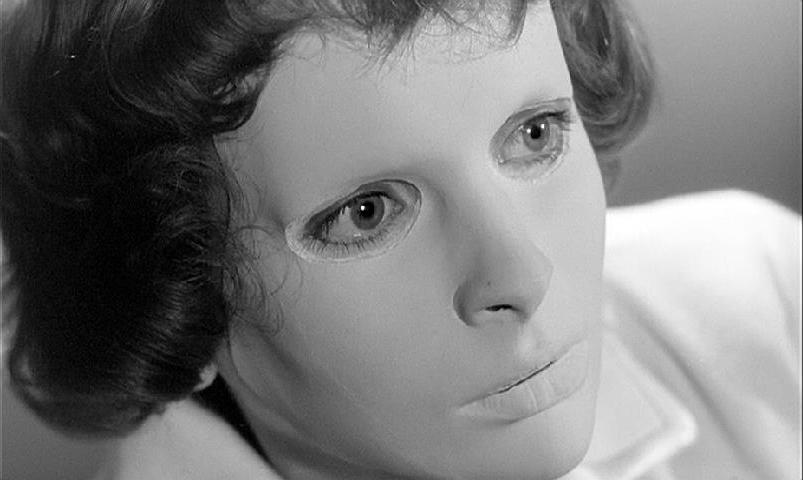
Eyes Without a Face (1960), dir. Georges Franju 
The Silence of the Lambs (1991), dir. Jonathan Demme 
Psycho (1960), dir. Afred Hitchcock 
The Cabinet of Dr Caligari (1920), dir. Robert Wiene 
Hour of the Wolf (1968), dir. Ingmar Bergman 
Ringu (1998), dir. Hideo Nakata 
The Sixth Sense (1999), dir. M. Night Shyamalan 
The Others (2001), dir. Alejandro Amenábar 
Dead Ringers (1998), dir. David Cronenberg 
Plus a film I don’t know how I feel about: Suspiria (1977), dir. Dario Argento 

In this list, the 1st 2 are probably unusual choices. They are not the films people usually think of when talking about horror films, because they are more than horror—they have deeper meaning and convey something else. The films are eerie and haunting more than terrifying. The Innocents is possibly the most aesthetically pleasing horror film I’ve ever seen (not Suspiria), and among the best films ever made. 


Eyes Without a Face is very poetic—a word that we normally wouldn’t use for a horror film, but watch it and you’ll know what I mean. 
Once in a while I watch a film not in my favourite genres, and get a lovely surprise.

Sunday, 7 October 2018

On Billy Wilder, The New French Extremity, and Hollywood vs European arthouse

I’ve just watched The Apartment the 3rd time, and I’m crazy about Billy Wilder again.


There was a time I named Billy Wilder as my no.1 favourite director, then over the past 2 years, I’ve been watching more European (art) films, especially from the 40s-60s, taking an interest in experimenting and the idea of film as dream, and moving away from classic and modern Hollywood, realism, and chronological storytelling, but Billy Wilder still has a special place in my heart. Now, watching again The Apartment, I see him as representing the best of classic Hollywood, whilst Ingmar Bergman’s the best of European arthouse—the 2 camps, so to speak. 
Let me elaborate by going slightly off-topic. The other day I came across the term New French Extremity. 
This is the definition on Wikipedia:
“New French Extremity (New French Extremism or, informally, New French Extreme) is a term coined by Artforum critic James Quandt for a collection of transgressive films by French directors at the turn of the 21st century.” 
According to James Quandt: 
“Bava as much as Bataille, Salò no less than Sade seem the determinants of a cinema suddenly determined to break every taboo, to wade in rivers of viscera and spumes of sperm, to fill each frame with flesh, nubile or gnarled, and subject it to all manner of penetration, mutilation, and defilement.” 
The New French Extremity has its roots in body horror and exploitation cinema. Google for images of Baise-moi, In My Skin, or Irréversible, and you’ll get the idea. 
Wikipedia also says: 
“Films belonging to the New French Extremity take a severe approach to depicting violence and sex.” 
The world of Danish director Lars von Trier is also like that, full of violence, rape, sexual humiliation, self-mutilation, hypocrisy...—he wants to break every taboo, have no limit, and depict everything on screen. 
I can’t help wondering, all this extremity—unsimulated sex scenes, violence, rape, self-mutiliation, blood…, all this ugliness, for what? 
Somehow it looks like there are 2 camps: Hollywood vs European arthouse; the Oscars vs Cannes; telling a good story (in a conventional way) vs experimenting with form and narrative. In a way, filmgoers can be put into either camp. The way I see it is that, people who choose European art films are either those who see film as art (good) or those who like avant-garde and experiments, even for the sake of experiment (bad); whereas people who choose American films are either those who see film as entertainment (bad) or those who value characters and a good story over experiment for the sake of experiment (good). 
Because of my favourite films, my own interests and tendencies, I tend to think I’m on the side of European art films, until I’m reminded that whilst there are masters such as Ingmar Bergman, Fellini, Bunuel, Tarkovsky…, European arthouse also has lots of ugliness, lots of filth and extremity, and lots of trash. 
Billy Wilder is the reminder that in cinema, special effects get outdated, experimenting becomes boring, transgression loses it meaning, and over time a film that focuses on those things becomes worthless, whilst a film that has human characters and a good story and a heart would stand the test of time. That is why his films are never old—films such as The Apartment, Sunset Boulevard, Ace in the Hole, and Some Like It Hot, are still fresh today, and will still be fresh 50 years from now, because they deal with human beings and conflicts and feelings, and because he looks at people with clear eyes and doesn’t stoop to false sentimentality. 
Ingmar Bergman and Billy Wilder are the directors who touch me the most on a personal level. They have very different styles, and very different approaches to cinema and storytelling, but they both are interested in human beings and universal problems. 
Their films are never old. 


_______________________________________

Ultimately, Bergman and Wilder may be in the same camp.
Film is their way of telling stories, expressing themselves, and dealing with human problems. 
The other camp is filmmakers who are more interested in other stuff—entertainment, special effects, experimenting, narrative, shock, whatever. To me, special effects may be fun to watch, experimenting may be interesting to see, but in the end, if there’s nothing beneath all that, who cares?

Friday, 5 October 2018

Some videos about the influence of Ingmar Bergman

1/ This is a video comparing a scene from Persona and from Robert Altman’s 3 Women: https://www.facebook.com/TheFilmSnob1/videos/2143142539270258/?__xts__%5B0%5D=68.ARBuqfwX1CkQDYPZL8xTOq5mANfQ1IxnhGOdz95j0-sHeFXsP8XOU8pQ8nV-NXM9xyJnPfTRMU1WxVWcJGJrTkjwp1CjCxM7h7mbtEZ6CHb9Nqk3ieNYvvgB7UjXrSvMOdh2SloyzWO55TaSyrHJog9H1og2v_DHOtPUAsG1Ub7gldujInEvUA&__tn__=H-R
Here are all the posts I’ve written about 3 Women:
http://thelittlewhiteattic.blogspot.com/2017/07/robert-altmans-3-women.html
http://thelittlewhiteattic.blogspot.com/2018/07/self-delusions-persona-and-3-women.html
http://thelittlewhiteattic.blogspot.com/2018/08/fragmented-thoughts-on-3-women.html

2/ The influence of Ingmar Bergman on cinema and other filmmakers doesn’t need to be said, but it’s nice to see to see clips put together like this:

Persona - After and Before from Steven Benedict on Vimeo.

My only complaint is that there are a few odd choices—some clips don’t look like a direct or even indirect influence, but more like a random similar shot. Overall, it’s nicely edited.

3/ This one is about Bergman’s influence on pop culture:


As I once read somewhere, of Bergman’s films, Persona is most written about (even called the Mount Everest of film analysis) and The Seventh Seal is most parodied.
I like that in the video, they keep Woody Allen almost entirely out of it.

4/ And this one is probably my favourite parody of The Seventh Seal:


Thursday, 27 September 2018

Billy Wilder and the themes of deception and cowardice

Noel Simsolo’s book about Billy Wilder in the Masters of Cinema series is delightful to read. It reminds me of why I love Billy Wilder so much. 
Take this paragraph about The Lost Weekend, a film I haven’t seen: 
“The Lost Weekend does not show that alcohol brings about a harmful disconnection from reality, but that people who drink are in tune with the far more horrible reality of their own cowardice. The mise-en-scène endlessly condemns the character for his spinelessness rather than his vice.” 
Billy Wilder might not have a strong, recognisable visual style, but there are 2 main themes that stay with him throughout his career. 
The 1st is illusion and deception—lies, masks, cross-dressing, disguise, fraud, masquerade… I once had a post about different forms of lies and deception in his films. 
The 2nd is cowardice and spinelessness, which relates to the choice between false values (e.g. easy money) and being a mensch. This is most clear in Sunset Boulevard, The Apartment, Double Indemnity, and Ace in the Hole (or The Big Carnival). His films are not moralising, but he is a moralist. The main character in each of these films throws away his own dignity and self-respect for money, power, or fame, and struggles with the awareness that it is wrong, but in the end, chooses to be a mensch.  
“Although Wilder kept moving from 1 film genre to another to avoid being classified in any of the industry’s categories, it becomes increasingly clear that all of his characters are similar in personality and behaviour. With this ghost trilogy certain contestants become apparent: differences of social situation, motivation, and crucially, ways of understanding reality; role play and lies; cowardice and a lack of lucidity; and manipulation of some by others. And always there is a discomfort with one’s life, past and present.” 
By “the ghost trilogy”, Simsolo’s referring to The Emperor Waltz, A Foreign Affair, and Sunset Boulevard. 
“… Sunset Boulevard is a despairing film that ends with 1 last lie, in which a mad, murderous old star is made to believe that she is shooting a film so that she can be taken away to prison or an asylum.” 
Seeing through pretensions and having no illusion, Billy Wilder keeps making films about people who lie. Simsolo says about Love in the Afternoon, another film I haven’t seen: 
“Love in the Afternoon is an apology for lying.” 
But then he says: 
“The happy ending at the station emerges from tears of distress because it is the product of a fool’s game. Neither the spineless seducer nor the innocent liar has escaped the vice resulting from their respective obsessions. They have each become a prisoner of a dream susceptible to becoming a daily nightmare. Despite its comic moments, Love in the Afternoon is a tragedy.” 
About Witness for the Prosecution, Simsolo remarks: 
 “Witness for the Prosecution is a film in which all the actors have to speak and express themselves in a range of different ways according to the profession, physical position, duality, disguise and psychology of their characters, who are all entangled in big or small lies.” 
It is an adaptation of Agatha Christie, but at the same time, is very much a Billy Wilder film. 
Simsolo’s comment also brings me to another point: Wilder’s greatest strengths are in dialogue and in his characters. No matter what kind of film he makes—film noir or drama or comedy or even farce, ultimately it is people that he’s interested in. He deals with greed, ambition, opportunism, deception, delusion, manipulation, shame, self-loathing, internal conflicts, cowardice…, and his characters are never flat or simplistic. This is the reason I would choose Billy Wilder over Stanley Kubrick any day. 
Danilo Castro at Taste of Cinema picked Billy Wilder as the best writer-director of all time. No.2 is Ingmar Bergman. Do I agree? Probably not, but I can see why. Bergman’s the better director, but Wilder has a greater range, and as a writer, he has wit.

Tuesday, 18 September 2018

Federico Fellini and the influences on his career

After Ingmar Bergman and Orson Welles, I’m now reading about Federico Fellini by Angel Quintana, in the Masters of Cinema series of Cahiers du Cinema. 
“Caricature makes it possible to convey psychological traits with just a few broad strokes. Fellini, the inventor of highly arresting worlds, saw images not in purely pictorial terms but as expressions of cartoonish aggression. This approach would eventually come to fruition by unleashing a visual dream-world.” 
Angel Quintana writes about the early influences on Fellini, from his childhood love of cartoons, comic strips, caricatures, carnivals, and the circus (the elements that make up his style) to neorealism and the collaborations with Rosselini. 
“Fellini learned then from Rossellini, as Gianni Rondolino has observed, that looking at the world means going beyond appearances, ‘introducing a new and original dramatic dimension and discovering the motivations hidden behind the facts’. […] A human being is not merely a social creature, as he or she is also subject to existential problems. Fellini came to realize that our understanding of reality is devoid of any sense if we ignore the constitutive elements of culture, and more especially the elements involved in the construction of the personality.” 
Quintana later writes about the influence of Carl Jung: 
“Unsettled by the success of La Dolce Vita and the scandal it provoked in some conservative quarters, Fellini went into psychoanalysis. Dr Ernst Bernhard introduced him to the theories of Carl Gustav Jung and made him understand that, contrary to the Freudian notion that symbols in dreams are merely a translation of repression, the unconscious can also be a repository for a richly poetic imaginary world. Reading Jung enabled Fellini to explore the symbolism of the collective unconscious and convinced that irrational images can be emotionally captivating. Fellini himself acknowledged that it was Jung who allowed him to make his cinema ‘a meeting point between science and magic, between rationality and imagination.’ He started to envisage a cinema with no borders between the real and the imaginary, a cinema immersed in the psyche. The influence of Jungian psychiatry led Fellini to analyse his own male ego in 8 ½ (1963) and reflect on femininity as a complex otherness in Juliet of the Spirits (1965).” 
I believe that Ingmar Bergman was also influenced by Jung—look at Persona*. 
I should read Jung. 


*: Here is a Jungian interpretation of Persona: http://www.iveybarr.com/persona-shadow-jungian-archetype-as-character/

Sunday, 16 September 2018

Some brief thoughts on Ingmar Bergman, obsessions, and Nordic culture

Currently reading Masters of Cinema: Ingmar Bergman by Jacques Mandelbaum. 
This is an interesting passage: 
“… we cannot discuss the start of the aspiring filmmaker’s career without noting, alongside his personal experience, the importance of his environment and times, which profoundly influenced what he was and to some extent what he would become. Under this heading—a fertile source of banalities and generalities that are all the more wrong because the mark of great artists is precisely that they escape commonplaces—we should begin by noting that Bergman came from one of the Nordic countries. From the Lutheran rigour mentioned above to the extreme contrast between the seasons (melancholy, grey winters and sudden, intoxicating summers), and within social and political systems that mask a relatively low threshold of tolerance beneath an assertion of openness, Bergman is a natural product of his culture. The crucial play of light and shadow in his films and the gnawing sense of guilt that tortures the bodies and souls of his characters clearly reveal the importance of such tensions, which can be seen as crucial to the work of most of the great Scandinavian thinkers and artists, from the Danish philosopher Soren Kierkegaard to his compatriot Carl Theodor Dreyer, and the Norwegian painter Edvard Munch.” 
(It’s interesting that at this point Mandelbaum doesn’t mention August Strindberg, perhaps the singular most important influence on Bergman). 
Think about other Scandinavian directors: Lars von Trier, Thomas Vinterberg, Roy Andersson, Joachim Trier (though I have to watch more). 
I do wonder if it’s because of my years in Norway that I feel close to Bergman and can feel his works a lot better than the works of other directors that I also admire immensely like Bunuel or Fellini. 
But it’s also personal. 
Let’s go back to the introduction in the book:
“… The physical and metaphysical context in which they are posed is provided by institutions (religion, family, art), obsessions (the couple, sex, death), motifs (mirrors, masks, doubles) and stylistic devices (close-ups, frontal views, enclosed spaces) throughout the fifty-odd films the director made between 1945 and 2003.” 
Some of these things I also share: obsession with sex, and death; love of the human face and therefore of close-ups; and fascination with mirrors, masks, and doubles (though admittedly the 2 short films I’ve directed have neither mirrors nor doubles). However, more important is my interest in people and relationships and the human psyche—the films that have the strongest impact on me are still the ones about people, with their complexities and contradictions and internal conflicts, and about feelings such as love, loss, longing, obsession, shame, guilt, despair, self-doubt, self-loathing, and so on. It is not without reason that sci-fi films never mean much to me, aliens and other planets don’t have my interest, nor does the general concept of humanity, as a whole; it’s people—the individual—that I care about. 
This looks like an interesting book.