I’m reading Sidney Lumet’s Making Movies, which I think is a very good and enjoyable book, especially for aspiring film directors.
Look at this:
 Isn’t that such a good “defence” of dialogue? The writer-director who has created the most memorable lines is Billy Wilder, who has 3 contenders for the best closing lines of all time—The Apartment (“Shut up and deal”), Some Like It Hot (“Nobody’s perfect”), and Sunset Boulevard (“All right, Mr. DeMille, I'm ready for my close-up”). Dialogue is not uncinematic. It is only uncinematic when it is superfluous exposition, and worst if it’s the director’s way of explaining the film to the audience (which is common in Christopher Nolan’s films).
Now look at this passage:
Isn’t that such a good “defence” of dialogue? The writer-director who has created the most memorable lines is Billy Wilder, who has 3 contenders for the best closing lines of all time—The Apartment (“Shut up and deal”), Some Like It Hot (“Nobody’s perfect”), and Sunset Boulevard (“All right, Mr. DeMille, I'm ready for my close-up”). Dialogue is not uncinematic. It is only uncinematic when it is superfluous exposition, and worst if it’s the director’s way of explaining the film to the audience (which is common in Christopher Nolan’s films).
Now look at this passage:
 That is fascinating and scary at the same time—would I be able to tell?
The book offers some invaluable insight and advice about directing. I admire Sidney Lumet immensely, and now love him even more as I read the book. He is not an auteur, he might not even be seen as a stylist, but does it matter? I would say that 12 Angry Men and Dog Day Afternoon are masterpieces, and Before the Devil Knows You’re Dead is a great, heartbreaking film that should be better known. Many of his other films are also highly acclaimed, such as Serpico, The Verdict, Network, Murder on the Orient Express, Long Day’s Journey into Night... Why are some other directors ranked higher just because their films are more stylistic or technically more impressive?
That leads me to another point: is the ability to work with actors not important? The directors who I think are masters at getting the best performances out of actors are Ingmar Bergman, Elia Kazan, Sidney Lumet, and Francis Ford Coppola. And perhaps Roman Polanski (Adrien Brody never had anything remotely as good as his performance in The Pianist).
Some other directors who are also good at working with actors are Billy Wilder, Clint Eastwood, Martin Scorsese, Zhang Yimou, Krzysztof Kieslowski… (I don’t include Kurosawa and Mizoguchi because Japanese acting is a different style).
As you follow a director’s work, you realise what their main strengths are—they are better at some aspects of filmmaking than others. Fellini’s main strengths, for example, are in blocking/staging, cinematography, and visual storytelling. Billy Wilder’s are in story, structure/ pacing, dialogue, and working with actors. Orson Welles’s are in cinematography (especially lighting), structure, editing, and sound. Luis Bunuel’s are in story/ plot, ideas, and pacing. Andrei Tarkovsky’s are in ideas, cinematography, sound, and atmosphere.
You also notice, not weaknesses, but that some aspects don’t interest a director as much as others. There isn’t much to say about cinematography and lighting in Luis Bunuel’s films, for example; or editing in Tarkovsky’s; or story in Wong Kar-wai’s.
It is not without reason that I think Ingmar Bergman’s the best director of all time, because his films do have everything—good story, interesting idea, depth, pacing, great cinematography (especially lighting), great sound, great editing (most notably in Persona), good production design (at least in Cries and Whispers and Fanny and Alexander), wonderful performances, good visual storytelling, experiments… But usually, directors have their strengths, and they may be weaker, or at least not as spectacular, in some other aspects of filmmaking, so why is it that directors who are good at techniques valued much more highly than directors who are good at drama (emotional complexity in a scene, and pacing for the film as a whole) and working with actors?
When a film looks good, it is visually pleasing, but at the end of the day, so what? I like good acting. I like touching stories. I like films that make me see life differently and learn something about myself. I never use the word “great” for directors like Quentin Tarantino or Wes Anderson—they’re good at what they do, and their films are entertaining, but have no depth and offer no more than that. But even if we talk about Stanley Kubrick, a director I admire very much when it comes to techniques (especially the production design, cinematography, and use of music), none of his films has ever touched me on an emotional, personal level like 12 Angry Men or Dog Day Afternoon has. In Dog Day Afternoon, people talk a lot about Al Pacino, who indeed delivers a fine performance, one of the best in his career, but we should also talk about John Cazale—for some reason, I can never forget the incredibly sad look on his face when Al Pacino asks where he wants to go if he could go anywhere, and he says “Wyoming”. 12 Angry Men shows Sidney Lumet’s talent at working with actors, and also his ability to make an engrossing film in an enclosed space. I’d choose Sidney Lumet over Kubrick anytime.
But that’s enough. Get Making Movies. It’s a good book. Even Roger Ebert said:
That is fascinating and scary at the same time—would I be able to tell?
The book offers some invaluable insight and advice about directing. I admire Sidney Lumet immensely, and now love him even more as I read the book. He is not an auteur, he might not even be seen as a stylist, but does it matter? I would say that 12 Angry Men and Dog Day Afternoon are masterpieces, and Before the Devil Knows You’re Dead is a great, heartbreaking film that should be better known. Many of his other films are also highly acclaimed, such as Serpico, The Verdict, Network, Murder on the Orient Express, Long Day’s Journey into Night... Why are some other directors ranked higher just because their films are more stylistic or technically more impressive?
That leads me to another point: is the ability to work with actors not important? The directors who I think are masters at getting the best performances out of actors are Ingmar Bergman, Elia Kazan, Sidney Lumet, and Francis Ford Coppola. And perhaps Roman Polanski (Adrien Brody never had anything remotely as good as his performance in The Pianist).
Some other directors who are also good at working with actors are Billy Wilder, Clint Eastwood, Martin Scorsese, Zhang Yimou, Krzysztof Kieslowski… (I don’t include Kurosawa and Mizoguchi because Japanese acting is a different style).
As you follow a director’s work, you realise what their main strengths are—they are better at some aspects of filmmaking than others. Fellini’s main strengths, for example, are in blocking/staging, cinematography, and visual storytelling. Billy Wilder’s are in story, structure/ pacing, dialogue, and working with actors. Orson Welles’s are in cinematography (especially lighting), structure, editing, and sound. Luis Bunuel’s are in story/ plot, ideas, and pacing. Andrei Tarkovsky’s are in ideas, cinematography, sound, and atmosphere.
You also notice, not weaknesses, but that some aspects don’t interest a director as much as others. There isn’t much to say about cinematography and lighting in Luis Bunuel’s films, for example; or editing in Tarkovsky’s; or story in Wong Kar-wai’s.
It is not without reason that I think Ingmar Bergman’s the best director of all time, because his films do have everything—good story, interesting idea, depth, pacing, great cinematography (especially lighting), great sound, great editing (most notably in Persona), good production design (at least in Cries and Whispers and Fanny and Alexander), wonderful performances, good visual storytelling, experiments… But usually, directors have their strengths, and they may be weaker, or at least not as spectacular, in some other aspects of filmmaking, so why is it that directors who are good at techniques valued much more highly than directors who are good at drama (emotional complexity in a scene, and pacing for the film as a whole) and working with actors?
When a film looks good, it is visually pleasing, but at the end of the day, so what? I like good acting. I like touching stories. I like films that make me see life differently and learn something about myself. I never use the word “great” for directors like Quentin Tarantino or Wes Anderson—they’re good at what they do, and their films are entertaining, but have no depth and offer no more than that. But even if we talk about Stanley Kubrick, a director I admire very much when it comes to techniques (especially the production design, cinematography, and use of music), none of his films has ever touched me on an emotional, personal level like 12 Angry Men or Dog Day Afternoon has. In Dog Day Afternoon, people talk a lot about Al Pacino, who indeed delivers a fine performance, one of the best in his career, but we should also talk about John Cazale—for some reason, I can never forget the incredibly sad look on his face when Al Pacino asks where he wants to go if he could go anywhere, and he says “Wyoming”. 12 Angry Men shows Sidney Lumet’s talent at working with actors, and also his ability to make an engrossing film in an enclosed space. I’d choose Sidney Lumet over Kubrick anytime.
But that’s enough. Get Making Movies. It’s a good book. Even Roger Ebert said:
“Invaluable… I am sometimes asked if there is 1 book a filmgoer could read to learn more about how movies are made and what to look for while watching them. This is the book.”
1/ Generally speaking, the majority of remakes are unnecessary and/or bad. However, I’m not against remakes per se.
2/ I am, as a principle, against remakes that are unnecessary and offer nothing new. What does David Lee Fisher offer in his 2005 remake of The Cabinet of Dr Caligari, except sound? Even the visual style is the same. And what after all is the point of Gus van Sant’s shot-for-shot remake of Psycho—with colour? Everyone I know, and perhaps everyone, associates Psycho with Anthony Perkins, not Vince Vaughn.
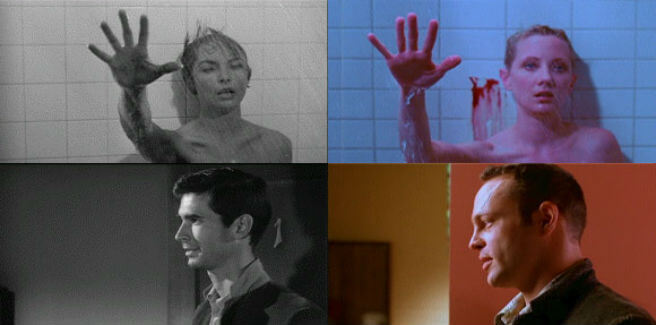 It’s because of this reason that I embrace the new Suspiria (which I intend to watch) and don’t understand some people’s complaint that Luca Guadagnino doesn’t want the same style and colour style of Dario Argento’s film.
Faithfulness may be a good thing for a film adaptation of a book (though it depends), but what do we need a remake for, if it offers nothing new? For filmgoers who only watch new films and refuse to watch B&W films and silent films? It is their problem that they deny history and the legacy of cinema, and miss out on masterpieces.
3/ As a principle, I’m also against remakes of films that are already regarded as among the greatest films ever made.
For example, I keep hearing rumours about a Gone with the Wind remake. Why would you remake a film that got 10 Oscars? I can’t think of any reason.
I’ve just discovered, though, that there’s a 2016 Ben-Hur. To be a precise, it’s not really a remake, but a 5th adaptation of the novel—however, the other adaptations are a silent short film, a silent film, and an animation, so this new film by Timur Bekmambetov would be directly compared to the William Wyler film, which got 11 Oscars.
Even the 1995 TV version of A Streetcar Named Desire is not a wise idea, in my opinion. Glenn Jordan’s take on the play is different from Elia Kazan’s—closer to Tennessee Williams’s play, if I remember correctly, so in a sense it does offer something new. At the same time, how can you compare to the cast of the 1951 film, especially Vivien Leigh and Marlon Brando? Alec Baldwin was very brave to take on one of Marlon Brando’s best roles, and Jessica Lange looked more like she was playing Vivien Leigh as Blanche DuBois.
4/ For some reason, all American remakes of Asian films I have seen are terrible. That includes The Departed, an acclaimed film which got Martin Scorsese an Oscar—the Hong Kong original Infernal Affairs is much better.
Spike Lee’s remake of Oldboy I haven’t seen, but it looks like a big mistake, judging by the cast. The story is also, in some sense, very Asian.
5/ However, I’m not against remakes in another language, country, and culture. In fact, when they’re good, I love them even more than standard remakes.
It’s because of this reason that I embrace the new Suspiria (which I intend to watch) and don’t understand some people’s complaint that Luca Guadagnino doesn’t want the same style and colour style of Dario Argento’s film.
Faithfulness may be a good thing for a film adaptation of a book (though it depends), but what do we need a remake for, if it offers nothing new? For filmgoers who only watch new films and refuse to watch B&W films and silent films? It is their problem that they deny history and the legacy of cinema, and miss out on masterpieces.
3/ As a principle, I’m also against remakes of films that are already regarded as among the greatest films ever made.
For example, I keep hearing rumours about a Gone with the Wind remake. Why would you remake a film that got 10 Oscars? I can’t think of any reason.
I’ve just discovered, though, that there’s a 2016 Ben-Hur. To be a precise, it’s not really a remake, but a 5th adaptation of the novel—however, the other adaptations are a silent short film, a silent film, and an animation, so this new film by Timur Bekmambetov would be directly compared to the William Wyler film, which got 11 Oscars.
Even the 1995 TV version of A Streetcar Named Desire is not a wise idea, in my opinion. Glenn Jordan’s take on the play is different from Elia Kazan’s—closer to Tennessee Williams’s play, if I remember correctly, so in a sense it does offer something new. At the same time, how can you compare to the cast of the 1951 film, especially Vivien Leigh and Marlon Brando? Alec Baldwin was very brave to take on one of Marlon Brando’s best roles, and Jessica Lange looked more like she was playing Vivien Leigh as Blanche DuBois.
4/ For some reason, all American remakes of Asian films I have seen are terrible. That includes The Departed, an acclaimed film which got Martin Scorsese an Oscar—the Hong Kong original Infernal Affairs is much better.
Spike Lee’s remake of Oldboy I haven’t seen, but it looks like a big mistake, judging by the cast. The story is also, in some sense, very Asian.
5/ However, I’m not against remakes in another language, country, and culture. In fact, when they’re good, I love them even more than standard remakes.
 The best remakes of this type that I can think of are The Handmaiden and Untold Scandal, South Korean remakes or adaptations of Western material—Fingersmith and Dangerous Liaisons respectively. They are excellent films on their own. As remakes/ adaptations, they retain the spirit of the original whilst adapting the story to the culture and traditions in South Korea, so they don’t feel foreign.
I haven’t seen A Fistful of Dollars, but I like the idea of it as a Western remake of Akira Kurosawa’s Yojimbo. Same with The Magnificent Seven and The Seven Samurai.
I suppose the question here is whether the remake in another culture offers anything new (as in the case of The Handmaiden) or just takes good material and makes it in English for filmgoers who are too lazy to watch films with subtitles. In the latter case, those people should watch dubbed films instead, and I’m saying that despite being against dubbing.
6/ Here’s an unpopular opinion: I think David Fincher’s The Girl with the Dragon Tattoo is better than the Swedish version.
The best remakes of this type that I can think of are The Handmaiden and Untold Scandal, South Korean remakes or adaptations of Western material—Fingersmith and Dangerous Liaisons respectively. They are excellent films on their own. As remakes/ adaptations, they retain the spirit of the original whilst adapting the story to the culture and traditions in South Korea, so they don’t feel foreign.
I haven’t seen A Fistful of Dollars, but I like the idea of it as a Western remake of Akira Kurosawa’s Yojimbo. Same with The Magnificent Seven and The Seven Samurai.
I suppose the question here is whether the remake in another culture offers anything new (as in the case of The Handmaiden) or just takes good material and makes it in English for filmgoers who are too lazy to watch films with subtitles. In the latter case, those people should watch dubbed films instead, and I’m saying that despite being against dubbing.
6/ Here’s an unpopular opinion: I think David Fincher’s The Girl with the Dragon Tattoo is better than the Swedish version.
Which is different from my list of favourite films.
Persona (1966), Wild Strawberries (1957), Hour of the Wolf (1968), and Cries and Whispers (1972) by Ingmar Bergman
Citizen Kane (1941) and F for Fake (1973) by Orson Welles
The Exterminating Angel (1962), The Phantom of Liberty (1974), and That Obscure Object of Desire (1977) by Luis Bunuel
La Jetée (1962) by Chris Marker
8 ½ (1963) by Federico Fellini
The Godfather (1972) by Francis Ford Coppola
Bicycle Thieves (1948) by Vittorio De Sica
Three Colours: Blue (1993) by Krzysztof Kieslowski
Ivan's Childhood (1962) by Andrei Tarkovsky
Taxi Driver (1976) by Martin Scorsese
Dogville (2003) by Lars von Trier
3 Women (1977) by Robert Altman
_____________________________
Every filmmaker is influenced by other filmmakers. Sometimes we may even be inspired by some aspect of a film we don’t like, like how I feel about Dogville.
As a filmmaking student, I’m still learning the skills and techniques, and exploring the form, I have yet to find my style, but it’s still nice to make a list to acknowledge the influences and have something to compare to in the future.
Or maybe I just really like lists.
The 50s: http://thelittlewhiteattic.blogspot.com/2017/08/my-favourite-films-from-1950s.html
The 60s: http://thelittlewhiteattic.blogspot.com/2018/03/my-favourite-films-from-1960s.html
The Private Life of Sherlock Holmes (1970) by Billy Wilder
Harold and Maude (1971) by Hal Ashby
The French Connection (1971) by William Friedkin
The Godfather (1972) by Francis Ford Coppola
Cries and Whispers (1972) by Ingmar Bergman
The Discreet Charm of the Bourgeoisie (1972) by Luis Bunuel
Last Tango in Paris (1972) by Bernardo Bertolucci
Cabaret (1972) by Bob Fosse
Solaris (1972) by Andrei Tarkovsky
Play It Again, Sam (1972) by Herbert Ross
Amarcord (1973) by Federico Fellini
The Last Detail (1973) by Hal Ashby
Mean Streets (1973) by Martin Scorsese
The Sting (1973) by George Roy Hill
Sleep (1973) by Woody Allen
F for Fake (1973) by Orson Welles
The Godfather Part II (1974) by Francis Ford Coppola
The Conversation (1974) by Francis Ford Coppola
Chinatown (1974) by Roman Polanski
The Phantom of Liberty (1974) by Luis Bunuel
Alice Doesn't Live Here Anymore (1974) by Martin Scorsese
Dog Day Afternoon (1975) by Sidney Lumet
Scent of a Woman (1975) by Martin Brest
Love and Death (1975) by Woody Allen
Taxi Driver (1976) by Martin Scorsese
Network (1976) by Sidney Lumet
3 Women (1977) by Robert Altman
That Obscure Object of Desire (1977) by Luis Bunuel
Annie Hall (1977) by Woody Allen
Autumn Sonata (1978) by Ingmar Bergman
The Tin Drum (1979) by Volker Schlöndorff
Manhatttan (1979) by Woody Allen
All That Jazz (1979) by Bob Fosse
Following the previous post, here’s a list of my 3 favourite films of some directors. I also note how many of the directors’ films I’ve watched.
(I don’t include a director if I’ve only seen 5 films or less. You probably notice that I broke my own rule a few times).
Woody Allen:
Annie Hall
Crimes and Misdemeanors
Love and Death
(out of 18)
Martin Scorsese:
Taxi Driver
Mean Streets
The Aviator
(out of 17)
Ingmar Bergman:
Persona
Cries and Whispers
Wild Strawberries or The Seventh Seal
(out of 15)
Alfred Hitchcock:
Psycho
Dial M for Murder
Vertigo
(out of 15)
Billy Wilder:
Sunset Boulevard
The Apartment
Witness for the Prosecution
(out of 14)
Federico Fellini:
Nights of Cabiria
8 ½
Amarcord
(out of 10)
Clint Eastwood:
Million Dollar Baby
Changeling
True Crime
(out of 10)
Zhang Yimou:
Raise the Red Lantern
To Live
Red Sorghum or Ju Dou
(out of 10)
Stanley Kubrick:
Dr Strangelove
The Killing
2001: A Space Odyssey
(out of 9)
Joel& Ethan Coen:
No Country for Old Men
The Big Lebowski
Fargo
(out of 9)
Kenji Mizoguchi:
Gion bayashi, aka A Geisha
Ugetsu monogatari
Akasen chitai, aka Street of Shame
(out of 8)
Luis Bunuel:
The Exterminating Angel
The Discreet Charm of the Bourgeoisie
The Phantom of Liberty or Viridiana
(out of 8)
Wong Kar-wai:
Chungking Express
Happy Together
2046
(out of 8)
Tim Burton:
Edward Scissorhands
Corpse Bride
Sweeney Todd
(out of 8)
Akira Kurosawa:
Ran
The Bad Sleep Well
High and Low
(out of 7)
Francis Ford Coppola:
The Godfather
The Conversation
The Godfather Part II
(out of 7)
Steven Spielberg:
Catch Me If You Can
A.I. Artificial Intelligence
The Terminal
(out of 7)
Park Chan-wook:
The Handmaiden
Thirst
(out of 6)
Roman Polanski:
Chinatown
The Pianist
Knife in the Water
(out of 6)
Quentin Tarantino:
Pulp Fiction
Inglourious Basterds
Jackie Brown
(out of 6)
Ang Lee:
Sense and Sensibility
Brokeback Mountain
Crouching Tiger, Hidden Dragon
(out of 6)
(originally posted on 17/10/2014).
Such a list only shows how little I've watched (very often, an excellent film is not mentioned here simply because I haven't watched it), but I'm shamelessly making and publishing it anyway. The ones in bold type are masterpieces and strong favourites, and will certainly remain in the list (in other words: will not be removed at any cost), the other films can be replaced when I discover/ remember something greater.
- The 40s:
The Great Dictator (1940)
The Philadelphia Story (1940)
Casablanca (1942)
Gaslight (1944)
Brief Encounter (1945)
It's a Wonderful Life (1946)
The Killers (1946)
The Best Years of Our Lives (1946)
The Bicycle Thief (1948)
The Heiress (1949)
- The 50s:
All about Eve (1950)
Sunset Boulevard (1950)
In a Lonely Place (1950)
A Streetcar Named Desire (1951)
On the Waterfront (1954)
The Killing (1956)
Witness for the Prosecution (1957)
12 Angry Men (1957)
Vertigo (1958)
Anatomy of a Murder (1959)
- The 60s:
The Apartment (1960)
Psycho (1960)
Vivre sa vie (1962)
The Insect Woman (1963)
8 ½ (1963)
The Woman in the Dunes (1964)
Dr. Strangelove or: How I Learned to Stop Worrying and Love the Bomb (1964)
My Fair Lady (1964)
Blowup (1966)
2001: A Space Odyssey (1968)
- The 70s:
The Private Life of Sherlock Holmes (1970)
The Godfather (1972)
Last Tango in Paris (1972)
The Godfather Part II (1974)
The Conversation (1974)
Chinatown (1974)
Dog Day Afternoon (1975)
Scent of a Woman (1975)
Taxi Driver (1976)
Autumn Sonata (1978)
- The 80s:
Raging Bull (1980)
On Golden Pond (1981)
Sophie's Choice (1982)
Scarface (1983)
Ran (1985)
Rain Man (1988)
The Accused (1988)
A Short Film About Love (1988)
My Left Foot (1989)
Monsieur Hire (1989)
- The 90s:
Goodfellas (1990)
The Silence of the Lambs (1991)
Raise the Red Lanterns (1991)
A Few Good Men (1992)
To Live (1994)
The Shawshank Redemption (1994)
Titanic (1997)
Happy Together (1997)
Central do Brasil (1998)
Magnolia (1999)
- The 2000s:
Memento (2000)
À la folie... pas du tout (2002)
The Pianist (2002)
Spring, Summer, Fall, Winter... and Spring (2003)
2046 (2004)
Million Dollar Baby (2004)
Brokeback Mountain (2005)
There Will Be Blood (2007)
Before the Devil Knows You're Dead (2007)
The Curious Case of Benjamin Button (2007)
Comment!
1/ The Godfather (1972)
2/ The Godfather Part II (1974)
3/ Goodfellas (1990)
4/ Mean Streets (1973)
5/ Gangs of New York (2002)
6/ Pulp Fiction (1994)
7/ Scarface (1983)
8/ Angels with Dirty Faces (1938)
9/ Infernal Affairs (2002)
10/ Bonnie& Clyde (1967)
Updated. Originally published on 21/10/2013.
1/ The Apartment (Billy Wilder)
2/ Sunset Boulevard (Billy Wilder)
3/ Ladri di bicilette (Vittorio De Sica)
4/ Casablanca (Michael Curtiz)
5/ A Streetcar Named Desire (Elia Kazan)
6/ Taxi Driver (Martin Scorsese)
7/ The Godfather (Francis Ford Coppola)
8/ Spring, Summer, Fall, Winter... and Spring (Kim Ki-duk)
9/ The Best Years of Our Lives (William Wyler)
10/ Happy Together (Wong Kar-wai)
Currently reading "Notes from
underground" by Dostoyevsky, translated by Richard Pevear and Larissa
Volokhonsky.
1/ The 1st line of chapter 1 is: "I am a
sick man... I am a wicked man. An unattractive man."
Reminds me of the 1st line of "Invisible
man": "I am an invisible man..."
Besides this, and the fact that both
narrators stay underground, I haven't seen anything else these 2 books have in
common.
2/ The 1st line of chapter 2 is: "I
would now like to tell you, gentlemen, whether you do or do not wish to hear
it, why I never managed to become even an insect. I'll tell you solemnly that I
wanted many times to become an insect. But I was not deemed worthy even of
that."
Is this an inspiration for Kafka's "The
metamorphosis"?
3/ In chapter 7, Dostoyevsky launches attacks
on and makes fun of Henry Thomas Buckle, who naively asserts that "man gets softer from
civilisation and, consequently, becomes less bloodthirsty and less capable of
war".
Reminds me of something Allen Ginsberg said
that is quoted in "The electric kool-aid acid test" (Tom Wolfe), that
no one wants war and conflicts only arise from misunderstanding and if people
can just sit down and sort out the misunderstanding, they can avoid war. Such
childish, simplistic mindset!
4/ Chapter 8, which stresses over and over
again that human beings do not always use reason and cannot strictly follow
some rational calculations and do the most profitable things all the time
because we are human beings and not piano keys (an attack on utilitarianism?), makes me
think of Stanley Kubrick's film "A clockwork orange", in which the
leading character is 'cured' by a machine and meant to be a good citizen who
commits no crime, yet he no longer has free will and the machine has turned him
into a machine.
5/ Dostoyevsky's 'analysis' of the need for
or even the enjoyment of suffering is an answer to the people who insist on
forgetting sadness, avoiding negativity and looking at the bright side. This
need is essential to us, to our wholeness, our growth, as much as foibles,
stupidity and senselessness are a part of our nature which we cannot deny.
Update at 6.44pm:
6/ The bumping scene between the underground man and the officer in part 2 right away revokes images from "Invisible man". My hunch was right, there are more similarities between these 2 works. Though the word "invisible" doesn't appear in "Notes from underground", the same idea is there, the narrator is unseen.
On a side note: whether I can develop it and use for my essay is another story, because their invisibility is different. In Ralph Ellison's narrator's case, he's unseen in the sense that people look at him and see the reflections of their own stereotypes and prejudices, or see him as a representation, an emblem, of something, instead of seeing his individuality. The underground man, on the other hand, is unseen because of people's loathing or his inferior status (unsuccessful), according to him, or simply because he's alienated from society.
7/ Chapter 5 of part 2, an absurd situation with all the trouble about money, somehow makes me think of "Hunger", though I'm not sure if there's any equivalent scene in the Knut Hamsun book.
8/ The meeting of the former schoolmates, I can't read without thinking of a similar scene in "Mrs Dalloway" (Virginia Woolf). All the old feelings come back, all the dislike, all the feeling of inferiority and diffidence. Of course, closely linked to it is my own visualisation of future meetings between me and my former classmates (though the bright side is that such meetings are unlikely to happen, considering that I live in another country and they probably have left as well).
9/ "Notes from underground" has humour, a kind of Kafka-like humour that I didn't find in "Crime and punishment".
In fact, though for now I'm not able to put it into words, due to my own inadequacy, the more I read Kafka and Dostoyevsky, the more similar they appear, and I can see why Kafka regards Dostoyevsky as 1 of his blood relatives.
10/ Before I finish reading, I already feel the need to reread the whole book right after finishing it.
11/ If I'm not mistaken, "Taxi driver" was inspired by this book. Indeed, it's not difficult to see: alienation, loneliness, depression, self-loathing, misanthropy, bitterness, rage, contradiction, etc.
Update at 11.05pm:
12/ Another time the underground man compares himself to a fly, and another time, a bug.
13/ The comparison may be a bit forced, but the dinner scene is reminiscent of the film "Inside Llewyn Davis". Like the narrator here, Llewyn Davis is, by general standard, a loser, and he's aware of it, but at the same time still has a contradictory feeling, a feeling of superiority. He dislikes his present life and cannot get anywhere better, for he's not talented enough, but he has a contemptuous look when sitting in a corner, listening to other people, such as Jim and Jean, or when singing Jim's song.
Something I understand very well.
It's tragic, good taste, or the ability to recognise genius and distinguish between talent and the absence of it, doesn't always go hand in hand with talent.
But then I digress. That sentence fits "Inside Llewyn Davis" only, or, what do the Coen bros mean? is he meant to be a small talent, or a misunderstood artist? Maybe it only fits me. But definitely not the narrator in "Notes from underground". His intelligence and hypersensitivity are the reasons he cannot connect to the people around him.
14/ Intelligence and hypersensitivity and high consciousness. Now doesn't this sound like Salinger's Seymour Glass?
15/ Strange, now instead of writing an in-depth analysis of "Notes from underground", I throw out heaps of names in your face, like a pretentious ass. Can't help it though.
Update on 11/3, 11.58am:
16/ "What was to be done?" in chapter 5 of part 2 is clearly an allusion to "What is to be done?" by Nikolai Chernyshevsky, the book to which "Notes from underground" is said to respond.
17/ I notice the monologue about a father's love for his daughter in chapter 6 is like what Mr Norton says about his daughter in "Invisible man", except that in Ralph Ellison's book, the love is pushed to the extreme, bordering on incest.
My Oscar predictions:
Best picture: "12 years a slave"
Best actor: Matthew McConaughey in "Dallas buyers club" (or Chiwetel Ejiofor in "12 years a slave")
Best actress: Cate Blanchett in "Blue jasmine"
Best supporting actor: Jared Leto in "Dallas buyers club"
Best supporting actress: Lupita Nyong'o in "12 years a slave"
Best director: Alfonso Cuarón for "Gravity" (or Steve McQueen for "12 years a slave")
______________________________________________________
[Warning: This is a rant].
Let's look at the nominees.
Among the 9 films, there's 1 film I haven't watched- "Nebraska". "12 years a slave", the best of them, is beautifully done, authentic and deeply moving. My other favourites are "Philomena", "Her" and "Dallas buyers club", they make us laugh and make us cry and stay with us long afterwards because they touch the deepest parts of our hearts. "Gravity" and "Captain Phillips" are OK, good for their genres and no more. "American hustle", which I've just watched, is dull and tedious, with unbearable cast (I'll come back to this point later). Above all, "The wolf of Wall Street" is a huge disappointment, or to be precise, it's an average comedy, but I can't believe that the man who has made masterpieces such as "Taxi driver", "Goodfellas", "Raging bull", "The aviator", "Mean streets"... could make such a ridiculous and pointless film like "The wolf of Wall Street". It's an embarrassing film, in the sense that, placed next to Paul Thomas Anderson's great works such as "There will be blood", "Magnolia" and "Boogie nights", his latest film "The master" is not as good but not embarrassing, but "Punch drunk love" is.
When it comes to the nominated actors and actresses, I realise that usually at Oscars they have a dozen films and then fill the acting categories with people from these films. As a result, some of the nominees don't deserve it whilst some brilliant performances in so-so or good but forgotten films get neglected. Jonah Hill in "The wolf of Wall Street" getting a nomination is like a joke. Christian Bale, who a few years ago blew my mind with "The fighter", has a pale and forgettable performance in "American hustle", like Bradley Cooper and Jennifer Lawrence in the same film, Sandra Bullock in "Gravity" and Michael Fassbender in "12 years a slave". Bradley Cooper is Bradley Cooper, "Silver linings playbook" may have changed his career and given him better opportunities, but he remains the way he is. Michael Fassbender is 1 of those actors I have never considered good, though some people have compared him to Daniel Day-Lewis (blasphemy!), and in this film, having such a challenging, fascinatingly complex role, doesn't make use of the great opportunity, which could have been the role of a lifetime. What truly gets on my nerves is that after "Winter's bone" and "Silver linings playbook", Jennifer Lawrence gets nominated again. She's overrated. Her confident, unsophisticated, down-to-earth, natural, easygoing public image charms and blinds people. In this film she's exactly the same as in "Silver linings playbook", the way she talks, the way she shouts, the way she lifts up her chin, the way she frowns, the way she laughs, the way she behaves like a crazy, unstable woman... In fact, that voice, those facial expressions, gestures, gesticulations... I have also seen in "Hunger games" and "Winter's bone" and "X-men: 1st class" and "House at the end of the street". So what's next? I've called it a mistake to give her an Oscar for "Silver linings playbook", though I do like her in it, now she's even more disappointing. What's next? Jennifer Lawrence plays herself, just like Keira Knightley, Naomi Watts, Carey Mulligan, Julia Roberts, Elizabeth Taylor.. and acts mostly on the surface, not as well as Jessica Chastain, Helena Bonham Carter, Glenn Close, Jodie Foster, Julianne Moore, Hilary Swank..., let alone Vivien Leigh, Meryl Streep, Ingrid Bergman, Cate Blanchett, Marion Cotillard, Katharine Hepburn, Bette Davis... I understand that she's young, and for the time being can't think of any young actress that is better, but I have seen enough to see that she will not develop any further in 10 years, 20 years, 30 years or even 40 years.
______________________________________________________
The discovery of Daniel Day-Lewis in the art of acting is as awful as the discovery of Tolstoy in literature. It changed my perspective and standard forever. Of course, I neither expect every actor to be like Daniel Day-Lewis, nor every writer to be like Tolstoy, which is impossible, but still...
A rather interesting article: http://flavorwire.com/200745/the-30-harshest-filmmaker-on-filmmaker-insults-in-history/view-all/
1/ I see very well why some people find Quentin Tarantino overrated. In a sense he is. Not that he is without talent because in fact he's a very gifted filmmaker. From dialogue to camera angles, from creation of characters to casting, from choosing music to creating memorable or even iconic moments, in these aspects I admire him very much. But I wouldn't go as far as calling him the greatest, most talented, film director of his generation/ of today, as many people have done. Some weeks ago, for example, I saw a watchmojo video that ranked him as no.3, below Martin Scorsese and Steven Spielberg. The flaw of Quentin Tarantino's films is, he has nothing to say. I've watched "Kill Bill" and "Django unchained" and "Inglourious basterds" and "Pulp fiction" and "Reservoir dogs". His films lack depth, he has nothing to say, he's not interested in telling a story and not interested in the real world. He makes films about films. They can be entertaining and very witty and very memorable but they aren't really deep, touching or thought-provoking.
I place Quentin Tarantino above Christopher Nolan and Terrence Malick and David Fincher but below Paul Thomas Anderson and the Coen brothers and perhaps Darren Aronofsky.
2/ On the other hand, Jean-Luc Godard is too political. Of course, my opinion of Godard is mostly prejudice, considering that I have watched only "Vivre sa vie" and "Pierrot le fou" and a bit of "Alphaville" and a part of "À bout de souffle" and perhaps a part of something else, but I can see what a Godard film is like. In spite of everything I would prefer Quentin Tarantino to those Marxists like Jean-Luc Godard and Bernando Bertolucci. His characters talk too much and philosophise too much. Put it this way, to me a film is a visual experience, not a verbal one. For words, we already have literature, poetry. People may disagree with me because film directors may have different ideas and styles and approaches, I'm also aware that Godard's original, revolutionary and extremely influential, but film is a different medium from literature and I think a film director fails when he puts all of his social and political and philosophical ideas in the mouths of his actors instead of conveying them through images, scenes, moments, the characters' actions, the story, etc. I love what Stanley Kubrick does with images. Most recently, I've watched "8 1/2" by Federico Fellini and loved the movements of the camera and of the actors and how they combine, and the use of the dream sequences to demonstrate Guido's mental state as he faces midlife crisis and writer's block and pressure from different sides.
Godard, I think, relies too heavily on words.
3/ The Steven Spielberg films I've watched are "The colour purple", "A.I: Artificial intelligence", "Catch me if you can", "The terminal", "Indiana Jones and the kingdom of the crystal skull" and "Lincoln". I'm not head over heels in love with Steven Spielberg (I know many people are). But then, I haven't seen most of his most important and acclaimed films, such as "Raiders of the lost ark", "Jurassic park", "Schindler's list", "Saving private Ryan", "Minority report", "Munich", "War horse" and the other Indiana Jones films, so what right do I have to say about him at all? The only thing to say now is, I do see him as talented but not as a favourite, and it's understandable why some people don't esteem him highly because Steven Spielberg may be seen as making films mostly for the audience and rarely making a very personal one.
4/ Jacques Rivette's criticism of Stanley Kubrick is comprehensible. As a Kubrick fan, I can't agree, but I understand it, because it's true that Kubrick remains detached from his characters and has a rather cold way of telling stories, especially in "Barry Lyndon". But that is his style, his purpose, the same way some writers keep a certain distance from their characters (Kafka, Flaubert...) Perhaps it's because of this coldness that I don't like "Barry Lyndon" as much as "Dr Strangelove", "The killing", "A clockwork orange"..., where he's also cold but doesn't have to be warm, but I can't say. Whether or not one likes him, I think, is personal.
5/ I, like David Cronenberg, dislike M. Night Shymalan. He made 1 good film, "The 6th sense", and made an entire career out of it. In fact, when I look at the Rotten tomatoes reception of his films, I don't get why producers still pay for his projects.
6/ I've never heard of Uwe Boll. It seems that he, Ed Wood of the 21st century, looks like a talentless but obnoxious, megalomaniac and childish person. Rather amusing.
7/ Vincent Gallo, as it seems, isn't much different from Uwe Boll in his ridiculousness and inability to take criticism. Reading those quotes in the flavorwire article I can't have any respect for this guy. The only thing I find acceptable, without agreeing with, is the one about Martin Scorsese, because he's talking about Marty as a director, not as a person, but it's his opinion. Very silly indeed, but it's his opinion. But he insults and speaks ill of the others, and has also insulted Roger Ebert. That's purely horrendous and revolting, and those statements say more about Vincent Gallo than about the people he's attacking. In his private home he can say anything he pleases, but in public, that's obnoxious.
Listening to film directors, especially the ones I love, talk about films and filmmaking is a great pleasure.
1/ The 1st part, a video, includes:
- Golden Globe's tribute to Martin Scorsese in 2010 (with his quotes and some movie clips).
- Martin Scorsese receiving the Cecil B. DeMille Award from his collaborators/ friends Leonardo DiCaprio and Robert DeNiro (by the way, Daniel Day-Lewis is in the crowd)
- His speech (William Faulkner's mentioned)
A touching and wonderful speech, and Marty simply makes me appreciate films even more.
2/ Martin Scorsese on Stanley Kubrick (source):
"When Eyes Wide Shut came out, a few months after Stanley Kubrick’s death in 1999, it was severely misunderstood, which came as no surprise. If you go back and look at the contemporary reactions to any Kubrick picture (except the earliest ones), you’ll see that all his films were initially misunderstood. Then, after five or ten years came the realization that 2001 or Barry Lyndon or The Shining was like nothing else before or since.
If Kubrick had lived to see the opening of his final film, he obviously would have been disappointed by the hostile reactions. But I’m sure that in the end he would have taken it with a grain of salt and moved on. That’s the lot of all true visionaries, who don’t see the use of working in the same vein as everyone else. Artists like Kubrick have minds expansive and dynamic enough to picture the world in motion, to comprehend not just where its been, but where it’s going.
Take Eyes Wide Shut. Many people were put off by the film’s unreality – the New York streets were too big, the orgy scene was a total fantasy, the action was slow and deliberate. All of this is true, and if the movie were designed to be realistic, it would be absolutely reasonable to judge these as failings. But Eyes Wide Shut is based on a Schnitzler novella called Dream Story, the story of a rift in a marriage told with the logic of a dream. And as with all dreams, you never know precisely when you’ve entered it. Everything seems real and lifelike, but different, a little exaggerated, a little off. Things appear to happen as if they were preordained, sometimes in a strange rhythm from which it’s impossible to escape. Audiences really had no preparation for a dream movie that didn’t announce itself as such, without the usual signals- hovering mists, people appearing and disappearing at will or floating off the ground. Like Rossellini’s Viaggio in Italia, another film severely misunderstood in its time, Eyes Wide Shut takes a couple on a harrowing journey, at the end of which they’re left clinging to each other. Both are films of terrifying self-exposure. They both ask the question: How much trust and faith can you really place in another human being? And they both end tentatively, yet hopefully. Honestly.
Watching a Kubrick film is like gazing up at a mountaintop. You look up and wonder, how could anyone have climbed that high? There are emotional passages and images and spaces in his films that have an inexplicable power, with a magnetic force that draws you in slowly, mysteriously: the boy’s rides on his Big Wheel through the endless corridors of the hotel in The Shining; the monumental silence of outer space in 2001: A Space Odyssey; the inhuman pace of the first half of Full Metal Jacket, building up to its logical, murderous conclusion; the grandeur of the war room in Dr. Strangelove, at once scary and comical; the brutal pop future of A Clockwork Orange; the raw intimacy of the exchanges between Tom Cruise and Nicole Kidman in Eyes Wide Shut.
I’m not sure if I can say that I have a favourite Kubrick picture, but somehow I keep coming back to Barry Lyndon. I think that’s because it’s such a profoundly emotional experience. The emotion is conveyed through the movement of the camera, the slowness of the pace, the way the characters move in relation to their surroundings. People didn’t get it when it came out. Many still don’t. Basically, in one exquisitely beautiful image after another, you’re watching the progress of a man as he moves from the purest innocence to the coldest sophistication, ending in absolute bitterness – and it’s all a matter of simple, elemental survival. It’s a terrifying film because all the candlelit beauty is nothing but a veil over the worst cruelty. But it’s real cruelty, the kind you see every day in polite society.
Stanley Kubrick was one of the only modern masters we had, and this final edition of Michel Ciment’s definitive book is an invaluable resource. Personally speaking, I’ve watched and studied Kubrick’s work repeatedly over the years. He was unique in the sense that with each new film he redefined the medium and its possibilities. But he was more than just a technical innovator. Like all visionaries, he spoke the truth. And no matter how comfortable we think we are with the truth, it always comes as a profound shock when we’re forced to meet it face-to-face."(2001)
"When Full Metal Jacket was first released, many viewers and critics were thrown off by the unusual structure. They wondered why director Stanley Kubrick had split the action in half — the gruelling and relentlessly-paced basic training scenes on Parris Island, and the more leisurely but ultimately devastating tour in Vietnam for Matthew Modine's Private Joker and his friends. But then, it's often taken about a decade for people to catch up with Kubrick. Neither 2001: A Space Odyssey nor Barry Lyndon nor The Shining were greeted with approval when they first appeared, and Eyes Wide Shut is still misunderstood.
What's interesting in Full Metal Jacket, which Kubrick and the great writer Michael Herr (the author of Dispatches) adapted quite faithfully from Gustav Hasford's novel The Short-Timers (along with Hasford himself), is the way that the two halves seem so different, and the manner in which they finally converge: two different roads to eruptions of terrible violence. As in all Kubrick films, there is a profound sense of mystery at the core, but he's also exposing a deeply disturbing truth. The shaving of the young men's heads, the physical and psychological punishment of their training, the terrible humiliation perpetrated on Vincent D'Onofrio's Private Pyle, the horribly obscene language spouted by every single character, the callous attitude toward the dead and the dying, the ultimate horror of the battlefield….it's all violent, from start to finish, and you're left wondering to what degree war is embedded in our DNA.
And, as always with Kubrick, Full Metal Jacket is a physically powerful experience. Once you've seen it a couple of times, every cut, every movement, every vista of the devastated city of Hue (recreated in an abandoned London gasworks) becomes indelible."(2006)
"When Stanley Kubrick set out to make a horror film, we were already terrified. Kubrick's films are terrifying enough as it is. What would he come up with? We saw the trailer, a single image of an elevator from which a torrent of blood slowly spilled and blanketed the screen...and the terror mounted. And, of course, as always with Kubrick, when the film finally came out, it was like no horror film ever made. Really, it almost didn't belong to the horror genre; it was like nothing we'd ever seen. But of course, that was Kubrick's genius: He created movies that were essentially unclassifiable, endlessly provocative and profoundly disturbing. And no matter how many times you see them, they remain disturbing.
Of course, many horror fans were put off by The Shining, and I don't believe that Stephen King, the author of the novel on which it was based, was ever very happy with the movie. Kubrick and his co-writer, the novelist Diane Johnson, kept many elements from King's novel, but they wrote their own work, turning to Freud's The Uncanny and Bruno Bettelheim's book about fairy tales, The Uses of Enchantment, for inspiration. In their film, the horror came from within the family — the violent father (Jack Nicholson) suffering from writer's block and having a hard time staying on the wagon, the mousy mother (Shelley Duvall) trying to believe that everything is okay for as long as she can and the quiet son (Danny Lloyd) with an extrasensory gift called "shining" that allows him to see terrors past and future. They're all cooped up in an enormous luxury hotel in Colorado that's been shut down for the season and where they've agreed to stay for the winter as caretakers. The halls and corridors seem to extend to infinity, like the shots of interstellar travel in 2001: A Space Odyssey, and the sense of space itself is terrifying, particularly in those justifiably famous Steadicam shots following Danny as he careens down the corridors on his Big Wheel.
In The Shining, Kubrick made potent use of ambiguity. You never really know what's happening: Is the father hallucinating or is he the reincarnation of a murderer from an earlier era? Are there real ghosts in the hotel or are they imagined by the traumatized son? Is the son sensing the horrors that will be committed by his father or just projecting them onto him? Few movies create such a powerful feeling of unease.
I love the score for this picture, put together by Kubrick from a variety of pieces by Ligeti, Bartók and Penderecki (it's clear that the music inspired Johnny Greenwood's score for There Will Be Blood). I also love the visions—the maze, the elevator, Nicholson bouncing a rubber ball across the vast expanses of the hotel lobby to kill time, the enormous golden ballroom, the red Formica bathroom in which Nicholson "meets" the butler. And, perhaps most frightening of all, the vision of an ordinary American family, beautifully acted, who've wandered into deep psychic waters. Kubrick was a giant and I keep going back to most of his pictures, The Shining included." (2008)
3/ Marty's article: "The persisting vision: Reading the language of cinema"
"We were living through the emotional truths on the screen, often in coded form, which these films from the 1940s and 1950s sometimes expressed in small things: gestures, glances, reactions between the characters, light, shadow. These were things that we normally couldn’t discuss or wouldn’t discuss or even acknowledge in our lives.
And that’s actually part of the wonder. Whenever I hear people dismiss movies as “fantasy” and make a hard distinction between film and life, I think to myself that it’s just a way of avoiding the power of cinema. Of course it’s not life—it’s the invocation of life, it’s in an ongoing dialogue with life."

