Pages

Wednesday, 27 March 2024

Don Quixote: “… it’s all made up, and fiction, created by idle minds”

1/ As I’m reading Don Quixote, it may be a good idea to examine the long-held view that Don Quixote is the first modern novel, and the recent claim that the first modern novel is The Tale of Genji from the 11th century. 

(Lots of people actually call The Tale of Genji the first novel, but it obviously wasn’t—there were ancient Greek novels). 

Personally, I have never bought the counter-argument that The Tale of Genji is a monogatari and the novel is a Western concept. The novel is a flexible form: Don Quixote, Clarissa, Tristram Shandy, Frankenstein, Moby Dick, Anna Karenina, Bleak House, Ulysses, As I Lay Dying, One Hundred Years of Solitude… — very different in form and structure—are all novels.

The Oxford Dictionary defines the novel as “a fictitious prose narrative of book length, typically representing character and action with some degree of realism.” The Britannica definition is “an invented prose narrative of considerable length and a certain complexity that deals imaginatively with human experience, usually through a connected sequence of events involving a group of persons in a specific setting.” By these definitions, The Tale of Genji is undoubtedly a novel. It’s not an epic or heroic narrative. 

And if the modern novel is defined by psychological depth, in which characters are individualised, and characterised by thoughts as well as actions, The Tale of Genji too meets the condition. I’m starting this discussion, which I’m probably too ignorant to handle, not to say that East Asians beat Europeans, but to argue that the novel as a form developed independently along different paths around the world. 

Don Quixote is more modern though: there are multiple narrators, perhaps unreliable narrators; there are first-person narrators as well as third-person narrators; there are stories within the story; Cervantes reminds the readers that we are reading fiction (even before the metafiction in Part 2), etc.  

The quote in the headline comes from P.1, ch.32, said by the priest to the innkeeper about chivalry romances. 


2/ I think Shakespeare would have liked the story of Anselmo, Lotario, and Camilla in Don Quixote. It handles some of his favourite themes: male friendship, a woman’s purity, love, jealousy, betrayal, manipulation, pretence… It’s a story within the story of Don Quixote, but within it, the characters put on an act for an audience (Anselmo) as though performing onstage: when Camilla, knowing that her husband Anselmo is watching through a keyhole, speaks out loud to herself like a heroine in a tragedy, she is mimicking—but Cervantes is mocking or at least referencing—soliloquies in theatre. 

Anselmo asking Lotario to help him test Camilla’s loyalty reminds me of Posthumus’s wager with Iachimo about Imogen’s fidelity in Cymbeline

I also like the complex layers of Don Quixote: we follow Don Quixote and Sancho Panza, with the narrator sometimes interrupting to remind us of the other narrator Cide Mahamate Benengeli; Don Quixote and Sancho Panza meet Cardenio, we get the Cardenio story and then get interrupted, and we get back to the main plot; at some point, the narrative leaves the main characters and follows the priest and the barber, who meet Cardenio, and he tells his story; the priest, the barber, and Cardenio then meet Dorotea, who tells her story; then Cardenio and Dorotea—so far subplots—join the main plot as they meet Don Quixote and Sancho Panza; but interestingly, they join the main plot by deceiving the knight and his squire and make up a story about Dorotea being Princess Micomicona; Cervantes then interrupts the main plot, giving us the story of Anselmo, Lotario, and Camilla; the inserted story is then interrupted by the main plot, as Sancho Panza runs in and yells that Don Quixote is fighting a giant; then the narrative returns to the Anselmo story; when it’s finished, new characters arrive, and now the plot of Cardenio, Luscinda, Don Fernando, and Dorotea gets resolved; and so on. You get the idea. 

What I’m saying is that Don Quixote has constant movements, constant interruptions, constant digressions. 


3/ I note that Don Quixote goes out in the world in armour seeking adventures and gets nothing but trouble and beatings, but some of the people he encounters have had adventures (like Ruy Perez, the captive) or colourful, dramatic experiences (Cardenio, Dorotea). 

Interestingly enough, Ruy Perez’s story must be inspired by Cervantes’s own experience as a soldier “sold into slavery in Algiers, the centre of the Christian slave traffic in the Muslim world.” Shakespeare’s life was rather boring in comparison. 

My Twitter friend Alok Ranjan has mentioned that he likes the interplay of Romance and Realism in Don Quixote, so I’ve been thinking about the differences: the main plot of Don Quixote is Realism, as he, inspired by chivalry romances, goes into the real world and gets beaten up; the subplots tend to be Romance, defined by Oxford English Dictionary as “a fictitious narrative, usually in prose, in which the settings or the events depicted are remote from everyday life, or in which sensational or exciting events or adventures form the central theme; a book”, or defined by Britannica as “sometimes marked by strange or unexpected incidents and developments.” 

At the same time, where do you draw the line? Isn’t Cervantes’s life full of adventures and strange incidents, like a romance?  


4/ I’ve noticed that so far, all the important female characters are beautiful, extremely beautiful: Luscinda, Dorotea, Zoraida. In the inserted story, Camilla is also beautiful. 

What about the ugly women, Miguel?  


5/ In my last blog post, I complained about Tom Lathrop’s translation, but except for a couple of odd words, I generally enjoy this edition. Generally speaking, the language is not really modernised, and it is funny. 

Some readers complain about the longueurs in Don Quixote, but I’ve enjoyed all of it so far.

Wonderful book! 

Wednesday, 20 March 2024

Don Quixote: “For the love of God, señor mío, don’t force me to see Your Grace naked!”

1/ The line above comes from P.1, ch.25 of Tom Lathrop’s translation.

I’ve been very much enjoying Don Quixote, laughing in public like a lunatic.

Cervantes is ingenious—he constantly plays around and subverts your expectations—for example, Sancho Panza tells a story and Don Quixote interrupts it, violating the rule Sancho has mentioned, and the story is cut off; Don Quixote later does the same thing with Cardenio, cutting off the story and you think it’s over, but later on, the story is picked up again. 


2/ Is Don Quixote mad? Or does he pretend to be insane? 

I will not attempt to have an interpretation at this point of the novel, but I’d like to draw your attention to a moment of madness—though this be madness, yet there’s method in it: 

““… So, it’s enough for me to think and believe that the good Aldonza Lorenzo is beautiful and chaste; her lineage matters little, since no one is going to investigate her background to give her an honorary degree—the only thing that matters is that I believe she’s the greatest princess in the world. […] To sum up, I make myself believe that everything I say about her is the absolute truth, neither more nor less, and I portray her in my imagination as I like her, so that in beauty and rank, Helen cannot match her, nor can Lucretia come near, nor any other of the famous women of ages past: Greek, barbarian, or Roman. Let anyone say what he wants—even if uninformed people criticize me, I’ll not be condemned by those who are discerning.”” (ibid.) 

Yes, his professions of love are mad. Yes, he plays the role of a knight errant doing everything for his beloved. But isn’t this what people do in love, just more extreme? Much of Proust is about the narrator fantasising, reinventing the women he loves. Shakespeare’s Cleopatra mythologises Antony, past the size of dreaming. 

““… It’s true that not all poets who praise ladies under fictitious names actually have these women as lovers. Do you think that the Amaryllises, the Phyllises, the Sylvias, the Dianas, the Galateas, the Alidas, and others who fill books, ballads, barbershops, and theaters, were really women of flesh and blood and really belonged to those who praise and praised them? No, certainly not, because most of them are fictional, and serve only to give a subject for their poems, and so that they themselves might be taken for lovers, and worthy to be so.” (ibid.) 

Do Shakespeare’s Fair Youth and Dark Lady exist? Not necessarily. 

I like the contrast between Don Quixote pining for the imagined Dulcinea and Cardenio driven mad by his love for Luscinda. 


3/ You notice that I’ve referenced Shakespeare a few times in my blog post so far. 

Imagine how upset I felt, reading the Cardenio story in Don Quixote and thinking about the Shakespeare play we lost! It’s not hard to see why the story of Cardenio, Luscinda, Don Fernando, and Dorotea appeals to Shakespeare and the Jacobean playwrights: the plot is full of twists and turns, and it has some of Shakespeare’s favourite themes and plot devices (disguise/ cross-dressing, lust, deceit, “star-crossed lovers”, and so on). I know that at this point it would have been a collaboration—the play’s probably more Fletcher than Shakespeare—but even the boy’s weakest plays like Henry VIII, The Two Noble Kinsmen, or Pericles, have good and interesting stuff in them.

I should read more about the perception of Cervantes among Shakespeare’s contemporaries—so far, I have come across a Don Quixote reference in Ben Jonson’s The Alchemist and what looked like one in John Webster’s The White Devil

On a side note, I have just discovered that there are lunatics out there who think that Shakespeare and Cervantes were the same person and that person was Francis Bacon. Marvelous! I love the idea that Bacon, apart from being a philosopher, statesman, scientist, lawyer, and jurist, and writing I don’t know how many books of philosophy and other subjects, also wrote all of Shakespeare’s plays and Don Quixote. More energy than Joyce Carol Oates. 


4/ I note that if many of Shakespeare’s characters are actors (almost every play has some form of disguise, acting, and pretence) and some are playwrights/ directors, manipulating others and driving the plot (like Iago in Othello or the Duke in Measure for Measure), many of Cervantes’s characters are storytellers: Don Quixote is one, turning his life into a chivalry romance; his niece and housekeeper make up a story after burning his books; Sancho Panza lies to him or plays along with his fantasies; the priest and Dorotea make up an elaborate story, improvising along the way, to lure Don Quixote out of the mountains and get him back home, and so on.


5/ Generally speaking, I enjoy Tom Lathrop’s translation—the book is very, very funny, and there are lots of helpful notes at the back. 

But once in a while, some modern phrasing gets on my nerves and takes me out of the book. I don’t mean that an English translation of Don Quixote should be in Shakespearean English, but words and phrases such as “boyfriend”, “girlfriend”, “a certain delicious je ne sais quoi”… stick out like a sore thumb in a 17th century novel, like “my ex” in Ignat Avsey’s translation of The Brothers Karamazov. Even the word “crazy”, which Lathrop employs rather often throughout the book, feels out of place, even though I have checked the etymology and it traces back to the early 17th century—perhaps I’m being irrational, but the word “crazy” is now so ubiquitous that it feels anachronistic and less appropriate in Don Quixote than “deranged”, “demented”, “lunatic”, “insane”, even “mad”. 

Lathrop’s language generally isn’t modern though. Most of the time, it feels fine—he doesn’t go for a “contemporary English” approach as Anthony Briggs does in his translation of War and Peace

Wednesday, 13 March 2024

Characters and images in Primo Levi’s The Truce

The Truce is sequel to If This Is a Man—the two books should be read together—but it is a rather different book: depicting Primo Levi’s journey from Auschwitz back to Italy, it is more life-affirming and exuberant; and Levi writes more about the people he met. 

“Jadzia was a small and timid girl, of a sickly-rosy colour; but her sheath of anaemic flesh was tormented, torn apart from inside, convulsed by a continual secret tempest. She had a desire, an urge, an impelling need of a man, of any man, at once, of all men. Every male who crossed her path attracted her; attracted her materially, heavily, as a magnet attracts iron.” (ch.2) 

(translated by Stuart Woolf) 

The people he describes are all fascinating, sometimes rather grotesque. A few strokes, and they appear so vivid. 

“… But Gottlieb was there, as sharp as a knife; there was no bureaucratic complication, no barrier of negligence, no official obstinacy which he was unable to remove in a few minutes, each time in a different way. Every difficulty dissolved into mist in the face of his effrontery, his soaring fantasy, his rapier-like quickness. He came back from each encounter with the monster of a thousand faces, which lives wherever official forms and circulars gather, radiant with victory like St George after his duel with the dragon, and recounted the rapid exchange, too conscious of his superiority to glory in it.” (ch.8)

The main characters of the book (the Greek, Cesare) are full of life, but the passing characters, the ones we meet only once, are also striking. 

“In the Moor’s chest, skeletal yet powerful, a gigantic but indeterminate anger raged ceaselessly; a senseless anger against everybody and everything, against the Russians and the Germans, against Italy and the Italians, against God and mankind, against himself and us, against day when it was day, and against night when it was night, against his destiny and all destinies, against his trade, even though it was a trade that ran in his blood. He was a bricklayer; for fifty years, in Italy, America, France, then again in Italy, and finally in Germany, he had laid bricks, and every brick had been cemented with curses. He cursed continuously, but not mechanically; he cursed with method and care, acrimoniously, pausing to find the right word, frequently correcting himself and losing his temper when unable to find the word he wanted; then he cursed the curse that would not come.” (ch.7) 

Primo Levi is a wonderful writer. If that doesn’t make you want to pick up The Truce, I don’t know what can. 

Sometimes he picks a single image to characterise someone and it’s so striking that it’s imprinted on your mind, such as this image about a man who has given up:  

“… Since then, Ferrari had not been at all enterprising. He was the most submissive and docile of my patients; he undressed immediately without protest, handed me his shirt with the inevitable lice and the morning after submitted to the disinfection without putting on airs like an offended lord. But the following day, the lice, heaven knows how, were there again. He was like that; he was no longer enterprising, he no longer put up resistance, not even to the lice.” (ch.4) 

Later on, Levi mentions lice in another passage and it makes you think of Ferrari: 

“The disinfected clothing presented interesting phenomena; corpses of exploded lice, strangely deformed; plastic pens, forgotten in a pocket by some plutocrat, distorted and with the cover sealed up; melted candle ends soaked up by the cloth; an egg, left in a pocket as an experiment, cracked open and dried out into a horny mass, but still edible.” (ch.12) 

Sometimes he creates a character sketch so outlandish, so absurd that you feel as though reading a Dickens novel: 

“Then we saw that it was a car all of us knew well, a Fiat 500A, a Topolino, rusty and decrepit, with the suspension piteously deformed.

It stopped in front of the entrance, and was at once surrounded by a crowd of inquisitive people. An extraordinary figure emerged, with great effort. It went on and on emerging; it was a very tall, corpulent, rubicund man, in a uniform we had never seen before: a Soviet General, a Generalissimo, a Marshal. When all of him had finally emerged from the door, the minute bodywork rose a good six inches, and the springs seemed to breathe more freely. The man was literally larger than the car, and it was incomprehensible how he had got inside. His conspicuous dimensions were further increased and accentuated, when he took a black object from the car, and unfolded it. It was a cloak, which hung down to the ground from two long wooden epaulettes; with an easy gesture, which gave evidence of his familiarity with the garment, he swung it over his back and fastened it to his shoulders, with the result that his outline, which had appeared plump, became angular.” (ch.14) 

But Primo Levi doesn’t stop there—he goes further: 

“Seen from behind, the man was a monumental black rectangle one yard by two, who strode with majestic symmetry towards the Red House, amid two rows of perplexed people over whom he towered by a full head. How would he get through the door, as wide as he was? But he bent the two epaulettes backwards, like two wings, and entered.” (ibid.)  

It is delightful! Levi doesn’t mention Dickens—he references Tolstoy, Dostoyevsky, Shakespeare, Dante, a few others—I wonder if he likes Dickens or just shares a liking for the grotesque. 

But the best, the most interesting image in The Truce, if I have to choose, would be this moment when Caesar tries to get a woman named Irina to buy his fish: 

“… Now it is Cesare’s turn to grow angry; he brandishes the fish (‘untreated’), dangles it in the air by its tail with an enormous effort, as if it weighed a hundredweight, and says: ‘Look at the size!’, then runs its entire length under Irina’s nose, and while doing this closes his eyes and draws in his breath deeply, as if inebriated with the fragrance of the fish. Irina takes advantage of the second in which Cesare’s eyes are closed to snatch the fish from him as quickly as a cat, to bite off its head cleanly with her white teeth, and to slap the flaccid mutilated corpse in Cesare’s face, with all her considerable strength.” (ch.12) 

What even is that? 

Primo Levi is such a magnificent writer. 

Primo Levi’s If This Is a Man (or Survival in Auschwitz)

Having just finished reading The Truce, Primo Levi’s memoir about his journey home from Auschwitz, I shall, I suppose, need some time to recover from Levi’s writings. But I’d like to write a bit about If This Is a Man, also known as Survival in Auschwitz

“… I understand that they are ordering me to be quiet, but the word is new to me, and since I do not know its meaning and implications, my inquietude increases. The confusion of languages is a fundamental component of the manner of living here: one is surrounded by a perpetual Babel, in which everyone shouts orders and threats in languages never heard before, and woe betide whoever fails to grasp the meaning. No one has time here, no one has patience, no one listens to you; we latest arrivals instinctively collect in the corners, against the walls, afraid of being beaten.” (ch.3) 

(translated by Stuart Woolf) 

If This Is a Man perhaps does not appeal much to readers—the Holocaust is a heavy, depressing subject and the book itself is said to be indispensable and essential—but Primo Levi is a wonderful writer. “A perpetual Babel”, for instance, is a great way to distil his experience at Auschwitz.  

“The Carbide Tower, which rises in the middle of Buna and whose top is rarely visible in the fog, was built by us. Its bricks were called Ziegel, briques, tegula, cegli, kamenny, mattoni, téglak, and they were cemented by hate; hate and discord, like the Tower of Babel, and it is this that we call it: – Babelturm, Bobelturm; and in it we hate the insane dream of grandeur of our masters, their contempt for God and men, for us men.” (ch.7) 

The chief strength of Primo Levi’s writing is that it doesn’t scream of anger, nor self-pity—as Paul Bailey writes in the Afterword, “[there] isn’t even a hint of hysterical recrimination”—he adopts the cool, collected tone of a witness. But in a cool, collected way, he describes the horrors of the Holocaust; depicts the things done to the prisoners, especially the Jews; and exposes the way the Nazis treated them like beasts and tried to turn them all into beasts. 

“When this music plays we know that our comrades, out in the fog, are marching like automatons; their souls are dead and the music drives them, like the wind drives dead leaves, and takes the place of their wills. There is no longer any will: every beat of the drum becomes a step, a reflected contraction of exhausted muscles. The Germans have succeeded in this. They are ten thousand and they are a single grey machine; they are exactly determined; they do not think and they do not desire, they walk.” (ch.4) 

And: 

“Buna is desperately and essentially opaque and grey. This huge entanglement of iron, concrete, mud and smoke is the negation of beauty. Its roads and buildings are named like us, by numbers or letters, not by weird and sinister names. Within its bounds not a blade of grass grows, and the soil is impregnated with the poisonous saps of coal and petroleum, and the only things alive are machines and slaves – and the former are more alive than the latter.” (ch.7) 

The Holocaust is evoked all the time now, but I can’t help feeling that most people today don’t know, don’t understand the full extent of its horrors. 

“Here, momentarily far away from the curses and the blows, we can re-enter into ourselves and meditate, and then it becomes clear that we will not return. We travelled here in the sealed wagons; we saw our women and our children leave towards nothingness; we, transformed into slaves, have marched a hundred times backwards and forwards to our silent labours, killed in our spirit long before our anonymous death. No one must leave here and so carry to the world, together with the sign impressed on his skin, the evil tidings of what man’s presumption made of man in Auschwitz.” (ch.4) 

But If This Is a Man is a great book because Primo Levi doesn’t simply recount his own experiences and describe the atrocities of Auschwitz—he also makes one think about what it means to be human, as he writes about the prisoners, including himself, striving to retain their humanity. 

“… precisely because the Lager was a great machine to reduce us to beasts, we must not become beasts; that even in this place one can survive, and therefore one must want to survive, to tell the story, to bear witness; and that to survive we must force ourselves to save at least the skeleton, the scaffolding, the form of civilization. We are slaves, deprived of every right, exposed to every insult, condemned to certain death, but we still possess one power, and we must defend it with all our strength for it is the last – the power to refuse our consent. So we must certainly wash our faces without soap in dirty water and dry ourselves on our jackets. We must polish our shoes, not because the regulation states it, but for dignity and propriety. We must walk erect, without dragging our feet, not in homage to Prussian discipline but to remain alive, not to begin to die.” (ch.3)

Primo Levi also writes about the humanity he saw whilst in the camp, he writes about what Vasily Grossman in Life and Fate calls the senseless acts of kindness

“... In fact, we are the untouchables to the civilians. They think, more or less explicitly – with all the nuances lying between contempt and commiseration – that as we have been condemned to this life of ours, reduced to our condition, we must be tainted by some mysterious, grave sin. They hear us speak in many different languages, which they do not understand and which sound to them as grotesque as animal noises; they see us reduced to ignoble slavery, without hair, without honour and without names, beaten every day, more abject every day, and they never see in our eyes a light of rebellion, or of peace, or of faith. […] 

Now nothing of this sort occurred between me and Lorenzo. However little sense there may be in trying to specify why I, rather than thousands of others, managed to survive the test, I believe that it was really due to Lorenzo that I am alive today; and not so much for his material aid, as for his having constantly reminded me by his presence, by his natural and plain manner of being good, that there still existed a just world outside our own, something and someone still pure and whole, not corrupt, not savage, extraneous to hatred and terror; something difficult to define, a remote possibility of good, but for which it was worth surviving.” (ch.12) 

That is one of the memorable passages in the book. Another one is when, after the Germans evacuated the camp together with all the healthy prisoners on the way to their death, leaving behind all the ill and dying ones, Primo Levi and two Frenchmen go in search of a stove and food, and cook for others, and one of the other prisoners suggests that each person would share their bread with Levi and the Frenchmen as they have been working: 

“It was the first human gesture that occurred among us. I believe that that moment can be dated as the beginning of the change by which we who had not died slowly changed from Häftlinge to men again.” (ch.17)

This is why If This Is a Man must be read by everyone: it’s not just a witness’s account of one of the greatest horrors of the 20th century, it’s an examination of what it means to be human. 


PS: I have also seen The Zone of Interest. Disturbing film, a very different approach to the subject of the Holocaust. I like the red frame and the sound design. 

Thursday, 29 February 2024

Things I read and saw in February

Films 

In February, I watched Past Lives, The Holdovers, Maestro, and American Fiction

It probably says something about me—I know not what—that people say the biggest films of 2023 are Oppenheimer, Barbie, and Killers of the Flower Moon and I either dislike them or, at best, feel indifferent (in the case of Killers of the Flower Moon). My favourite film of 2023 is Anatomy of a Fall, followed by The Holdovers. What is wrong with those people who sneer at The Holdovers and call it a cosy film? Most modern films exasperate me with their badly written dialogue, probably resulting from dismissive attitudes about dialogue in film (hello, Denis Villeneuve), so it’s refreshing to watch something with such good dialogue. 

Past Lives mostly has boring and mundane dialogue except for one great scene, between the main character and her husband in bed. About 2-3 good scenes, and one great scene. 

Maestro I can only comment on as a pleb—for I have not seen much of Leonard Bernstein to critique Bradley Cooper’s performance—but perhaps ignorance is an advantage in that, not distracted by the differences between the actor and the man he portrayed, I could judge the film as a film and I thought it was a mess. Why is it called Maestro when it’s more about the wife? 

American Fiction is funny and enjoyable, though sometimes a bit ham-fisted. I like though that the main character is named after Thelonious Monk and Ralph Ellison. 

But my favourite is Anatomy of a Fall, a film I still think about long after. 


Books

In February, I read Primo Levi’s If This Is a Man (also known as Survival in Auschwitz), then read G. Wilson Knight’s The Imperial Theme on my work trip, and returned to Primo Levi with The Truce, the sequel. 

If This Is a Man is one of the greatest books I’ve ever read, not just because of its importance as a testimony and a record, but also because of Primo Levi’s talent as a writer and insights about people. Reading the book, I thought of the differences between it and a famous memoir by a Vietnamese man who was imprisoned by the communists—both wrote about their own experiences, but if the Vietnamese writer was a storyteller and no more, Primo Levi got one to think about what it meant to be human. 

G. Wilson Knight’s book is brilliant, especially for those of you who love Antony and Cleopatra


Museums 

My favourite museum in Geneva is the Patek Philippe Museum, followed by Musée Ariana. 

The Musée d’Art et d’Histoire and Maison Tavel in Geneva were not without interesting things, but they made me realise how lucky, how spoilt I was, living in London. 


Play

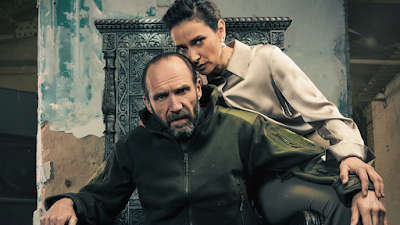
Today I saw my first Shakespeare production onstage: Simon Godwin’s Macbeth, with Ralph Fiennes and Indira Varma as the Macbeths. 

That would be the fourth version, after Trevor Nunn (Ian McKellen – Judi Dench), Joel Coen (Denzel Washington – Frances McDormand), and Orson Welles (Orson Welles – Jeanette Nolan).

It’s too early to comment at length. My immediate reaction is that it’s very different from Trevor Nunn’s production, which to me is perfect as a Shakespeare production can be. I did enjoy it, and I liked the comic touch in Ralph Fiennes’s performance as Macbeth—I hadn’t seen the potential for something comic, darkly comic, in the text and in the other performances—but it worked.

One complaint is that the porter scene is removed. Another complaint is that Simon Godwin increased the presence and significance of the witches, but they didn’t look right—they didn’t look striking, frightening, unnatural, like they’re not the inhabitants of the earth—compare them to the witches in Trevor Nunn’s production, or Kathryn Hunter in Joel Coen’s film. 

But I need to think some more about the play. 

Wednesday, 28 February 2024

My film Footfalls: 5-year anniversary of RTS Student Award

Facebook has just reminded me that 5 years ago, my experimental short Footfalls won the Royal Television Society Student Award – Short Form. 

That also reminds me that I have never made the film public online. 

So here it is. 


Wednesday, 14 February 2024

25 types of men on Tinder

As Blogger would make you sign in to verify your age, I have decided to publish the list on Google Docs. 

Enjoy! 


Sunday, 4 February 2024

Primo Levi and King Lear

I’m currently reading If This Is a Man (known in the US as Survival in Auschwitz), a memoir by Jewish Italian chemist/writer Primo Levi. 

I don’t need to tell you that the book is full of horrors. 

“Then for the first time we became aware that our language lacks words to express this offence, the demolition of a man. In a moment, with almost prophetic intuition, the reality was revealed to us: we had reached the bottom. It is not possible to sink lower than this; no human condition is more miserable than this, nor could it conceivably be so. Nothing belongs to us any more; they have taken away our clothes, our shoes, even our hair; if we speak, they will not listen to us, and if they listen, they will not understand. They will even take away our name: and if we want to keep it, we will have to find ourselves the strength to do so, to manage somehow so that behind the name something of us, of us as we were, still remains.” (ch.2) 

(translated by Stuart Woolf)

How could people do this to other human beings? Is there any cause in nature that makes these hard hearts? The Holocaust is invoked a lot these days—unfortunately I have seen a lot of Holocaust inversion—but I think people cannot imagine, till they have read such an account, the awfulness, the enormity of what the Nazis did to the prisoners at the camp. 

“Imagine now a man who is deprived of everyone he loves, and at the same time of his house, his habits, his clothes, in short, of everything he possesses: he will be a hollow man, reduced to suffering and needs, forgetful of dignity and restraint, for he who loses all often easily loses himself. He will be a man whose life or death can be lightly decided with no sense of human affinity, in the most fortunate of cases, on the basis of a pure judgement of utility. It is in this way that one can understand the double sense of the term ‘extermination camp’, and it is now clear what we seek to express with the phrase: ‘to lie on the bottom’.”

That paragraph makes me think of a key passage in King Lear, when Lear sees the disguised Edgar:

“Is man no more than this? Consider him well. Thou owest the worm no silk, the beast no hide, the sheep no wool, the cat no perfume. Ha! Here’s three on’s are sophisticated! Thou art the thing itself: unaccommodated man is no more but such a poor bare, forked animal as thou art.” (Act 3 scene 4) 

But the power of If This Is a Man, at least it’s my impression so far, is that Primo Levi writes about how the prisoners strove to retain their humanity, even in the most inhuman conditions of the camp: 

“… precisely because the Lager was a great machine to reduce us to beasts, we must not become beasts; that even in this place one can survive, and therefore one must want to survive, to tell the story, to bear witness; and that to survive we must force ourselves to save at least the skeleton, the scaffolding, the form of civilization. We are slaves, deprived of every right, exposed to every insult, condemned to certain death, but we still possess one power, and we must defend it with all our strength for it is the last – the power to refuse our consent. So we must certainly wash our faces without soap in dirty water and dry ourselves on our jackets. We must polish our shoes, not because the regulation states it, but for dignity and propriety. We must walk erect, without dragging our feet, not in homage to Prussian discipline but to remain alive, not to begin to die.” (ch.3) 

That is a powerful passage. 

Tuesday, 30 January 2024

King Lear (1971, dir. Peter Brook)

At its most basic, my measure of a King Lear production or film adaptation is rather simple: does it make me cry at Lear’s reunion at Cordelia, and at the final scene? 

Peter Brook’s film doesn’t—but why? 

I’m going to quote Roger Ebert

“It is important to describe him as Brook's Lear, because he is not Shakespeare's. "King Lear" is the most difficult of Shakespeare's plays to stage, the most complex and, to my mind, the greatest. There are immensities of feeling and meaning in it that Brook has not even touched.” 

King Lear is severely cut. A standard production of King Lear is about 3 hours (my favourite version, featuring Don Warrington, is 3 hours 10 minutes) and Peter Brook’s film is 2 hours 11 minutes on Prime (though IMDb says it’s 2 hours 17 minutes). Apart from removing many lines from the main plot and reducing the Gloucester subplot to its minimum, he rearranges lines and changes many details in the story. Above all, he reduces—or flattens out—the extremities of the play. 

Shakespeare’s King Lear is a play of extremes. On one side are the extremely evil, beyond comprehension: Goneril, Regan, Cornwall, Edmund. On the other side are the extremely good, equally incomprehensible: Cordelia, Kent, Edgar, the unnamed servant who kills Cornwall. We are constantly told—and rightly so—that people are not black and white, that we shouldn’t create characters who are wholly evil or wholly good. But Shakespeare pulls it off as he knows that there is unmotivated hate, just as there is senseless goodness, and he pushes to the extreme these two concepts in King Lear, to powerful effect.

In the film, Peter Brook makes Cordelia (Anne-Lise Gabold) more ambiguous as he omits her reasons for saying “Nothing”; presents Kent (Tom Fleming) as a hothead; and reduces the villainy of Goneril (Irene Worth) and Regan (Susan Engel), making them more sympathetic at the beginning as he gets Paul Scofield to play Lear as an erratic, irrational man, increasingly difficult to live with. Portraying Lear is a delicate balancing act: in some way, his hateful, misogynistic curses are awful, revealing something dark in his character; but at the same time, there is a reason that Cordelia loves him and Kent remains loyal to him; Lear is a figure of pity, but sometimes also a figure of greatness. I don’t quite see that in Paul Scofield’s performance in the 1971 film. 

Roger Ebert argues: 

“[Brook’s] approach was suggested by "Shakespeare Our Contemporary," a controversial book by the Polish critic Jan Kott. In Kott's view, "King Lear" is a play about the total futility of things. The old man Lear stumbles ungracefully toward his death because, simply put, that's the way it goes for most of us. To search for meaning or philosophical consolation is to kid yourself. 

[…] the Brook-Kott version of "Lear" is certainly fashionable and modern. But it gives us a film that severely limits Shakespeare's vision, and focuses our attention on his more nihilistic passages while ignoring or sabotaging the others.” 

That perhaps is why the film doesn’t quite work for me. I also think that the final scene loses much of its impact because Brook quickly kills off Edmund (Ian Hogg), cutting the speech “Some good I mean to do/ Despite of mine own nature”, and gives us a flash of the hanged Cordelia before Lear appears with her dead body. It is an incomprehensible thing about art that even though we all know the story of King Lear, even though we all know what happens at the end of the play, we still get that feeling akin to hope when Edmund reveals his plot—as though this time Cordelia would be saved—and we still feel shocked when Lear appears carrying her body and saying “Howl, howl, howl, howl! O, you men of stone/ Had I your tongues and eyes, I'd use them so/ That heaven’s vault should crack. She’s gone forever!”. All of that effect is lost in the 1971 film. It also doesn’t help that Brook makes lots of jump cuts in that scene, perhaps aiming for a sense of fragmentation like the state of Lear’s mind, but to me it breaks Lear’s speeches and the scene into pieces, destroying their emotional impact. 

What do you think about the 1971 film? 

Sunday, 28 January 2024

Types of characters in Shakespeare

Aren’t you amazed at the range of characters in Shakespeare? I mean not just a range in backgrounds, identities, personalities, viewpoints, but also a range in types of characters? 

Shakespeare can create both larger-than-life characters (the Macbeths, Lear, Othello) and small, ordinary characters (Juliet’s nurse, Celia, Hero); both complex, multifaceted characters (Hamlet, Hal, Cleopatra) and caricatures (Pistol, Dogberry, Perdita’s adoptive father). He can create utterly charming characters (Rosalind, Beatrice). He can depict, convincingly, wholly good characters (Desdemona, Kent, Imogen) and wholly evil characters (Goneril, Regan, Iago). He can delineate characters who are charismatic and lovable despite their bad traits (Falstaff) or sympathetic despite their villainy (Shylock), as well as characters who are repulsive despite their intelligence (Portia) or deeply unpleasant despite their virtue (Isabella). He can get you to dislike a character then feel ashamed for having laughed at their humiliation (Malvolio). He can create a two-dimensional comic relief character then, with a single line, give him depth (Sir Andrew Aguecheek). He can depict an utterly ordinary character then transfigure her in the last act (Emilia), or elevate her into a quasi-mythological being (Cleopatra). He can create characters who continue to puzzle, who continue to be analysed and discussed centuries later (Hamlet, Iago). 

It’s astonishing. (Most) other writers don’t have such range.

At the risk of being accused of denigrating other writers in order to praise Shakespeare, let me explain what I mean. I think, for example, that Chekhov can’t create larger-than-life characters and Tolstoy can’t really write caricatures (except for Napoleon), not for lack of talent but because of their sensibilities. Dostoyevsky probably can’t write small, ordinary characters. George Eliot and Edith Wharton can’t portray a charming character, especially if they themselves disapprove of them, as Jane Austen (Henry and Mary Crawford) and Thackeray (Becky Sharp) can. Jane Austen, like Shakespeare, can depict a two-dimensional foolish character and then make us feel ashamed when we realise they have feelings (Miss Bates), but she doesn’t create a character whose name becomes a byword for something, the way Shakespeare (Othello, Shylock) and some other writers can (Melville: Bartleby, Ahab; Nabokov: Lolita; Dickens: Scrooge). Dickens, like Shakespeare, can give us a caricature and then in last few chapters give them complexity and depth (Sir Leicester Dedlock), but readers tend to complain about his wholly good characters, something very few writers can convincingly pull off. 

Shakespeare’s genius is miraculous.