Pages

Wednesday, 15 November 2023

My 10 favourite episodes of Inside No.9

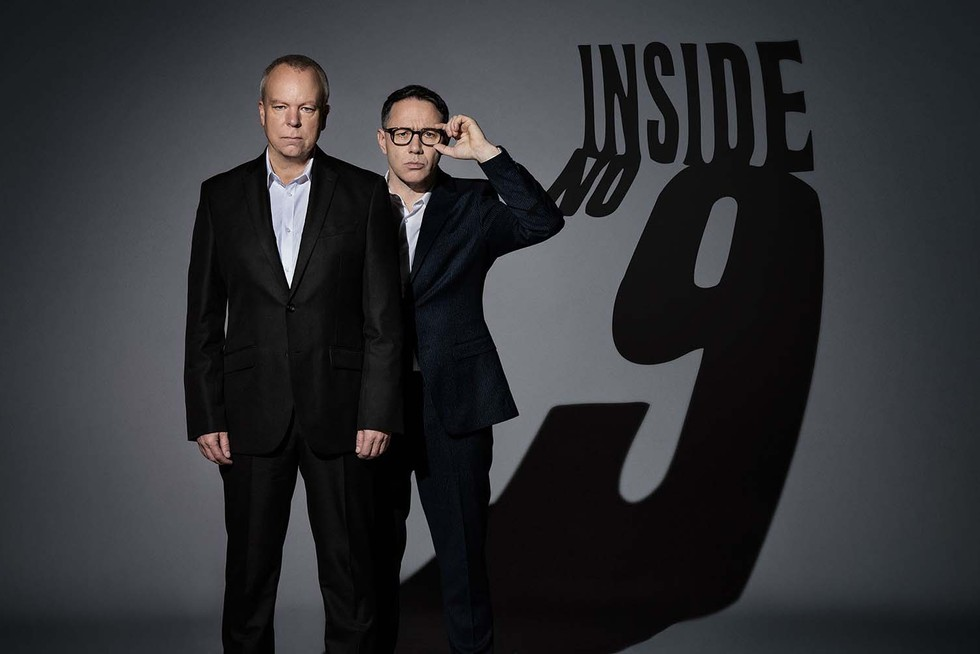
I have just finished watching Inside No.9—it is brilliant! It’s a British black comedy series, written by Reece Shearsmith and Steve Pemberton, and each episode is a self-contained story, almost all starring one of them or both (usually both).

Ingenuous plots, clever twists, good dialogue, good attention to detail. Also, both Shearsmith and Pemberton have a great range. 

Here are my 10 favourite episodes (in chronological order): 

  • A Quiet Night In: two hapless burglars trying to steal a (postmodernist?) painting whilst the couple in the house argue; almost entirely without dialogue. 
  • The Understudy: about a production of Macbeth, and inspired by Macbeth
  • The 12 Days of Christine: 12 days from 12 years of Christine’s life; great drama and emotion packed into just half an hour. 
  • The Billsimple premise (four men arguing over a bill), simple location (for most of the episode, around a table); the entire plot driven by characters and dialogue. 
  • The Riddle of the Sphinx: one of the most ingenuous episodes in the series; revolving around a cryptic crossword. 
  • Zanzibar: a Shakespeare mash-up; the whole dialogue in iambic pentameter. 
  • Bernie Clifton’s Dressing Room: double-act Cheese and Crackers reuniting after 30 years to perform in front of an audience. 
  • Once Removed: a removal man arriving to help a woman move house, leading to bizarre circumstances that unfold through reverse chronology; one of the cleverest episodes. 
  • Misdirection: a battle of wits between magicians, years after a stolen trick. 
  • Wuthering Heist: a heist film in the style of Commedia dell’arte and inspired by Reservoir Dogs
  • The Bones of St Nicholas: a professor camping in a church that is said to be haunted and contain the bones of St Nicholas. 

All right, I know, that’s actually 11. But you can’t make me get rid of one. 


One of my favourite jokes from Inside No.9

- Jesus! What a blue-cock!

- What’s a blue-cock?

- A tight-fisted wanker.

Saturday, 11 November 2023

On Hannah Arendt and antisemitism

I always wanted to read Hannah Arendt’s The Origins of Totalitarianism—now seemed like the perfect time. Very interesting book, at least so far. 

I’m just going to jot down some thoughts. 

1/ “This situation was an important factor in the early rise and continuous growth of antisemitism in the nineteenth century. Which group of people would turn antisemitic in a given country at a given historical moment depended exclusively upon general circumstances which made them ready for a violent antagonism to their government. But the remarkable similarity of arguments and images which time and again were spontaneously reproduced have an intimate relationship with the truth they distort. We find the Jews always represented as an international trade organization, a world-wide family concern with identical interests everywhere, a secret force behind the throne which degrades all visible governments into mere facade, or into marionettes whose strings are manipulated from behind the scenes. Because of their close relationship to state sources of power, the Jews were invariably identified with power, and because of their aloofness from society and concentration upon the closed circle of the family, they were invariably suspected of working for the destruction of all social structures.” (P.1, ch.2)

Still true today, this is something I see on both the left and the right. 


2/ “It is an obvious, if frequently forgotten, rule that anti-Jewish feeling acquires political relevance only when it can combine with a major political issue, or when Jewish group interests come into open conflict with those of a major class in society.” (ibid.)

Over the past few years, I have seen anti-Jewish sentiments expressed among the anti-immigrant crowd, the anti-woke crowd, the “Covid is a hoax” crowd, and other groups, but the biggest political issue adopted by antisemites at the moment is the Palestinian cause. To clarify, I don’t mean that every single pro-Palestinian person hates Jews, or wants to destroy the state of Israel, but I would argue that lots of antisemites hide behind the Palestinian cause and mask their Jew hatred by replacing the word “Jews” with “Zionists” when saying something antisemitic. 

Regarding the pro-Palestinian (or more accurately, anti-Israeli) protests in the West and especially in London, I have no doubt that many people genuinely care about the Palestinians and want the suffering in Gaza to end, but it’s a fact that many others in the marches hate Jews, support Hamas, and want Israel to be destroyed “from the river to the sea”. You can’t deny it. You too have seen the signs. You too have heard the chants. You too have seen people openly supporting Hamas. 


3/ “Many of these bankers were Jews and, even more important, the general figure of the banker bore definite Jewish traits for historical reasons. Thus the leftist movement of the lower middle class and the entire propaganda against banking capital turned more or less antisemitic, a development of little importance in industrial Germany but of great significance in France and, to a lesser extent, in Austria.” (ibid.) 

Interestingly, Hannah Arendt points out that Karl Marx, himself a Jew, was anti-Jewish. 


4/ “Friedrich Engels once remarked that the protagonists of the antisemitic movement of his time were noblemen, and its chorus the howling mob of the petty bourgeoisie. This is true not only for Germany, but also for Austria's Christian Socialism and France's Anti-Dreyfusards. In all these cases, the aristocracy, in a desperate last struggle, tried to ally itself with the conservative forces of the churches—the Catholic Church in Austria and France, the Protestant Church in Germany—under the pretext of fighting liberalism with the weapons of Christianity.” (ibid.) 

As I have said earlier, there are antisemites across the political spectrum.

The thing I find fascinating is that there are elements of antisemitism in both of the two worst ideologies of the 20th century: Nazism and communism. There are also such elements in some of the worst ideologies at the moment. 


5/ “… the German Liberal Party, under the leadership of Schoenerer, was from the beginning a lower middle-class party without connections or restraints from the side of the nobility, and with a decidedly left-wing outlook.

It never achieved a real mass basis, but it was remarkably successful in the universities during the eighties where it organized the first closely knit students' organization on the basis of open antisemitism. Schoenerer's antisemitism, at first almost exclusively directed against the Rothschilds, won him the sympathies of the labor movement, which regarded him as a true radical gone astray. His main advantage was that he could base his antisemitic propaganda on demonstrable facts: as a member of the Austrian Reichsrat he had fought for nationalization of the Austrian railroads, the major part of which had been in the hands of the Rothschilds since 1836 due to a state license which expired in 1886. Schoenerer succeeded in gathering 40,000 signatures against its renewal, and in placing the Jewish question in the limelight of public interest. The close connection between the Rothschilds and the financial interests of the monarchy became very obvious when the government tried to extend the license under conditions which were patently to the disadvantage of the state as well as the public.” (ibid.) 

That reminds me, I should pick up a book about the Rothschilds and the conspiracy theory. 


6/ “It is well known that the belief in a Jewish conspiracy that was kept together by a secret society had the greatest propaganda value for antisemitic publicity, and by far outran all traditional European superstitions about ritual murder and well-poisoning.” (P.1, ch.3)

“Jews run Hollywood”, “Jews own the media”, “Jews control the world”, etc.—it is depressing to read Hannah Arendt’s book from 1951 and recognise many things discussed. Are Jews over-represented in certain fields? Yes, it’s undeniable. But if Jews were controlling the media and controlling the world, they’re doing a pretty bad job—the media, the UN, the WHO… have for a long time been strongly biased against Israel. 


7/ “Not the Dreyfus case with its trials but the Dreyfus Affair in its entirety offers a foregleam of the twentieth century. As Bernanos pointed out in 1931 "The Dreyfus affair already belongs to that tragic era which certainly was not ended by the last war. The affair reveals the same inhuman character, preserving amid the welter of unbridled passions and the flames of hate an inconceivably cold and callous heart." Certainly it was not in France that the true sequel to the affair was to be found, but the reason why France fell an easy prey to Nazi aggression is not far to seek.” (P.1, ch.4) 

Is this the case? I have no idea. But the chapter about the Dreyfus affair is interesting.

Emile Zola was indeed a true intellectual, who stood up for the truth and for justice, putting himself at risk. In contrast, many members of the intelligentsia now pretend to stand up for justice and to side with the oppressed, but they sympathise with terrorists, condone atrocities, and unthinkingly repeat slogans and received opinions.

But then that’s nothing new, I guess. It’s only a few months ago when I read Wonder Confronts Certainty, in which Gary Saul Morson wrote about the educated class’s bloodlust and love of violence, and their embracing of revolution for the sake of revolution. 


8/ “It was against the rich and the clergy, not for the republic, not for justice and freedom that the workers finally took to the streets.” (ibid.) 

That’s a good observation, speaking as someone from a communist country. 


9/ “While the mob actually stormed Jewish shops and assailed Jews in the streets, the language of high society made real, passionate violence look like harmless child's play.” (ibid.) 

And that is happening again now. On the streets of London and other Western cities, there have been people chanting genocidal phrases and calling for jihad and calling for intifada; in the West, there have been intimidations of and attacks on Jews, or Jewish businesses; but some people still pretend or perhaps convince themselves that antisemitism is overblown, that there’s no cause for concern, that the chants are all harmless.

I can’t help fearing that we’re reliving the 20th century. 


10/ “The case of the unfortunate Captain Dreyfus had shown the world that in every Jewish nobleman and multimillionaire there still remained something of the old-time pariah, who has no country, for whom human rights do not exist, and whom society would gladly exclude from its privileges. No one, however, found it more difficult to grasp this fact than the emancipated Jews themselves.” (ibid.) 

The shocking responses to the October 7 massacre, which I never would have expected—remember that the first protests were immediately after the massacre and before Israel’s retaliation—truly opened my eyes. 

Wednesday, 1 November 2023

100 latest films I've watched

From July 2023 to November 2023

In bold: films and TV episodes I think are good. 


1/ The Mentalist: Strawberries and Cream - Parts 1 and 2 (2011) 

2/ The Mentalist: Blood Money (2010) 

3/ The Mentalist: Red All Over (2010) 

4/ The Mentalist: 18-5-4 (2010) 

5/ The Mentalist: Scarlet Ribbons (2011) 

6/ The Mentalist: Little Red Book (2011) 

7/ The Mentalist: Pretty Red Balloon (2011) 

8/ The Mentalist: Ring Around the Rosie (2011) 

9/ Barbie (2023) 

10/ The Mentalist: Blood and Sand (2011) 

11/ The Mentalist: Where in the World is Carmine O'Brien? (2011)

12/ The Mentalist: Blinking Red Light (2011) 

13/ The Mentalist: Pink Tops (2011) 

14/ The Mentalist: The Redshirt (2011) 

15/ The Mentalist: Always Bet on Red (2012) 

16/ The Mentalist: My Bloody Valentine (2012) 

17/ The Mentalist: Red Is the New Black (2012) 

18/ The Mentalist: At First Blush (2012) 

19/ The Mentalist: War of the Roses (2012) 

20/ The Mentalist: His Thoughts Were Red Thoughts (2012) 

21/ The Mentalist: Cheap Burgundy (2012) 

22/ The Mentalist: Ruddy Cheeks (2012) 

23/ The Mentalist: Pink Champagne on Ice (2012) 

24/ The Mentalist: Something Rotten in Redmund (2012) 

25/ The Mentalist: Ruby Slippers (2012) 

26/ The Mentalist: So Long, and Thanks for All the Red Snapper (2012)

27/ The Mentalist: The Crimson Hat (2012) 

28/ The Mentalist: The Red Glass Bead (2012) 

29/ The Mentalist: Devil's Cherry (2012) 

30/ The Mentalist: Not One Red Scent (2012) 

31/ The Mentalist: Blood Feud (2012) 

32/ The Mentalist: Cherry Picked (2012) 

33/ The Mentalist: If It Bleeds, It Leads (2012) 

34/ The Mentalist: Red Sails in the Sunset (2012) 

35/ The Mentalist: Black Cherry (2012) 

36/ The Mentalist: Panama Red (2012) 

37/ The Mentalist: Days of Wine and Roses (2012) 

38/ The Mentalist: Little Red Corvette (2013) 

39/ Indiscreet (1958) 

40/ The Mentalist: The Red Barn (2013)  

41/ The Mentalist: Red in Tooth and Claw (2013) 

42/ The Mentalist: Red Lacquer Nail Polish (2013) 

43/ Ida (2013) 

44/ The Mentalist: There Will Be Blood (2013) 

45/ The Mentalist: Red, White, and Blue (2013) 

46/ The Mentalist: Behind the Red Curtain (2013) 

47/ The Mentalist: Red Letter Day (2013) 

48/ The Mentalist: Red Velvet Cupcakes (2013) 

49/ The Mentalist: Red and Itchy (2013) 

50/ The Mentalist: Red John's Rules (2013) 

51/ The Mentalist: The Desert Rose (2013) 

52/ The Mentalist: Black-Winged Redbird (2013)

53/ The Mentalist: Wedding in Red (2013) 

54/ The Mentalist: Red Listed (2013) 

55/ The Mentalist: The Red Tattoo (2013) 

56/ The Mentalist: Fire and Brimstone (2013) 

57/ The Mentalist: The Great Red Dragon (2013) 

58/ The Mentalist: Red John (2013) 

59/ The Mentalist: My Blue Heaven (2013) 

60/ The Mentalist: Green Thumb (2013) 

61/ The Mentalist: White Lies (2014) 

62/ The Mentalist: Golden Hammer (2014)

63/ The Mentalist: Black Helicopters (2014) 

64/ The Mentalist: Grey Water (2014) 

65/ The Mentalist: White as the Driven Snow (2014) 

66/ The Mentalist: Violets (2014) 

67/ The Mentalist: Silver Wings of Time (2014) 

68/ The Mentalist: Forest Green (2014) 

69/ The Mentalist: Brown Eyed Girls (2014) 

70/ The Mentalist: Il Tavolo Bianco (2014) 

71/ The Mentalist: Black Hearts (2014) 

72/ The Mentalist: Blue Bird (2014) 

73/ The Mentalist: Nothing But Blue Skies (2014) 

74/  The Mentalist: The Greybar Hotel (2014) 

75/ The Mentalist: Orange Blossom Ice Cream (2014) 

76/ The Mentalist: Black Market (2014) 

77/ The Mentalist: The Silver Briefcase (2014) 

78/ The Mentalist: Green Light (2015) 

79/ The Mentalist: Little Yellow House (2015)  

80/ The Mentalist: The Whites of His Eyes (2015) 

81/ The Mentalist: Copper Bullet (2015) 

82/ The Mentalist: Nothing Gold Can Stay (2015) 

83/ The Mentalist: Byzantium (2015) 

84/ The Mentalist: Brown Shag Carpet / White Orchids (2015) 

85/ The Man Who Wasn't There (2001) 

86/ The French Dispatch (2021)

87/ Panorama: Downfall of the Crypto King (2023) - extended version 

88/ Rosencrantz & Guildenstern Are Dead (1990) 

89/ Inside No.9: Zanzibar (2018) 

90/ Inside No.9: Bernie Clifton's Dressing Room (2018) 

91/ Killers of the Flower Moon (2023)

92/ Inside No.9: Sardines (2014)

93/ Inside No.9: A Quiet Night In (2014) 

94/ Inside No.9: Tom & Gerri (2014) 

95/ Inside No.9: Last Gasp (2014) 

96/ Inside No.9: The Understudy (2014) 

97/ Inside No.9: The Harrowing (2014) 

98/ Inside No.9: La Couchette (2015) 

99/ Inside No.9: The Trial of Elizabeth Gadge (2015) 

100/ Inside No.9: Cold Comfort (2015) 
Tuesday, 10 October 2023

Marriages of unequal minds in Shakespeare

Have you ever noticed how often women in Shakespeare’s plays go for men unworthy of them? 

In The Two Gentlemen of Verona, Julia and Silvia are both better than Valentine and Proteus. 

In Love’s Labour’s Lost, all three women are wittier and wiser than the men. 

In The Merchant of Venice, Portia is cleverer and more resourceful than Bassanio, and clearly would be the one wearing the pants in the relationship.

In As You Like It, one thinks that Orlando is a nice lad but wonders what Rosalind can possibly see in him. 

Similar with Helena and Bertram in All’s Well That Ends Well (though I think both are utterly unpleasant). 

In Measure for Measure, I don’t know why Marianna wants Angelo after he has thrown her away. 

In Twelfth Night, Viola, intelligent in other ways but foolish in love, willingly a thousand deaths would die for a narcissist such as Orsino.

In Othello, Desdemona is the sweetest innocent, too good for Othello (I have always clashed with A. C. Bradley’s view of him as a noble man). 

Same with Hero and Claudio in Much Ado About Nothing

Same with Imogen and Posthumus Leonatus in Cymbeline

Same with Hermione and Leontes in The Winter’s Tale.

Love is blind indeed.

So which are the equal and balanced couples in Shakespeare?

I guess we can say Romeo and Juliet, and Antony and Cleopatra—though in both cases, their love is destructive. I would also say the Macbeths—they’re a happy, loving couple—she does taunt him but I have always thought that people exaggerate her dominance, her control over him—Macbeth already has black and deep desires before she speaks; Macbeth is the one committing the murder, she can’t; Macbeth is the one killing more people, she can’t stop him. 

Probably the only great match with a happy ending is Beatrice and Benedick in Much Ado About Nothing

Why does Shakespeare so often depict women going for men unworthy of them? 

Wednesday, 4 October 2023

A Bardolator’s notes on living in London

1/ As other sufferers would understand, once you have caught the Shakespeare bug, it’s incurable—you read the plays and listen to audio recordings and watch productions and watch film adaptations and read centuries of criticism—and if you happen to live in London, you look for the places associated with Shakespeare.

In May, I went on a Shakespeare tour with Declan McHugh, who specialises in Shakespeare and serial killers.

Last Sunday, I went on another Shakespeare tour with Helen Palmer of Elan Walks.

(Helen said to me “So you’re the Bardolator in the group.” How did she know? you ask. I’m a show-off, that’s how). 


2/ On 25/9, I was at the Swan at the Globe with Himadri of Argumentative Old Git blog, having won two tickets, for the event celebrating 400 years of First Folio and the new edition by Folio Society.

Three gorgeous volumes, £1000. Limited edition. 

I can’t afford them—I’m just a poor girl—but hey, I was one of the first people outside Folio Society to have seen and felt these beautiful books. 


3/ It’s insane to me that souvenir shops in Amsterdam are filled with Van Gogh and those in Vienna are filled with Mozart and Gustav Klimt, but souvenir shops in London just sell Harry Potter, the royal family, and London symbols such as the red bus. No Shakespeare. No Dickens. Rarely Sherlock Holmes. Just contemporary pop culture nonsense.


4/ I’m currently reading and enjoying Neil MacGregor’s Shakespeare’s Restless World: An Unexpected History in Twenty Objects

It’s an interesting concept.

One can enjoy Shakespeare books anywhere, but it feels a bit more personal when you recognise place names (ah, Shoreditch!) or you can easily pop to Bankside and walk around the area where he worked.

(Yep, I’m rubbing it in). 


5/ There is a Shakespeare Museum opening in London next year. I am excited but worried. 


6/ If you’re heartbroken (or planning to be), I recommend London. Lots of attractions to see, things to do, places to visit.

Since moving to London, I have seen only two copies of the First Folio: the one at British Library and the one at the Globe. 


This year is the 400th anniversary of the First Folio so, you’ve guessed it, I’m gonna go hunt them: https://folio400.com/first-folios-on-show-in-2023/

Monday, 2 October 2023

Cleopatra and Shakespeare’s characters’ ability to surprise

If asked to pick the greatest line in Shakespeare, I would go with “I was adored once too.” Virginia Woolf also thinks that when Sir Andrew says that line in Twelfth Night, “we feel that we hold him in the hollow of our hands; a novelist would have taken three volumes to bring us to that pitch of intimacy.”

Just five words completely change our perception of Sir Andrew. 

Also in Twelfth Night, Shakespeare does something brilliant with Malvolio: Malvolio first comes across as self-satisfied, holier-than-thou, and insufferable, so we laugh along when other characters play a prank on him, but then the prank goes too far and turns into something much darker and crueller, and as we see Malvolio abused and beaten and humiliated, we not only feel sorry for him but also feel complicit in the humiliation of the pitiful man.

It is excellent, and Jane Austen later does something similar with Miss Bates in Emma.

When people talk about Shakespeare’s understanding of human nature and powers of characterisation, they understandably talk about Iago and Othello, together with Hamlet, Macbeth, Rosalind…, but the most surprising character in Othello is Emilia. For a large part of the play, Emilia comes across as ordinary and earthy, contrasting with the saintliness and naïve childlikeness of Desdemona, but in the final scene, she is transfigured. Iago has seen through everything and manipulated everyone, but Emilia’s love and self-sacrifice and fearlessness is the one thing he has not anticipated. 

“EMILIA […] Thou hast not half that power to do me harm

As I have to be hurt…” 

(Act 5 scene 2) 

The intensity! The rage! It is Emilia who defends Desdemona’s honour, who exposes Othello, who brings down Iago. It is a powerful scene—she is transfigured. 

But there’s nothing like the surprise of Cleopatra, the infinite variety of Cleopatra. A. C. Bradley thinks that in Shakespeare, there are four characters that are inexhaustible: Hamlet, Falstaff, Iago, and Cleopatra.

For a large part of Antony and Cleopatra, she is depicted as lascivious and tempestuous and dramatic and manipulative and shallow and an irresponsible ruler, and yet in the final Act, she is transformed. In the large part of the play, Antony and Cleopatra, both irresponsible rulers and in some ways very ordinary people, are both turned into quasi-mythological beings. It’s largely Cleopatra who mythologises Antony and herself. 

“CLEOPATRA Think you there was or might be such a man 

As this I dreamt of? 

DOLABELLA Gentle madam, no. 

CLEOPATRA You lie, up to the hearing of the gods, 

But if there be nor ever were one such, 

It’s past the size of dreaming; nature wants stuff 

To vie strange forms with fancy, yet t’ imagine

As Antony were nature’s piece ’gainst fancy, 

Condemning shadows quite.” 

(Act 5 scene 2) 

Her death is one of the most striking, unforgettable deaths in Shakespeare (and in literature in general). But unlike the death of Desdemona or Cordelia, it doesn’t feel tragic—instead, there’s a strange beauty and nobility in Cleopatra’s death. 

“CLEOPATRA Give me my robe, put on my crown, I have 

Immortal longings in me. Now no more 

The juice of Egypt’s grape shall moist this lip,

Yare, yare, good Iras; methinks I hear 

Antony call; I see him rouse himself

To praise my noble act. I hear him mock

The luck of Caesar, which the gods give men

To excuse their after wrath. Husband, I come:

Now to that name my courage prove my title! 

I am fire, and air; my other elements

I give to baser life…” 

(ibid.) 

How does a pleasure-seeking, manipulative, and essentially shallow woman like Cleopatra transform into such a quasi-mythological being in the last Act of the play? How does Shakespeare do it? I don’t know—I’ve reread the play recently and still don’t know. It’s miraculous. 

Thursday, 21 September 2023

More and more puzzled by Measure for Measure

1/ I still think the Duke goes around pulling all the strings because he wants to test everyone in Vienna. Some readers and viewers of the play complain that the final two acts drag on for too long when the Duke could easily remove his disguise and set everything right, but I don’t think he’s just interested in justice, in setting everything right—I think he wants to experiment, to test everyone to their very limit.

The question is, of course, why? Perhaps he’s bored, never having had much interest in governing. Perhaps he wants to study human nature. Perhaps he wants to play God. Perhaps he turns everything upside down and begins anew when he returns to power, having given the citizens of Vienna a taste of tyranny. Perhaps he wants to demonstrate to everyone, especially those in power, the danger of bias and the impossibility of establishing the truth when we’re in a “he said, she said” situation. 


2/ Barnardine is the minor, seemingly inconsequential character in Shakespeare that interests me the most, because he’s the only character in Measure for Measure that the Duke cannot control. 

“BARNADINE […] I will not consent to die this day, it’s certain.” 

(Act 4 scene 3) 

For all his game of playing God and manipulating everything, the Duke also cannot control Lucio’s mouth, but in the final scene, Lucio inadvertently plays into the Duke’s game when he slanders Friar Lodowick (the Duke’s disguise) and thus puts Escalus to the test as a judge (which he fails, coloured by his misjudgement about Angelo). And later, the Duke can punish Lucio by forcing him to marry a prostitute.

Barnardine on the contrary cannot be controlled, cannot be swayed. He refuses to get pulled into the Duke’s elaborate plot. He would prefer not to. 


3/ When I reread Hamlet or King Lear, I saw more layers of meaning and understood them a bit better.

But when I reread Measure for Measure recently, it puzzled me even more—I’m still in the dark—it’s a baffling play. 

For example, people tell me that Measure for Measure is about mercy. But do you notice the absurdity of Isabella’s call for mercy for Angelo? 

“ISABELLA […] My brother had but justice, 

In that he did the thing for which he died. 

For Angelo, 

His act did not o’ertake his bad intent, 

And must be buried but as an intent 

That perished by the way. Thoughts are no subjects, 

Intents but merely thoughts.” 

(Act 5 scene 1)

How is it justice that Claudio has to die for “fornication”? How is it just intent when Angelo forces Isabella to trade her virginity for her brother’s life—which doesn’t become “action” only because the Duke intervenes and gets Marianna to change place with Isabella—and then deceitfully lets Claudio be executed anyway? What kind of mercy is this? 

We can imagine what Shakespeare would have thought about Claudio’s “crime”—Anne Hathaway was pregnant on their wedding day. 


4/ The Duke is, in his way, also a tyrant. 

Look at the resolution.

He makes Angelo marry Marianna: Angelo doesn’t want her, and she ends up with someone who doesn’t care for her.

He makes Lucio marry the prostitute who has a child with him: Lucio doesn’t want her, how do we know if she wants him? 

He “proposes” to Isabella: she never says yes, and we all know she wants to become a nun.

Isn’t that tyrannical? 

This is not me imposing a modern perspective on the play—Shakespeare depicted over and over again forced marriages, in Romeo and Juliet, in A Midsummer Night’s Dream, in The Merry Wives of Windsor—we can deduce what he must have thought about them. 

Friday, 15 September 2023

Chekhov and shame

I prefer Chekhov’s later and longer stories, naturally. But many of his earlier stories, though just sketches, are very good.

In Volume 8 of Constance Garnett’s Chekhov, shame is the theme in most of the stories: Chekhov depicts an encounter, a confrontation, or a confession, and pinpoints a moment of shame, of the realisation in some character that they have wasted their lives or been unkind to others. And it’s very moving. 

For example, in “The Chorus Girl”, a chorus girl named Pasha is with a man when his wife suddenly appears and asks about him: 

“Pasha felt that on this lady in black with the angry eyes and white slender fingers she produced the impression of something horrid and unseemly, and she felt ashamed of her chubby red cheeks, the pock-mark on her nose, and the fringe on her forehead, which never could be combed back. And it seemed to her that if she had been thin, and had had no powder on her face and no fringe on her forehead, then she could have disguised the fact that she was not “respectable,” and she would not have felt so frightened and ashamed to stand facing this unknown, mysterious lady.”

It is similar to a moment in “A Gentleman Friend”: 

“The staircase impressed her as luxurious, and magnificent, but of all its splendours what caught her eye most was an immense looking-glass, in which she saw a ragged figure without a fashionable jacket, without a big hat, and without bronze shoes. And it seemed strange to Vanda that, now that she was humbly dressed and looked like a laundress or sewing girl, she felt ashamed, and no trace of her usual boldness and sauciness remained, and in her own mind she no longer thought of herself as Vanda, but as the Nastasya Kanavkin she used to be in the old days. . . .” 

To go back to “The Chorus Girl”, the wife screams at her, curses her, begs her whilst the husband is hiding and hearing everything.  

“Pasha shrieked with horror and waved her hands. She felt that this pale, beautiful lady who expressed herself so grandly, as though she were on the stage, really might go down on her knees to her, simply from pride, from grandeur, to exalt herself and humiliate the chorus girl.” 

A large part of the story is about the chorus girl’s shame and humiliation—because of it, she does an impulsive act that she later regrets—but then the wife leaves and the man appears, and now what we see is his shame. 

“At a Country House” is also a sketch, but different from “The Chorus Girl”, shame is not a feeling that runs through the entire story but a moment of sudden realisation: 

“Rashevitch was fearfully confused. Dumbfoundered, as though he had been caught in the act of a crime, he gazed helplessly at Meier, and did not know what to say. Genya and Iraida flushed crimson, and bent over their music; they were ashamed of their tactless father. A minute passed in silence, and there was a feeling of unbearable discomfort…” 

That moment changes the colour, the tone of the rest of the story. 

“When he reached his own room, Rashevitch sat down on his bed and began to undress. He felt oppressed, and he was still haunted by the same feeling as though he had eaten soap. He was ashamed. As he undressed he looked at his long, sinewy, elderly legs, and remembered that in the district they called him the “toad,” and after every long conversation he always felt ashamed.” 

It also changes the way we perceive the character. Rashevitch is the kind of man Chekhov might not have liked in real life, for he speaks of blue blood and disparages the working class, but Chekhov humanises him—through shame—and makes us feel sorry for him. 

The subject of shame is even more developed, and better handled, in “Rothschild’s Fiddle”. Look at the moment when Yakov notices the look of joy on his dying wife’s face: 

“Looking at the old woman, Yakov for some reason reflected that he had not once in his life been affectionate to her, had had no feeling for her, had never once thought to buy her a kerchief, or to bring her home some dainty from a wedding, but had done nothing but shout at her, scold her for his losses, shake his fists at her; it is true he had never actually beaten her, but he had frightened her, and at such times she had always been numb with terror. Why, he had forbidden her to drink tea because they spent too much without that, and she drank only hot water. And he understood why she had such a strange, joyful face now, and he was overcome with dread.” 

Chekhov doesn’t use the word, but it’s a moment of immense shame. The feeling becomes stronger after the funeral: 

“He wondered how it had happened that for the last forty or fifty years of his life he had never once been to the river, or if he had been by it he had not paid attention to it. […] But nothing of this had happened, even in his dreams; life had passed uselessly without any pleasure, had been wasted for nothing, not even a pinch of snuff; there was nothing left in front, and if one looked back—there was nothing there but losses, and such terrible ones, it made one cold all over. […] Why do people always do what isn’t needful? Why had Yakov all his life scolded, bellowed, shaken his fists, ill-treated his wife, and, one might ask, what necessity was there for him to frighten and insult the Jew that day? Why did people in general hinder each other from living? What losses were due to it! what terrible losses! If it were not for hatred and malice people would get immense benefit from one another.”

Now connected with shame is the subject of waste—something that occupies Chekhov throughout his career, in both short stories and plays—the idea that we waste our lives and hinder each other from living. 

I shall end my blog post with a quote from Edmund White, as quoted on Anecdotal Evidence blog

“But surely the stories of Chekhov or the paintings of de Chirico move us not only because they are so well done, but because in each case the artist has arranged exactly the right things in the right order. The choice of subject matter has been at least half of the achievement. Of course, if the rendering were less accomplished, its inaccuracies would distract us or stand between us and what was going on; but the aptness of the rendering alone could never explain the mysterious hold those words in the dark have over us.”

Wednesday, 30 August 2023

On Turgenev’s Virgin Soil

Virgin Soil is one of Turgenev’s lesser-known works. Not hard to see why. It is, as Tom of Wuthering Expectations has put it, formless.  

But if you’re interested in 19th century Russian society and politics, like I am, especially now that I have just read Gary Saul Morson’s Wonder Confronts Certainty, it is an interesting novel. It is probably Turgenev’s most political novel, or the novel where his stance is most clear: the revolutionaries are not psychopaths but naïve idealists who want to “serve the people” but know nothing about “the people”; the ideal is someone like Solomin, who introduces gradual changes and makes actual positive impact on people’s lives. If only the likes of Solomin had triumphed instead of the Bolsheviks! 

There are also some good bits in Virgin Soil. My favourite part is the chapter about the old couple, Fomushka and Fimushka—it does nothing to advance the plot, it even feels incongruous, but it’s striking and full of life. 

The characterisation of Nezhdanov and the depiction of his doubt and struggle are good. He is the most, or perhaps the only, fully developed character in the novel. Like Tolstoy always writes about the Man Who Searches for Meaning, Chekhov always writes about the Man Who Wastes His Life, Dostoyevsky always writes about the Spiteful Man, Turgenev always writes about the Superfluous Man.

Tom wrote

“The generation of Nihilists replaces the Superfluous Men, only to discover that they themselves were superfluous, and now the more violent, conspiratorial, anarchistic Populists elbow out the nihilists, finding, to their despair, that they are entirely superfluous.” 

Nezhdanov is another Superfluous Man. But it doesn’t feel boring—the doubt, the struggle, the gulf he feels between himself and the peasants, the feeling that “it’s difficult for an aesthete to engage with real life”, the despair and self-loathing—all that is well depicted.

There are some good moments, some good scenes throughout the book. The confrontation between Valentina Sipyagina and Marianna, for example. 

“Marianna left hastily, while Valentina Mikhailovna jumped up from her armchair, on the point of shouting and bursting into tears. But she did not know what to shout and the tears did not come. 

[…] She recognized a certain portion of truth in what she had heard. But how could she be judged so harshly? “Can I be so evil?” she thought, looking at herself in the mirror which was placed between the two windows directly in front of her. This mirror reflected a delightful, somewhat distorted face, with prominent red patches, which was nevertheless charming, and remarkable, soft, velvet eyes. “Me. Am I evil,” she thought again, “with eyes like that?”…” (Ch.26) 

(translated by Michael Pursglove) 

I like that. 

The scene where Sipyagin tricks Paklin into revealing the whereabouts of Nezhdanov and Marianna is also good, especially the moment Paklin realises what he has done and tries to justify himself, in vain. 

Some other good bits in Virgin Soil are when the characters leave things unsaid. 

“Marianna wanted to ask for an explanation of these words, but did not, and anyway, at that moment Solomin came into the room.” (Ch.36)

That scene between Nezhdanov and Marianna is very good. I don’t particularly like the romance in the novel, but that particular scene is excellent. 

“Solomin went out and caught Marianna up on the stairs. He had intended to say something to her about Nezhdanov, but remained silent. And, for her part, Marianna realized that Solomin had intended to say something to her, about Nezhdanov in particular, and that he had remained silent. And she too remained silent.” (ibid.)

I like it when a writer depicts those moments when people leave things unsaid; when they don’t say, or can’t say, something. Chekhov and Henry James are the masters of those silences, Turgenev also does it.  

Turgenev depicts another silence in the final chapter of the book: 

“Mashurina merely nodded. She wanted him to continue speaking of Nezhdanov, but could not pluck up the courage to ask him.” (Ch.38) 

The entire chapter is poignant. I like that Turgenev ends the novel not on Marianna and Solomin, but on Paklin and Mashurina: we’re in a way moved further away from Nezhdanov, but we can see the impact of his death on somebody.

There are indeed some very good bits in the book. 

Tuesday, 22 August 2023

Virgin Soil: Fomushka and Fimushka

Virgin Soil seems like the right book to read after Gary Saul Morson’s Wonder Confronts Certainty

Perhaps at some point I will write about Turgenev’s revolutionaries, but right now I’m interested in the old couple: the Subochevs, Foma Lavrentyevich (Fomushka) and Yevfimiya Pavlovna (Fimushka). 

This is how Paklin describes them: 

““No politics, no literature, nothing modern gets a look in there. […] The smell there is antique; the people are antique, the air is antique. Take anything you like and it’s antique. Catherine II, powder, hooped skirts, the eighteenth century! […] They’re awfully like one another, only she wears a mobcap and he a nightcap—with the same ruches as the mobcap, but minus the ribbon. If it wasn’t for this ribbon, you wouldn’t know who was who…”” 

(translated by Michael Pursglove) 

Personally I think not much of interest has happened before this point. Nezhdanov, an illegitimate son of an aristocrat, and a Red, is employed as a tutor by the privy councillor Sipyagin; there he meets a few progressive people who want to “do something”—Marianna (Sipyagin’s niece), Markelov (Sipyagin’s brother-in-law), Solomin (a factory owner), etc. Paklin, one of the revolutionaries Nezhdanov has known from before, visits him, gets introduced to the others, and then takes them to the Subochevs, who gave shelter to his sister. 

“The Subochevs’ coachman, too, was an extremely ancient man, redolent of train oil and pitch; his beard began near his eyes and his eyebrows fell to his beard in a little cascade. He was so slow in all his movements that he used up a whole five minutes to take a pinch of snuff, two minutes to stick his whip into his belt and over two hours to harness Moveless alone.” 

Doesn’t that sound more like something out of Gogol? 

“When together, they were never bored, so they were never apart and did not wish for any other company. Neither Fomushka nor Fimushka had ever been seriously ill, and if one of them had some slight indisposition, they both drank an infusion of lime blossom, had warm oil rubbed onto the smalls of their backs or hot fat dropped onto the soles of their feet, and it soon passed.” 

The episode with the Subochevs is unlike anything that came before. It is—I wouldn’t say out-of-place—incongruous. 

I like it though. The old couple. The house. The servants in the house. The whole scene. It is lively, and unexpected.