Pages

Tuesday, 6 April 2021

Othello (1990), ft. Ian McKellen

This is a Royal Shakespeare Company production, directed by Trevor Nunn, who also directed the Macbeth production with Ian McKellen and Judi Dench. The cast are Willard White as Othello, Ian McKellen as Iago, Imogen Stubbs as Desdemona, Zoë Wanamaker as Emilia, and so on. 

The success of the production lies chiefly in Ian McKellen’s performance as Iago. If we compare this one and the Stratford Festival (Canada) production that I saw 2 months ago, Gordon S. Miller plays Iago as jovial, outgoing and ends up appearing too loud, too pushy, not at all subtle, whereas Ian McKellen’s approach comes closer to my idea of the villain: he is quiet, soft-spoken, adopting a self-effacing persona; in front of others, he’s always cleaning up, fixing clothes for people, looking sympathetic and attentive and trustworthy; alone, his face darkens, he’s consumed with an immense and inexplicable hatred for Othello.

Let’s contrast 2 scenes. The first scene is when Desdemona asks Iago how he would praise her and he throws back some sexist jokes—Ian McKellen’s Iago is funny, he comes across as an entertainer and everyone laughs and gets away with it as a harmless joke; Gordon S. Miller’s Iago, on the other hand, has no charm that he comes across as hateful and misogynistic, especially when Laura Condlln as Emilia looks visibly upset, so it’s hard to see how others see him as likable or trustworthy. 

The other scene is when Iago asks about Desdemona and Cassio and starts poisoning Othello’s mind—Gordon S. Miller’s Iago is too loud, too pushy and aggressive in the way he approaches the subject and suggests the ideas to Othello; Ian McKellen’s Iago, in contrast, is to me more like Iago in Shakespeare’s text. Shakespeare’s psychological insight and power of characterisation can be seen here: Iago plays Othello by starting some insinuations then pretending to hesitate, hinting something then withholding it and making him curious, dropping an idea here and an image there without appearing pushy, attacking Othello’s weakest points whilst pretending to care about his marriage… Shakespeare’s Iago is subtle and manipulative, and so is Ian McKellen’s portrayal, unlike Gordon S. Miller’s.

I have regarded Ian McKellen as the perfect Macbeth, now I see him as the ultimate Iago.

Everyone else in the production is good and well-cast. Cassio can be approached in different ways, Sean Baker plays him as a ladies’ man who does like Desdemona, and it works. Roderigo is played by Michael Grandage, and whilst I’m not quite sure about the scene of him hitting and kicking on the floor, he does look pathetic and gullible. Zoë Wanamaker is good as Emilia, especially in the final scene. And I think Imogen Stubbs plays Desdemona perfectly—she is naïve and childlike, especially in the scene where Othello is busy with work and she keeps pestering him about when Cassio may come for a meal, like a child used to getting things her way and not understanding how the world works. This childlikeness is essential to Desdemona, I didn’t really see it in Amelia Sargisson’s performance in the Stratford Festival production.

To my surprise, however, the killing scene works better in the Stratford Festival production. 

Let’s look at Shakespeare’s text, the moment right before the murder: 

“DESDEMONA Alas, he is betrayed, and I undone!

OTHELLO Out, strumpet! Weep’st thou for him to my face? 

DESDEMONA O, banish me, my lord, but kill me not! 

OTHELLO Down, strumpet! 

DESDEMONA Kill me tomorrow; let me live tonight! 

OTHELLO Nay, if you strive—

DESDEMONA But half an hour! 

OTHELLO Being done, there is no pause. 

DESDEMONA But while I say one prayer! 

OTHELLO It is too late. 

Smothers her.” 

(Act 5 scene 2) 

This is an unbearable scene and there cannot be a pause or lingering of any kind—as Desdemona is struggling and begging, the scene becomes more and more intense and when it gets to the peak, he smothers her. Then Emilia knocks on the door and that knocks Othello out of the heat of the moment and he realises what he has done. 

In Trevor Nunn’s production, Desdemona runs around and tries to get away from Othello, which works perfectly fine, but the mistake is that she is on the floor begging for life and the intensity gets to the peak there, but she goes quiet, as though stunned, when he gives out his hand and she takes it, and there’s a gap between “But while I say one prayer!” and “It is too late”—the timing is wrong, and as Othello kills Desdemona afterwards, the emotion is lost, the impact is all gone. 

The peak of the play is in the final scene, after the killing: Emilia is the one element Iago hasn’t anticipated in his scheme. Whereas Desdemona is naïve and sees everyone in the best light, Iago sees everyone in the worst light—he is not the great psychologist many people say he is, he sees everyone’s weaknesses but no more, he doesn’t expect Othello’s strong reaction and doesn’t anticipate Emilia’s passion and courage. The scene works well in the production. I think it slightly drags on in the final bit, but Ian McKellen’s face, when Iago says to Othello “Demand me nothing. What you know, you know.”, is chilling. 

Williard White is quite good as Othello, especially his voice, probably because he’s an opera singer. I think he is overshadowed by Ian McKellen, however, and Trevor Nunn also seems to focus more on Iago than Othello—Ian McKellen’s name comes first on the cover, there are more close-ups of him, and the production ends on his face, not Othello’s. 

Overall, it’s an excellent production, especially Ian McKellen.

Sunday, 4 April 2021

Doctor Faustus by Christopher Marlowe

1/ This is my first play by Christopher Marlowe, and also the first play I’ve read from the Elizabethan period that isn’t by Shakespeare. You probably don’t need to be told that it’s based on the German legend of Faust and his pact with the devil (in case you’re wondering, no, I haven’t read Goethe).

It’s an exciting play. See Fautus’s speech in front of the devils.   

“FAUSTUS Now that the gloomy shadow of the night,

Longing to view Origon’s rizzling look,

Leaps from th’ antartic world unto the sky

And dims the welkin with her pitchy breath,

Faustus, begin thine incantations,

And try if devils will obey thy hest,

Seeing thou hast pray’d and sacrific’d to them. 

Within this circle is Jehovah’s name

Forward and backward anagrammatiz’d,

The breviated names of holy saints,

Figures of every adjunct to the heavens,

And characters of signs and erring stars,

By which the spirits are enforc’d to rise:

Then fear not, Faustus, to be resolute

And try the uttermost magic can perform.”

(Act 1 scene 3) 

What fun. 

I note that Faustus speaks to himself in the soliloquies, addressing himself as thou and Faustus, which is different from Shakespeare’s soliloquies. 

As we see in the soliloquies, Faustus does waver and struggle with himself. Marlowe also adds to it by creating a good angel and a bad angel, as the 2 sides in Faustus. Here’s the man arguing with himself: 

“FAUSTUS Now, Faustus, must thou needs be damn’d

And canst thou not be sav’d?

What boots it then to think of God or heaven?

Away with such vain fancies, and despair;

Despair in God, and trust in Beelzebub.

Now go not backward; no, Faustus, be resolute:

Why waver’st thou? O, something soundeth in mine ears,

‘Abjure this magic, turn to God again!’ 

Ay, and Faustus will turn to God again.

To God? He loves thee not; 

The god thou serv’st is thine own appetite,

Wherein is fix’d the love of Beelzebub:

To him I’ll build an altar and a church

And offer lukewarm blood of new-born babes.” 

(Act 2 scene 1) 

But look at this speech from Lucifer’s agent: 

“MEPHOSTOPHILIS […] Hell hath no limits, nor is circumscrib’d

In one self place, but where we are is hell,

And where hell is, there must be ever be; 

And, to be short, when all the world dissolves

And every creature shall be purify’d, 

All places shall be hell that is not heaven.” 

(ibid.) 

Earlier, he makes a similar point: 

“MEPHOSTOPHILIS Why, this is hell, nor am I out of it.

Think’st thou that I, who saw the face of God 

And tasted the eternal joys of heaven,

Am not tormented with ten thousand hells

In being depriv’d of everlasting bliss? 

O Faustus, leave these frivolous demands,

Which strike a terror to my fainting soul.” 

(Act 1 scene 3) 

Is that not a curious speech? “Fainting soul”? “Eternal joys of heaven”? “Everlasting bliss”? Mephostophilis is meant to tempt Faustus and recruit souls for Lucifer, is he not? Faustus isn’t tempted by the devils—he walks into it himself. 

But why 24 years?


2/ I know it’s not Marlowe’s fault, but I couldn’t help laughing when reading the scene of Faustus and Mephostophilis talking about planets, or Faustus talking to the Duke about the hemispheres—Faustus sells his soul for higher knowledge, and that’s the kind of knowledge he gets? HAHAHAHA.  


3/ Faustus doesn’t only use his power for knowledge, he also uses it to play pranks on others, such as the Pope, a nobleman called Benvolio, or a horse courser (horse dealer)—in some sense, he’s not much better than Robin the clown after all. 

Generally however, he’s portrayed sympathetically—who would think the horse courser is not at fault? Who would think the punishment of Benvolio and other noblemen is underserved? 


4/ I note that there’s a lot more Latin in Doctor Faustus than in Shakespeare’s plays. Is it the same for other plays by Marlowe, or just this one? There are rhymes occasionally, rarer than in Shakespeare. 

It would be wiser to compare the two writers when I’ve read all or at least most of Marlowe’s works, but my first impression is that if we leave out Shakespeare’s mature plays (as we should) and only compare Doctor Faustus and Shakespeare’s plays from around the same time such as The Taming of the Shrew or The Comedy of Errors (not the collaborations), Doctor Faustus may be more ambitious in terms of form, scope, and ideas, but I still think the early Shakespeare plays are superior in terms of language and characterisation. 

The characters here still seem crude, only the titular character seems to have an inner life, and there’s some trace of the old morality plays such as the good angel and the bad angel and the impersonations of the 7 Deadly Sins. 

However, it’s undeniably an exciting and ambitious play with big ideas, and the final act is wonderful. I’ve read that Shakespeare broke some rules and conventions of classical drama (such as the 3 unities: unity of action, unity of time, and unity of place), and he certainly did, but a few innovations could be found in Marlowe’s play already: Doctor Faustus spans 24 years, there are many locations, and there is comic relief. There is a clown, called Robin. 


5/ The greatest scene in Doctor Faustus is Act 5 scene 2, especially the last hour before Faustus’s damnation. What a scene. 

Look at the way Christopher Marlowe uses words to paint a picture of hell. 

“BAD ANGEL Now Faustus, let thine eyes with horror stare

Into that vast perpetual torture-house. 

These are the furies, tossing damned souls 

On burning forks; their bodies boil in lead: 

There are live quarters broiling on the coals, 

That ne’er can die: this ever-burning chair 

Is for o’er-tortur’d souls to rest them in:

These that are fed with sops of flaming fire

Were gluttons and lov’d only delicates

And laugh’d to see the poor starve at their gates.

But yet all these are nothing; thou shalt see 

Ten thousand tortures that more horrid be.” 

Marlowe’s power of language is best seen in Faustus’s final speech. 

“FAUSTUS Ah, Faustus,

Now hast thou but one bare hour to live,

And then thou must be damn'd perpetually!

Stand still, you ever-moving spheres of heaven,

That time may cease, and midnight never come;

Fair Nature's eye, rise, rise again, and make

Perpetual day; or let this hour be but

A year, a month, a week, a natural day,

That Faustus may repent and save his soul!

O lente, lente currite, noctis equi!

The stars move still, time runs, the clock will strike,

The devil will come, and Faustus must be damn'd.

O, I'll leap up to my God! Who pulls me down?

See, see, where Christ's blood streams in the firmament!

One drop would save my soul, half a drop: Ah, my Christ!—

Ah, rend not my heart for naming of my Christ;

Yet will I call on him. O, spare me, Lucifer!—

Where is it now? 'tis gone:  and see, where God

Stretcheth out his arm, and bends his ireful brows.

Mountains and hills, come, come, and fall on me,

And hide me from the heavy wrath of God!

No, no!

Then will I headlong run into the earth:.

Earth, gape! O, no, it will not harbour me!

You stars that reign'd at my nativity,

Whose influence hath allotted death and hell,

Now draw up Faustus, like a foggy mist.

Into the entrails of yon labouring cloud,

That, when you vomit forth into the air,

My limbs may issue from your smoky mouths,

So that my soul may but ascend to heaven!

[The clock strikes].

Ah, half the hour is past! 'twill all be pass’d anon

O God,

If thou wilt not have mercy on my soul,

Yet for Christ's sake, whose blood hath ransom'd me,

Impose some end to my incessant pain;

Let Faustus live in hell a thousand years,

A hundred thousand, and at last be sav'd!

O, no end is limited to damned souls!

Why wert thou not a creature wanting soul?

Or why is this immortal that thou hast?

Ah, Pythagoras' metempsychosis, were that true,

This soul should fly from me, and I be chang'd

Unto some brutish beast: all beasts are happy,

For when they die

Their souls are soon dissolv'd in elements;

But mine must live still to be plagu'd in hell.

Curs'd be the parents that engender'd me!

No, Faustus, curse thyself, curse Lucifer

That hath depriv'd thee of the joys of heaven.

[The clock striketh twelve.]

O, it strikes, it strikes! Now, body, turn to air,

Or Lucifer will bear thee quick to hell!

[Thunder and lightning.]

O soul, be chang'd into little water drops,

And fall into the ocean, ne'er be found!

[Enter DEVILS]

My God, my god, look not so fierce on me!

Adders and serpents, let me breathe a while!

Ugly hell, gape not! Come not, Lucifer!

I'll burn my books!—Ah, Mephostophilis!

(Act 5 scene 2) 

This is longer than all of Faustus’s previous soliloquies in the play—I put up the entire speech because it’s utterly brilliant. 

I should read more Marlowe. 

Monday, 29 March 2021

The Taming of the Shrew

1/ The Taming of the Shrew is an unusual play, in that it has a frame narrative (the Induction)—indeed there’s also a play within a play in A Midsummer Night’s Dream, Love’s Labour’s Lost, and Hamlet, but in those cases, the play inside is only a small, secondary part of the plot whereas the play within The Taming of the Shrew is the main text. In fact, the Induction isn’t necessary as such, and he doesn’t return to the Sly plot at the end. 

So why does Shakespeare write it? There must be some meaning.  


2/ Everyone knows the premise: Bianca is a lovely girl and has 2 (and then 3 suitors) but her father Baptista has decided that she cannot get married till her elder sister Kate (Katherina)—the shrew—is wedded.  

In Love’s Labour’s Lost, everything is neat: the king loves the princess of France, Berowne loves Rosaline, Longaville loves Maria, and Dumaine loves Katharine. 

In The Taming of the Shrew, Bianca is wooed by Lucentio, Gremio, and Hortensio whilst Petruchio sets out to tame her sister Kate. Shakespeare complicates matters by making the suitors Hortensio pretend to be a music teacher named Litio and Lucentio a Latin teacher called Cambio to woo Bianca, whilst Lucentio’s servant Tranio impersonates him and gets a pedant to impersonate Lucentio’s father Vincentio. 

As though that’s not confusing enough, Petruchio has a servant named Grumio. 

We can see from the start that the men are assess: Baptista creates a rule to get the shrewish Kate out of the house and doesn’t care who marries her (as we can see in his reaction to Petruchio); the men agree with each other to get Petruchio to court Kate, like schoolboys challenge each other to win over a girl for fun*; Petruchio openly says that he means to marry for money; Baptista tells Gremio and Tranio (as Lucentio) to bid on his daughter Bianca and agrees to give her to the richer Lucentio, without regard for her feelings. 


3/ There’s lots of debate surrounding The Taming of the Shrew, and many people think it’s a misogynistic play about a strong-willed woman broken in a cruel manner—some even think it is proof of Shakespeare’s misogyny. 

First of all, the forgetful readers who call Shakespeare a misogynist must be reminded that he also creates sharp-tongued, intelligent and/or strong-willed female characters such as Rosalind (As You Like It), Rosaline and the princess of France (Love’s Labour’s Lost), Juliet (Romeo and Juliet), Beatrice (Much Ado About Nothing), Emilia (Othello), Adriana (The Comedy of Errors), Cordelia (King Lear), and so on. Luckily there’s no “strong female character” trope in his days so there’s a great range of female characters (and characters in general) in his plays: Shakespeare also depicts traditional women, saintly women, simple-minded women, ambitious women, dangerous and merciless women, etc. 

In The Taming of the Screw, as we can see in the final scene, the widow isn’t soft and Bianca isn’t as submissive as she seems either.  

Secondly, the tender-hearted readers who think of Kate as just a strong-willed woman seem to forget that she verbally abuses everybody (not in jest), hits Hortensio (as the music teacher Litio) on the head, unprovoked; hits Petruchio the first time they meet; even ties up and hits her own sister Bianca and chases her. Is that acceptable behaviour? Kate is different from Beatrice or Adriana. She’s not just strong-willed and sharp-tongued, but stubborn, unreasonable, and violent. 

If we forget about gender, this is a play about a strong will that meets a stronger will. Before Petruchio, nobody wants Kate (even her own father wants to get rid of her). In a way, Petruchio and Kate are a match for each other, like Benedick and Beatrice are a perfect match—Petruchio of course is not Benedick, but neither is Kate Beatrice.

Petruchio says he wants to marry for money, but I don’t think that’s the only reason he marries Kate—there are plenty of other rich women that are easier to deal with, I think he’s in it for the sport. His method is cruel indeed, but in his defence, he tries to mould her into a more suitable partner and one can tell at the end that they’re likely to be happy together, whereas Bianca’s marriage is less certain. 


4/ Another question is: is Kate tamed at the end? How should we interpret her final speech?

Some critics think The Taming of the Shrew is a misogynistic play. I don’t think so. Some others think it’s a proto-feminist play, a satire on objectionable male behaviour. I don’t think so either. 

I think the play is a study of a strong will meeting a stronger will. There is attraction on both sides: for Petruchio, this is a challenge, a game; for Kate, he’s unlike anyone else, a difficult woman like her may find all other men boring and pathetic, and feel drawn to him. 

In the end, does she yield out of tiredness and frustration? Or does she play along, calling the sun the moon and an old man a maid? Does she really submit? Or does she put on a role? 

Shakespeare leaves it open enough that it can depend on the interpretation and approach of the director and the actors. The main point though, is that Petruchio’s method does not change Kate’s nature—she’s still sharp and confrontational, as we see in the conversation with the widow at the wedding; it only changes her behaviour, and her behaviour needs changing.  


5/ Here is Tony Tanner’s argument: 

“When [Petruchio] comes to his wedding in that grotesque tattered motley of hopelessly ill-matched and shoddy garments […], it is as if he is saying to her, in visible, material signs—this is how prepared you are for marriage, given your dire inner dishevelment. When he makes a messy parody of the wedding, with his loud rudeness, blows, and sop-throwing, he is saying—and this is the sort of respect you have for the solemn ceremonies of society. And when he throws the food, and pots, and clothes around, and behaves with incomprehensible contrariness, he is offering a representation, for her benefit, of the kind of domestic chaos which sustainedly ‘shrewish’ behaviour would bring to the household. […] Petruchio is educating and ‘taming’ Kate in, as he sees it, the only way in which she will learn.” (Introduction) 

And: 

“… it is possible to see Petruchio as curbing, rather than crushing, Kate; making her into a worthy companion instead of an all-over-the-place wild-cat, beating her head against every convention in sight (the possibility that her father has contributed to this by his manifest favouritism towards Bianca is clearly hinted). Seen this way, he is liberating her from a pointless, self-lashing, ‘beast-liness’—the Herculean labour.” (ibid.)  

Tony Tanner says there’s no getting around Kate’s final long speech about women’s obedience, but I note some irony there:

“KATE […] Thy husband is thy lord, thy life, thy keeper, 

Thy head, thy sovereign—one that cares for thee, 

And for thy maintenance commits his body

To painful labor both by sea and land,

To watch the night in storms, the day in cold,

Whilst thou li’st warm at home, secure and safe…” 

(Act 5 scene 2) 

These lines she says to the widow, whom Hortensio marries for money—in other words, the widow’s the one providing “maintenance”. How ironic. 


6/ I’ve just seen the ACT production of The Taming of the Shrew from 1976**. It is hysterical. 

Petruchio (Marc Singer) is quick, dynamic, full of energy and magnetism, and—shall I say it—so hot. You can see that his energy matches Kate’s, his quick wit equals hers, he can impose his will on her, and they’re attracted to each other from the start. 

I probably wouldn’t enjoy another production as much as this one. 


*: This is something I saw in several high school movies. Have no idea if it happens in real life or not. 

**: Watch it here, with subtitles. 

Thursday, 25 March 2021

The Comedy of Errors and the 2 sisters

1/ The premise of The Comedy of Errors is simple: it’s about 2 separated twin brothers with the same name, and about their slaves, who are also twin brothers with the same name, and the twins get mistaken for each other. 

It’s a farce and it’s hilarious. As I’ve rediscovered Shakespeare and read a lot of his plays lately, I now think Shakespeare is the greatest of writers, for he triumphs in all kinds of genres: tragedies and histories and comedies and more, and the comedies themselves have different styles and belong to various subgenres—the farce of The Comedy of Errors is different from the comedy of Much Ado About Nothing or Love’s Labour’s Lost, and nothing like the comedy of A Midsummer Night’s Dream. The sheer range is incredible. 

One thing I’ve noticed is that there’s always something dark about them: Much Ado About Nothing has a plot that involves manipulation, slander, humiliation, and a challenge to a duel; Love’s Labour’s Lost has a death and doesn’t end with a wedding; A Midsummer Night’s Dream begins with a father forcing his daughter to marry a guy against her will and threatening to kill her; and The Comedy of Errors begins with a death sentence, which hangs over the entire play. 


2/ In the introduction, Tony Tanner notes that in no play is the relationship between husband and wife more seriously examined than in The Comedy of Errors

The first conversation between Adriana (wife of Antipholus of Ephesus) and her sister Luciana is about that. 

“ADRIANA Why should their liberty than ours be more?” 

(Act 2 scene 1) 

Luciana says a few things that sound subservient. 

“ADRIANA This servitude makes you to keep unwed.

LUCIANA Not this, but troubles of the marriage bed.

ADRIANA But, were you wedded, you would bear some sway.

LUCIANA Ere I learn love, I’ll practice to obey.

ADRIANA How if your husband start some other where?

LUCIANA Till he come home again, I would forbear.” 

(ibid.) 

That sounds like the shit lots of Viet women think and say. 

I like Adriana’s response: 

“ADRIANA Patience unmoved! No marvel though she pause; 

They can be meek that have no other cause 

A wretched soul, bruised with adversity,

We bid be quiet when we hear it cry; 

But were we burd’ned with like weight of pain, 

As much or more we should ourselves complain:

So thou, that hast no unkind mate to grieve thee,

With urging helpless patience would relieve me;

But, if thou live to see like right bereft,

This fool-begged patience in thee will be left.” 

(ibid.) 

This would go well with my blog post about Shakespeare and the empty words of consolation.

Antipholus of Ephesus doesn’t come home for dinner, so Adriana has to go seek him, thinking he has an affair. She runs into Antipholus of Syracuse, who of course doesn’t recognise her. 

These lines from her sister Luciana to Antipholus are interesting: 

“LUCIANA […] If you did wed my sister for her wealth,

Then for her wealth’s sake use her with more kindness; 

Or, if you like elsewhere, do it by stealth,

Muffle your false love with some show of blindness. 

[…] Bear a fair presence, though your heart be tainted,

Teach sin the carriage of a holy saint,

Be secret-false: what need she be acquainted?

What simple thief brags of his own attaint? 

‘Tis double wrong to truant with your bed

And let her read it in thy looks at board…” 

(Act 3 scene 2) 

A lot can be said about these lines, but it strikes me personally because lots of Viet women (not me) have that mindset. 

“LUCIANA […] Alas, poor women! Make us but believe,

Being compact of credit, that you love us;

Though others have the arm, show us the sleeve:

We in your motion turn, and you may move us…”

(ibid.)

The 2 sisters are contrasted, but the interesting part is that they’re not simply types like a shrew or a submissive woman. Look at these lines:  

“LUCIANA Self-harming jealousy! Fie, beat it hence.” 

[…]

LUCIANA How many fond fools serve mad jealousy!” 

(Act 2 scene 1) 

Later, Luciana tells Adriana about her husband (it’s actually Antipholus of Syracuse) flirting with her and Adriana says he’s now deformed and vicious. 

“LUCIANA Who would be jealous then of such a one? 

No evil lost is wailed when it is gone.

ADRIANA Ah, but I think him better than I say;

And yet would herein others’ eyes were worse. 

Far from her nest the lapwing cries away;

My heart prays for him, though my tongue do curse.” 

(Act 4 scene 2) 

Adriana is strong-willed and assertive but also passionate, Luciana seems to believe in the traditional role of a wife but chides her sister for getting jealous and upsetting herself over a man. 

In Act 2 scene 2, when the 2 sisters go look for the husband, Adriana makes a very long speech about marriage. It is comic in context as she’s talking to the wrong man, who doesn’t know who she is, but the speech itself is serious and heartfelt. 

“ADRIANA […] How comes it now, my husband, O how comes it,

That thou art then estranged from thyself? 

Thyself I call it, being strange to me, 

That, undividable, incorporate,

And better than thy dear self’s better part.

Ah, do not tear away thyself from me;

For know, my love, as easy mayst thou fall

A drop of water in the breaking gulf,

And take unmingled thence that drop again

Without addition or diminishing

As take from me thyself, and not me too…” 

(Act 2 scene 2) 

She also says what Antipholus would do if she were to cheat, and tell him “Keep then fair league and truce with thy true bed”. It is a great speech, and she tells her husband to come back, without sounding pathetic or subservient. 

Both characters are complex and have an inner life. It’s not necessary as such—perhaps not for a farcical comedy—but Shakespeare gives them depth nevertheless. 


3/ The hilarity of the play is that the characters don’t know they’re in a comedy—to them, others are witches and sorcerers or have gone mad, or perhaps they themselves are going mad. 

Whilst William Hazlitt says Shakespeare makes no improvement to the source play by Plautus, Menaechmi, Tony Tanner says Shakespeare makes significant changes and turns it into a much richer play—he summarises the plot of the Plautus play, compares the 2, and argues why The Comedy of Errors is much richer and deeper. Shakespeare enlarges the role of the wife (Adriana), making her more articulate and sympathetic, and gives her a sister. 

“… in general, the main characters have an emotional and even moral dimension, an inner life, which is entirely foreign to Plautus’s mercenary knock-abouts.” (Introduction) 

The entire essay is terrific, Tony Tanner writes about doubles, identity, the water motif, the theme of family separation and reunion, etc. Here’s the final sentence:

“… if this is indeed Shakespeare’s first comedy, it is truly remarkable how many of the themes and preoccupations of his later work he here, thus early, broached—how promptly, as it were, he staked out his dramatic territory.” (ibid.) 

 It is remarkable indeed. 

Monday, 22 March 2021

Henry V

1/ The play is the final part of Shakespeare’s second tetralogy: Richard II, Henry IV, Part 1, Henry IV, Part 2, and then Henry V.

One thing is unusual: I thought that a play, unlike a novel or a short story, didn’t have narration—Henry V has some kind of narration. Some of Shakespeare’s plays may have a prologue (like Romeo and Juliet) or an epilogue (like Henry IV, Part 2), but this one starts with a prologue and a chorus at the beginning of each act, which is to narrate the story rather than just address the audience.  


2/ Let’s see: 

“KING […] France being ours, we’ll bend it to our awe, 

Or break it all to pieces.” 

(Act 1 scene 2) 

King Henry V (previously Prince Hal) is not very likable in this play. I’ve been told that Henry V is a patriotic play and the King is a good king (often contrasted with Richard II), but I find it hard to see it that way. Look at the threats he gives Harfleur, for example: 

“KING […] If I begin the batt’ry once again, 

I will not leave the half-achieved Harfleur

Till in her ashes she lied buried. 

The gates of mercy shall be all shut up, 

And the fleshed soldier, rough and hard of heart, 

In liberty of bloody hand shall range

With conscience wide as hell, mowing like grass 

Your fresh fair virgins and your flow’ring infant. 

[…] What is’t to me, when you yourselves are cause, 

If your pure maidens fall into the hand 

Of hot and forcing violation?...” 

(Act 3 scene 3)

King Henry doesn’t sound like a saint, does he? He keeps repeating these horrific images, then tells the men of Harfleur to pity their town and surrender: 

“If not—why, in a moment look to see 

The blind and bloody soldier with foul hand

Defile the locks of your shrill-shrieking daughters;

Your fathers taken by the silver beards,

And their most reverend heads dashed to the walls;

Your naked infants spitted upon spikes,

Whilst the mad mothers with their howls confused

Do break the clouds, as did the wives of Jewry

At Herod’s blood-hunting slaughtermen.” 

(ibid.)

These words are threats and they are meant to scare, but the phrase “foul hand” is curious nevertheless—he’s using it for English soldiers. What about the Herod image? 

Now look at these lines some time later from the Prince of France to other Frenchmen, including the King:

“DAUPHIN By faith and honor, 

Our madams mock at us and plainly say

Our mettle is bred out, and they will give

Their bodies to the lust of English youth,

To new-store France with bastard warriors”.

(Act 3 scene 5) 

That’s funny. 


3/ Henry V doesn’t only glorify war. Look at this line, for example: 

“BOY Would I were in an alehouse in London! I would give all my fame for a pot of ale, and safety.”

(Act 3 scene 2) 

Note that Shakespeare gives this line to Falstaff’s boy, not Bardolph, Nym, or Pistol, whom we all know to be cowards and braggarts. The boy is young but clever, and sees through them all—look at his lines at the end of the scene: 

“BOY […] I must leave them, and seek some better service. Their villainy goes against my weak stomach, and therefore must cast it up.” 

(ibid.) 

One of the best scenes of the play is the night before the battle of Agincourt, when the King disguises himself and goes among his men. See this exchange between him and a soldier named John Bates, talking about the King and the cause: 

“BATES He may show what outward courage he will; but I believe, as cold a night as ‘tis, he could wish himself in Thames up to the neck; and so I would he were, and I by him, at all adventures, so we were quit here.

KING By my troth, I will speak my conscience of the King: I think he would not wish himself anywhere but where he is.

BATES Then I would he were here alone; so should he be sure to be ransomed, and a many poor men’s lives saved.” 

(Act 4 scene 1) 

The war isn’t at all glorified here. A few lines later, another soldier named Michael Williams speaks:

“WILLIAMS But if the cause be not good, the King himself hath a heavy reckoning to make, when all those legs and arms and heads, chopped off in a battle, shall join together at the latter day and cry all “We died at such a place”, some swearing, some crying for a surgeon, some upon their wives left poor behind them, some upon the debts they owe, some upon their children rawly left. […] Now, if these men do not die well, it will be a black matter for the King that led them to it; who to disobey, were against all proportion of subjection.” 

(ibid.)

Shakespeare does give King Henry a speech to defend himself, but he also gives the soldiers these lines, which save the play from being a simplistic play that idealises Henry and glorifies the war. 

William Hazlitt doesn’t seem to be a fan of the King:

“Because his own title to the crown was doubtful, he laid claim to that of France. Because he did not know how to exercise the enormous power, which had just dropped into his hands, to any one good purpose, he immediately undertook (a cheap and obvious resource of sovereignty) to do all the mischief he could.” (Characters of Shakespeare’s Plays

And:

“Henry declares his resolution 'when France is his, to bend it to his awe, or break it all to pieces'—a resolution worthy of a conqueror, to destroy all that he cannot enslave; and what adds to the joke, he lays all the blame of the consequences of his ambition on those who will not submit tamely to his tyranny.” (ibid.) 


4/ Henry V has a soliloquy before the battle to Agincourt, thinking that the only thing a king has that others lack is ceremony, and he thinks to himself: 

“KING […] No, not all of these, thrice-gorgeous ceremony, 

Not all these, laid in bed majestical, 

Can sleep so soundly as the wretched slave

[…] And but for ceremony, such a wretch,

Winding up days with toil and nights with sleep,

Had the forehand and vantage of a king.

The slave, a member of the country’s peace, 

Enjoys it; but in gross brain little wots

What watch the king keeps to maintain the peace,

Whose hours the peasant best advantages.”

(ibid.) 

This echoes King Henry IV’s soliloquy in the earlier play. 

“KING HENRY IV […] How many thousand of my poorest subjects

Are at this hour asleep! O sleep, O gentle sleep,

Nature’s soft nurse, how have I frighted thee, 

That thou no more wilt weight my eyelids down

And steep my senses in forgetfulness? 

Why rather, sleep, liest thou in smoky cribs,

Upon uneasy pallets stretching thee

And hushed with buzzing night-flies to thy slumber,

Than in the perfumed chambers of the great,

Under the canopies of costly state,

And lulled with sounds of sweetest melody?

O thou dull god, why liest thou with the vile

In loathsome beds, and leav’st the kingly couch

A watch-case or a common ’larum-bell?

Wilt thou upon the high and giddy mast

Seal up the ship-boy’s eyes, and rock his brains

In cradle of the rude imperious surge

And in the visitation of the winds,

Who take the ruffian billows by the top,

Curling their monstrous heads and hanging them

With deaf’ning clamours in the slipp’ry clouds,

That, with the hurly, death itself awakes?

Canst thou, O partial sleep, give thy repose

To the wet sea-boy in an hour so rude,

And in the calmest and most stillest night,

With all appliances and means to boot,

Deny it to a king? Then happy low, lie down!

Uneasy lies the head that wears a crown.” 

(Henry IV, Part 2, Act 3 scene 1) 

(I’m putting up the entire soliloquy because it’s so good, and better than Henry V’s). 

Like father, like son. The irony is that Henry IV was defending his country and his throne against rebels, whereas now Henry V is the one waging war, the one invading another country.

That being said, what a stirring speech that King Henry V gives before the battle of Agincourt. 


5/ Tony Tanner brings up the possibility that Henry V wages war to follow his father’s advice:

“KING HENRY IV […] Therefore, my Harry,

Be it thy course to busy giddy minds

With foreign quarrels, that action, hence borne out,

May waste the memory of the former days.”

(Henry IV, Part 2, Act 4 scene 5) 

That is interesting. 


6/ Henry V, now that he’s king, has changed a lot and generally feels very different, but I don’t think he has turned into a completely different person. See the way he tests and tricks the traitors so that they cannot ask for mercy. See the way he disguises himself to go among his men and hear the truth. See the way he plays a prank on Williams the soldier. All that is like Hal.

However it’s true that Hal has killed a part of himself when banishing Falstaff. In order to be a good king, a fair king, he has to set aside his personal feelings and former friendships, and destroy part of his humanity—that is why, because he’s a good king, he doesn’t react upon hearing that his former friend Bardolph’s condemned to be hanged.  


7/ People sometimes talk about great writers on the sentence level. I think Shakespeare’s the greatest writer on the phrase level. 

Just look at the Chorus at the beginning of Act 4 for example: “creeping murmur”, “poring dark”, “the foul womb of night”, “paly flames” (paly= pale), “drowsy morning”, “the cripple tardy-gaited night”, “lank-lean cheeks and war-worn coats”, etc. 


8/ Tony Tanner has some criticisms of the play:

“That Henry seems to have it all so effortlessly his own way. No shadows fall on him; he is not beset by doubts; he never loses his mental footing, or misses a step, as it were.” (Introduction) 

Henry V is, in many ways, the weakest in the tetralogy and it’s perhaps one of Shakespeare’s weakest plays. 

Tony Tanner does point out, though, that Henry V isn’t saintly and perfect as people say. I like his analysis of Fluellen’s speech in Act 4 scene 7—Tony Tanner then says:

“The unavoidable implication of Fluellen’s inspired concatenation is that this is a king who, when it comes to it, is willing to kill his enemies and his friends.” (ibid.)

Beneath his public exterior of piety, chivalry, and regality, Henry can be a man of “rages, furies, wraths, cholers, moods”.

The essay should be read in its entirety, but the most interesting bit is that Shakespeare removes everything about Henry’s tactics for the battle of Agincourt. There are no details whatsoever, as though they have no strategy and rely on God. 


9/ Much has been said about Nell Quickly’s account of Falstaff’s death, so I won’t say more. Instead, I’d like to draw attention to the final scene of the play: when courting Katherine of France, Henry doesn’t come across as very nice, does he?  

Sunday, 21 March 2021

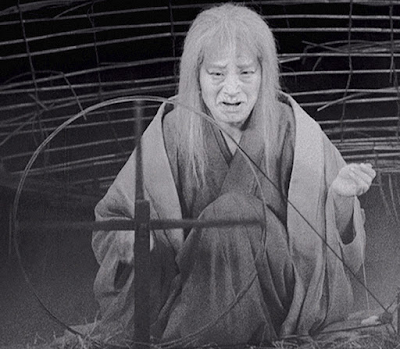
Brief thoughts on Throne of Blood

I wonder what I would have thought about Throne of Blood, had I not known Shakespeare’s play—but I do, and love Macbeth. Speaking as a fan of Kurosawa, especially Ran, I was disappointed. 


So what is the problem? I shall not talk about the loss of poetry, which is to be expected, and I personally have always been fascinated by film adaptations that move the story to a different setting, a different country and culture, such as Ran (loosely based on King Lear) or Untold Scandal (South Korean, based on Les Liaisons Dangereuses). In many ways, Throne of Blood is an admirable adaptation—the foggy atmosphere works perfectly, and the evil spirit spinning the thread in the deep forest, replacing Shakespeare’s 3 witches, is a haunting image. I just can’t help feeling the loss of poetry because part of its greatness is in the language, and many great lines are no longer there. 

More importantly, I just don’t think Throne of Blood has the psychological depth and complexity of Shakespeare’s play. Isuzu Yamada as Lady Asaji is striking—her face barely moves, almost like she’s not human; her cold-hearted ambition and evil make one think of Lady Kaede in Ran. Unlike Lady Macbeth, Lady Asaji doesn’t seem to struggle with herself or have any vulnerability for a large part of the film. Unlike Lady Macbeth, she doesn’t have to summon spirits to ask them to “fill me from the crown to the toe top-full/ Of direst cruelty. Make thick my blood/ Stop up the access and passage to remorse”, she doesn’t have to justify to herself why she doesn’t do the killing herself, she doesn’t sway from her purpose for a moment. Lady Asaji is too cold, too confident, too calculating and manipulative to descend into madness as in the play, which is why Kurosawa has to invent a reason—her baby, who ends up as a stillborn.


Washizu, played by Toshiro Mifune, doesn’t have the depth of Macbeth either. Because the character of the wife is changed, the nature of their relationship is also changed: in Shakespeare’s play, Lady Macbeth is the one who comes up with the plan and talks Macbeth into doing it, but Macbeth is still the one who commits the murder and she cannot, then afterwards he has to kill more and more people and she is the one to tell him “You must leave this”; the relationship between Washizu and Lady Asaji doesn’t seem to have that kind of complexity as she manipulates him the entire time, she talks him into killing the Lord and then convinces him to kill Niki (the equivalent of Banquo). Compared to Macbeth, Washizu appears weaker and completely controlled by his wife. 

The film also suffers from the loss of soliloquies. We do see Washizu reason against Lady Asaji’s scheme, we do see him struggle with himself, we do see him in shock after he kills the Lord (and realises the enormity of what he’s done). A bit is lost when we don’t have the “If it were done when 'tis done” speech, which shows that Macbeth not only knows all the arguments against killing Duncan but also knows perfectly well it would lead to more blood—he just can’t help it. 

But I think the film does suffer from the loss of 2 great soliloquies, the “Is this a dagger which I see before me” one and the “Tomorrow, and tomorrow, and tomorrow” one. Or perhaps a better way of putting it is that Throne of Blood still works well as a film, it just doesn’t have the psychological depth and complexity of Macbeth, and part of it is because it doesn’t have these soliloquies. 

What do you think? 

Author questions (2021 version)

 Compare to my answers in 2017.


1/ Who are your favourite writers?

Jane Austen, William Shakespeare, Lev Tolstoy, Murasaki Shikibu, Cao Xueqin, Vladimir Nabokov, Herman Melville, Gustave Flaubert, Emily Bronte, Edith Wharton, Ryunosuke Akutagawa, P. G. Wodehouse, Hàn Mặc Tử… 

2/ Who were your favourite writers when you were a teenager? Which of them do you still like?

Late teens: Haruki Murakami, Elfriede Jelinek, Milan Kundera, Franz Kafka, Isabel Allende, Patrick Suskind, Toni Morrison, F. Scott Fitzgerald, J. D. Salinger, Gabriel Garcia Marquez, Phạm Thị Hoài, George Orwell, etc. 

Early teens: Charlotte Bronte, Marc Levy, Guillaume Musso, Aziz Nesin, Nguyễn Nhật Ánh, Nguyễn Ngọc Thuần, Paulo Coelho, etc. 

I wasn’t a precocious reader, no. 

Kafka I still like. Not sure what I’d think about Fitzgerald, Salinger, Marquez, Orwell, and Toni Morrison now, to whom I haven’t come back for a while. I have complex feelings about Charlotte Bronte.

3/ Which writers have most influenced you?

Tolstoy, Nabokov, Jane Austen. 

4/ Which writers do you wish had not influenced you?

Can't think of anyone. 

5/ Which writers are you embarrassed you used to like?

Dan Brown, Marc Levy, Paulo Coelho. I can’t stand Murakami anymore but I’m not embarrassed I used to like him. 

6/ Which writers did you expect not to like, but did? 

Jane Austen and Cao Xueqin. I didn’t like them at first. 

7/ Which writers do you think you will still read, and like, for the rest of your life?

Jane Austen definitely, as she’s the author closest to my heart. Tolstoy. Shakespeare. Nabokov. Perhaps Melville—at least Moby Dick will always have a special place in my heart. Perhaps Murasaki Shikibu and Cao Xueqin.

8/ Who are your favourite prose stylists? Or your favourite writers on the sentence level?

Melville, Nabokov, Wodehouse, Robert Louis Stevenson. Virginia Woolf in her essays. My favourite writer on the phrase level is Shakespeare. 

9/ Who are your favourite writers of characters?

Tolstoy, Shakespeare, Jane Austen, Cao Xueqin, Edith Wharton. George Eliot is great at characters but her moralising narrator should be out of the way. I’d name Flaubert for Madame Bovary and Nabokov for Lolita

10/ Which writers, alive or dead, would you invite to dinner?

Not sure. 

11/ Which writers, alive or dead, would you like to know personally? And think you could be friends with?

Jane Austen, Emily Bronte, Edith Wharton, Shakespeare, Nabokov… I wish to have known Murasaki Shikibu but don’t speak Japanese. I don’t think I could have been friends with any of them.  

12/ Do you personally know any published author?

This time, I won’t do any name-dropping. 

13/ Which writers do you like/ admire but generally avoid, for some reason?

Flaubert, because of his misanthropy and pessimism. Nabokov and Melville, because they’re challenging and intimidating and I have to be in the right mindset. Henry James, because of his knotty sentences. Dostoyevsky, because obviously.

In 2017, I also mentioned George Eliot, but for the time being, I think I’m acquainted enough with her works and will read other authors before returning to her. 

14/ Which writers do you like as critics/ essayists but not as novelists?

Woolf. I like Joan Didion as an essayist but haven’t read her novels.  

15/ Which writers have changed you as a reader?

Tolstoy and Nabokov, in shaping my tastes and aesthetics. Murasaki Shikibu, in changing my perspective on the history of literature.  

16/ Who do you think are overrated?

Murakami is the obvious answer—Japan’s greatest writer is Murasaki Shikibu, Japan’s greatest modern novelist is Natsume Soseki, not Murakami. Other overrated writers: Harper Lee, Alice Walker, Joyce Carol Oates…

As “overrated” doesn’t mean “bad” or “mediocre”, just “considered better than they are”, I’d say F. Scott Fitzgerald is also overrated. The Great American Novel, to me, is not The Great Gatsby—my vote goes to Moby Dick, and my second choice is Ralph Ellison’s Invisible Man

I’m also tempted to mention some important writers I read recently, but it may be my shortcoming and I would have to read more of their works. 

17/ Who do you think are underrated and should be more widely read?

Edith Wharton, Carson McCullers, Natsume Soseki, Akutagawa. 

I wouldn’t say Cao Xueqin and Murasaki Shikibu are underrated—they are not rated because they are not read—I think Hong lou meng and The Tale of Genji are two of the greatest novels I’ve ever read, on par with the finest works of Western literature. 

18/ Who do you think are the best living writers? 

I’m not very knowledgeable about contemporary literature to have an opinion. 

19/ Which writers do you go to for comfort?

Wodehouse. 

20/ Which writers do you go to for amusement?

Wodehouse is always the answer. I also like Daphne du Maurier. 

21/ Who are the greatest writers that you don't personally like/ that you just don't warm to?

George Eliot, Henry James, Dostoyevsky. Over time, I’ve come to like James more, so perhaps one day he’d be one of my favourite writers.  

I’ve only read one novel from each but doubt that I would ever warm to Balzac or Zola.

22/ Which writers do you strongly dislike? 

Stephenie Meyer, E. L. James, Gayl Jones, E. L. Doctorow, Joyce Carol Oates, Viet Thanh Nguyen. 

23/ Which writers are you prejudiced against? 

Hemingway, Knausgård, Naipaul, Ayn Rand, Michel Houellebecq, Bukowski. 

24/ Which writers do you feel you should have read by now?

This would be a very long list. 

25/ Which writers from your country would you recommend to a foreigner?

In a way, I’ve lost my roots, so my recommendations are limited: Nguyễn Du, Phạm Thị Hoài, Nguyễn Huy Thiệp, Nam Cao... Nguyễn Du’s Truyện Kiều (The Tale of Kieu) is considered Vietnam’s greatest literary work. Do not read Timothy Allen’s translation (Penguins). 

26/ Which writers do you recommend to everyone? Every serious reader?

All of my favourite writers. Also Dostoyevsky, Henry James, George Eliot, Soseki, Sei Shonagon... However, over the past few months, the writers I promote the most are Murasaki Shikibu and Cao Xueqin, because they’re barely read and discussed in the West. 

27/ Which writers do you wish you could write like?

I will not answer this question. 

28/ What is your favourite language to read in? 

English. However, I would read Chinese literature in Vietnamese translation, not English. 

29/ Which foreign-language writers make you wish to learn their language in order to read them in the original? 

Russian, because of Tolstoy, Gogol, Leskov, Chekhov, Turgenev… French because of Flaubert. 

However, I’ve got Nguyễn Du, Hàn Mặc Tử, Bùi Giáng… and I’m glad I can read Shakespeare in the original. 

30/ Who is the best writer you've discovered recently? 

Murasaki Shikibu and Cao Xueqin. Most recently, I re-discovered Shakespeare, and he is magnificent—as people have always said. 

Thursday, 11 March 2021

Quarrelling with Harold Bloom

You are curious—Harold Bloom is one of the most important and influential literary critics, especially in the culture wars. This blog post is not about the culture wars, the debates surrounding the Western canon, but about some of my thoughts upon reading Bloom’s The Western Canon

1/ On Shakespeare:

In the chapter “An Elegy for the Canon”, Bloom says: 

“Shakespeare and his few peers, who after all, invented all of us.” 

Later:

“Shakespeare, as we like to forget, largely invented us; if you add the rest of the Canon, then Shakespeare and the Canon wholly invented us.” (ibid.)

What does he mean? Who is “us”? What does “invent” mean in this context? He doesn’t say. I’m aware that he wrote Shakespeare: The Invention of Human and it may (or may not) have the answer I’m looking for, but it was published in 1998, 4 years after The Western Canon, so for 4 years at least people wouldn’t have known what he meant. 

Let’s look at something else: 

“Falstaff in the marvelous course of his stage fortunes has provoked a chorus of moralizing. Some of the finest critics and speculators have been particularly nasty; their epithets have included “parasite,” “coward,” “braggart,” “corrupter,” “seducer,” as well as the merely palpable “glutton,” “drunkard,” and “whorer.” My favorite judgment is George Bernard Shaw’s “a besotted and disgusting old wretch,” a reaction I generously attribute to Shaw’s secret realization that he could not match Falstaff in wit, and so could not prefer his own mind to Shakespeare’s with quite the ease and confidence he so frequently asserted. Shaw, like all of us, could not confront Shakespeare without a realization antithetical to itself, the recognition of both strangeness and familiarity at once.” (Chapter “Shakespeare, Center of the Canon”) 

Now what does Bloom mean? Is he saying that Falstaff is, to him, not a parasite, coward, braggart, corrupter, glutton, drunkard, etc.? What does wit have to do with it? Is Falstaff none of these things because he has wit? 

But he doesn’t explain, and moves onto something else. 

“… not being a Shakespeare scholar, I have no inhibition in surmising that Malvolio in Twelfth Night is a satire upon some Jonsonian moral stances, and that Edmund in King Lear is a nihilistic vision founded upon aspects of not only Marlovian heroes but Marlowe himself.” (ibid.) 

I have neither read Ben Jonson nor Christopher Marlowe. What does he mean?

These are the following sentences: 

“Neither figure lacks appeal; Malvolio is a comic victim in Twelfth Night, yet we feel he has wandered into the wrong play. Elsewhere, he would prosper and retain his dignity and self-esteem. Edmund is where he belongs, out-Iagoing Iago in the abyss of Lear’s ruined cosmos. You have to be Goneril or Regan to love him, but all of us might find him dangerously engaging, free of hypocrisy, and asserting his and our responsibility for whatever it is we become.” (ibid.) 

That doesn’t clarify anything, does it? In fact, it creates more questions, like what does he mean that Malvolio “has wandered into the wrong play”? I have no idea. 

In the next paragraph, Bloom says: 

“Edmund has drive, grand wit, enormous intellect, and an icy joy, carrying his high spirits into the ranks of death. […] Edmund carries the Marlovian Machiavel to a new sublimity and is at once an ironic tribute to Marlowe and a triumphant overcoming of the great overreacher. Like Malvolio, Edmund is an equivocal tribute but ultimately a testimony to Shakespearean generosity, albeit ironical.” (ibid.) 

That may partly (only partly) explain what he means about Edmund being “founded upon aspects of not only Marlovian heroes but Marlowe himself”, but the last 2 sentences in the paragraph again create more questions: what does “a triumphant overcoming of the great overreacher” mean? What does the line about “Shakespearean generosity, albeit ironical” mean? He hasn’t explained what he means about Malvolio either. But he moves onto something else. 

Now look at this: 

“There are no great biographies of Shakespeare, not because we do not know enough but because there is not enough to know.” (ibid.) 

Certainly Shakespeare’s life seems to be less eventful and exciting than Marlowe’s, but what does Bloom mean that “there is not enough to know”? We know very little about his life, there are mysteries and unanswered (and unanswerable) questions, there are a few seeming contradictions, and I think lots of fans would like to know more about his life or at least know the answers to those questions. 

Later on, when Bloom’s talking about why Shakespeare’s the greatest of writers, he says:

“Shakespeare […] saw “nature” through clashing perspectives, those of Lear and Edmund in the most sublime of the tragedies, of Hamlet and Claudius in another, of Othello and Iago in yet another. You cannot hold a mirror up to any of these natures, or persuade yourself convincingly that your sense of reality is more comprehensive than that of Shakespearean tragedy. There are no literary works that go beyond Shakespeare’s in reminding you that nothing can be like a play except another play, while at the same time intimating that a tragic idea is not just like another tragic idea (though it may be) but is also like a person, or like change in a person, or like the final form of personal change, which is death.

The meaning of a word is always another word, for words are more like other words than they can be like persons or things, but Shakespeare hints frequently that words are more like persons than they are like things. Shakespearean representation of character has a preternatural richness about it because no other writer, before or since, gives us a stronger illusion that each character speaks with a different voice from the others.” (ibid.) 

Perhaps I’m slow, but what is he saying? I have no idea. 

Besides, I think Shakespeare’s a terrific writer of characters not only because each character has a different voice (you can say the same about Jane Austen’s characters), but because a) his characters are complex, multifaceted and they change over time; b) he creates a wide range of characters of different sexes, different classes, and different backgrounds; c) his characters can be interpreted in multiple ways; d) Shakespeare speaks in so many different voices and the characters and the plays are so different in vision and ideology that we cannot know his real views, etc. In order to write about Shakespeare’s genius for characters, I would have to write a long post and examine several characters in detail, but my point is that Shakespeare is a great writer of characters for many reasons, not only that each character has a distinct voice.

Bloom must have known it, but he didn’t say. He also says that Shakespeare’s main strength is in his characters, after saying: 

“Shakespeare’s command of language, though overwhelming, is not unique and is capable of imitation.” (ibid.) 

That’s not true either. Shakespeare’s a poet as much as a playwright, and if there were nothing special about his language, as Bloom seems to be saying, then why have so many of Shakespeare’s phrases entered the English language and are still commonly used today?

It’s not just language and characters that make Shakespeare the greatest of writers—he excels in tragedies and comedies and histories and romances (and sonnets), and the plays have very different visions. Just place the delightful and whimsical A Midsummer Night’s Dream next to the unbearably tragic Othello, or the tragic but exuberant Romeo and Juliet next to the bleak and cheerless King Lear, etc. and you can see.

Back to Bloom, he makes lots of assertions in the chapter without clarifying his meaning or backing them up with something from the text. Tony Tanner, currently my favourite Shakespeare critic, always makes himself clear and uses evidence from the text to back it up. I don’t know what Bloom means about a character being a free artist of himself, for instance. Nor do I know what he means when saying “And despite Tolstoy’s furious polemics against Shakespeare, his own art depends on a Shakespearean sense of character, both in his two great novels and in the late masterpiece, the short novel Hadji Murad”—what is “a Shakespearean sense of character”? How does Tolstoy’s art depend on it? He doesn’t say, and the next line is about Pushkin, Dostoyevsky, and Turgenev.  


2/ On Jane Austen: 

Let’s see: 

“Henry James insisted that the novelist must be a sensibility upon which absolutely nothing is lost; by that test (clearly a limited one) only Austen, George Eliot, and James himself, among all those writing in English, would join Stendhal, Flaubert, and Tolstoy in a rather restricted pantheon. Anne Elliot may well be the one character in all of prose fiction upon whom nothing is lost, though she is in no danger of turning into a novelist.” (Chapter “Canonical Memory in Early Wordsworth and Jane Austen’s Persuasion”) 

Assuming I get it right that “nothing is lost” means nothing escapes her and she sees through everyone, how is Anne Elliot “the one character in all of prose fiction” with that quality? In Jane Austen’s oeuvre alone, there is another character: Fanny Price from Mansfield Park.

A few paragraphs later, Bloom mentions her: 

“I like to turn Barber’s point in the other direction: more even than Hamlet or Falstaff, or than Elizabeth Bennet, or than Fanny Price in Mansfield Park, Rosalind and Anne Elliot are almost completely poised, nearly able to see all around the play and the novel. Their poise cannot transcend perspectivizing completely, but Rosalind’s wit and Anne’s sensibility, both balanced and free of either excessive aggressivity or defensiveness, enable them to share more of their creators’ poise than we ever come to do.” (ibid.) 

Of course Anne is more perceptive than Elizabeth Bennet—the whole point of the novel is that Elizabeth is proud and prejudiced, and she misjudges character, though not as badly as Emma Woodhouse. But how is Fanny Price less perceptive than Anne Elliot? Fanny sees through the Crawfords, notices the game Henry plays with Maria and Julia, notices the pain of Julia and Mr Rushworth that everyone else overlooks, recognises the disappointment of Maria that leads her to marry Mr Rushworth, understands everyone in the novel including herself, etc. 

In the chapter, Harold Bloom uses over and over again the phrase “the Protestant will”. 

“Anne Elliot is the last of Austen’s heroines of what I think we must call the Protestant will, but in her the will is modified, perhaps perfected, by its descendant, the Romantic sympathetic imagination, of which Wordsworth, as we have seen, was the prophet.” (ibid.) 

Again:

“Jane Austen’s earlier heroines, of whom Elizabeth Bennet is the exemplar, manifested the Protestant will as direct descendants of Samuel Richardson’s Clarissa Harlowe, with Dr. Samuel Johnson hovering nearby as moral authority.” (ibid.)

And again: 

“Austen was, however, immensely interested in the pragmatic and secular consequences of the Protestant will, and they seem to me a crucial element in helping us appreciate the heroines of her novels.” (ibid.) 

But what does it mean? I have no idea. He mentions “the Protestant will” earlier in the chapter, when discussing Wordsworth: 

“You could argue that Margaret’s hope is a secularization of Protestant hope, which was a function of the Protestant will. That will turned upon the individual soul’s self-esteem and on the allied right of private judgment in spiritual realms, including the assertion of the inner light, by which each man and woman read and interpreted the Bible for himself or herself.” (ibid.) 

Is that meant to be an explanation of the phrase? I cannot say, but assuming that it is, what does it have to do with Jane Austen? If it is not, what does the phrase mean? 

Throughout the chapter, Bloom doesn’t really argue why Jane Austen is one of the greatest novelists of all time and why she deserves to be part of the Western canon either. The only thing I note is this:

“Austen has a good measure of Shakespeare’s unmatched ability to give us persons, both major and minor, who are each utterly consistent in her or his separate mode of speech, and yet completely different from one another.” (ibid.) 

That is not enough to say about her genius, but note the Shakespeare comparison. Earlier he says:

“Austen’s irony is very Shakespearean. Even the reader must fall into the initial error of undervaluing Anne Elliot. The wit of Elizabeth Bennet or of Rosalind is easier to appreciate than Anne Elliot’s accurate sensibility.” (ibid.) 

What does it mean that her irony is Shakespearean? The following sentences do not elaborate on it. 

He compares again later:

“Austen’s Shakespearean inwardness, culminating in Anne Elliot, revises the moral intensities of Clarissa Harlowe’s secularized Protestant martyrdom, her slow dying after being raped by Lovelace.” (ibid.) 

What does “Shakespearean inwardness” mean? 


3/ On Tolstoy: 

In the chapter about Tolstoy, Harold Bloom spends some time talking about his faith, then focuses on Hadji Murad, which he calls the greatest story in the world. He also calls it “Tolstoy’s most Shakespearean story in its gallery of rich characterizations, in the extraordinary range of its dramatic sympathies, above all in the representation of change in its central protagonist.” (Chapter “Tolstoy and Heroism”) 

Here he does clarify what he means about “most Shakespearean story”, but he doesn’t when he later says: 

“His strongest character, Anna Karenina, has profound strains of Shakespeare in her, for which Tolstoy, who loves her, will not forgive her.” (ibid.) 

What are the “profound strains of Shakespeare” in Anna? I don’t know. He goes on:

“Since it is not hyperbolical to observe that Tolstoy actually hated Shakespeare, it is only just to add that he also feared him.” (ibid.) 

Again, he doesn’t explain why he thinks Tolstoy fears Shakespeare. At least George Orwell, in his response to Tolstoy’s essay on Shakespeare, argues that the two writers have different visions and approaches to literature, and that Tolstoy sees himself in Lear. 

“Hadji Murad is the grandest exception in late Tolstoy, for here the old shaman rivals Shakespeare. Shakespeare’s extraordinary faculty for endowing even the most minor characters with exuberant being, for ramming them with life, is slyly absorbed by Tolstoy. Everyone in Hadji Murad is vividly individualized […] The catalog seems endless, as in a major Shakespearean play.” (ibid.) 

Hadji Murad may be compared to Shakespeare because it is purer than Tolstoy’s other works in the sense that it’s devoid of moralising, but it is not unique in that every character is vividly individualised—the same can be said about Anna Karenina, War and Peace, or other works by Tolstoy. 

Clearly Bloom uses Shakespeare as the standard against which to measure all writers. I love Shakespeare, but don’t writers have different strengths and powers? 

“For once, like Shakespeare, Tolstoy speaks through a voice not at all his own and enacts the great role of Hadji Murad, the natural man as epic hero.” (ibid.)

I’m confused—it’s not just Hadji Murad, Tolstoy is considered by many people to be the greatest novelist because he can inhabit the minds of many characters who are all different from each other and different from himself, and he seems to do it better than anyone else. What does Bloom mean “for once”? 

This is the conclusion of the chapter:

“Hadji Murad is the best there is in his universe—whether Caucasian or Russian—at every attribute that matters: daring, horsemanship, resourcefulness, leadership, vision of reality. No other hero of epic or saga, ancient or modern, is quite equal to him, or nearly as likable. As Hadji Murad dies, he is purged of pity, anger, and desire. And so is Tolstoy. And so are we. That Tolstoy, of all writers, could imagine a death at once so appropriate and so unlike his own dread of death is an unexpected and reassuring triumph for aesthetic dignity. Whatever we take the canonical to be, Hadji Murad centers it in the Democratic Age.” (ibid.) 

Even if we don’t question the bit about other heroes not being as likable as Hadji Murad, how does this argue for Tolstoy’s place in the Western canon? 


As a final word, I love the Western canon, and generally agree with Harold Bloom when he’s talking about the canon or about canonisation in general. It’s when he’s talking about specific writers or specific works that I have problems with him—not necessarily because of disagreement, but often because I can neither agree nor disagree because I have no idea what he means.