Today is Jane Austen’s 244th birthday.
Her reputation is strange and contradictory—Jane Austen, as I often say, is overhyped but underrated. Overhyped because her name is a brand in pop culture, with lots of related merchandise; there are balls and events for people to dress up Regency-style and imagine being in a Jane Austen novel; and compared to other classic authors, her works seem to have a lot more adaptations, modernisations, retellings, prequels, sequels, parodies, mash-ups, and other kinds of spin-offs.
Underrated because she’s profoundly misunderstood by many readers, misrepresented in pop culture, and seemingly not taken as seriously as she deserves. To many people, she’s still associated, wrongly, with romance and chicklit, with balls and pretty frocks, and dismissed as trivial, limited, and not a very serious writer. It is not only detractors but sometimes even fans and admirers. Just recently for example, I saw someone using the word “fangirling”, as though there is something frivolous and childish about loving Jane Austen’s works and readers cannot appreciate them with a cool judgment.
(I haven’t even mentioned the readers who only enjoy her works on the surface and admire her for all the wrong reasons).
To me, Jane Austen is among the greatest writers of Western literature. People, discussing her works, often talk about women’s rights, her depiction of society and critique of social norms and the patriarchy, as though social issues are the only things or even the main things that make her important and relevant. I love her elegant prose, her humour and use of irony. Above all, she has sharp observation and deep understanding of human behaviour. Nothing escapes her, nothing fools her—deception and hypocrisy, in different forms, are constantly in her works.
Among Jane Austen’s 6 complete novels, the most popular one might be Pride and Prejudice, but the best is either Mansfield Park or Emma. I can’t choose. Emma is a puzzle, a kind of mystery novel. It is in Emma that Jane Austen masters the free indirect speech, setting up lots of traps for readers, tricking us into ridiculing Miss Bates till we realise that we, just like Emma, forget that she too has feeling, or tricking us into seeing the Jane Fairfax affair from Emma’s perspective and failing to understand the truth, until the mystery is revealed, then when we reread the book, knowing the answer, we realise that the hints have been there all long, right before our eyes.
Mansfield Park is the most visual of her novels, the most dense and rich in detail. It is her least popular, or most misunderstood work, because it is the most complex—she creates very charming villains and challenges readers to resist them. Most fail the test, especially those who think Mary Crawford is another Elizabeth Bennet, not realising that she is frivolous, mercenary, selfish, shallow, and incapable of the self-reflection that Elizabeth Bennet shares with Fanny Price and the other heroines. As I wrote before, in order to understand Mansfield Park, sometimes a reader has to know all the other 5 novels, and understand Jane Austen’s ideas about love, relationships, self-reflection, and balance.
On their own terms the 6 novels are brilliant. In a way, they seem to be the same—by using the marriage plot, Jane Austen always writes about reflection, growth, perception, understanding of other people, and understanding of oneself. But when the novels are examined in relation to each other, we can start to see that they respond to each other, in different ways. We can also see more clearly her ideas of balance: between sense and sensibility, between emotional display and restraint, between a resolute character and a persuadable temper, between pride and humility, between wit or quickness of mind and self-reflection, between openness and reservedness, between honesty and civility, between being practical and being mercenary, and so on.
Apart from literary merit, Jane Austen’s novels have also influenced the way I think about life, love, relationships, and the way men and women treat each other. The author is elusive—as Virginia Woolf has written, Jane Austen writes without anger, without bitterness, without resentment; she doesn’t let her personality take over the page; it is hard to tell what the real Jane Austen was really like. But I wouldn’t be far off in thinking that she has no delusions about anything, not even herself; she sees compatibility, understanding, and respect as foundation for a strong relationship; she distrusts lack of openness and disapproves of men who toy with women’s feelings; and she believes that everything should be in balance.
Whilst literature should not be reduced to self-help books, these ideas and values are central to her works, and they make me feel closer to them on a personal level.
At the moment I’m reading Daphne du Maurier’s Rebecca, but thinking of rereading Mansfield Park soon, perhaps in January. Anyone can join the read-along if you want.
Monday, 16 December 2019


Saturday, 14 December 2019
Rebecca: the trouble with the 2nd Mrs de Winter
Whilst the likeability or relatability of a character or narrator is irrelevant for judging literary merit, I can understand when readers don’t like the unnamed narrator of Rebecca, the 2nd Mrs de Winter (it’s only when they go on to dislike the book that is an issue).
To be honest, sometimes I want to give her a slap.
She is shy, introverted, socially awkward, naïve, inexperienced, deeply insecure, and very self-conscious. It makes sense that she is that way, being an orphan, having no money at the beginning of the story, and being a paid companion for a rich woman—she is, as I wrote before, acutely aware of her own place because she’s constantly reminded of it. For a moment, I wondered why she would be paid to be a companion, considering her introversion, dislike of social events and meetings, and incapacity for small talk, but I suppose that’s why the pompous Mrs Van Hopper wants her—she is docile, trustworthy enough, and wouldn’t take over or “steal the spotlight”, so to speak.
It also makes perfect sense for the story. She is shy and socially awkward—that’s why she feels out of place at Manderley and can’t act properly as the mistress of the house. She is diffident and insecure—that’s why she keeps comparing herself to Rebecca and finds herself inferior in every way, failing to notice hints of Rebecca’s imperfections.
1 thing I’ve learnt over the past year is that, if you’re in the position of an employer, manager, director, or anything of authority, etc. you have to act like it; if you let employees see your uncertainties, insecurities, and lack of experience, or worse, let them walk over you, it’s irreparable. Even if you’re not sure, fake it till you make it. I’m not kidding. The narrator of Rebecca, from the start, not only exposes her lack of class and experience, and fails to assert authority, but also lets employees take over, make decisions, and follow Rebecca’s ways. She makes herself an outsider, a guest, a person of no influence, by letting them run things and do things as Rebecca did.
She is also very self-conscious, which can get irritating. Readers can see that she is very perceptive, and notices everything, even subtle changes of expression or signs of irritation that others fail to recognise, but lots of times she also replays things in her mind, fixates on people’s curiosity and judgment, and imagines things people say about her behind her back, such as guests, employees, and Maxim’s sister Beatrice. She gets more and more neurotic, imagining that everyone scrutinises her and dislikes her.
She also becomes more obsessed with Rebecca.
In this passage, the narrator justifies herself to the reader:
But now I think I know what the real trouble is with the 2nd Mrs de Winter.
To be honest, sometimes I want to give her a slap.
She is shy, introverted, socially awkward, naïve, inexperienced, deeply insecure, and very self-conscious. It makes sense that she is that way, being an orphan, having no money at the beginning of the story, and being a paid companion for a rich woman—she is, as I wrote before, acutely aware of her own place because she’s constantly reminded of it. For a moment, I wondered why she would be paid to be a companion, considering her introversion, dislike of social events and meetings, and incapacity for small talk, but I suppose that’s why the pompous Mrs Van Hopper wants her—she is docile, trustworthy enough, and wouldn’t take over or “steal the spotlight”, so to speak.
It also makes perfect sense for the story. She is shy and socially awkward—that’s why she feels out of place at Manderley and can’t act properly as the mistress of the house. She is diffident and insecure—that’s why she keeps comparing herself to Rebecca and finds herself inferior in every way, failing to notice hints of Rebecca’s imperfections.
1 thing I’ve learnt over the past year is that, if you’re in the position of an employer, manager, director, or anything of authority, etc. you have to act like it; if you let employees see your uncertainties, insecurities, and lack of experience, or worse, let them walk over you, it’s irreparable. Even if you’re not sure, fake it till you make it. I’m not kidding. The narrator of Rebecca, from the start, not only exposes her lack of class and experience, and fails to assert authority, but also lets employees take over, make decisions, and follow Rebecca’s ways. She makes herself an outsider, a guest, a person of no influence, by letting them run things and do things as Rebecca did.
She is also very self-conscious, which can get irritating. Readers can see that she is very perceptive, and notices everything, even subtle changes of expression or signs of irritation that others fail to recognise, but lots of times she also replays things in her mind, fixates on people’s curiosity and judgment, and imagines things people say about her behind her back, such as guests, employees, and Maxim’s sister Beatrice. She gets more and more neurotic, imagining that everyone scrutinises her and dislikes her.
She also becomes more obsessed with Rebecca.
In this passage, the narrator justifies herself to the reader:
“Frank had told me to forget the past, and I wanted to forget it. But Frank did not have to sit in the morning room as I did, every day, and touch the pen she had held between her fingers. He did not have to rest his hands on the blotter, and stare in front of him at her writing on the pigeonholes. He did not have to look at the candlesticks on the mantelpiece, the clock, the vase in which the flowers stood, the pictures on the walls and remember, every day, that they belonged to her, she had chosen them, they were not mine at all. Frank did not have to sit at her place in the dining room, hold the knife and fork that she had held, drink from her glass. He did not throw a coat over his shoulders which had been hers, nor find her handkerchief in the pocket. He did not notice, every day, as I did, the blind gaze of the old dog in its basket in the library, who lifted its head when it heard my footstep, the footstep of a woman, and sniffing the air drooped its head again, because I was not the one she sought.I guess I was harsh.
Little things, meaningless and stupid in themselves, but they were there for me to see, for me to hear, for me to feel. Dear God, I did not want to think about Rebecca. I wanted to be happy, to make Maxim happy, and I wanted us to be together. There was no other wish in my heart but that. I could not help it if she came to me in thoughts, in dreams. I could not help it if I felt like a guest in Manderley, my home, walking where she had trodden, resting where she had lain. I was like a guest, biding my time, waiting for the return of the hostess. Little sentences, little reproofs reminding me every hour, every day.” (Ch.12)
But now I think I know what the real trouble is with the 2nd Mrs de Winter.
“Maxim had to go up to London at the end of June to some public dinner. A man's dinner. Something to do with the county. He was away for two days and I was left alone. I dreaded his going. When I saw the car disappear round the sweep in the drive I felt exactly as though it were to be a final parting and I should never see him again. There would be an accident of course and later on in the afternoon, when I came back from my walk, I should find Frith white and frightened waiting for me with a message. The doctor would have rung up from some cottage hospital. "You must be very brave," he would say, "I'm afraid you must be prepared for a great shock."Her real trouble is: insecurity/ negative thinking + an active imagination + nothing to do. She reminds me of the women in Jane Austen’s Emma (read Tom’s post about the problem with “resources”). Nothing to do. But if Emma Woodhouse can go around, gossiping and matchmaking people, the 2nd Mrs de Winter can’t even do that. She’s more or less locked up in the house (not literally), having nothing to do, so naturally she spends time imagining people’s judgment of her, and thinking about Rebecca.
And Frank would come, and we would go to the hospital together. Maxim would not recognize me. I went through the whole thing as I was sitting at lunch, I could see the crowd of local people clustering round the churchyard at the funeral, and myself leaning on Frank's arm. It was so real to me that I could scarcely eat any lunch, and I kept straining my ears to hear the telephone should it ring.
I sat out in the garden under the chestnut tree in the afternoon, with a book on my lap, but I scarcely read at all. When I saw Robert come across the lawn I knew it was the telephone and I felt physically sick. "A message from the club, Madam, to say Mr. de Winter arrived ten minutes ago."” (Ch.13)
Thursday, 12 December 2019
Rebecca: Manderley and the flowers
I like the way Daphne du Maurier describes Manderley, Maxim de Winter’s house.
Here’s the way to the house:
For anyone who is unfamiliar with the story of Rebecca (what rock did you live under?), the novel has a very interesting premise. The narrator, a young, shy, inexperienced, awkward, and unnamed woman (who I believe is 21 at the time of the events, and who is nevertheless said to have an unusual name) marries a rich, 42-year-old widower named Maxim de Winter and moves to his house Manderley, only to realise that in every corner of the house is the phantom of his 1st wife, the beautiful and accomplished Rebecca.
The gardens have the rhododendrons Rebecca cultivated, the house has her items, the furniture and style of the rooms have a stamp of her personality, and her influence continues to be felt among the employees, who continue running the house the way Rebecca ordered and still refer to her as Mrs de Winter.
Rebecca’s vitality beyond the grave swallows up our barely alive narrator.
In the novel, Manderley isn’t simply a house, a setting—it’s a character, it’s the narrator’s Overlook Hotel, driving her mad.
Daphne du Maurier therefore starts the novel with the house (the famous opening line “Last night I dreamt I went to Manderley again”). Through Mrs Van Hopper, she introduces Max de Winter as the owner of Manderley. The narrator associates him inextricably with Manderley, a house she has dreamt of since young, thanks to a cheap picture she got.
Du Maurier describes the house in detail—from the surrounding areas, to the structure of the building, to the different rooms and its particulars. Everything has meaning, or at least, everything seems to have meaning to the narrator’s neurotic mind. For example, upon arrival she discovers that her new room is in the East Wing, redecorated from a room previously for occasional visitors, where she can’t hear the sea, whereas the old bedroom of Max de Winter and Rebecca is in the West Wing, a large, old, and beautiful room that views the sea. The narrator sees hers as a second-rate room for a second-rate person.
The flowers also have meaning. The 1st chapter of the book already mentions the rhododendrons, as quoted in an early blog post.
Here’s how they appear the 1st time the narrator comes to Manderley:
Instead, look at this passage:
This is a curious passage, is it not?
Daffodils, crocuses, bluebells, primroses, violets, lilacs…This is a man who cares about flowers. In my previous blog post, I pointed out the detail of Max de Winter taking an emery board out of his pocket and filing his nails, a clear hint of an eccentric personality, but after some thinking, I’ve realised that it shows the difference between him and his new wife—the narrator is a nail biter. Max de Winter is particular about his nails (after all, he calls hers disgusting), and he’s particular about his flowers.
At the same time, look again at the passage—at the lines I highlighted. I can’t help wondering if there’s any meaning there—Rebecca’s morning room views the rhododendrons, whereas the narrator’s new room in the East Wing views the rose garden.
Here’s the way to the house:
“This drive twisted and turned as a serpent, scarce wider in places than a path, and above our heads was a great colonnade of trees, whose branches nodded and intermingled with one another, making an archway for us, like the roof of a church. Even the midday sun would not penetrate the interlacing of those green leaves, they were too thickly entwined, one with another, and only little flickering patches of warm light would come in intermittent waves to dapple the drive with gold. It was very silent, very still. On the high road there had been a gay west wind blowing in my face, making the grass on the hedges dance in unison, but here there was no wind. Even the engine of the car had taken a new note, throbbing low, quieter than before. As the drive descended to the valley so the trees came in upon us, great beeches with lovely smooth white stems, lifting their myriad branches to one another, and other trees, trees I could not name, coming close, so close that I could touch them with my hands. On we went, over a little bridge that spanned a narrow stream, and still this drive that was no drive twisted and turned like an enchanted ribbon through the dark and silent woods, penetrating even deeper to the very heart surely of the forest itself, and still there was no clearing, no space to hold a house.” (Ch.7)Dark, ominous.
For anyone who is unfamiliar with the story of Rebecca (what rock did you live under?), the novel has a very interesting premise. The narrator, a young, shy, inexperienced, awkward, and unnamed woman (who I believe is 21 at the time of the events, and who is nevertheless said to have an unusual name) marries a rich, 42-year-old widower named Maxim de Winter and moves to his house Manderley, only to realise that in every corner of the house is the phantom of his 1st wife, the beautiful and accomplished Rebecca.
The gardens have the rhododendrons Rebecca cultivated, the house has her items, the furniture and style of the rooms have a stamp of her personality, and her influence continues to be felt among the employees, who continue running the house the way Rebecca ordered and still refer to her as Mrs de Winter.
Rebecca’s vitality beyond the grave swallows up our barely alive narrator.
In the novel, Manderley isn’t simply a house, a setting—it’s a character, it’s the narrator’s Overlook Hotel, driving her mad.
Daphne du Maurier therefore starts the novel with the house (the famous opening line “Last night I dreamt I went to Manderley again”). Through Mrs Van Hopper, she introduces Max de Winter as the owner of Manderley. The narrator associates him inextricably with Manderley, a house she has dreamt of since young, thanks to a cheap picture she got.
Du Maurier describes the house in detail—from the surrounding areas, to the structure of the building, to the different rooms and its particulars. Everything has meaning, or at least, everything seems to have meaning to the narrator’s neurotic mind. For example, upon arrival she discovers that her new room is in the East Wing, redecorated from a room previously for occasional visitors, where she can’t hear the sea, whereas the old bedroom of Max de Winter and Rebecca is in the West Wing, a large, old, and beautiful room that views the sea. The narrator sees hers as a second-rate room for a second-rate person.
The flowers also have meaning. The 1st chapter of the book already mentions the rhododendrons, as quoted in an early blog post.
Here’s how they appear the 1st time the narrator comes to Manderley:
“Suddenly I saw a clearing in the dark drive ahead, and a patch of sky, and in a moment the dark trees had thinned, the nameless shrubs had disappeared, and on either side of us was a wall of color, bloodred, reaching far above our heads. We were among the rhododendrons. There was something bewildering, even shocking, about the suddenness of their discovery. The woods had not prepared me for them. They startled me with their crimson faces, massed one upon the other in incredible profusion, showing no leaf, no twig, nothing but the slaughterous red, luscious and fantastic, unlike any rhododendron plant I had seen before.The rhododendrons have a strong presence in Rebecca—they are not only in the gardens, but also in Rebecca’s morning room. But I won’t write more about them. A simple Google search shows that there have been lots of essays and blog posts out there about their significance, symbolising Rebecca’s vitality and strong personality, and her presence everywhere in the house.
I glanced at Maxim. He was smiling. "Like them?" he said.
I told him "Yes," a little breathlessly, uncertain whether I was speaking the truth or not, for to me a rhododendron was a homely, domestic thing, strictly conventional, mauve or pink in color, standing one beside the other in a neat round bed. And these were monsters, rearing to the sky, massed like a battalion, too beautiful I thought, too powerful; they were not plants at all.” (ibid.)
Instead, look at this passage:
"Suddenly he began to talk about Manderley. […] The daffodils were in bloom, stirring in the evening breeze, golden heads cupped upon lean stalks, and however many you might pick there would be no thinning of the ranks, they were massed like an army, shoulder to shoulder. On a bank below the lawns, crocuses were planted, golden, pink, and mauve, but by this time they would be past their best, dropping and fading, like pallid snowdrops. The primrose was more vulgar, a homely pleasant creature who appeared in every cranny like a weed. Too early yet for bluebells, their heads were still hidden beneath last year's leaves, but when they came, dwarfing the more humble violet, they choked the very bracken in the woods, and with their color made a challenge to the sky.(my emphasis)
He never would have them in the house, he said. Thrust into vases they became dank and listless, and to see them at their best you must walk in the woods in the morning, about twelve o'clock, when the sun was overhead. They had a smoky, rather bitter smell, as though a wild sap ran in their stalks, pungent and juicy. People who plucked bluebells from the woods were vandals; he had forbidden it at Manderley. Sometimes, driving in the country, he had seen bicyclists with huge bunches strapped before them on the handles, the bloom already fading from the dying heads, the ravaged stalks straggling naked and unclean.
The primrose did not mind it quite so much; although a creature of the wilds it had a leaning towards civilization, and preened and smiled in a jam-jar in some cottage window without resentment, living quite a week if given water. No wildflowers came in the house at Manderley. He had special cultivated flowers, grown for the house alone, in the walled garden. A rose was one of the few flowers, he said, that looked better picked than growing. A bowl of roses in a drawing room had a depth of color and scent they had not possessed in the open. There was something rather blowzy about roses in full bloom, something shallow and raucous, like women with untidy hair. In the house they became mysterious and subtle. He had roses in the house at Manderley for eight months in the year. Did I like syringa, he asked me? There was a tree on the edge of the lawn he could smell from his bedroom window. His sister, who was a hard, rather practical person, used to complain that there were too many scents at Manderley, they made her drunk. Perhaps she was right. He did not care. It was the only form of intoxication that appealed to him. His earliest recollection was of great branches of lilac, standing in white jars, and they filled the house with a wistful, poignant smell…” (Ch.4)
This is a curious passage, is it not?
Daffodils, crocuses, bluebells, primroses, violets, lilacs…This is a man who cares about flowers. In my previous blog post, I pointed out the detail of Max de Winter taking an emery board out of his pocket and filing his nails, a clear hint of an eccentric personality, but after some thinking, I’ve realised that it shows the difference between him and his new wife—the narrator is a nail biter. Max de Winter is particular about his nails (after all, he calls hers disgusting), and he’s particular about his flowers.
At the same time, look again at the passage—at the lines I highlighted. I can’t help wondering if there’s any meaning there—Rebecca’s morning room views the rhododendrons, whereas the narrator’s new room in the East Wing views the rose garden.
Wednesday, 11 December 2019
Rebecca: the proposal and the red flags
Very suddenly, to the narrator of Rebecca as well as the readers, Maxim de Winter proposes. Everyone’s shocked.
The characters meet in Monte Carlo. Mrs Van Hopper, out of the blue, decides to go to New York. The day before the trip, the narrator cannot see de Winter because he’s away, so on the last day, she runs to his room to say goodbye. He tells her to follow as he comes down to breakfast, then gives her the choice between going to New York with her employer and going to Manderley with him.
He proposes to her, you little fool.
Readers like me, female, and having read Jane Austen and bad marriage novels, are quick to notice the bad signs. Before this scene, there are already a few, mostly Maxim de Winter’s sudden change of moods, and lack of openness, also his condescending tone to the narrator sometimes.
There are a few others in the proposal scene: the curt response, like an order (“Shut the door”); the way he goes on with his things without explaining and makes her wait, even though she says she has to go back to Mrs Van Hopper; the way he asks her to marry him; the unromantic, even cold, tone; the choice of words such as “ignorant”, “little fool”, “unintelligent”; the line “philanthropy is not my strongest quality”; the laugh; the line “your duties will be almost exactly the same”.
The worst red flag?
The characters meet in Monte Carlo. Mrs Van Hopper, out of the blue, decides to go to New York. The day before the trip, the narrator cannot see de Winter because he’s away, so on the last day, she runs to his room to say goodbye. He tells her to follow as he comes down to breakfast, then gives her the choice between going to New York with her employer and going to Manderley with him.
He proposes to her, you little fool.
“This sudden talk of marriage bewildered me, even shocked me I think. It was as though the King asked one. It did not even ring true. And he went on eating his marmalade as though everything were natural. In books men knelt to women, and it would be moonlight. Not as breakfast, not like this.” (Ch.6)The proposal scene is vivid. And full of red flags.
Readers like me, female, and having read Jane Austen and bad marriage novels, are quick to notice the bad signs. Before this scene, there are already a few, mostly Maxim de Winter’s sudden change of moods, and lack of openness, also his condescending tone to the narrator sometimes.
There are a few others in the proposal scene: the curt response, like an order (“Shut the door”); the way he goes on with his things without explaining and makes her wait, even though she says she has to go back to Mrs Van Hopper; the way he asks her to marry him; the unromantic, even cold, tone; the choice of words such as “ignorant”, “little fool”, “unintelligent”; the line “philanthropy is not my strongest quality”; the laugh; the line “your duties will be almost exactly the same”.
The worst red flag?
“And he took an emery board out of his pocket and began filing his nails.” (ibid.)What kind of weirdo is this? Or is it standard for a man in this time period to have an emery board in his pocket?
Tuesday, 10 December 2019
Starting Rebecca
I’m currently reading Rebecca by Daphne du Maurier.
After the awful The Lair of the White Worm, Rebecca is a pleasant surprise. It is good, at least so far.
Rebecca, like classics and other influential novels in popular culture, is a book that is (almost) impossible to approach with a fresh, innocent mind, without any preconceptions whatsoever. I don’t know about other readers, but I started reading Rebecca thinking not only about the premise and story, but also about the 1st 10-15 minutes of the Hitchcock film (I stopped watching), and about its reputed connections with Jane Eyre.
The book is thererfore a surprise—it starts with a dream, then the present, then goes back to the beginning. That is interesting, as Daphne du Maurier’s preparing the readers for more dreams later, and at the same time telling us that the narrator “survives”.
The writing is good. Look at the prose and imagery here:
Here and there, I’ve seen a few readers complain about the narrator’s shy, timid, awkward, and passive personality, especially when comparing her to the independent, strong-minded, and passionate Jane Eyre. I don’t understand, do they read novels in order to make friends with characters? Probably the same people who whine about Fanny Price not being fun and witty like Elizabeth Bennet.
The mention of Fanny Price is deliberate, because Fanny Price of Mansfield Park and the narrator of Rebecca have something in common: both of them have no money and live with someone richer—the former lives with her rich relatives and the latter is a paid companion for a rich woman; both of them are dependent on someone else, and painfully aware of their social position, of which they’re constantly reminded; both of them are therefore quiet and reserved, even if they were not quiet by nature, their status would not allow them to be “loud” or claim anything.
But whatever. Such complaints are absurd—if some people judge a book by whether or not they like or can relate to the main character, good for them.
The 1st meeting between the unnamed narrator and Maxim de Winter, in the presence of her employer Mrs Van Hopper, is an excellent scene. Mrs Van Hopper is like a Jane Austen character—a snobbish, ridiculous, and gossipy woman with no perception and no sense of self-awareness.
The scene appears simple, but there are 3 things going on at the same time—on the surface, Mrs Van Hopper and Maxim de Winter have a conversation, or rather, she does most of the talking, annoyingly; Maxim de Winter tolerates her whilst observing the narrator; the narrator observes him, sees everything that escapes Mrs Van Hopper’s notice, and feels dragged into humiliation for being with her.
After the awful The Lair of the White Worm, Rebecca is a pleasant surprise. It is good, at least so far.
Rebecca, like classics and other influential novels in popular culture, is a book that is (almost) impossible to approach with a fresh, innocent mind, without any preconceptions whatsoever. I don’t know about other readers, but I started reading Rebecca thinking not only about the premise and story, but also about the 1st 10-15 minutes of the Hitchcock film (I stopped watching), and about its reputed connections with Jane Eyre.
The book is thererfore a surprise—it starts with a dream, then the present, then goes back to the beginning. That is interesting, as Daphne du Maurier’s preparing the readers for more dreams later, and at the same time telling us that the narrator “survives”.
The writing is good. Look at the prose and imagery here:
“The terrace sloped to the lawns, and the lawns stretched to the sea, and turning I could see the sheet of silver placid under the moon, like a lake undisturbed by wind or storm. No waves would come to ruffle this dream water, and no bulk of cloud, wind-driven from the west, obscure the clarity of this pale sky. I turned again to the house, and though it stood inviolate, untouched, as though we ourselves had left but yesterday, I saw that the garden had obeyed the jungle law, even as the woods had done. The rhododendrons stood fifty feet high, twisted and entwined with bracken, and they had entered into alien marriage with a host of nameless shrubs, poor, bastard things that clung about their roots as though conscious of their spurious origin. A lilac had mated with a copper beech, and to bind them yet more closely to one another the malevolent ivy, always an enemy to grace, had thrown her tendrils about the pair and made them prisoners. Ivy held prior place in this lost garden, the long strands crept across the lawns, and soon would encroach upon the house itself. There was another plant too, some half-breed from the woods, whose seed had been scattered long ago beneath the trees and then forgotten, and now, marching in unison with the ivy, thrust its ugly form like a giant rhubarb towards the soft grass where the daffodils had blown.The use of verbs is interesting—in this passage, she mostly uses action verbs.
Nettles were everywhere, the vanguard of the army. They choked the terrace, they sprawled about the paths, they leaned, vulgar and lanky, against the very windows of the house. They made indifferent sentinels, for in many places their ranks had been broken by the rhubarb plant, and they lay with crumpled heads and listless stems, making a pathway for the rabbits. I left the drive and went onto the terrace, for the nettles were no barrier to me, a dreamer. I walked enchanted, and nothing held me back.” (Ch.1)
Here and there, I’ve seen a few readers complain about the narrator’s shy, timid, awkward, and passive personality, especially when comparing her to the independent, strong-minded, and passionate Jane Eyre. I don’t understand, do they read novels in order to make friends with characters? Probably the same people who whine about Fanny Price not being fun and witty like Elizabeth Bennet.
The mention of Fanny Price is deliberate, because Fanny Price of Mansfield Park and the narrator of Rebecca have something in common: both of them have no money and live with someone richer—the former lives with her rich relatives and the latter is a paid companion for a rich woman; both of them are dependent on someone else, and painfully aware of their social position, of which they’re constantly reminded; both of them are therefore quiet and reserved, even if they were not quiet by nature, their status would not allow them to be “loud” or claim anything.
But whatever. Such complaints are absurd—if some people judge a book by whether or not they like or can relate to the main character, good for them.
The 1st meeting between the unnamed narrator and Maxim de Winter, in the presence of her employer Mrs Van Hopper, is an excellent scene. Mrs Van Hopper is like a Jane Austen character—a snobbish, ridiculous, and gossipy woman with no perception and no sense of self-awareness.
“‘You know Nell Middlesex of course’, she went on. ‘What a charmer she is. They always say that second child isn't his, but I don't believe it. People will say anything, won't they, when a woman is attractive? And she is so very lovely. Tell me, is it true the Caxton-Hyslop marriage is not a success?’…” (Ch.3)Such a brilliant characterisation.
The scene appears simple, but there are 3 things going on at the same time—on the surface, Mrs Van Hopper and Maxim de Winter have a conversation, or rather, she does most of the talking, annoyingly; Maxim de Winter tolerates her whilst observing the narrator; the narrator observes him, sees everything that escapes Mrs Van Hopper’s notice, and feels dragged into humiliation for being with her.
“She deserved it, of course, and I waited for her change of face, but incredible as it may seem his words were lost on her, and I was left to writhe in her stead, feeling like a child that had been smacked.” (ibid.)And again:
“There was a pause, and I felt the color flood into my face. I was too young, that was the trouble. Had I been older I would have caught his eye and smiled, her unbelievable behavior making a bond between us; but as it was I was stricken into shame, and endured one of the frequent agonies of youth.” (ibid.)And:
“The sting did not touch her, she accepted it as a pleasantry.” (ibid.)Such a good scene.
Saturday, 7 December 2019
On not finishing The Lair of the White Worm
Every reader must at some point decide that curiosity is no longer enough, and they have no choice but to stop reading.
I thought earlier that I would continue reading The Lair of the White Worm, despite everything, just to finish the story, but have now reached the point where interest wears thin and I no longer have any reason to continue. Life is too short. But at least, after going through half of it, I can say I know enough to criticise it.
The racism, for 1 thing, is shocking. The word “negro” appears 17 times throughout the book, “nigger” 23 times, and the word “savage” is used 7 times to refer to the character of Oolanga. Oolanga is described as unsoftened savage, low, base, malignant, evil, hateful, barbaric, etc. He with his African origins is used as a device, a character who is human but not fully human—a subhuman, a savage, someone from “the swamp and the forest”, and a kind of devil.
In my previous blog post, I already quoted some revolting passages from Bram Stoker’s book. Now, look at these sentences from the scene where Oolanga expresses his love to Lady Arabella:
I tried to get past all that, but it’s difficult. Would the racism be accepted as a product of its time (1911) if The Lair of the White Worm were otherwise a well-written book? For a moment, I wasn’t so sure, as I looked at great classic works with some deplorable views on women and/or non-white people. But in terms of racism, it’s worse than any novel I’ve ever read, and as disgusting as the white supremacy propaganda and rhetoric I used to read on my Ethnicity and Immigration in America course.
Moreover, in this case luckily there’s no dilemma, because The Lair of the White Worm easily belongs in the bin. It is such a bad book.
The plot is muddled and incoherent, the characterisation is confused and weak, there are too many ideas, mostly crackpot ideas, and Bram Stoker makes a big mistake in switching from Adam Salton’s to the villains’ points of view—Edgar Caswall and Lady Arabella and even Oolanga. Even if they are not narrators, he still comes close to them and switches to their perspective, and he can’t handle the task. The characterisation falls apart. Before anyone protests, of course I’m not expecting any psychological depth, Bram Stoker is not Tolstoy, nor does he try to be, but part of why Dracula works so well is because Dracula is barely there—the distance, mystery, and legend, coupled with everyone’s fear, cause more dread. In The Lair of the White Worm, he fails miserably when focusing on the perspective of the villains.
Overall, the book is a big filthy confusing mess. Some books require readers to go along with them and figure out what the author was trying to do, to judge them accordingly. The Lair of the White Worm doesn’t deserve that.
Waste of time and effort.
______________________________________
By the way, if you want to know the plot, this is a hilarious (negative) review:
https://cassandraparkin.wordpress.com/2011/06/12/adventures-in-trash-the-lair-of-the-white-worm-by-bram-stoker/
I thought earlier that I would continue reading The Lair of the White Worm, despite everything, just to finish the story, but have now reached the point where interest wears thin and I no longer have any reason to continue. Life is too short. But at least, after going through half of it, I can say I know enough to criticise it.
The racism, for 1 thing, is shocking. The word “negro” appears 17 times throughout the book, “nigger” 23 times, and the word “savage” is used 7 times to refer to the character of Oolanga. Oolanga is described as unsoftened savage, low, base, malignant, evil, hateful, barbaric, etc. He with his African origins is used as a device, a character who is human but not fully human—a subhuman, a savage, someone from “the swamp and the forest”, and a kind of devil.
In my previous blog post, I already quoted some revolting passages from Bram Stoker’s book. Now, look at these sentences from the scene where Oolanga expresses his love to Lady Arabella:
“The circumstances were too grotesque, the contrast too violent, for subdued mirth. The man a debased specimen of one of the most primitive races of the earth, and of an ugliness which was simply devilish; the woman of high degree, beautiful, accomplished.” (Ch.13)Imagine that.
I tried to get past all that, but it’s difficult. Would the racism be accepted as a product of its time (1911) if The Lair of the White Worm were otherwise a well-written book? For a moment, I wasn’t so sure, as I looked at great classic works with some deplorable views on women and/or non-white people. But in terms of racism, it’s worse than any novel I’ve ever read, and as disgusting as the white supremacy propaganda and rhetoric I used to read on my Ethnicity and Immigration in America course.
Moreover, in this case luckily there’s no dilemma, because The Lair of the White Worm easily belongs in the bin. It is such a bad book.
The plot is muddled and incoherent, the characterisation is confused and weak, there are too many ideas, mostly crackpot ideas, and Bram Stoker makes a big mistake in switching from Adam Salton’s to the villains’ points of view—Edgar Caswall and Lady Arabella and even Oolanga. Even if they are not narrators, he still comes close to them and switches to their perspective, and he can’t handle the task. The characterisation falls apart. Before anyone protests, of course I’m not expecting any psychological depth, Bram Stoker is not Tolstoy, nor does he try to be, but part of why Dracula works so well is because Dracula is barely there—the distance, mystery, and legend, coupled with everyone’s fear, cause more dread. In The Lair of the White Worm, he fails miserably when focusing on the perspective of the villains.
Overall, the book is a big filthy confusing mess. Some books require readers to go along with them and figure out what the author was trying to do, to judge them accordingly. The Lair of the White Worm doesn’t deserve that.
Waste of time and effort.
______________________________________
By the way, if you want to know the plot, this is a hilarious (negative) review:
https://cassandraparkin.wordpress.com/2011/06/12/adventures-in-trash-the-lair-of-the-white-worm-by-bram-stoker/
Friday, 6 December 2019
The Lair of the White Worm
Anyone who comes from Dracula to The Lair of the White Worm, expecting a nutty book, would still be surprised and baffled because of how nutty it is.
Bram Stoker’s good at captivating our attention—we want to know what happens, how it ends, what the mystery is. But it’s a crazy, baffling, badly plotted, and incoherent book, and I haven’t even finished it.
Here’s the summary: our main character Adam Salton from Australia comes to England to visit his grand-uncle Richard Salton. There he is introduced to Mr Salton’s friend, Sir Nathaniel de Salis. Together Mr Salton and Sir Nathaniel, but especially the latter, introduce Adam to the area, show him the different sites such as Castra Regis (the castle of Caswall family) and Diana’s Grove, tell him the history and traits of the Caswall family and the legends of the area.
Then Edgar Caswall, the new heir of the castle, comes home to claim the place after generations. The book so far has 3 villains: Edgar Caswall, his African servant Oolanga, and Lady Arabella March of Diana’s Grove, all of whom share a chilling lack of human feeling.
The book is filled with myths, legends; pseudo-sciences such as physiognomy; and other crackpot ideas such as Voodoo, hypnotising, inherited personality traits, and so-called “moral metabolism”:
The book is also filled with racism. Lots of it. I feel slightly annoyed but can get over the depiction of women—innocent, helpless, dove-like creatures who swoon at the slightest thing, but the racism is quite something else.
Behold Oolanga’s introduction:
I do take the time into account (The Lair of the White Worm was published in 1911), but that is still quite hard to stomach. I mean, disgusting.
I continued reading the book to get to the end of the story, but that never quite gets out of the way.
The plot, however, becomes more confusing and less coherent. I’m currently on chapter 14, and chapter 12 is when Bram Stoker starts to lose control and the story takes a random turn and moves in a different direction. Imagine, the story up to chapter 11 has been about the 3 villains, Edgar Caswall’s courtship of Lilla Watford (under Adam’s watchful eyes), and the mystery of the snakes and Adam’s dead mongooses. All of a sudden, in chapter 12, Bram Stoker mixes in Hitchcock’s The Birds, and introduces the odd solution of a kite in shape of a great hawk, which helps shut up the birds but at the same time also brings about a dreadful silence and soundless gloom among the cattle and a depression among the people in the area. He also writes about Edgar Caswall developing a mad obsession with the kite—watching it, associating human qualities with it, trying to communicate with it.
Then, suddenly, abruptly, and very randomly, Bram Stoker changes direction again—to the collection of curios, mummies, and weapons in the castle, and to a mysterious chest.
What in the fresh hell is going on?
I have no clue. This is really bad, a hotchpotch of insane ideas. But I have to read it to the end.
Bram Stoker’s good at captivating our attention—we want to know what happens, how it ends, what the mystery is. But it’s a crazy, baffling, badly plotted, and incoherent book, and I haven’t even finished it.
Here’s the summary: our main character Adam Salton from Australia comes to England to visit his grand-uncle Richard Salton. There he is introduced to Mr Salton’s friend, Sir Nathaniel de Salis. Together Mr Salton and Sir Nathaniel, but especially the latter, introduce Adam to the area, show him the different sites such as Castra Regis (the castle of Caswall family) and Diana’s Grove, tell him the history and traits of the Caswall family and the legends of the area.
Then Edgar Caswall, the new heir of the castle, comes home to claim the place after generations. The book so far has 3 villains: Edgar Caswall, his African servant Oolanga, and Lady Arabella March of Diana’s Grove, all of whom share a chilling lack of human feeling.
The book is filled with myths, legends; pseudo-sciences such as physiognomy; and other crackpot ideas such as Voodoo, hypnotising, inherited personality traits, and so-called “moral metabolism”:
“Strangely, as [Edgar Caswall] yielded to this demoralising process, he seemed to be achieving a new likeness to Oolanga. […] the thing which puzzled [Adam] most was that the forbidding qualities in the African, which had at first evoked his attention and his disgust, remained the same. Had it been that the two men had been affected, one changing with the other by slow degrees—a sort of moral metabolism,—he would have better and more easily understood it. Transmutation of different bodies is, in a way, more understandable than changes in one body that have no equivalent equipoise in the other. The idea was recurrent to him that perhaps when a nature has reached its lowest point of decadence it loses the faculty of change of any kind.” (Ch.13)See what I mean? Madman Bram Stoker is.
The book is also filled with racism. Lots of it. I feel slightly annoyed but can get over the depiction of women—innocent, helpless, dove-like creatures who swoon at the slightest thing, but the racism is quite something else.
Behold Oolanga’s introduction:
“But presently his African servant approached him, and at once their thoughts changed to a larger toleration. For by comparison with this man his face seemed to have a certain nobility hitherto lacking. Caswall looked indeed a savage—but a cultured savage. In him were traces of the softening civilisation of ages—of some of the higher instincts and education of man, no matter how rudimentary these might be. But the face of Oolanga, as his master at once called him, was pure pristine, unreformed, unsoftened savage, with inherent in it all of the hideous possibilities of a lost, devil-ridden child of the forest and the swamp—the lowest and most loathsome of all created things which were in some form ostensibly human.” (Ch.4)That’s bad, no? It gets worse. Bram Stoker places Oolanga and Lady Arabella next to each other:
“The girl of the Caucasian type, beautiful, Salon blonde, with a complexion of milk and roses, high-bred, clever, serene of nature. The other negroid of the lowest type; hideously ugly, wanting in all the mental and moral faculties—in fact, so brutal as to be hardly human.” (Ch.5)That’s convenient: the author wants a human who is not fully human, a villain who is low, base, savage, a “child of the forest and the swamp”, so he creates an African character.
“Briefly, this is his history. He was originally a witch-finder—about as low an occupation as exists amongst aboriginal savages. Then he got up in the world and became an Obi-man, which gives an opportunity to wealth via blackmail. Finally, he reached the highest honour in hellish service. He became a user of Voodoo, which seems to be a service of the utmost baseness and cruelty. I was told some of his deeds of cruelty, which are simply sickening. They made me long for an opportunity of helping to drive him back to hell. You might think to look at him that you could measure in some way the extent of his vileness; but it would be a vain hope. Monsters such as he is belong to an earlier and more rudimentary stage of barbarism. He is in his way a clever fellow—for a nigger; but is none the less dangerous or the less hateful for that.” (Ch.7)Whoa.
I do take the time into account (The Lair of the White Worm was published in 1911), but that is still quite hard to stomach. I mean, disgusting.
I continued reading the book to get to the end of the story, but that never quite gets out of the way.
The plot, however, becomes more confusing and less coherent. I’m currently on chapter 14, and chapter 12 is when Bram Stoker starts to lose control and the story takes a random turn and moves in a different direction. Imagine, the story up to chapter 11 has been about the 3 villains, Edgar Caswall’s courtship of Lilla Watford (under Adam’s watchful eyes), and the mystery of the snakes and Adam’s dead mongooses. All of a sudden, in chapter 12, Bram Stoker mixes in Hitchcock’s The Birds, and introduces the odd solution of a kite in shape of a great hawk, which helps shut up the birds but at the same time also brings about a dreadful silence and soundless gloom among the cattle and a depression among the people in the area. He also writes about Edgar Caswall developing a mad obsession with the kite—watching it, associating human qualities with it, trying to communicate with it.
Then, suddenly, abruptly, and very randomly, Bram Stoker changes direction again—to the collection of curios, mummies, and weapons in the castle, and to a mysterious chest.
What in the fresh hell is going on?
I have no clue. This is really bad, a hotchpotch of insane ideas. But I have to read it to the end.
Thursday, 28 November 2019
Bram Stoker’s horror stories
Everyone needs a bit of escapism once in a while (especially now when elections are coming up in the UK and my facebook newsfeed is flooded with idiocy), so these days I’ve been reading Bram Stoker’s Dracula’s Guest and Other Weird Stories. My copy is a Penguin Classics, which includes The Lair of the White Worm.
In short, 4 years after Dracula, I’m reading his horror stories. Guess what, I prefer them.
So far, of the 9 short stories, I’ve read 7. My favourites are “The Judge’s House” and “The Squaw”. There isn’t much to say about these stories, as (most) horror stories are to be read, not analysed. The plot is relatively simple. “The Judge’s House” is about a science student who goes to a strange town and stays at a house for peace and quiet, which turns out to be a haunted house of a cruel judge. “The Squaw” is a revenge tale in which an American tourist kills a little kitten by accident in front of its mother and is followed by the cat.
The plot is simple, but Bram Stoker’s brilliant at creating atmosphere and building up tension. “The Burial of the Rats” is a good example of tension and suspense, as the story’s written from the point of view of a tourist being chased in the dark by a group of silent murderous rag-pickers. “Dracula’s Guest” is also good, which could be a draft, an original opening, a deleted episode, or just a story on its own (it’s complete on its own)—an enjoyable read for those who want a bit more of Dracula. But the best stories here are “The Judge’s House” and “The Squaw”, especially in the use of the uncanny. A rat has baleful eyes, and a cat stares with hatred.
In short, 4 years after Dracula, I’m reading his horror stories. Guess what, I prefer them.
So far, of the 9 short stories, I’ve read 7. My favourites are “The Judge’s House” and “The Squaw”. There isn’t much to say about these stories, as (most) horror stories are to be read, not analysed. The plot is relatively simple. “The Judge’s House” is about a science student who goes to a strange town and stays at a house for peace and quiet, which turns out to be a haunted house of a cruel judge. “The Squaw” is a revenge tale in which an American tourist kills a little kitten by accident in front of its mother and is followed by the cat.
The plot is simple, but Bram Stoker’s brilliant at creating atmosphere and building up tension. “The Burial of the Rats” is a good example of tension and suspense, as the story’s written from the point of view of a tourist being chased in the dark by a group of silent murderous rag-pickers. “Dracula’s Guest” is also good, which could be a draft, an original opening, a deleted episode, or just a story on its own (it’s complete on its own)—an enjoyable read for those who want a bit more of Dracula. But the best stories here are “The Judge’s House” and “The Squaw”, especially in the use of the uncanny. A rat has baleful eyes, and a cat stares with hatred.
Wednesday, 27 November 2019
The Yorkshire Ripper Files: a Very British Crime Story (2019)
Not long after The Ripper Hoaxer: The Real Story (2006)*, I’ve just seen The Yorkshire Ripper Files: a Very British Crime Story (2019)**.
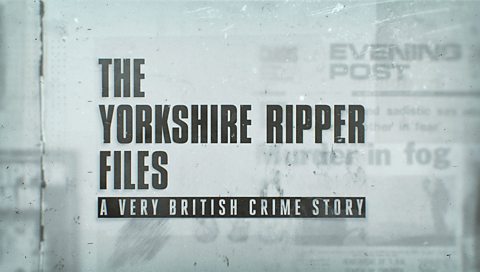
Whilst the 2006 film focuses entirely on the hoax and its effect on the investigation, the 2019 miniseries (3 episodes) is about the case as a whole—the victims, the investigation, the media, and the mood in Yorkshire at the time (the 70s-80s).
Arguably, it is about the Yorkshire Ripper case from a feminist perspective:
- Placing the victims, not the murderer, in the centre—focusing on their lives, speaking to their families, discussing the way they are portrayed or described by the police/ the news, etc.
- Examining the effect of the murders on women in Yorkshire—from fear to suggested curfew and feminist protests.
- Examining misogyny and prejudice against prostitutes among the West Yorkshire police, and how it led to misassumption and other errors in the investigation.
That is where the problem lies. The filmmaker doesn’t set out to find out what went wrong and why West Yorkshire police made mistakes, fell for the hoax, and dismissed key witnesses. Instead, she set out to explain it, and to prove that it was because of misogyny and prejudice against prostitutes.
I’m not saying that it was not a factor, it was. The documentary does show that from early on, the police jumped to the conclusion that Peter Sutcliffe (the Yorkshire Ripper) must have been motivated by hatred of prostitutes, and anyone else who was not a prostitute must either have had “loose morals” or been a wrong target. The documentary also shows that not only the police but the press and the public at the time also made a distinction between prostitutes and “respectable women”, even saying things such as the “respectable women” were “innocent victims”, as though the prostitutes somehow deserved to be killed.
In that way, the miniseries can be interesting. But as a whole, it is a weak documentary because of its obvious agenda. Sexism and prejudice against prostitutes alone cannot explain why the police fell for the hoax and changed the whole course of the investigation because of it without any basis, failed to make a connection between the 2 similar photofits, dismissed eye witnesses (survivors) and their similar testimonies, failed to see discrepancies between the profile built on eye witnesses’ testimonies and the profile built on the letters and tape (the hoax), ignored dissent, interviewed Peter Sutcliffe 9 times and let him go 9 times, and so on.
In addition, a documentary, in my opinion, should tell the story and explore its subject without preconceptions, and let the audience judge as the events unfold. For most of The Yorkshire Ripper Files, especially because of the narration, it feels more like a long video essay than a documentary.
That being said, it can be an interesting watch if you want to know more about the Yorkshire Ripper case and the mood in Yorkshire at the time.
*: For whatever reasons, the only place where I can find information about the documentary is here: https://www.truenorth.tv/work/ripper-hoaxer-real-story/
However, the entire documentary can be watched here: https://www.youtube.com/watch?v=-t8JcOewaOM
**: If you have BBC iPlayer, the miniseries can be found here: https://www.bbc.co.uk/programmes/m0003m05
Whilst the 2006 film focuses entirely on the hoax and its effect on the investigation, the 2019 miniseries (3 episodes) is about the case as a whole—the victims, the investigation, the media, and the mood in Yorkshire at the time (the 70s-80s).
Arguably, it is about the Yorkshire Ripper case from a feminist perspective:
- Placing the victims, not the murderer, in the centre—focusing on their lives, speaking to their families, discussing the way they are portrayed or described by the police/ the news, etc.
- Examining the effect of the murders on women in Yorkshire—from fear to suggested curfew and feminist protests.
- Examining misogyny and prejudice against prostitutes among the West Yorkshire police, and how it led to misassumption and other errors in the investigation.
That is where the problem lies. The filmmaker doesn’t set out to find out what went wrong and why West Yorkshire police made mistakes, fell for the hoax, and dismissed key witnesses. Instead, she set out to explain it, and to prove that it was because of misogyny and prejudice against prostitutes.
I’m not saying that it was not a factor, it was. The documentary does show that from early on, the police jumped to the conclusion that Peter Sutcliffe (the Yorkshire Ripper) must have been motivated by hatred of prostitutes, and anyone else who was not a prostitute must either have had “loose morals” or been a wrong target. The documentary also shows that not only the police but the press and the public at the time also made a distinction between prostitutes and “respectable women”, even saying things such as the “respectable women” were “innocent victims”, as though the prostitutes somehow deserved to be killed.
In that way, the miniseries can be interesting. But as a whole, it is a weak documentary because of its obvious agenda. Sexism and prejudice against prostitutes alone cannot explain why the police fell for the hoax and changed the whole course of the investigation because of it without any basis, failed to make a connection between the 2 similar photofits, dismissed eye witnesses (survivors) and their similar testimonies, failed to see discrepancies between the profile built on eye witnesses’ testimonies and the profile built on the letters and tape (the hoax), ignored dissent, interviewed Peter Sutcliffe 9 times and let him go 9 times, and so on.
In addition, a documentary, in my opinion, should tell the story and explore its subject without preconceptions, and let the audience judge as the events unfold. For most of The Yorkshire Ripper Files, especially because of the narration, it feels more like a long video essay than a documentary.
That being said, it can be an interesting watch if you want to know more about the Yorkshire Ripper case and the mood in Yorkshire at the time.
*: For whatever reasons, the only place where I can find information about the documentary is here: https://www.truenorth.tv/work/ripper-hoaxer-real-story/
However, the entire documentary can be watched here: https://www.youtube.com/watch?v=-t8JcOewaOM
**: If you have BBC iPlayer, the miniseries can be found here: https://www.bbc.co.uk/programmes/m0003m05
Monday, 18 November 2019
On trans issues
This blog post has no disclaimer.
1/ Recently I’ve noticed that the word “transphobic” is used very regularly, almost everywhere and for almost everything, perhaps nearly to the point of losing all meaning.
Examples of transphobia can be bullying, abusing, or mocking transgender people; using violence against transgender people; denying jobs, housing, or healthcare to transgender people; dismissing feelings of gender dysphoria, etc.
However:
Discussing transitioning and detransitioning is not transphobic.
Questioning gender ideology is not transphobic.
Having a debate about trans athletes in women’s sports, or even disapproving of trans athletes competing in women’s sports, is not transphobic.
Talking about the differences between trans women and cis women, or between trans men and cis men, is not transphobic.
Not dating trans people is not transphobic.
In a free society, people have the right to question things, to have a conversation, to have a debate. The word “transphobic” is too often thrown out carelessly, to shut up others and end a conversation, like some other words such as “sexist”, “misogynistic”, “mansplaining”, “racist”...—and like them, “transphobic” starts losing its meaning and is taken less seriously.
2/ A short while ago, a study in the Journal of Social and Personal Relationships revealed that 87.5% of participants would only date cisgender people and excluded transgender people.
The result is to be expected. What is telling is that the author of the study, Karen L. Blair, decided to write a commentary on her blog about it, and wrote:
Did she ask the participants what their reasons were? No. Instead:
Then in the conclusion, she wrote:
In short, she’s suggesting that toleration doesn’t only mean respecting trans people’s human rights and treating them equally and respectfully, but toleration also includes dating and having sex with them.
The entire blog post can be read here: http://www.cambridgeblog.org/2019/06/who-will-date-a-trans-person/
She’s not the only one who has such opinions. I’ve come across other articles, such as this:
https://www.them.us/story/cis-trans-dating?fbclid=IwAR0TKBvrjhhU4mct-ICJi88Bqa6gt7EXzvCqiY2OxWWEevkkn2EZVZEyxt8#
Or videos like this:
https://youtu.be/2X-PgHSZh6U
The speaker, a transgender person, argues that not dating trans people is discriminatory and hurtful.
Someone may ask me, is it racist not to date Asian women? Well it is if it’s because you think Asians are inferior to white people or Asians are stupid/ dirty, etc., but if you’re just not attracted to Asian features, no, that’s not racist, and I don’t care.
3/ Relating to the subject above is the concept of “cotton ceiling”, a term in the trans community which refers to the barriers trans women face when denied access to sex with lesbians. Have a look:
https://transgenderreality.com/2016/12/22/shallow-creepy-fetishist-of-vaginae/
https://transgenderreality.com/2016/07/31/people-arent-thinking-deeply-enough-about-their-sexuality-more-cotton-ceiling-from-transactivists/
https://transgenderreality.com/2015/11/20/its-a-girls-dick/
Google “Get the L out”, you can find lots of articles about conflicts between lesbian activists and trans activists, and the movement to get the L out of LGBT. Here is an example:
https://www.newstatesman.com/politics/feminism/2018/07/why-were-lesbians-protesting-pride-because-lgbt-coalition-leaves-women
As I read about conflicts between the trans community and other parts of the LBGT community, I noticed an interesting pattern: trans men don’t seem to say much, whereas some trans women are very loud and have been attacking cis straight men and lesbians for not wanting to sleep with them—cis straight men are called “insecure”, “confused”, “afraid of being labelled gay”, “suffering from toxic masculinity”, whereas lesbians are derided as transphobes and “vagina fetishists”.
This is not to say that all trans people are the same, nor that all trans activists are toxic. However, such people exist in the trans community. It is harmful and dangerous to suggest that it’s transphobic not to date trans people, or to argue that trans people are exactly the same as cis people.
4/ A few years ago, Chimamanda Ngozi Adichie sparked an outrage when she said that trans women were different from cis women.
In fact, screaming “transphobic!” is an automatic response whenever someone says that trans women and cis women are not the same. Trans people shouldn’t be seen as less human, and I understand that it’s hurtful to say that trans women are not true women, but it is silly and delusional to suggest that there are no differences whatsoever between trans women and cis women, either in biology or in experience, especially if a trans woman transitioned after puberty.
The argument that “trans women are real women” and “people are whatever gender they identify as” is problematic and wrong in the case of lesbians, because lesbians should not be harassed into having sex with trans women, nor abused for not doing so.
It is a greater issue when we talk about trans athletes in women’s sports.
5/ Let’s look at the debate on trans athletes in women’s sports.
https://www.wired.com/story/the-glorious-victories-of-trans-athletes-are-shaking-up-sports/
https://nationalfile.com/womens-sports-are-being-dominated-by-trans-athletes/?fbclid=IwAR3FGq03X4eJ6Qo2EkDr0DszbN0Evxt_EHkXZVT7-_mqwiSykKg1jlL4n2M
https://nypost.com/2019/10/13/justice-for-trans-athletes-is-unfair-to-girls-like-my-daughter/
If you believe that trans athletes should have the right to compete and it would be unjust otherwise, how do you make it fair when trans athletes who transitioned after puberty have an unfair physical advantage? Getting hormones might have an effect on their performance, but doesn’t change their muscle mass and bone structure.
There are people who, in response to the debate, say that the gender binary in sports should be dispensed with, and men and women should compete together—such statements are not worth examining.
6/ The media, when discussing trans issues, tend to talk about gender dysphoria and trans people’s suicide rates. They don’t talk about the actual process of transitioning and its effects on physical and mental health. Nor do they touch on the subject of detransitioning.
These subjects are important, because there are things to consider if you’re thinking about transitioning. More importantly, they are part of the debate if you ask, at what age should children be allowed to transition? On the 1 hand, certain characteristics can no longer change after puberty. On the other hand, when do you actually know that a child is not happy with their gender and transitioning would be the answer? What if the problem lies elsewhere? What if the child is mistaken? What if they change their mind a few years later?
In times of confusion, the online trans community can be dangerous, because their “diagnosis” of someone as transgender can often be based on meaningless stereotypes.
https://transgenderreality.com/2017/09/29/non-conformity-to-gender-roles-as-red-flags/
https://transgenderreality.com/2016/09/30/wearing-the-most-comfortable-sandals-ever-more-stereotypes-about-men-and-women/
https://transgenderreality.com/2016/06/14/feeling-pretty-and-delicate-that-is-clearly-female-behavioral-traits-right/
https://transgenderreality.com/2016/05/19/have-you-ever-identified-more-with-female-characters-than-male-ones/
https://transgenderreality.com/2016/05/10/the-dangers-of-stereotypes/
https://transgenderreality.com/2016/03/02/like-to-wear-comfortable-clothes-dislike-sexism-change-your-sex/
https://transgenderreality.com/2016/01/20/really-what-little-boy-wants-to-be-the-girl-lion/
https://transgenderreality.com/2015/12/11/i-wasnt-like-other-girls-i-liked-pokemon-i-liked-dragonball-z/
For the record, I’ve never liked pink, and as a kid, I had guns as well as dolls, and most of my stuff were blue. The idea that there are girl stuff and boy stuff is absolutely ridiculous, and it is a lot worse to claim that if a girl likes boy stuff, she must wish to be a boy, and vice versa.
It is a pity that there was a time people said that men and women were the same, and girls could be whatever they wanted to be—astronauts, engineers, doctors, etc. but now liking something is seen as a boy thing or a girl thing. When, for example, a person who identifies as genderfluid, says that they sometimes feel like a guy and sometimes feel like a girl, I don’t know what they mean. What does it mean, really, to feel like a guy or a girl? If liking girl things is equal to feeling like a girl, isn’t that reinforcing gender stereotypes?
The online trans community can sometimes cause harm in the way they give advice and persuade young people to believe they are transgender and should go for transitioning.
https://transgenderreality.com/2016/03/15/lie-to-them-to-get-hrt-give-them-the-good-old-narrative/
https://transgenderreality.com/2016/08/04/questioning-teens-and-social-contagion/
https://transgenderreality.com/2016/07/30/do-you-feel-uncomfortable-with-yourself-in-some-way/
https://transgenderreality.com/2016/05/13/i-hide-my-meds-in-my-saxophone-case-self-medding-advice-to-minors/
This, again, doesn’t mean that all trans activists are the same, but these people exist in the online trans community, and this is something, I think, parents should be aware of.
7/ In conclusion, trans issues, like everything else, are not black and white. Nuance is important. Facts are important. It is harmful to shut down a debate and dismiss everything as transphobic.
Trans issues are not simple, and if you say that people not only can identify as whatever gender they wish but must also be recognised as that gender and have all of its rights, that can, very often, come at the expense of someone else.
1/ Recently I’ve noticed that the word “transphobic” is used very regularly, almost everywhere and for almost everything, perhaps nearly to the point of losing all meaning.
Examples of transphobia can be bullying, abusing, or mocking transgender people; using violence against transgender people; denying jobs, housing, or healthcare to transgender people; dismissing feelings of gender dysphoria, etc.
However:
Discussing transitioning and detransitioning is not transphobic.
Questioning gender ideology is not transphobic.
Having a debate about trans athletes in women’s sports, or even disapproving of trans athletes competing in women’s sports, is not transphobic.
Talking about the differences between trans women and cis women, or between trans men and cis men, is not transphobic.
Not dating trans people is not transphobic.
In a free society, people have the right to question things, to have a conversation, to have a debate. The word “transphobic” is too often thrown out carelessly, to shut up others and end a conversation, like some other words such as “sexist”, “misogynistic”, “mansplaining”, “racist”...—and like them, “transphobic” starts losing its meaning and is taken less seriously.
2/ A short while ago, a study in the Journal of Social and Personal Relationships revealed that 87.5% of participants would only date cisgender people and excluded transgender people.
The result is to be expected. What is telling is that the author of the study, Karen L. Blair, decided to write a commentary on her blog about it, and wrote:
“What then, does this mean for trans people’s overall well-being if the majority of people within society won’t even consider them as potential dating partners under hypothetical conditions? A lack of social support could contribute to some of the existing discrepancies in mental and physical well-being within trans communities.”Not dating transgender people is seen as a lack of social support.
Did she ask the participants what their reasons were? No. Instead:
“... the authors speculated that exclusion was likely the result of factors ranging from explicit transprejudice, such as viewing trans persons as unfit, mentally ill, or subhuman, to a lack of understanding or knowledge about what it means to be a transgender man or woman, and therefore, what it would mean to date a trans person.”It didn’t seem to dawn on her to consider the thought that maybe those participants were just not attracted to transgender people.
Then in the conclusion, she wrote:
“Ultimately, each individual has the freedom to decide whom they date or are interested in dating, and thus the article does not suggest that any single individual must include trans people within their dating pool. However, the article does suggest that examining and following the overall societal patterns of including or excluding trans people within the intimate realm of dating can be used as an indicator of overall acceptance and social inclusion of trans people. In other words, it is one thing to make space for trans people within our workplaces, schools, washrooms, and public spaces, but it is another to see them included within our families and most intimate of spaces, our romantic relationships. We won’t be able to say, as a society, that we are accepting of trans citizens until they are also included within our prospective dating pools; at the very least, on a hypothetical basis.”(my emphasis)
In short, she’s suggesting that toleration doesn’t only mean respecting trans people’s human rights and treating them equally and respectfully, but toleration also includes dating and having sex with them.
The entire blog post can be read here: http://www.cambridgeblog.org/2019/06/who-will-date-a-trans-person/
She’s not the only one who has such opinions. I’ve come across other articles, such as this:
https://www.them.us/story/cis-trans-dating?fbclid=IwAR0TKBvrjhhU4mct-ICJi88Bqa6gt7EXzvCqiY2OxWWEevkkn2EZVZEyxt8#
Or videos like this:
https://youtu.be/2X-PgHSZh6U
The speaker, a transgender person, argues that not dating trans people is discriminatory and hurtful.
Someone may ask me, is it racist not to date Asian women? Well it is if it’s because you think Asians are inferior to white people or Asians are stupid/ dirty, etc., but if you’re just not attracted to Asian features, no, that’s not racist, and I don’t care.
3/ Relating to the subject above is the concept of “cotton ceiling”, a term in the trans community which refers to the barriers trans women face when denied access to sex with lesbians. Have a look:
https://transgenderreality.com/2016/12/22/shallow-creepy-fetishist-of-vaginae/
https://transgenderreality.com/2016/07/31/people-arent-thinking-deeply-enough-about-their-sexuality-more-cotton-ceiling-from-transactivists/
https://transgenderreality.com/2015/11/20/its-a-girls-dick/
Google “Get the L out”, you can find lots of articles about conflicts between lesbian activists and trans activists, and the movement to get the L out of LGBT. Here is an example:
https://www.newstatesman.com/politics/feminism/2018/07/why-were-lesbians-protesting-pride-because-lgbt-coalition-leaves-women
As I read about conflicts between the trans community and other parts of the LBGT community, I noticed an interesting pattern: trans men don’t seem to say much, whereas some trans women are very loud and have been attacking cis straight men and lesbians for not wanting to sleep with them—cis straight men are called “insecure”, “confused”, “afraid of being labelled gay”, “suffering from toxic masculinity”, whereas lesbians are derided as transphobes and “vagina fetishists”.
This is not to say that all trans people are the same, nor that all trans activists are toxic. However, such people exist in the trans community. It is harmful and dangerous to suggest that it’s transphobic not to date trans people, or to argue that trans people are exactly the same as cis people.
4/ A few years ago, Chimamanda Ngozi Adichie sparked an outrage when she said that trans women were different from cis women.
In fact, screaming “transphobic!” is an automatic response whenever someone says that trans women and cis women are not the same. Trans people shouldn’t be seen as less human, and I understand that it’s hurtful to say that trans women are not true women, but it is silly and delusional to suggest that there are no differences whatsoever between trans women and cis women, either in biology or in experience, especially if a trans woman transitioned after puberty.
The argument that “trans women are real women” and “people are whatever gender they identify as” is problematic and wrong in the case of lesbians, because lesbians should not be harassed into having sex with trans women, nor abused for not doing so.
It is a greater issue when we talk about trans athletes in women’s sports.
5/ Let’s look at the debate on trans athletes in women’s sports.
https://www.wired.com/story/the-glorious-victories-of-trans-athletes-are-shaking-up-sports/
https://nationalfile.com/womens-sports-are-being-dominated-by-trans-athletes/?fbclid=IwAR3FGq03X4eJ6Qo2EkDr0DszbN0Evxt_EHkXZVT7-_mqwiSykKg1jlL4n2M
https://nypost.com/2019/10/13/justice-for-trans-athletes-is-unfair-to-girls-like-my-daughter/
If you believe that trans athletes should have the right to compete and it would be unjust otherwise, how do you make it fair when trans athletes who transitioned after puberty have an unfair physical advantage? Getting hormones might have an effect on their performance, but doesn’t change their muscle mass and bone structure.
There are people who, in response to the debate, say that the gender binary in sports should be dispensed with, and men and women should compete together—such statements are not worth examining.
6/ The media, when discussing trans issues, tend to talk about gender dysphoria and trans people’s suicide rates. They don’t talk about the actual process of transitioning and its effects on physical and mental health. Nor do they touch on the subject of detransitioning.
These subjects are important, because there are things to consider if you’re thinking about transitioning. More importantly, they are part of the debate if you ask, at what age should children be allowed to transition? On the 1 hand, certain characteristics can no longer change after puberty. On the other hand, when do you actually know that a child is not happy with their gender and transitioning would be the answer? What if the problem lies elsewhere? What if the child is mistaken? What if they change their mind a few years later?
In times of confusion, the online trans community can be dangerous, because their “diagnosis” of someone as transgender can often be based on meaningless stereotypes.
https://transgenderreality.com/2017/09/29/non-conformity-to-gender-roles-as-red-flags/
https://transgenderreality.com/2016/09/30/wearing-the-most-comfortable-sandals-ever-more-stereotypes-about-men-and-women/
https://transgenderreality.com/2016/06/14/feeling-pretty-and-delicate-that-is-clearly-female-behavioral-traits-right/
https://transgenderreality.com/2016/05/19/have-you-ever-identified-more-with-female-characters-than-male-ones/
https://transgenderreality.com/2016/05/10/the-dangers-of-stereotypes/
https://transgenderreality.com/2016/03/02/like-to-wear-comfortable-clothes-dislike-sexism-change-your-sex/
https://transgenderreality.com/2016/01/20/really-what-little-boy-wants-to-be-the-girl-lion/
https://transgenderreality.com/2015/12/11/i-wasnt-like-other-girls-i-liked-pokemon-i-liked-dragonball-z/
For the record, I’ve never liked pink, and as a kid, I had guns as well as dolls, and most of my stuff were blue. The idea that there are girl stuff and boy stuff is absolutely ridiculous, and it is a lot worse to claim that if a girl likes boy stuff, she must wish to be a boy, and vice versa.
It is a pity that there was a time people said that men and women were the same, and girls could be whatever they wanted to be—astronauts, engineers, doctors, etc. but now liking something is seen as a boy thing or a girl thing. When, for example, a person who identifies as genderfluid, says that they sometimes feel like a guy and sometimes feel like a girl, I don’t know what they mean. What does it mean, really, to feel like a guy or a girl? If liking girl things is equal to feeling like a girl, isn’t that reinforcing gender stereotypes?
The online trans community can sometimes cause harm in the way they give advice and persuade young people to believe they are transgender and should go for transitioning.
https://transgenderreality.com/2016/03/15/lie-to-them-to-get-hrt-give-them-the-good-old-narrative/
https://transgenderreality.com/2016/08/04/questioning-teens-and-social-contagion/
https://transgenderreality.com/2016/07/30/do-you-feel-uncomfortable-with-yourself-in-some-way/
https://transgenderreality.com/2016/05/13/i-hide-my-meds-in-my-saxophone-case-self-medding-advice-to-minors/
This, again, doesn’t mean that all trans activists are the same, but these people exist in the online trans community, and this is something, I think, parents should be aware of.
7/ In conclusion, trans issues, like everything else, are not black and white. Nuance is important. Facts are important. It is harmful to shut down a debate and dismiss everything as transphobic.
Trans issues are not simple, and if you say that people not only can identify as whatever gender they wish but must also be recognised as that gender and have all of its rights, that can, very often, come at the expense of someone else.
Subscribe to:
Posts (Atom)