In the previous blog post about The God of Small Things, I wrote about the prose and imagery. Here is something else I love about Arundhati Roy’s novel—the descriptions, and the clever use of verbs or adjectives for humans for animals, plants, or objects.
From chapter 1:
“In the old house on the hill, Baby Kochamma sat at the dining table rubbing the thick, frothy bitterness out of an elderly cucumber.”
(emphasis mine, as for the rest of the blog post)
Later:
“Only the vines kept growing, like toe-nails on a corpse. They reached through the nostrils of the pink plaster gnomes and blossomed in their hollow heads, giving them an expression half surprised, half sneeze-coming.”
From chapter 4:
“A swathe of dirty yellow sponge spilled out and shivered on the backseat like an immense jaundiced liver.”
From chapter 5:
“The slow ceiling fan sliced the thick, frightened air into an unending spiral that spun slowly to the floor like the peeled skin of an endless potato.”
From chapter 7:
“A column of shining black ants walked across a windowsill, their bottoms tilted upwards, like a line of mincing chorus girls in a Busby Berkeley musical silhouetted against the sun. Butted and beautiful.”
Later:
“Laughter curled around the edges of Rahel’s voice.”
And:
“The steel door of the incinerator went up and the muted hum of the eternal fire became a red roaring. The heat lunged out at them like a famished beast. Then Rahel’s Ammu was fed to it.”
From chapter 8:
“Wolves. Flowers. Iguanas. Changing shape as the sun moved through the sky. Dying punctually, at dusk.”
Later:
“The day that Chacko prevented Pappachi from beating her (and Pappachi had murdered his chair instead), Mammachi packed her wifely luggage and committed it to Chacko’s care.”
Later:
“Escaped wisps of hair were recaptured and returned to white headscarves.”
From chapter 10:
“It leaned backwards as though the letters were reluctant to form words, and the words reluctant to be in sentences.”
Later:
“In the factory the silence swooped down once more and tightened around the twins. But this time it was a different kind of silence. An old river silence. The silence of Fisher People and waxy mermaids.”
The God of Small Things is so beloved and acclaimed not because of the tragedies, not for the damning depiction of the caste system, patriarchy, and inequalities, in India. Its power is in the striking imagery, in the author’s bold choice of words and ability to evoke smells and feelings, in the mood and atmosphere, in the haunting sadness.
Which is different from my list of favourite films.
Persona (1966), Wild Strawberries (1957), Hour of the Wolf (1968), and Cries and Whispers (1972) by Ingmar Bergman
Citizen Kane (1941) and F for Fake (1973) by Orson Welles
The Exterminating Angel (1962), The Phantom of Liberty (1974), and That Obscure Object of Desire (1977) by Luis Bunuel
La Jetée (1962) by Chris Marker
8 ½ (1963) by Federico Fellini
The Godfather (1972) by Francis Ford Coppola
Bicycle Thieves (1948) by Vittorio De Sica
Three Colours: Blue (1993) by Krzysztof Kieslowski
Ivan's Childhood (1962) by Andrei Tarkovsky
Taxi Driver (1976) by Martin Scorsese
Dogville (2003) by Lars von Trier
3 Women (1977) by Robert Altman
_____________________________
Every filmmaker is influenced by other filmmakers. Sometimes we may even be inspired by some aspect of a film we don’t like, like how I feel about Dogville.
As a filmmaking student, I’m still learning the skills and techniques, and exploring the form, I have yet to find my style, but it’s still nice to make a list to acknowledge the influences and have something to compare to in the future.
Or maybe I just really like lists.
This is a test for another project.
Sydney Hinchliffe played the main role in my short film Footfalls.
Untitled from Hai Di Nguyen on Vimeo.
This time a fun thing.
Dancing Plants from Hai Di Nguyen on Vimeo.
“He stared straight ahead with his mortgaged eye. He wept with his own one. 1 cheek glistened with tears. The other stayed dry.”
(Ch.2)
I’ve been reading Arundhati Roy’s The God of Small Things.
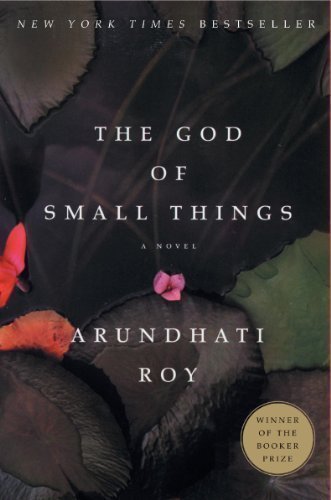 It’s a well-written book about tragedies in a family in India because of the caste system and such barbaric laws in Indian society. The story is not told chronologically, but in fragments, like memories, or pieces of a puzzle. It draws you in, though sometimes at the beginning it can be irritatingly cryptic, as Arundhati Roy doesn’t want to reveal the tragedy too soon.
But I read more for the prose, the rhythmic prose, and the imagery in the book.
About Estha’s silence, from chapter 1:
It’s a well-written book about tragedies in a family in India because of the caste system and such barbaric laws in Indian society. The story is not told chronologically, but in fragments, like memories, or pieces of a puzzle. It draws you in, though sometimes at the beginning it can be irritatingly cryptic, as Arundhati Roy doesn’t want to reveal the tragedy too soon.
But I read more for the prose, the rhythmic prose, and the imagery in the book.
About Estha’s silence, from chapter 1:
“Estha had always been a quiet child, so no one could pinpoint with any degree of accuracy exactly when (the year, if not the month, or day) he had stopped talking. Stopped talking altogether, that is. The fact is that there wasn’t an ‘exactly when’. It had been a gradual wining down and closing shop. A barely noticeable quietening. As though he had simply out of conversation and had nothing left to say. Yet Estha’s silence was never awkward. Never intrusive. Never noisy. It wasn’t an accusing, protesting silence as much as a sort of aestivation, a dormancy, the psychological equivalent of what lungfish do to get themselves through the dry season, except that in Estha’s case the dry season looked as though it would last forever.”
The description becomes more extreme:
“Once the quietness arrived, it stayed and spread in Estha. It reached out of his head and enfolded him in his swampy arms. It rocked him to the rhythm of an ancient, foetal heartbeat. It sent its stealthy, suckered tentacles inching along the insides of his skull, hoovering the knolls and dells of his memory, dislodging old sentences, whisking them off the tip of his tongue. It stripped his thoughts of the words that described them and left them pared and naked. Unspeakable. Numb. And to an observer therefore, perhaps barely there. He grew accustomed to the uneasy octopus that lived inside him and squirted its inky tranquilizer on his past. Gradually the reason for his silence was hidden away, entombed somewhere deep in the soothing folds of the fact of it.”
Gross. But that’s an interesting image.
“The red has bled away.”
It’s hard to say why I like this so much. Or this:
“… Though you couldn’t see the river from the house any more, like a seashell always has a sea-sense, the Ayemenem house still had a river-sense.
A rushing, rolling, fishswimming sense.”
About Sophie Mol’s death, from chapter 1:
“Chacko was Mammachi’s only son. Her own grief grieved her. His devastated her.”
And later:
“It is curious how sometimes the memory of death lives on for so much longer than the memory of the life that it purloined.”
That line resonates, to some extent.
Now look at this choice of words:
“In the cold home on the hill, Baby Kochamma sat at the dining table rubbing the thick, frothy bitterness out of an elderly cucumber.”
And this simile from chapter 4—description of a taxi:
“A swathe of dirty yellow sponge spilled out and shivered on the back seat like an immense jaundiced liver.”
You get the idea.
Man on Wire (2008) by James Marsh
Searching for Sugar Man (2012) by Malik Bendjelloul
Deliver Us from Evil (2006) by Amy J. Berg
Mea Maxima Culpa: Silence in the House of God (2012) by Alex Gibney
Anvil! The Story of Anvil (2008) by Sacha Gervasi
The Most Hated Family in America (2007) and America's Most Hated Family in Crisis (2011) by Louis Theroux
Tickled (2016) by David Farrier and Dylan Reeve
The Imposter (2012) by Bart Layton
The Cleaners (2018) by Hans Block and Moritz Riesewieck
Blackfish (2013) by Gabriela Cowperthwaite
And F for Fake (1973) by Orson Welles, if it counts as a documentary
This is a personal project: the first film about my grandma.
I thought a lot about it, and later may have regrets about sharing something so personal, but here it is.
Grandma's Room from Hai Di Nguyen on Vimeo.
I came across this draft from June, which I couldn’t finish as we didn’t have internet in the new apartment.
An interesting simile from chapter 15 of White-Jacket:
“I sometimes thought that the junks of lean pork—which were boiled in their own bristles, and looked gaunt and grim, like pickled chins of half-famished, unwashed Cossacks—had something to do with creating the bristling bitterness at times prevailing in our mess. The men tore off the tough hide from their pork, as if they were Indians scalping Christians.”
Grim.
What does it say about the novel?
________________________________
Meanwhile, I’m reading Arundhati Roy’s The God of Small Things, after giving up on Lewis Carroll’s Sylvie and Bruno.
What are you reading?
The 50s: http://thelittlewhiteattic.blogspot.com/2017/08/my-favourite-films-from-1950s.html
The 60s: http://thelittlewhiteattic.blogspot.com/2018/03/my-favourite-films-from-1960s.html
The Private Life of Sherlock Holmes (1970) by Billy Wilder
Harold and Maude (1971) by Hal Ashby
The French Connection (1971) by William Friedkin
The Godfather (1972) by Francis Ford Coppola
Cries and Whispers (1972) by Ingmar Bergman
The Discreet Charm of the Bourgeoisie (1972) by Luis Bunuel
Last Tango in Paris (1972) by Bernardo Bertolucci
Cabaret (1972) by Bob Fosse
Solaris (1972) by Andrei Tarkovsky
Play It Again, Sam (1972) by Herbert Ross
Amarcord (1973) by Federico Fellini
The Last Detail (1973) by Hal Ashby
Mean Streets (1973) by Martin Scorsese
The Sting (1973) by George Roy Hill
Sleep (1973) by Woody Allen
F for Fake (1973) by Orson Welles
The Godfather Part II (1974) by Francis Ford Coppola
The Conversation (1974) by Francis Ford Coppola
Chinatown (1974) by Roman Polanski
The Phantom of Liberty (1974) by Luis Bunuel
Alice Doesn't Live Here Anymore (1974) by Martin Scorsese
Dog Day Afternoon (1975) by Sidney Lumet
Scent of a Woman (1975) by Martin Brest
Love and Death (1975) by Woody Allen
Taxi Driver (1976) by Martin Scorsese
Network (1976) by Sidney Lumet
3 Women (1977) by Robert Altman
That Obscure Object of Desire (1977) by Luis Bunuel
Annie Hall (1977) by Woody Allen
Autumn Sonata (1978) by Ingmar Bergman
The Tin Drum (1979) by Volker Schlöndorff
Manhatttan (1979) by Woody Allen
All That Jazz (1979) by Bob Fosse


