Pages

Wednesday, 17 June 2015

Lydgate the sexist

Chapter 27:
"... This play at being a little in love was agreeable, and did not interfere with graver pursuits. Flirtation, after all, was not necessarily a singeing process..."
That line is about Lydgate and his flirtation with Rosamond Vincy.
On her side? She doesn't "distinguish flirtation from love, either in herself or in another". Playing with a woman's feelings places Lydgate in the same group with Willoughby and Henry Crawford.
"Lydgate found it more and more agreeable to be with her, and there was no constraint now, there was a delightful interchange of influence in their eyes, and what they said had that superfluity of meaning for them, which is observable with some sense of flatness by a third person; still they had no interviews or asides from which a third person need have been excluded. In fact, they flirted; and Lydgate was secure in the belief that they did nothing else. If a man could not love and be wise, surely he could flirt and be wise at the same time? [...] The Vincys' house, with all its faults, was the pleasanter by contrast; besides, it nourished Rosamond—sweet to look at as a half-opened blush-rose, and adorned with accomplishments for the refined amusement of man."
That's the way he sees her, a source of amusement.
Go back a little, chapter 16:
"He did admire Rosamond exceedingly; but that madness which had once beset him about Laure was not, he thought, likely to recur in relation to any other woman. Certainly, if falling in love had been at all in question, it would have been quite safe with a creature like this Miss Vincy, who had just the kind of intelligence one would desire in a woman—polished, refined, docile, lending itself to finish in all the delicacies of life, and enshrined in a body which expressed this with a force of demonstration that excluded the need for other evidence. Lydgate felt sure that if ever he married, his wife would have that feminine radiance, that distinctive womanhood which must be classed with flowers and music, that sort of beauty which by its very nature was virtuous, being moulded only for pure and delicate joys."
Lydgate thinks of women the way most Victorian men thought of women.
More about his sexism, chapter 17:
"... it was plain that a vicar might be adored by his womankind as the king of men and preachers, and yet be held by them to stand in much need of their direction. Lydgate, with the usual shallowness of a young bachelor, wondered that Mr Farebrother had not taught them better."
Those phrases "his womankind" and "them" refer to Mrs Farebrother (the vicar's mother), Miss Noble (her sister) and Miss Winifred Farebrother (the vicar's elder sister), all older than Mr Farebrother. Uhm? 
George Eliot drops here and there small, tiny details that expose what kind of man Lydgate is, however good he is in other aspects.
"Certainly her thoughts were much occupied with Lydgate himself; he seemed to her almost perfect [...] How different he was from young Plymdale or Mr. Caius Larcher! Those young men had not a notion of French, and could speak on no subject with striking knowledge, except perhaps the dyeing and carrying trades, which of course they were ashamed to mention; they were Middlemarch gentry, elated with their silver-headed whips and satin stocks, but embarrassed in their manners, and timidly jocose: even Fred was above them, having at least the accent and manner of a university man. Whereas Lydgate was always listened to, bore himself with the careless politeness of conscious superiority, and seemed to have the right clothes on by a certain natural affinity, without ever having to think about them. Rosamond was proud when he entered the room, and when he approached her with a distinguishing smile, she had a delicious sense that she was the object of enviable homage. If Lydgate had been aware of all the pride he excited in that delicate bosom, he might have been just as well pleased as any other man, even the most densely ignorant of humoral pathology or fibrous tissue: he held it one of the prettiest attitudes of the feminine mind to adore a man's pre-eminence without too precise a knowledge of what it consisted in."
Here, the Lydgate- Rosamond thing in a sense seems to mirror the Causabon- Dorothea relationship. Through such unequal relationships, George Eliot demonstrates the consequences of gender inequalities, of the lack of education and other opportunities for women. This topic she has discussed in an essay titled "Margaret Fuller and Mary Wollstonecraft": 
http://jpkc.fudan.edu.cn/s/61/t/96/19/1e/info6430.htm
Let's see what's going to happen to this couple.

Tuesday, 16 June 2015

Get out of the way, will you?; or George Eliot vs some other writers

Page 193 of Middlemarch:
"These were actually Lydgate's first meditations as he walked away from Mr Vincy's, and on this ground I fear that many ladies will consider him hardly worthy of their attention..."
Page 195:
"Poor Lydgate! or shall I say, Poor Rosamond!"
Page 196:
"If you think it incredible that to imagine Lydgate as a man of family could cause thrills of satisfaction which had anything to do with the sense that she was in love with him, I will ask you to use your power of comparison a little more effectively, and consider whether red cloth and epaulets have never had an influence of that sort. Our passions do not live apart in locked chambers, but, dressed in their small wardrobe of notions, bring their provisions to a common table and mess together, feeding out of the common store according to their appetite."
Then the narrative goes on, the author's presence is still felt on every page, but at least the "I" disappears or at least passes unnoticed. Then on page 224, chapter 20:
"Two hours later, Dorothea was seated in an inner room or boudoir of a handsome apartment in the Via Sistina.
I am sorry to add that she was sobbing bitterly, with such abandonment to this relief of an oppressed heart as a woman habitually controlled by pride on her own account and thoughtfulness for others will sometimes allow herself when she feels securely alone. And Mr. Casaubon was certain to remain away for some time at the Vatican."
Page 225:
"To those who have looked at Rome with the quickening power of a knowledge which breathes a growing soul into all historic shapes, and traces out the suppressed transitions which unite all contrasts, Rome may still be the spiritual centre and interpreter of the world. But let them conceive one more historical contrast: the gigantic broken revelations of that Imperial and Papal city thrust abruptly on the notions of a girl who had been brought up in English and Swiss Puritanism, fed on meagre Protestant histories and on art chiefly of the hand-screen sort; a girl whose ardent nature turned all her small allowance of knowledge into principles, fusing her actions into their mould, and whose quick emotions gave the most abstract things the quality of a pleasure or a pain; a girl who had lately become a wife, and from the enthusiastic acceptance of untried duty found herself plunged in tumultuous preoccupation with her personal lot..."
The narrator doesn't say "I", but she's addressing (some of) the readers.
Page 226:
"... Our moods are apt to bring with them images which succeed each other like the magic-lantern pictures of a doze..."
On the same page:
"Not that this inward amazement of Dorothea's was anything very exceptional: many souls in their young nudity are tumbled out among incongruities and left to "find their feet" among them, while their elders go about their business. Nor can I suppose that when Mrs. Casaubon is discovered in a fit of weeping six weeks after her wedding, the situation will be regarded as tragic. Some discouragement, some faintness of heart at the new real future which replaces the imaginary, is not unusual, and we do not expect people to be deeply moved by what is not unusual. That element of tragedy which lies in the very fact of frequency, has not yet wrought itself into the coarse emotion of mankind; and perhaps our frames could hardly bear much of it. If we had a keen vision and feeling of all ordinary human life, it would be like hearing the grass grow and the squirrel's heart beat, and we should die of that roar which lies on the other side of silence. As it is, the quickest of us walk about well wadded with stupidity.
However, Dorothea was crying, and if she had been required to state the cause, she could only have done so in some such general words as I have already used: to have been driven to be more particular would have been like trying to give a history of the lights and shadows, for that new real future which was replacing the imaginary drew its material from the endless minutiae by which her view of Mr. Casaubon and her wifely relation, now that she was married to him, was gradually changing with the secret motion of a watch-hand from what it had been in her maiden dream..."
She's still there. Yes, she's still there.
Page 228:
"... How was it that in the weeks since her marriage, Dorothea had not distinctly observed but felt with a stifling depression, that the large vistas and wide fresh air which she had dreamed of finding in her husband's mind were replaced by anterooms and winding passages which seemed to lead nowhither? I suppose it was that in courtship everything is regarded as provisional and preliminary, and the smallest sample of virtue or accomplishment is taken to guarantee delightful stores which the broad leisure of marriage will reveal. But the door-sill of marriage once crossed, expectation is concentrated on the present. Having once embarked on your marital voyage, it is impossible not to be aware that you make no way and that the sea is not within sight—that, in fact, you are exploring an enclosed basin."
Page 230:
"And by a sad contradiction Dorothea's ideas and resolves seemed like melting ice floating and lost in the warm flood of which they had been but another form. She was humiliated to find herself a mere victim of feeling, as if she could know nothing except through that medium: all her strength was scattered in fits of agitation, of struggle, of despondency, and then again in visions of more complete renunciation, transforming all hard conditions into duty. Poor Dorothea!..."
On page 232, George Eliot describes the 1st "argument" between Dorothea, now Mrs Casaubon, and her husband. He neglects her, noticing nothing. Dorothea feels useless, and betrays her feeling of anger. Here the intrusive narrator again speaks up:
"I fear there was a little temper in her reply."
I can't help thinking: Get out of the way, will you?
The problem is not so simple. It's not merely that the narrator constantly says "I" or addresses the readers or tries to evoke their sympathy by saying "we"/ "our"/ "us". It's not merely that the readers can see the author clearly on the page. Rather, it's the feeling that the whole book is a parable of sort, a story with a moral, told by George Eliot, an adult, to us children. Whilst telling the story, the adult comments on it, clarifies everything, keeps nothing subtle, lectures, moralises, directs our sympathy to the right people, explains for us who's good and who's bad and whom to like and whom to condemn, etc. George Eliot's description of what's going on in Mr Casaubon's mind doesn't create the impression (or illusion) of entering his mind; instead, it's still the voice of a person talking, talking to the readers.
"We are angered even by the full acceptance of our humiliating confessions—how much more by hearing in hard distinct syllables from the lips of a near observer, those confused murmurs which we try to call morbid, and strive against as if they were the oncoming of numbness!"
His thoughts and feelings are not presented for their own sake. They are there for a purpose:
"She was as blind to his inward troubles as he to hers; she had not yet learned those hidden conflicts in her husband which claim our pity."
I will not compare George Eliot to Flaubert. I've done that before. Tom at Wuthering Expectations has also done it.
Instead, I'll refer to another female writer: Jane Austen. People can think more highly of Jane Austen or George Eliot, depending not on enjoyment and preference but on their aesthetics. According to mine, Jane Austen is the superior artist, who has what Virginia Woolf calls an androgynous and incandescent mind which "consumes all impediments", who writes "without hate, without bitterness, without fear, without protest, without preaching", who presents things as they are, who is serious but never moralistic, who doesn't let personal feelings interfere with her art. She's also the more serious artist, seen in the way she works with the form, innovates, makes fun of conventions, parodies certain kinds of novels (the sentimental novel and the Gothic novel), in later works reacts against what she has done in previous works, etc. whereas George Eliot seems to use fiction as a means to another (higher?) end. Jane Austen frequently uses the free indirect speech, which she perfects in Emma, but it's Mansfield Park that best shows her superiority. As Caroline wrote a while ago, if George Eliot had written Mansfield Park, she would have taken care to make Henry and Mary less fascinating and more shallow, she would have made sure that readers side with Fanny. Or she would have made Henry change into a better man, for Fanny, but that's another story. 
George Eliot might be compared to Gogol and Tolstoy, who are not invisible. I'm thinking specifically of Dead Souls and War and Peace. The difference is that Gogol is only there in some of his digressions, and Tolstoy only appears in the essays on history and philosophy that he incorporates into his novel; neither let their private feelings and personal opinions distort their art, neither try to make the readers react and respond in a certain way, despite their didacticism. George Eliot does. That ruins her writing. 
However, hopefully in the end I may, like Virginia Woolf, see Middlemarch as a great work in spite of its imperfections, a much better novel than Adam Bede and Daniel Deronda

Monday, 15 June 2015

Details and facts in fiction: the case of Nabokov (and Tolstoy)

3 brilliant, thought-provoking posts by D. G. Myers about Nabokov's attention to details and stress on accuracy: 
http://dgmyers.blogspot.no/2009/03/his-necessary-and-sufficient-realism.html
"Nabokov liked to say that reality is the only word that should also be squeezed between the tongs of quotation marks. As I observed below, the colors that he assigned to Quilty’s cars were actual paint codes in American-made cars in the early fifties. And then this case, which bears such an uncanny similarity to the plot of Lolita that I almost suspect Nabokov of discovering in it the germ of his novel, and then concealing the source in a parenthetical sentence in an unimportant scene in a late chapter. Nabokov was a master illusionist—to conceal his necessary and sufficient realism." 
http://dgmyers.blogspot.no/2009/02/novel-and-car.html
http://dgmyers.blogspot.no/2010/04/exact-day.html
(Pnin tells others of the exact day Anna Karenina starts). 
"Who on earth, they might protest, needs to know this stuff?
But Nabokov believed it was indispensable—not merely to scholarship and criticism, but to fiction itself. Now, this may sound the note of heresy, because as a novelist, Nabokov’s scorn for realism and didacticism is notorious. [...]
And yet, in his fiction, Nabokov takes excruciating pains to specify exactly where or when. Pnin is fifty-two when the novel bearing his name opens. The time is the Fall Semester of 1950. 
[...] Obscure pedant and great novelist are conjoined by a passion to know the exact day, and what ultimately separates them may be of lesser moment. Literature thrives on exactitude and abhors approximation." 

Characters in Middlemarch and associations

I wonder if it's me, or George Eliot always makes me think of something else. 
Again, about Tertius Lydgate: 
"He was an ardent fellow, but at present his ardour was absorbed in love of his work and in the ambition of making his life recognised as a factor in the better life of mankind..." 
Again he sounds like Frankenstein (I've written about the repetition of the words "ardent" and "ardour" in Mary Shelley's book). 
"Poor Lydgate! or shall I say, Poor Rosamond! Each lived in a world of which the other knew nothing." 
There is, I'm sure, a similar sentence in Daniel Deronda about Deronda and Gwendolen. 
"While her aunt Bulstrode, who had a sisterly faithfulness towards her brother's family, had 2 sincere wishes for Rosamond- that she might show a more serious turn of mind, and that she might meet with a husband whose wealth correspond to her habits."
Rosamond sounds like Gwendolen. Also shallow. Also frivolous, carefree. Also beautiful, charming. Also used to having people in love with her. She sings too, and doesn't like the men around her ("I shall not marry any Middlemarch young man"), almost like Gwendolen, though the latter has a harsh opinion on men in general. In other words, there seem to be 2 Gwendolens in Middlemarch, the other is Celia, but Rosamond's more like her.
Another character she slightly resembles is Hélène in War and Peace. At least Lydgate coming from a new place and having ambitions and falling in love with a sexually alluring but superficial woman does sound like Pierre. 
If Rosamond's similar to Gwendolen, Dorothea's to be contrasted with her, and she's reminiscent of Mirah in Daniel Deronda, or, in some ways, Dinah in Adam Bede, except that she's less perfect and more human. In the way she takes pleasure in self-deprivation, there's something like she's insincere to herself. I'm referring to the jewels dividing scene. 
"'They are lovely', said Dorothea, slipping the ring and bracelet on her finely-turned finger and wrist, and holding them towards the window on a level with her eyes. All the while her thought was trying to justify her delight in the colours by merging them in her mystic religious joy." 
Besides, as I've said before, Dorothea's naive and hasty. George Eliot should have created more characters like that. What do we need Dinah and Mirah for. 
If there's a kind of Mirah in Middlemarch, there's a Daniel Deronda. That's Will Ladislaw. Too early to say anything about him, the guy appears for several pages, draws a bit, talks a bit, laughs a bit, and gets out of the plot. But there are similarities- Will's also idealistic, with no fixed profession. He wanders. 
The old, fox-cunning, eagle-sharp Featherstone, who is fooled by nobody, is like the old prince Bolkonsky in War and Peace. And he bullies Mary Garth like Bolkonsky bullies Marya. Another similarity between Mary and Marya is their plain appearance. Other than that, they're different. Marya's pious, gentle, generally quite passive, Mary's independent and can be quite cynical sometimes. 
To match Middlemarch's Marya, there's a Nikolay, and that's Fred Vincy. At least, they're both spendthrifts who get into debts. 
The emotionless, cold-as-a-machine, duty-bound Casaubon of course sounds like Karenin in Anna Karenina (I know, Karenin has emotions, but he's such a stoic that he has difficulty expressing and articulating his feelings, and thus appears emotionless). 

"Stone Cold Dead in the Market"- Ella Fitzgerald and Louis Jordan

Apparently everything reminds me of something else- this is how my brain works.
Chapter 15 of Middlemarch, a passage about Lydgate's past:
"It happened when he was studying in Paris, and just as the time when, over and above his other work, he was occupied with some galvanic experiments. [...] he left his frogs and rabbits to some repose under their trying and mysterious dispensation of unexplained shocks..."
I thought of Frankenstein.
And then comes the scene where Lydgate meets the actress Laure, with whom he's infatuated, and she strips him of illusions by confessing her murder of her husband.
He is shocked, of course, and after a moment, says "He was brutal to you: you hated him."
The moment was ruined, sort of, because I thought of something absolutely irrelevant, perhaps even inappropriate:


Oh well, what can I do. I'd been listening to the song over and over again in the afternoon. Don't you just love this catchy song.

Sunday, 14 June 2015

Middlemarch: the signs

It's not possible to read Middlemarch, knowing it's about an unhappy marriage, without thinking of Daniel Deronda.
The 2 couples are different, of course. Dorothea's not Gwendolen. If Gwendolen's spoilt, selfish, coquettish, shallow, ignorant, frivolous, Dorothea's intelligent, simple, thoughtful, serious and idealistic. In some ways, it's Celia that resembles Gwendolen more. However Dorothea, for all of her intelligence, is inexperienced, naive and unwise, and she doesn't have Celia's keen sight. Apparently she's so used to seeing big pictures (her dreams, plans, ambitions) that she fails to notice details, without knowing that it's the seemingly tiny, trivial things that reveal a lot about a person's character.
Casaubon isn't Grandcourt either. Take the scene when Mr Cadwallader asks Sir James "Why? what do you know against him?".
"Sir James paused. He did not usually find it easy to give his reasons: it seemed to him strange that people should not know them without being told, since he only felt what was reasonable. At last he said:
'Now, Cadwallader, has he got any heart?'..." 
Everyone's against the match, but why? Let's talk about Daniel Deronda 1st. Grandcourt from the beginning already shows his self-conceit and egotism in the way he dismisses everything as dull, and something calculating and threatening in the way he constantly creates pauses in his talk with Gwendolen. There are also references to some rumours about his character and past life. Casaubon? He's too old, dry, ugly..., people say. But that hardly matters. The narrator says:
"But at present this caution against a too hasty judgement interests me more in relation to Mr. Casaubon than to his young cousin. If to Dorothea Mr. Casaubon had been the mere occasion which had set alight the fine inflammable material of her youthful illusions, does it follow that he was fairly represented in the minds of those less impassioned personages who have hitherto delivered their judgements concerning him? I protest against any absolute conclusion, any prejudice derived from Mrs. Cadwallader's contempt for a neighbouring clergyman's alleged greatness of soul, or Sir James Chettam's poor opinion of his rival's legs,—from Mr. Brooke's failure to elicit a companion's ideas, or from Celia's criticism of a middle-aged scholar's personal appearance. I am not sure that the greatest man of his age, if ever that solitary superlative existed, could escape these unfavourable reflections of himself in various small mirrors; and even Milton, looking for his portrait in a spoon, must submit to have the facial angle of a bumpkin. Moreover, if Mr. Casaubon, speaking for himself, has rather a chilling rhetoric, it is not therefore certain that there is no good work or fine feeling in him. Did not an immortal physicist and interpreter of hieroglyphs write detestable verses? Has the theory of the solar system been advanced by graceful manners and conversational tact?"
Then she says: 
"Doubtless his lot is important in his own eyes; and the chief reason that we think he asks too large a place in our consideration must be our want of room for him, since we refer him to the Divine regard with perfect confidence; nay, it is even held sublime for our neighbour to expect the utmost there, however little he may have got from us. Mr. Casaubon, too, was the centre of his own world; if he was liable to think that others were providentially made for him, and especially to consider them in the light of their fitness for the author of a Key to all Mythologies, this trait is not quite alien to us, and, like the other mendicant hopes of mortals, claims some of our pity." 
He's self-centred, we conclude, but this passage's not written in a tone of strong condemnation. The signs are dropped here and there, in the 1st 10 chapters, but they're subtle: Dorothea notices him not caring much about her plans; Mr Brooke tells Mrs Cadwallader that Casaubon's concerned about nothing but Church questions; Casaubon doesn't feel much excitement for the wedding and "concluded that the poets had much exaggerated the force of masculine passion"; he writes in his proposal that she's "adapted to supply aid in graver labours and to cast a charm over vacant hours"; he wants Dorothea to have a companion whilst in Rome only because he "should feel more at liberty" and not in the least notices that she's hurt... These details are small, vague, subtle, masterfully laid out- the suggestion of the unhappy marriage isn't as clear as in Daniel Deronda, the reader, picking up these details, just gradually gets the impression. 
Another sign that this marriage will go wrong is Dorothea's blind admiration and submissiveness. Gwendolen mistakenly thinks she can manage Grandcourt, but she does hesitate, and accepts mostly because of her poverty, whereas Dorothea eagerly throws herself into this situation, without thinking. More importantly, Gwendolen wants to control her husband or at least to have her ways, whereas Dorothea always looks up to her future husband, values his opinions above her own, throws away her independence, justifies his actions, blames herself, sees Casaubon as an intellectual, a teacher, a guide, a superior..., feels grateful to him for loving her and choosing her to be his wife... "She was not in the least teaching Mr. Casaubon to ask if he were good enough for her, but merely asking herself anxiously how she could be good enough for Mr. Casaubon."
Such a relationship simply cannot turn out well. 

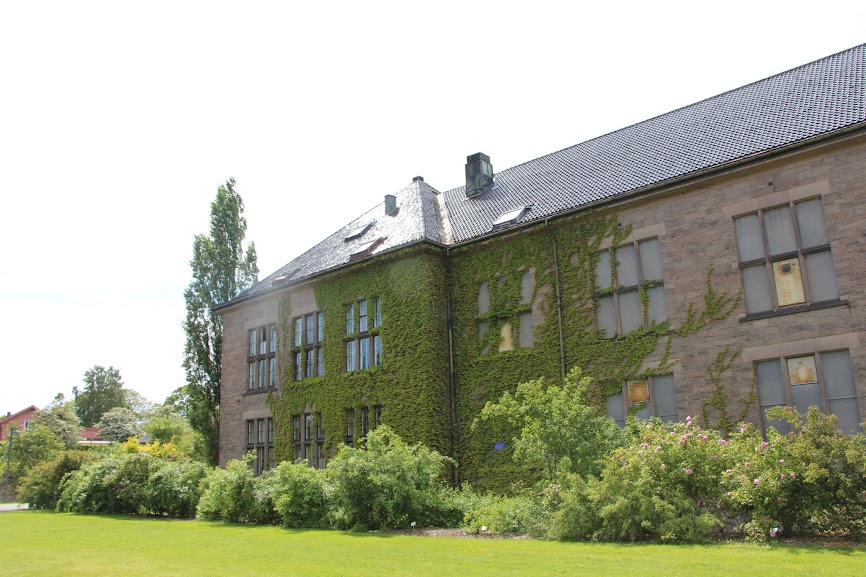
Photos: Oslo botanical garden

New photos by me. 


Full set: 
https://plus.google.com/photos/104156964467977244850/albums/6160157442913097137


____________________________________________________

I got 3 books on my birthday: a Germany photobook from Hải Lý (photos of our trip to Frankfurt, Heidelberg, Würzburg and Rothenburg), Kendra Bean's Vivien Leigh: An Intimate Portrait from Thanh Thanh and ****: or, The Anatomy of Melancholy by Matthew Selwyn from the author himself (OK he didn't know about my birthday, but the book arrived just the day before so why not include it :p). Also got a pair of high heels from my mom, because I'd been invited to a wedding. 
This year I celebrated my birthday completely off facebook (my account's still deactivated), and spent hours with Sediqa at the botanical garden. It was lovely. 

Saturday, 13 June 2015

New photos: Sediqa

My new photos. 
Model: Sediqa. 
Location: Botanical garden, Oslo. 
https://plus.google.com/photos/104156964467977244850/albums/6159949331253995921


On the idea of improving Brief Encounter

http://www.theguardian.com/film/2006/feb/04/1
I've also had a look at Rotten Tomatoes. When criticised, Brief Encounter is not criticised for its dialogue or acting or camera angles and the like, which are perfect- the complaint is mostly about the unconsummated relationship and the choice in the end. Obsolete, they say. Dated. Conservative. Even laughable. 
I don't think of it that way. Yes, the 1960s have happened. The divorce laws have been reformed. The pill has been invented. Sexual relations have revolutionised. And we aren't repressed any more, at least not like Laura and Alec. Nevertheless, 2 people today may still fall in love but have to part at some point, because they each have their own emotional ties, duties and obligations and aren't willing to sacrifice everything for a passionate affair that may not guarantee happiness, because of the sense of guilt towards their children, and because of the awareness that they haven't known each other long enough and that their love is more of a passionate kind. It's not about moral values, it's about being torn between a sense of duty and guilt, and desire, which they know might only mean a general desire to get out of the humdrum of their lives, rather than true love. The film is moving because it's unsentimental and real, because Laura and Alec are 2 ordinary people who make decisions like 2 ordinary people, not like those in films and novels. Brief Encounter seems to be a response to Anna Karenina- Laura falls in love with someone else, but doesn't get into an affair and leave her husband as Anna does; Laura in a moment of desperation runs towards the train, but doesn't jump as Anna does; Laura imagines herself and Alec in a series of cliché lifted from romance films, then opens her eyes to face reality, and in the end, comes back to her family. The film is moving because it reminds us that not everyone in life decides to take a leap- most people may find life dull but remain exactly where they are. The film is moving because it reminds us that sometimes a romance, however intensely felt, isn't meant to be, and yet perhaps the experience of it is enough. 
Such a beautiful film. 
Some people, like the author of the article above, simply miss the point entirely. 


PS: Check out this review: 
http://www.moviemartyr.com/1945/briefencounter.htm

Friday, 12 June 2015

Brief Encounter; and my 5 favourite romantic films


A love story, between a doctor and a housewife who are neither particularly good-looking, nor young- both are married and with children. They meet in a railway station's café and, enjoying each other's company, they agree to meet every Thursday, but soon find out that their innocent and casual relationship turns into something much stronger, and deeper. Brief Encounter has been chosen by Time as the best romantic film ever made and it's not difficult to see why, though the couple don't consummate their relationship, because the film focuses on the tension and struggle in Laura's mind, on the conflicting feelings of passion, longing, happiness and guilt, degradation. There are several wonderful scenes in the film, but the most moving one is perhaps the farewell, the most retrained of farewells ever- for the good of everybody, Laura and Alec know they must part and therefore try to enjoy their last moments together, but their last precious minutes are interrupted by a garrulous friend and their farewell can only be a soft shoulder squeeze. 
Beautiful film by David Lean. This is the film that has inspired The Apartment, according to Billy Wilder himself. 


________________________________________________

My 5 favourite love stories in cinema: 
Casablanca (1942)
The Apartment (1960) 
Brief Encounter (1945) 
Breakfast at Tiffany's (1961)
Waterloo Bridge (1940)